
Tag Archives: God

021 I Jenna Dunn on Seven Scriptures to Prove Complementarianism is Wrong

In this episode, Jenna Dunn of Ezer Bible returns to the podcast to revisit her journey from complementarianism to egalitarianism, exploring key Biblical passages and challenging traditional interpretations of gender roles in the Church. This episode offers deep insights into how we read Scripture, translation issues, and the theological basis for gender equality in Christian ministry.

You can read the Bible passages we discuss here: Romans 16, Genesis 2, and Genesis 3:16, 1 Corinthians 11, 1 Corinthians 14, 1 Timothy 2:12, and 1 Timothy 3.

Here are links to where you can follow Jenna Dunn and her Ezer Bible ministry:
Jenna’s Website: Ezer Bible
Ezer Bible on Facebook
Ezer Bible on Instagram
Ezer Bible on YouTube

Please enjoy this episode of The Beautiful Kingdom Builders podcast on YouTubeSpotifyApple PodcastsAmazon MusicSubstack, and more

TRANSCRIPT:

Ruth Perry (00:15)
My guest today is Jenna Dunn from Ezer Bible. You were my very first interview when I started this podcast. Even though I released our conversation as my third were my very first. When I listened to our episode back, I was like, Oh, I should have asked her so many other questions. And I just really appreciate you being my guinea pig. And I appreciate you coming back on and being gracious enough to do that again. So thank you, Jenna.

Jenna (00:38)
Thank you, Ruth. I’m really happy to be here. It’s been really amazing to get to see all the people you’ve interviewed. loved our conversation last time, but yeah, I’m excited to talk seven passages that I mentioned before.

I remember telling you the backstory about how I had these seven passages bookmarked in a Bible that I always carried with me. And I put together an online guide that’s a video, but I’m always thinking that maybe it’s better to just talk to people who want to know the Bible for themselves and they’re already curious. Maybe other women or couples who are in a complementarian church and they’re like well, I want to know how to explain what’s wrong with that position or what the Bible really says because I noticed if you try to talk directly to somebody who’s really invested in complementarianism or if you’re going to a church and that’s part of their doctrinal statement, you can’t really change people’s minds easily and maybe you shouldn’t. Maybe you should find a different place to fellowship.

I think for myself it was really destructive in my life to think that you can convince somebody and it’s tempting too because you’re like, well we all believe in the Bible. Just show them what it says in the Bible and that was definitely my mindset. I had these seven passages bookmarked and I’ll just show them, this is what it says. It’ll be so easy. They’ll just agree. But there’s almost like a spiritual resistance to people who are upholding that worldview, right? It’s not even just, Oh, the Bible says men need to do this and women need to do this. It’s so much beyond that. It’s their political framework. It’s how they’re interpreting scripture, it’s a whole framework that’s imposed onto the Bible. It’s how they’re doing relationships.

Ruth Perry (02:18)
I think it’s like the parable of the soils; some soil is receptive and some is really hard. And the people who are most considering that maybe complementarianism isn’t the way is the person who has had a bad experience and they’ve realized that the fruit of complementarianism isn’t good. And so they’re experiencing some cognitive dissonance. And that could have been either in their relationship at church or in the home.

Or perhaps they’ve felt a call from God. And so now they’re trying make sense of that because they’re a woman. That can’t be right. And so it seems like the people who are the receptive hearers of egalitarianism, if they’re coming from a complementarian background, they’re in a spiritual season of, that’s not working, I need to find a better way. But if it is working for them, they’re just gonna ignore you. They’re gonna cast you out as heretical. They’re gonna warn themselves about you and others.

Jenna (03:13)
Yeah, and I have to say too, when you’re in a complimentarian church and you haven’t really questioned that mindset or that framework at all, it seems like it’s not that big of a deal. So some women feel called to teach or pastor. What’s the big deal? They can teach and pastor women and children. There’s plenty of opportunities. Nobody should be feeling bad. And it really just doesn’t seem like it’s that important.

And it isn’t, you can still do a lot. I would have been perfectly happy just doing children’s ministry. I was writing Sunday school curriculum and I loved it. I never wanted to teach men. So the only reason why it was an issue is that what was being taught to everybody was not what the Bible said. So that’s the issue is that you have a framework people who are different in some way, like they’re female, they bring truth to the light. They can’t call somebody into repentance. They can’t even make positive change in their marriage, right? It’s the whole framework where only men the leadership capabilities and the ability to tell everybody this is why you need to repent. This is what the Bible actually says. So that’s the issue is that women can’t come against that framework. They can’t question that doctrine. They have to go along with it.

I remember there was another situation where I brought up to leadership that there’s not any women in positions of authority so what if I as a woman was in a dangerous situation like an abusive marriage or I had something very personal and I needed to get counseling or help or advice from a woman they were like well pastors wives, ministry wives, look at all these women and you don’t understand you can’t go to a woman who’s married to one of the leaders and say, I think that the way that Ephesians 5, the way the pastor talked about it, was really bad because there’s women in the church that are in abusive marriages. You can’t question anything, you can’t change anything, and there’s no women that have a rightful authority, right? Following their place in the pyramid structure, right? Trying to keep their position.

That’s not a healthy dynamic, although the issue is not, well, women can’t teach men, and they’re just not happy only teaching other women. It’s really that what’s being taught is not able to be questioned, and men are only called into repentance by other men. So they have a whole blind spot, you know? And they’re only interpreting scripture according to this narrow framework of what other men have said it says, and you can’t question it.

And a lot of times, a Sunday morning teaching will not even have a very healthy perspective, it’s very narrow minded. I remember one example was seeing a male pastor teach about the woman at the well. And it just drove me crazy because his bias was so visible. So there’s all these passages in the Bible that are really about women and they are the words and theology and conversations of women and the stories of women and then only men can teach it and they don’t understand, they don’t see, they don’t ask the right things.

I think it took women to start saying Bathsheba was raped. So many male pastors taught that story. And then it was women that came along and they’re like, was she able to say no? Did she have to if the king comes and says, you have to go with me? Did she have an option? Women think to ask that. And the Bible is not just this rule book and it’s not stories of only men. There’s all these really personal stories of women and it makes sense to have women help with that translation and interpretation.

So it’s not about, well, women want to be able to do all these things that men do because they’re not happy being a woman. No, men aren’t doing things good. And how is that going to get fixed? If you silence the people that are really given by God as gifts to help his body. That is what the leadership positions in the church are supposed to be, is people that are given by Jesus to his bride to teach and to lead and to preach and to evangelize. If you only have men doing those things, it’s not going to be as good as it could be.

Ruth Perry (07:17)
I also think of the value that you bring to this conversation and that I bring to this conversation is that we up complementarian. And so we’ve read the Bible through that lens, and then we’ve rediscovered the Bible through a new lens. And just having that insight of both perspectives, I think, is really valuable. And I know growing up complementarian, the way that complementarians spoke of egalitarians. I would say it was not according to the New Testament one another commands that we’re supposed to love one another and consider others better than ourselves. But rather, there was a lot of demeaning language and writing off and just assuming that egalitarians were playing fast and loose with scripture and that they weren’t taking it seriously and that they were letting their culture influence the way that they read the Bible. And as I’ve met egalitarians and read egalitarians, that couldn’t be further from the truth.

Jenna (08:08)
Yeah. Yeah, who’s doing mental gymnastics? The people trying to make it fit the most common social structure we’ve had throughout the world, throughout time is patriarchy and trying to make the Bible fit that, trying to make the Bible prescribe patriarchy. I think that that’s really pandering to the culture.

Even the name complementarian, I find slightly deceptive because nobody is saying that men and women are the same. Both sides think that male and female were created by God to complement each other so it’s not even being honest about what their position is. Their position is not just that men and women are different and compliment each other, but that there must be this hierarchy between them. But if you say, well, they’re hierarchalists, they don’t love that. And if you say, you’re advocating for patriarchy, they don’t really love that either.

But being complementarian, it’s a weird thing for them to name the movement, but also just the fact that everything came out as a response, right? It was a very reactionary movement. It only makes sense in America and it only makes sense since the 70s and it only makes sense as a reaction to feminism. And so there’s these bigger issues that are hard to bring up and I think one of the strategies is to ask the right questions and to help them bigger ideas in scripture. So one of the first things that I think is really important to bring up is Romans 16.

So the seven passages are Romans 16 and then Genesis 2 and then look at Genesis 3:16 and then you get into the First Corinthians 11, First Corinthians 14 and First Timothy 2. So everybody starts the other way around with first Timothy 2, and I actually think that’s the least relevant passage But I also think it’s important to look at the whole chapter.

So, those seven chapters, I think you can give people an overview of what that passage is talking about and the big picture and it’ll all fit in. And hopefully it illuminates all of scripture and it doesn’t just feel like this disconnected framework. And I think that’s one of the things that really bothered me about complementarianism is that they will make a list of something like, nine proofs of male headship or, the true woman manifesto. There’s also the biblical manhood and womanhood. It’s kind of like a manifesto, but they’ll make 10 points, like 10 sentences, and then they’ll just be like three scriptures to support that statement.

And the scriptures are different genres of the Bible. They’re just a hodgepodge and then the scriptures don’t support the statement, or they’ll be saying something slightly different. They’ll say, well, Paul is quoting the created order. And then you go and you look at where they’re saying Paul’s saying that, but Paul’s never using the phrase created order.

I don’t see egalitarians use the Bible that way, right? There’s more respect. There’s more providing context and explaining who’s saying that and who their audience is and why they might be saying it. There’s a need for that because I think using the Bible like it’s just a rule book or a blueprint for how to have a good family or how to have a good marriage or how everybody should act according to their gender, it’s just a weird way to use scripture.

And so with those seven passages, kind of the crux of the issue is the complementarian idea of created order that they get from Genesis, right? Because the verses that they’re using from Paul, they think that he’s quoting Genesis. So looking at Romans 16 first to say, what did the early church look like? And Romans 16 not only gives you a list men and women working together, it does list one married couple in ministry, Priscilla and Aquila, but it lists a lot of women with no statement about who they’re married to or whose wife they are. It also gives women titles of respect. It shows that they’re set over others. You know, even listing churches that they are set over. You have Phoebe presiding over the Church of Centrea.

So just the amount of women and the way women are listed and then how Paul is commending them. So it doesn’t only just tell you how the church looked and what people were doing, but what Paul thought about it. And everything else that you talk about after that, every other part of the Bible that you read, would Paul really be contradicting himself if he’s commending women for leading? Is he later telling them to be silent?

If he’s calling them coworkers and partnering with them and even having women over him as a man, is he later going to say, yeah, I don’t want any women to exercise authority over men? The conversation has to start with that. You get this picture of the early church as being very diverse the women that are commended are not all somebody’s wife and somebody’s mother. It’s not like when you are at a pastor’s conference by The Resurgence or by The Gospel Coalition and the only mention of women is so-and-so’s wife. It’s a very different feel.

The early church movement had a lot of women and maybe their husbands weren’t saved. Maybe their husbands weren’t with them and maybe they weren’t married and there was a lot of householders that were women. And they impose this 1950s Leave it to Beaver family model onto the text and it’s just not in the text.

And also, a lot of these things that they think Paul is saying are much worse. He’s not just saying women ask your husbands at home and be respectful and show deference to male leadership. He’s not saying that. He’s saying the voice of a woman shameful or filthy. So you either think he’s quoting a different idea or that he believes that and that somehow makes sense when you see Romans 16 and it doesn’t make sense, right?

So I think starting with Romans 16, that’s the biggest thing. If you have two seconds to talk to a complementarian, ask them if they read Romans 16 what they think about it. If you’re reading the ESV, some of these passages are interpreted in such a way, like it’ll say, well known to the apostles, right?

Ruth Perry (14:09)
Hmm. Yeah, I was going to ask you about how can away from Junia?

Jenna (14:13)
Yeah, well, it was Junius for a while and then they realized there’s no way it was a man’s name. And so then they changed the other words in the sentence. So you see, not only is the actual scripture important to look at, but that history of how we’ve translated it. Also, it reveals that there’s been a historic bias against female leadership.

And so I think that’s important to recognize because it’s not just people being difficult or politically correct because of feminism now. It’s not just our modern culture. Women have always been discriminated against and they’ve always been trying to serve the Lord. They’ve always been full of the Holy Spirit and trying to do what they’re called to do and there’s always been a historic bias there in translation and we have a history of how it’s been translated. The end result is nobody thinks that it could possibly be Junius. Everybody knows it’s Junia.

And so that should cause you to also doubt the other things that the ESV tries to get away with in modern times. Like they still try to, say, not deacon to say servant. None of the other places where men are called deacons do they try to say servant. And you actually have the church that she’s presiding over listed. So yeah, I think that that is an obstacle, the translation issues. And unfortunately, that is one of the reasons why people continue to be complementarian is just cause they’re reading the ESV. And so they’re not seeing what scripture really says. And that’s too bad. ⁓

Ruth Perry (15:37)
It’s interesting how people say, well, there’s no women pastors in the Bible, but there’s no one in the Bible that has the title pastor. It is deacon or servant or shepherd or some other term.

Jenna (15:41)
No pastors. Yeah, and the bigger picture of that though is that there aren’t offices. There’s not these elite titles, right? The fact that Paul is like, I’m going to call the people that are in charge servants. It’s so Jesus-like. It backs up the whole ethic of Jesus, to say, don’t be like the Gentiles who lord it over one another.

Whoever is going to be the greatest among you is going to be your servant. So to not try to seek to be the greatest. I love all of the stories where the male disciples are arguing about who’s greatest among them. There’s one where they’re like outside arguing and they come into the house and Jesus knows what they were arguing about, and he’s like, what were you talking about back there? You know? I see that feeling in the whole nine proofs of male headship that they get from Genesis, right? Like the whole concept of created order. This is their whole argument in those bullet point checklists.

The man was created first, the woman sinned first. And it’s just this childish, immature framework of who did what first, who is greatest, who’s not greatest. It’s just a weird way to look at the Bible and it goes against the bigger picture of everything Jesus said. And then you see Paul really running with the exact same ethic, setting up churches and just saying, we’re gonna call everybody who leads a servant.

And even the five-fold ministry titles, those are all things you’re doing. You’re a teacher, you’re an evangelist, you’re a shepherd. It’s not about this official title.

Ruth Perry (17:24)
I think it is a little bit of projection, the way they talk about women who are trying to follow their callings in the church. They’re like, well, you just want power. But I feel that reveals what their perspective is, that those positions are power. And it’s about authority and lording over others rather than service and servanthood.

Jenna (17:37)
Yeah. Yeah, I do see the projection too. It’s really interesting being told that you just want attention when you’re a woman in the church, that was really odd for me. It’s so not my personality and I can’t think of anything I’ve done that would warrant somebody saying, well, you just want attention. Their view of womanhood and what I should want and what I should be is so narrow and small that it’s like anything outside of that is oh, you want all these things.

Yeah, it takes empathy, I think, for somebody coming from that framework to imagine what that must feel like. You get saved and you get baptized and you start learning about the Bible and then you get filled with the Holy Spirit. And for some people, they really feel called to teach or to lead or to even preach, to call people into repentance. And then if you’re a woman, you’re supposed to show this special respect. You can’t be in any sort of authority position where you’re telling a man what to do or criticize him. You can’t tell him that he’s teaching the Bible wrong or that he’s not seeing things. I’m not saying that you would ever do it in a disrespectful way, but it’s just not allowed in any way.

And so what do you do if you really want to build community and be a part of a community? There’s just not a way do it in a healthy way, I don’t think. And it also is really destructive for a lot of marriages. If you are married and you’re in leadership in that type of environment, there’s just a lot of ways that your marriage is going to be attacked because especially if you’re the woman thinking that the Bible is freeing towards women and opens the mouths of women and is empowering for women and then you’re in a complementarian culture, it’s going to be hard not only socially, it’s going to be hard to actually to be honest with people and to be in community. And then if you’re in a marriage that’s disjointed that way, it’s really hard.

I wish it was just a matter of saying, well, we all have the same Lord. We read the same Bible. We have the same Spirit. Let’s just open up the Bible and just see what it says. But unfortunately, there’s a lot more to it. But yeah, Romans 16 is good. I think the next thing to focus on is the whole creation account, mainly Genesis two, because everything in complementarian theology hinges on them establishing male headship before the fall.

Everybody agrees as soon as the fall happens and he’s gonna rule over her, that’s Bad. It’s, you know, what do you think before that, you think God instituted a form of patriarchy or a good male headship hierarchy, right? That’s the crux of the issue and I think the fact that you have new language to prove that is a good indicator that it’s not just obvious in scripture. Phrases like, God’s design, created order, order of creation.

Even male headship is kind of a questionable phrase. The Bible definitely talks about men being the head of their wife, but I see all the time people are reading a scripture and every place that says head, they say headship and sometimes they’ll even just say authority. I’m like wow, that’s a crazy metaphor, authority in a body. That’s not even a metaphor anymore, right? You’ve just completely changed a word. But yeah, people will say Paul said and then say something that’s not even in the Bible and not what he said.

And this idea equal, but different roles, even the idea of roles or gender roles, that’s all really modern stuff. It like the sixties? They started talking about gender roles. That’s a social construct. It’s a weird thing to impose onto the Bible.

Once you see how weird it is, once you start questioning it, you’re like, this is really a whole way of looking at things and actually taking a story and saying, God instituted a certain design or order and then the sin in the Garden of Eden is a reversal of that. At that point you’re redefining sin as not acting like your gender or not following your role. Try to find another story in the Bible where that’s what the sin is. Not following, not staying in your place.

That really struck me the other day, how it’s all hinging on a really modern idea. And now you’re taking a story in the Bible that is foundational to understanding the rest of scripture and you’re saying, it’s about not staying in your place. Have you seen what I’m talking about where the chain of command is supposed to be, God, Jesus, man, woman, and then the reversal is the serpent, woman, man, God, you know what I mean? But that idea is sticky.

Ruth Perry (22:05)
This is really where we read our culture into the Bible because we are conditioned in a patriarchal culture where there are roles, and we call them traditional values. So it feels old, just using that language of this is the traditional view. It feels like this is the right way to view things, but it really is the culture of the world and we’re supposed to be renewed and not conform to the culture of the world, but conform to the values of the kingdom of God, which I feel like Genesis 1 and 2 really lays out a beautiful vision of partnership between men and women in having dominion. They were both given the same job description to have dominion and care for God’s beautiful creation, and they were connected with God and they were connected with each other. And the sin creates disconnection and harm between our relationship with each other and with God.

But your ministry is called Ezer Bible. So I’m obviously wanting to hear from you about how you understand that word helpmeet because that sounds, in the King James Version that people love to read, it says that the woman is a helpmeet or in the ESV helper. And we just read that through our modern English lens as subordinate and that there’s hierarchy inherent in that. That that’s what God’s created order is. That we’re assisting the man in his calling and his dominion. So can you explain how to better understand that word helper?

Jenna (23:21)
Yeah, that was actually world-changing for me. I think that that was the thing that caused me to leave complementarian theology. And I’ve noticed that some of the different well-known complementarian bloggers or authors, they’ve changed that list. It used to be like the second point was that the woman’s called ezer was actually one of their proofs of male headship. Which is crazy because you know if it was the other way around where God created the man to rescue the woman from being alone, that God calls himself ezer. And it would be a proof of male headship.

And then, to even have it say, equal to or facing him, like on his level. So she’s a rescue, a deliverer, but on his level. I think it’s really difficult to get subservience out of that word and when I really looked up that word and I saw the other places it was used I actually felt it elevated, I mean, I know it’s equal to but I was thinking wow, that’s really an elevating title for the first woman to be called, and the fact that God’s like, I’m gonna make an ezer like this..

I think that the takeaway that complementarians get about like, he was created first, she sinned first. It’s a really weird takeaway when you see the story as it is, how everything is done in such a way that they can’t not be interdependent. She’s built from his body. So, can you say that he existed first if, the materials that she’s built with are his body? It’s done in such a way that I think what you’re supposed to take away is wow, they’re really interconnected.

That’s the idea that eventually leads to marriage is that she’s taken out of him, so then he’s going to leave his family and cleave to her because he’s seeking that wholeness. That seems like the bigger thing to take away from that story but also isn’t that story all about Jesus? There are so many things in that story that go against the natural world that we know. We all know that every human came out of the body of a woman. This is the natural order of things and this story is flipping a lot of that on its head and Paul uses all of that in the New Testament to show interdependence and connection, not to show a hierarchy.

I think that another huge thing to point out is that Paul doesn’t say that the man is created first so to stop putting words in his mouth, to stop misquoting him is huge. Because then you have to be thinking, what is Paul saying? He’s not saying that the man was created first. It literally doesn’t say that word in there. And take the phrase created order and to start imposing that onto how you’re interpreting the Bible. Paul says the man is formed first. And then you have to look at the formation going on.

That there’s a completely different word for the idea of taking something that already existed in chapter one and molding it like clay and then breathing life into it and then taking part of the bone and the flesh off and building a woman. I don’t know if you’ve heard something that was kind of new to me that I heard from Tim Mackey was that the word ezer is just one little dot different from the word city.

So like this idea of building an ezer, it’s like an architecture word. It’s like how you’d build an altar, or you’d build a house, or you’d build a city. You look in the New Testament and you have the New City that’s prepared like a bride. There’s some really interesting spiritual stuff going on in this story, right? The natural order shows us that we all got our life from a woman. And so maybe there’s some respect and honor due to women that we all are born of a woman and then this story maybe gives men this idea well everything came from a man, he was first and I think that they really glom onto that as sort of a projection of male superiority but I don’t think that that’s why God gave us that story.

And I actually think the entire creation account is about the Creator. I see Jesus in every in every part of that and Paul does too. In fact, most of what Paul is talking about whenever he’s quoting the creation account, he’s talking about that interconnection. He’s talking about two become one, a head and a body, make He’s talking about the fact that the woman is made, is built from his body and just the same thing with Jesus and his church. The church is being built from the broken body of Jesus and the church is a bride and the church is like a city.

But the big thing to make complementarians, look at it different, it’s just to make them look at what it actually says. You can see that these phrases their framework is dependent on don’t exist in Scripture. I think too it’s important to not misquote Paul. There’s a lot of things that they say Paul is saying and then you look at it and that’s not what he’s saying.

You know, like I talked about the quote, that’s called like the quote refutation view where he’s quoting, I think, the Jewish oral law. But when you look at what he’s actually quoting, if you want to try to make that his actual opinion, it’s pretty extreme. It’s actually a really mean thing to say. I actually just walked away from Christianity when I did a word search I think it’s verse 34, it says something like, the voice of a woman is shameful. And I was like, I’m sure it doesn’t say shameful. Like, I don’t recommend looking up that word, It says the voice of a woman is filthy.

It’s not just saying, women maybe aren’t educated at this time in history and they just need to hush down a little bit and just ask their husbands at home and stay in their place. It’s saying something about the quality of her voice, no matter what she’s saying.

Ruth Perry (29:08)
It’s deragatory.

Jenna (29:09)
Yeah, and to say something’s filthy or shameful is hinting at the idea which was prevalent in the first century, that the voice of a woman is sensual, which you know you still see that in other cultures today. Some of the Muslim majority countries have laws against women speaking in public, because they think it’s immodest. The idea that that’s representative of Paul, I think just doesn’t fit with the rest of his story.

It does fit with who he was before he encountered Christ on the road to Damascus. So you see him confronting his past worldview. You’ve seen Galatians 3.28, he says that there’s neither slave or free, or male or female, or Jew or Gentile. That is almost verbatim a prayer. So he’s refuting what he probably used to pray when he was a Pharisee. So you see him come against the world view that he used to hold to. I think it’s very unlikely that he’s out of nowhere just going back to being a Pharisee.

But I think that sometimes people who don’t power of the gospel, they just kind of synchronize everything in his life. They’re like, oh, well, he was a Pharisee. So he believed that. And they sync that together with who he was as a Christian in Christ. No, he did a 180. Before he was rounding up all the Jesus followers and locking them up and killing them.

You can’t synchronize that with who he is in Christ. He had a conversion experience. Whereas he used to follow those ideas, now he’s partnering with women. Now he’s learning for women. And I think the idea that he’s saying that is just, I think it’s so out of line with everything else that his ministry is about. And I think it’s perfectly in line that he would say that and refute it. There is a quote Rabbi Eliezer that says the voice of a woman is filthy nakedness, and there is also the quote that says little woman know nothing but the use of her distaff like her spitting, so there’s things that are really similar to that idea in the Talmud, but at that time they could have just been Jewish oral laws or slogans and I think it’s very likely that he’s, quoting them and saying, what? Did the Word of God come from you or did it come to you only?

I think that with that passage, just getting people to really look at what it says and to not say that it says something it doesn’t. That was the way it was presented to me. This is about headship. Same with 1st Timothy 2. It’s about headship. It’s about the created order. Paul’s quoting the created order. Well, he’s not. That phrase isn’t being used. And what he’s saying, that the voice of a woman is filthy is nothing to do with the created order. you know? And that’s actually not one of them that he’s quoting the creation account. It’s the 1 Timothy 2 and 1 Corinthians 11 where Paul, specifically quotes the creation account.

So, you you’ve got like this circle where how they’re interpreting the creation account is influencing their view of these two verses and then how they’re interpreting those two verses is influencing their creation account idea. And so it’s like, how do you break that loop? It’s a negative feedback loop. How do you get them to see both sections correctly? You can’t just fix one, right? But the crux of the issue is they don’t see the creation account accurately. They’re convinced that it’s about something different than it’s about, they don’t read that story and think, this is about how men and women were rule together. They were created in a way that they’re interdependent on each other.

Ruth Perry (32:42)
This might be a tangent, but I also think Calvinists don’t start in Genesis 1 and 2. They like to start in Genesis 3 at the fall where we are, you know, original sin, that we are filthy and just totally unworthy of anything from God. Everything is a free gift, which Armenians would agree. Everything is a free gift from God.

But Armenians would start with Genesis 1 and 2 about common grace and the creation of God and the dignity and value of every human life, the very goodness of human beings. But there could be patriarchal Armenians too. And they might allow women to use their gifts in the church, but then they’ll still want that order in the home of male headship and women’s submission.

Jenna (33:21)
Yeah, I’ve seen that. Yeah, I’ve been really intrigued by that. I came across that pretty recently where I was listening to somebody who said, yeah, I believe in male headship in the home, but not in the church. And I had to think about that for a second because that means that you still hold to the idea of the created order in Genesis. But that means it’s only applicable to a man and a woman in marriage. I think a lot of that has to do with how you’re interpreting all the head-body metaphor.

You’re either reading the head-body metaphor as a metaphor about connection and interdependence, or you’re breaking that metaphor and replacing that word with a different word. Headship and authority, those are the same thing, but the metaphor is not a headship and a body. That’s like saying, let’s hike up this trail, meet me at the authority of the river. You’d be like, no, that doesn’t even make sense. So there’s no other place where we use words that way, you know?

And actually, the word in Greek, we have the perfect match in English, the word head in English. It has the same meanings. It can mean your literal head. It can mean authority, like a CEO. And it could mean source, like the head of a river. So it really is like the perfect English word. Usually you don’t have an exact match, it really is head is head. If I’m saying to you, take that hat off your head, I’m not saying take the hat off your authority.

I just don’t understand how people break that metaphor and then think that they’re reading the Bible correctly. I mean, I know what happens is they’re like, well, Jesus is the head of the church. And those are similar things, but can’t you see you can use the same word in different contexts. You can say that Jesus is head over the church, because that’s also true. But that doesn’t mean that men take on every single thing that’s true about Jesus. It’s only in the context of a marriage that a man is a head of a body.

You can’t have more than one of each for that metaphor to work. If you’ve ever seen the umbrellas, the umbrellas are crazy. You can have five umbrellas under one umbrella. If it’s just about authority, there’s not one of each, right? You can’t have two becomes one. It like completely breaks the metaphor.

Ruth Perry (35:14)
That’s not how umbrellas work. You only need one. Yeah.

Jenna (35:26)
Maybe that’s even just like a language issue that people don’t understand where the Bible is using a metaphor. You know, maybe people wanting to be very literal with the way they read the Bible. They’re trying to be literal with the metaphor. But yeah.

Ruth Perry (35:38)
You would also think, if Jesus is head of the church in the way that they want to be head of their church or their wife, then we wouldn’t have 40 something thousand different denominations. We would all be submitted to Christ and look the same, right?

Jenna (35:52)
Yeah, I actually think that the complementarian position’s a little bit more about the unwillingness to let something be less structured than we would like. The unwillingness to sort of hold things with an open hand and say, we are all submitted to Jesus. Jesus is the head of his church. Jesus is building his church. But instead we want to create a structure that looks like the world. We want something hierarchal so that everybody knows what they’re supposed to do. We want to be able to follow rank and have this certain structure that makes sense to us.

And I think, the Bible just doesn’t really give us that. I don’t think that what you see in Romans 16 shows that that’s what there was, at that time. the fact is not even after a lot of persecution that you get a really structured church. And even at that point, you still see women doing that complementarians say that women can’t do today. That’s another thing that’s crazy to me. Just if you look at the history of the church, women have always been trying to do stuff. So this idea that it’s just only women today because of feminism. It’s only women now that are trying to do things that they shouldn’t do. Like throughout history women have just been completely satisfied serving men.

Yeah, there’s there’s so many different aspects that go into it that show it’s not just about what does the bible say because if we could all just like read the same bible and say well you know it says this it doesn’t say this that would be simple right but yeah people are bringing a lot of baggage into the whole discussion

Ruth Perry (37:04)
Yeah. So back to your seven passages, then you move to Genesis 3:16 and you talk about the fall. What do you say about that?

Jenna (37:25)
Yeah, so I think that the major thing to take away from Genesis is just the idea of created versus formed, and to see that the phrase created order needs to be examined, to see what’s actually there. But the Genesis 3:16, it’s crazy how one verse has so much baggage.

But the quickest, easiest thing to take away from that verse without going into the whole history of how it’s been mistranslated is that Paul read it a certain way. It’s different than what you see in most translations today. For the vast majority of church history, I think like for 1500 years, it said turning. It didn’t say, it didn’t even say desire.

Ruth Perry (38:08)
This is where it says your desire will be for your husband and he will rule over you.

Jenna (38:12)
Yeah, and also if you look at a Septuagint it says, she will be turning towards her husband. He will rule over her. And it’s a prediction, It’s just saying this is what’s going to happen. It’s not saying that he has to rule over her. I think the 2016 ESV actually changed it to your desire will be to control your husband or something like that. And then in the more recent, I think it’s 2025 or 2026, they updated it and went back to desire.

So I think almost every translation today says your desire will be for your husband and he will rule over you. And I think that’s fine, but you miss out on the parallelism. if you notice, if you leave it as turning, which is how Paul read it, there’s a reciprocal thing going on where he’s returning to the ground, which is where he came from. That’s what he was formed from. And she is turning towards where she came from.

So you get this idea of repentance almost. Now that there’s sin in the world, now there’s sin and death, the temptation for men and women is to turn back to where they came from, which is turning away from God. And the idea of repentance, at least in the Old Testament, the Hebrew shove, is like you’re turning. You turn to God and you turn away from sin. So, I’m a huge advocate for the idea that that should say turning. I was really moved when I realized that that’s definitely what Paul was looking at. And for most of church history, it has said that. But even if we leave it as desire, that is a crucial verse because complementarians are using that to say that he needs to rule over her. Prescriptive, not in a descriptive way.

And so you have to point that out that God’s not prescribing men to rule over women. That’s the product of the fall. That’s a negative thing. And the other reason why that verse is really important, I have a gigantic ESV study Bible and so it has a lot more footnotes than most Bibles do. But when I was reading the whole passage in First Corinthians 14 and it says, as the law says, my footnote in my ESV had reference to Genesis 3:16. So that means they were interpreting that passage as Paul quoting Genesis 3:16 to silence women.

I don’t know how prevalent that idea is among other complementarians, but it’s something to point out. Really, you think Paul’s quoting Genesis 3:16 and telling women to be silent or to be subject to men? I don’t know. I think that’s a crazy cross-reference.

Ruth Perry (40:37)
Yeah, on this side of the resurrection, we’re supposed to be living a new life and in a new kingdom. And, all of the results of the fall have been defeated.

Jenna (40:40)
Yeah. Yeah, my feeling is that that’s not that common of a view. I think most complementarians, would say, well, there’s headship before, but now it’s a distortion. He’s ruling over her and that’s a negative thing, not a positive thing. I mean there’s so many things that the ESV translation team did that were really a stretch, but to me that, to think that Paul’s quoting that, which means you’re making Genesis 3:16 a law.

And I think it is worthwhile to start with Romans 16, to see this is a really good representation of what was happening, what women did. Like we’re going to talk about women in ministry, let’s look at the passage that has a bunch of women doing ministry and then see what Paul is saying about it and how he seems to feel about it. And then to look at some of these other verses, that are quoting the creation account where they’re getting the idea of created order. Because if you go to interpret 1st Corinthians 11 or 1st Timothy 2, but you think that there was headship before the fall, you’re not gonna see what Paul’s saying, right?

Both of those passages tend to be the only ones that people talk about when they talk about women in ministry. And so many times that you’ll have a woman teaching or preaching or a video explaining the egalitarian position and there’ll just be a comment that is, say first Timothy 2:12. It’s basically like saying, shut up, but it’s a Bible verse reference used like a slap in the face, like a weapon to silence a woman. I don’t think you can really make headway with somebody that has that mentality, but it shows how contagious that idea was, is that Paul basically said women can’t exercise authority over a man. That idea became very contagious.

So I think the most succinct thing to bring up is does that word say exercise authority? And you can actually go to some of the older translations. So the King James version says usurp authority. I think there’s a translation that says domineer. So that’s the crux of the issue is was the woman doing a positive or a negative, because exercise authority is a positive thing throughout. That’s what you’re saying is men exercise authority if they’re a pastor or a leader in the church or exercising authority over men and women. So that’s a positive, but you’re just saying a woman’s not allowed to do that.

So you’re assuming authentein is positive. It’s not used anywhere else in the Bible, first of all, but I think to think that it’s a positive word, of course the ESV needed to translate it “exercise authority” in order to uphold their position. But the fact that they are not able to uphold their position using the older Bible translations should make you wonder. You couldn’t argue for a complementarian worldview just using the King James Version, at least not with this passage, because you’re like, yeah, of course a woman can’t usurp authority. Of course a woman shouldn’t domineer. Of course, nobody should authentein anybody.

Ruth Perry (43:36)
There’s a hermeneutical rule where you don’t make a blanket rule for the church from one verse or from one word like that. You should be able to verify it through the whole testimony of scripture.

Jenna (43:44)
Right, yeah, I have a list that’s like the 10 rules of Bible interpretation and I think I can’t remember the first name, but Gundry, or, there’s a list of scholars that put together a list and that sounds like one of the main points, but yeah, basically you’re not gonna argue for something using something obscure. And so just the simple fact that that word is not used anywhere else in the Bible noteworthy. I’ve never really heard complementarians give a good response to that.

Ruth Perry (44:18)
Or they’ll turn that into a rule for all times and all places, but then say, well, we don’t have to greet each other with a kiss for all times and all places though. Yeah.

Jenna (44:24)
Right? Right, yeah, Paul is giving a lot of personal advice, like bring my cloak back and drink a little wine for your stomach. And there’s all these like personal things and we don’t make doctrine out of it. But also the bigger picture of why is Paul writing to Timothy? What’s going on in Ephesus? Why does he feel the need to make sure this young pastor what these men and women need to be doing in worship because there’s directions for men and there’s directions for women and why in the world would you need to tell women that they’re going to be safe during childbirth? Like in Ephesus in the first century what could he possibly be talking about?

I think that the complementarian position is just so unsatisfactory for interpreting the entire passage because they give you no context. You know, why does Paul feel the need to point out that Adam’s formed first and it was the woman who was deceived. Why is he pointing that out? Is he talking about some women who are deceived? Is he talking about this idea that there’s somebody who’s superior because they were first, they were born first? So it’s like, what’s going on in Ephesus in the first century?

That verse needs to be in context of the whole thing about how the women are dressing and how they’re worried about dying and childbirth. And so, yeah, I think the way complementarians pluck it out and put it in this bullet point list of the nine proofs that men are in charge and to just lump it together with their statement about Paul says that the man was created first, which is them saying that he said something he didn’t. And it is mental gymnastics. It’s also just a really disrespectful way to use scripture.

Ruth Perry (46:05)
So we’ve talked about Romans 16, Genesis 2, and 316. We’ve talked about 1 Corinthians 11, 1 Corinthians 14, 1 Timothy 2:12. That’s six passages. That’s all I wrote down. What was the seventh passage?

Jenna (46:19)
This is probably the hardest one and it’s usually the one that I would bring up last, but you have to get into the whole one woman man thing. It’s in Titus, but I just focus on 1 Timothy 3. You’re already talking about Paul giving advice to Timothy, but there’s a whole section that usually has the chapter heading qualifications for leaders or qualifications for elders or overseers.

And you got this whole list of character qualities. And you have the sentence structure saying, whosoever. And then you’ve got all these male pronouns added in. And the only reason why they add the he’s in there is because they translate the idiom “one woman man” to “husband of one wife.” And that’s a terrible translation because those are different things, right? An idiom, an expression, like a one-horse town is an idiom.

If you told me you know that such and such town is a one horse town and I went there and I came back and I said there’s no horses there. You’d be like, we’re just saying it’s a small town. It’s the same idea. A one woman man is somebody who’s faithful, it’s a character quality and it fits in with that list that’s all character qualities.

And so because they translate that to one woman man, then they start adding in the male pronouns and make that entire passage about men when it’s whosoever. If anyone desires the office of bishop, if anybody stretches out their hand be a leader, that’s a good thing to desire. That is actually the Holy Spirit in you calling you to ministry. And so that passage is for men and women. A one woman man is a woman. So there is another scripture that talks about women like widows or single women. Sometimes I think in the New Testament, widow is not literally to mean that your husband’s dead. It can just mean that you are a single woman.

But there’s a passage that talks about the women who are one men women. So that would be useful to use that phrase, that idiom, if you were only referring to a group of women. But as soon as you’re referring to a group that’s men and women, you have to say a one woman man. That includes everybody. So part of the problem with interpreting this wrong, is not only does it disqualify a lot of people in the New Testament who were not married, and it makes Paul contradict himself, right? Because he actually has a few statements where, especially for women, he’s like, it might be better for you to stay single because you can serve the Lord with your whole heart. You won’t be having to take care of your husband.

I think in some ways, Paul encourages celibacy, especially for ministry, and ministry during persecution. this to like, now you have to be married. And then the idea that people were actually practicing polygamy, you have this culture in Rome where men were having sex with a lot of different people but they only had one wife. He’s not trying to say in order to be a leader you have to not be a polygamist. He’s not saying you have to be married, he’s saying you have to be faithful. And when you look at like the modern church in America there’s a lot of men who are in ministry and, look at the scandals that are coming out weekly, right? So-and-so cheated on their wife. So-and-so was, you involved in some kind of assault situation. According to the ESV’s interpretation of this passage none of these men are one woman man, but they’re all husbands of one wife. They’re all just married to one woman. So they’re qualified for ministry. You know, they’re not.

We should, as a church, interpret this correctly and understand that there is a character that is demanded of people who say, hey, I want to be set over others. I want to be in charge. I want to lead others. Like there needs to be a certain level of character that’s proven there and it’s not about gender.

Ruth Perry (49:57)
Yeah, I mean, it’s really weird just if you think about it, it’s really weird that people would be eligible for leadership because of their body and their equipment. That’s the least of our concerns. It is character and maturity and a life that displays the fruit of the Spirit. And that can be a man or a woman. We all have the Holy Spirit. We’ve all been given gifts. Your sons and your daughters will prophesy.

So if you’re a woman who’s grown up with this complimentarian point of view, but God has called you to something different, I just encourage you to explore more and read more and start at Jenna’s ministry, Ezer Bible. What is your website, Jenna?

Jenna (50:36)
It’s ezerbible.com and there’s a bunch of video courses that I’m putting together. I’m putting together basically guides that you can just print and use on your own, but you can also come into the community and go through a video course that has worksheets and printables and different resources. And the idea is that you would learn and then talk to other people.

I really wanted to learn from other people that are called to be teachers, but also people who are prophetic or evangelists or people who are pastoring. I guess I really view the people in the church as being the gifts, and so I want to be able connected with other people and community. So yeah, I really would like people to come and either follow me on social media or sign up for the free community and just get to know me better and get to learn the Bible better.

One of the things with the New Testament that I’ve put together over the years is that there’s all these things that women are, and they’re not things that women are really told. So like women are one woman men. Women are sons in the New Testament. And this gets into translation stuff, but I actually think you should leave it as sons and not make it sons and daughters. But the idea of sonship is is a huge principle in the New Testament. But women are men of God in the New Testament too, because the word men is anthropoid, it’s human of God. Women are fishers of men. There’s all these things.

I made a list one time of all the things women are in the New Testament. And it’s unfortunate that the way Christianity is presented to so many women is leaving out all these very deep theological concepts, even just the concept of where we have brothers, like the word Adelphoi in the New Testament. There’s some translations that just translate it to brothers and then some say brothers and sisters, but that Greek basically means, from the same womb. You have Christians who are all part of the community all born-again believers, they’re all of the same Spirit, they’re all following the same God. There is this word of unity that is used and I think that that’s been the biggest thing for me as a woman is just seeing all the things that the New Testament calls me that I normally would have excluded myself from.

Ruth Perry (52:42)
That’s awesome. That’s a great place to end for today, Jenna. Thank you so much for all your hard work and sharing your wisdom and your resources with us. And God bless.

Jenna (52:52)
God bless, thank you.


Did you enjoy this episode? Please subscribe, rate or review us on YouTubeSpotifyApple PodcastsAmazon MusicSubstack, and more! Your support means the world. God bless!

020 I Becky Garrison on Gaslighting for God: Recognizing Spiritual Narcissists and Cultures

Find all of Becky Garrison’s books on Amazon at this link.

I had a lot of fun and a lot of “A ha!” moments reading religious satirist Becky Garrison’s ninth book, Gaslighting for God: A Satirical Guide to Save Yourself from Spiritual Narcissists. Garrison formerly wrote for The Whittenburg Door, a Christian satire magazine. Her social commentary is so insightful. In our conversation, Garrison discusses the intersections of narcissism, gaslighting, and spiritual abuse within religious communities and broader culture. She shares personal experiences, critiques of religious and political figures, and offers guidance on recognizing and resisting narcissistic dynamics. This is a very timely resource and is well-researched and comes from deep expertise.

Key topics in this episode:
Narcissism and spiritual abuse in religious communities
The role of humor and satire in exposing narcissistic dynamics
Personal experiences with narcissistic family and church systems
Connections between political figures like Trump and broader cultural narcissism
Strategies for recognizing and resisting narcissistic manipulation

Here are links for you to follow Garrison’s work:
Buy Gaslighting for God
Becky Garrison Website
Becky Garrison on Substack
YouTube Channel of Becky Garrison

Please enjoy this episode of The Beautiful Kingdom Builders podcast on YouTubeSpotifyApple PodcastsAmazon MusicSubstack, and more

TRANSCRIPT:

Ruth Perry (00:15)
My guest today is author, journalist, and religious satirist, Becky Garrison, whose most recent book is titled, Gaslighting for God, a satirical guide to saving yourself from spiritual narcissists. Thank you so much for being here today, Becky.

Becky (00:26)
Thank you for having me, much appreciated.

Ruth Perry (00:32)
I just finished your book yesterday and I was really amazed by it. It was really powerful. It wasn’t what I was expecting in some ways and then it was so more deep and insightful than I was expecting in other ways. And so I highly God anyone who wants to learn more about gaslighting and narcissism and how this intersects with the Christian church in America. It’s really fantastic.

But as I was reading your book, one of the thoughts that I kept having was, have producers or writers of the show, Righteous Gemstones, reached out to you, Becky? I think you’d be a great writer!

Becky (01:05)
No, they have not and in fact, I mean that show my only quibble with that show is that in real life Prosperity Gospels would never swear in public. We use words like sugar instead of other words. So that that was my only quibble and I don’t think they would have been quite as sexually up But that’s the Danny McBride did. He likes to have men walking around doing things and he did that but other than that he really captured I think the essence of someone even Eli and even his wife, they were still so caught up in their own narcissism that even the sweet, precious, matriarch, she was still narcissistic as all get out. It was more overt versus covert. But there was clearly an evidence that they never really cared about their congregation. They cared about the numbers and the pews and that’s what I think the ultimate definition of a narcissist versus someone who’s self-absorbed. I mean, we all like attention.

You know to be it’s nice to be recognized. It’s nice to get validated. And sometimes when you have a book coming out or another project and you can get full of your own But you can get a little too full of yourself, but then someone can call you out and say hey, wait a minute knock it off. That could not happen with the Righteous Gemstones. They lack empathy. They lack compassion. They had no self-awareness whatsoever of how their actions were impacting others. There’s also a grandiose sense of self. I am better than you. I am a better human being than you. I am smarter than you. If it’s one of those mean girl things, I look better than you. Whatever it is, I am better than other people. Not just I’m for myself, but I’m full of myself a little bit on times.

Ruth Perry (02:36)
I did appreciate towards the end of your book, you did talk about how it is important for us to take some pride in our work and to enjoy the process of creating things and putting things out there and creating community. And because in the back of my mind, I always have this little niggling thing, like I don’t want to be narcissistic, And sometimes,

Like now starting this podcast, I feel really passionate about putting alternative narratives about Christianity out there rather than the toxic forms that are so pervasive. But I don’t want to be narcissistic. And so I really did appreciate that at the end of your book, how you talked about how taking some pride in your work and like enjoying that process is good.

Becky (03:09)
Mmm. Typically, if you’re asking yourself, am I narcissistic? Odds are you’re not. The kind of celebrity who humblebrags, we’re all a little narcissistic or, I just might be narcissistic about that. Yeah, that person’s a flaming narcissist trying to deflect. But a lot of us, it is something that you struggle with. And I think it’s a legitimate struggle. How do you have an open conversation and admitting your humanity? You might look at your podcast when we can go, damn, someone’s doing better than me.

That’s normal, that’s okay to do. It’s acknowledging, it’s an inability, not there’s another human being on the other end and that person matters and they don’t matter as someone who can give you volunteer hours, who can give you their money, who can give you whatever you need from them, the affirmation, the accolades, et cetera, et cetera. But we all have that it’s important. It’s called either high self-esteem healthy narcissism. That’s what gets me to keep going up and keep going. I believe in what I’m doing. I believe in my work. I believe in it passionately and I will defend it and that might maybe come off as a bit of an a-hole. But that’s the difference between that and a narcissist.

Like if someone’s being kind of rude to me and kind of a jerk and I’m a little bit rude back, that might be justified in my behavior. I’m still going to feel a little something. I hurt someone’s feelings. I feel bad and I should feel a little bad because I hurt someone’s feelings. And what am I going to do to make that better? So I can become more regulated so I don’t snap at someone.

Ruth Perry (04:45)
How do you employing humor impactful when you’re having difficult conversations like this?

Becky (04:52)
Well, there’s role of the satirist, if you think of it. He functions as the court jestor. We keep the king honest. I’m thinking, one of my childhood influences was Monty Python. I was a prenatal Episcopalian. My late father was an Episcopal priest and a sociology professor. Do the math, do the ecclesiology. Yep, I was prenatal Episcopalian.

And so the way in which they lampoon the lunacies, you all can laugh at something collectively. And once you can laugh at something and say, my God, this is absolutely ridiculous. It helps break the energy down. And it really gives us a chance to see, because the point of a satirist is if we can break the idol, smash the idol, you can then see the glimpses of God or goodness underneath, but you first must smash the idol. And we’re in a period right now of a lot of idol smashing and that’s where you’re getting a lot of the pushback is that from the most extreme fundamentalist to the most enlightened guru, everyone has their idol and they love it. I mean, the people would love it. The Wittenberg Door, the progressives. I say this in the book when I would satirize a televangelist, all of a sudden we would satirize Jim Wallace, Tony Campallo, Brian McLaren, the whole emergent church gang. And all of a sudden you would have thought that we committed Harry Carrey on.

You know, it was like, and that’s why I did not understand that versus someone like Jerry Jenkins. So I mentioned the book. We satirized him. How can you not satirize the Left Behind series? You have to do that. It is ripe. I we had the plumbers edition, the Cleft Behind, everything. And he wrote us back and said, Hey, this is funny. I’m open for an interview if you’re up for it. And I did it. And we do not agree on probably anything theologically.

Or very few things we would agree on. But we had one the most pleasant conversations because he was a decent human being. You know, he was not a narcissist. He was kind, he was generous. And we had a very pleasant interview. Other people that I’ve agreed with on almost everything, theologically, and then all of a sudden I’ll just critique them and you would have thought that I did something horrible to them. They just go absolutely like Tasmanian Devil Ballistic.

Until the research in the narcissism. I had no clue what was going on. And now I can watch the news I can watch certain progressive pastors and their conservative counterparts and go yep. That’s a narcissistic meltdown. Okay, I don’t have to take that person seriously because you cannot have a dialogue with a narcissist. You can enjoy their entertainment If there’s no abuse involved, I want to make that clear if there’s abuse you should not be supporting this. But if the person is just a full-blown narcissist and you happen to like their music, you like their performance, go see it. It’s enjoyable. Just don’t expect anything beyond the evening’s fun. I think that’s where especially Christians, we’re looking for a form of a community. You cannot have that with a narcissist. And that’s what you have to give up is the hope that you’ll ever have a community with this person.

Ruth Perry (07:40)
So you have developed a very finely tuned narcissism detector, it seems. And then you also say in your book that coupled with that, you have an intense desire to speak truth to pastoral power. So before we dive into the content of your book, I was curious if you would share what is your personal background and experiences that have shaped you in that way.

Becky (07:45)
Okay. I was born to a hippie father from a very old, genteel southern family. He was the black sheep, to put it kindly, who was, I later discovered in my teens was an alcoholic. I’ve now since realized he was also a narcissist. And I realized that the majority of my extended family were narcissists. He married an enabling earth mother type, both of them died from their addictions in the 1970s. And at that time, the research was not there for alcoholism. So there was a lot of blame, a lot of shame. These were the bad people. And the family was displacing them. And I was also the family white elephant spotter, so to speak, in that I would say, why is so-and-so drunk? Why is this happening? I’m seeing something. And I would continuously be told, you’re making that up. That isn’t true. No, you’re not.

So I now have through the research learned that often the oldest child is the one scapegoat, because they’re the ones who can see the truth. My younger brother was the golden child. My younger sister was the golden beauty and I was the loser dreamer. So I was scape. So this dynamic came from my childhood, but yet my father in his research, I mentioned this in the book, he was studying how to reach those on the fringes. He was researching why were some kids joining SDS and others joining JAPUZA. What was it that was attracting these kids to these radical movements? Neither one of which we now have learning was really proven to be very healthy, but why were kids drawn to wanting to make a better difference? And that put them up to be easily manipulated by people that had more nefarious agendas. So that got it started.

When I discovered the Wittenberg Door, was the perfect outlet for all the anger that I felt about the church I mean I did go to divinity school because there’s a side of silly me thought I wanted to be like my father. Until I realized had I done that I don’t think I’d be here today. The church would have crushed me. I see a lot of my friends that have a similar spirit to me and the institutional church just crushed them. They do so much better when they’re outside the church doing their own thing instead of trying to function within what I would say is a highly narcissistic institution that I’m convinced that the institutional church is dead. I think there’s some individual churches doing some great work, but I think their institutional structure is just too necrotic. And through the Wittenberg Door, we began to satirize that. And that led to a lot of things. I did a lot of the faith and politics stuff. I also started when God’s Politics blog became a best seller.

That’s when I started critiquing the progressives and all of a sudden all the progressives that loved the Door, they loved how we went after the conservatives, that’s when they started to hammer us. They could not accept the fact that there could be narcissism in their midst in a more covert form. As one who grew up with the frozen chosen, as you call the Episcopalies, I would say hell yes, it’s rampant.

Ruth Perry (10:47)
I had a friend on, maybe a month ago to share a story of being a survivor of a marriage with a narcissist and her husband is Benjamin L. Corey, a progressive Christian writer about peace and nonviolence. But then in his personal life, just super controlling and passive aggressive and very much a narcissistic sponge, feeding off of my friend. And I’m just at a loss of how does someone like my friend get any justice? For right now, she was alienated from her children because of litigation after their separation. She can’t even see her children. And so it’s such a frustrating situation.

Becky (11:24)
It is and I don’t have an easy answer. I’m not a lawyer. I can’t give legal advice. I did notice that what was interesting I’m thinking about Phillip Yancey, there’s another case that came into play and that was very frustrating in that revelations came out that he had an affair. There was something involving his assistant that sounded a little nefarious. I mean, she died kind of suddenly in a freak climbing accident in a gym.

Ruth Perry (11:33)
Yeah!

Becky (11:47)
Which if you’re an experienced climber, almost never happens. So I’m still, there’s something a little fishy there. I’m just saying, I think in that case, he would never accept your responsibility. He never, he just said, I’m so great. He viewed the women in his life as pawns. And I think the best we can do is you just speak your truth to power. And I’ve been in that situation that she’s been in. When I saw abuse within the US emergent church movement in 2006, I spoke out.

And I got hammered. I got doxxed. I got cyber bullied. I was not was a very unpleasant situation. And the more I learned, I taught myself what gaslighting was and what scapegoating was, I understood the dynamics of what was happening. I learned how to do gray rock. ‘Cause in the beginning. I appeared crazy.

I would be like, what the, you know, what do you mean? I am not jealous. I am simply pointing out the fact that you claim that you’re inclusive and you have one female speaker. And then once the female speaker got on board, she immediately became just like the men because she had to preserve her place of power. So I was simply saying, you’re promoting religionless Christianity. And there’s a hierarchy. There’s a lot of abuse within this system. There’s this private networks that are spreading all kind of stuff. And because I had not

done enough work on myself and my own trauma triggers, I came off as crazy. I’m not going to recreate how I came off, but it was not to my best interest. So the first thing I say to anybody is get your own self together by finding whatever somatic therapy works for you. For me, it was EMDR. If I had not had EMDR, I don’t think I could have written the book because I would have been too triggered by bringing up past traumas. And I think that’s the first thing I would say is have you done your oxygen mask, taking care of yourself. And the second is what did not exist in 2006 that exists now are support groups. When Tony Jones tried to re-emerge as another emergent church speaker, other people all of a sudden started calling his crap out. That did not happen in 2006. Everybody was still part of, I want to be part of the cool kids crap.

Your friend now has other women who have been through something similar. You know Tia Levings has an excellent list of trauma resources on her page. Her book I Belong to Me is coming out in May. I would give it to her as a gift, you know What do you need to do for yourself? And once you get to that point, I think you’ll be in a better place. Your kids are gonna see a different mother They may be so poisoned in top that that you can’t control but you can control your response to a situation and find other people to support. When I had an experience, my first revelation of the narcissism, I had gotten to a professional and personal relationship with a mindfulness therapist who I’d later discovered is a narcissist. A malignant narcissist at best may even have some psychopathic tendencies. I couldn’t tell if he enjoyed inflicting his pain or he just didn’t care.

But I joined a narcissistic support group and I realized, this is 2016, so the research was much newer than it is now. And I realized I’m not alone. Other women have the same experience. This is a pattern. I could not see the pattern because I believed in the promise of whatever this person was preaching. I believed in the goodness. I had a good heart. I’m an empath and my God, we’re magnets for narcissists.

I’m now narcissistic resistant. Narcissists don’t approach me like they used to. You can become narcissistic resistant. They will go to somebody else. And you have to also get over your fear of missing out. And I’m also over my hypervigilance. If I narcissist, someone that I know has extreme narcissistic tendencies, hurting someone else, I’ll just point it out, but I’m not going to try to rescue people. We’ve made so much progress.

We’re in the narcissistic research right now where alcoholism was in 1980. I started the recovery movement actually in 83. And it was very nascent. There wasn’t a whole lot out there, but we were starting to understand that alcoholism was not a mental illness. It was a very complex dynamic that impacted the entire family. And how was I impacted? Being raised in an extended family of alcoholics who I now realize are many of were narcissists, including the ones that aren’t alcoholics. I mean, it was pretty much, I can count on one hand, the number of extended family members I know that are not narcissists, to be honest. And I began to realize a lot of that. And I think for people, find other people, they exist and you’ll develop a network and you’ll discover you’re not alone.

And once you realize you’re not alone, that eliminates so much of the anxiety and pain that you’re feeling. At least that’s been my experience.

Ruth Perry (16:16)
It does seem like narcissism is such a systemic and widespread issue in our culture today. And just listening to you speak, I’m a pastor’s kid as well, although my parents were teetotalers because they both came from alcoholic families. But that same dynamic was still in the family. also ⁓ dynamic those in my family that you name in your book is manipulators and martyrs.

You were quoting Brad Sargent’s friend, Linda O: “Manipulators and martyrs go together in matched pairs,” and I was thinking about how women are conditioned in the church to make ourselves smaller and to be quiet and meek and gentle and so we’re just trained from a very early age to be the martyr. And then we end up in, a lot of us end up in relationships like this where there’s a manipulator. And part of that is the culture training men too, to be this way where they feel entitled to things and they feel special.

Becky (17:00)
Mm-hmm. And then there’s people like me that just push back from the get-go and we’re always excluded. And it’s taking me a long time to develop sympathy for what I call the mean girls. I’ve been thinking about this and I began to realize that, my sister was a classic mean girl. And what it was is she from the beginning was ranked based on her beauty. She was ranked based on her looks, her ability to present. She never did the beauty pageant cheerleader thing.

But that is one of the dynamics, is that we want our women to look a certain way. We want them to appeal to the male gaze. And if you don’t, in the 70s and 80s, you’d be called lesbian, you’d be called, worse, which was really absolutely horrible for women that actually preferred same-sex relationships. To me, to use that term as a slur is just absolutely god-awful. And I kept telling them, no, I’m not a lesbian. I just don’t want a guy that’s going to be like the husband you guys married kind of thing. You know, and you tell people that sometimes you make a conscious decision that given my family dynamics, I decided it was best that I remained unmarried and without children. just decided that is the best. I cannot give a kid a decent family life. And I also need to do a lot of work on myself so I can now find a lot healthier relationships.

And so I made a conscious decision not to involve innocent humans in my family’s dynamic, which was not an easy decision to make, but it was one that I realized I needed to do because it was not be fair to an innocent third party. I think with the me girls, I just realized they got ahead by using their sexuality. They’re the ones that Harvey Weinstein, Jeffrey Epstein, other women preyed on. They wouldn’t have preyed on me because they could tell by looking at me, I wasn’t going to be that compliant. My attraction to narcissism was more the spiritual guru promising this. That’s where I would be attracted to people. But in terms of just the whole mean girl persona, I I resented those women like crazy for quite a while because they could make your life miserable. If you were the little nerdy writer, those kind of women can just make life hell.

And even today, I encounter them sometimes. I’ll do spirits reporting and beer reporting. I’m often the only woman there, so it’s no big deal. But if I do wine reporting, some of those women can just be absolutely mean girl central. And some of the publicists, and and I used to be worried about that. I used to get really like, I don’t fit into these women. Now I realize we’re all going through something, even these women, these beauty queen patterns. You you see these 24 year olds that are dating 60, 70, 80 year olds, it’s not healthy, but they’re going through something on their gotta be something going on, because a lot of the mean girls are not happy. Because if you are really pleased and content with yourself, you don’t need to be an outraging bitch to other people. You don’t need to do that.

What is it about you that makes them feel like in order for them to affirm you, they have to put you down. And over time, I think these women develop a narcissistic core. I don’t know if my sister, she didn’t start out that way, but over time she became more and more self-centered because her looks, that was her currency.

Ruth Perry (20:08)
When I started reading, I thought that you’d talk a lot more about Trump. I was surprised that you didn’t. And the way that evangelical and conservative Christians have embraced him, even though he appears to many people to be a Machiavellian, like the worst kind of just really dark triad personality type narcissist. What connections do you see between spiritual gaslighting and broader cultural patterns in politics and patriarchy and nationalism and all of those intersections.

Becky (20:37)
I had an agent try to sell this book in 2018. The original book proposal was Trump focused. Publishers didn’t want it. They said, we’re done with Trump books. We have enough books. Steve Hassan did the case against Trump. There is the book, Dangerous Case, Bandy Lee edited a book on the dangerous case of Donald Trump, lays it out. She ended up getting fired, by the way, for diagnosing someone which was very questionable, but still you’re not supposed to diagnose.

I believe that Trump is a symptom. We’ve growing up as a kid. Do you remember Lyndon LaRouche? Do you remember these we’ve always had crackpots. We’ve always had nutcases. The question for me was why in 2016 when they were presented with a slate of reasonable Republican candidates The voters chose Trump that is the question that I wanted to answer it to me. That’s a deeper question that was you brewing for some time now. When you look through his story, we’ve had these church splits that have been simmering and simmering Trump is just when it look at 1979, that’s the year the Episcopal Church first ordained women.

It’s also the formation of the Moral Majority. And it was not founded on abortion. Abortion came out in 1973. Naveen Jeltsin did not give a hoot. Jerry Falwell was quoted, That’s a Catholic issue. But they were really upset about was interracial dating and that’s why they really formed. But they pretty soon had to do, we have to do a family-friendly thing because even in 79 you couldn’t say we’re the white party. You just could not say that and get elected in 79. So we had the Moral Majority.

And then you look at the year I started writing for the Wittenberg Door, 1994 was the year the Republicans took over Congress with the Christian Coalition. And we thought, wow, that’s going to be… And then you found Clinton in 96. In addition to the Monica Lewinsky scandal, he also formed the DLC, which really started to alienate a lot of progressives. You can see a lot of these shifts starting to happen in a lot of years.

We thought in 2008 when Obama was elected, he was the first president to acknowledge atheists at the National Prayer Breakfast. We thought we’re hitting this progressive revolution. in 2016, I was really excited. The DNC put up the most diverse list of candidates ever. We had people of color. We had a gay man, more women, this dynamic lineup. The DNC stacked the deck and gave us Hillary.

And that was the moment I said, we’re going to get President Trump. And my friends who are progressive said, you’re wrong. I said, no. The will of the people were ignored. You have enough Bernie bros that want change. They’re going to vote for change. They did. And that’s how we got Trump. And then in 2020, the Democrats again, had a pretty good lineup, not quite as diverse. They gave us Biden, who we did not want. I felt that the progressives kept stacking the deck and further frustrating. And when people get frustrated and they feel like no one’s listening to them, that’s when they’re susceptible to cult dynamics. That’s when they’re susceptible to saying to they’re not listening to you.

Because guess what? They weren’t. And if people feel that no one is listening to them, they will go to someone who is telling them exactly what they need to hear. That is the moment when people are the most susceptible to joining cults. I think that’s what happened in 2020. And then in 2024, well, we’re going to give you Biden again, even though you don’t really want him. And then at the last minute, we’re going to switch aroo and give you Kamala, who never won a primary, she was never the most popular candidate. And then boom, Trump gets elected again.

I’m looking at this from a broader perspective. I also think that people did not realize in 2024 how bad it was going to get. I think they thought they were taking a malignant narcissist who didn’t care about anybody, but he was going to keep America out of war. He was going keep America first. He was going do something with sensible immigrant. don’t know if sensible is not the word I’ve used, but I think people thought it was going be a continuation of the first term. I don’t think they thought that you could get worse than Sarah Huckabee Sanders. I don’t think they thought you could get worse than Jeff Sessions and Richard Barr. I don’t think they could get worse than whoever was his defense secretary. I mean, the moment Pete Hegsath and they changed his Department of War, this is when I felt it went from malignant narcissism to Machiavellianism. Because in the beginning, I do think there’s a sense that, and anybody who lives in New York City knows this, he does not care about anybody but himself. He’s mobbed up.

The media wanted this conflict circus. I think if we had investigated his ties to Roy Cohn, for example, really thoroughly, this was scary. Roy Cohn was Joseph McCarthy’s lawyer. That was Trump’s lawyer. Roy Cohn repped several mob families. He introduced him to these mob families. And the media didn’t investigate that because I think they wanted the Hillary Trump matchup. That was great for ratings.

putting Biden against Trump, that was hysterical. I mean, that was like watching a really bad Saturday Night Live sketch to watch those two men debate. I was watching this going, no matter who gets elected, we’re either going to be screwed or absolutely completely effed. And in 2024, when they did the switcheroo, I said, this is not, we’re going to get Trump again. And I just knew it. I didn’t know how bad it was going to be.

What people might want to realize is that there’s a difference between a malignant narcissist and full-blown cult. The distinction is a cult leader by nature is an extreme narcissist. They’re also a psychopath, meaning they enjoy what they’re doing. A narcissist doesn’t care a psychopath enjoys. That’s how I distinguish it. And the Machiavellian nature is they want to take over the world. They want domination over their entire universe.

Whereas in our society it just wants to be number one. They don’t feel the need to dominate. They need to be the center of attention, but there’s not this need for the world domination that you see now. And we’ve got ourselves into this pickle and I don’t see the Democrats and the progressives offering candidates that are really going to get us out of it. At least on the presidential level. On the local level, yes, that’s why I’m shifting my focus somewhat, I think we could help rebuild at the local level. How do we care for our neighbor? There’s a difference between Trump and MAGA, and I make that distinction. And where we go from here, I’m not gonna be a politician, I’m not gonna be a fortune teller, but that’s why I didn’t make it Trump specific because this is gonna continue when he’s gone. MAGA is gonna be here. And there are also ardent progressives.

And I think it would help to look at what were legitimate concerns that people had the progressives ignored. And that’s the beginning of a step of healing is to look at that component. Like how many women who were MAHA, they just wanted alternative treatments for their kids. A lot of them, they were not full blown MAGA, but all of sudden they felt the Big Pharma was telling them how to rule their lives.

The Big Pharma was calling them idiots or education was calling them idiots for wanting to homeschool their kids. They wanted to do alternative things that were legal and justified and they were not allowed to do it. You know, women were trying to give their little kid who has epilepsy, giving him CBD and discovering it worked and then being told they couldn’t give it. They had to give the kid pharma drug that A, they couldn’t afford and B, cause their kid to be sick. What would have happened if the women who were interested in natural health had been taken more seriously, would they have gone full blown? So you always have to think of what could you have done? Were you so full of your own hubris and your own self-righteousness that you didn’t listen to what other people were asking and demanding? And I think that’s where I’m seeing the progressive movement is, is are they willing to listen to alternative views?

There’s a large group of people that I think are dissatisfied with everything. What are they going to do about that dissatisfaction? Where can they put that?

Ruth Perry (28:17)
So what is it narcissistic personalities that both woo and wound people?

Becky (28:23)
I would call it the Jekyll-Hyde syndrome. They can be incredibly charismatic. They’re also very tuned into when you’re vulnerable. You see this with certain rather nefarious dating coaches is I will give you what you’re looking for. You’re looking for women empowerment. You’re looking to explore your female sexuality. You’re looking to do better your business. You’re looking to be a better mother. Whatever you are looking for that you’re not finding, they have the answer. And they will just love bomb you to bits. They will give you everything you want. And to the point where you don’t realize how much money you’re spending, how much time you’re spending, because you’re getting that fix. You’re getting that high. You’re getting that adrenaline rush, that oxycutin. You’re getting that, ooh, that dopamine hit. It feels so good to finally be recognized, especially if you come from a background where you haven’t been recognized.

And then the moment, the nanosecond, you disagree. The moment you say, I can’t afford to pay it this month, I need to take some time for myself, I need to step back a little bit. Whatever, you have just drained them of their narcissistic supply. The moment you cut it off, they will turn into to Mr. Hyde and do what is called narcissistic collapse. They will go completely irrational. I think for a lot of us, we do get disappointed. If someone cancels on you last minute, you’re going to be disappointed. But that’s different than someone going completely ballistic. It’s someone saying, I’m disappointed that we’re not making this projections right. What can we do to make this better versus I’m disappointed in you for failing?

After you have a narcissistic collapse hit you, you sit there going what the hell just happened? It’s not as simple like I need to have a talk with you about your work performance or we need to discuss you being a bit cleaner or bit whatever. It’s complete annihilation of you or all of sudden they get with a one out of you, you wrote those three articles I needed you to write to make me feel good, okay, bye, I’m gone. They took what they needed from you and then they left you. Just bye. And you’re starting going, what the hell just happened here? And their words don’t match their actions. And after a while, you start to find yourself going crazy, which is why I find it very helpful to identify the pattern because it keeps you from going crazy.

Now I can identify it and I go, okay, that person’s having narcissistic collapse. I’m going to treat him like a three year old, a toddler. Just walk away. I’m not going to engage. You cannot rationalize with a toddler. You cannot be reasonable. And if you give him his binky or his Nobel Peace Prize, it’s not going to solve anything. It’s a temporary, it’s like a pacifier situation. They’re going to continue to escalate. This is not going to stop until you walk away and then let them find somebody else. And over time, it starts to crumble. And that’s what you’re seeing now is the starting of the crumbling.

Maybe I’m too naive to think that, but I do believe, and I’m looking at the Epstein files to me as the beginning of a revelation of we’re finally starting to see a lot of stuff start to crumble. And that’s a good thing. I say, hallelujah.

Ruth Perry (31:14)
What is the connection to and sex abuse in these kind of high control groups?

Becky (31:20)
Because they can. I do not understand the attraction to children. I do not understand why any man would want to have a relationship with someone who’s not age appropriate. I don’t get it. And I think that some of it is these men do not want adult relationships. They want relationships they can control. Men have always wanted, some have wanted significant younger women, and there’s always women who are willing naive enough.

In the case of children, you start to tell a kid who comes from a very broken home who’s never had any kind of love. They’re so susceptible to being loved bombed. And all of a sudden they’ve never had anything. Wow, I got a couple hundred dollars just for doing this little act. Can’t be that bad. And then before they know it, they’ve been trafficked beyond their beliefs because they didn’t understand what was going on. They didn’t understand the dynamics. An older woman would walk into that and go, what the hell?

But then I’m dealing, like I’m looking into something, as you might have there was a UMC minister in Missouri and she the executive assistant and then the grounds manager for Epstein Island. claims she didn’t see anything. At the time she was studying to be a minister, as I understand And the UMC has suspended her pending investigation because they feel that her involvement this case went against the UMC’s code of ethics around treatment of women. Hallelujah for small victories. However, I’m very shocked that she claimed she saw nothing. I mean, you see the photos of the house. You didn’t think it was odd there was a dentist chair in there. You didn’t think it was odd there were photos of underage girls. There was like Lolita on steroids.

You’re a pastor and I don’t expect a pastor to be a complete intuitive, because we all have different personality types. But if you’re a pastor and you don’t think there’s something wrong with unaccompanied minors getting off of a plane to meet a group of old men, if your spidey sense doesn’t do anything and you claim you saw nothing, then you’re not qualified to be a minister because at a basic core. A minister needs to notice when something that serious is going on. I would expect a pastor to know that youth minister is getting a little too handsy. Yes, that volunteer is being inappropriate. If you can’t even see something as blatantly obvious as underage girls, unaccompanied often with a lot of older men, and you think this is just a pool party, you’re not qualified for ordained ministry.

And the fact that she got called out on it, I’m glad the UMC is doing the right thing. What no one has figured out is how did she meet I want to know how did a UMC minister from Missouri meet Jeffrey Epstein and get offered that job? So always interested in looking at the connections because Epstein has made some referrals. He referred Eric Metaxas’ book to somebody.

Ruth Perry (33:59)
Yeah.

Becky (34:02)
No, I take it back, Ken Starr referred Eric Metaxas’ book to him. And then there was an instance where he forwarded on Rick Warren’s newsletter. Well, okay, what is Ken Starr doing referring the book written by the guy who was one earliest Trump supporters? Eric Metaxas was supporting Trump before anybody else did, just about. So he was a key figure in helping Trump get elected. Why is Ken Barr recommending this Bonhoeffer book, the book is terrible. Every scholar said it’s terrible. Then you have other, references like that. Epstein recommended Dobson’s Dare to Discipline book to a young survivor who was having problems with her family. These are very evangelical books. How are they getting into that network? So far that’s the only Christian connection I’ve been able to find.

Deepak Chopra is another thing. He claims I didn’t do anything inappropriate. And you’re sitting here discussing how, you know, God is a construct, cute girls are real. And I would never go to a guru that said that. That is disgusting. I mean, that is just the way he’s discussing about girls. Like, did you bring me girls? Did you bring me girls? You’re a grown adult male who is responsible, thanks to Oprah in large part, for bringing in all of these concepts of the East to the West. Oprah basically, now that we’ve realized, was a walking show for predators. She gave us Dr. Phil, she gave us Dr. Oz, she gave us the anti-vax movement. She supported John of God. And if you Google John of God in Brazil, he is in jail bizarre medical experiments and pedophilia.

So I think we have to look at ourselves and why did we ever trust Oprah? She’s not trustworthy. Look at all the people she’s introduced us to. She never took any responsibility. She also introduced us to the secret of Dr. Lisa Rankin is someone that I would recommend your listeners check out. She’s one of the people that spoke on Deepak’s stage, one of the few people speaking out. All these people that stood and profited by being connected to Deepak have not spoken out. And yet she did. A few people are speaking out. There’s some outliers who are saying, I’m willing to risk my book contract. I’m willing to risk my speaking, my place on the center stage. I’m willing to do what needs to be done to make this right. Now, why they didn’t speak out before is another story, but they’re speaking out now. And I think this is similar to the Weinstein in the Cosby case. It takes a while to convince people that someone this powerful is this evil.

Ruth Perry (36:24)
I had a funny interaction. I met Eric Metaxas seven or eight years ago. I was homeschooling my children by day and waitressing by night. And I live in the vicinity of Liberty University. And he had a group of conservative influencers at dinner at the steakhouse. And they were there for some event at the Falkirk Center at Liberty. And after the dinner, Eric Metaxas was standing up and he asked me if I knew who he was. And I said, I do know who you are. And he said, that’s so nice. I’m going to let my wife know that you said that. What did I say?

Becky (36:57)
I interviewed him for The Door and this is before the Wilberforce book. He was anti post veggie tales, not quite the best selling author. And it was one of most worst interviews of my life. It’s just all the oxygen in the room was sucked out and he was incredibly full of himself.

But what I appreciate about that was that I could get it, I knew to stay away from it from get-go. It was the progressives. Like I was drawn in to Nadia Bolz Weber, Pete Rollins, that more progressive line of thought. And actually I endorsed some of their stuff in the beginning, because in the beginning it sounded really good. So then all of sudden the moment they became bestselling authors, or if not bestselling in the case of Rollins, the moment they got their little click going.

It was just all of a sudden, ooh, wow. I mean, they were just as obnoxious as Eric Metaxas, but in a slightly subtler way. And it can be really when someone writes something that you believe and then you meet them and you go, crap. And so I’m telling people, take what’s good. Okay, if they wrote something that you enjoy, acknowledge that. There’s nothing wrong with you for taking someone’s words and saying, that word’s really…

Move me but just know that person didn’t live out those teachings, you know and try to find people that did live out those teachings They exist. I mean Henri Nouwen, there was never anything about him and he’s someone that I continue to rely on yes, there were some abuses within the community for him, but it was after his death. He had nothing to do with that There are a lot of good spiritual thinkers that don’t engage in this. So the question is don’t kick yourself, but then look and say where can I find better fruit?

Where can I find fruit from people who like that? Which is why I continue to recommend Tia Leving. There’s a lot of people in the religious trauma field that I tell people, be careful. Similar to the recovery movement. There’s people out there wanting to make a name for themselves as deconstruction coaches, religious trauma coaches, whatever you want to help someone with their faith. And that’s why I say I’m a writer. I mean, have an MSW.

Actually clinical social work is going to be particular, but I’m not licensed right now and I am going to sell myself as a writer. I am not going to sell myself as a life coach. I’m gonna stay in my own lane, I’m gonna leave that up to qualified trauma therapists who are working currently in that field and I will provide the education to hopefully give people the awareness that yeah maybe that kind of help would be helpful for me. But there are, a lot of people out there trying to sell you their own shtick and there’s some really good solid voices. And it’s important to kind of distinguish between the two of them. And it takes a while. I mean, to me, one of the biggest things is do you get a sense of community around them? Do you get a sense of care?

Or it’s all about them and their accomplishments and what they can do and what their success rate And we’re kind of in this gray kind of new frontier. The research in the narcissism is only about 10 years old. You still have a lot of therapists that think religious trauma is BS. They don’t think that you get trauma from a religious experience. So there’s a lot of education that needs to happen. Similar to where I said where alcoholism was in the 1980s.

Ruth Perry (40:00)
I also had EMDR therapy because I realized been reading about religious trauma for a long and it didn’t ever occur to me that I had religious trauma. But then it kind of clicked in place after many years of like myself just trying to make sense of all the different things I had experienced in the church and often very painful and things and having that EMDR therapy was extremely helpful.

Becky (40:26)
Oh yeah, and it’s not the only form of therapy that could work. There are other somatic forms. There’s brain spotting, emotional isometrics, a lot of different treatments. And you find a therapist that works for you. How I chose my therapist for EMDR is I began to ask and see, did she really listen to me? Like I described to her that I didn’t want to get married. I didn’t want to have kids. And I was describing my relationship status and whatnot.

I look to see in her eyes, was she judging You know, is saying that whatever choices, if I make healthy legal lifestyle choices, those should be mine. Like if you want to legally choose to be a sex, if you want to become a sex worker, that’s your personal decision versus being coerced into something. So I’d say when you go to a therapist, how does that therapist treat you? Do you get any kind of a creepy vibe? Get the hell out of there.

Find another therapist. There’s plenty of therapists that do EMDR, that do somatic work. And a lot of that is for women. Your gut is such a good tool and we don’t use it. We kind of just say, I’m not feeling good. I’ll just go take some Pepto-Bismol. We don’t tune into why are you feeling that? No, don’t medicate that. Don’t drink it away. You don’t need a glass of wine to deal with this. Think of why you’re feeling this way.

And that tells you something isn’t quite right. Now, this therapist might be right for somebody else, but it’s not right for you. Not everything is narcissistic. But something just might not be right for you. The more you’re in tune with what you need and what you want, you’re not going to be coerced into just doing and going along with what everybody else says.

And you also don’t hear what the mean girls say, which for women, I think that’s something that we really need to focus on because a lot of the mean girls got ahead and those of us who weren’t mean girls didn’t get the job. But what I’m starting to realize now is they paid a price for getting that job. They have had to sacrifice their looks. I mean, we can make fun of Maro Lago face all we want, but those women had to subject whoever they are to so deep inside of them that it’s almost like there’s not a person there anymore. I don’t know if they were born that way, I don’t know a lot of their childhoods, but they’ve become an incredibly self-centered narcissistic person that can only think of themselves from their own lens of beauty. And they’re doing whatever they can do to maintain their place of power. That is clearly a narcissistic move. I don’t know how many of them started out that way.

I suspect it’s like my sister that they were told from a very young age, they’re beautiful. Were never told they were smart. Were never told they could do whatever they wanted to do. So they began to focus primarily on developing their looks. And as they got to be in their thirties and forties, it got even harsher. You know, they had to continue to maintain that persona.

Ruth Perry (43:02)
Well, your book is a very helpful guide, social commentary that you give and your insight and how well you understand what is going on and how well you describe all these terms mean. Narcissism, gaslighting, the echo chamber. There’s so many different things that you describe and explain and it seems like you’ve read a hundred books in the process of writing this book.

Becky (43:24)
Well, it helps to read all the research that’s out there. And in fact, a lot of the narcissism books, what I didn’t like about it was they were focusing on dating, or parenting, which I think is an important thing. But it was also having a black and white view. And I take a gray view, which is why I said, if something’s risen to the level of malignancy, like what I was finding in the U.S. Emergent Church world, then I feel it’s wrong to participate in that group’s activities because you’re supporting an abusive culture. But if someone is just a full blown self-centered narcissist, but yet you enjoy their comedy show, I we don’t evaluate musicians or actresses or we say we like the show. And I found that by looking at something like, okay, I like your show. It really changes how I feel because I’m not looking to form a community.

I’m looking to have an enjoyable evening enjoying the social lubricant because we all need some degree of social lubricant. We have a loneliness epidemic. But I’ve also learned it’s okay to be alone. It’s better to be alone than to be trying to get the approval of a narcissistic system, a narcissistic community. And I was one of these Uber volunteers. I love to help. And for me, just pulling back and saying, nope, not going to do it. That’s been life changing for me truly.

And you can find communities that care. I go to tasting rooms like Misara, this winery run by a Persian winemaker and have an incredibly connected experience. At Kristoff Farms, Nick Kristoff and his wife, they do cider and community building conversations through cider and their Pinot Noir wines. There ways, even though you can say, oh, this one aspect of the industry is very narcissistic and superficial and only cares about wine scores and who’s this and who’s that. There’s another side that’s really connective and really community and grounded in sustainability. And I tell people, my reporting, I look to do stuff that’s reporting on sustainability, community, spirituality. And I consciously look for things that have those elements. If they don’t have it, I might say, this is a nice evening. Nice dinner, nice glass of wine, nice music, nice show. But I’m not gonna expect that to be my community connective place. I’m gonna go to those community connective places that really care about me. And it’s life changing once you can learn to make that shift. And I wish the best for everybody. But take care of yourself, for your friend and find other people.

There are other people like you. This is emerging as more and more of us start to come to these awarenesses. We’re finding other support groups. Tons of podcasts. I’ve been on a number of them and you know, there’s a lot of conversations happening, how to find authenticity. I think people are searching for that in this world. And I don’t think you can find it at the national level, but I think you can find it at the grassroots level.

Ruth Perry (46:02)
Thank you so much for all the work you’ve done to be a guide to others into this more hopeful and healthy way to live. Where is the best place for people to find you online and find your work?

Becky (46:12)
Well, it’s available to any online, most online retailers. My sub stack is, you Google Becky Garrison or Gaslighting for God. It’s my sub stack. That’s where I post a number of pieces. I also have a Facebook author page, Becky Garrison writer, and then an Instagram is Becky underscore Garrison. I’m also on LinkedIn as Becky Garrison and there’s a YouTube channel. So, but I don’t use the latter two that frequently. I’m also moving more and more towards Substack because I find out can have more substantial conversations there. The noise in Meta Universe is just not helpful and I’m not going to pay to play with Mark Zuckerberg. He does not deserve my money.

Ruth Perry (46:49)
Well thank you so much for being here today Becky. Would you like to have the last word before we sign off?

Becky (46:53)
No, well, just thank you for the work that you’re doing as well. I have not lost my optimism that first drew me to narcissistic energies. I just am now being far more discerning. I would say to them, be an optimist, but also be a discerning optimist, not a naive.

Ruth Perry (47:09)
Alright, thank you so much. God bless, Becky.

Becky (47:11)
You too, thank you so much.


Did you enjoy this episode? Please subscribe, rate or review us on YouTubeSpotifyApple PodcastsAmazon MusicSubstack, and more! Your support means the world. God bless!
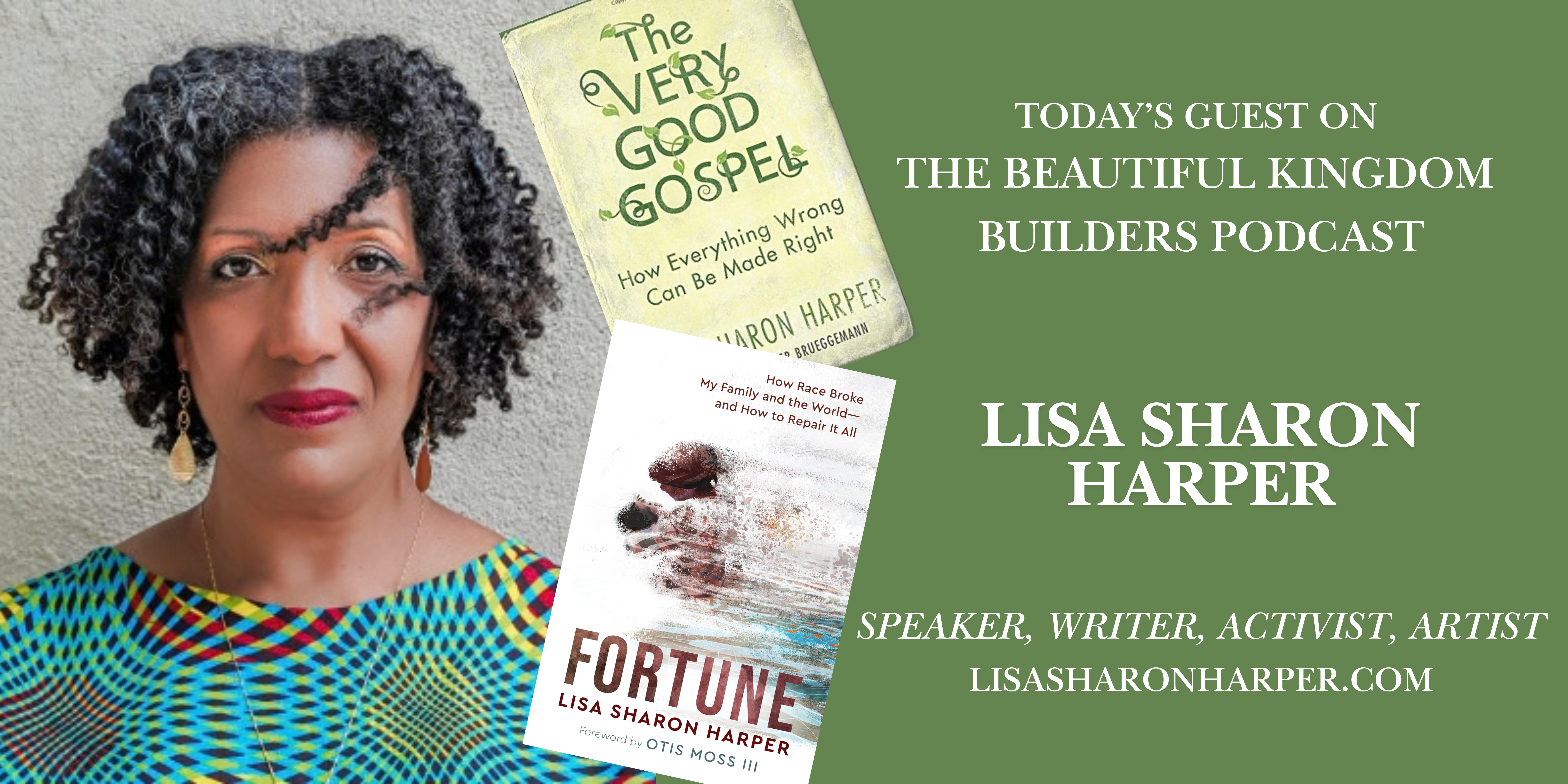
019 I Bishop Sue Haupert-Johnson: Can the Church Heal Its Deepest Divisions?

In Season 1, Episode 19 of The Beautiful Kingdom Builders, I had the honor of sitting down with Sue Haupert-Johnson, Bishop of the Virginia Conference of the United Methodist Church. Our conversation explored not only her personal story and spiritual practices, but also what it means to lead with courage and faith in a season of deep conflict within the Church.

Bishop Sue shared about her early faith journey, the influences that shaped her call to ministry, and the ways her experiences—as a woman, a mother, and a leader—have informed her pastoral voice. Grounded in Wesleyan theology, she spoke of a vision for the Church that prioritizes connection over hierarchy and invites both clergy and laity into shared ministry.

At the heart of our conversation was the reality of navigating disaffiliation within the UMC. For many congregations and leaders, this has been a painful and divisive time. And yet, Bishop Sue pointed to the possibility of faithfulness even in disagreement—of a Church that listens, holds tension, and refuses to abandon love.

This season of change culminated in a historic moment at the 2024 General Conference of the United Methodist Church, where the denomination removed exclusionary language from the Book of Discipline, fully including LGBTQ people in the life of the Church. For many, this marked not just a policy shift, but a theological and spiritual turning point—an embodiment of God’s expansive grace.

The Virginia Annual Conference sessions in 2024 and 2025 became a powerful witness to what it looks like to stay at the table through disagreement. Through initiatives like the Journey in Understanding, the conference has sought to foster dialogue, healing, and deeper connection across differences.

What emerged from our conversation is a hopeful vision for the future of the Church—one rooted in authenticity, justice, and the leadership of the next generation. Even in the midst of conflict, the Spirit continues to move, calling us toward a more inclusive and compassionate community.

Please visit this link to see what a journey in understanding looks like: journey | VAUMC. It was a beautiful example of listening to understand, not necessarily to agree, and to go forward in unity despite disagreement.

In our conversation, Bishop Sue recommended two books: J.B. Phillip’s book, Your God is Too Small and Amanda Ripley’s High Conflict.

Please enjoy this episode of The Beautiful Kingdom Builders podcast on YouTubeSpotifyApple PodcastsAmazon MusicSubstack, and more

TRANSCRIPT:

Ruth Perry (00:15)
I am so delighted to have Bishop Sue Haupert-Johnson today, the Bishop of the Virginia Conference of the United Methodist Church. Thank you so much for being here today, Bishop Sue!

Sue Haupert-Johnson (00:25)
My pleasure. I’m delighted to be here.

Ruth Perry (00:27)
Just laying it out there to begin with, I’d really like to talk with you about disaffiliation and leading through conflict. Because in my background, I very church experience in a local church where my dad was the and my brother was the associate pastor. And it got so ugly and just the fallout of that situation has been decades long now. I had two big lessons that I took away from going through that. Number one, it was a patriarchal church culture. And this was causing cognitive dissonance for me about that worldview because I realized if the women of the church had had a place at the these conversations, then the outcome would have been very different.

And then the other thing that I realized was this was independent church kind of separated from any denominational structure. So we didn’t have anyone to come in and help. And so those two lessons have come with me since then. And I was invited to pastor in the United Methodist Church three years ago. So my very first Annual Conference was the 2024 Annual Conference in Hampton.

And there was some tension there, to say the least. And even thinking back on in the last week, as I’ve anticipated our conversation, it just makes me emotional because it was such beautiful and Holy-Spirit filled experience, I feel, going to the 2024 Annual Conference and then seeing what came of it in 2025 at the Annual Conference.

And so I’m hoping I don’t get emotional talking to you today, it was just really beautiful and I really appreciated your leadership and I wanted to talk to you today. But before we get into that, can you go and tell us about the beginning of your story a little bit about your faith journey?

Sue Haupert-Johnson (02:02)
Yeah. Yeah, I grew up in a very large United Methodist Church. My family joked that we passed five United Methodist Churches to get to our church, but in some ways it was providential. It was a church where the bishop usually attended, so I knew all the bishops in Florida. A lot of the conference staff went to the church there, so I knew them. I was very involved as a youth and a young adult, especially in the music programs of the church. I consider the church as integral to my life early on in the sense that I learned all the Bible stories, that I knew the framework of the story, that I knew.

I don’t think I’ve ever doubted the presence of God in my life or the power of Jesus and the Holy Spirit, but I had increasing issues as I went to college with the institutional church and just, I think I had to find faith for myself and the relevance of it. I was laughing, I was reading the piece this week about how don’t make fun of Christmas and Easter Christians on Christmas and Easter because how are you hospitable if you’re judging them? And I really am grateful that the 10 years I was out of the church, when I returned, I was welcomed with open arms.

And really, I had a profound experience of Christ, a profound experience. The Gospel of Luke will always mean a lot to me because I had achieved everything I wanted to in my secular life and was miserable. And I realized, you know, Jesus… Well, my experience of Him was He said, why don’t we try things my way now? Which to me was a very gracious presence in my life, you know, that, I’ll use what’s past, I’ll use what’s happened in your life. And I always say that to local pastors and folks who come to their calling later in life, that everything that happens to us, God uses in our ministry, in our increasing knowledge and love of God.

And so I ended up when I was about 28 going back to church and went to Hyde Park in Tampa and had a really good experience And it wasn’t the pastor, it was mostly the older women of the church, Ruth, the saints of the church who had such powerful faith. I mean, they had lost husbands, they had lost children, they had seen everything in the world, and they still were just pillars of faith. And I often say I would kill to go back and prepare Communion again with Grace Spear. She was a 90-year-old woman who just tended to me, shepherd me. You know, when you talk about being discipled, and I think that’s the ideal way to learn the faith is to be discipled by people and to model. I mean, that’s what Jesus did with the disciples. And Grace did that for me.

And so those older women in the church, and I get mad at the ageism in the church because, man, those women have carried the church for a long time. And so I ended up realizing that my secular life was not rewarding and that I was being called to something more. And I ended up going to seminary fully intending on teaching theology, because who would want to serve in a church? And then I had a senior pastor at my home church who invited me, the staff parish committee invited me to come back to be on staff for a year. And I fell in love with it. And so, you know, 30 years later, here I am.

But people say to me all the time, they rag on the church and they talk about the ugliness in the church. I’m like, you know what? Multiply everything you’ve seen by a million and I’ve seen it. But I can honestly say that the beauty of the church that I’ve seen outweighs any of that. And when you glimpse the kingdom of God and when you glimpse a people of God working together as the body of Christ, that’s the hope of the world. And so rather than throw rocks at it and complain about it, my goal in life is to help create healthy, loving, welcoming communities that are out to serve the least and the lost.

And I get so frustrated when the church, I mean, this whole Christian nationalism movement is insane. God doesn’t align with the wealthy and the powerful. I love in the Magnificat, which I pray daily, where Mary sings, the poor God will fill with good things and the rich will be sent empty away. And I think that the church has got to really be a force for the voiceless and the weakest. And so when we lose track of that…

And I think the disaffiliation kind of reflected the politics of our time, right? We want our property, it just, I think it reflected everything that Jesus most despised. To use the church for your own political ends or to have your way or to promulgate a lot of misinformation and lies. I just would pray at night, God show me how these ends justify the means because I don’t get it. I still don’t get it. I’ll never get it.

Because I had lived in the church being against what I believed for most of my ministry, right? I’ve always been for LGBTQ inclusion. And so for them to say to me, well, the church left me. I’m like, the church didn’t leave you. I mean, come on, seriously? I lived in the church. You know, it doesn’t mean that I have to agree with it. There’s some basics we have to agree on, but there’s a lot of leeway and John Wesley realized that. So anyhow, I have little patience and I think back to those days and I still just shake my head, and go, boy, they lost themselves.

Ruth Perry (07:21)
I think a lot of people like myself, because I grew up very conservative, evangelical, and going back to that church conflict, that was really the first domino falling, where I started rethinking things. But I think dominoes have been falling for a lot of people who grew up evangelical like myself. And I’m just sick and tired of culture wars and I’m tired not being able to wrestle ideas that are like, I don’t want to be spoon-fed what to believe. I want to wrestle with it and really weigh both sides and determine for myself. And so I want some leeway in that process of maybe exploring something that someone thinks is heretical.

Sue Haupert-Johnson (07:46)
Right, right. Well, you know, and just when you think you’ve got it figured out and everything is neatly lined up, God, you know, meets a persecutor of the Jews on the road to Damascus. God totally messes with our certainty all the time. And so, yeah, you can think you’ve got it figured out, but then God’s gonna come to you in a way that you just can’t fathom, right? That’s the whole of gospel. And in the most unlikely of ways. So, yeah.

Ruth Perry (08:27)
So for 10 years you were pursuing a secular path for a career, what was that in, Bishop Sue?

Sue Haupert-Johnson (08:34)
Well, I went to law school and I think if I wasn’t in the church, I’d be a judge. I love justice. I love the intellectual part of law. I love weighing arguments and coming down to the just outcome. What I didn’t like about the practice of law was the business.

You know, at the end of the day, it was about making a buck and I wish somebody had clued me in how miserable life is when you have to bill somebody for every six minutes of your time. And that was that was the reality. And I just don’t care enough about money. I mean, I didn’t want to spend my life moving money from one person or one corporation to another. And don’t get me wrong. I am very grateful for people who do that and love it.

I am very grateful for good lawyers and I have good lawyers and I know good lawyers. But it was not my calling and nothing is worse to be working outside your calling. I don’t care whether it’s a church calling, well the vocation, right? To be in the wrong vocation I think is a hard thing. So there’s nothing worse than a miserable job. And I had a miserable job and I realized that God was not leading me down that path.

You know, do I wish I’d been passionate about it? Do I wish I loved it? Yeah, it was pretty lucrative. But it wasn’t for me.

Ruth Perry (09:48)
Do you ever put your lawyer hat in ministry?

Sue Haupert-Johnson (09:52)
All the time. You know, I think what I appreciate now and how God uses, I think I would love it if everybody went to law school. I think it teaches you how to think, teaches you how to be logical, although it’s kind of a curse in the church, because a lot of argument in the church is emotional, right? And so sometimes I’m sitting with somebody going, yeah, that makes no sense. But it’s, you know, so.

Sometimes to be a logical person in the church is like a new lesson in frustration. But I’m grateful that I understand the law. I’m grateful that I understand how the business world works. I’m grateful that I’ve had clients. I’m grateful to know their lives. I’m grateful to just have a basic understanding. I mean, my undergraduate degree was in finance. So, economics, all of that stuff, I’m glad I’m grounded in it. Every day in my work it helps and certainly the legal part helps because a lot of our assessment is, is this right? Is this lawful? Is this being done in above board manner? In personnel, is this being done fairly? And so all of that, yeah, I think it was a valuable education.

Ruth Perry (10:57)
And how has your motherhood impacted your ministry?

Sue Haupert-Johnson (10:58)
Tremendous, you know. I think I’m a much kinder, gentler person since I was a mother because I realized when Samantha was a baby how easy it would be to mess one of these up. And so I started looking at my parishioners and anybody in general as, you have some bad parenting. And then if you throw in addiction and sexual abuse and just physical abuse and trauma. It doesn’t take much to really mis-wire a human being. And so I think I have a lot more empathy.

At the time I was pregnant, there was an unsheltered homeless man named Leland. And sometimes in churches they would have the pastor pretend to be homeless, we didn’t have to pretend; Leland showed up. To my church’s credit, they were lovely to Leland. And Leland was a regular part of our community. And he would call me so often and my assistant would be like, oh God, it’s Leland again. I’m like, you know what? I realize I’m the only human being he talks to. And I value our friendship. And so anyhow, I remember when I found out I was pregnant.

And I told Leland and he was crying with joy for me because we had gone through a lot of fertility stuff and it was hard fought. And Leland said, you know, Pastor Sue, I wish I was your baby. And and I said, Leland, no, you don’t, because I would kick your butt. But, I think to know people like that, that’s why I get so frustrated.

To speak badly about unsheltered people or to speak badly about immigrants or just you’re just showing your ignorance and you’re showing you don’t have contact with them on a daily basis because if you do your heart breaks and you realize my reality is not everybody’s reality and there’s some reality that I am very grateful I mean my last prayer before I go to bed every night is God thank you that I have a place and a name and that’s an old Jewish saying a place and a name but I thank you that I’m not a refugee or fleeing from a country with only the clothes on my back dragging my I mean with no assurance of safety or I don’t know how you can be cruel to people like that and I think that is the distortion of our times and the distortion of the faith and I’m pretty tired of it at this point so yeah.

Ruth Perry (13:07)
So you’ve already mentioned that you pray the Magnificat every day. And this nighttime prayer. What other spiritual practices do you have that sustain you?

Sue Haupert-Johnson (13:11)
Yeah. Yeah, I’ve long prayed the daily office. I pray the evening, the morning if I remember, but always the evening. And to me, there’s something about the regular immersion in Scripture, day in and day out. And the Psalms, certainly pray the Psalms often. To me, they’re especially powerful in these days we’re living in. And I worship weekly. Sometimes online if I’m observing a pastor that I want to see how they preach or how the service is going.

But to me the beauty of the faith and the heart of the Wesleyan understanding of things is we have a method. And so to me there’s something very reassuring about having a pattern of life, having a foundation, so that I do these things in good times or easy times so that I have them just to fall back on on harder times. And so it’s kind of the safety net, the fabric, the ground of my being that I rely on. And that’s been, I think the people of great faith that I know, that’s the hallmark of their lives. There’s a method.

Ruth Perry (14:19)
A lot of the audience that I have is ecumenical, so all kinds of denominations. What are the distinctives of Wesleyan theology and practice that most

Sue Haupert-Johnson (14:24)
Great. Yeah. Right.

Yeah, I appreciate, I think that sanctification or the notion that I as a human being am always a work in progress. And I think that’s valuable and that the goal is not to be in heaven sitting on a cloud with a harp. The goal is not my individual salvation. God is at work to save the whole world and is using me in that story. And so, I don’t sit around and guess who’s going to heaven and who’s not. I think God’s desire is, we all will. And my focus is, my every day becoming more perfect in love of God and neighbor.

And for John Wesley, the whole goal of the human life is perfection in love, so that I have perfect love for God and neighbor. And obviously that’s a lifetime task and it’s the work of the Holy Spirit in my life every day. But what John Wesley saw is that when we die, he thought most people were perfected in love on their death beds, which makes sense, right? Because you’re perfected and then you meet Christ face to face and Christ sees himself when you get there. That’s the ongoing sense of I’m a work in progress.

Why I’m not Calvinist. I think there’s too much emphasis on when I was converted. You know, like it all happens at once? I don’t think so. You know, the day I came back to the church and that I count as my conversion time was just the beginning. Like my husband says, you know, it’s like if you stop there, it’s like getting to Disney World and just cheering when you get inside the turnstiles, but you don’t explore the whole Magic Kingdom. And so to me, the beauty of the Christian life is the

Ruth Perry (15:47)
Yeah.

Sue Haupert-Johnson (16:07)
day to day, becoming more like Christ. And you know, I hope I’m more like Christ now than I was 10 years ago. And if I’m not, then that’s when I have to really lean into the method because I should be. And I say when I preach in churches all the time, because there are usually older folks in them if you haven’t noticed.

I’ll say if you’ve been in United Methodist Church for 30, 40, 50 years, you should be darn near close to perfection and love. So I don’t know why you’re being so mean petty or unchangeable and rooted in the past because God’s always, making all things new and I think we all need to be made new. So that’s to me the Wesleyan theology in a nutshell, is that through the method, through these practices, through connection with the Holy Spirit, the Holy Spirit works in us day to day until we become like Christ. And that’s a much richer, more beautiful understanding.

And God’s doing that in the world too, right? That God is trying to transform the whole world and all of creation is groaning for the new heaven and new earth. And so instead of like sitting around and talking about who’s going to heaven and who’s going to hell, I think my better job is to love people and to introduce them to Christ so that they become all that they can be. And that’s to me the challenge.

Ruth Perry (17:29)
Yeah, we tend to make God so small.

Sue Haupert-Johnson (17:43)
Well, if you want to read a great book, it’s a classic. J.B. Phillips wrote a book called Your God is Too Small. And he’s dead on in that book because every chapter is about how we how we make God in our own image and how God, a lot of times, God reflects our parents. However you’re parented has a huge impact on how you see God, I think.

Ruth Perry (17:53)
Another question I people would if they’re like me coming from different background than the Methodist Church is about all the hierarchy and even like what is a bishop and how do you describe your role?

Sue Haupert-Johnson (17:58)
Right. I think rather than thinking about it as a hierarchy, connection is better. Connection, because we can do more things together than we can alone. If we pool our resources. I just was in a meeting all morning with global ministries and, when people put their resources together, we can do amazing things.

A connection that nobody’s alone. If you’re clergy in the United Methodist Church and you’re feeling alone, then the connection is failing you and we’ve got to do what we can to shore it up. And, you know, I really didn’t think of it this way until I was on a panel with Nadia Bolz Weber. And she said to me, you know, Bishop, I am Lutheran because I need a bishop. I need somebody to hold me accountable.

And I think that’s, like you said, you had all of that nightmarish experience in the church, in the conflict, and nobody was around. And sadly, churches don’t really benefit or really see the beauty of our connection unless they get into trouble. But I’ve had churches where there’s been embezzlement. I’ve had churches where there’s been sexual misconduct. You’ll have a pastor the next week, and you will have a whole team come in to help answer questions, do pastoral care.

So I like the connection better than the hierarchy, but that said, I remember meeting a pastor’s widow years ago and she said, this is the first time I’ve come back to United Methodist Church because my ex-husband who just died was a pastor and he did untold… No, he wasn’t United Methodist. He was another denomination. And she said, he got away with a ton of stuff that he never would have gotten. He wasn’t properly vetted. He wasn’t properly supervised. And she said, I will never go to a church that’s not a United Methodist church because I know that you vet your pastors, that you have a standard for pastors, and that you take action when pastors do things that are inappropriate or unlawful.

And so, I mean, I’m not Pollyannish enough to think that it’s perfect, but I think that we do our darndest to make sure that our churches are safe, to make sure that our clergy are not doing harm. And I can honestly tell you, if it hits my desk, it’s dealt with. So I get great satisfaction out of that. So and you know I’ve told the cabinet, I’ve said, you guys, if somebody brings you a complaint and I don’t get it, because that’s where it dies down. I mean, I’ve seen it in the past where things get pushed under the rug and I said heck, if I find out that you didn’t give me a complaint, I’ll file a complaint against you because we have got to know when stuff is is being reported or lifted up or brought to our attention. So I don’t mess around with that. I guess that’s my legal background too. But yeah, no, don’t turn a blind eye to anything.

Ruth Perry (20:51)
I very much appreciate that. And I will say, just three years in the denomination for me now, the connection has been so strong and I’ve felt so supported and encouraged and uplifted in so many different ways by so many different people. And I’ve met so many really wonderful, kind people. And I love my little congregations too.

Sue Haupert-Johnson (20:53)
Yeah. Good. And you know Ruth, I would say, you know, and anytime I have a pastor who’s like, I just don’t feel connected, I feel like, I’m like, you know what? You do something about it, right? If I’m not feeling connected, I always was the first one to call a new pastor in town and say, and not just United Methodist, I think it’s incumbent upon us to create community and to create community that’s not our church members, right? So I always had excellent ecumenical friends, clergy from all denominations, rabbis, imams, because there’s a unique kind and those are colleagues that you need.

So I would say if you’re feeling alone, now if it’s depression or mental illness or something causing that, we’ve got to address that. But if it’s not, you hold the keys, right? You have a phone. You can go visit. So you take the initiative and create connection. I love clergy and laity who create connection because I think that’s how we model Christ.

Ruth Perry (22:10)
I was in a day of training for the Living Waters District in January, and I was in a lay servant leader class, and one of the ladies said that she met you in the restroom at the Annual Conference. And then she said, you introduced yourself, and she introduced herself and said, I’m just a lay person. And your response to her was you are not just a lay person, that we’re partners in ministry, and she was just really touched by that. How would you describe the relationship between clergy and laity?

Sue Haupert-Johnson (22:31)
Right. Yeah. You know what? I wouldn’t even make that distinction. I love that our English word for vocation comes from the Latin for call, right? So any of us who have a vocation is called. And I think God gives us unique gifts and calls us to different things. In fact, when I graduated from seminary, one of my professors was really annoyed that I was pursuing ordination because he said, man, I wish you’d go back and be a lawyer because people don’t expect lawyers to talk about Jesus. So I think that laity are called by God and put in places.

I’ve been thinking a lot about Miss Kerry. Miss Kerry was an administrative assistant in the federal courthouse when I worked in the federal courthouse in Tampa. And she was called to be an administrative assistant and she was Jesus Christ agent in that federal courthouse. If you had a problem, if you were grieving, if you needed a word of encouragement or support, people flocked to Miss Kerry like moths to flame. And I know God called her to be there. So I don’t divide clergy and laity. I think that we’re all called to something. And if you happen to be called into representative ministry, I don’t think it’s because you’re any better.

I think it’s just, you know, God chooses weird people for weird things. If you read the Bible, you know, I’ve always loved Jesse who Samuel comes looking for the anointed one and Jesse’s bringing out all his, older and better sons, right? And Samuel’s like, no, no, no. And then, you know, David, he’s like, I got this other kid. And sometimes I think, God calls us not because we’re the best or the brightest, or the most, certainly not the most holy, if clergy are the most holy. I’ve met a lot of laity who are more holy than clergy. But I think that when you start seeing people as called by God into all arenas, then you don’t privilege representative ministry over any other.

And one thing that whenever I talk to a group of laity, who are exploring a call to ministry, say, you know, I think one of the grievous mistakes the church has made is when somebody gets really involved in a church and has done everything every office a lay person can do in the church. Well, it’s time for you to be a pastor. And that’s just not the case. So I think God is calling people to be excellent lay people. And any pastor knows, gosh, you’re so reliant on those folks.

And I have had tremendously gifted laity who have… They’re the backbone of the church, certainly not the clergy person as it should be. so no, let’s get rid of the laity clergy distinction and just talk about what has God called you to do in this world to bring the kingdom about. So don’t ever walk up to me if you’re a lay person and say I’m just a lay person.

Ruth Perry (25:19)
So can take us back to the season of disaffiliation I think pretty much everybody has heard about it or something about probably a skewed telling of it So just from someone who’s been there and seen it and been part of the leadership. What was the season of disaffiliation about in the United Methodist Church?

Sue Haupert-Johnson (25:40)
Yeah, I think it was about, you know, I had a DS, she said, this is just a property grab. I think it was, I think the time was ripe for it. I think that the rise of the conservative in the political realm really fueled the conservative part of the church to rise up. I think that what I lament was there wasn’t a lot of, let’s talk about this. Let’s reason about this together. Let’s hold each other as, you know, siblings in Christ and honor Christ in each other. That kind of went out the window.

And I know that there was probably poor behavior on both sides, but I experienced it mostly from those who really poisoned a lot of our churches with really radical claims. I can understand if you disagree with me about human sexuality. Certainly not an essential of the faith. Certainly not anything Jesus talked about. You know, and there’s always been, it seems like the… When one controversy dies, another arises. I know until 1971 every bishop was asked if they would support integration. And if you answered yes, you might not get elected in the South. And then the next issue of the day was LGBTQ. And in 1971, that kind of started being the litmus test for bishops.

So I think a lot of it, if you look at it, a lot of it was in the South. And I think that the Bible has always been looked to to support, to condone slavery, to condone segregation, to make… The huge issue in the early 1990s was divorce. And so it just seems like we’ve always got to be arguing about something. But what I appreciated about the United Methodist Church was because we had a trust clause and because we understood that every United Methodist Church is an outpost for our denomination in that town, that that preserved it through a lot of these controversies.

You know, other denominations, I always thought we were so much better, because every Baptist church would split 10 or 20 times in 100 years. No, we had a trust clause. And that said, you know what? This will be, no matter what controversy rises, no matter how much we disagree, this will still be a United Methodist church in this community. And we’re thinking seven generations down the road, and we’re not gonna let whatever the argument du jour is separate us. And that is held. And so I really, don’t think we ever should have abandoned the trust clause.

I think we should have said, and if I had been, if I had had any control, I would have said, you are welcome to leave. If you disagree with the church, you are welcome to leave, but you are not welcome to stir up everybody to go with you, and you were not free to take the property. And, you know, I stayed in the United Methodist Church when LGBTQ rights were not recognized, because I did not see that as an essential of the Church. And if I thought it was, I would have left. I would have not taken anybody with me. I would have not created any kind of… Because I value the body of Christ.

And anytime you come to a vote, anytime you come to, and we saw that at Annual Conference, you know, the year you talked about, you bring it to a vote. If you’ve read, there’s a great book by Amanda Ripley called, Real Conflict, I think it’s a conflict book. But she says, the problem is it becomes all about winning and losing and you lose sight of the controversy at hand.

And it, you know, if you’ve read James, the tongue is a fire and it burns and it burns to the gates of hell and that’s what happened. I mean, to hear churches that disaffiliated because they were told the United Methodist Church no longer believed in Jesus or the resurrection. To be told that the United Methodist Church, that all we want are drag queens. I mean, every little, every one situation was blown, you know, the

It just… And I wish that there have been wiser minds and I wish the denomination had held strong and said, you know what, you are free to go. But you aren’t free to take our property and you aren’t free to create war zones out of our churches. And unfortunately, that’s what happened. And I don’t know how you live with yourself if you do that. I mean, there are some points where you’re just like… And it was hard.

I know I told my cabinet in North George, I’m like, If I say something that does not reflect Christ well, if I, you know, stoop to that level, call me on it. But I just was amazed at what was said and what was written, what I received, to be called like, what was it they always called me? Apostate. She’s apostate. And then the gender stuff came in like, the Jezebel, the evil woman, because something about women’s leadership, especially the far right, and you see that in our politics too, is threatening and must be destroyed, right? I mean, don’t think Pam Bondi was just let go. It’s no mistake that the first two fired out of the cabinet were women because even the religious leaders that they’re looking to denigrate women and…

I just, it just got out of hand. And I think it’ll take a long time. I know I’ve got a lot of scars. I know you have scars. We all have scars because, we should have been better and that the body of Christ deserves better. And, you know, I just, I was amazed because I had so many talks and so many discussions and tried to, I worked so hard and then I realized, they really don’t want to work this out. They want what they want and I can’t, I can’t fight that. So.

And you know, move on. It’s time to say, we need a more excellent way. We don’t need to ever let this happen again. And a part of it was we lost our identity. What is the Methodist identity? United Methodist identity. And how do we be Christ-like in all things, right? I mean, Jesus said, love your enemies and pray for those who persecute you. I think he meant it. But I just watched slicing and dicing in the worst form.

Ruth Perry (31:42)
So you’re someone who takes the Bible seriously. You read it every day. You’re doing your best to be a faithful disciple of Jesus Christ. And yet you’re failing this litmus test, Bishop Sue, on this very important issue. How do you defend your perspective?

Sue Haupert-Johnson (31:45)
Yeah, right. Yeah. You know, I think this is why I appreciate tradition and experience. I mean, if you’re a real student of the Bible and not just verses in the Bible, you see God’s… I mean, there’s a great passage where God talks about, will give identity to the eunuch. They weren’t allowed in the temple and God says, I will restore them. You see God work through the unlikely. You see God include the Gentiles, right?

And to me, the miracle was that the Jerusalem church said, yes, right? We do see there’s a wideness in God’s mercy. We saw that. so it came through my experience in the church, and dear friends of mine who came out after I knew them well, right? It was like, everything I’ve been told by our culture about LGBTQ folks is not born out in my experience. Some of my best friends, some of the most loving and giving people. And also I came out of seminary at the height of the AIDS epidemic. And so I watched as so many loved ones were taken off life support, watched men sob at the loss of their loved, you know, another man.

So I saw the depth of love. And if all love comes from God, how do you make sense of that? Right? And some of the most faithful, devout, really lovely followers of Jesus Christ were LGBTQ. And so I had to say, you know what? If all of sin, and I’m not sure why that, you know, gets special sin, I had so many people yell at me full of pride and anger and ugliness. I’m like, I don’t understand how this sin is any different from what you’re calling sin and LGBTQ folks.

And so I think that my experience of the depth of their faith and truly faithful people who I know are so connected to God that if for one second they sensed that God disapproved of them loving somebody of the same gender, they would have renounced that. But they never got that sense. I just had to start, you know, and if I’m wrong, I’m wrong, right? And Jesus, thou art full of mercy.” And so at some point a friend of mine said this well, he said, if I have to meet my Maker and I have to meet Jesus Christ face to face, I think I’m going to err on the side of I was too loving and too open then the other way.

And so I just had to learn that everything I had been told to hate and to ridicule and to mock about LGBTQ folks was absolutely wrong and misguided. And that just came from knowing them. Same with the homeless people, right? Everything I’ve been told about them, Leland dispelled. Everything I’ve been told about divorced people, right? Because we grew up, my goodness.

God works through that. So I think it’s having a little more openness to mystery and that God does work in weird ways and that, you know, it’s time to let everybody be faithful. I, you know, and I may be wrong. Anytime I talk to somebody and they can’t say I may be wrong, I am eternally frustrated. But I don’t think I am. Yeah.

Ruth Perry (35:10)
I appreciate John Wesley’s rules for living. Do good, do no harm, stay in love with God. And I think the church, like all denominations, the church in America has done a lot of harm, whether they were well-intentioned or not. It’s hard to believe it was all well-intentioned because the harm has been just extraordinarily heartbreaking ⁓ that families would disown children. That suicide rates would be so high, that we shame and other, and we don’t see the belovedness of God LGBTQ. All of that is very harmful. And so at the Annual Conference in 2024, a college minister came forward with a resolution. Is that the right word, resolution? Suggesting that the Virginia Annual Conference make an apology for harm done to LGBTQ.

Sue Haupert-Johnson (35:34)
Right.

Ruth Perry (35:57)
after the General Conference had removed the exclusionary language. And so for three days, the Virginia Conference of United Methodists, from different perspectives, talked about this. Speeches for and against. As I was in my hotel, I would hear people talking about it, passing through the halls, people were talking about it. It was just, the air was buzzing and the conflict was palpable. And so, for me having that church conflict background, I’m a little keyed up but worried about things. And that last business session, when a group of pastors came forward and suggested rather than taking a vote because it would be so divided, it would have been close to 50-50, they suggested a commission be put together kind of like a truth and reconciliation

Sue Haupert-Johnson (36:34)
Mm hmm. Right. It was, I think. Yeah.

Ruth Perry (36:43)
that would take time to think and work more deeply on this and hear from people from all perspectives. I just remember, it felt like the whole room just kind of everybody’s shoulders relaxed. And the Holy Spirit, was palpable, that that was the right thing, most God honoring path forward. How was that conference behind the scenes for the Bishop of the Virginia Annual Conference. What was your experience?

Sue Haupert-Johnson (37:09)
Right, right. Well, I remember, you know, we even have people stand up and the vote was that even. And I realized I got to just buy myself some time so that we could talk about this until morning, right? So, and we had to have ballots made anyhow. So, that’s what I was thinking to begin with. And I think it was an affirmation from the Holy Spirit that three clergy walked up to me. Two of them were, well, one was very pro LGBTQ and one was totally against. And they said, what if we just talked about this? What if we created a group to talk about this and see where we end up? And I said, that’s exactly what we need. And clearly the Annual Conference wanted a third way, a more excellent way.

Because you know, one thing that bugged me about the whole disaffiliation thing, if I was ever in a church, like if we had a capital campaign or a building campaign and the vote failed 55 to 45, we wouldn’t go ahead with it. We would, you know, let’s talk about this. Because clearly there’s, there’s nothing that is helpful about an up or down vote because if you’re on the losing side you feel like crap, right? And so what we did was we created this commission and we had folks who were LGBTQ. Interesting to me how often they’re left out of the conversation on that commission as well as very conservative folks. And the beauty is over a year they sat together and they grew to love one another.

And so it really, you know, they might vote opposite, but they both want each other in the church. And so let’s get rid of the votes and just realize that if, you know, if we have the essentials, we have the rules, the general rules for a reason, right? That’s the orthodoxy. And we can argue all day long about other things, but at the end of the day, we need to stay together.

And so, you know, heck, I don’t agree with my whole family around the Thanksgiving table. And to me, I don’t want a church full of Sues. How do I learn and grow? It’s difference that has brought me along the journey. And so I think that if we can agree, well, one of the best, I can’t even remember who said this, but somebody said, you know, if you have one hand on the cross, you’re pretty close to one another. So why can’t we just all have a hand on the cross and, you know, in the non-essentials, think and let be and let Jesus sort it out, right? I always like Paul’s, you know, in Corinthians, we see through a glass darkly, but then we’ll see face to face. So let’s just acknowledge we’re seeing through a glass darkly.

And at the end of the day, I think Jesus wants us just to love one another and to respect each other and to defend each other. And, you know, and I went hasten that I’m part of a family and man, we disagree and we’ll fight each other. But man, if you’re on the outside and you say something against one of us.

You’re getting the whole group against so, you know, why can’t the church be more like that? If you’re messing with an undocumented person or you’re messing with somebody who’s weaker and doesn’t have status, if you’re messing with somebody who’s mocked because of their sexuality, the whole family should be standing up for you just because you’re a child of God and you’re my sibling in Christ. So I don’t understand why we’ve lost that. But we’ve got to reclaim that the church isn’t going to survive.

Ruth Perry (40:36)
I’m going to post video of the report at the 2025 this commission gave (vaumc.org/journey/). I’m going to post that in the show from what you just said, what gives you hope now as the United Methodist Church moves forward?

Sue Haupert-Johnson (40:40)
Good. You know, increasingly the church is finding its voice. And increasingly, and I’m talking about the church that defends the poor and the, and I’m hopeful, I’m hopeful, my 24 year old gives me hope that younger generations are longing for relevance and longing for a better world and a better future for all people, not just for themselves. And they think much more communally.

And certainly my daughter does not think in terms of race and ethnicity. You know, it’s a different world. And I’m hopeful that we can turn it over to them and let them move the church in beautiful new ways. Because we’ve held onto the past far too long. We’re way too rigid. And we need to follow where Christ is leading.

And I think it’s new in different ways, which should be exciting, but for a lot of folks it’s threatening. So I’m hopeful we can take their lead and follow them into a better future.

Ruth Perry (41:47)
If you could speak directly to those who have felt hurt or excluded by the church, what would you want them to hear?

Sue Haupert-Johnson (41:53)
That the church is not Jesus. That the church, you know, ideally when it’s in its most beautiful form, it is the body of Christ. But human beings are sinful and broken. And so any human organization is going to be broken. So I plead with you to not write off Jesus because of what you’ve experienced in the church, and to ask God to show you and to send you people in your life who truly represent Christ and to go with them and to not assume that just because you’ve had one bad experience or a lifetime of bad experience in one church, but that you open your eyes and heart to the possibility that God can work through a group of people and you just need to find that group.

So that’s what I would say. Because I mean, I’ve been hurt by the church too. think that, it’s not, you know, I can’t even say the church. It’s individuals in the church. It’s people who weren’t, they weren’t being faithful to the method, right? They weren’t open to their own growth. heck, think Saturday Night Live nailed it with the church lady, right? When you’re just a pinched old woman who’s judgmental, that’s really not a good representative of the church.

I think back when I was a kid there were two missionary women and we called them the buzzard sisters because all they did was sit in the church. never showed the love and the grace of Christ. They were just the hall monitors. And if that’s your experience of people in the church, luckily there were many others who showed me a better way and showed me Christ. But don’t presume that everybody who calls themselves Christian represents Christ.

Ruth Perry (43:24)
I want to thank you so much for being on the Beautiful Kingdom Builders podcast today, Bishop Sue.

Sue Haupert-Johnson (43:28)
My pleasure. Thanks. I’m so glad you’re doing this, Ruth. And greetings to everybody out there. And I hope our paths cross one day.

Ruth Perry (43:35)
Would you like to have the last word? Is there anything else that we haven’t covered today?

Sue Haupert-Johnson (43:40)
You know, I think my last word is as we approach Easter, I love the account where the angels at the head and the foot say to the disciples, Jesus has gone on ahead and he’ll meet you in Galilee. And I’ve always thought about, know, Jesus is already ahead of us. He’s out there and he is still waiting for us, and he is in the least… the places we least expect to see him with, the people we least expect to see them… least expect to see him with. But he’s out there and so I invite you to join in the journey of going and finding him. And that is what life is all about. So join us in that journey.

Ruth Perry (44:21)
Amen. Thank you so much. God bless.

Sue Haupert-Johnson (44:22)
Amen. Thanks a lot. Blessings on Easter and thanks again. Appreciate it. Bye bye.


Did you enjoy this episode? Please subscribe, rate or review us on YouTubeSpotifyApple PodcastsAmazon MusicSubstack, and more! Your support means the world. God bless!