Tag Archives: equality

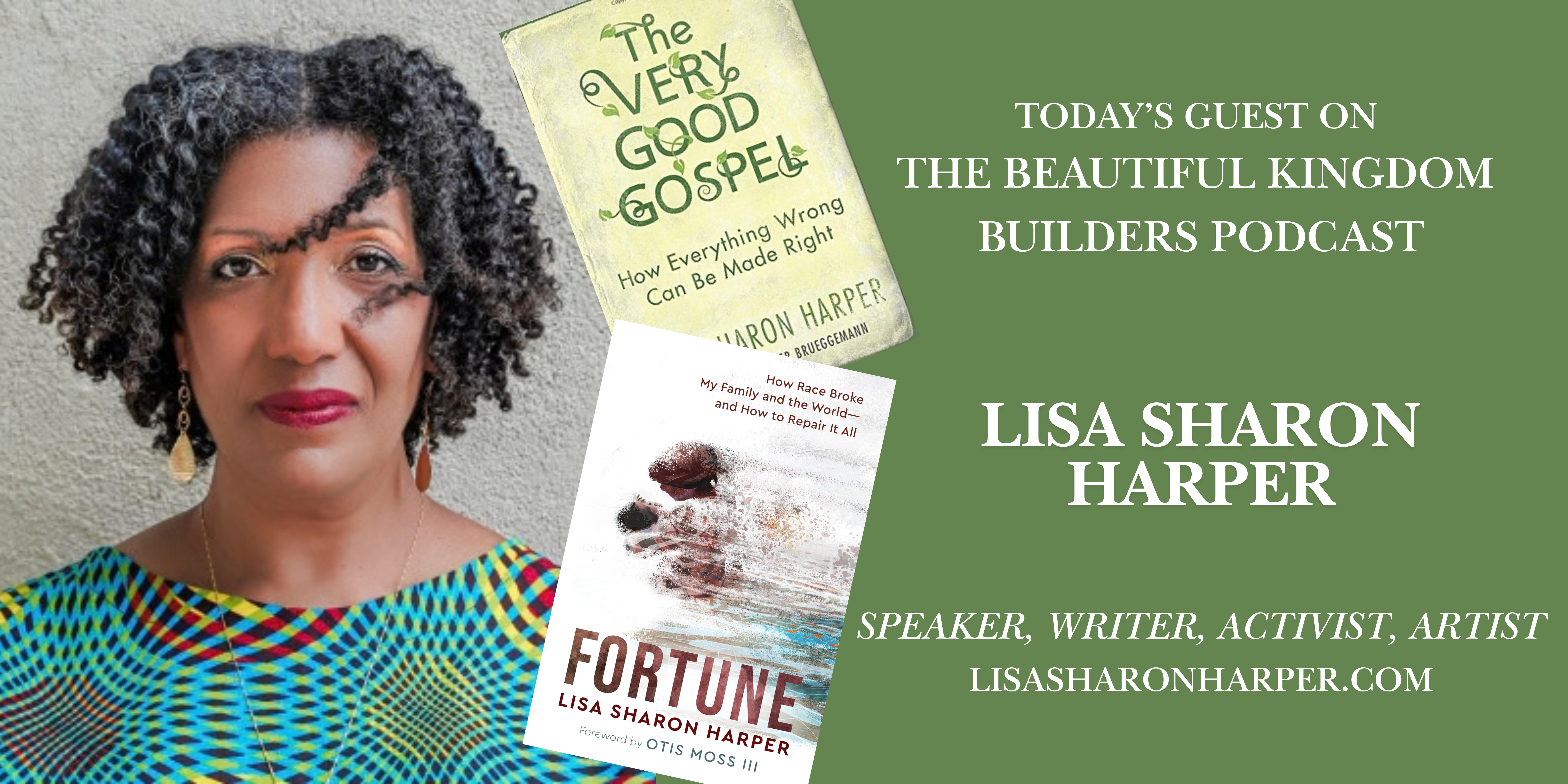
021 I Jenna Dunn on Seven Scriptures to Prove Complementarianism is Wrong

In this episode, Jenna Dunn of Ezer Bible returns to the podcast to revisit her journey from complementarianism to egalitarianism, exploring key Biblical passages and challenging traditional interpretations of gender roles in the Church. This episode offers deep insights into how we read Scripture, translation issues, and the theological basis for gender equality in Christian ministry.

You can read the Bible passages we discuss here: Romans 16, Genesis 2, and Genesis 3:16, 1 Corinthians 11, 1 Corinthians 14, 1 Timothy 2:12, and 1 Timothy 3.

Here are links to where you can follow Jenna Dunn and her Ezer Bible ministry:
Jenna’s Website: Ezer Bible
Ezer Bible on Facebook
Ezer Bible on Instagram
Ezer Bible on YouTube

Please enjoy this episode of The Beautiful Kingdom Builders podcast on YouTubeSpotifyApple PodcastsAmazon MusicSubstack, and more

TRANSCRIPT:

Ruth Perry (00:15)
My guest today is Jenna Dunn from Ezer Bible. You were my very first interview when I started this podcast. Even though I released our conversation as my third were my very first. When I listened to our episode back, I was like, Oh, I should have asked her so many other questions. And I just really appreciate you being my guinea pig. And I appreciate you coming back on and being gracious enough to do that again. So thank you, Jenna.

Jenna (00:38)
Thank you, Ruth. I’m really happy to be here. It’s been really amazing to get to see all the people you’ve interviewed. loved our conversation last time, but yeah, I’m excited to talk seven passages that I mentioned before.

I remember telling you the backstory about how I had these seven passages bookmarked in a Bible that I always carried with me. And I put together an online guide that’s a video, but I’m always thinking that maybe it’s better to just talk to people who want to know the Bible for themselves and they’re already curious. Maybe other women or couples who are in a complementarian church and they’re like well, I want to know how to explain what’s wrong with that position or what the Bible really says because I noticed if you try to talk directly to somebody who’s really invested in complementarianism or if you’re going to a church and that’s part of their doctrinal statement, you can’t really change people’s minds easily and maybe you shouldn’t. Maybe you should find a different place to fellowship.

I think for myself it was really destructive in my life to think that you can convince somebody and it’s tempting too because you’re like, well we all believe in the Bible. Just show them what it says in the Bible and that was definitely my mindset. I had these seven passages bookmarked and I’ll just show them, this is what it says. It’ll be so easy. They’ll just agree. But there’s almost like a spiritual resistance to people who are upholding that worldview, right? It’s not even just, Oh, the Bible says men need to do this and women need to do this. It’s so much beyond that. It’s their political framework. It’s how they’re interpreting scripture, it’s a whole framework that’s imposed onto the Bible. It’s how they’re doing relationships.

Ruth Perry (02:18)
I think it’s like the parable of the soils; some soil is receptive and some is really hard. And the people who are most considering that maybe complementarianism isn’t the way is the person who has had a bad experience and they’ve realized that the fruit of complementarianism isn’t good. And so they’re experiencing some cognitive dissonance. And that could have been either in their relationship at church or in the home.

Or perhaps they’ve felt a call from God. And so now they’re trying make sense of that because they’re a woman. That can’t be right. And so it seems like the people who are the receptive hearers of egalitarianism, if they’re coming from a complementarian background, they’re in a spiritual season of, that’s not working, I need to find a better way. But if it is working for them, they’re just gonna ignore you. They’re gonna cast you out as heretical. They’re gonna warn themselves about you and others.

Jenna (03:13)
Yeah, and I have to say too, when you’re in a complimentarian church and you haven’t really questioned that mindset or that framework at all, it seems like it’s not that big of a deal. So some women feel called to teach or pastor. What’s the big deal? They can teach and pastor women and children. There’s plenty of opportunities. Nobody should be feeling bad. And it really just doesn’t seem like it’s that important.

And it isn’t, you can still do a lot. I would have been perfectly happy just doing children’s ministry. I was writing Sunday school curriculum and I loved it. I never wanted to teach men. So the only reason why it was an issue is that what was being taught to everybody was not what the Bible said. So that’s the issue is that you have a framework people who are different in some way, like they’re female, they bring truth to the light. They can’t call somebody into repentance. They can’t even make positive change in their marriage, right? It’s the whole framework where only men the leadership capabilities and the ability to tell everybody this is why you need to repent. This is what the Bible actually says. So that’s the issue is that women can’t come against that framework. They can’t question that doctrine. They have to go along with it.

I remember there was another situation where I brought up to leadership that there’s not any women in positions of authority so what if I as a woman was in a dangerous situation like an abusive marriage or I had something very personal and I needed to get counseling or help or advice from a woman they were like well pastors wives, ministry wives, look at all these women and you don’t understand you can’t go to a woman who’s married to one of the leaders and say, I think that the way that Ephesians 5, the way the pastor talked about it, was really bad because there’s women in the church that are in abusive marriages. You can’t question anything, you can’t change anything, and there’s no women that have a rightful authority, right? Following their place in the pyramid structure, right? Trying to keep their position.

That’s not a healthy dynamic, although the issue is not, well, women can’t teach men, and they’re just not happy only teaching other women. It’s really that what’s being taught is not able to be questioned, and men are only called into repentance by other men. So they have a whole blind spot, you know? And they’re only interpreting scripture according to this narrow framework of what other men have said it says, and you can’t question it.

And a lot of times, a Sunday morning teaching will not even have a very healthy perspective, it’s very narrow minded. I remember one example was seeing a male pastor teach about the woman at the well. And it just drove me crazy because his bias was so visible. So there’s all these passages in the Bible that are really about women and they are the words and theology and conversations of women and the stories of women and then only men can teach it and they don’t understand, they don’t see, they don’t ask the right things.

I think it took women to start saying Bathsheba was raped. So many male pastors taught that story. And then it was women that came along and they’re like, was she able to say no? Did she have to if the king comes and says, you have to go with me? Did she have an option? Women think to ask that. And the Bible is not just this rule book and it’s not stories of only men. There’s all these really personal stories of women and it makes sense to have women help with that translation and interpretation.

So it’s not about, well, women want to be able to do all these things that men do because they’re not happy being a woman. No, men aren’t doing things good. And how is that going to get fixed? If you silence the people that are really given by God as gifts to help his body. That is what the leadership positions in the church are supposed to be, is people that are given by Jesus to his bride to teach and to lead and to preach and to evangelize. If you only have men doing those things, it’s not going to be as good as it could be.

Ruth Perry (07:17)
I also think of the value that you bring to this conversation and that I bring to this conversation is that we up complementarian. And so we’ve read the Bible through that lens, and then we’ve rediscovered the Bible through a new lens. And just having that insight of both perspectives, I think, is really valuable. And I know growing up complementarian, the way that complementarians spoke of egalitarians. I would say it was not according to the New Testament one another commands that we’re supposed to love one another and consider others better than ourselves. But rather, there was a lot of demeaning language and writing off and just assuming that egalitarians were playing fast and loose with scripture and that they weren’t taking it seriously and that they were letting their culture influence the way that they read the Bible. And as I’ve met egalitarians and read egalitarians, that couldn’t be further from the truth.

Jenna (08:08)
Yeah. Yeah, who’s doing mental gymnastics? The people trying to make it fit the most common social structure we’ve had throughout the world, throughout time is patriarchy and trying to make the Bible fit that, trying to make the Bible prescribe patriarchy. I think that that’s really pandering to the culture.

Even the name complementarian, I find slightly deceptive because nobody is saying that men and women are the same. Both sides think that male and female were created by God to complement each other so it’s not even being honest about what their position is. Their position is not just that men and women are different and compliment each other, but that there must be this hierarchy between them. But if you say, well, they’re hierarchalists, they don’t love that. And if you say, you’re advocating for patriarchy, they don’t really love that either.

But being complementarian, it’s a weird thing for them to name the movement, but also just the fact that everything came out as a response, right? It was a very reactionary movement. It only makes sense in America and it only makes sense since the 70s and it only makes sense as a reaction to feminism. And so there’s these bigger issues that are hard to bring up and I think one of the strategies is to ask the right questions and to help them bigger ideas in scripture. So one of the first things that I think is really important to bring up is Romans 16.

So the seven passages are Romans 16 and then Genesis 2 and then look at Genesis 3:16 and then you get into the First Corinthians 11, First Corinthians 14 and First Timothy 2. So everybody starts the other way around with first Timothy 2, and I actually think that’s the least relevant passage But I also think it’s important to look at the whole chapter.

So, those seven chapters, I think you can give people an overview of what that passage is talking about and the big picture and it’ll all fit in. And hopefully it illuminates all of scripture and it doesn’t just feel like this disconnected framework. And I think that’s one of the things that really bothered me about complementarianism is that they will make a list of something like, nine proofs of male headship or, the true woman manifesto. There’s also the biblical manhood and womanhood. It’s kind of like a manifesto, but they’ll make 10 points, like 10 sentences, and then they’ll just be like three scriptures to support that statement.

And the scriptures are different genres of the Bible. They’re just a hodgepodge and then the scriptures don’t support the statement, or they’ll be saying something slightly different. They’ll say, well, Paul is quoting the created order. And then you go and you look at where they’re saying Paul’s saying that, but Paul’s never using the phrase created order.

I don’t see egalitarians use the Bible that way, right? There’s more respect. There’s more providing context and explaining who’s saying that and who their audience is and why they might be saying it. There’s a need for that because I think using the Bible like it’s just a rule book or a blueprint for how to have a good family or how to have a good marriage or how everybody should act according to their gender, it’s just a weird way to use scripture.

And so with those seven passages, kind of the crux of the issue is the complementarian idea of created order that they get from Genesis, right? Because the verses that they’re using from Paul, they think that he’s quoting Genesis. So looking at Romans 16 first to say, what did the early church look like? And Romans 16 not only gives you a list men and women working together, it does list one married couple in ministry, Priscilla and Aquila, but it lists a lot of women with no statement about who they’re married to or whose wife they are. It also gives women titles of respect. It shows that they’re set over others. You know, even listing churches that they are set over. You have Phoebe presiding over the Church of Centrea.

So just the amount of women and the way women are listed and then how Paul is commending them. So it doesn’t only just tell you how the church looked and what people were doing, but what Paul thought about it. And everything else that you talk about after that, every other part of the Bible that you read, would Paul really be contradicting himself if he’s commending women for leading? Is he later telling them to be silent?

If he’s calling them coworkers and partnering with them and even having women over him as a man, is he later going to say, yeah, I don’t want any women to exercise authority over men? The conversation has to start with that. You get this picture of the early church as being very diverse the women that are commended are not all somebody’s wife and somebody’s mother. It’s not like when you are at a pastor’s conference by The Resurgence or by The Gospel Coalition and the only mention of women is so-and-so’s wife. It’s a very different feel.

The early church movement had a lot of women and maybe their husbands weren’t saved. Maybe their husbands weren’t with them and maybe they weren’t married and there was a lot of householders that were women. And they impose this 1950s Leave it to Beaver family model onto the text and it’s just not in the text.

And also, a lot of these things that they think Paul is saying are much worse. He’s not just saying women ask your husbands at home and be respectful and show deference to male leadership. He’s not saying that. He’s saying the voice of a woman shameful or filthy. So you either think he’s quoting a different idea or that he believes that and that somehow makes sense when you see Romans 16 and it doesn’t make sense, right?

So I think starting with Romans 16, that’s the biggest thing. If you have two seconds to talk to a complementarian, ask them if they read Romans 16 what they think about it. If you’re reading the ESV, some of these passages are interpreted in such a way, like it’ll say, well known to the apostles, right?

Ruth Perry (14:09)
Hmm. Yeah, I was going to ask you about how can away from Junia?

Jenna (14:13)
Yeah, well, it was Junius for a while and then they realized there’s no way it was a man’s name. And so then they changed the other words in the sentence. So you see, not only is the actual scripture important to look at, but that history of how we’ve translated it. Also, it reveals that there’s been a historic bias against female leadership.

And so I think that’s important to recognize because it’s not just people being difficult or politically correct because of feminism now. It’s not just our modern culture. Women have always been discriminated against and they’ve always been trying to serve the Lord. They’ve always been full of the Holy Spirit and trying to do what they’re called to do and there’s always been a historic bias there in translation and we have a history of how it’s been translated. The end result is nobody thinks that it could possibly be Junius. Everybody knows it’s Junia.

And so that should cause you to also doubt the other things that the ESV tries to get away with in modern times. Like they still try to, say, not deacon to say servant. None of the other places where men are called deacons do they try to say servant. And you actually have the church that she’s presiding over listed. So yeah, I think that that is an obstacle, the translation issues. And unfortunately, that is one of the reasons why people continue to be complementarian is just cause they’re reading the ESV. And so they’re not seeing what scripture really says. And that’s too bad. ⁓

Ruth Perry (15:37)
It’s interesting how people say, well, there’s no women pastors in the Bible, but there’s no one in the Bible that has the title pastor. It is deacon or servant or shepherd or some other term.

Jenna (15:41)
No pastors. Yeah, and the bigger picture of that though is that there aren’t offices. There’s not these elite titles, right? The fact that Paul is like, I’m going to call the people that are in charge servants. It’s so Jesus-like. It backs up the whole ethic of Jesus, to say, don’t be like the Gentiles who lord it over one another.

Whoever is going to be the greatest among you is going to be your servant. So to not try to seek to be the greatest. I love all of the stories where the male disciples are arguing about who’s greatest among them. There’s one where they’re like outside arguing and they come into the house and Jesus knows what they were arguing about, and he’s like, what were you talking about back there? You know? I see that feeling in the whole nine proofs of male headship that they get from Genesis, right? Like the whole concept of created order. This is their whole argument in those bullet point checklists.

The man was created first, the woman sinned first. And it’s just this childish, immature framework of who did what first, who is greatest, who’s not greatest. It’s just a weird way to look at the Bible and it goes against the bigger picture of everything Jesus said. And then you see Paul really running with the exact same ethic, setting up churches and just saying, we’re gonna call everybody who leads a servant.

And even the five-fold ministry titles, those are all things you’re doing. You’re a teacher, you’re an evangelist, you’re a shepherd. It’s not about this official title.

Ruth Perry (17:24)
I think it is a little bit of projection, the way they talk about women who are trying to follow their callings in the church. They’re like, well, you just want power. But I feel that reveals what their perspective is, that those positions are power. And it’s about authority and lording over others rather than service and servanthood.

Jenna (17:37)
Yeah. Yeah, I do see the projection too. It’s really interesting being told that you just want attention when you’re a woman in the church, that was really odd for me. It’s so not my personality and I can’t think of anything I’ve done that would warrant somebody saying, well, you just want attention. Their view of womanhood and what I should want and what I should be is so narrow and small that it’s like anything outside of that is oh, you want all these things.

Yeah, it takes empathy, I think, for somebody coming from that framework to imagine what that must feel like. You get saved and you get baptized and you start learning about the Bible and then you get filled with the Holy Spirit. And for some people, they really feel called to teach or to lead or to even preach, to call people into repentance. And then if you’re a woman, you’re supposed to show this special respect. You can’t be in any sort of authority position where you’re telling a man what to do or criticize him. You can’t tell him that he’s teaching the Bible wrong or that he’s not seeing things. I’m not saying that you would ever do it in a disrespectful way, but it’s just not allowed in any way.

And so what do you do if you really want to build community and be a part of a community? There’s just not a way do it in a healthy way, I don’t think. And it also is really destructive for a lot of marriages. If you are married and you’re in leadership in that type of environment, there’s just a lot of ways that your marriage is going to be attacked because especially if you’re the woman thinking that the Bible is freeing towards women and opens the mouths of women and is empowering for women and then you’re in a complementarian culture, it’s going to be hard not only socially, it’s going to be hard to actually to be honest with people and to be in community. And then if you’re in a marriage that’s disjointed that way, it’s really hard.

I wish it was just a matter of saying, well, we all have the same Lord. We read the same Bible. We have the same Spirit. Let’s just open up the Bible and just see what it says. But unfortunately, there’s a lot more to it. But yeah, Romans 16 is good. I think the next thing to focus on is the whole creation account, mainly Genesis two, because everything in complementarian theology hinges on them establishing male headship before the fall.

Everybody agrees as soon as the fall happens and he’s gonna rule over her, that’s Bad. It’s, you know, what do you think before that, you think God instituted a form of patriarchy or a good male headship hierarchy, right? That’s the crux of the issue and I think the fact that you have new language to prove that is a good indicator that it’s not just obvious in scripture. Phrases like, God’s design, created order, order of creation.

Even male headship is kind of a questionable phrase. The Bible definitely talks about men being the head of their wife, but I see all the time people are reading a scripture and every place that says head, they say headship and sometimes they’ll even just say authority. I’m like wow, that’s a crazy metaphor, authority in a body. That’s not even a metaphor anymore, right? You’ve just completely changed a word. But yeah, people will say Paul said and then say something that’s not even in the Bible and not what he said.

And this idea equal, but different roles, even the idea of roles or gender roles, that’s all really modern stuff. It like the sixties? They started talking about gender roles. That’s a social construct. It’s a weird thing to impose onto the Bible.

Once you see how weird it is, once you start questioning it, you’re like, this is really a whole way of looking at things and actually taking a story and saying, God instituted a certain design or order and then the sin in the Garden of Eden is a reversal of that. At that point you’re redefining sin as not acting like your gender or not following your role. Try to find another story in the Bible where that’s what the sin is. Not following, not staying in your place.

That really struck me the other day, how it’s all hinging on a really modern idea. And now you’re taking a story in the Bible that is foundational to understanding the rest of scripture and you’re saying, it’s about not staying in your place. Have you seen what I’m talking about where the chain of command is supposed to be, God, Jesus, man, woman, and then the reversal is the serpent, woman, man, God, you know what I mean? But that idea is sticky.

Ruth Perry (22:05)
This is really where we read our culture into the Bible because we are conditioned in a patriarchal culture where there are roles, and we call them traditional values. So it feels old, just using that language of this is the traditional view. It feels like this is the right way to view things, but it really is the culture of the world and we’re supposed to be renewed and not conform to the culture of the world, but conform to the values of the kingdom of God, which I feel like Genesis 1 and 2 really lays out a beautiful vision of partnership between men and women in having dominion. They were both given the same job description to have dominion and care for God’s beautiful creation, and they were connected with God and they were connected with each other. And the sin creates disconnection and harm between our relationship with each other and with God.

But your ministry is called Ezer Bible. So I’m obviously wanting to hear from you about how you understand that word helpmeet because that sounds, in the King James Version that people love to read, it says that the woman is a helpmeet or in the ESV helper. And we just read that through our modern English lens as subordinate and that there’s hierarchy inherent in that. That that’s what God’s created order is. That we’re assisting the man in his calling and his dominion. So can you explain how to better understand that word helper?

Jenna (23:21)
Yeah, that was actually world-changing for me. I think that that was the thing that caused me to leave complementarian theology. And I’ve noticed that some of the different well-known complementarian bloggers or authors, they’ve changed that list. It used to be like the second point was that the woman’s called ezer was actually one of their proofs of male headship. Which is crazy because you know if it was the other way around where God created the man to rescue the woman from being alone, that God calls himself ezer. And it would be a proof of male headship.

And then, to even have it say, equal to or facing him, like on his level. So she’s a rescue, a deliverer, but on his level. I think it’s really difficult to get subservience out of that word and when I really looked up that word and I saw the other places it was used I actually felt it elevated, I mean, I know it’s equal to but I was thinking wow, that’s really an elevating title for the first woman to be called, and the fact that God’s like, I’m gonna make an ezer like this..

I think that the takeaway that complementarians get about like, he was created first, she sinned first. It’s a really weird takeaway when you see the story as it is, how everything is done in such a way that they can’t not be interdependent. She’s built from his body. So, can you say that he existed first if, the materials that she’s built with are his body? It’s done in such a way that I think what you’re supposed to take away is wow, they’re really interconnected.

That’s the idea that eventually leads to marriage is that she’s taken out of him, so then he’s going to leave his family and cleave to her because he’s seeking that wholeness. That seems like the bigger thing to take away from that story but also isn’t that story all about Jesus? There are so many things in that story that go against the natural world that we know. We all know that every human came out of the body of a woman. This is the natural order of things and this story is flipping a lot of that on its head and Paul uses all of that in the New Testament to show interdependence and connection, not to show a hierarchy.

I think that another huge thing to point out is that Paul doesn’t say that the man is created first so to stop putting words in his mouth, to stop misquoting him is huge. Because then you have to be thinking, what is Paul saying? He’s not saying that the man was created first. It literally doesn’t say that word in there. And take the phrase created order and to start imposing that onto how you’re interpreting the Bible. Paul says the man is formed first. And then you have to look at the formation going on.

That there’s a completely different word for the idea of taking something that already existed in chapter one and molding it like clay and then breathing life into it and then taking part of the bone and the flesh off and building a woman. I don’t know if you’ve heard something that was kind of new to me that I heard from Tim Mackey was that the word ezer is just one little dot different from the word city.

So like this idea of building an ezer, it’s like an architecture word. It’s like how you’d build an altar, or you’d build a house, or you’d build a city. You look in the New Testament and you have the New City that’s prepared like a bride. There’s some really interesting spiritual stuff going on in this story, right? The natural order shows us that we all got our life from a woman. And so maybe there’s some respect and honor due to women that we all are born of a woman and then this story maybe gives men this idea well everything came from a man, he was first and I think that they really glom onto that as sort of a projection of male superiority but I don’t think that that’s why God gave us that story.

And I actually think the entire creation account is about the Creator. I see Jesus in every in every part of that and Paul does too. In fact, most of what Paul is talking about whenever he’s quoting the creation account, he’s talking about that interconnection. He’s talking about two become one, a head and a body, make He’s talking about the fact that the woman is made, is built from his body and just the same thing with Jesus and his church. The church is being built from the broken body of Jesus and the church is a bride and the church is like a city.

But the big thing to make complementarians, look at it different, it’s just to make them look at what it actually says. You can see that these phrases their framework is dependent on don’t exist in Scripture. I think too it’s important to not misquote Paul. There’s a lot of things that they say Paul is saying and then you look at it and that’s not what he’s saying.

You know, like I talked about the quote, that’s called like the quote refutation view where he’s quoting, I think, the Jewish oral law. But when you look at what he’s actually quoting, if you want to try to make that his actual opinion, it’s pretty extreme. It’s actually a really mean thing to say. I actually just walked away from Christianity when I did a word search I think it’s verse 34, it says something like, the voice of a woman is shameful. And I was like, I’m sure it doesn’t say shameful. Like, I don’t recommend looking up that word, It says the voice of a woman is filthy.

It’s not just saying, women maybe aren’t educated at this time in history and they just need to hush down a little bit and just ask their husbands at home and stay in their place. It’s saying something about the quality of her voice, no matter what she’s saying.

Ruth Perry (29:08)
It’s deragatory.

Jenna (29:09)
Yeah, and to say something’s filthy or shameful is hinting at the idea which was prevalent in the first century, that the voice of a woman is sensual, which you know you still see that in other cultures today. Some of the Muslim majority countries have laws against women speaking in public, because they think it’s immodest. The idea that that’s representative of Paul, I think just doesn’t fit with the rest of his story.

It does fit with who he was before he encountered Christ on the road to Damascus. So you see him confronting his past worldview. You’ve seen Galatians 3.28, he says that there’s neither slave or free, or male or female, or Jew or Gentile. That is almost verbatim a prayer. So he’s refuting what he probably used to pray when he was a Pharisee. So you see him come against the world view that he used to hold to. I think it’s very unlikely that he’s out of nowhere just going back to being a Pharisee.

But I think that sometimes people who don’t power of the gospel, they just kind of synchronize everything in his life. They’re like, oh, well, he was a Pharisee. So he believed that. And they sync that together with who he was as a Christian in Christ. No, he did a 180. Before he was rounding up all the Jesus followers and locking them up and killing them.

You can’t synchronize that with who he is in Christ. He had a conversion experience. Whereas he used to follow those ideas, now he’s partnering with women. Now he’s learning for women. And I think the idea that he’s saying that is just, I think it’s so out of line with everything else that his ministry is about. And I think it’s perfectly in line that he would say that and refute it. There is a quote Rabbi Eliezer that says the voice of a woman is filthy nakedness, and there is also the quote that says little woman know nothing but the use of her distaff like her spitting, so there’s things that are really similar to that idea in the Talmud, but at that time they could have just been Jewish oral laws or slogans and I think it’s very likely that he’s, quoting them and saying, what? Did the Word of God come from you or did it come to you only?

I think that with that passage, just getting people to really look at what it says and to not say that it says something it doesn’t. That was the way it was presented to me. This is about headship. Same with 1st Timothy 2. It’s about headship. It’s about the created order. Paul’s quoting the created order. Well, he’s not. That phrase isn’t being used. And what he’s saying, that the voice of a woman is filthy is nothing to do with the created order. you know? And that’s actually not one of them that he’s quoting the creation account. It’s the 1 Timothy 2 and 1 Corinthians 11 where Paul, specifically quotes the creation account.

So, you you’ve got like this circle where how they’re interpreting the creation account is influencing their view of these two verses and then how they’re interpreting those two verses is influencing their creation account idea. And so it’s like, how do you break that loop? It’s a negative feedback loop. How do you get them to see both sections correctly? You can’t just fix one, right? But the crux of the issue is they don’t see the creation account accurately. They’re convinced that it’s about something different than it’s about, they don’t read that story and think, this is about how men and women were rule together. They were created in a way that they’re interdependent on each other.

Ruth Perry (32:42)
This might be a tangent, but I also think Calvinists don’t start in Genesis 1 and 2. They like to start in Genesis 3 at the fall where we are, you know, original sin, that we are filthy and just totally unworthy of anything from God. Everything is a free gift, which Armenians would agree. Everything is a free gift from God.

But Armenians would start with Genesis 1 and 2 about common grace and the creation of God and the dignity and value of every human life, the very goodness of human beings. But there could be patriarchal Armenians too. And they might allow women to use their gifts in the church, but then they’ll still want that order in the home of male headship and women’s submission.

Jenna (33:21)
Yeah, I’ve seen that. Yeah, I’ve been really intrigued by that. I came across that pretty recently where I was listening to somebody who said, yeah, I believe in male headship in the home, but not in the church. And I had to think about that for a second because that means that you still hold to the idea of the created order in Genesis. But that means it’s only applicable to a man and a woman in marriage. I think a lot of that has to do with how you’re interpreting all the head-body metaphor.

You’re either reading the head-body metaphor as a metaphor about connection and interdependence, or you’re breaking that metaphor and replacing that word with a different word. Headship and authority, those are the same thing, but the metaphor is not a headship and a body. That’s like saying, let’s hike up this trail, meet me at the authority of the river. You’d be like, no, that doesn’t even make sense. So there’s no other place where we use words that way, you know?

And actually, the word in Greek, we have the perfect match in English, the word head in English. It has the same meanings. It can mean your literal head. It can mean authority, like a CEO. And it could mean source, like the head of a river. So it really is like the perfect English word. Usually you don’t have an exact match, it really is head is head. If I’m saying to you, take that hat off your head, I’m not saying take the hat off your authority.

I just don’t understand how people break that metaphor and then think that they’re reading the Bible correctly. I mean, I know what happens is they’re like, well, Jesus is the head of the church. And those are similar things, but can’t you see you can use the same word in different contexts. You can say that Jesus is head over the church, because that’s also true. But that doesn’t mean that men take on every single thing that’s true about Jesus. It’s only in the context of a marriage that a man is a head of a body.

You can’t have more than one of each for that metaphor to work. If you’ve ever seen the umbrellas, the umbrellas are crazy. You can have five umbrellas under one umbrella. If it’s just about authority, there’s not one of each, right? You can’t have two becomes one. It like completely breaks the metaphor.

Ruth Perry (35:14)
That’s not how umbrellas work. You only need one. Yeah.

Jenna (35:26)
Maybe that’s even just like a language issue that people don’t understand where the Bible is using a metaphor. You know, maybe people wanting to be very literal with the way they read the Bible. They’re trying to be literal with the metaphor. But yeah.

Ruth Perry (35:38)
You would also think, if Jesus is head of the church in the way that they want to be head of their church or their wife, then we wouldn’t have 40 something thousand different denominations. We would all be submitted to Christ and look the same, right?

Jenna (35:52)
Yeah, I actually think that the complementarian position’s a little bit more about the unwillingness to let something be less structured than we would like. The unwillingness to sort of hold things with an open hand and say, we are all submitted to Jesus. Jesus is the head of his church. Jesus is building his church. But instead we want to create a structure that looks like the world. We want something hierarchal so that everybody knows what they’re supposed to do. We want to be able to follow rank and have this certain structure that makes sense to us.

And I think, the Bible just doesn’t really give us that. I don’t think that what you see in Romans 16 shows that that’s what there was, at that time. the fact is not even after a lot of persecution that you get a really structured church. And even at that point, you still see women doing that complementarians say that women can’t do today. That’s another thing that’s crazy to me. Just if you look at the history of the church, women have always been trying to do stuff. So this idea that it’s just only women today because of feminism. It’s only women now that are trying to do things that they shouldn’t do. Like throughout history women have just been completely satisfied serving men.

Yeah, there’s there’s so many different aspects that go into it that show it’s not just about what does the bible say because if we could all just like read the same bible and say well you know it says this it doesn’t say this that would be simple right but yeah people are bringing a lot of baggage into the whole discussion

Ruth Perry (37:04)
Yeah. So back to your seven passages, then you move to Genesis 3:16 and you talk about the fall. What do you say about that?

Jenna (37:25)
Yeah, so I think that the major thing to take away from Genesis is just the idea of created versus formed, and to see that the phrase created order needs to be examined, to see what’s actually there. But the Genesis 3:16, it’s crazy how one verse has so much baggage.

But the quickest, easiest thing to take away from that verse without going into the whole history of how it’s been mistranslated is that Paul read it a certain way. It’s different than what you see in most translations today. For the vast majority of church history, I think like for 1500 years, it said turning. It didn’t say, it didn’t even say desire.

Ruth Perry (38:08)
This is where it says your desire will be for your husband and he will rule over you.

Jenna (38:12)
Yeah, and also if you look at a Septuagint it says, she will be turning towards her husband. He will rule over her. And it’s a prediction, It’s just saying this is what’s going to happen. It’s not saying that he has to rule over her. I think the 2016 ESV actually changed it to your desire will be to control your husband or something like that. And then in the more recent, I think it’s 2025 or 2026, they updated it and went back to desire.

So I think almost every translation today says your desire will be for your husband and he will rule over you. And I think that’s fine, but you miss out on the parallelism. if you notice, if you leave it as turning, which is how Paul read it, there’s a reciprocal thing going on where he’s returning to the ground, which is where he came from. That’s what he was formed from. And she is turning towards where she came from.

So you get this idea of repentance almost. Now that there’s sin in the world, now there’s sin and death, the temptation for men and women is to turn back to where they came from, which is turning away from God. And the idea of repentance, at least in the Old Testament, the Hebrew shove, is like you’re turning. You turn to God and you turn away from sin. So, I’m a huge advocate for the idea that that should say turning. I was really moved when I realized that that’s definitely what Paul was looking at. And for most of church history, it has said that. But even if we leave it as desire, that is a crucial verse because complementarians are using that to say that he needs to rule over her. Prescriptive, not in a descriptive way.

And so you have to point that out that God’s not prescribing men to rule over women. That’s the product of the fall. That’s a negative thing. And the other reason why that verse is really important, I have a gigantic ESV study Bible and so it has a lot more footnotes than most Bibles do. But when I was reading the whole passage in First Corinthians 14 and it says, as the law says, my footnote in my ESV had reference to Genesis 3:16. So that means they were interpreting that passage as Paul quoting Genesis 3:16 to silence women.

I don’t know how prevalent that idea is among other complementarians, but it’s something to point out. Really, you think Paul’s quoting Genesis 3:16 and telling women to be silent or to be subject to men? I don’t know. I think that’s a crazy cross-reference.

Ruth Perry (40:37)
Yeah, on this side of the resurrection, we’re supposed to be living a new life and in a new kingdom. And, all of the results of the fall have been defeated.

Jenna (40:40)
Yeah. Yeah, my feeling is that that’s not that common of a view. I think most complementarians, would say, well, there’s headship before, but now it’s a distortion. He’s ruling over her and that’s a negative thing, not a positive thing. I mean there’s so many things that the ESV translation team did that were really a stretch, but to me that, to think that Paul’s quoting that, which means you’re making Genesis 3:16 a law.

And I think it is worthwhile to start with Romans 16, to see this is a really good representation of what was happening, what women did. Like we’re going to talk about women in ministry, let’s look at the passage that has a bunch of women doing ministry and then see what Paul is saying about it and how he seems to feel about it. And then to look at some of these other verses, that are quoting the creation account where they’re getting the idea of created order. Because if you go to interpret 1st Corinthians 11 or 1st Timothy 2, but you think that there was headship before the fall, you’re not gonna see what Paul’s saying, right?

Both of those passages tend to be the only ones that people talk about when they talk about women in ministry. And so many times that you’ll have a woman teaching or preaching or a video explaining the egalitarian position and there’ll just be a comment that is, say first Timothy 2:12. It’s basically like saying, shut up, but it’s a Bible verse reference used like a slap in the face, like a weapon to silence a woman. I don’t think you can really make headway with somebody that has that mentality, but it shows how contagious that idea was, is that Paul basically said women can’t exercise authority over a man. That idea became very contagious.

So I think the most succinct thing to bring up is does that word say exercise authority? And you can actually go to some of the older translations. So the King James version says usurp authority. I think there’s a translation that says domineer. So that’s the crux of the issue is was the woman doing a positive or a negative, because exercise authority is a positive thing throughout. That’s what you’re saying is men exercise authority if they’re a pastor or a leader in the church or exercising authority over men and women. So that’s a positive, but you’re just saying a woman’s not allowed to do that.

So you’re assuming authentein is positive. It’s not used anywhere else in the Bible, first of all, but I think to think that it’s a positive word, of course the ESV needed to translate it “exercise authority” in order to uphold their position. But the fact that they are not able to uphold their position using the older Bible translations should make you wonder. You couldn’t argue for a complementarian worldview just using the King James Version, at least not with this passage, because you’re like, yeah, of course a woman can’t usurp authority. Of course a woman shouldn’t domineer. Of course, nobody should authentein anybody.

Ruth Perry (43:36)
There’s a hermeneutical rule where you don’t make a blanket rule for the church from one verse or from one word like that. You should be able to verify it through the whole testimony of scripture.

Jenna (43:44)
Right, yeah, I have a list that’s like the 10 rules of Bible interpretation and I think I can’t remember the first name, but Gundry, or, there’s a list of scholars that put together a list and that sounds like one of the main points, but yeah, basically you’re not gonna argue for something using something obscure. And so just the simple fact that that word is not used anywhere else in the Bible noteworthy. I’ve never really heard complementarians give a good response to that.

Ruth Perry (44:18)
Or they’ll turn that into a rule for all times and all places, but then say, well, we don’t have to greet each other with a kiss for all times and all places though. Yeah.

Jenna (44:24)
Right? Right, yeah, Paul is giving a lot of personal advice, like bring my cloak back and drink a little wine for your stomach. And there’s all these like personal things and we don’t make doctrine out of it. But also the bigger picture of why is Paul writing to Timothy? What’s going on in Ephesus? Why does he feel the need to make sure this young pastor what these men and women need to be doing in worship because there’s directions for men and there’s directions for women and why in the world would you need to tell women that they’re going to be safe during childbirth? Like in Ephesus in the first century what could he possibly be talking about?

I think that the complementarian position is just so unsatisfactory for interpreting the entire passage because they give you no context. You know, why does Paul feel the need to point out that Adam’s formed first and it was the woman who was deceived. Why is he pointing that out? Is he talking about some women who are deceived? Is he talking about this idea that there’s somebody who’s superior because they were first, they were born first? So it’s like, what’s going on in Ephesus in the first century?

That verse needs to be in context of the whole thing about how the women are dressing and how they’re worried about dying and childbirth. And so, yeah, I think the way complementarians pluck it out and put it in this bullet point list of the nine proofs that men are in charge and to just lump it together with their statement about Paul says that the man was created first, which is them saying that he said something he didn’t. And it is mental gymnastics. It’s also just a really disrespectful way to use scripture.

Ruth Perry (46:05)
So we’ve talked about Romans 16, Genesis 2, and 316. We’ve talked about 1 Corinthians 11, 1 Corinthians 14, 1 Timothy 2:12. That’s six passages. That’s all I wrote down. What was the seventh passage?

Jenna (46:19)
This is probably the hardest one and it’s usually the one that I would bring up last, but you have to get into the whole one woman man thing. It’s in Titus, but I just focus on 1 Timothy 3. You’re already talking about Paul giving advice to Timothy, but there’s a whole section that usually has the chapter heading qualifications for leaders or qualifications for elders or overseers.

And you got this whole list of character qualities. And you have the sentence structure saying, whosoever. And then you’ve got all these male pronouns added in. And the only reason why they add the he’s in there is because they translate the idiom “one woman man” to “husband of one wife.” And that’s a terrible translation because those are different things, right? An idiom, an expression, like a one-horse town is an idiom.

If you told me you know that such and such town is a one horse town and I went there and I came back and I said there’s no horses there. You’d be like, we’re just saying it’s a small town. It’s the same idea. A one woman man is somebody who’s faithful, it’s a character quality and it fits in with that list that’s all character qualities.

And so because they translate that to one woman man, then they start adding in the male pronouns and make that entire passage about men when it’s whosoever. If anyone desires the office of bishop, if anybody stretches out their hand be a leader, that’s a good thing to desire. That is actually the Holy Spirit in you calling you to ministry. And so that passage is for men and women. A one woman man is a woman. So there is another scripture that talks about women like widows or single women. Sometimes I think in the New Testament, widow is not literally to mean that your husband’s dead. It can just mean that you are a single woman.

But there’s a passage that talks about the women who are one men women. So that would be useful to use that phrase, that idiom, if you were only referring to a group of women. But as soon as you’re referring to a group that’s men and women, you have to say a one woman man. That includes everybody. So part of the problem with interpreting this wrong, is not only does it disqualify a lot of people in the New Testament who were not married, and it makes Paul contradict himself, right? Because he actually has a few statements where, especially for women, he’s like, it might be better for you to stay single because you can serve the Lord with your whole heart. You won’t be having to take care of your husband.

I think in some ways, Paul encourages celibacy, especially for ministry, and ministry during persecution. this to like, now you have to be married. And then the idea that people were actually practicing polygamy, you have this culture in Rome where men were having sex with a lot of different people but they only had one wife. He’s not trying to say in order to be a leader you have to not be a polygamist. He’s not saying you have to be married, he’s saying you have to be faithful. And when you look at like the modern church in America there’s a lot of men who are in ministry and, look at the scandals that are coming out weekly, right? So-and-so cheated on their wife. So-and-so was, you involved in some kind of assault situation. According to the ESV’s interpretation of this passage none of these men are one woman man, but they’re all husbands of one wife. They’re all just married to one woman. So they’re qualified for ministry. You know, they’re not.

We should, as a church, interpret this correctly and understand that there is a character that is demanded of people who say, hey, I want to be set over others. I want to be in charge. I want to lead others. Like there needs to be a certain level of character that’s proven there and it’s not about gender.

Ruth Perry (49:57)
Yeah, I mean, it’s really weird just if you think about it, it’s really weird that people would be eligible for leadership because of their body and their equipment. That’s the least of our concerns. It is character and maturity and a life that displays the fruit of the Spirit. And that can be a man or a woman. We all have the Holy Spirit. We’ve all been given gifts. Your sons and your daughters will prophesy.

So if you’re a woman who’s grown up with this complimentarian point of view, but God has called you to something different, I just encourage you to explore more and read more and start at Jenna’s ministry, Ezer Bible. What is your website, Jenna?

Jenna (50:36)
It’s ezerbible.com and there’s a bunch of video courses that I’m putting together. I’m putting together basically guides that you can just print and use on your own, but you can also come into the community and go through a video course that has worksheets and printables and different resources. And the idea is that you would learn and then talk to other people.

I really wanted to learn from other people that are called to be teachers, but also people who are prophetic or evangelists or people who are pastoring. I guess I really view the people in the church as being the gifts, and so I want to be able connected with other people and community. So yeah, I really would like people to come and either follow me on social media or sign up for the free community and just get to know me better and get to learn the Bible better.

One of the things with the New Testament that I’ve put together over the years is that there’s all these things that women are, and they’re not things that women are really told. So like women are one woman men. Women are sons in the New Testament. And this gets into translation stuff, but I actually think you should leave it as sons and not make it sons and daughters. But the idea of sonship is is a huge principle in the New Testament. But women are men of God in the New Testament too, because the word men is anthropoid, it’s human of God. Women are fishers of men. There’s all these things.

I made a list one time of all the things women are in the New Testament. And it’s unfortunate that the way Christianity is presented to so many women is leaving out all these very deep theological concepts, even just the concept of where we have brothers, like the word Adelphoi in the New Testament. There’s some translations that just translate it to brothers and then some say brothers and sisters, but that Greek basically means, from the same womb. You have Christians who are all part of the community all born-again believers, they’re all of the same Spirit, they’re all following the same God. There is this word of unity that is used and I think that that’s been the biggest thing for me as a woman is just seeing all the things that the New Testament calls me that I normally would have excluded myself from.

Ruth Perry (52:42)
That’s awesome. That’s a great place to end for today, Jenna. Thank you so much for all your hard work and sharing your wisdom and your resources with us. And God bless.

Jenna (52:52)
God bless, thank you.


Did you enjoy this episode? Please subscribe, rate or review us on YouTubeSpotifyApple PodcastsAmazon MusicSubstack, and more! Your support means the world. God bless!

005 I Dr. Roy Ciampa on Paul’s Household Instructions in Ephesians 5

My guest this week is my former Gordon-Conwell Theological Seminary professor, Dr. Roy Ciampa, whose transformative class, Ephesians in Depth, has stayed with me over the years as my faith has grown and changed. In this conversation, we discuss the theological implications of Paul’s writings, the cultural context of the Greco-Roman world, and the significance of mutual submission in relationships. Dr. Ciampa shares insights from his academic background and teaching experiences, emphasizing the importance of understanding scripture in its historical context. The dialogue highlights the beauty of God’s love and grace, encouraging listeners to reflect on their own faith journeys and the role of women in ministry.

I think my favorite thing Dr. Ciampa said to me, was that Ephesians was “written in the key of worship.”

Dr. Ciampa mentions a document he compiled to help students understand first century Greco-Roman views of women and marriage, beginning with Old Testament and Classical Greek texts up through the time of the New Testament, so that NT texts might be better understood in light of the developing contexts. You can read that insightful document here. And find more of Dr. Ciampa’s scholarly writings on his website, viceregency.com.

You can watch our conversation on YouTube, or stream it on Spotify, Apple Podcasts, Amazon Music, and more–find all those links on Podlink! Please like, subscribe, rate and share with a friend if you found this interview helpful!

Transcript:

Ruth Perry (00:16)
This is a new thing for me and I appreciate you being one of my very first guests, Dr. Ciampa.

Roy Ciampa (00:22)
Well, I’m honored to be invited and hope this will be helpful to people.

Ruth Perry (00:26)
What I’m hoping to share on my podcast for my first season is I’m going to go back and have conversations with people who helped me as my faith has shifted and changed over the last 20 years. Because my background is very conservative, complementarian, traditional, But it’s changed a lot over the years through crises of faith and through cognitive dissonance that’s happened and different things that have gone on. And I’m just really grateful that my faith has remained strong because I’ve encountered people like you who’ve helped me to reimagine my faith and think about things differently.

Roy Ciampa (01:04)
That’s nice to hear.

Ruth Perry (01:04)
And so at the time that I had you as a professor, I was a complementarian student, pretty committed to that perspective. And I was an educational ministries student at Gordon-Conwell Theological Seminary. And I think that I took Ephesians as one of my core theology classes. And it’s the only class that I encountered you as a professor. But looking back on my seminary experience, I really loved that class so much and the book of Ephesians has just remained my favorite book of the Bible.

And I’m really grateful that I had that experience because I didn’t have to learn Greek or Hebrew in seminary as an education student. And this was the only class where we really went through word by word and you taught how to parse Paul’s Greek into English and how to make sense of his run on sentences and you taught the importance of understanding the context of the passage. And I just learned so much from you. And so I’m really excited to talk about that with you today. But I thought before we get into that, I would like to know more about you. I don’t really know what your faith formation was like, your background, where you’re coming from. If you’d like to just go back and tell us a little bit about your own spiritual journey.

Roy Ciampa (02:15)
Sure, I’d be happy to. I grew up in an nominal Christian family. We went to church about once a year because my grandmother wanted us to. I was confirmed in a Congregational church when I was, I suppose, a young teenager. But it didn’t really mean much. I never really understood anything about the Bible.

I came to faith when I was in my first year of college, I owe it, a large part of it, I owe, I think, to next door neighbors who moved in when I was in middle school. Wonderful, dedicated Christians, the Monk family, and they had two sons, one a year older than me and one a year younger, Robert and Stuart. And the whole family just modeled for me, a wonderful Christian faith and love. And so they took me to evangelistic events.

But I didn’t think that I thought I was a Christian. I remember sitting during one, in a roller skating rink while somebody was speaking and we had our heads down and I’m saying that this isn’t for me. I’m already Christian. They’re not talking about me. I’m a Christian. Anyway, it was my first year of college. Some guys shared the gospel with me and I realized that this was the message that had transformed their lives and their family and I realized it was true and I was in need of it and so I trusted in the Lord and I was baptized, came to faith, I was discipled.

But I was in a very conservative context. I was listening to the guys that discipled me had me listening to some fundamentalist preachers. John R. Rice wrote a book I Am a Fundamentalist and after a year I felt like God was calling me into ministry and I went to Jerry Falwell’s school at the time was called Liberty Baptist College for a year. And then after a year there I transferred to Gordon College where I did my undergraduate degree.

By the time I graduated from Gordon College, well certainly I was no longer a fundamentalist, was I would say mainstream evangelical and probably still conservative on women’s issues but very open to other ways of understanding that issue.

I don’t really remember at what point, if it was near the end of my college experience or beginning of my seminary experience, I went to Denver Seminary, had some great mentors there. And I know while I was at Denver Seminary, I became a convinced egalitarian.

And that came out of various kinds of experiences. Part of it was coming to have a much better understanding of the world in which the New Testament was written, and especially Paul, in the context of his letters and the things that he says about women, among other things. And part of it was just understanding more broadly what theology would say about how I should relate to my own wife and other women as well.

But maybe we’ll get around to that later. After seminary, my wife and I were appointed to go overseas and we had two kids by then and we took our kids and we went to Portugal where I trained pastors. And overall, our time in Portugal span about 12 years, and in the middle of that, I spent a couple of years in Scotland doing my PhD.

I had wonderful time training pastors and Christian leaders in Portugal, worked with the Bible Society there to help with their contemporary Portuguese translation of the Bible. And then I was invited to go teach at Gordon-Conwell in 2001. So I taught the New Testament studies at Gordon-Conwell from 2001 to 2014. At a certain point became the Chair of the Division of Biblical Studies there.

And then after or 13 years there, I went and worked for four years for American Bible Society, training Bible translators and Bible translation consultants around the world. I still taught for Gordon Conwell on weekends while I was doing that, but my main gig was training Bible translators and Bible translation consultants. So that was a great experience, but I missed the full-time academic community.

So in 2018 I accepted the invitation to take on the role of Chair of the Religion Department which soon became the Department of Biblical and Religious Studies at Samford University in Birmingham, Alabama. But.

In 2024, I retired and moved back to New Hampshire, which is where my wife and I had had a place for a while, and it’s our happy place. And so I’m now a professor emeritus at Stanford University, and I teach a course a semester for Gordon Conwell. I’m teaching Interpreting the New Testament for Gordon Conwell on Thursdays right now. So I mean, that’s that’s more than you wanted, probably, but that’s kind of the overview.

Ruth Perry (06:38)
No, that’s great. Congratulations on retiring and then continuing your work.

Roy Ciampa (06:44)
Thank you. Well, there’s lots of what I’ve done that I love. I’m still writing books and articles and teaching one day a week scratches that itch. so it’s fun.

Ruth Perry (06:53)
I’m a Gordon College graduate myself. I was a music major there and the reason why I decided to study music was because I loved the church and I wanted to be in ministry and that’s where I saw women serving in the church. So I studied music and then I decided to go to Gordon Conwell in 2003 when I graduated from Gordon College because I still loved learning so much and I wanted to continue learning and in my conception of my ministry life, I always conceived myself as just being in volunteer ministry in the church. And that I would be a pastor’s wife, likely, or a missionary’s wife. I really wanted to live overseas. I went backpacking through Europe while I was in college, and Portugal was my favorite. I loved Portugal.

Roy Ciampa (07:41)
It’s a great country.

Ruth Perry (07:41)
And so I would have liked to have been a missionary or a musician, but those were really the only two ideas that I had in my brain that a woman could do in the church. I knew that I loved the church more than anything and I really wanted to serve the church. So that’s what brought me to Gordon-Conwell and brought me to your classroom. And it sounds like it was early on in your teaching there.

Roy Ciampa (08:00)
Yeah, it was early on at Gordon-Conwell. I taught for a number of years in Portugal, but that was in my early years at Gordon-Conwell, yes. And I remember that course called Ephesians in Depth, as I recall.

Ruth Perry (08:09)
It was in depth for sure. Yes. I remember we went word by word and we would, I can’t even remember how to explain what you did with us in the class. I was trying to find my class notes because I know that they’re in my basement somewhere. But I remember we parsed every sentence and figured out what the structure was. And you really brought it.

Roy Ciampa (08:29)
Ha

Ruth Perry (08:37)
It was hard work and it brought the book to life for me.

Roy Ciampa (08:41)
That’s so kind of you to say. I’m grateful to hear that.

Ruth Perry (08:43)
And it’s such a beautiful book. Ephesians, it just, the words that come to mind when I think about Ephesians is, Paul keeps talking about peace and love and unity and the power of the Holy Spirit and all the blessings that we’ve received from God. And it’s just such a beautiful theological grounding of then why we should follow Christ and live in a way worthy of the calling we’ve received.

And so I don’t know how much you want to talk about Ephesians itself before we get to the household codes in Ephesians 5. But what I really want to talk with you too for my Beautiful Kingdom Builders audience is the context of the book of Ephesians and what was going on in the cultural world at that time that would have helped the people who are hearing Paul’s message in that day understand it maybe differently than we understand it today.

Roy Ciampa (09:35)
Well, yeah, there’s a lot to talk about. So many different aspects of it. And I think one of the things, actually in our church, we’re in a small group right now that’s going through Ephesians. And so it’s been kind of fun to do that in a church Bible study again. But one of the things I think that’s key to Ephesians, you just have this joyful, kind of, I would say worshipful kind of tone to the whole thing.

Many people have pointed out that the letter has a different style than most of Paul’s letters. It has these kind of run-on sentences and these kind of complicated sentences. There’s lots of what we call pleonasms where you could say something simply, but in a pleonasm you could put up two or three different ways of saying it within the same sentence. So over and over again Paul will say we have kind of this blessing of redemption, the forgiveness of our sins. And it’s like, well, those are two different ways of talking about the same thing, or he’ll talk about within one line, he does this a couple of times in the opening part of Ephesians, that everything’s happened according to God’s purpose and his will and his choice. It’s like, well, those are just three different ways of saying God did what he wanted to do.

And I’m reminded that, We find examples of this in various contexts. We find it in poetry and we find it in worship music. An example I typically use is the song Majesty, Worship His Majesty. And if you go through that song over and over again, it finds different ways to say the same thing in new words. Kingdom authority, majesty, kingdom authority, so exalt, lift up on high. Those are two different things, they’re not. Exalt, lift up on high, the name of Jesus. Magnify, come glorify. What’s the difference between magnifying, it’s all the same thing.

Singing this is just a worshipful, excited, rich, different way of expressing yourself. And Paul begins the letter with what’s called a Jewish Baruchah, which in Hebrew would be blessed, be like Baruch HaTah, Adonai Eloheinu, blessed as the Lord our God. he starts out, blessed is the…

God and Father of our Lord Jesus Christ has blessed us in the heavenly realms with every blessing in Christ. And so I think the style is different and I think it’s different for a purpose because Paul’s wanting to express his theology in a very worshipful almost liturgical kind of way.

And it’s remarkable that he’s doing that while he’s under arrest. He says he’s in chains, which reminds us of Acts of course, when they’re imprisoned in Philippi and they end up singing songs and praising God in prison. And here Paul is, he’s in prison and he writes a letter and he writes it in the key of worship. And partly that’s because just who Paul is and partly because he’s writing to readers who are Gentiles, who are so far away from where Christianity began in Jerusalem and Judea. And they’ve got to be thinking as Gentiles, like their spiritual leader is now in prison and could lose his life.

What does this mean? Have they gotten themselves messed up with something they shouldn’t have? Has a train gone off the rails and they’ve got to be concerned about Paul. They’ve got to be concerned about what all this means. And here’s Paul, he writes from prison, he’s like, God’s plan is working itself out in this wonderful way and it’s such a blessing to me to be a part of this. let’s praise God for all the blessings that we have. And let me just list off some of these blessings for you.

And it really is, I think, meant to reassure the readers that… the train hasn’t gone off the rails, that God is in charge, that everything that they’ve experienced is part of God’s plan of redemption and of reconciling Jews and Gentiles together and to God, and that Paul is not at all, know, fretting or depressed or himself concerned that something’s gone wrong because he’s in prison, but he sees God’s hand in all of this. So I think that’s a, for me, that’s a very important part of the background.

And then you have to be careful because I’m tempted to try and lecture my way through a whole semester’s worth of stuff on Ephesians in one little conversation. But I do think, you know, that most people recognize that two halves of the letter have different tones and sometimes they describe the first half as doctrine and the second as practical teaching.

But an important key is that it’s not just that Paul decided to talk and discuss theology for a while and then look at his watch and said, well, that’s maybe enough theology for them. Maybe I should give them some practical stuff. And so let me talk practical stuff for a while. But the theology underwrites the practical part. That is, the theology, the first part is there to support everything he’s going to tell the church that they ought to be doing.

And the second part, they are organized organically related to each other. And the whole first part is about God’s grace, his mercy, his love, how he hasn’t treated us the way we deserve when we were, you know, children of wrath by nature. He hasn’t treated us that way, but he’s shown us love and mercy and grace and blessing upon blessing upon blessing. And then we get in the second half of the letter. And in my understanding, the second half of letter is primarily all about imitating God.

And so we get that theme early on how we should be imitators of God. We shouldn’t live like the Gentiles live. That’s one of the themes. But we should be imitators of God. And then he talks about how God has shown his love to us in Jesus Christ who gave himself for us and his love for us. And so we have sections that talk about how we should be one, united together as one body.

And then we have material talking about how we should and love and we should walk in the light and then later how we should walk in wisdom and then finally the last part is where we should put on the full armor of God and we look at those things they come what do these things have in common being one walking in love and light and wisdom well love and light are two main attributes of God God is love God is light

And then wisdom is another very well-known attribute of God, the all-wise one. And there’s large sections of scripture dedicated to wisdom and Proverbs 8 and elsewhere. And that’s understood to be an attribute of God. And then you think,

When we walk in love, we’re imitating God. When we walk in light, we’re imitating God. When we walk in wisdom, we’re imitating God and His wisdom. And then you realize that the full armor of God we’re supposed to put on is not just armor that God gives us, but the Old Testament background tells us this is the armor that God puts on. He puts on a helmet of salvation. He puts on a breastplate of righteousness. When he goes and he fights spiritual battles for his people. So even when we put on our spiritual armor, we’re still imitating God.

That earlier part about being one, it’s like, that’s right, God is one. So when we’re one, you there’s one God, one Lord, one baptism, and when we act as one, we’re also imitating God. So one of the greatest ways we imitate God then, when you understand the relationship between the first half of the letter and the second half, is by treating other people the way he’s treated us.

He hasn’t treated us as he could have, but he treated us with love, with mercy, with grace, over and over again. And this ends up becoming very important for, as you referred to, the household codes, because they’re a main theme is about how people in charge with authority treat people that in that culture were under them, wives were under their husbands and children under the parents and slaves under their masters. And so one of the main themes that comes out there is, again, the emphasis tends to be on the person with power, treating the one with less power with grace and mercy and not being harsh with them. But I mean, that raises all kinds of other questions about why do we have household codes and what’s this about?

We’re talking about household codes, we’re talking about slaves and masters. And we don’t have slaves and masters in our household. We think of those as something outside the family. You get your family, and then you get your employees or other people. But of course, that was part of the family. But hey, I’ve been going on for a while now, Ruth, so maybe feel free.

Ruth Perry (18:02)
No, you’re cooking. I’m enjoying it immensely. I was thinking about back to your class, I remember that before we got into the household codes, you started that passage in Ephesians 5.18, be filled with the Holy Spirit, singing songs and hymns and spiritual songs to each other, making music in your heart to the Lord and always giving thanks to God the Father for everything in the name of our Lord Jesus Christ and submitting to each other out of reverence for Christ. That all of those things were under that same heading of be filled with the Holy Spirit.

Roy Ciampa (18:42)
Yes, it is. And being filled with the Holy Spirit is under the heading of walking in wisdom. So, because it’s one of the things is if you look for the term walking, which is often translated as live, like live in love or live according to light. The metaphor is walking in the light and walking in love and walking in children of light or walk wisely. And then the wisdom part underneath that is all the stuff about being filled with the spirit and submitting to one another.

And then so all that stuff about husbands and wives and parents and children and masters and slaves comes under the submitting to one another part, which comes under the being filled with the Holy Spirit part, which comes under the walking in wisdom part.

And it’s Paul providing his readers with wisdom about how to live in family in the first century Ephesian or, you know, Greco-Roman context. And of course, it’s important that context is radically different from ours.

Ruth Perry (19:44)
Can you describe that context for us.

Roy Ciampa (19:47)
Sure. Well, in a few different ways. Maybe one way to start is by, just as we were already kind of hinting at…

that when we talk about a household code, we do talk about husbands and wives and parents and children and masters and slaves because the household was very differently structured than we think of it today. That many households, they had slaves within the household and they’d have also freed men and free women in some cases in the household as well. And so we think of a household typically as, you know, parents and their children and nuclear family.

And sometimes we think of the extended family as well. Maybe there are grandparents around or something. But we don’t think of parents and children and slaves and freed men and women as part of a household. But that is a part of what a fairly well-to-do or a somewhat well-to-do household would have all those components. And then, you know, we realize

When people preach through Ephesians, when they get to the stuff about slaves and masters, they realize what we don’t approve of masters and slaves today. And so if they’re to preach on that, they kind of adapt it and say, well, this might apply to like employees and employers and that sort of thing. And so here we can get some wisdom for how we can relate to each other as employees and employers. And maybe there’s it’s OK. But it’s really important to point out that employees are not slaves and employers are not masters. And so you have to make adaptations.

You can’t just say all the employers shouldn’t treat the employees the way Paul thought, you know, masters should treat slaves. And we have to be reminded that Paul’s not endorsing slavery, but early Christians were living in a world where this is just part of the social fabric. They weren’t put in charge. They weren’t asked to take over the social fabric and restructure it. They had to learn how can they live as Christians within that social fabric and within these institutions. And so Paul provides wisdom for those who are in these situations.

But as I was saying, when we get to that stuff about masters and slaves, people say, we have to make adjustments. We can’t just apply that to employees and employers because that’s not the same thing. But when we preach about husbands and wives, people look around and say, I know husbands and wives, and many of us will say, well, I’m a husband or I’m a wife and I have a wife or a husband. And so they’re all around us. So when he starts talking about husbands and wives, we’re like, okay, we know what he’s talking about.

This is something very familiar to all of us, except that it isn’t because marriage has evolved in many ways. And so to go back and realize that in the Greco-Roman world, Men didn’t typically marry until they were 28 to 30 years old. And partly because there was no expectation with the double standard that’s typical in all of history, the double standard with regard to sex is that men weren’t expected to remain pure or virgins until marriage. They had access to prostitutes and household slaves and other sexual outlets and that wasn’t considered a problem by most people in the Greco-Roman world. Whereas women were expected to be married shortly after going through puberty.

When I was in class, I have like a 40 page document, you may or may not recall of this kind of material from the Old Testament and quotes from the Greco-Roman world and different sources where people are talking about husbands and wives and it talks about age at marriage and it talks about, you know, the understanding that it’s good if a woman or girl can know how to carry on a conversation and maybe do a little bit of sewing, a little bit of cooking, but that’s about it because she’s supposed to learn everything she learns from her husband that she’s supposed to be like a tabla rasa, she’s supposed to be like a blank slate on whom the husband can leave his impressions.

I was just reading, reviewing again because something came up on social media. I don’t remember what it was anymore, but it was about, that’s what it was, this woman’s book recently. A woman wrote a book on misogyny in America and the publisher accidentally put out an ad or an email inviting people to submit for exam copies. whoever prepared the text for that forgot to replace the name of the author from a previous book they must have worked on. And so they had the title of the book in the book cover, but the author’s name was a man who hadn’t written anything like this, who writes in very different subjects.

So here’s a book on misogyny in the church, and the publisher puts out something that attributes it to a man instead of the woman who wrote it, and reminded me of this ancient… thing about somebody who’s talking about some man’s wife who’s a man who’s great at poetry and he’s presented some poetry from his wife and he claims that his wife wrote this wonderful poetry and this person’s saying it’s great poetry but you know I’m not sure if his wife really wrote it but either way the husband deserves the credit because either he’s the one who really wrote it or He’s the one that taught her.

So whatever the woman produces, it’s always back to the man. Because again, she’s expected to have learned whatever she knows through her husband, a woman getting married right after puberty and a man not marrying until he’s 28 or 30 years old. There’s a huge difference, not only in age, but maturity, knowledge of the world and in the Greco-Roman world, the extent to which women were expected to be more or less confined to the home, whereas men could go anywhere and could have a greater education so their knowledge of the world is different. Their human development at marriage and then throughout marriage. You might say, 10 years later it’ll be different. Well, 10 years later they still, they would have already formed a kind of relationship where he’s practically like a parent.

The husband’s practically a parent or Ben Witherington describes it as almost an uncle-niece relationship between a husband and wife at that time. And that changes a lot. I mean, that helps you understand all kinds of things in the New Testament when people are talking about how husbands and wives should relate to each other. It’s a significant thing in terms of submission if the wife has always only been kind of tutored by her husband and taught by him and mentored by him.

You know, three stages of human development behind him, then it’s natural that the man’s going to be treated as though he’s more knowledgeable, wiser, more experienced, better able to provide any kind of leadership needed, and that that’s the role that he should have. Which brings us back to that whole thing about love and mercy.

One of things that I realized when I started looking through these texts and thinking about it more was if one of the main themes of the letter is that we should treat each other as Christ and God has treated us, if my wife is my peer, which is something that just was not normally ever the case in the Greco-Roman world, right? We were just talking about that. But my wife is more or less my age. She has the same experience of the world. She hasn’t been cooped up at home. She’s got college education. She has, a master’s degree. She’s wiser than I am on many things and just as intelligent as I am. If she’s my peer in every way, does Jesus, does God really want us to pretend as though I’m much wiser and more knowledgeable than she is and better able to lead in every situation than she is?

Because that was the traditional slot of a wife in first century Ephesus and the slot of a husband in first century Ephesus or should I actually treat her for who she really is? And to recognize her strengths and her knowledge and her wisdom and her abilities. And this relates to something I’ve sometimes referred to as the mapping of identities. That is, we look at women today and we map onto them the identity we find of a wife in the first century Ephesus. We look at a husband today and we map onto them the identity of a husband in first century Ephesus. And we do that in other ways as well. I have an whole article about ways in which this mapping of identities can create real problems.

But I don’t think I should ask my wife to try and fill a slot from a different culture and time, asks her to treat me and asks me to treat her as though we are so different, as though we are as different as the first century Greco-Roman husband and wife, when in fact we’re actually peers. And then I’d go back and realize that if this whole second part is about learning how to treat other people…as God has treated us, and I realize, well, even if you look at the household code, the instructions to husbands and wives aren’t exactly the same as the husbands to parents and children, and neither of those are the same as the instructions to slaves and masters. So Paul recognized that although we’re all supposed to be Christ-like and treat others in Christ-like ways, the nature of the relationship is going to impact what that looks like.

And so the first century Greco-Roman husband-wife relationship is different from the parent-child relationship is different from the slave-master relationship. So Paul provides different instructions. So then I begin to think and realize, well, then we can treat this as a case study.

We have at least three case studies and what it means to apply Christ-like, God-like love and mercy and grace to other people. And it’s one thing in the marriage, one thing with the children, another thing with masters and slaves. Maybe it would be something else if it was with a spouse who is my peer and who is as intelligent and wise and able to lead and do other things as I am, as my same age, same experience of the world, what would it then mean for me to treat her in a Christ-like way and for her to treat me in a Christ-like way and not try to fit them into some…

You know, I’m reminded we have a two and a half year old granddaughter, you know, those cubes you get that have the different shapes, there’s the triangle and there’s the square and the rectangle and the star and you have the blocks, you’re trying to fit them through the right shapes, you know, and I feel like lots of times they’re taking, you know, modern men and women who are very different shapes and we’re trying to fit them into the shapes of the first century husband and wife, male and female.

And those pieces just don’t fit. And the key question still comes back to, if I’m looking at the second half of Ephesians, I’m learning how to walk wisely in acting in Christ-like ways towards people around me.

And so there lots of different relationships. There’s the student athlete relationship. There’s the police officer citizen relationship. There’s the teacher student relationship. There’s the husband wife relationship. There’s the employee employee employee relationship. And all of these we learn how to treat each other in loving ways. But we don’t have to find some first century Greco-Roman slot to fit people into to make that relationship match the one we have.

Ruth Perry (31:02)
I feel like the way my brain works is that I have a sieve inside my brain and when I go to class I learn the information and it all goes away. But for some reason I really latched on to all of that that you taught 20 years ago and then I went off and I got married the next year and it just fell completely into traditional rules because that’s what I grown up with and that’s what had been modeled to me and same for my husband. And so it was just natural to not even think about how we’re going to relate to each other. We just fell into the traditional rules that we had been taught through example and direct teaching. And almost immediately for me as the woman, I could recognize that my voice was diminished, my importance was diminished, and it created some cognitive dissonance for me. But I didn’t, I just tolerated it. I didn’t really rock the boat any.

And then we had another experience early on in our marriage. I’m thinking maybe three or four years after we got married, our church had a really terrible conflict and split. My dad was a pastor and so it was deeply personal. And you’re teaching again on the book of Ephesians. I looked at that experience and it was a traditional church structure with men in leadership. And it was clear as day to me that if the women had a voice and a place at the table in that conflict, things wouldn’t have been as ugly as they were and as destructive and terrible. And so those two things, like my early marriage years and walking through that church conflict,

The importance of your teaching on the book of Ephesians really snapped into place for me crystal clear that if we are walking in a manner worthy of the calling we’ve received, we’re going to submit to one another, male, female, slave, free, Gentile. Like there’s no distinctions that if we’re truly living in the way that God has called us to live, that we’re going to love each other. And that means we’re going to listen to each other’s voices, that every voice has a place and has value.

And we’re going to submit the mutual submission piece that we often gloss straight over and go into, OK, but wives, you’re submitting, and then the husband is the head.

Roy Ciampa (33:12)
Mm-hmm. Right, yes. No, it really, it ends up being, and I hate to say it, but in many cases, not a loving sort of thing, but a very obedience, command-centered sort of thing, which kind of is pushing them back against the grain of the letter as a whole, and the way I understand the theology of the letter as a whole.

By the way, one of the key texts that I think is helpful for thinking about this is in 1 Corinthians chapter 14, where Paul has that part that says, and some people think that this doesn’t belong in the Bible, and I don’t know what you think, but I think verses 34 and 35 are supposed to be there. But it’s the part that says women should remain silent in the churches, they’re not allowed to speak, but must be in submission, as the law says.

They want to inquire about something, they should ask their own husbands at home, for it is disgraceful for a woman to speak in the church. Now Paul had already taught that both men and women could pray and prophesy, right, back in chapter 11. And that’s remarkable in itself because a lot of people look at 1 Corinthians 11, they think, because it starts off about who’s the head of who, who’s the head you know, God is the head of Christ, who’s the head of the man, who’s head of the woman. it sounds like, okay, yeah, very much what sort of subordination here and all this sort of thing.

But when he actually gets into it, he talks about ministry in just two terms, prayer and prophecy. Gordon Fee has suggested, and I think he’s probably right, that those are like big terms for discourse directed to God. That’s prayer and discourse directed at the congregation, which is prophecy. But in any case, those are the only two things he talks about. And he says both men and women can do it. They just have to dress appropriately when they’re doing it. So there’s nothing in there about any kinds of ministries that men can do that women can’t.

But anyway, so he’s already said that they can pray and prophesy. So what’s this all about? They should remain silent. And so obviously he’s not speaking about speaking in general. He has certain kinds of speaking. And in that very passage, he says, if they want to inquire about something, they should ask their own husbands at home. Well, that may be the hint that what he’s talking about is women who don’t understand something that’s going on.

Again, remember the women would have less education, less experience of the world, less knowledge of what’s going on around them. And if they don’t know what’s going on and they’re asking questions that are interrupting them in the church, and in that culture, for a woman to ask another man, somebody else’s husband their question, would be really offensive and would raise all kinds of concerns. Anyway, so.

If that’s what’s going on, Paul says if they have things they should inquire of their own husbands at home. Now, you know, I may have said this when I taught you in class, but I mean, I’ve been teaching since, you know, a full-time teacher since I suppose I started in 1991. And I don’t know how many times I could have said, having both a husband and a wife in my class, I could have said to the husband, if you’re not getting all this, you might ask your wife to explain it to you when you get home.

I’ve very often had husbands and wives in the class and it’s not unusual for the wife to understand things better than to be more academically strong than the husband is. I could never say, you know, if any of the women here don’t understand what I’m talking about, why don’t you ask your own husband at home? not that I couldn’t just say it because it wouldn’t be politically correct, but it would just be stupid.

And I’m not saying Paul’s stupid, The expression assumes a culture and a context where the husband can be virtually guaranteed to know more and understand things better than their wife, which is perfectly reasonable for the Greco-Roman context of Corinth that Paul’s speaking to, not Corinth and Ephesus and the whole world in which Paul’s speaking because of this age and education and experience gap that we talked about at the beginning of our conversation. So a verse like that makes perfectly good sense in that context, but would make absolutely no sense in a world where men and women can both be educated and experienced And so again, I think it really is a problem of, I think, very harmful biblical interpretation when

We end up trying to act as though we are living in roles that were filled by first century people. And we’re gonna figure out how to treat each other in those roles as opposed to treating people for who they actually are. And that’s at the core of love, isn’t it? To know someone, to respect them for who they are, for what they bring to the table, and to learn from each other and to submit to each other.

And that’s really a large part of what effusions is about.

Ruth Perry (38:10)
I think from my background being very conservative, there was a lot of warning against listening to people who didn’t share traditional values because they were being influenced by the culture around them or they were playing fast and loose with scripture and they weren’t taking the word of God seriously or this or that. Like there were so many warnings against listening to someone who might suggest mutual submission or sharing authority between men and women in ministry and in the home.

And in my experience, just with my encounter of you, Dr. Ciampa and since you, many other egalitarian scholars and pastors, they’ve all taken the word of God seriously, and their life has shown the fruit of the Spirit in ways that isn’t always readily witnessed in other people’s lives who are really clinging to the authority structures and having power over others. And so I’m really grateful that I took this Ephesians class with you 20 something years ago and that I remembered all the information even though I compartmentalized it at the time and filed it away and went on with my traditional ways. I’m grateful that it was accessible when I needed it and when things started falling apart. And so then I didn’t just say Well, if this is what Christianity is, I don’t want it. But I could imagine a more beautiful Christianity because of what you had taught me.

Roy Ciampa (39:42)
That’s very kind, but I think that it is very sad to see people turning away from Christianity because the presentation they’ve received is not wholesome, it’s not healthy, it’s not edifying. And too often it is, as you said, very much about power and who can have power. And so it’s very sad to see large parts of a whole generation are more that are turning away from the church because of the way the church in Christianity has been presented, which is sad. And we do think it’s such a beautiful thing. The truth of God’s grace and the grace that he teaches us to live by ought to be something that ought to attract people from all over the globe to this great God of love and grace and mercy who’s worthy of all our praise.

Ruth Perry (40:30)
the message of Ephesians is speaking to us today. And I pray we all have ears to hear.

Where can we find your papers and your writing? Dr. Ciampa, do you have a website or do you have the online presence?

Roy Ciampa (40:43)
I have a website. Yeah, actually, but it’s not it’s just a purely pedagogical sort of thing. And I, and I’ve spent hundreds of hours, if not thousands, thousands in the heyday of my career. So I have a I have a website called viceregency.com And the.com is a joke, because I’ve never done any commercial stuff with it. should be a.org. But I have vice regency.com. And then it’s it’s all links to different things you can learn from and

Maybe I’ll go there and add a link to this paper. I’ll tell you what, I’ll send it to you in case there’s some place you want to post it on, on anything you’re doing.

Ruth Perry (41:20)
I have a Facebook page called the Beautiful Kingdom Builders. I will put it there and I want to give you the last word before we sign off.

Roy Ciampa (41:31)
Well, thank you for having me. It’s been a blessing to be with you and it is anything I can do to help people see how great and marvelous, as Paul was trying to say in Ephesians, how beyond anything we can imagine is the love of God, how deep and high and wide, and in every dimension you can imagine this love of God that we find in Jesus Christ and the mercy and love that it teaches us to express towards others.

May God advance that through the knowledge of Jesus Christ. So thanks for having me.

Ruth Perry (42:02)
Thank you so much. Amen. Have a great time in your retirement and as you continue to teach. Thank you so much. Bye.

Roy Ciampa (42:08)
Thank you very much. Bye bye.


Thanks for visiting The Beautiful Kingdom Builders and listening to this podcast episode. You can subscribe by email here up on the far right of this blog, and find TBKB on all your favorite podcasting and social media platforms. God bless!

001 I Becky Buck & The Origins of TBKB

Please enjoy the first episode of The Beautiful Kingdom Builders Podcast, in which I interview co-founder Becky Buck and we reminisce about the origins of this blog and our Facebook community. We explore our personal journeys of faith, the challenges of deconstructing traditional beliefs, and the importance of love and community in spiritual growth. We discuss the impact of religious trauma, the complexities of gender roles within faith, and the need for critical thinking in understanding one’s beliefs. Our conversation emphasizes the significance of reclaiming identity and voice, particularly for women in high-control religious environments, and the transformative power of love in fostering a deeper connection with God. I hope you enjoy it! Please subscribe on your favorite podcast platform and follow me on Instagram, Threads, Bluesky, Facebook and TikTok for reels and more!

In this conversation, we mention North Harbor Community Baptist Church, our pastors Dan and Lisa Wells, Brennan Manning, and Carolyn Custis James — all great resources and hopefully future podcast guests!

TRANSCRIPT:

Ruth Perry (00:15)
I just want to welcome my very beautiful friend, Becky Buck! We go way back to our time when I lived in Maine. And we are the dynamic duo that started The Beautiful Kingdom Warriors page. I had to look it up. When did we start? It was January, 2014. And so I’m very grateful to have you here, Becky, because I was in a real spiritual wilderness period of my life at the time and it was so lonely. And you filled a huge gap for me being a kindred spirit. And I’m just so grateful for our friendship and our work together on The Beautiful Kingdom Warriors. And I’m excited to like reminisce together and talk about our spiritual journeys together.

Becky Buck (01:04)
Yeah, definitely. I can’t believe it’s been 10 years. That is, that’s wild. I mean, we’ve seen so much since then, you know, moves, transitions, losses.

Ruth Perry (01:07)
Yeah. You’ve had two babies, I think, since we started. You already had two.

Becky Buck (01:21)
Yes, I’ve had two babies. A pandemic. mean, coming back after that, career changes, it’s been a decade. It really has been. Yeah, I was looking back when we were working on the blog and getting main ownership transferred back to you. I was like, wow, this is a trip down memory lane. I tried to go back as far as our first blog and blog entries would go. And it was like, wowzer, we’ve done a lot of growth since even then.

Ruth Perry (01:50)
Yeah, yeah.

So I thought, I want to go back before the Beautiful Kingdom Warriors. And both of us share where we were when we met each other. And so I’ll give you a couple of minutes to like just stew on that question. And I’ll say where I was at the time. We had, my husband and I moved back to Maine.

Becky Buck (01:59)
Yeah.

Ruth Perry (02:13)
after we finished seminary in Massachusetts and after we had had our first son and he was an infant and my dad’s church in my hometown is where we were going and my dad was the senior pastor and my brother was the associate pastor and we went there for a couple of years and then there was a huge church split and it was really ugly and there was a lot of trauma and spiritual abuse that we experienced through that. And so I think that was when Benjamin was a baby.

And he was born in, oh my gosh, 2007. And then between the time that we came to North Harbor Community Church where I met you, so there was like five years where we were basically starting in our hometown of Boothbay, Maine, going to like all the evangelical churches and visiting them. And then we would get involved in them. And there were several churches that we ended up having, like either being asked to leave or being like gently prodded to leave. And so we had additional traumatic experiences with church. And so when we came to North Harbor, spiritually I was very ragged and I was like an open wound. And then I was also deconstructing because in 2010, when I was pregnant with Abbey I had my call to ministry from God and I was a complementarian at the time. The belief that spiritual authority belongs to men in the church and in the home. And so that was causing some painful cognitive dissonance for me. And I started reading books and blogs but in my personal relationships, if I brought anything up like that, it was like I’d get slapped on the wrist by people. Like you’re going out of bounds, you’re headed down a slippery slope. And so a lot of personal
kind of trying to keep me in my place and in my lane. So a lot of those readings and things were just happening privately for myself and kind of lonely. So that’s where I was when we came to North Harbor. I think we got there in 2012. And where was your journey to North Harbor, Becky?

Becky Buck (04:05)
Yeah, I mean, I think a big piece of we were we hit it off immediately because I feel like you and I were both really battered and bruised at that point in our like season of ministry. I think when we both first came to North Harbor, I don’t know if we I guess maybe we were still volunteering on the Kids Cove team. I don’t know if Graham had joined the preaching team yet or if even we had started with worship. But I feel like

We were easing our way back in to serving after also coming out of kind of a toxic ministry situation. So the short answer for how we ended up at North Harbor is community. think when Graham and I moved from Florida back home here to Maine, it was because my two best friends were part of the launch team for North Harbor.

And so Graham served for about two years on staff at a church in New Hampshire as a youth pastor. And I think what was hard about that is we thought even just moving to New Hampshire, somehow we would have community and friends and family, but we very quickly discovered that because we believed in things like egalitarian ways of moving through ministry in the world, because we didn’t really hold to normal upper middle class, I would even say elitist views of students needing to participate in sports and get amazing grades and then go on to Ivy League institutions. We didn’t really push that and you know we were basically pushed out of that first official full-time ministerial position.

When that happened, I was like done with the church because lots of pieces of my story involve, we’ve talked about this before, spiritual and religious trauma through high control, fundamentalist Christianity. And my journey with my faith, I think it’s really hard when you’re hoping for the best because you’re answering the call of ministry and you encounter just pain and disappointment and shame. And I think those were themes that I had struggled with personally, but then to watch Graham go through that for the first time really was like, I was so heartbroken and yeah, so when we made the choice to move back, was to be near my family. We found out my dad was really sick and we wanted to kind of move home to help care for him.

And again, we had community, like we would come visit North Harbor and it was like, that was our people. And I think what made that place so special for us was there wasn’t an expectation for us to get involved. We were just like loved. But that made us then want to be involved, probably a little faster than we should have been. But I think what’s really hard as you grow in your journey of life, deconstruction is a natural part of that. And I think people are very afraid of that and it’s a very hot button topic word that’s being thrown around in these volatile times of just worldwide unrest. And I think it’s not something to be afraid of because a richer understanding of the human experience is what can await you in that because we would not have found each other if we hadn’t been open to the process of growing and questioning and critically thinking together, you know?

Ruth Perry (07:26)
So was it church hurt that started for you, the onion, peeling away the layers of the things that you had been raised with in high control religion? Or was it something else like what radicalized you, Becky?

Becky Buck (07:38)
What radicalized me? I don’t know the Sermon on the Mount. Imagine that. It’s so funny because I was like practicing last week or two weeks ago before, you know, the unfortunate Black Widow incident. So glad that you’re on the mend. That was scary. Yeah, I was in the car and I’m like, she’s going to ask me about my deconstruction journey. She’s going to ask like, what are you going to say? Like, and

Ruth Perry (07:42)
Yeah!

Thank you. Thank you.

This is what I love to talk about. I love to hear people’s story.

Becky Buck (08:05)
Yeah, yeah, same. I mean, that’s why we started this, right? was like a redemptive base for people to have redemptive dialogue about, you know, areas of theology and life that were colliding. Yeah, so I think, well, first of all, I think being born a woman, radicalizes you quickly. Because we don’t know necessarily what is being done to us when that is the norm, right? And I think, I always felt in my spirit that I was a lot. I always related more to my brothers and the men. I was very nurturing, but, and I love hair and makeup, obviously, and fashion and creativity and expression and all of that. And I always had loved that.

what I always joke about like being so young and having like, you know, the tutu with the bow and arrow and a Barbie and a GI Joe. Like that was kind of my childhood. And I think that was humored until I hit puberty. Right. Like the aspects of myself, I was still very praised for my beauty and I was praised for my like performing abilities with like singing and music. Right.

Ruth Perry (08:58)
Yeah!

Becky Buck (09:16)
And so you learn quickly that if you want to belong or if you want to feel good, those are the things that you have to do. And I think when I hit my teen years, that’s when my deconstruction journey began. Because I quickly realized that in high control fundamentalist Christianity, not all voices are welcome at the table. And that was through local church.

That was through youth groups. went to a church school. It was through that. And I don’t want to completely destroy how beautiful my growing up experience was in that in many ways. I had great friends in my very, very small Christian school. We made a lot of great memories together. I met Graham at a Christian camp that I would say was much more liberal, but still women were only allowed to work in the kitchen, the nurse’s office, or admin. They could have admin roles at the Christian boys camp. We were told that we were supposed to be wallflowers, which if you’ve spent five seconds with me you know like that’s it’s not gonna happen.

And I think I never understood, I guess in so many ways I’ve always been moving like the line towards like liberal progressive Christianity because I always felt like I was pushing the boundary of always asking, but why do we do it this way? So like we have dress code, but why? women’s bodies are dangerous, but like what about men though?

Like, so we have to have modesty, but like what are men doing? Like there was just these pieces to my deconstruction journey and the way that my brain works. Like it didn’t add up. It didn’t make sense. Like if God loves everyone, why are we saying like in order to be loved by God, you have to look like this, be like this, perform like this, do like this. So I think my entire deconstruction journey was truthfully just like studying the Bible through a critical lens and being open to hearing from people who didn’t believe the same things as I did. And that was really frowned upon, right?

I mean, I lost friends for reading Carolyn Custis James. Like, I mean, I lost friends because of that, because I was no longer a complementarian. Yeah, so I think the beginning was being born a woman in a high control patriarchal society where it just didn’t add up. It didn’t add up for me like who I was as a person and what I read in the Bible even without knowing Hebrew or Greek like it just it didn’t make sense to what I was being told I had to do and be to what I was like reading. So yeah I don’t know.

Ruth Perry (11:41)
Yeah. You were young because for me, I never questioned complementarianism and I got a lot of positive feedback for myself and like puberty and beyond as being a good Christian girl. And so I never really questioned it until I was, um, after I’d had children basically, or maybe it was actually the day that we got home from our honeymoon. My husband came home for dinner and I was like sobbing and I said, I don’t want to be a housewife. Like finally occurred to me. Wait a second. This isn’t for me. Um, yeah. So I would commend you for being a young person and realizing and asking why.

Like that’s a skill that I just, I didn’t have. And I really admire it in people, the people who are like, what, why? And also, like, I agree with you. I have so much gratefulness that I came from a Christian background. Even if it wasn’t a perfect Christian background, I still don’t think I have a perfect Christianity. I don’t think anybody does. And so that heritage I’m grateful for, but I do feel like we need to have curiosity, and we need to work out our own salvation. And we need to like really test the things that we believe because we’re all wrong about stuff. And I think we were wrong about a lot of things. Yeah.

Becky Buck (13:02)
Right. And I think, for sure, for sure. I mean, I think, yeah, it’s tough. Like one of my words in the current season of life, studying to become a licensed clinical counselor is like duality or like if you’ve ever heard of like dialectical behavioral therapy, right? It’s this concept of radical acceptance that two seemingly opposing truths can be true at the same time. So I can hold gratitude for the friendships and the lessons that I learned through really beautifully loving and kind people who embodied the teachings of Christ, right? I can hold that. And then in this other hand, I can hold appropriate feminist rage for systems of harm that are anti-biblical, that push an agenda that was never the gospel because women are dangerous in many, views within the church.

And I think, yeah, I think that piece is unfortunately the piece that people see, especially in these turbulent times. Like that’s what they see, right? They see just this in your face, high control, Christian nationalist agenda. That’s what people think the church is. Like it’s it’s rough out there, it’s really rough out there if you are somebody who’s really trying to embody the teachings of Christ and kind of let everything else go because the second you put your foot into anything that goes against this ideology. You know, you’re blacklisted from so many things. It’s, it’s, it is a rough, rough world trying to hold that duality. So I don’t want you to hear me say that I’m like, okay with how I grew up and what I was exposed to and what I went through because I carry that spiritual and religious trauma of not being able to trust myself.

In full disclosure, right, one of my first moments in therapy in Graham’s first year of seminary, when I had a really intense emotional breakdown, my work was to order for myself at a restaurant. Like I had such fear and like I couldn’t order from a menu. I would get anxiety about like ordering my own food. I had to like defer to what everybody else was having, why they were having it. I could not make choices for myself. And I think in high control religion as a woman, you’re taught that you can’t trust yourself. If you are born female in high control Christianity, you are immediately marked as less than. You carry evil within you, you carry temptation within you, right? And I think we internalize that.

We are internalizing a message in critical periods of human development that I’m not safe. My emotions, my feelings are not safe. I can’t trust those things. The only thing I can trust is what my dad says and what my pastor says. Those are the only things that I can trust. So I’m being taught that message, right? But still experiencing such rich celebration of who I am between my relationship with Christ growing up, right? So like, I don’t know, like I just, I don’t want to gloss over the duality, you know?

I think it’s really important that we call out systems of oppression for what they are. Even though high control fundamentalist Christianity taught me about community, it also taught me about hate and it taught me about fear and it taught me about separation. And I think that’s something that unfortunately we still see in this giant movement back to what so many of us were fighting against for so long. So, yeah.

Ruth Perry (16:46)
I had a epiphany, maybe there’s two different times when I feel like I had big spiritual awakenings. And one time was after one of my very best friends died at 21 years old. And she had become a Christian when we were in high school. And I had done this discipleship book with her and she was my Christian friend. But then when we went off to college, she IM’d me one day back when we were IM-ing people and said that she was doubting her faith. And I remember like throwing myself on my bed sobbing. I couldn’t comprehend doubting faith. And to me, she was a lost person now. And for a few years, when I went home and we would hang out, I never talked to her about her faith. Cause I was like, so the weight of her salvation was on my shoulders.

Becky Buck (17:11)
Yeah, we were.

Ruth Perry (17:31)
And I was so intimidated and fearful of what a conversation about her faith would be like, that I just never said anything. And then she died of a pulmonary embolism at 21 years old. And I was certain, like I had this like crushing guilt that I failed her and that I did not save her in time. And so that spiritual awakening, came to the realization, I don’t really, I don’t know how I think, I mean, God just revealed this to me, I think that God loved my friend more than I loved my friend. And that God cared for my friend more than I cared for my friend. And that God could have reached her without me, which was like a huge light bulb realization that her salvation wasn’t on me, that it was on Jesus. And so I had this like, new realization that the weight of the world wasn’t on me. God is the one doing the work.

And then around the same time, after God called me to be in ministry and I started reading about women in ministry and rethinking that. And this was right after our home church had split with all my family involved and just a lot of emotional, like it was a really raw time. I came across Brennan Manning on YouTube. He’s the guy who wrote Ragamuffin Gospel. And there’s like old gravelly videos of him preaching with his old like deep voice. And there’s something about listening to his sermons that just broke me wide open. And I was weeping and realizing for the first time that God loved me unconditionally and that I didn’t have to earn anything, that I didn’t have to be a good Christian girl.

Becky Buck (18:48)
yes.

Ruth Perry (19:08)
I could be just a very flawed human being and God would love me. God loves me unconditionally. That realization gave me the freedom to really start deconstructing and having the liberty to question things. Cause feeling like you have to earn your salvation or that like you could go to hell at the like, there’s so much fear in that. And I, the realization that you know what?

I think God is powerful to save. I think that we’ve underestimated what God can do for us and that God is more loving and beautiful than we’ve ever imagined. And it was in that, that knowledge that gave me the freedom to deconstruct. So tell me, Becky, with all of your psychology studies, what is it about love, like feeling loved, that gives you the freedom to be curious about other things?

Becky Buck (19:52)
Yeah, that’s a great question. So I think love equates to safety. And when we feel truly safe, we can experience love, right? It’s very difficult to feel love when you’re not feeling safe. Not that you can’t, but I do think for me specifically, my own journey, like safety has been like a priority for the 15 years I have personally been in therapy. So it is a journey when we look at why love though, right? Like why biologically do we need love?

Well, love is belonging. Love is identity, love is bonding, So that moment that the baby is born, that rush of those bonding hormones and oxytocin, right? That is present in birth and all mammals that give birth. So I think we have to think about that without that bonding, we would die. Just on a purely biological level, like it keeps us alive, right, to desire to be bonded and cared for.

I think in relation really into attachment theory, where that explores how our primary caregivers shape our ability to be secure in relationships, most often in romantic relationships, but not exclusively to that. And so, you know, that love really has to be present and specifically meaning love looks like meeting basic needs, yes, but it also looks like somebody having joy over who you are. Physically touching you. There’s so many pieces to secure attachment. You know, that when I push back or when I go away, you’re still gonna be there and you’re still gonna love me. You know, that’s stuff that we learn.

And I think in faith, I think what’s really difficult in high control religion, is we equate love with transaction and possession, which is not love. And we reward that system with praise. So again, was like the whole looking back at my childhood, there were just things that did not make sense to me. It didn’t make sense to me how I could feel love from the same people that caused me harm. That created in myself a type of attachment called disorganized attachment. And it’s really complicated because people who are your primary caregivers show up for you a lot, but then are also unsafe sometimes in really big ways.

And so for myself, I think it was hard for me to process love because I equated love with chaos and the love of Christ brings peace, right? I think of like perfect love casts out fear. That’s one of my favorite verses. I had a friend once we were having a conversation about what we believed about faith and spirituality and he talked about how his experience of God is that God is love and love is God. So any place that you find love, that’s God. And that just blew me away. That was like four or five years ago. And I was in the thick of some really, really difficult deconstructing life stuff. So I tattooed love wins on my knuckles. ⁓ And that spoke to me in so many ways because that is love, right? Love is showing up. Love is safe spaces and safe places. Love is having hard conversations with people who don’t agree with you, which is why we started this, right?

Ruth Perry (23:08)
Aww. Yeah. Yeah.

Becky Buck (23:30)
and trying to find a way to offer compassion to each other. yeah, psychologically speaking, we have to have love to thrive in healthy mental and socio-cultural ways. Yeah, it has to be there.

Ruth Perry (23:48)
I’m thinking of 1 John 4:7-8 Beloved, let us love one another, for love is from God, and everyone who loves is born of God and knows God. And they that love not know not God, for God is love. Beloved, let us love one another.

Becky Buck (24:03)
Yeah, we have chills. Mm-hmm, mm-hmm, mm-hmm. Yeah.

Ruth Perry (24:06)
Fortunately, that was a song that I sang growing up, so I remember it, because I have the worst memory in the world. But I mean, I’m so grateful for it. Like, that’s a verse that I remember, because I do feel like until you understand love, you don’t really understand God.

Becky Buck (24:14)
Woo! Right, right, because we often associate

Ruth Perry (24:23)
Not that anybody can understand God, but you start to.

Becky Buck (24:27)
Right. Yeah. Well, because God is something when you’re in really high control, fundamentalist Christianity with a headship model and a complementarian model. And I think probably a lot of people who watch this will know what that is. But, you know, headship is in the home where the father figure, the male father figure, that’s the child’s first go-to and the father is accountable to the pastor and the pastor is accountable to God. And so everything is run through the father and I think unfortunately I talk a lot about I lost my dad in 2022 and so the last several years have been a lot of joy and pain as I listen to people’s memories of him.

I am constantly reminded of villains and heroes and how we often, in other people’s accounts and experiences of us, sometimes we’re going to be villains and sometimes we’re going to be heroes. But all of us embody that at one point or another in our lives. And I think in my growing up fear, was a motivator for good behavior. Love as a child felt very far away. I didn’t really see but I think I was also like obsessed with Disney romantic love too. Like there’s a whole piece of that in there that I was like wanting that and very swayed by those persuasions and feelings but yeah I agree. I think God isn’t fear. And I think we were taught that we have to be afraid of God to keep us in line and to keep us compliant, especially as women.

Yeah, that’s an interesting thought, because like, mulling it over We can’t know who God is, if you don’t really experience love or understand love. You’re gonna miss it. Or value it, or value love, you know? You’re gonna miss God.

Ruth Perry (26:16)
Yeah. Yeah.

I mean, I was taught, I think I was 30 something when I had that epiphany. So for 30 years, I had been a Christian and been taught that God is love and God loves you and we’re saved by grace, not by works. I knew all that, but there’s a difference between the words that you’re taught and then the behaviors that you’re conditioned in everybody was rewarded for conforming I don’t think my home churches ever felt like they were high control. But as a child growing up in them, I definitely absorbed.

how to conform and be praised and what was expected and what was valued in that community. And it’s taken a lot of years now to just find my voice like you. I didn’t have a voice. I had a script that I had inherited and I knew by heart and I used my script, but I did not know my own personality or… desires or needs. I was really good at just compartmentalizing that all the way in some hidden recess that I couldn’t reach. And so I was a very golden Christian girl, but that’s a painful thing to undo. It’s really hard to undo.

Becky Buck (27:36)
Yeah, yeah. Well again, because you’re rewarded for being a martyr as a woman, you know, we have the internalized misogyny of, in order to be loved by God, in order to be worthy of love and belonging, you have to die to yourself, right? And that’s praised. So the woman doing all the things in the home, in the church for kids, right? That is praised as pastors wives. That’s what people are like, great job. Like we really want to keep you around because you’re such a utility that we can just work with, you know? So I think for me that was really hard.

I didn’t say this, but when Graham went to seminary, they had a, what do they call it? Wives in ministry? It was wives. They prized the word wives. It wasn’t women, it was wives in ministry and it was like a support group and I kid you not the first one I went to there was a lesson about how to properly set a table for when you’re hosting like different families and things like that. Like literally it was like Miss Manners Club and I turned around and I walked out. I’m like no this is not it. This is not it for me. And I think that also fueled my deconstruction journey was seeing at a seminary, you know, 50 women being put in their place and willingly doing it and not questioning it.

I found that really upsetting because in my experience growing up, like, because obviously I had my mom, like there was tension. There was constant tension in my mom showing up for her family, but being true to herself. And I love my mom for that. she was not going to be controlled. She was not going to conform, but then she like kind of did, you know, but I think I also have to credit her and I have to credit the women in my life who were believers but still brought a voice to the table even when they weren’t supposed to. I think I learned that you have to know how to play the game, that you can have a voice at the table in certain situations and places. But yeah, the script is real. That is a real piece.

Ruth Perry (29:40)
Mm-hmm.

Becky Buck (29:59)
to… I know I feel like we always say it wasn’t that bad. It wasn’t that bad. And then you start to tell your story and you’re like, oh my, I was actually a part of a community that a pastor from a pulpit said that women who wear pants are whores. Children in the service saying that. mean, who, some of those kids didn’t even know what a whore was. Like, and yeah.

Ruth Perry (30:15)
Yeah. My gosh.

Becky Buck (30:23)
It’s crazy to look back and just think how Creator God aligns us to bring healing to the world. I think looking at you and I and our alignment, I think we were both rewriting the script.

Ruth Perry (30:40)
Yeah, and it was really powerful to find a fellow sojourner on the path out there in the wilderness. made it a lot less lonely. You actually like threw a lot of firewood on my fire. Like you got me so revved up and so passionate. And I was like, you know what? This has to change. We’re gonna change the world, Becky.

Becky Buck (31:01)
Yeah. We’re just, it’s what we do. Just one brave truth at a time. One brave truth at a time.

Ruth Perry (31:09)
We should have recurring conversations because you’re a wealth of knowledge and expertise on this and just such a beautiful soul and your heart is bigger than anybody else’s. You have so much love and passion and a heart for justice and making things right. Which I feel like that’s straight from God and that’s a mission and the Church is blessed to have you. And I hope more people tune in and join us in this I don’t know that I like the word deconstruction, but I don’t have another one. So just question the script that you’ve been given because… Yeah! Yeah. Yeah.

Becky Buck (31:54)
Just call it critical thinking, where we’re exploring critical thinking skills together, because that inevitably leads to deconstruction.

Ruth Perry (32:03)
Yeah, things aren’t as black and white as we were told. There’s room for questions. And wrestling with your faith is a biblical thing to do, so.

Becky Buck (32:11)
Mm-hmm. Yep.

Ruth Perry (32:12)
Before we say goodbye on this one, can you tell me about where the name The Beautiful Kingdom Warriors came from?

Becky Buck (32:19)
yes, can I tell you that? Well, I remember us wanting to start this blog. You talk about me lighting a fire under you, but your spirit spoke to me about just being willing to be wrong, being willing to shift and change gears and perspectives. And I think, you know, we both knew that when we met, we were supposed to do something with our experience and our stories.

I guess originally because we really geared this more towards like women in ministry and debunking, complimentarian faith, the word beautiful came to my mind, because like, that’s such a hot button word in the church as a woman, right? Like if you’re too pretty, you’re going to distract the men. But if you’re not pretty enough, you’re not trying hard enough to get a husband. So there’s this really distorted view.

Ruth Perry (33:08)
Or you’re not trying hard enough for your husband that you already have.

Becky Buck (33:11)
Also true. So I think reclaiming that word under the lens of an egalitarian worldview. And then warrior comes out of, a very misunderstood translation when in Genesis when, you know, it’s the account where like basically scriptures are written as like you know God made a helper for Adam and this is a weapon that complementarian people use and high control religion and fundamentalist Christianity and all of that use to say that that headship is biblical right like God created men men then is told that he will have a helper.

So like a woman has to come under. I always was described it as like God, men, women come under the mission of the men in their lives. So first their fathers and their pastors, and then when they get married, that then becomes the umbrella that they’re under to come under their husband’s for furthering the gospel. And so that also never sat well with me.

Right, remember Little Becky with the bow and arrow and G.I. Joe and Barbie, like I have a warrior spirit within my soul. And I think, a big piece of my deconstruction journey was reading the book Lost Women of the Bible by Carolyn Custis James. And at that time, her husband was the president of Reform Theological Seminary where Graham was at. And so she took a massive hit in writing this book, basically debunking headship and pushing forward God’s truth for women and celebrating and empowering women as equals in life and ministry.

And I think she basically opens the book and kind of talks about that word helper. And it’s translated as ezer and it means yes, helper, but in the Hebrew, it actually means more of like co-laborer or co-warrior. And I think it’s 16 other times that it’s used in the Old Testament in reference to God coming and helping in battle. So it’s this visual of a man and a woman being back to back in battle, keeping an eye out for one another to fight for safety for whatever they’re fighting for. And I actually have that tattooed too.

Somewhere, nope, not that arm. This arm, this arm, some arm, this arm. I don’t think you can see it, but it’s there somewhere. I don’t know. I don’t know how to move it. But I think that was reclaiming that word, right? Through that knowledge received from the Lost Women of the Bible book. And I think it’s such a powerful visual that’s inclusive of everybody in how.

Ruth Perry (35:32)
Yay! Yeah!

Becky Buck (35:53)
whether it’s a romantic relationship, friendship, whatever it is, men and women are meant to work together, back to back, to co-warrior in sharing light and love and truth.

Ruth Perry (36:08)
I think Carolyn Custis James uses the phrase Blessed Alliance to explain what the relationship between men and women ought to be in God’s kingdom. And it’s like such a misrepresentation of egalitarianism that women want to be above men. Like we want to be free to use our gifts and follow our callings and be a part of building God’s kingdom here on earth as in heaven. And it’s about an alliance. It’s not a competition. And really the curse is where the dominion of man came over the woman. So we don’t want to live out the curse. We’re supposed to like live in the resurrection, redemption, history of Jesus now. Like in the kingdom of God, we should not be living under the curse.

Becky Buck (36:38)
right. Yeah, yeah, think, yeah, I think when we chose the Beautiful Kingdom Warriors, that was kind of the thought behind that. And I love how you kind of shifted it to be builders, right? Because that has more of a peace lens, which we need in this world.

Ruth Perry (37:00)
Yeah. Yeah, I was getting a lot of comments from people, why are you using such violent language? like, well, I mean, it was more like drawing from the imagery of the Bible and the, but yeah, I think they both, I like both names.

Becky Buck (37:17)
Mm-hmm. Yeah, well I think you’re, you know, the, the, I don’t even know what we call it, the blog, the company, the, what is it? What is it even now?

Ruth Perry (37:29)
Yeah, I just always call that a blog. I don’t really know.

Becky Buck (37:32)
I feel like it did its job and now it’s being birthed into something new. And I think it feels like it’s moving towards a more inclusive space where it doesn’t have to be as feminine driven, like in terms of what it needed to be to start for both of us to find a place for our voice and to help other women struggling with feeling like they didn’t have a place and that they were too much and not enough.

Ruth Perry (38:02)
It’s like once your dominoes start falling, you realize, well, actually, you know, patriarchy is linked to white supremacy, is linked to colonizing, is linked to this, is linked to that. And you’re seeing like how everything is interconnected because anything that’s like about supremacy of one over another is anti-God’s kingdom, I think.

Becky Buck (38:13)
Mm-hmm. Agreed. Totally agree. Because people use religion as a weapon, right? In my anthropology class when I went back to school, which was also a huge piece of my deconstruction journey, was like going to a secular university for the first time in my entire life. But it has made me so full and like clear in my vision and purpose and who I am and who I want to become. Like I could not have done the work that I needed to do to get to this point in my journey. the professor, the first day of class, she started by saying, beware of ideology. I didn’t even know what ideology was. I think when we say it has to be this way and only this way or else.

The or else is a problem. And you’re absolutely right. Like we can’t look at egalitarian belief in ministry and then not talk about issues related to like systems of oppression 100%. Like, yeah, I’m in full support of that. you can cut this out if you want to but I even hesitate to call myself a Christian at all these days. and it’s not because I don’t believe in the love of God and the person of Christ like bringing that truth through his life and death and resurrection. But yeah, I think the Christian nationalist movement has defiled the name of Christianity and Christian. And there were atrocities and terrible things that the Protestant faith and the Catholic Church did, again, weaponizing ideology for power and control and colonialism.

Yeah, maybe I would just end that with beware of ideology because it’s serving someone. That ideology that you are screaming in the streets taking bullets for, that is serving someone else who is not in the street taking bullets, right? And I think that’s where the critical thinking lens is really, really important in offering compassion and understanding to one another, but also being willing to be wrong and to pull back and say, like that wasn’t okay that that happened in history or in my past or path. Yeah. Yeah.

Ruth Perry (40:45)
The truth will set us free. It doesn’t help to be defensive or defend like the indefensible. It’s better just to shine a light on it.

Becky Buck (40:57)
For sure, for sure. And we talk a lot about like moving the needle, right? So I think it was Lisa in one of her sermons that that always stuck with me. You’re either moving towards a growing relationship with Christ or like moving away from that.

Ruth Perry (41:15)
I remember her saying that the day that we went to the youth group and that you and I shared about ezer and Genesis and she had her lesson first and I remember her talking about that with the kids and then I remember us talking and then if I remember correctly maybe Kian or Marissa had like a gecko or some lizard that they named Ezer and I was like really honored.

Becky Buck (41:36)
I love that. I love that.

Ruth Perry (41:37)
And I also remember while we were at North Harbor, think between you and I causing such a stir over women’s equality that they changed Lisa’s title from director to pastor. And I felt like that was so exciting. And now North Harbor has a female lead pastor. It’s like just.

Becky Buck (41:51)
They did. They did. I have chills from that. Yes. Yes, yes, Patty is,

Ruth Perry (42:00)
You and I speaking up and this being the thing that we’re passionate about. I mean, you can like really change a culture. And so it’s really powerful when we talk, tell our stories, ask our questions out loud. It’s powerful.

Becky Buck (42:03)
That makes me cry.

Yeah, and to not be afraid to think about who’s missing at the table, right? If we’re going to say that love is God and God is love and God loves the world, then the world should be represented at our table equally across the board. So if there are people missing at the table, there’s a reason why they’re missing. And I think not being content and asking the hard questions paves safety to experience love and belonging.

because now you’re safe enough to critically think and explore and deconstruct and you’re in a safe place to do that. And then again, inevitably love wins. And so you come to a place where more people’s voices are at the table and more work can be done creating places where people can belong and they are no longer feeling oppressed. They’re no longer feeling less than. And yeah.

I agree. I think it’s so powerful how one voice can turn to two voices, can turn to hundreds and thousands of voices just by asking the questions and finding that truth and that light together.

Ruth Perry (43:17)
Man, this was a really beautiful episode and I’m just so grateful for you, Becky, and I love you so much.

Becky Buck (43:25)
I love you too. I’m so, so grateful that we have reconnected and got to kind of celebrate where we came from and where we’re at. And maybe we can kind of revisit where you want to take this next. I don’t know.

Ruth Perry (43:37)
Yeah, let’s do this again soon.

Becky Buck (43:40)
Definitely.

Ruth Perry (43:41)
Alright, thank you. Bye.

Becky Buck (43:43)
You’re welcome. We did it!


Thank you again for celebrating the birth of the Beautiful Kingdom Builders Podcast with me! I am so excited to continue having redemptive conversations about gender, justice, abuse and healing in the Christian faith. Subscribe so you never miss an episode!