Tag Archives: faith

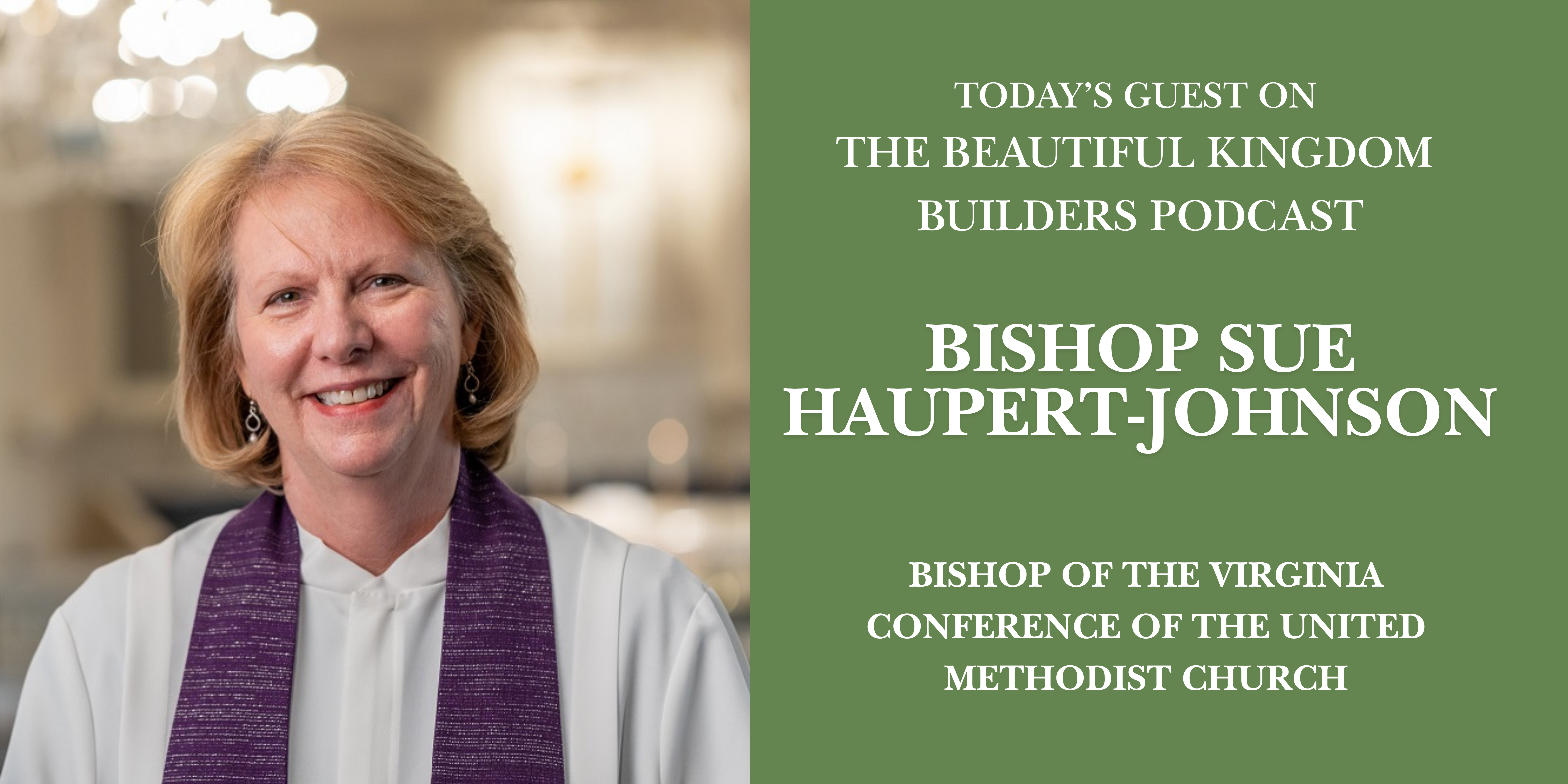
019 I Bishop Sue Haupert-Johnson: Can the Church Heal Its Deepest Divisions?

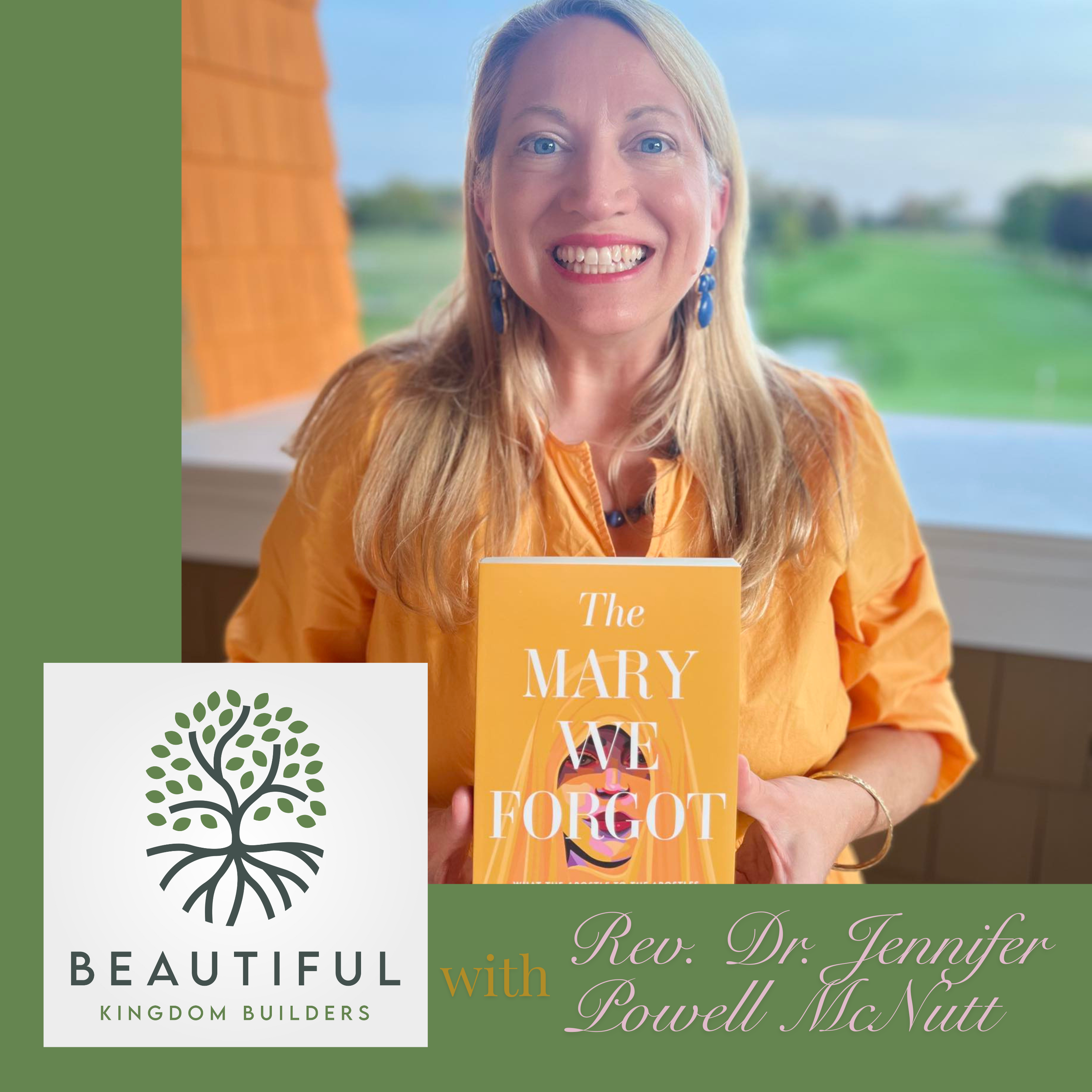
In Season 1, Episode 19 of The Beautiful Kingdom Builders, I had the honor of sitting down with Sue Haupert-Johnson, Bishop of the Virginia Conference of the United Methodist Church. Our conversation explored not only her personal story and spiritual practices, but also what it means to lead with courage and faith in a season of deep conflict within the Church.

Bishop Sue shared about her early faith journey, the influences that shaped her call to ministry, and the ways her experiences—as a woman, a mother, and a leader—have informed her pastoral voice. Grounded in Wesleyan theology, she spoke of a vision for the Church that prioritizes connection over hierarchy and invites both clergy and laity into shared ministry.

At the heart of our conversation was the reality of navigating disaffiliation within the UMC. For many congregations and leaders, this has been a painful and divisive time. And yet, Bishop Sue pointed to the possibility of faithfulness even in disagreement—of a Church that listens, holds tension, and refuses to abandon love.

This season of change culminated in a historic moment at the 2024 General Conference of the United Methodist Church, where the denomination removed exclusionary language from the Book of Discipline, fully including LGBTQ people in the life of the Church. For many, this marked not just a policy shift, but a theological and spiritual turning point—an embodiment of God’s expansive grace.

The Virginia Annual Conference sessions in 2024 and 2025 became a powerful witness to what it looks like to stay at the table through disagreement. Through initiatives like the Journey in Understanding, the conference has sought to foster dialogue, healing, and deeper connection across differences.

What emerged from our conversation is a hopeful vision for the future of the Church—one rooted in authenticity, justice, and the leadership of the next generation. Even in the midst of conflict, the Spirit continues to move, calling us toward a more inclusive and compassionate community.

Please visit this link to see what a journey in understanding looks like: journey | VAUMC. It was a beautiful example of listening to understand, not necessarily to agree, and to go forward in unity despite disagreement.

In our conversation, Bishop Sue recommended two books: J.B. Phillip’s book, Your God is Too Small and Amanda Ripley’s High Conflict.

Please enjoy this episode of The Beautiful Kingdom Builders podcast on YouTubeSpotifyApple PodcastsAmazon MusicSubstack, and more

TRANSCRIPT:

Ruth Perry (00:15)
I am so delighted to have Bishop Sue Haupert-Johnson today, the Bishop of the Virginia Conference of the United Methodist Church. Thank you so much for being here today, Bishop Sue!

Sue Haupert-Johnson (00:25)
My pleasure. I’m delighted to be here.

Ruth Perry (00:27)
Just laying it out there to begin with, I’d really like to talk with you about disaffiliation and leading through conflict. Because in my background, I very church experience in a local church where my dad was the and my brother was the associate pastor. And it got so ugly and just the fallout of that situation has been decades long now. I had two big lessons that I took away from going through that. Number one, it was a patriarchal church culture. And this was causing cognitive dissonance for me about that worldview because I realized if the women of the church had had a place at the these conversations, then the outcome would have been very different.

And then the other thing that I realized was this was independent church kind of separated from any denominational structure. So we didn’t have anyone to come in and help. And so those two lessons have come with me since then. And I was invited to pastor in the United Methodist Church three years ago. So my very first Annual Conference was the 2024 Annual Conference in Hampton.

And there was some tension there, to say the least. And even thinking back on in the last week, as I’ve anticipated our conversation, it just makes me emotional because it was such beautiful and Holy-Spirit filled experience, I feel, going to the 2024 Annual Conference and then seeing what came of it in 2025 at the Annual Conference.

And so I’m hoping I don’t get emotional talking to you today, it was just really beautiful and I really appreciated your leadership and I wanted to talk to you today. But before we get into that, can you go and tell us about the beginning of your story a little bit about your faith journey?

Sue Haupert-Johnson (02:02)
Yeah. Yeah, I grew up in a very large United Methodist Church. My family joked that we passed five United Methodist Churches to get to our church, but in some ways it was providential. It was a church where the bishop usually attended, so I knew all the bishops in Florida. A lot of the conference staff went to the church there, so I knew them. I was very involved as a youth and a young adult, especially in the music programs of the church. I consider the church as integral to my life early on in the sense that I learned all the Bible stories, that I knew the framework of the story, that I knew.

I don’t think I’ve ever doubted the presence of God in my life or the power of Jesus and the Holy Spirit, but I had increasing issues as I went to college with the institutional church and just, I think I had to find faith for myself and the relevance of it. I was laughing, I was reading the piece this week about how don’t make fun of Christmas and Easter Christians on Christmas and Easter because how are you hospitable if you’re judging them? And I really am grateful that the 10 years I was out of the church, when I returned, I was welcomed with open arms.

And really, I had a profound experience of Christ, a profound experience. The Gospel of Luke will always mean a lot to me because I had achieved everything I wanted to in my secular life and was miserable. And I realized, you know, Jesus… Well, my experience of Him was He said, why don’t we try things my way now? Which to me was a very gracious presence in my life, you know, that, I’ll use what’s past, I’ll use what’s happened in your life. And I always say that to local pastors and folks who come to their calling later in life, that everything that happens to us, God uses in our ministry, in our increasing knowledge and love of God.

And so I ended up when I was about 28 going back to church and went to Hyde Park in Tampa and had a really good experience And it wasn’t the pastor, it was mostly the older women of the church, Ruth, the saints of the church who had such powerful faith. I mean, they had lost husbands, they had lost children, they had seen everything in the world, and they still were just pillars of faith. And I often say I would kill to go back and prepare Communion again with Grace Spear. She was a 90-year-old woman who just tended to me, shepherd me. You know, when you talk about being discipled, and I think that’s the ideal way to learn the faith is to be discipled by people and to model. I mean, that’s what Jesus did with the disciples. And Grace did that for me.

And so those older women in the church, and I get mad at the ageism in the church because, man, those women have carried the church for a long time. And so I ended up realizing that my secular life was not rewarding and that I was being called to something more. And I ended up going to seminary fully intending on teaching theology, because who would want to serve in a church? And then I had a senior pastor at my home church who invited me, the staff parish committee invited me to come back to be on staff for a year. And I fell in love with it. And so, you know, 30 years later, here I am.

But people say to me all the time, they rag on the church and they talk about the ugliness in the church. I’m like, you know what? Multiply everything you’ve seen by a million and I’ve seen it. But I can honestly say that the beauty of the church that I’ve seen outweighs any of that. And when you glimpse the kingdom of God and when you glimpse a people of God working together as the body of Christ, that’s the hope of the world. And so rather than throw rocks at it and complain about it, my goal in life is to help create healthy, loving, welcoming communities that are out to serve the least and the lost.

And I get so frustrated when the church, I mean, this whole Christian nationalism movement is insane. God doesn’t align with the wealthy and the powerful. I love in the Magnificat, which I pray daily, where Mary sings, the poor God will fill with good things and the rich will be sent empty away. And I think that the church has got to really be a force for the voiceless and the weakest. And so when we lose track of that…

And I think the disaffiliation kind of reflected the politics of our time, right? We want our property, it just, I think it reflected everything that Jesus most despised. To use the church for your own political ends or to have your way or to promulgate a lot of misinformation and lies. I just would pray at night, God show me how these ends justify the means because I don’t get it. I still don’t get it. I’ll never get it.

Because I had lived in the church being against what I believed for most of my ministry, right? I’ve always been for LGBTQ inclusion. And so for them to say to me, well, the church left me. I’m like, the church didn’t leave you. I mean, come on, seriously? I lived in the church. You know, it doesn’t mean that I have to agree with it. There’s some basics we have to agree on, but there’s a lot of leeway and John Wesley realized that. So anyhow, I have little patience and I think back to those days and I still just shake my head, and go, boy, they lost themselves.

Ruth Perry (07:21)
I think a lot of people like myself, because I grew up very conservative, evangelical, and going back to that church conflict, that was really the first domino falling, where I started rethinking things. But I think dominoes have been falling for a lot of people who grew up evangelical like myself. And I’m just sick and tired of culture wars and I’m tired not being able to wrestle ideas that are like, I don’t want to be spoon-fed what to believe. I want to wrestle with it and really weigh both sides and determine for myself. And so I want some leeway in that process of maybe exploring something that someone thinks is heretical.

Sue Haupert-Johnson (07:46)
Right, right. Well, you know, and just when you think you’ve got it figured out and everything is neatly lined up, God, you know, meets a persecutor of the Jews on the road to Damascus. God totally messes with our certainty all the time. And so, yeah, you can think you’ve got it figured out, but then God’s gonna come to you in a way that you just can’t fathom, right? That’s the whole of gospel. And in the most unlikely of ways. So, yeah.

Ruth Perry (08:27)
So for 10 years you were pursuing a secular path for a career, what was that in, Bishop Sue?

Sue Haupert-Johnson (08:34)
Well, I went to law school and I think if I wasn’t in the church, I’d be a judge. I love justice. I love the intellectual part of law. I love weighing arguments and coming down to the just outcome. What I didn’t like about the practice of law was the business.

You know, at the end of the day, it was about making a buck and I wish somebody had clued me in how miserable life is when you have to bill somebody for every six minutes of your time. And that was that was the reality. And I just don’t care enough about money. I mean, I didn’t want to spend my life moving money from one person or one corporation to another. And don’t get me wrong. I am very grateful for people who do that and love it.

I am very grateful for good lawyers and I have good lawyers and I know good lawyers. But it was not my calling and nothing is worse to be working outside your calling. I don’t care whether it’s a church calling, well the vocation, right? To be in the wrong vocation I think is a hard thing. So there’s nothing worse than a miserable job. And I had a miserable job and I realized that God was not leading me down that path.

You know, do I wish I’d been passionate about it? Do I wish I loved it? Yeah, it was pretty lucrative. But it wasn’t for me.

Ruth Perry (09:48)
Do you ever put your lawyer hat in ministry?

Sue Haupert-Johnson (09:52)
All the time. You know, I think what I appreciate now and how God uses, I think I would love it if everybody went to law school. I think it teaches you how to think, teaches you how to be logical, although it’s kind of a curse in the church, because a lot of argument in the church is emotional, right? And so sometimes I’m sitting with somebody going, yeah, that makes no sense. But it’s, you know, so.

Sometimes to be a logical person in the church is like a new lesson in frustration. But I’m grateful that I understand the law. I’m grateful that I understand how the business world works. I’m grateful that I’ve had clients. I’m grateful to know their lives. I’m grateful to just have a basic understanding. I mean, my undergraduate degree was in finance. So, economics, all of that stuff, I’m glad I’m grounded in it. Every day in my work it helps and certainly the legal part helps because a lot of our assessment is, is this right? Is this lawful? Is this being done in above board manner? In personnel, is this being done fairly? And so all of that, yeah, I think it was a valuable education.

Ruth Perry (10:57)
And how has your motherhood impacted your ministry?

Sue Haupert-Johnson (10:58)
Tremendous, you know. I think I’m a much kinder, gentler person since I was a mother because I realized when Samantha was a baby how easy it would be to mess one of these up. And so I started looking at my parishioners and anybody in general as, you have some bad parenting. And then if you throw in addiction and sexual abuse and just physical abuse and trauma. It doesn’t take much to really mis-wire a human being. And so I think I have a lot more empathy.

At the time I was pregnant, there was an unsheltered homeless man named Leland. And sometimes in churches they would have the pastor pretend to be homeless, we didn’t have to pretend; Leland showed up. To my church’s credit, they were lovely to Leland. And Leland was a regular part of our community. And he would call me so often and my assistant would be like, oh God, it’s Leland again. I’m like, you know what? I realize I’m the only human being he talks to. And I value our friendship. And so anyhow, I remember when I found out I was pregnant.

And I told Leland and he was crying with joy for me because we had gone through a lot of fertility stuff and it was hard fought. And Leland said, you know, Pastor Sue, I wish I was your baby. And and I said, Leland, no, you don’t, because I would kick your butt. But, I think to know people like that, that’s why I get so frustrated.

To speak badly about unsheltered people or to speak badly about immigrants or just you’re just showing your ignorance and you’re showing you don’t have contact with them on a daily basis because if you do your heart breaks and you realize my reality is not everybody’s reality and there’s some reality that I am very grateful I mean my last prayer before I go to bed every night is God thank you that I have a place and a name and that’s an old Jewish saying a place and a name but I thank you that I’m not a refugee or fleeing from a country with only the clothes on my back dragging my I mean with no assurance of safety or I don’t know how you can be cruel to people like that and I think that is the distortion of our times and the distortion of the faith and I’m pretty tired of it at this point so yeah.

Ruth Perry (13:07)
So you’ve already mentioned that you pray the Magnificat every day. And this nighttime prayer. What other spiritual practices do you have that sustain you?

Sue Haupert-Johnson (13:11)
Yeah. Yeah, I’ve long prayed the daily office. I pray the evening, the morning if I remember, but always the evening. And to me, there’s something about the regular immersion in Scripture, day in and day out. And the Psalms, certainly pray the Psalms often. To me, they’re especially powerful in these days we’re living in. And I worship weekly. Sometimes online if I’m observing a pastor that I want to see how they preach or how the service is going.

But to me the beauty of the faith and the heart of the Wesleyan understanding of things is we have a method. And so to me there’s something very reassuring about having a pattern of life, having a foundation, so that I do these things in good times or easy times so that I have them just to fall back on on harder times. And so it’s kind of the safety net, the fabric, the ground of my being that I rely on. And that’s been, I think the people of great faith that I know, that’s the hallmark of their lives. There’s a method.

Ruth Perry (14:19)
A lot of the audience that I have is ecumenical, so all kinds of denominations. What are the distinctives of Wesleyan theology and practice that most

Sue Haupert-Johnson (14:24)
Great. Yeah. Right.

Yeah, I appreciate, I think that sanctification or the notion that I as a human being am always a work in progress. And I think that’s valuable and that the goal is not to be in heaven sitting on a cloud with a harp. The goal is not my individual salvation. God is at work to save the whole world and is using me in that story. And so, I don’t sit around and guess who’s going to heaven and who’s not. I think God’s desire is, we all will. And my focus is, my every day becoming more perfect in love of God and neighbor.

And for John Wesley, the whole goal of the human life is perfection in love, so that I have perfect love for God and neighbor. And obviously that’s a lifetime task and it’s the work of the Holy Spirit in my life every day. But what John Wesley saw is that when we die, he thought most people were perfected in love on their death beds, which makes sense, right? Because you’re perfected and then you meet Christ face to face and Christ sees himself when you get there. That’s the ongoing sense of I’m a work in progress.

Why I’m not Calvinist. I think there’s too much emphasis on when I was converted. You know, like it all happens at once? I don’t think so. You know, the day I came back to the church and that I count as my conversion time was just the beginning. Like my husband says, you know, it’s like if you stop there, it’s like getting to Disney World and just cheering when you get inside the turnstiles, but you don’t explore the whole Magic Kingdom. And so to me, the beauty of the Christian life is the

Ruth Perry (15:47)
Yeah.

Sue Haupert-Johnson (16:07)
day to day, becoming more like Christ. And you know, I hope I’m more like Christ now than I was 10 years ago. And if I’m not, then that’s when I have to really lean into the method because I should be. And I say when I preach in churches all the time, because there are usually older folks in them if you haven’t noticed.

I’ll say if you’ve been in United Methodist Church for 30, 40, 50 years, you should be darn near close to perfection and love. So I don’t know why you’re being so mean petty or unchangeable and rooted in the past because God’s always, making all things new and I think we all need to be made new. So that’s to me the Wesleyan theology in a nutshell, is that through the method, through these practices, through connection with the Holy Spirit, the Holy Spirit works in us day to day until we become like Christ. And that’s a much richer, more beautiful understanding.

And God’s doing that in the world too, right? That God is trying to transform the whole world and all of creation is groaning for the new heaven and new earth. And so instead of like sitting around and talking about who’s going to heaven and who’s going to hell, I think my better job is to love people and to introduce them to Christ so that they become all that they can be. And that’s to me the challenge.

Ruth Perry (17:29)
Yeah, we tend to make God so small.

Sue Haupert-Johnson (17:43)
Well, if you want to read a great book, it’s a classic. J.B. Phillips wrote a book called Your God is Too Small. And he’s dead on in that book because every chapter is about how we how we make God in our own image and how God, a lot of times, God reflects our parents. However you’re parented has a huge impact on how you see God, I think.

Ruth Perry (17:53)
Another question I people would if they’re like me coming from different background than the Methodist Church is about all the hierarchy and even like what is a bishop and how do you describe your role?

Sue Haupert-Johnson (17:58)
Right. I think rather than thinking about it as a hierarchy, connection is better. Connection, because we can do more things together than we can alone. If we pool our resources. I just was in a meeting all morning with global ministries and, when people put their resources together, we can do amazing things.

A connection that nobody’s alone. If you’re clergy in the United Methodist Church and you’re feeling alone, then the connection is failing you and we’ve got to do what we can to shore it up. And, you know, I really didn’t think of it this way until I was on a panel with Nadia Bolz Weber. And she said to me, you know, Bishop, I am Lutheran because I need a bishop. I need somebody to hold me accountable.

And I think that’s, like you said, you had all of that nightmarish experience in the church, in the conflict, and nobody was around. And sadly, churches don’t really benefit or really see the beauty of our connection unless they get into trouble. But I’ve had churches where there’s been embezzlement. I’ve had churches where there’s been sexual misconduct. You’ll have a pastor the next week, and you will have a whole team come in to help answer questions, do pastoral care.

So I like the connection better than the hierarchy, but that said, I remember meeting a pastor’s widow years ago and she said, this is the first time I’ve come back to United Methodist Church because my ex-husband who just died was a pastor and he did untold… No, he wasn’t United Methodist. He was another denomination. And she said, he got away with a ton of stuff that he never would have gotten. He wasn’t properly vetted. He wasn’t properly supervised. And she said, I will never go to a church that’s not a United Methodist church because I know that you vet your pastors, that you have a standard for pastors, and that you take action when pastors do things that are inappropriate or unlawful.

And so, I mean, I’m not Pollyannish enough to think that it’s perfect, but I think that we do our darndest to make sure that our churches are safe, to make sure that our clergy are not doing harm. And I can honestly tell you, if it hits my desk, it’s dealt with. So I get great satisfaction out of that. So and you know I’ve told the cabinet, I’ve said, you guys, if somebody brings you a complaint and I don’t get it, because that’s where it dies down. I mean, I’ve seen it in the past where things get pushed under the rug and I said heck, if I find out that you didn’t give me a complaint, I’ll file a complaint against you because we have got to know when stuff is is being reported or lifted up or brought to our attention. So I don’t mess around with that. I guess that’s my legal background too. But yeah, no, don’t turn a blind eye to anything.

Ruth Perry (20:51)
I very much appreciate that. And I will say, just three years in the denomination for me now, the connection has been so strong and I’ve felt so supported and encouraged and uplifted in so many different ways by so many different people. And I’ve met so many really wonderful, kind people. And I love my little congregations too.

Sue Haupert-Johnson (20:53)
Yeah. Good. And you know Ruth, I would say, you know, and anytime I have a pastor who’s like, I just don’t feel connected, I feel like, I’m like, you know what? You do something about it, right? If I’m not feeling connected, I always was the first one to call a new pastor in town and say, and not just United Methodist, I think it’s incumbent upon us to create community and to create community that’s not our church members, right? So I always had excellent ecumenical friends, clergy from all denominations, rabbis, imams, because there’s a unique kind and those are colleagues that you need.

So I would say if you’re feeling alone, now if it’s depression or mental illness or something causing that, we’ve got to address that. But if it’s not, you hold the keys, right? You have a phone. You can go visit. So you take the initiative and create connection. I love clergy and laity who create connection because I think that’s how we model Christ.

Ruth Perry (22:10)
I was in a day of training for the Living Waters District in January, and I was in a lay servant leader class, and one of the ladies said that she met you in the restroom at the Annual Conference. And then she said, you introduced yourself, and she introduced herself and said, I’m just a lay person. And your response to her was you are not just a lay person, that we’re partners in ministry, and she was just really touched by that. How would you describe the relationship between clergy and laity?

Sue Haupert-Johnson (22:31)
Right. Yeah. You know what? I wouldn’t even make that distinction. I love that our English word for vocation comes from the Latin for call, right? So any of us who have a vocation is called. And I think God gives us unique gifts and calls us to different things. In fact, when I graduated from seminary, one of my professors was really annoyed that I was pursuing ordination because he said, man, I wish you’d go back and be a lawyer because people don’t expect lawyers to talk about Jesus. So I think that laity are called by God and put in places.

I’ve been thinking a lot about Miss Kerry. Miss Kerry was an administrative assistant in the federal courthouse when I worked in the federal courthouse in Tampa. And she was called to be an administrative assistant and she was Jesus Christ agent in that federal courthouse. If you had a problem, if you were grieving, if you needed a word of encouragement or support, people flocked to Miss Kerry like moths to flame. And I know God called her to be there. So I don’t divide clergy and laity. I think that we’re all called to something. And if you happen to be called into representative ministry, I don’t think it’s because you’re any better.

I think it’s just, you know, God chooses weird people for weird things. If you read the Bible, you know, I’ve always loved Jesse who Samuel comes looking for the anointed one and Jesse’s bringing out all his, older and better sons, right? And Samuel’s like, no, no, no. And then, you know, David, he’s like, I got this other kid. And sometimes I think, God calls us not because we’re the best or the brightest, or the most, certainly not the most holy, if clergy are the most holy. I’ve met a lot of laity who are more holy than clergy. But I think that when you start seeing people as called by God into all arenas, then you don’t privilege representative ministry over any other.

And one thing that whenever I talk to a group of laity, who are exploring a call to ministry, say, you know, I think one of the grievous mistakes the church has made is when somebody gets really involved in a church and has done everything every office a lay person can do in the church. Well, it’s time for you to be a pastor. And that’s just not the case. So I think God is calling people to be excellent lay people. And any pastor knows, gosh, you’re so reliant on those folks.

And I have had tremendously gifted laity who have… They’re the backbone of the church, certainly not the clergy person as it should be. so no, let’s get rid of the laity clergy distinction and just talk about what has God called you to do in this world to bring the kingdom about. So don’t ever walk up to me if you’re a lay person and say I’m just a lay person.

Ruth Perry (25:19)
So can take us back to the season of disaffiliation I think pretty much everybody has heard about it or something about probably a skewed telling of it So just from someone who’s been there and seen it and been part of the leadership. What was the season of disaffiliation about in the United Methodist Church?

Sue Haupert-Johnson (25:40)
Yeah, I think it was about, you know, I had a DS, she said, this is just a property grab. I think it was, I think the time was ripe for it. I think that the rise of the conservative in the political realm really fueled the conservative part of the church to rise up. I think that what I lament was there wasn’t a lot of, let’s talk about this. Let’s reason about this together. Let’s hold each other as, you know, siblings in Christ and honor Christ in each other. That kind of went out the window.

And I know that there was probably poor behavior on both sides, but I experienced it mostly from those who really poisoned a lot of our churches with really radical claims. I can understand if you disagree with me about human sexuality. Certainly not an essential of the faith. Certainly not anything Jesus talked about. You know, and there’s always been, it seems like the… When one controversy dies, another arises. I know until 1971 every bishop was asked if they would support integration. And if you answered yes, you might not get elected in the South. And then the next issue of the day was LGBTQ. And in 1971, that kind of started being the litmus test for bishops.

So I think a lot of it, if you look at it, a lot of it was in the South. And I think that the Bible has always been looked to to support, to condone slavery, to condone segregation, to make… The huge issue in the early 1990s was divorce. And so it just seems like we’ve always got to be arguing about something. But what I appreciated about the United Methodist Church was because we had a trust clause and because we understood that every United Methodist Church is an outpost for our denomination in that town, that that preserved it through a lot of these controversies.

You know, other denominations, I always thought we were so much better, because every Baptist church would split 10 or 20 times in 100 years. No, we had a trust clause. And that said, you know what? This will be, no matter what controversy rises, no matter how much we disagree, this will still be a United Methodist church in this community. And we’re thinking seven generations down the road, and we’re not gonna let whatever the argument du jour is separate us. And that is held. And so I really, don’t think we ever should have abandoned the trust clause.

I think we should have said, and if I had been, if I had had any control, I would have said, you are welcome to leave. If you disagree with the church, you are welcome to leave, but you are not welcome to stir up everybody to go with you, and you were not free to take the property. And, you know, I stayed in the United Methodist Church when LGBTQ rights were not recognized, because I did not see that as an essential of the Church. And if I thought it was, I would have left. I would have not taken anybody with me. I would have not created any kind of… Because I value the body of Christ.

And anytime you come to a vote, anytime you come to, and we saw that at Annual Conference, you know, the year you talked about, you bring it to a vote. If you’ve read, there’s a great book by Amanda Ripley called, Real Conflict, I think it’s a conflict book. But she says, the problem is it becomes all about winning and losing and you lose sight of the controversy at hand.

And it, you know, if you’ve read James, the tongue is a fire and it burns and it burns to the gates of hell and that’s what happened. I mean, to hear churches that disaffiliated because they were told the United Methodist Church no longer believed in Jesus or the resurrection. To be told that the United Methodist Church, that all we want are drag queens. I mean, every little, every one situation was blown, you know, the

It just… And I wish that there have been wiser minds and I wish the denomination had held strong and said, you know what, you are free to go. But you aren’t free to take our property and you aren’t free to create war zones out of our churches. And unfortunately, that’s what happened. And I don’t know how you live with yourself if you do that. I mean, there are some points where you’re just like… And it was hard.

I know I told my cabinet in North George, I’m like, If I say something that does not reflect Christ well, if I, you know, stoop to that level, call me on it. But I just was amazed at what was said and what was written, what I received, to be called like, what was it they always called me? Apostate. She’s apostate. And then the gender stuff came in like, the Jezebel, the evil woman, because something about women’s leadership, especially the far right, and you see that in our politics too, is threatening and must be destroyed, right? I mean, don’t think Pam Bondi was just let go. It’s no mistake that the first two fired out of the cabinet were women because even the religious leaders that they’re looking to denigrate women and…

I just, it just got out of hand. And I think it’ll take a long time. I know I’ve got a lot of scars. I know you have scars. We all have scars because, we should have been better and that the body of Christ deserves better. And, you know, I just, I was amazed because I had so many talks and so many discussions and tried to, I worked so hard and then I realized, they really don’t want to work this out. They want what they want and I can’t, I can’t fight that. So.

And you know, move on. It’s time to say, we need a more excellent way. We don’t need to ever let this happen again. And a part of it was we lost our identity. What is the Methodist identity? United Methodist identity. And how do we be Christ-like in all things, right? I mean, Jesus said, love your enemies and pray for those who persecute you. I think he meant it. But I just watched slicing and dicing in the worst form.

Ruth Perry (31:42)
So you’re someone who takes the Bible seriously. You read it every day. You’re doing your best to be a faithful disciple of Jesus Christ. And yet you’re failing this litmus test, Bishop Sue, on this very important issue. How do you defend your perspective?

Sue Haupert-Johnson (31:45)
Yeah, right. Yeah. You know, I think this is why I appreciate tradition and experience. I mean, if you’re a real student of the Bible and not just verses in the Bible, you see God’s… I mean, there’s a great passage where God talks about, will give identity to the eunuch. They weren’t allowed in the temple and God says, I will restore them. You see God work through the unlikely. You see God include the Gentiles, right?

And to me, the miracle was that the Jerusalem church said, yes, right? We do see there’s a wideness in God’s mercy. We saw that. so it came through my experience in the church, and dear friends of mine who came out after I knew them well, right? It was like, everything I’ve been told by our culture about LGBTQ folks is not born out in my experience. Some of my best friends, some of the most loving and giving people. And also I came out of seminary at the height of the AIDS epidemic. And so I watched as so many loved ones were taken off life support, watched men sob at the loss of their loved, you know, another man.

So I saw the depth of love. And if all love comes from God, how do you make sense of that? Right? And some of the most faithful, devout, really lovely followers of Jesus Christ were LGBTQ. And so I had to say, you know what? If all of sin, and I’m not sure why that, you know, gets special sin, I had so many people yell at me full of pride and anger and ugliness. I’m like, I don’t understand how this sin is any different from what you’re calling sin and LGBTQ folks.

And so I think that my experience of the depth of their faith and truly faithful people who I know are so connected to God that if for one second they sensed that God disapproved of them loving somebody of the same gender, they would have renounced that. But they never got that sense. I just had to start, you know, and if I’m wrong, I’m wrong, right? And Jesus, thou art full of mercy.” And so at some point a friend of mine said this well, he said, if I have to meet my Maker and I have to meet Jesus Christ face to face, I think I’m going to err on the side of I was too loving and too open then the other way.

And so I just had to learn that everything I had been told to hate and to ridicule and to mock about LGBTQ folks was absolutely wrong and misguided. And that just came from knowing them. Same with the homeless people, right? Everything I’ve been told about them, Leland dispelled. Everything I’ve been told about divorced people, right? Because we grew up, my goodness.

God works through that. So I think it’s having a little more openness to mystery and that God does work in weird ways and that, you know, it’s time to let everybody be faithful. I, you know, and I may be wrong. Anytime I talk to somebody and they can’t say I may be wrong, I am eternally frustrated. But I don’t think I am. Yeah.

Ruth Perry (35:10)
I appreciate John Wesley’s rules for living. Do good, do no harm, stay in love with God. And I think the church, like all denominations, the church in America has done a lot of harm, whether they were well-intentioned or not. It’s hard to believe it was all well-intentioned because the harm has been just extraordinarily heartbreaking ⁓ that families would disown children. That suicide rates would be so high, that we shame and other, and we don’t see the belovedness of God LGBTQ. All of that is very harmful. And so at the Annual Conference in 2024, a college minister came forward with a resolution. Is that the right word, resolution? Suggesting that the Virginia Annual Conference make an apology for harm done to LGBTQ.

Sue Haupert-Johnson (35:34)
Right.

Ruth Perry (35:57)
after the General Conference had removed the exclusionary language. And so for three days, the Virginia Conference of United Methodists, from different perspectives, talked about this. Speeches for and against. As I was in my hotel, I would hear people talking about it, passing through the halls, people were talking about it. It was just, the air was buzzing and the conflict was palpable. And so, for me having that church conflict background, I’m a little keyed up but worried about things. And that last business session, when a group of pastors came forward and suggested rather than taking a vote because it would be so divided, it would have been close to 50-50, they suggested a commission be put together kind of like a truth and reconciliation

Sue Haupert-Johnson (36:34)
Mm hmm. Right. It was, I think. Yeah.

Ruth Perry (36:43)
that would take time to think and work more deeply on this and hear from people from all perspectives. I just remember, it felt like the whole room just kind of everybody’s shoulders relaxed. And the Holy Spirit, was palpable, that that was the right thing, most God honoring path forward. How was that conference behind the scenes for the Bishop of the Virginia Annual Conference. What was your experience?

Sue Haupert-Johnson (37:09)
Right, right. Well, I remember, you know, we even have people stand up and the vote was that even. And I realized I got to just buy myself some time so that we could talk about this until morning, right? So, and we had to have ballots made anyhow. So, that’s what I was thinking to begin with. And I think it was an affirmation from the Holy Spirit that three clergy walked up to me. Two of them were, well, one was very pro LGBTQ and one was totally against. And they said, what if we just talked about this? What if we created a group to talk about this and see where we end up? And I said, that’s exactly what we need. And clearly the Annual Conference wanted a third way, a more excellent way.

Because you know, one thing that bugged me about the whole disaffiliation thing, if I was ever in a church, like if we had a capital campaign or a building campaign and the vote failed 55 to 45, we wouldn’t go ahead with it. We would, you know, let’s talk about this. Because clearly there’s, there’s nothing that is helpful about an up or down vote because if you’re on the losing side you feel like crap, right? And so what we did was we created this commission and we had folks who were LGBTQ. Interesting to me how often they’re left out of the conversation on that commission as well as very conservative folks. And the beauty is over a year they sat together and they grew to love one another.

And so it really, you know, they might vote opposite, but they both want each other in the church. And so let’s get rid of the votes and just realize that if, you know, if we have the essentials, we have the rules, the general rules for a reason, right? That’s the orthodoxy. And we can argue all day long about other things, but at the end of the day, we need to stay together.

And so, you know, heck, I don’t agree with my whole family around the Thanksgiving table. And to me, I don’t want a church full of Sues. How do I learn and grow? It’s difference that has brought me along the journey. And so I think that if we can agree, well, one of the best, I can’t even remember who said this, but somebody said, you know, if you have one hand on the cross, you’re pretty close to one another. So why can’t we just all have a hand on the cross and, you know, in the non-essentials, think and let be and let Jesus sort it out, right? I always like Paul’s, you know, in Corinthians, we see through a glass darkly, but then we’ll see face to face. So let’s just acknowledge we’re seeing through a glass darkly.

And at the end of the day, I think Jesus wants us just to love one another and to respect each other and to defend each other. And, you know, and I went hasten that I’m part of a family and man, we disagree and we’ll fight each other. But man, if you’re on the outside and you say something against one of us.

You’re getting the whole group against so, you know, why can’t the church be more like that? If you’re messing with an undocumented person or you’re messing with somebody who’s weaker and doesn’t have status, if you’re messing with somebody who’s mocked because of their sexuality, the whole family should be standing up for you just because you’re a child of God and you’re my sibling in Christ. So I don’t understand why we’ve lost that. But we’ve got to reclaim that the church isn’t going to survive.

Ruth Perry (40:36)
I’m going to post video of the report at the 2025 this commission gave (vaumc.org/journey/). I’m going to post that in the show from what you just said, what gives you hope now as the United Methodist Church moves forward?

Sue Haupert-Johnson (40:40)
Good. You know, increasingly the church is finding its voice. And increasingly, and I’m talking about the church that defends the poor and the, and I’m hopeful, I’m hopeful, my 24 year old gives me hope that younger generations are longing for relevance and longing for a better world and a better future for all people, not just for themselves. And they think much more communally.

And certainly my daughter does not think in terms of race and ethnicity. You know, it’s a different world. And I’m hopeful that we can turn it over to them and let them move the church in beautiful new ways. Because we’ve held onto the past far too long. We’re way too rigid. And we need to follow where Christ is leading.

And I think it’s new in different ways, which should be exciting, but for a lot of folks it’s threatening. So I’m hopeful we can take their lead and follow them into a better future.

Ruth Perry (41:47)
If you could speak directly to those who have felt hurt or excluded by the church, what would you want them to hear?

Sue Haupert-Johnson (41:53)
That the church is not Jesus. That the church, you know, ideally when it’s in its most beautiful form, it is the body of Christ. But human beings are sinful and broken. And so any human organization is going to be broken. So I plead with you to not write off Jesus because of what you’ve experienced in the church, and to ask God to show you and to send you people in your life who truly represent Christ and to go with them and to not assume that just because you’ve had one bad experience or a lifetime of bad experience in one church, but that you open your eyes and heart to the possibility that God can work through a group of people and you just need to find that group.

So that’s what I would say. Because I mean, I’ve been hurt by the church too. think that, it’s not, you know, I can’t even say the church. It’s individuals in the church. It’s people who weren’t, they weren’t being faithful to the method, right? They weren’t open to their own growth. heck, think Saturday Night Live nailed it with the church lady, right? When you’re just a pinched old woman who’s judgmental, that’s really not a good representative of the church.

I think back when I was a kid there were two missionary women and we called them the buzzard sisters because all they did was sit in the church. never showed the love and the grace of Christ. They were just the hall monitors. And if that’s your experience of people in the church, luckily there were many others who showed me a better way and showed me Christ. But don’t presume that everybody who calls themselves Christian represents Christ.

Ruth Perry (43:24)
I want to thank you so much for being on the Beautiful Kingdom Builders podcast today, Bishop Sue.

Sue Haupert-Johnson (43:28)
My pleasure. Thanks. I’m so glad you’re doing this, Ruth. And greetings to everybody out there. And I hope our paths cross one day.

Ruth Perry (43:35)
Would you like to have the last word? Is there anything else that we haven’t covered today?

Sue Haupert-Johnson (43:40)
You know, I think my last word is as we approach Easter, I love the account where the angels at the head and the foot say to the disciples, Jesus has gone on ahead and he’ll meet you in Galilee. And I’ve always thought about, know, Jesus is already ahead of us. He’s out there and he is still waiting for us, and he is in the least… the places we least expect to see him with, the people we least expect to see them… least expect to see him with. But he’s out there and so I invite you to join in the journey of going and finding him. And that is what life is all about. So join us in that journey.

Ruth Perry (44:21)
Amen. Thank you so much. God bless.

Sue Haupert-Johnson (44:22)
Amen. Thanks a lot. Blessings on Easter and thanks again. Appreciate it. Bye bye.


Did you enjoy this episode? Please subscribe, rate or review us on YouTubeSpotifyApple PodcastsAmazon MusicSubstack, and more! Your support means the world. God bless!

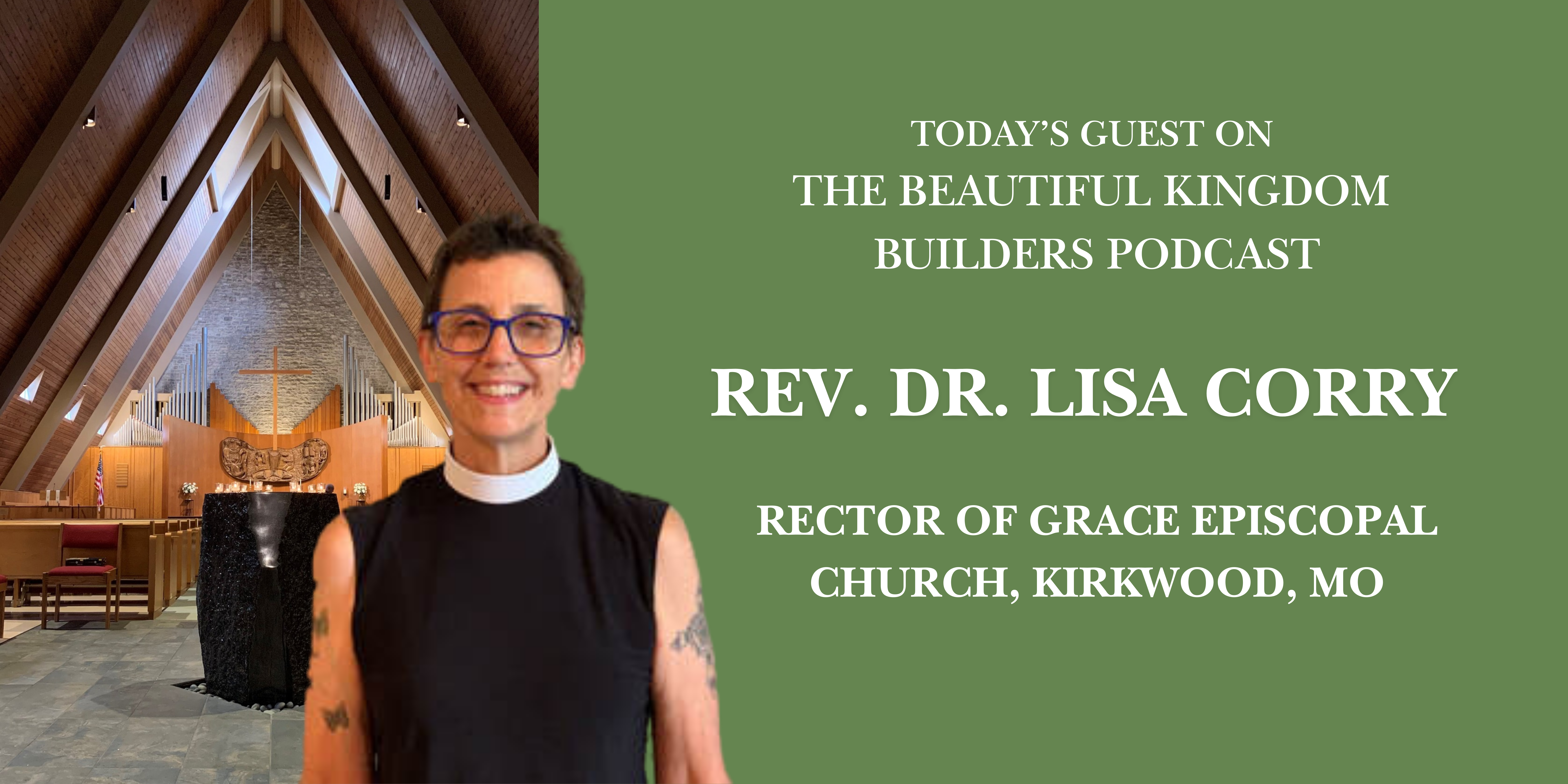
016 I Rev. Dr. Lisa Corry: Lessons in Grace-Filled Leadership

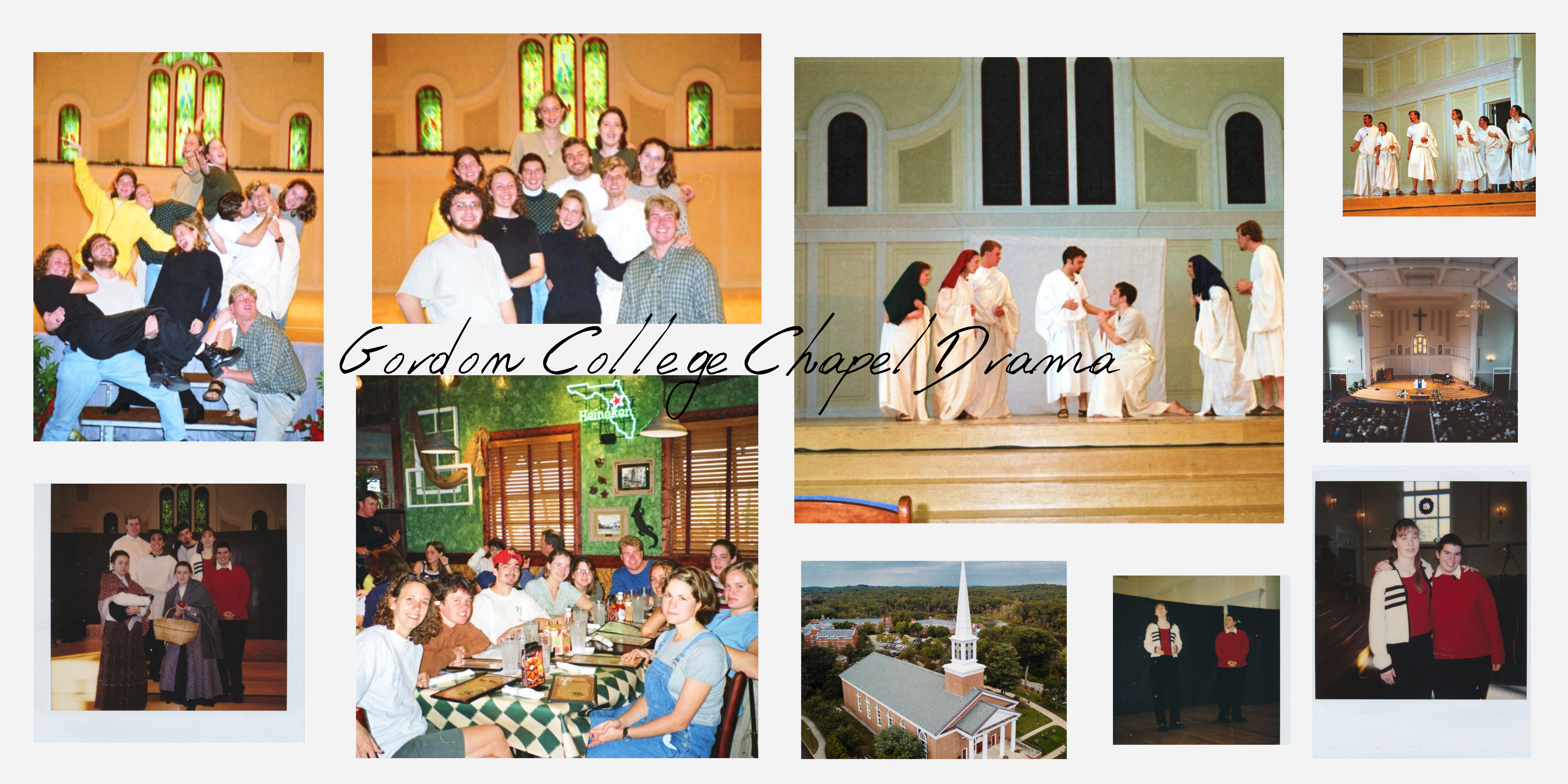
This episode was so fun to record! Lisa mentored myself and my brother Matthew McNutt when we were students at Gordon College, and we had the best time reconnecting and reminiscing with Lisa about those pivotal years. Matthew and I both participated and led the Chapel Drama Team while we were students at Gordon, which meant participating on the Chapel Cabinet under Lisa’s valiant leadership. The pictures below overlap Matthew’s senior year and my freshman year. I’m glad that Matthew could find some pictures to share–he’s more organized than I am!

Join us for an inspiring conversation with Reverend Dr. Lisa Corry as she shares her journey through faith, ministry, and personal growth. Discover insights on spiritual development, leadership, and the importance of grace-filled mentorship. You can listen to our conversation on The Beautiful Kingdom Builders Podcast on YouTubeSpotifyApple PodcastsAmazon MusicSubstack, and more

TRANSCRIPT:

Ruth Perry (00:15)
My guest today is the lovely Reverend Dr. Lisa Corry who was working at Gordon College in the chapel office when myself and my brother Matthew, who I’ve invited to be here today as well, we were both part of the chapel cabinet as students. And so Lisa was our mentor. And I’m very excited to have you on today, Lisa.

Lisa (00:38)
I’m thrilled to be here. It’s so great to see you both.

Matthew McNutt (00:41)
Yeah, it’s fun to catch up after so many years.

Lisa (00:43)
Yes, a lot of years.

Ruth Perry (00:45)
So when I started my podcast, I was thinking for my first season, something that I wanted to do is bring on people who’ve been instrumental in my own faith journey. And having you as a mentor at Gordon College was a really clutch time. I remember you walked through the death of a very close friend of mine. You helped me through that. You helped me with my first dating relationship. And you encouraged me to break up with that person? Which I did!

Matthew McNutt (01:16)
Ha!

Ruth Perry (01:17)
It was very wise. It was very wise of you. I appreciate that. You gave me a lot of opportunities to just be involved and have a voice on the cabinet. And that was a lot of fun for me. Matthew, what do you remember about Lisa at Gordon?

Matthew McNutt (01:33)
I probably stressed you out a lot more than Ruth did. I have to reassure you, I’m a lot more organized and prepared than I was back in the late 1900s when I was one of your students. Oh my word. So what I do remember is I jumped in as a freshman, there was a chapel drama team, and I signed up to join it. I had at that point in my life. I really had sworn off God and I was 100 % in it because I liked acting and being on stage in front of 1200 of my peers just had so much appeal and But I was also really good at faking the Christian stuff and by the time my sophomore year rolled around, I thought I was good at faking it.

I’d grown up in really fundamentalist and legalistic environments and just by the time I was 17, 19 years old, had gone like, this is, I don’t wanna be a part of that. And I showed up at Gordon, a 21 year old freshman, and I remember around the end of my sophomore year, at that point, I had become part of the leadership of the drama ministry. But towards the end of my sophomore year, I was just getting really overwhelmed with guilt over, I I’m claiming to be things I’m not. I’m really faking it. I don’t, I don’t know what. And so I had scheduled a meeting with you, Lisa, to just kind of go.

I’m lying. I’m lying about all these things. I, know, and I think I need to get my life right with God, but here’s all the ways I am not honoring God. And I was probably the most honest I had ever been in my life at that point to anyone. And I just genuinely thought, yeah, you’re like, what did, what did I do in this moment? I remember with the environments I grew up in,

Lisa (03:21)
I’m nervous. What did I do?

Matthew McNutt (03:28)
I just assumed with what I’m saying, that you would go away and just be like, we need to get him out of our school. Like he definitely shouldn’t be doing chapel drama. He should probably be gone. Like he’s a failure and like just such legalistic harsh environments. And, you in that moment just express all this love and grace and just were like, you actually seem surprised when you realized.

I thought this was going to just kind of land me out of the school and out of everything. And instead you really dialed in and mentor. And I’d already been kind of wrestling with, this grace-filled approach to Christianity that Gordon College is modeling for real? you know, cause I had remembered thinking at times like I could be that type of Christian. And so that was a really pivotal moment for me where I finally was like, okay, like I’m gonna go all in with God. And my junior year of college, when you were kind of coaching and mentoring, had gotten rid of my TV, which was a big deal. I love movies and I got rid of all of my secular, it wasn’t even that some of it was bad. It was just like, I need to change how I focus on God. And so my junior year was probably the most,

Lisa (04:37)
I do remember that.

Matthew McNutt (04:50)
spiritually intense growth period in my life. And I have given your response to me as an example to youth leaders that I’ve been training for the last 25 years of this is how we love students into faith and show grace. And so, yeah, you were a huge part of me turning back to God. And then a year or so later when I started going, I think I’m actually like, I remembered being so embarrassed telling you, I think I might be called to be a youth pastor, not a high school teacher. And I was waiting for you to laugh at me and be like, this is great because I grew up in environments that gave me very low self-confidence. And so, yeah, so I’ve been in ministry for 25 years now, full-time ministry.

Lisa (05:32)
Heh.

Matthew McNutt (05:42)
in huge part because of those couple pivotal conversations. So that was probably more a longer winded thing than you were looking for, Ruth. But, but yeah.

Ruth Perry (05:53)
No, I mean, that is so beautiful. I love to hear it.

And I just wonder, like, how many years were you in college ministry, Lisa?

Lisa (06:02)
Yeah, that’s a good question. Let me think a second. I think probably 25 maybe. I mean, not always directly, but I always gave time in that direction when I worked in college settings. Yeah, but it’s neat to hear you reflect, both of you. And I just remember you both were authentic, fun. One of you was a little more wacky than the other one.

Ruth Perry (06:26)
Which one?

Matthew McNutt (06:27)
Probably the one that landed in youth ministry and not the one pastoring three churches.

Lisa (06:33)
And you both are leaders. You were leaders then and you’re leaders now. I mean, it’s really beautiful. And it’s beautiful that, I mean, we’re all a little bit older and we all have enough mileage to know that this life holds many lives. And you all are leaders contributing to the kingdom of God and the streams of your church. And that’s, golly, that’s what it’s about. That’s great.

Ruth Perry (06:56)
I think something that inspires me about your ministry is just the non-anxious presence that you were to very angsty people at that stage of life. You were always just really calm, cool and collected and kind and gracious. And I think it speaks to your trust in the power of the Holy Spirit to do the Holy Spirit’s work. And that when you just show up and you’re there for someone, you don’t have to be able to quote the whole Bible or explain 10 tenets of like, I think the way that we kind of grew up, you just should know the road to salvation and like know all these things and ask people and you’re carrying the whole weight of their salvation on your shoulders almost. And so just learning that

Actually, God is a lot bigger than you are. You can just hear someone out and then maybe offer them a little bit of grace and just how far that can go in their spiritual life is really powerful.

Lisa (07:55)
Wow, that’s neat to hear. I was ordained in the Episcopal Church nine years ago this year. And as I reflect to people what a big part of my kind of day job is right now, I tell people a lot that I share calm, that that’s a big piece of my job, is I just share calm with people. And so it’s fun that you would bring that up. I don’t necessarily remember being super calm in those days, but.

Ruth Perry (08:17)
Super calm.

Lisa (08:19)
Yeah.

Matthew McNutt (08:20)
I mean, you’re pretty calm and focused with all of my antics. I remember you reassured another student that was really stressed out. They were leading the dance ministry or something, and they were worried, like, is McNutt gonna even have this stuff done in time? And you were like, look, you because her personality was she already had everything done months ahead of time kind of a deal and you were like look you guys are very different but I can assure you when the day comes it will be ready.

Lisa (08:52)
Yeah, you know, you were never early, but you were never late.

Ruth Perry (08:59)
This is reminding me of a big lesson you taught me. I was a perfectionist and super stressed out about everything. And you taught me that I needed to have life balance and that I should just give 80 % effort. So I dialed it down to 80 % effort my senior year and my grades stayed the same, but my quality of life vastly improved.

Lisa (09:10)
Yes. ⁓

Matthew McNutt (09:13)
Ha ha ha ha ha!

Lisa (09:21)
Hahaha

Ruth Perry (09:22)
And so I’ve taken that into like, I’m just trying to give 80 % here and there and good enough is my life motto now. Good enough.

Lisa (09:29)
Man. That’s right. That’s exactly right. Yes. You know, I was reminding myself I was doing a small group last night and there’s a quote from the, I forget the author’s name, but the gentleman wrote something like everything I needed to know I learned in kindergarten. But the sentence is, anything worth doing is worth not doing well.

Matthew McNutt (09:31)
Ha ha ha ha ha.

Lisa (09:48)
Isn’t that great?

Ruth Perry (09:48)
That’s good. Yeah! Lisa, can you tell us about you now? Because when I was in college, I don’t think I ever asked you about you. So now 20 something years later, let’s catch up. Where are you from? Where did you grow up?

Lisa (09:56)
You, how funny. How funny. You know, because when I think of you both, that’s so funny. I don’t think it ever crossed my mind that we didn’t talk about me. But I always think of Boothbay, Maine when I think of you guys. And coffee. I think of coffee. Is that right? Yeah. Yeah. So yeah, I’m from Michigan, just outside of Detroit originally. And I’ve lived all over the country.

Ruth Perry (10:12)
Yeah, yeah, yeah, Moosehead Coffee Beans. That was the family business.

Lisa (10:25)
Not that I was wandering, but I kept kind of just following the bouncy ball. And I was always a late kind of decider to do things. Like I think when I was with you both, I don’t know if I’d started it yet, but before I left Gordon, I had dinked away slowly at a Masters from Gordon Conwell. And I don’t even remember when that was exactly, but I don’t know if you guys were in my galaxy then, but probably because I left Gordon not long after you guys left. Maybe it’s…

Ruth Perry (10:52)
I think I remember when you graduated.

Matthew McNutt (10:52)
Yeah, I feel like I remember you taking classes, like one at a time, I feel like. One or two.

Lisa (10:56)
Oh, okay. Yeah, it was the power of the dink.

Mm-hmm. Yeah. It took me hundred years, but I got it. But I didn’t even start that till I was probably 30, you know? And then I have a doctorate also that I worked on and almost got kicked out because I took too long, but I did graduate. It was a cohort program, but from Biola, Talbot.

But I didn’t start that until my mid 40s. So about me. So I’ve gone to school. I’ve worked in higher ed and I lived actually, believe it or not, after I left Massachusetts of all places, I’d probably surprised myself because I had to look at a map about where it was before I took the job. I moved to Arkansas. I lived in Arkansas for about 20 years. Isn’t that wild?

And it’s a really great place. And I worked at John Brown University for a while and probably about a decade, I think. It’s in Northwest Arkansas. And in that season got more and more involved in the Episcopal Church and discovered a call there and went through the process, which is fun and a lot of discernment and discovery. I lived in Minnesota for a little while and it was very cold and dark and I don’t know why anybody lives there.

Sorry if anybody’s offended by that. yeah, I’m in St. Louis area now. Been here about a year and a half, maybe two years in August.

Matthew McNutt (12:20)
What landed you in college ministry for so many years? What was your pull to that or what was your calling to that?

Lisa (12:27)
Yeah, I, when I was in college, it was a really important time in my own faith development. I came to college really questioning God. I almost got a scholarship to play basketball and I hurt my knee my senior year of high school. And when that was taken away, I kind of crumbled a bit, you know, as we do when we’re 17 and something important has taken away. So I found myself at Michigan State as an undergrad and was really searching and stumbled into through people on my floor getting involved in Campus Crusade for Christ.

And that was a real foundational experience for me for Bible study and learning about this personal relationship with God and all that that meant and the kingdom of God really helped me set in motion some values. And I think because that was such a significant time after my undergrad, went on staff with that organization for little bit. I didn’t really fit. It’s pretty, not that I’m not conservative, but it’s pretty, it’s pretty conservative. And so I, after a few years, I slid out of there, but it was a great experience for me as a student and as a staff member.

And then after that, I discovered there was this thing called Christian higher education. I’d never heard of it before. See, I’m really slow, I’m slow, slow, slow, but I, I got on that bus and I thought, my gosh, I can work and get paid and invest in college students. What a great idea. so Gordon was my first stop and working in Christian Higher Ed. So I worked at like three different colleges, but since I’m talking with you today, I’ll say you all are my favorite. Gordon’s my favorite.

Ruth Perry (14:04)
I’m keeping that in. Okay, so I wanted to follow up. I have two questions initially. Number one, what do people from Arkansas call themselves? Arkansas-sian? Like, what is that?

Lisa (14:15)
It took me a long time to learn this. Arkansans. Yeah, because I used to call them Arkansinians. But they’d be like, no, Arkansans. Yeah.

Ruth Perry (14:18)
Arkansans, okay, thank you. Yeah, yeah. Yeah, I can see that one too. Arkansans, helpful. All right, and then my

Matthew McNutt (14:27)
Didn’t take off.

Ruth Perry (14:30)
Second question. I guess I’m kind of cluing in that maybe you didn’t grow up in church.

Lisa (14:34)
Good, good, good, good. Listen, good attentive listening. Yeah. Nominally Catholic group, nominally Catholic. And I was confirmed in the Catholic church, but it wasn’t a center of my life or I think it was a practice, particularly with my mom’s, but not necessarily the family system commitment. And so. Maybe even a little bit like you’ve described, Matthew, just I think I probably had more fear of God than vision about a Christian life. So that took a while to undo and redo. And those college years for me are when that happened.

Matthew McNutt (15:11)
So what would you say with 25 years in college ministry, what were kind of your key concerns or key passions when you were working with young people? What is your style of ministry or what was your emphasis with young people in that stage of life?

Lisa (15:22)
Mm. Yeah. Yeah, you know, two things strike me. One is kind of you kind of inferred about this, Ruth. I think not a lot of people, particularly college age students at that time, and I’ve been out of that loop for a little bit, you know better than I do, but don’t have people that sit across from them and look them in the eye and say, how are you? And so I think just expressing that care and not hurrying past that question and following wherever it goes without judgment does a lot inside a young person’s deep places, I think.

So that was a big piece, I think, was just that relational holding of space and being fully present to them. The other thing is, in my doctorate, though you know, doctorates are hard, which you’re aware of, Matthew. I think it’s a terminal degree because it almost kills you, right? But anyway, my dissertation, I went from a PhD to an Ed.D. So it’s a doctor of education because I had a, I stupidly or wisely picked a really hard dissertation chair.

Matthew McNutt (16:22)
Yeah.

Lisa (16:36)
And I assumed he was keeping track of some things he wasn’t. And he assumed I was keeping track of some things I wasn’t. And then he was like, you’ve got to either get out of this program and work on your own and reapply or change to an EdD. And I was like, I’m going to change to an EdD. I can’t keep doing this. I got to stop this hamster wheel.

But anyway, My dissertation, the title of it is something like, and it’s funny, I can’t remember it because it was so much a part of my life, but it was, it’s something like, you know, cause it’s like an inch wide and a hundred miles deep, Spirituality Development in Women in the College Years. And so it had to get that deep, but my research didn’t start that deep. You just kind of find your way.

But the thing I discovered in that, what I ended up doing was intertwining spirituality development in the college years with identity development, like inter-connecting theology and social science theory. And then I also discovered, and this was not even just Christian, it was just spirituality. I was trying to be wide, but the thing I discovered overall that still impacts me in my own life and talking with any age person, but college-age students, it strikes me a lot for, is that the thing that college students need is how to learn how to be quiet and maybe meditate or sit in silence practice some kind of silent discipline, where discipline is not a harsh word but just a silent practice. And there were a of colleges at that time and this was probably close to 15 years ago now, but that the big push was in response to that creating spaces on campus that are only for silent meditation or silent sitting. And that just really was interesting to me.

Ruth Perry (18:19)
There was a room in the chapel office designated for prayer. And I remember you would send me there on occasion with the notepad to like, contemplate something in conversation with God. So you were doing that even then before your doctorate.

Lisa (18:26)
Mm-hmm. Yeah, and it wasn’t a time out. It wasn’t.

Ruth Perry (18:42)
No!

Matthew McNutt (18:43)
That’s how I’m interpreting it because as I recall, I did not get sent there. So I might have been the better… ⁓

Lisa (18:47)
Hahaha! That’s great.

Ruth Perry (18:54)
Well, it’s actually, so this in particular, was when I was having my first dating relationship. And as a conditioned good girl in the Christian faith, something that I just couldn’t do was imagine that God had a calling on my life. I didn’t know how to say no to anybody. And so every time I would talk with you and you would ask me about my relationship. And I would talk about what my goals were. We had already talked about what I wanted to do after college, which was go to seminary. And then we’d talk about this relationship where he didn’t think I should go to seminary. And you’d be like, so why are you dating this person?

Lisa (19:32)
That’s funny.

Ruth Perry (19:35)
Yeah, so I definitely have had people think, ask me what do I want to do in my life? But you were like, prioritize that.

Lisa (19:42)
Yeah, because you can make decisions to move in the direction. And remind me your husband’s first name. Logan, because I remember when you met him. I remember when you guys started going out. Yeah.

Ruth Perry (19:45)
Yeah. Logan.

Matthew McNutt (19:56)
I did too.

Lisa (19:57)
Well, I remember when you and your wife started going out too, so.

Matthew McNutt (20:01)
Yeah,

Lisa (20:01)
Thanks.

Ruth Perry (20:02)
So what about the Episcopal denomination? What about their beliefs and their tradition do you love?

Lisa (20:09)
Yeah, gosh. You know, when I was in Massachusetts, I was kind of dabbling in going to the Episcopal Church a bit. But the center of my galaxy was always where I was working, is where I would give kind of my free time for ministry. And then in Minnesota and in Arkansas, I began to get more involved in the church. And I hit this moment and I don’t know what predicated or, you know, made it pop for me, but I hit this moment where I was like, you know, I think I want to move. I was working in the co-curricular teaching part-time in the Bible department, but also doing some small group spiritual formation oversight on campus, but I was giving more time than that. And I thought, well, I think what I want to do is start giving my extra time to the church. And so I started getting more involved in the Episcopal church. But what drew me to it was,

You know, for my Catholic upbringing, the liturgy is really similar. And when I first started going, there was something about having this meaning of this personal relationship that was pretty vibrant with the action and participation in the liturgy. And that was somehow put me together. And so I was really drawn to that. then I think too, Episcopals are really good at two things. They’re good at accepting everybody and they’re good at agreeing to disagree, while also being high critical thinkers as a generalization. So those are kind of a few of the things that drew me in.

I don’t know if you guys are familiar with the Episcopal Church.

Ruth Perry (21:37)
Was that in South Hamilton, was that an Episcopal church that I would go for their special services? And I think the reason I found them was because you had them come for Ash Wednesday. And that was the very first time I had ever received the imposition of ashes.

Lisa (21:41)
Yep. Yep. Yeah. Wow, okay. yeah, meaningful stuff. Yeah, and the Episcopals are good because they don’t, you know, they’re really good at marking time. So the colors change, liturgical seasons, so you always know where you are. don’t like, you don’t have to wonder what’s happening. And they’re good at remembering and we need to keep reminding ourselves of reality. I know I do. Yeah.

Matthew McNutt (22:14)
What was the transition like for you going from full-time ministry in college to college students to full-time ministry in the Episcopal Church? Or your focus shifting in that way?

Lisa (22:25)
Yeah. Yeah, you know what’s interesting at first, what’s really surprised me was that people are just people. know, and so somebody who’s 21 or 19 is the same in so many ways as somebody who’s 80, as somebody who’s four, right? You just have to, you just have to know your audience well enough to communicate in the way they can hear. And so I was just really surprised that, you know, the four-year-old and the 19-year-old and the 80-year-old are all worrying about the same things. And they’re all wondering what’s for dinner. And they’re all, everybody’s thinking about the same things, even though it’s such a different developmental scheme, but it’s people are people. And that was my big surprise and also a big help, right? Because I had spent so much time with college students. Thank God that it could translate, right?

Matthew McNutt (23:16)
One of the questions that pops into my mind is, you know, even with an egalitarian denomination, I still read reports to talk about the challenges of being a woman in pastoral ministry. Have you experienced some of those challenges or are there ways where you’re like, it has really worked well for I don’t even I’m not even articulating it very well at this point.

Lisa (23:38)
No, I hear, I know, but I hear you. Well, I’ll tell you, the first time I really felt like I hit a ceiling and that I thought was gender. And it was actually at John Brown University down in Arkansas. When I was taking in the decision of moving from a PhD to an Ed.D, because I think I had more of an internal fantasy that I realized that I wanted to maybe teach full time in the college setting, you know, so I

I thought, oh, I’ll ask the chair of the Bible department what they think I should do. you know, I don’t want to mess up that possibility. And so when I laid it all out with this gentleman, old white man, if I may say, he just looks at me and said, you know, it doesn’t matter. We would never hire you. And I was like, I was like, oh, OK, thank you very much. the last.

Matthew McNutt (24:20)
My gosh. That’s direct.

Lisa (24:26)
Yeah, I was like, dear. And then I was like, I’m just gonna get the EDDs, because why am I knocking myself out? It certainly doesn’t matter. And so that was the first time I felt, and I felt like, I mean, I didn’t say, well, tell me, sir, is that a gender response? But I’m pretty sure it was.

And then I think as a female priest, as a woman who’s ordained, I have been more aware or experienced more misogyny than I ever have in my entire life. And it’s not like aggressive. It’s more like how people treat you or talk to you. Like there’s times, I’m the first woman rector, rector’s a funny word for like lead priest at a church. I’m the first female rector at the church I’m at right now. And there have been a handful of times when people have talked to me and I’ve taken a beat and I’ve looked at them and I’ve said, would you say that to a man? And then they go back. And some of them say, I’m sorry. And then some of them just don’t know what to do at all. I’m kind of awkwardly cavitated back in a way. I’ve learned to gently confront it. But I think that, know, ministry is more than I realized, often a male world. I don’t know, Ruth, if you hit that.

Ruth Perry (25:36)
I got that a lot. I have experienced a lot of misogyny, but not since I joined the United Methodist Church. And the difference has been so striking to me. And I’ve also started attending ecumenical pastors group around the same time that I started pastoring here. And the pastors in that group are not misogynistic. There’s another group here in town with all the pastors are welcome to, and I just don’t go to that one because I don’t want to deal with it.

Lisa (25:56)
Nice. Good.

Ruth Perry (26:10)
But I am really enjoying just, my parishioners have had a lot of women. And so it’s normal to them and they just always call me pastor and they just always refer to me with so much respect and it’s just been really lovely. And so I’ve had three years of no misogyny.

Lisa (26:25)
Yeah. There you go, yeah. And I don’t mean to just be negative, you because it’s wonderful. And I feel like I’ve landed in my call that took me about 50 years to discover, but there’s pockets of it. That’s probably the thing that’s been difficult. So the pockets.

Matthew McNutt (26:52)
And part of me wonders, as you were talking, Ruth, because of where we grew up, where a woman wouldn’t be a lot like it would be a question of whether or not a woman could teach in Sunday school, let alone be a pastor. Part of me wonders if growing up where it was so blatant, because there are women in Methodist churches that will still talk about the challenges they experience as opposed to the men, but where it’s so much less so than what we grew up with. Yeah, not that I’m trying to, Ruth, could you please find some examples of misogyny? That’s a…

Ruth Perry (27:25)
Yeah, it’s been striking. No, I’m having the universal United Methodist experience, Matthew. I speak for all United Methodists.

Lisa (27:35)
Ha ha!

Matthew McNutt (27:36)
I mean, you’re in the South.

Ruth Perry (27:37)
My town is primarily Southern Baptist or Independent Baptist and all the little Independent Baptists that have fought with each other and broken up with each other.

Lisa (27:42)
Okay, dear. You know, Virginia’s an interesting state. They’re interesting people.

Ruth Perry (27:55)
Yeah, it has been very interesting.

Lisa (27:58)
Yeah, but it’s beautiful.

Matthew McNutt (27:59)
Perrys are weird people in Virginia.

Ruth Perry (28:02)
Yeah, the Perrys. We’re doing our best.

Lisa (28:05)
It’s funny.

Ruth Perry (28:06)
Who are some Christian theologians or writers or artists that have been meaningful in your faith journey, Lisa?

Lisa (28:10)
Oof. Boy, that’s a big question. In terms of like reflection, and she’s been around for decades, probably maybe even when I was at Gordon, Jan Richardson is, Ruth, are you familiar with her? Yeah. She says a lot of poetry and a lot of reflection. She’s kind of artsy. I feel like maybe she might be in your Methodist stream.

Ruth Perry (28:28)
I’ve heard her, but I don’t think I’ve ever read her.

Lisa (28:41)
I could be making that up, but I think so. But she’s been significant to just kind of help facilitate thoughtful reflection and take in big spiritual truths. So she’s really great. C.S. Lewis is always just fantastic. There’s a guy, I forget where he’s out of, but he’s done some commentaries. D.A. Carson, I appreciate the way he writes and his thoughtfulness and fidelity to scripture and what it’s trying to say and how and why.

I think most recently, not everybody’s a theologian that helps me. There was a poet laureate from Colorado who died recently, Andrea Gibson. And they have some poetry that is just phenomenal about the hardship and angst of life this landing that they’ve done and hope, which is just beautiful to sit with. So those are what come to mind off the top of my head. How about you guys? Am I allowed to ask you that?

Ruth Perry (29:39)
Yeah. Matthew, you first.

Matthew McNutt (29:41)
Come on. Shoot, would have to, I read, I read a ton, I know, I read a ton of stuff. I really love anything NT writes. Carolyn Custis James has written some really cool stuff that I’ve appreciated. I went through a phase where I was reading everything by Pete Enns, which was kind of fun and challenging some of my thoughts.

Lisa (29:45)
That’s a hard question. He’s good.

Matthew McNutt (30:05)
But yeah, have a ton of favorite authors. My goal this year has been to read like 50 or 60 books over the course of the year. So I’m trying to get there.

Lisa (30:08)
It’s, yeah. Wow. It is funny because we all probably, all three of us probably read a lot of Christian stuff all the time, right? Yeah. How about you Ruth? Yeah.

Ruth Perry (30:28)
Yeah, I think that’s my problem is I kind of snack. And I’m not like, I’ll some people they’ll like I really I’ve read all the books of this one person. I’m like, wow, I’ve read one book. And then I’ve moved on. Although I have all of the Brene Brown books, and I have one in the mail.

Lisa (30:33)
That’s great. That’s a great image.

Ruth Perry (30:49)
that I realized I hadn’t read it yet. So I think that that may be the only person that I’ve like really kept up with all her work. And Lisa Sharon Harper, her book, The Very Good Gospel was really impactful to me. And so I’m reading her book Fortune right now, and I’m hoping that she’ll come. I’m going to invite her to come on and talk with me. I hope she will. I think those two have been
probably more influential than others.

Lisa (31:16)
That’s great.

Ruth Perry (31:17)
Do you have spiritual practices that nourish you in particular, Lisa?

Lisa (31:22)
Nice. Yeah, yeah, I do actually. There’s the one isn’t which I kind of brought up before is that idea of kind of silence, sitting in silence. There’s a practice which you it’s kind of like silent meditation, but it’s a little more. It’s got some parameters to it that are helpful. It’s called centering prayer. You guys heard of that? So in centering prayer, you sit in silence and it’s about just letting go of thoughts. And so even if you’re busy the whole time, just letting go, at least you’re letting go, right? So you can’t fail. You just have to show up.

So I think sitting in silence and seeking the silence of silence every day helps me know what’s going on in my own soul, but it also helps me get rid of the things that are between me and God, you know? So that is probably a personal practice that most days of the week for probably a couple of decades that I think has been really transformative for me.

The other one might sound a little more odd, but it’s yoga. I do yoga. And during the pandemic, I did this online training to be a yoga instructor because I wanted to learn about yoga. And so it’s just a personal practice. A lot of people do it kind of in classes and socially, but I find it kind of magical. Our bodies and minds and wellbeing are also connected. It just kind of helps put me together or take me apart, depending. So those are the two, I think, strangely, those are the two things that come to mind. Yeah.

How about you guys?

Ruth Perry (32:51)
Honestly, playing the piano is a spiritual practice for me. I often will play through the hymnal or I’ll hear a song that speaks to me. I can’t play without music, so I’ll have to find the music online and then print it out and I’ll just play like one song for a while and just sing it to the Lord. And that is probably the one spiritual practice that I have that really fills me up. And then a lot of…

Lisa (33:06)
Nice.

Ruth Perry (33:14)
I think my problem is being quiet. And so I’m taking note, Lisa, that I need to turn things off because I’m just constantly scrolling or reading or listening to podcasts and I do not practice quiet. If I’m in the car, I’m either listening to a podcast or some music. So yeah, I’m taking note. Thank you for that.

Matthew McNutt (33:35)
Yeah, as your brother, I would say I’ve never thought of you as quiet. This is the… I think for me, when I’m able to isolate myself and relax, it’s hard for me to settle down and relax and just be, which is what you were always telling me to do way back then.

Lisa (33:39)
Hahahaha!

Matthew McNutt (33:55)
You were even like Qui-Gon Jinn is saying just be like Qui-Gon Jinn Trying to speak my language back in the day ⁓ Writing is where I get a lot of my energy and and excitement and so Just trying to find ways to write and create about faith has been a good

Lisa (33:59)
Hahaha! Didn’t help.

Matthew McNutt (34:16)
exercise for me as well to dial in.

Ruth Perry (34:22)
One of my questions, because of our background growing up evangelical, something that I’ve realized is that it had never even occurred to me to try mainline denominations. Even though in college, I was a music major taking theology of worship classes and in seminary too, and they would send us to all kinds of services and so I’ve experienced a lot but it never occurred to me to join a church that wasn’t evangelical. I think now where we are culturally in America a lot of people are kind of disillusioned with the evangelical church and they’re feeling lost. And so what would you say that a mainline denomination like the Episcopal Church has to offer to someone who’s rethinking the way that they’ve grown up?

Lisa (35:10)
Yeah, I’m trying to think, you know, there’s some faces from church that actually come go through my mind here where I am now. And I think that.

You know, it’s kind of like everybody’s the same thing, that thing I told you before, you know, you can be 19 or 35 and have two small kids. But, know, that it’s that everything’s OK and you can rest here and you can relax here. And we don’t have a big to do list for you to do this right. I think that when people know that they’re just accepted and that there’s no plumb line that they have to make sure that they hold to, they can be loved in a direction that doesn’t overwhelm them with heavy weight. Yeah, but do, agree with you that, you know, churches are not, Christianity’s got not a great reputation right now. And I would say, you know, I was thinking about this briefly while I was walking my dog this morning, who’s not barking at all, ⁓ and it’s right there. I’m just kidding.

But anyway, I was thinking about how we share a bit of a similarity in that, you know, I really grew in my faith and was exposed to Christianity through Campus Crusade for Christ. And then in the Christian higher ed piece of contributing to faith outside of the church. And you all had the missionary background and I think some, some missionary thought that was so deep within you for kind of para-church kind of things that

For all of us, there’s a degree that it’s certainly, why would it cross our minds? But then we have this sometimes awful history, but a great history. The church is a beautiful thing. And so why would we do anything else but find a church? It’s interesting how it’s the last thing and not the first.

Ruth Perry (37:02)
Lisa, thank you so much for coming on the podcast today. just want to, before you go, I want to tell you, just thank you for being person who met me where I was in my spiritual journey and gave me, really wise advice and a lot of grace and kindness and also opportunities, to imagine what I could do to serve the Lord. You gave me my position as the student director of ministries. I don’t know if you remember that, but I was discipling other students and that was really impactful as well. So your ministry to me means so much to me and I want to thank you, Lisa.

Lisa (37:30)
I do. Well, I’m so grateful for you both, goodness, and available to you. I know it’s been 100 years, but if I can support you guys at all, I’m here.

Matthew McNutt (37:50)
Now I think for me it’s a lot of the similar sentiments as Ruth. You were a huge part of me coming back to faith and for me feeling empowered to go into ministry full time. And I must have been a headache at times to deal with the chapel ministry. But that was such a special special season in my life. So thank you.

Lisa (38:00)
Yeah. No, you were not. You guys are great. Yeah.

Ruth Perry (38:14)
God has given her extra blessings for ministering to you.

Lisa, do you want to have the last word before we sign off?

Lisa (38:27)
You know, I’ll just say that what’s so great is because of relationship we’ve had that we can just pick up and I’m so happy and it’s so normal to talk with you both. Feels like we’re in that windowless office I had in the chapel. So thank you. Thanks for thinking of me. It’s great to be together. Thank you.

Ruth Perry (38:41)
Yes. This was awesome. Thank you so much, Lisa. God bless you.

Lisa (38:49)
God bless you guys, take care. All right.


You can listen to our conversation on The Beautiful Kingdom Builders Podcast on YouTubeSpotifyApple PodcastsAmazon MusicSubstack, and more! If you find our conversation helpful, please share it with a friend, rate and review, and subscribe so you never miss an episode! God bless YOU!

008 I Rev. Dr. Jennifer Powell McNutt on The Mary We Forgot

In this episode, Dr. Jennifer Powell McNutt discusses her insights on Mary Magdalene from her book, ⁠The Mary We Forgot⁠.

Dr. McNutt describes her own faith journey leading her to the dual ministry of Church historian and Presbyterian minister, and then delves into the historical mischaracterization and significance of Mary Magdalene, and what “the apostle to the apostles” can teach us today: from the importance of her healing from demons to her financial support of Jesus’ ministry, being the first witness and messenger of the resurrection, and as a missionary to France in her later life.

Dr. McNutt and her husband, Rev. Dr. David McNutt, have a ministry called ⁠McNuttshell Ministries⁠, a teaching, preaching, and writing ministry that serves both the church and the academy by sharing the Christian faith “in a nutshell.” 

You can find Dr. McNutt on ⁠Facebook⁠, ⁠Instagram⁠, ⁠Threads⁠, ⁠Substack⁠, and more! Find today’s episode notes and transcript on ⁠The Beautiful Kingdom Builders⁠ blog.

In our conversation, Sandra Glahn’s book, Vindicating the Vixens: Revisiting Sexualized, Vilified, and Marginalized Women of the Bible comes up, and Dr. McNutt encourages us to read all the books in her bibliography.

I was really excited to speak with Dr. McNutt after reading her beautiful, pastoral book, which was gifted to me from my brother, Rev. Dr. Matthew McNutt. It’s always fun to meet another McNutt doing good work out in the world! Here’s that adorable picture of my family with our nut shell sign my dad made; I’m guessing this is 1983 or 1984:

If you enjoy this episode, please Subscribe to The Beautiful Kingdom Builders podcast on your favorite platform, rate and review it, and share it with a friend! Every little bit of encouragement helps! You can watch our episode on YouTube or find it on SpotifyApple PodcastsAmazon Music, and more!

TRANSCRIPT:

Ruth Perry (00:16)
Well, Welcome to the Beautiful Kingdom Builders podcast, Dr. Jennifer Powell McNutt. I’m so honored to have you here today.

Jennifer Powell McNutt (00:20)
Yay! Thank you so much for having me. What a delight.

Ruth Perry (00:25)
I feel like, like you talk about in your book, our sibling relationship in Christ, and then we have that added layer of the last name.

Jennifer Powell McNutt (00:30)
haha McNutt. I know we are definitely related. Well, by marriage. yeah. Yes.

Ruth Perry (00:38)
Absolutely. I’m married out of it, so I’m Perry now, but growing up McNutt was very special, and so I thought that I should have my brother Matthew on so we have extra McNutts to join the fun. I wanted to show you this cool picture of my family. My dad made this sign with a bunch of different nuts, and I thought of this picture when I read the name of your ministry, McNuttshell Ministries. Very cute.

Jennifer Powell McNutt (00:46)
I love it. Can’t have enough McNutts. Lean into it, you know? Just embrace it.

Matthew McNutt (01:04)
I always just, yup, I always called my stuff the Nutt house, cause it’s like, we’re…

Jennifer Powell McNutt (01:09)
Oh yeah. When I started teaching there was the McNutty professor, that movie or whatever had come out, know, so there’s that too. I was like, oh no.

Ruth Perry (01:19)
I appreciate you bringing a lot of nobility and dignity to the name, you’re doing us well.

Jennifer Powell McNutt (01:23)
Good, I’m glad I’m accepted. I’m earning my stripes. That’s good.

Ruth Perry (01:29)
Yeah! My brother actually bought me your book for Christmas last year. And so that’s another reason why I wanted to have him in on this conversation, because he’s an avid reader and he loved your book. And I loved your book. I’m very excited to talk with you today about Mary Magdalene. But first, I want to talk to you about you. I’d love to hear about your personal faith journey, your testimony and just a little bit more about your background before we get into the book.

Jennifer Powell McNutt (02:02)
Yeah, thank you so much. Yeah, my faith journey just begins with my family and the ministry that my parents led and as pastors, co-pastors even in our denomination, we’re Presbyterian and having met in seminary and all of that and just knowing Jesus from the beginning and loving Christ and wanting to follow Him and feeling like a part of my parents’ ministry in a very powerful, compelling, persuasive way. And those church communities, you know, just really embracing us too. In California and Texas. But also churches that they had after I went to college in Pennsylvania, San Diego, and now they live here with us, retired, mostly retired.

And so for me, there isn’t a time that I don’t remember loving Jesus and wanting to follow Him. But there were many particular moments where the Lord has directed me in my life and calling and desire to be equipped for this vocation that I’m in as a professor at Wheaton College, but then also as an ordained minister in the Presbyterian Church and hoping to bridge that church and academy, that work, that it will enrich students and also churches. So for me, it just came from really as a child being called into ministry and that was like a pivot for my whole life. I was 10 years old and I was like, I’m going to seminary. yeah, it’s just been so interesting to see how I’ve been directed, in terms of my discipline too, and then just loving, especially the life of the classroom and know, adult education in the church and kind of the preaching parts came a little bit later for me. And I enjoy that as well so much, but my primary call is to the classroom. And so, you know, just how you go through life and make your decisions and do the best you can to be faithful and somehow the Lord directs you in the right path. So that’s been my hope at least.

Ruth Perry (04:20)
That’s really beautiful that you have the academic and the pastoral dual calling. I’m curious to know, what do you see as the, greatest benefits of your church history background and expertise in your church ministry?

Jennifer Powell McNutt (04:35)
Yeah, I just love to make that knowledge accessible that I really feel the importance of that to come in and to help deepen those roots and a sense of confidence in the faith and growth in the faith and also inviting those questions to that faith seeking understanding I think is so important.

To be able to grapple with the places where we’re uncomfortable, where we feel a tension, where we find a disconnect or a dissonance with our context and what Scripture’s saying or how we understand things. Those are all opportunities for going deeper, for the Lord using that in deeper ways. And so I love that part of it.

I’ve been doing a lot more just with all different denominations, churches all over the country and even outside of the US that come from their own history and their own context and the value of knowing the fullness of church history to the best of my abilities. Obviously there’s more than I could ever fully grasp, but nonetheless that you can speak

to people in their local spaces, in their local context in a way that maintains that larger story and helps them to see how they fit into God’s particular story and that universal story. So I’d to distill a richer perspective and connection that Christians have with one another today and with the past. So that’s my hope.

Matthew McNutt (06:14)
Is there something about Wheaton College in particular that drew you or that you’ve particularly enjoyed serving there?

Jennifer Powell McNutt (06:22)
Yeah, thank you. So I did go to Westmont College. It was Christian, liberal arts education. That was where I was really nurtured and knew about Wheaton. I never really expected to be at Wheaton. California girl going to the Midwest wasn’t exactly in my bingo card. yeah, but having taught as a doctoral preceptor in the university settings, I did long for the kind of relationship that you can have with your students, the mentoring relationship that you can have with your students at a Christian school and being able to like care about them as whole people and not just about their grades, or just about their minds, but about their whole life and who they are and kind of shepherding them through this time that we have together. And I found that there was kind of more of a distance at some of the university settings. We were required to have quite a distance. And so it’s just really wonderful to be at a school where you can just like pray with the student and they can share more about who they are and their sense of calling or vocational purpose. And yeah, you can just support them in a holistic way.

And so that’s the thing I’ve loved the most. And I think you would get that at other Christian schools too. But Wheaton does that really well, that integration of faith and learning, the connection between Scripture, theology, and context and just seeing how all those pieces fit together. And a lot of it too is how they valued me and supported me and made a place for my expertise and a place for me to thrive. So I’m very grateful for that. It’s been 18 years, so there’s definitely been ups and downs. Nothing is perfect, but on the whole, I would say, yeah, I think it’s been a really good experience.

Ruth Perry (08:28)
Another follow-up question I have about your background is thinking about the Presbyterian denomination with their theology and their tradition and their history. What do you feel like the Presbyterian church has to offer to the broader Christian family that is of particular value and beauty?

Jennifer Powell McNutt (08:45)
Well, I love that question. Thank you. We don’t always get to answer that. You know, like so many traditions, the Presbyterian Church is pretty fragmented, you know, in terms of so many different branches, certain branches that wouldn’t allow me to do ministry in as a woman. Other branches that don’t necessarily align with my own theological convictions fully.

So it’s always complex to navigate. And then there’s perception too, you know, of like a dominant voice in the tradition or majority voice in the tradition. So I always want to be very generous in my Reformed perspective. And the things that I love are the elements of humility that come into play for the tradition. I think it’s really important to remember, and I’ve spoken on this many times in different venues about that if we go back to our origins, our inception points, like in the 16th century, in the Reformation with John Calvin in Geneva, that so much of his ministry was dedicated to people who were displaced and living in exile and suffering from persecution. And so the theology that he emphasizes is God’s power and ability to be present with us, to save us even through the most devastating, catastrophic moments in our lives and that God’s goodness and God’s ability to save us is never diminished by those circumstances. And really trust in God’s loving, fatherly activity in our lives.

Also, I would say, that, as I mentioned, the humility, but that, the transcendence between, like, us humans and God, I think those are good reminders, too, as well that he’s capable to save and willing. Those are parts that I love, also love about Scripture, you know, Scripture as like, glasses that we put on to understand, to see the world clearly and to understand the world around us. I really strongly affirm that I believe that and experience that just at many different levels. So of God’s activity through that. Those are two things. I’ll add one third one. And that is something called, a little lesson here, duplex gratia, double grace.

I love the duplex gratia, which is that we are, just as we’re justified, that that is linked to our sanctification, that the Holy Spirit is at work in uniting us to Christ, in transforming our lives and sanctifying us, that we might be holy and righteous. So, those are three things I think that are sometimes missed in perceptions of the Reformed tradition, that context can give us some gratitude and appreciation for.

Ruth Perry (11:34)
Beautiful, praise God.

Matthew McNutt (11:35)
You wrote later in the book that Mary Magdalene’s place in the biblical story has been buried in the cellars and attics of our churches.” What drew you to study and write about Mary Magdalene?

Jennifer Powell McNutt (11:43)
Yeah, thank you so much. There are a lot of layers to the story. So I’ll just say kind of one thing and then maybe you want to follow up. But one thing that I have been struck by is in coming out of a tradition in the branch of the Presbyterian Church that I was in, they were very attentive to women in the Bible. And there was a place to talk about that and to think about, I would say, kind of a Galatians 3.28 like, you know, church experience so that you could be called, you have gifts from the Holy Spirit that are not gendered and you know, that God could call you to serve anyone.

But even in that space and even in that context, there was still kind of a separation between some of the focus on the women in the Bible, in the pulpit, and the focus on the women of the Bible in the women’s ministry. So we still had that. And then in addition to that, in another layer, I don’t think anybody wanted to touch Mary Magdalene. So I grew up knowing Lydia and Deborah and Phoebe and those names before I was ever taught how to understand, think about Mary Magdalene.

And I think that’s a much larger problem. It’s not just in certain types of Protestant churches. It’s not just in the Protestant tradition. It’s in the Roman Catholic Church. It’s much broader than this. It’s kind of a Christian issue of how to interpret and understand Mary Magdalene. And so when, as a professor with many years in my research, I began to notice more and more in my classrooms and discussion theology I was doing references to women in the Bible and the Reformation and seeing how they are talking about Mary Magdalene kind of brought it to the surface of this is really different than what we see in our culture because there’s a cultural discussion and also what we’re seeing in our churches.

Kind of seeing the need. And for me, first, I only saw it as for women. Like, let’s talk about Mary Magdalene for women. And I was invited to have those opportunities to share that kind of perspective. But through the process of getting the book to be accepted and published, I began to realize, this is for the whole church. It’s not just for women. And that’s because the gospel writers invite the whole church to see Mary Magdalene’s presence and her witness and her calling by Christ to proclaim. So that’s been great. So it’s kind of like a growth process, I would say like over time, you know how the Lord plants a seed, you know, I was a doctoral student when the Da Vinci code took off, I was in Scotland, everybody was talking about it. It was in every bookstore window. There were bookstores back then. you know, every bookstore window, everybody’s talking about it. And now when I look back at that time, I realized that the church was so susceptible to that cultural moment and the confusion that erupted from that cultural moment because there had been no clarity about her, you know, before that.

So I bring also that to the writing of the book, that experience as well. Did you guys experience that? I don’t know. Like when, you know, when the DaVinci code came out and.

Matthew McNutt (15:16)
I remember when it came out.

Ruth Perry (15:16)
I felt like reading, one of the things I loved about your book is that all of the references you made were a part of my life. I just felt like we would be friends if we knew each other. And I really enjoyed that aspect of reading your book too. I was thinking about when I first started, so Matthew and I grew up conservative Baptist. And so we were definitely of a mind that, spiritual authority belonged to men in the church and the home and read the Bible through that lens. And when I started rethinking that, because I had received a call from God when I was 30 years old, so I was way behind you in that process.

But it was when I was 30, so I started trying to read the Bible through a new lens. And I was frequently told I was reading the Bible through a flawed hermeneutic because most of the people I knew were still conservative. So they were being critical of my questions and the new things I was discovering in the Bible. And I just love that you describe it as a hermeneutic of surprise. Just seeing how God elevates women in the Bible. I don’t know that everybody listening to my podcast knows what the word hermeneutic means, so maybe explain the word hermeneutic and then also just talk more about that hermeneutic as a surprise.

Jennifer Powell McNutt (16:32)
Sure, absolutely. Thank you. So hermeneutic means basically just interpretation. And so when you study hermeneutics, you’re studying different ways of interpreting. So there’s different approaches or methods for interpreting Scripture. Of course, hermeneutics can be used for other sources as well. But there are those critical lenses that are used to understand the text and methods to get at the meaning of the text in its context or how it, you know, the different, they would say, percopes or like portions of Scripture, how they are placed intentionally side by side and what the meaning is for that. There’s all different approaches.

So I was coming from a context that was kind of more like saying, there’s not enough women in the Bible. It’s not enough and it’s not empowering to women because they’re not really present enough in the gospels or in the texts. And so as a historian, it’s important that we understand literature in its context, you know, what were the practices and approaches that you would expect in that time period for how they would write about it. And the thing is, is that they wouldn’t reference women at all.

And so when we say like 200 named women isn’t enough, we’re kind of coming at it from, I think, the wrong side. We need to turn around and go the opposite direction about what does it mean to add 200 women into the text and to highlight their names. Or just to leave them unnamed even, but still present in the story is really interesting. So the hermeneutic of surprise is intended to challenge the hermeneutic of suspicion to an extent, to say that suspicion isn’t always the best disposition of a reader of Scripture because we can miss all the surprising ways that the text in its context is telling the story. So we can be surprised ourselves from our own context, we don’t expect, you know, gentleness to be emphasized or whatever it might be.

And that’s like us growing in how the text relates to our place today as Christians. But the text itself already has embedded moments of surprise within the text that we miss if we only read it from our context. We have to try to read it from the space in that time to see what is being highlighted. So I just have a few different examples that I try to show, but I think once you approach it that way, you’ll begin to see the whole of Scripture, so many surprising parts of Scripture that just sometimes requires to sit a little bit more with, to seek to learn and to study and to, sit under a, knowledgeable teacher to help you to read Scripture with more insight and perspective. I think that can be very useful. All of us can benefit from that at different points, including myself.

Matthew McNutt (19:52)
I mean, you’ve already touched on this a little bit, right? That Mary Magdala’s story has been muddled and obscured throughout history. And even just talking about how the church is not very familiar with her. How do you disentangle her from the other Marys in the Gospels, from the unnamed women that she gets lumped in with?

Jennifer Powell McNutt (20:13)
Right, yes. Well, I think the first thing, my first question was how did this happen? So again, coming in as a historian and trying to go back to some of the original interpretations of Mary Magdalene. So especially looking at Irenaeus of Lyon is a father for the church in the West and the East. So it’s a really interesting starting point to see a trajectory that’s established there and to understand how the early church especially was engaging with Mary Magdalene because the church can’t ignore her because she is the only one who is named by all four gospels as present at the empty tomb and then as first witness by both John’s gospel and Matthew’s gospel.

And so there’s no Easter sermon without Mary Magdalene. And that means that she is someone that we can kind of track in the history of interpretation and see some of the shifts that took place. The thing that I became alert to was how, and I talk about in the book, so with charts, which I think are really helpful because it gets complicated. But what I noticed was especially the importance of Augustine’s voice for the Western branch of the church in his readings of the women that anointed Jesus, that there’s a story of a woman anointing Jesus in each of the four gospels, and that three of the women mentioned are anonymous, but that one woman is noted as Mary, who’s coming from Bethany.

And so we know her as Mary Bethany. And that was really the beginning of the shift to see her as a prostitute because of Luke 7. So just go back and read Luke 7 and then notice too that Luke 8 is where Mary Magdalene is named and identified with Magdala. so the church kind of gets into seeing her as the sinner woman and so there’s first the conflation of the anointings and then there’s a conflation with the Marys and that’s formalized in the seventh century and that continues to be the tradition. But what I loved about the history of it too is that it’s not a very simple story, it’s not so consistent.

And there are many other layers to how the church has also remembered her because there’s other parts of her story because she’s so prominent in so many elements of Christ’s ministry from Galilee to Jerusalem, all the way to the empty tomb. So she’s there, you know, for all these things. And so sometimes when the church is emphasizing, evangelism and preaching, they focus more on her as a preacher and as an evangelist and as an apostle to the apostles. And so I was able in that research and in that tracking also to correct some of the confusion around the history of her reception, as well as to confirm, that this has been very complex. Like, it’s not surprising that we’ve been confused about it for so long.

And then I think because of that confusion, the church has been uncertain about what it means when we point to her. What does it mean when we point to Mary Magdalene? I never had anyone say to me, you should be like Mary Magdalene. You know, as a young Christian woman, like that would be like, is that an insult? Like, what are you saying to me right now? And so I think the church has been a little bit maybe afraid even to point to her because of the, you know, lack of clarity in that message. And so my hope is that the book can kind of give her back to the church in a clearer way to say, we actually really need to grapple with this because she’s pointing us to the risen Christ and she has such an important role in the gospels. It’s not something you can set aside. It’s actually really critical to our understanding of Jesus. And it’s okay, you know, to point to her because this is what she means according to the Bible.

Ruth Perry (24:37)
Yeah, you use the language of the church playing telephone with Mary Magdalene, which I thought was really appropriate. And then you also talk about our collective memory loss about her. But it was very fascinating for me to read about Mary beyond the Bible. I had never heard anything about her history past the Bible. I’ve heard about the apostles. And so that was really fascinating. Would you tell us more about where Mary went after the biblical text?

Jennifer Powell McNutt (25:07)
I mean, we don’t know for sure, so I’ll just start there. But it is pretty remarkable that the church has held on to the remembrance of her, her accepting Christ’s call to proclaim that he’s risen and also the words that he gave to her and that he doesn’t that she doesn’t stop doing that. I like to it’s not like she’s just like passing a note to the remaining disciples, and then goes on her way. the church has remembered her as living out that call for the rest of her life. And that makes so much sense to me as someone who, as Mary Magdalene was someone who was welcomed into his ministry from Galilee, who was a benefactor and disciple, was a student of Jesus’s.

Then was the cross and at the tomb and all these places. So I like to highlight that she’s there for everything and the Gospels mention that to us. So then the church remembers that she continues in her ministry and that she actually travels to France and that she evangelizes France, which by the way is the beginning of Christianity in the western side of the Roman Empire.

So for her to go from Jerusalem to France is absolutely possible. And the fact that all of the followers of Jesus are really scattered or missional in their work after Pentecost and even kind before that or in the Jerusalem area, but Pentecost really is like moving people outside of Jerusalem into these other locations and places. And then the dangers that were present for Christians in this time. We know that from a second century Greek philosopher who was an opponent of Christianity, that he knew about Mary Magdalene.

He knew that the Christian faith was based upon her testimony of Christ’s resurrection. That was like a widespread thing that was known. And he is very critical of her because she was weeping and she’s a woman and you’re not supposed to have those things as the basis of your truth. Which is surprising, by the way, the hermeneutic is a surprise.

So we know that she was known at the time and so her life could have, very likely would have been in danger as a result. so, yes, there’s lots that is possible about that. And we as Christians in the West, though in France they remember this, but outside of France, a lot of people don’t know this part of our Western story that it’s rooted in Mary Magdalene’s claim and witness to Christ, the apostolicity comes through her for the Western Church. And so, and that’s not just a Roman Catholic tradition, but that’s also evident in recognized in the Reformation among some of the Protestant traditions that are emerging in the Reformation. yeah, so that’s very exciting, I think, to highlight and feature.

But in later periods as the Roman Catholic Church was moving towards a hermetic monasticism, in kind of isolated living in caves, that kind of thing, her story takes on a lot of hagiographical elements. It too easily lines up with the way that you’re supposed to be devoted to the church in that time. Like she suddenly seems like a medieval woman. She’s definitely not a medieval woman. So that’s when you’re like, that’s, that’s pretty ridiculous. You know, that’s, that didn’t happen. But, did she come initially to France? She certainly could have. And so that’s something to know, I think, and, to allow for the possibility of.

And yeah, in the book, I’ll just say our family went there, I share about our journey going to those churches and those locations where she is remembered and just kind of sorting that part of the story out and thinking through it. yeah.

Ruth Perry (29:19)
And possibly seeing her skull. That’s quite something. Yeah.

Jennifer Powell McNutt (29:22)
Yes, we saw a skull that is attributed to Mary Magdalene. That was shocking.

Ruth Perry (29:33)
I was also thinking in your answer about the danger that she was in in France, the danger that you point out that she was in at the foot of the cross, bearing witness to Jesus’ crucifixion. I had never thought about that before.

Jennifer Powell McNutt (29:37)
Yeah, just the Roman Empire. Yes, it’s so interesting to think too about how the Gospels do give us all the pieces, even though we don’t get the fullness of the story. But we have to remember that there is a selectivity for all of the people in the biblical stories. You know, we don’t get to hear very much about Joseph, you know, but we know he was so important and that he had this, you know, what is highlighted about him is what we are invited to remember.

And, you know, we love to see more about Jesus’s mother. There’s a few glimpses. And then the last time we see her is in the upper room waiting for Pentecost to take place. So that also allows us to see that she was present in other ways. so we want to value the ways in which Scripture reveals portions of the story to us, even as we recognize that the full, all of the elements are not always revealed to us. And I don’t think we need every element in order to appreciate the pieces that Scripture does reveal.

Matthew McNutt (30:50)
You talk about the importance of correcting mischaracterizations of Mary Magdalene, and there’s a part of it, as a youth pastor for 25 years, I’m kind of dancing around my head, man, what would it look like to more intentionally teach about Mary? You know, when there’s time looking at the calendar to teach and do all of this, why should Christians care about teaching about her, about correcting these mischaracterizations, about taking time to invest in knowing Mary’s story.

Jennifer Powell McNutt (31:26)
Thank you so much. I love that question. I’m going to have a hard time keeping this tight. So I can talk about this a lot. Okay. So the first thing I would say is we need to expand our imagination for how we can see her as theologically and biblically significant in our ministries.

There are many pieces to her story, but oftentimes it becomes reduced to was she a prostitute or not? It’s an easy answer. She wasn’t. Okay, so now we have to move on. Who was she? Okay, so this is where I think actually churches could and should emphasize her as an example for stewardship, right? What is she doing? She is a patron of Jesus’s ministry. Luke chapter eight highlights her and other women that are financially supporting Jesus’s ministry and traveling with him. And when we realized that not everybody was allowed to go with Jesus, not everybody was invited to be with him in that kind of intimate way.

We can say, this is really significant. Their presence there is significant. So it actually completely transforms. And I would say that I was writing this before The Chosen was kind of starting to do this, but The Chosen is such a helpful step forward in allowing us to reimagine beyond the 12, right? So there are the 12 men that are invited to be part of Jesus’ ministry, but there are many women, that’s what Luke chapter eight says, many women, and then certain women who have key roles that are with Jesus and traveling with him and receiving teaching and being part of his ministry and probably were part of the 70 that were sent out because many times these were male and female, like married couples, according to some of the best scholarship on the topic. So we just need to expand the ministry to, and we need to be clear when we say disciples, we actually mean men and women. We say the 12 we are talking about these men. And those are not exactly the same.

So we need to change the way we talk about it so that people don’t associate disciples with male exclusive participation. So that’s one part of it. It transforms the way we see Jesus’s ministry. We can see how stewardship is involved, right? How we’re using finances to support him. And then we can also expand our understanding of the importance of the empty tomb. My experience has been, and again, even in a tradition that has been alert to women’s call to ministry that we don’t know anything about the women of Luke eight. And then all of a sudden on Easter morning, we’re like, we hear that there are women there and we think that they’re just any women, but they aren’t. They have been there the whole time. And so their witness is so much greater actually than just that they happen to be there at the empty tomb in that moment. But it’s everything that Jesus has done for them up until that moment.

And so in Mary Magdalene’s case, now we have to grapple with demon oppression, right? We have to, and that is something our churches definitely don’t want to talk about in my experience, right? How do we talk about this part of her story? So these are women who have been healed from the grip of basically the greatest evil that they could experience. In Mary Magdalene’s case, seven demons, Jesus talks about how significant seven demons are in Matthew chapter 12, he highlights that for us, what could happen with seven demons, and that’s what she has. And so that’s where we have to say, what does it mean when the gospels are highlighting for us that Jesus conquers demons, right? What does that tell us about who Christ is and about the power of the Lord and about God’s kingdom and the kingdom come?

And Mary Magdalene’s witness then, if we are so wrapped up in thinking about her as a prostitute and unwilling or afraid to talk about her as a woman who has been delivered from demonic presence, she is the witness at the tomb, then we are going to miss the fullness of what it means when she points us to the risen Christ. We’re going to think it’s one thing when it’s actually another.

So there are many women, there’s different groups of women that are there, but the particularity of Mary Magdalene’s presence is highlighting for us that Jesus is King, that he has conquered evil for us and that God’s kingdom has arrived. And so that’s how Jesus invites us to understand this part of his ministry.

And when we do that, we can also embrace the texts that are outside of Scripture that recognize and identify Jesus as exorcist, that this is widely known at the time that he is a very successful exorcist. So that brings us also into their context, into that time and what that means for us today. Then pastorally, I would just say it means that whatever the thing is that has gripped you, right? In that, you know, I like to talk about a sheep that is, you know, at the bottom of that pit.

Jesus talks about this in Matthew 12, you know, the sheep that’s at the bottom of the pit, it’s the Sabbath and no one can save this sheep. And yet the Son of God can, right? The Son of God comes in and can save the sheep, pull it out of the pit. And that’s us. That’s a proclamation of God’s power in our lives and the possibility of his work in our lives. So that’s a message that the church needs to hear, I think, it’s exciting to hear that and when we receive her, we can receive that kind of biblical theological message. Does that answer the question? Okay.

Matthew McNutt (37:14)
That’s good. That’s good. And it’s funny. I was even kind of reacting to, know, when you talk about people’s aversion to talking about her because they think she was a prostitute, which she was not. But then I was also sitting here, but it’s funny. We have no aversion to talking about Paul, who was a murderer and a blasphemer before he started preaching. We have no aversion to talking about Matthew, who was a tax collector, which was, you know, a traitor to the people. And, such a horrible practice that they would separate sinners and then you had tax. It’s like we don’t have that same aversion for the men with complicated pasts as we do for her.

Jennifer Powell McNutt (37:53)
Yeah, exactly. That’s so true. Or we make all the women former prostitutes, right? That’s the other thing that we end up doing is saying this is the only story that a woman in Scripture can have. And so we miss, you know, these other stories.

Matthew McNutt (38:08)
I love the book, Vindicating the Vixens, which is just a collection of stories of how we’ve sexualized and vixenized all these different women whose stories were not actually like that. It a really cool book.

Jennifer Powell McNutt (38:11)
Yes! I love that book too, thank you for highlighting that. It’s really important book.

Matthew McNutt (38:24)
Except we’re talking about yours.

Jennifer Powell McNutt (38:26)
That’s okay. I tried to fill up my book with footnotes, with citations, so people can go. You’ll see that book is in there and referenced, and many other wonderful books. I was kind of bringing those biblical voices together, seeing a need even in biblical scholarship and commentaries, to try to piece together the story of Mary Magdalene. So I’m bringing the church history, but also some of the best biblical scholarship out there to help us to see the story. So yeah, please use those footnotes and read these other books, because they help me too. That’s how I was able to do my work.

Ruth Perry (39:03)
You say, “In an era of de-churching and faith deconstruction, Mary Magdalene can serve as a model of steady faith in Christ, even when our churches fail us and hurt us.”

And “Her readiness to run is the outworking of her readiness to follow and give of herself and her resources to Christ’s ministry.”

I thought those are two beautiful quotes about Mary Magdalene from your book, but I was also wondering, How does her faith challenge and inspire you and your discipleship in ministry? Dr. McNutt.

Jennifer Powell McNutt (39:33)
Thank you so much. I was really struck when I was kind of piecing together her story, how everything around her was really crumbling or changing rapidly, you know, in just a very short amount of time. The shock of, the betrayal that took place within their community, and her being elevated out of that in a very special way. There are so many surprising things going on and it did really strike me because working in church history, you will very quickly come to all the failures and problems that the church has faced, the mistakes, the blind spots, the failures.

They’re there. And of course, in our church today, we see those too. I think church history can help with that, to see there is an enduring struggle for the church to live in to sanctification and to keep repenting. Just as individuals, are called to live a life of repentance to continually turn back to Christ, so too are our churches, and to focus on Christ, to put Christ really at the center. And I think for me, Mary Magdalene has become such a powerful example of centering Christ in your life. I’m amazed.

Whatever it was she was doing before, we don’t really know what was going on exactly before that, except for her suffering. But we don’t know exactly what that looked like or anything. But the Gospels invite us to remember that she, her whole life becomes focused around Christ walking. I love this walking literally in his footsteps. The direction of her finances become focused on building Christ’s ministry, being a faithful witness, and she is faithful and doing something very hard that she’s called to do. And that does inspire me. It does remind me.

And so when I see the structure of the church, and I’m speaking as a Reformation scholar, so I talk about this all the time, right? The failures of the structure of the church to keep our focus and center on Christ and building Christ’s ministry. And I do think that that can be helpful. That doesn’t condone the mistakes or the pain or the importance of whatever actions might happen. But we don’t abandon Christ even when our churches fail us, and they certainly do. So that’s a hard reality as being saved by Christ and being transformed by Christ, but also being transformed by Christ at the same time and all the future that we look to in that transformation. yeah, so those are a few thoughts for how she’s inspired me.

She really has become such a central voice in my faith. And I would say I’ve gotten this question from other podcasts where they’re like, did you always love her, always feel drawn to her. And my honest answer is no. I wasn’t because I didn’t know what to think about her because my church also didn’t know what to think about her. So it’s been a delightful surprise to see how she can have a more prominent place in my own faith journey with Christ.

Ruth Perry (42:58)
And what do you think Mary would say to the church today?

Jennifer Powell McNutt (43:01)
What would she say? She would probably say the same thing. You have been, the words that Jesus gave to her, which is that Jesus is our brother and God is our father, and we are part of this family, and basically proclaim that he is risen, and keep it about the resurrection and all that that means for us today. But I’ve think she would have a lot of good insight beyond what the text can reveal to us. How are we using our money? There’s another one. Right.

Matthew McNutt (43:31)
This has been, I’ve really appreciated the insights and just hearing some of your heart and passion behind your work and what led you to this and expanding some of what we’ve read in your book. So thank you so much for that.

Jennifer Powell McNutt (43:31)
Thank you, Matthew. It was a wonderful conversation with you both. I’m so grateful for the invitation and I look forward to, yeah, I hope more conversations together and we’ll meet in person someday, I hope.

Ruth Perry (43:59)
Thank you for the gift that your life and testimony is to the church, Dr. McNutt. We appreciate you. Thank you for your time today.

Jennifer Powell McNutt (44:03)
I appreciate you. Thank you for having me. I was blessed by our conversation. Thank you.


Thanks for visiting The Beautiful Kingdom Builders! Here is the link again for Dr. McNutt’s book, The Mary We Forgot. It is an amazingly pastoral work that will give you so much food for thought and moments of surprise!

We’re excited about our new podcast and hope to bring light to the darkness through these conversations about gender, abuse, justice and healing in the Christian Faith. Follow along here (you can subscribe by email on the right-hand menu under our page description) or on your favorite podcast platform and social media: YouTubeSpotifyApple PodcastsAmazon MusicFacebookInstagramThreadsBlueskyPinterest, and TikTok!