Tag Archives: healing

011 I Kathy Escobar on Reimagining Faith for a New Day

You can find Kathy Escobar’s books on Amazon: https://amzn.to/4kBXsG4 or on her website, KathyEscobar.com

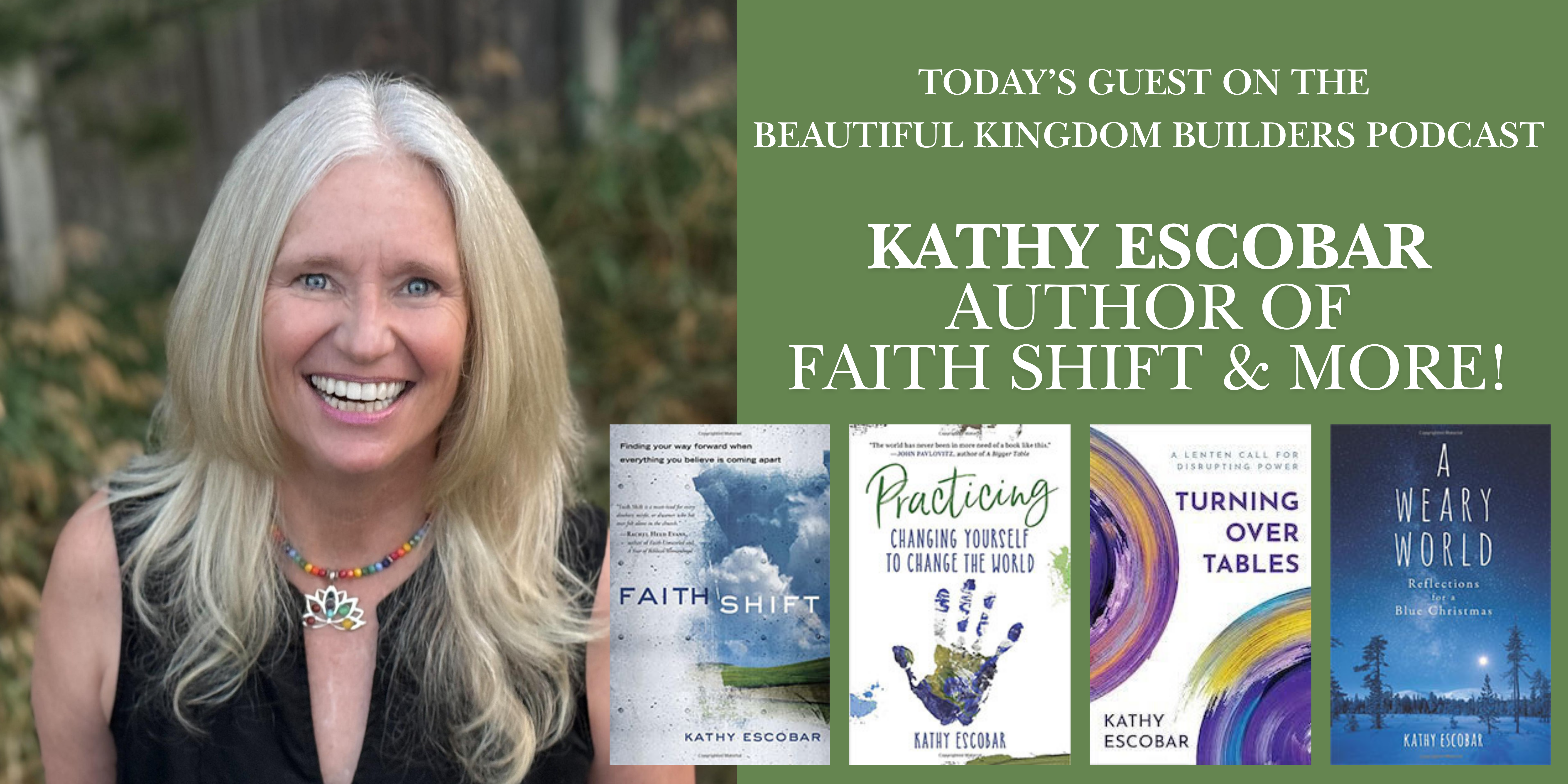
I’m so delighted to share this conversation that I had with Kathy Escobar, writer, pastor, advocate, speaker and spiritual director. You can find out more about Kathy’s work at KathyEscobar.com and find all of her books here.

I read her book in 2016 and shared a review here on the blog exactly ten years ago. As I prepared to interview Kathy, I remembered the trend going around right now of sharing pictures of ourselves in 2016 and reflecting on how much we and our world have changed in that time. We’ve been through a lot, my friends. Kathy’s book, “Faith Shift”, is as relevant today as it was to me ten years ago, as I was grappling with the cognitive dissonance of spiritual trauma and deconstructing my conservative Baptist upbringing. We talk through all the stages of a faith shift together in this episode: Fusing, Shifting, Returning, Unraveling, Severing and Rebuilding (or Reimagining, if she could write it again today.) We talked about co-dependency and being a “Good Christian Woman” vs. an “Ex Good Christian Woman,” which I blogged about in 2015 here. We talked about embodiment and activism and finding church and ministry outside of evangelicalsm. It was such a fun conversation, and I know you’ll get a lot from it!
You can listen to our episode together on The Beautiful Kingdom Builders Podcast on YouTubeSpotifyApple PodcastsAmazon Music, or more! If you find our conversation helpful, please share it with a friend, rate and review, and subscribe so you never miss an episode!

TRANSCRIPT:

Ruth Perry (00:15)
My guest today is Kathy Escobar, a pastor, writer, advocate, speaker, and spiritual director. And on her website, she describes herself as a community cultivator and change catalyzer who believes in the power of human connection and that healthier people make healthier families, communities, and systems. Welcome, Kathy. Thank you for being here today.

Kathy Escobar (00:36)
it’s so fun. I’m so glad we get to hang out.

Ruth Perry (00:39)
You’ve written many beautiful books, but I wanted to bring you on to talk about this book, Faith Shift. I read this 10 years ago, And on the cover it has a blurb from Rachel Held Evans saying, “Faith Shift is a must read for every doubter, misfit or dreamer who has ever felt alone in the church.” And that was definitely me 10 years ago. And so I’m so grateful that I found your book and I’m grateful that here today.

And just thinking about how 10 years ago was 2016 and there’s that trend right now, people sharing pictures of themselves in 2016 and reflecting on how much the world has changed in one decade because we’ve seen the rise of MAGA and Christian nationalism and the Black Lives Matter movement and the Me Too movement. We’ve seen the erosion of our democracy and civil rights and now the scapegoating and oppression of immigrants and covering up the Epstein files. I mean, just so much for 10 years. so, And the church has just hemorrhaged people. I think people have been questioning their faith and walking away from their faith communities.

Kathy Escobar (01:36)
It’s a lot. It’s a lot.

Ruth Perry (01:46)
I think this last 10 years is a really important time for us to reflect on. And so first of all, I want to say kudos to you for writing such an important book.

Kathy Escobar (01:55)
I have to say like just you reading Rachel’s cover quote, it gave me chills. it is so, so special that we were connected all those years ago. And honestly, I attribute a lot of what happened with Faith Shift to Rachel and her support for the process and the book, but just more than anything, the process. I mean, that’s really what the material was about. And it is interesting because it’s 12 years now and then 10 years of kind of really this 2016 and 2026. a lot’s happened. And it’s interesting how it is more timeless than I thought.

Because you know, I knew when I wrote it there were people that were already, way past they had unraveled and were rebuilding and reimagining and then there are people just entering in the story and then that people would be entering into the story a few years later, but now we’re 12 years later and then there’s brand new people because of the way things have ramped up and I am so glad I would change a few things in there, very few on the whole.

The I really still stand behind, but I think what I love is that people can at least find some kindredness because it’s a hard process. And right now with so many people going, I can’t do this anymore. Like that was a few calls this morning of just setting up meetings. Like I’m done. I can’t go anymore. I can’t be part anymore. And just people wanting some support for that so that we’re not struggling so much through the because there’s a long line. You’re one of them who have done that work, you know, and now we’re here to hold the container for other people. And I’m glad that there is way more support now in 2026 than there was in 2014.

Ruth Perry (03:42)
When I came to your book, I was in a really broken place because my home church had gone through a split and my dad had been the senior pastor and my brother had been his associate pastor. And everybody in the church was like family to me. I just never could have imagined that they would treat us the way we were treated and the things that we experienced, it was really traumatic on multiple levels. And so I was reeling from that.

And then also, I had grown up complementarian and then God called me to be a pastor in 2010 when I was pregnant with my third child. And so I was going through all the cognitive dissonance of trying to figure that out. And so my faith was just really, you describe it as spiritual vertigo in your book. And that was exactly how I was feeling. It was a really, really painful season. And so when I came to your blog, and was reading your posts and then I discovered you had a book and I ordered this. It was like finding balm in Gilead. You gave me language and insight that helped me understand the season I was in and that helped me to persevere and make it through. And so just thank you from the bottom of my heart to you personally for that. And I do hope more people read your book.

Kathy Escobar (04:53)
That means so much and that’s exactly why I wrote it right there. always it was just like may it get into the hands of the people that need it the most and and just find ourselves in the story and that was always you know the language in there I kind of do have these movements of a faith shift and evolution of faith But it was like change the words change the way that change how it looks it doesn’t matter Just grab what you need for your story that’s gonna help you

Ruth Perry (05:22)
Before we talk about the book, can you tell us a little bit about your own personal faith background?

Kathy Escobar (05:27)
Yeah, so I was not raised in church and so that’s an interesting part because like I know what it was like before kind of going in on the system and so my family, my dad was a hippie in Northern California. My mom had gone through one marriage and married my dad and left him and so our whole our whole house was kind of I’d say super spiritual but not religious and so I would go to a Catholic church with my grandparents when I was visiting them and that was sweet but I was super lost and didn’t understand anything that was happening but somewhere along the line someone invited me to Vacation Bible School and I went and I was always hungry for spiritual connection always.

So I went and I prayed the prayer, didn’t do anything. You know, I didn’t have any structures. Then somewhere along the line, someone gave me this little white Bible. And I still have it in my memento box. And they just were like, read this and read John. And I don’t remember my exact age, but I was an avid reader really young. And it was probably late elementary, early middle school. And I was just super drawn to Jesus. I was. I thought Jesus was super cool. I loved that it was all the outcasts and the lepers and that part of it really I was drawn in and my family had a lot of chaos and so I felt that connection. I did. There was something about it.

So it was pretty pure, is the bottom line because I didn’t go to church. So I wasn’t systemized at It was real and I have a lot of journals like Dear God and Dear Jesus and I just was kind of kind like that Judy Blume book. You know, I was just reaching out for connection. And so I did end up going to an evangelical church in my high school years with my boyfriend at the time. Something did kind of happen. I just was more hungry for it. And that was kind of the entry into evangelicalism and so just started to go more started to listen to what they said and so.

For me, my background became being part of mainly evangelical churches, Calvary chapels. We went to the Vineyard for a little bit, those sort of attractional churches that were in the evangelical stream where women didn’t teach and lead, but it was like really fun to be part of. There was a lot of whiz bang and there was this thing happening of this is a way you can live your life. And I was really drawn to it because I didn’t have a lot of boundaries or I didn’t really have any certainty in my family. And I did feel a security in that system. So I was in that system for a chunk of years. I always kind of pushed against it because I went to Pepperdine University for my undergrad and I was one of the poorest people there. I drove up in my Datsun B210 1976. You know, there’s Ferraris and Mercedes and BMWs.

And I didn’t really get the Church of Christ thing because I wasn’t church, you know, I didn’t really get it. And then the girls in my Bible class were crying and saying, it’s so terrible, I can’t serve communion, they won’t let me do this, I can’t serve communion. I was looking at them going like, what’s your problem? Why are you there if they’re not letting you serve communion? And the irony is just probably about four or five years later, I was in churches like that with my husband.

Really there and that is strange thing for me. And so I always describe like a funnel, but there’s a funnel on both sides and one is like going up into the tightness of a funnel, like the base. And so I was in that system for a chunk of years, but it’s kind of always like pressing out on it. And then a big piece was bumping up into all kinds of things, primarily related to women, the LGBT community, the inerrancy of the Bible, things that just didn’t make sense to me. the system was saying, but this is what it says. And this is, you just don’t know cause you’re young in your faith. And I questioned myself.

I didn’t have some security, but I kept growing up. And when everything came apart for me, it was really was in 2006. I really describe it as the funnel out in now it’s this many years later. 20 years later and my funnel is way out. And I’m so glad and then I still have good things that are left and that’s the piece of Faith Shift is that there’s a way to reimagine and pursue a faith that has those values of mystery and diversity and freedom but the systems are just so terrible at helping us with that. So that’s kind of my background.

I am an ex-vangelical for sure but I’m not whereI grew up, you know, I kind of have this different foundation now, but it is wide and expansive and I’m so grateful I got out.

Ruth Perry (10:20)
In your first chapter in Faith Shift, you wrote, “Most Christians are taught that faith is defined by an event, salvation. After we get saved, we turn our energies to keeping faith, growing it, spreading it. The truth is growth and change are natural parts of our relationship with God. God invites us to be in motion, but often the faith systems we are a part of don’t. Our changes can feel threatening to those who are used to believing and behaving a particular way. A faith shift, what often feels like a failure or an end can actually be a doorway to something more, something bigger and truer.” That’s from chapter one, you titled, You’re Not Crazy, You’re Not Alone, which was excellent. So you had gone through that process, then of faith shifting that brought you to write this book. And who were you picturing as your readers?

Kathy Escobar (11:00)
Yeah. Well, I think the readers were the people that I was around circles with here in Denver. There was just this little covert group of people. A lot of them were in ministry, not everybody, and that were just asking these really good questions together. And we would sit here in the backyard around campfires and coffee shops and over dinner and just really talk about what we didn’t hold on to anymore. What does that mean?

And kind of this idea, I wrote a post about spiritual Jenga, if you start taking out core things that people said, you have to have, will the whole thing come down? So those kinds of things, and what does it mean if the whole thing comes down? What does it mean for my kids? What does it mean for myself? I put a lot into it. There’s a ton of grief related to these changes because we have lived a certain way. I had a lot built in my identity as a really good Christian and certainty, you know, in faith shift, I think we’ll probably talk a little bit more about those movements, but you know, in that fusing, like that initial thing of certainty and conformity and belonging and affiliate, like those things are so strong.

And so when they start to come apart, like who are we? And so that was really the people that were part of The Refuge community at the very beginning were huge. And also you started with Rachel’s quote is that I started writing in 2007. I started looking up stuff in 2006 when The Refuge started. We’re getting ready to have our 20 year birthday in April. And in 2006 and seven, I started meeting some other people in other places. We’re still friends and everybody has had a huge faith deconstruction and is I mean life in new ways. But we were connecting around the United States. I mean that’s how I met Rachel was writing and I met her in real life and we became friends and there were so many of us in that stream. And so by 2014, It was just a lot of people resonating with the same things.

There were lot of things out of the themes were always the same. And it was always, I used to be here. It’s not resonating anymore. What is available to me? Like is there life on the other side or is that part of my life completely done? And honestly, it feels so disorienting. That was the biggest theme by far was the disorientation of losing the things that we once had. And I think that ⁓ a piece of the conversations were always, I framed it in faith shift this way, but it was always what we were talking about is that’s when we lose our beliefs, then we lose the structures that support those beliefs, then we lose the relationships that are in those structures, and then we lose our identity.

And so that’s what everyone was talking about. Who am I now? And is it okay? Am I going to be okay? Was a huge piece. Am I going to be okay? Especially people, I didn’t have it as strong because I was in evangelicalism, but I wasn’t in fundamentalism. And so there were a lot of things about what’s going to happen to me eternally if I walk away from all those belief systems, am I going to burn in hell for the rest of my life? Like I told people they would. And you know, those kinds of things were really, really deep. And then I had more of the, who am I without it? Because I did get a lot out of that system. And, and some a lot of fear of just, what do I, if you don’t believe this, then what do you believe? And so that was a big piece of my process.

Ruth Perry (14:35)
Yeah. Yeah, your book, you name each of those stages. And if you don’t mind walking through the stages again and give us the name and then what’s going on in each stage of a faith shift.

Kathy Escobar (15:04)
Yeah, I’m glad to do that. And so, infusing, infusing is like our start.

It’s just our start and our start looks different. Mine was, when I was a kid, but it wasn’t born with it. Some people started with it in the womb. Some people were 30, you know, wherever it was, but it is that desire for the core values. There are certainty and conformity and affiliation. So like truth, knowing what this is, this kind of conforming to the norms of the group and then being part of something, what it feels like to be part. Most people all have that. That’s just part of it. But some people stay there.

I would say most people do probably go through a little bit of shifting and I describe that as a like wavy line where you just start to question some things. like hmm. It’s when you’re sitting in church and you’re like why are we singing that song? Could I be doing something better with my time? Is this what Jesus wanted? I don’t know if I agree with that thing the pastor just said that doesn’t make sense in real life or they’re talking about my kid right now when they’re talking about LGBT stuff, whatever it is it’s like rumbly is how I describe shifting and what happens is, I think a lot of people fuse and a lot of people rumble.

And then a stage in there of returning kind of just like an arrow back over, like, I don’t know, but I don’t have anywhere else to go. It’s familiar to me, it’s comfortable enough, whatever. And I think there’s a lot in that cycle of fusing, shifting, returning, and just kind of staying there. Then there’s some of us, where you’re definitely one, I’m definitely one, a lot of people listening, I’m sure are too.

The biggest thing on shifting, it’s in our control. It’s in our control. A lot of us hit a place where it’s no longer in our control. a bridge too far. It is too big of a violation in our core values. something that happens in our life. A lot of people I know, their faith shift started when they got divorced and how the church responded to them. In my situation, I had a traumatic event as a leader where horrible power things were revealed like Oz. It was like the curtain and it was so bad. It was just terrible. And I couldn’t not look at it. I could not close the curtain. That I would say is when we hit the next three, which all faith deconstructors really probably connect with the most. And that is unraveling. And it’s a free fall down, man. is not shifting does not describe it.

And we kind of struggle with the faith shift language a little bit, like that it wasn’t strong enough, you know, for what happened. But it is because it’s all a big shift in our lives and a transition. But unraveling is when it just really gets out of our control. And that’s what happened to me. Like once I saw I saw the inequity, I saw the terrible things that were being said about people on the margins. I saw consolidated power. Saw God card getting played all the time. I couldn’t unsee it. I couldn’t un-feel it. And it’s just like a free fall down. And in unraveling is a desire for uncertainty, authenticity, and autonomy.

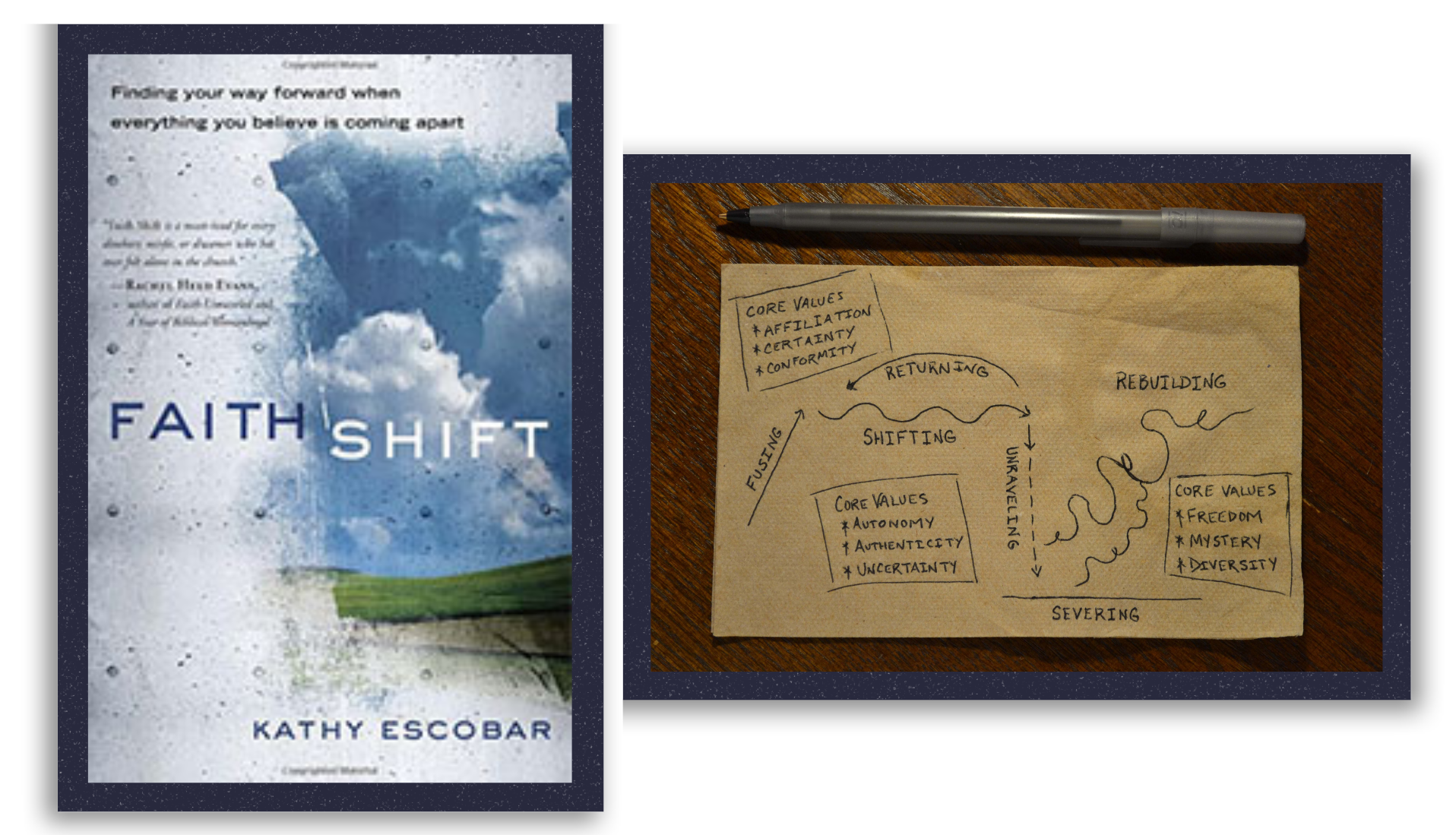
Because it’s like, gotta figure out what I need and no one’s gonna tell me anymore. You know, those kinds of things. And in there, in unraveling, big, big ball of grief. And I already said the four things when we lose those beliefs and then structures, relationships and identity. It’s just unraveling. It’s just a bunch of grief. And then the bottom one, which when we were working on the project, my editors and I, and I never forget this conversation. We were trying to come up with different words about severing because the truth is some people really walk away from it all like they really do. I never fully severed. So when I kind of looked at the Faith Shift, Faith Evolution model I say to people, it’s on a napkin. It’s not the whole cross the bridge to Jesus thing. It’s a totally different model, but it is something you could just draw it your own way. I drew it this way to give a visual for it.

And so at the bottom is severing like people really do have to leave emotionally. And that’s where atheism, agnosticism and the one that I always leave room for is a true break from the old toxic system. And you need to detox and especially when you’re in spiritually abusive systems, you can’t just go to something new. It’s a spiritual bypass. You’re not going to make it. So you have to like cut and cleanse. And some people sever forever. And the part with the book was really leaving room for that. It’s very controversial. It’s not to me, because I see people do just fine if they sever. But there are people that want to rebuild or reimagine something else.

And so I will say a chunk of years now, I changed the language that’s in Faith Shift from rebuilding to reimagining. Whenever I’m with a group on this, I would use reimagine now instead of rebuilding because rebuilding was fine for then, but so much has changed and building something is also a lot of resistance to that for good reason. You’re just building something else that has to come down. But reimagining, really resonates and in reimagining it’s just like a bunch of like squiggly lines. And it’s not back here it’s like this way it’s forward and it’s squiggly and it’s messy and it’s up and down and all around but it’s a search the core values that guide reimagining slash rebuilding are a desire for greater mystery freedom and diversity in all the things so it’s a wider everything.

The thing I want to say about my editors is that when we were in the room workshopping this, they kept wanting to have an infinity model. And it didn’t leave room for severing and people don’t go back there. Like it doesn’t flow that way. And it was funny. We went round and round and I just kept saying, no, it doesn’t resonate with me or the people that I journey with. And then they finally throw their pens down. They’re like, okay, we’re really off on this, aren’t we? And I was like, yeah, I think so. I do. Because it’s just not people’s experiences.

And I’ve had multiple people tell me that if severing, wasn’t on there, they would have thrown the book away. They would have thrown the book away. They would have got that far and people need permission in themselves. They don’t need permission from me. They need permission in themselves to let that be and find out who we are separated from the system. I never fully separated my story because of The Refuge and we started it and I had a place to do stuff. So I came close, I thought about it, but I had the luxury kind of of being around a bunch of other people, reimagining together. But there’s so many that need that and I think that that’s the problem when we try and go well you’re just going through a faith and you’ll come back around and that’s just not how this works in most cases when we really unravel.

Ruth Perry (22:06)
I feel like I did sever, even though I’ve always maintained my relationships and my faith. I’ve reimagined it, but I severed from the need to people please. I had to sever from the codependency of the toxic system that I was in, especially in my closest relationships, where I had to learn that I had to have integrity and authenticity in doing what I felt was right, not doing what other people expected of me. And so in that way, I felt like the severing language was really impactful for me.

Kathy Escobar (22:32)
Yeah. I’m so glad. I’m so glad and it’s brave and it’s hard, but it’s so healthy. Like it is so healthy to detach and sever from toxic things. Like that’s not a stretch in the world.

Ruth Perry (22:50)
Yeah, that’s my next question for you actually is How, when people start rebuilding or reimagining their faith and going through this process, what do you see is healthier in their life than before?

Kathy Escobar (23:01)
Well, I always say this, I mean, and this is a bad stat, but in my experience, and I can say this because I can line up every single person I know, 100 % of the time, people are healthier and more free. And it’s one of my deep sadnesses, to be honest, because I’m mainly in the Christian tradition. And so for that many people spending that much time in that system, there should be a lot more freedom.

And so to have to go through this whole process of untangling for so many things to become a healthier, more freer person is very sad. What I’ve seen on the whole is people just really learn how to live more true to their truest true, which one of the worst toxic theology things that’s taught in my opinion is that, our heart is wicked above all things, that we can’t trust you’re nothing apart from Jesus.

You know that God is in control of everything and you’ve got to find your way into God’s will or if you’re out if anything bad in your life, then it’s not in alignment with God somehow. It’s so much power and control. And so it is healthy to leave those kinds of toxic abusive relationships. I think the health that I see is as we learn how to tell the truth more. We learn how to not be split. Like we’re not one thing on the inside that we’re like, and then outside we’re pretending like we’re doing fine because we just don’t have a safe place to be authentic.

So I think health is healing the split and everyone becomes more whole. I think the other piece is actually listening to our bodies. So a huge piece of evangelical fundamentalist Christianity is disembodiment and just being cut off from our bodies and that was a huge thing for me and so I couldn’t even tell you like what am I feeling?

What’s my feeling? I don’t know. I don’t even know because you have to find that feeling in your body. It’s not a head thing. You feel and where do you feel it in your body and just really being disconnected. And so I think what happens in the spaces of mystery and in the spaces of freedom to explore different spiritual practices, what works and doesn’t work instead of having to like buy into all of it. And freedom, like people really settle in to become healthier.

And I just feel it makes me want to cry because I, last night at our house of refuge, I’ve known some of those people since the beginning of The Refuge. And we’re still here meeting in our house. This is one piece of the work of The Refuge still is house of refuge. It’s every other Wednesday night at Collective Spiritual Conversations and I can’t even tell you the healing. It’s crazy what happened when everybody got out of the thing that they were so dedicated to. And it doesn’t mean there’s not still realities of mental health. There’s not still realities of struggles in this world. Nothing’s resolved because it’s the human experience. But it’s like everyone is not carrying that burden on top of those things anymore. And it’s so fun to see. I am amazed at something that has so much money and so much time and so much energy and so much culture and all those things just does not produce health. That’s what it is. It just doesn’t produce that many healthy people. And that’s a shame. That’s a shame.

It really is because it’s a lot of opportunity to put in really good stuff for people. The stuff that we really need and that is how to be more whole and authentic and secure and free and use your gifts freely and follow the deepest desires of your heart for the greater good in the world without control, someone controlling that. So there’s my long answer to that question.

Ruth Perry (26:36)
Yeah. I think between being a codependent people pleaser and just absorbing everybody else’s needs and then on top of that having the same disembodiment issue, I know that my work is embodiment healing that I need to do. So what do you recommend? Where do I start?

Kathy Escobar (27:20)
My gosh, well you know one thing is my friend Janelle Absramsey, she’s edited and written in a few different books. She’s a good friend of mine. We actually met through Faith Shift. She came to a Faith Shift processing party that we had. I did some of those in the early days just creating space to kind of walk through. We met there and she’s now the co-director of Brew Theology in Denver. And she just came to, we have a group at The Refuge called Reimagine on Sunday night, first Sunday night of the month, virtually. It’s one of our only like wide ⁓ on the weekend virtual groups. And it came out of a desire, honestly, our first year was related to church burnouts and freedom seekers and people that were just desiring something different. And then this last year we switched a little bit more to practical and soulful resourcing to navigate these turbulent times because what’s happening in the wider story right now in 2026. It’s been happening for 10 years, but it really has been happening long before that, but it’s illuminated the Christian nationalism thing, the double down, the misogyny.

It’s so deep and it really is rattling. Even people who have been in a pretty good place over the years just feel that wound opened and then new people feeling the wound and finding out. So Reimagine is about that like resourcing. So she came and she had a whole thing on embodiment and it was so good. I can send you at least the PDF because it has a bunch of resources and I think you would really, I think you’d really connect and she’s a pastor, a piece of the story. It’s okay for me to say this. Our multi-faith group that I’m part of, she joined, I’ve been part for 15 years, she joined a chunk of years ago after not being able to be ordained in the denomination that she grew up in. We ordained her.

It was incredible. It was so beautiful. There were like seven faiths. We had a beautiful service. I was part of helping curate it. And it was really one of the holiest things because she’s an incredible pastor. She’s an incredible pastor and we ordained her.

Ruth Perry (29:17)
Beautiful.

Kathy Escobar (29:33)
I knew it was one of the coolest multi-faith things that we did. We do a lot of cool things, but that was like way up in the books of one of the coolest things that we’ve done together in the time that I’ve been there.

Ruth Perry (29:43)
Yeah, patriarchy is pretty insidious in a lot of the church. And so that was one of the things that I really appreciated in your blog, I think more than your book. I don’t remember from the book if you addressed it as much, but in your blog, I really loved your post, Good Christian Woman versus Ex-Good Christian Woman. And I think I shared it with hundreds of people probably at the time. And so I just thought I would read

Kathy Escobar (30:08)
That was a long time ago, yeah.

Ruth Perry (30:11)
You made this bullet list of qualities of a good Christian woman. You said they:
rarely engage in conflict,
are terrible at saying no because it feels selfish,
know how to say the right things, do the right things to keep the peace,
continually strive, and I do mean strive, to be a better wife, better mother, better Christian,
live with a feeling that God is disappointed with us somehow.
feel a lot of shame for who we are and who we aren’t, but rarely say it out loud.
doubt our leadership, feelings, gifts, dreams.
dwell on the things we should be doing differently or better.
view anger as sin and always seek permission.
That’s so heavy.

Kathy Escobar (30:49)
It’s a lot. I love that post though. And you know what? It is one of my top posts ever. And that was from like, what year was that? It was a long time ago.

Ruth Perry (30:59)
Yeah, well, it probably was in 2014 or 2016 or so when I was reading your book, I’m guessing. And then you provided a better list. Ex-good Christian women are:
learning to show up in relationship instead of hiding,
engage in conflict instead of avoid it,
say no with less and less guilt and say yes more freely, more honestly,
tell the truth,
respect anger
are honest about shame,
live in the present,
are beginning to believe we are enough here and now,
open ourselves up to dreams and passions and living out what God is stirring up in us,
lead and love and live in all kinds of new ways with or without permission,
are discovering that God is much bigger than we were ever taught and loves us more than we ever knew.
What a much more beautiful picture of Christian womanhood, huh?

Kathy Escobar (31:52)
And honestly as you read those like so much is in there on embodiment honestly. Embodiment really is just being like that living through us. And so our being connected to the deepest parts of our soul and our bodies and like one thing instead of a bunch of fragmented things. That really is what to me embodiment is. And then moving in the world that way, showing up in rooms that way. Our back straight and our head held high, which is so hard when we were taught to just be up space, saying what we want and what we need. So like that to me is all embodiment. And so I love that list. I do still love it after all these years.

Ruth Perry (32:38)
How does a performance-based faith, like our early faith stage, create codependency in us, do you think?

Kathy Escobar (32:45)
Well, I have a lot of things written about our codependent relationship with God. so, the truth is, mean, honestly, it is kind of a setup because in codependence, you’re always striving to kind of be okay. That’s ultimately what it is. The definition for me for codependence is any pattern or anything that we do that makes us be okay. And when we don’t do it, we’re not okay.

And so, those basically have, you know, shame and self-worth and compliance and avoidance and control, like all these ways that we try and be okay. So, performance-based with God is pretty simple in those systems that you’re, talking about that a lot of people listening probably were part of. It’s just really is performance-based.

You’re evaluated for how you say things. You’re evaluated for what you look like. You’re evaluated for how you serve God. My whole thing is you just say a lot of God things, people think that it’s awesome. I was like, throwing in Bible verses does not mean anything. But to even the Christian world, they’re like, ⁓ that person you can trust, even though their life is not indicative of those Bible verses.

We value those kinds of things. And so I think that performance and then you really put in, economic security. There’s a lot of things that the lie of white supremacy, Christian supremacy, Bible supremacy, male supremacy, like those lies are really deep in us and they’re a huge part. And so in relationship with God, when we’re taught that we are okay if we do these things, if we believe these things or if we behave this way, whatever that looks like, it creates this cycle and I was in one for sure, because I am an adult child of an alcoholic, I know co-dependence. I still go to meetings, the Refuge House, the Refuge Recovery meeting twice a month, and it’s a great meeting because we’re all just trying to be healthier humans. That’s really what we’re trying to do.

But in my God season, it was just never feeling like I was enough, which is what most co-dependents feel. Never feeling like if I said the truth, what does that say about my faith? And then I’m in a less standing with God. And then constant trying to make sure that I’m proving my worth in the world.

First to God and then to other people. And so it is just a vicious cycle. And honestly, it’s an addiction. The way to break out of codependency is similar to other addictions. And it really takes being honest about these things and saying it’s not working. And when I look at it now, I mean, it’s so many years later, but it’s really sad, the setup with God.

To be in this constant cycle. It is an abusive relationship, the way that the theological constructs that people taught us about God and then the setup of what it meant to be part of that system. And so honestly, it’s like untangling from an abusive relationship. And I know that’s not on God. That’s not on God. That is on the people that taught us that. And so I do think it’s confusing because the people get so merged with who, with God.

They’re all tangled up and they were claiming God. And I think that was a big piece of the work for me was really trying to separate out. Like even though I was taught these things doesn’t mean that that’s who God is. And there are now especially being out of the system for 20 years this year. I can say it’s amazing to be in the multi-faith space and the inter spiritual so many different things progressive Christian like it doesn’t matter like across, there’s just a lot more out there than that very narrow system and I’m in awe all the time about that and how sad it is that we just have put God in the most narrow thing and then said this is the only way and you are measured against this standard.

Ruth Perry (36:50)
Yeah. And the certainty piece too of the early stage where we see everything so concretely one way or another. And is it growing to be a problem where if you start to feel a little dissonant about one little thing. Now, if you bring that up, you almost get ejected immediately, like written off. There is so much more control in these groups about who belongs, who’s in and who’s out. And so part of it too is they’re like forcing people into their faith shift, maybe a little prematurely at times, because they’re like, I’ve been ejected.

Kathy Escobar (37:23)
I know, I think you’re right, I do. I think now, when I talk to people, I’m like, do you like being there? Well, yeah, I do like being there. And like, but I’m troubled about this. And so just the best way to test it is just to see what happens when you ask a question and you push against or you disagree. That’s how you test what a system is made of.

And I have people that systems have done just fine, honestly, because healthy systems and they can do it. They might not love it, but those do tend to be more progressive, inclusive communities that can hold a much wider breadth of the mystery of faith and don’t have really strict doctrinal statements. They might say what they believe, but it’s just got a lot of room in it. And then I’ve had others, you know, they just, it was awful.

And so, and sometimes what’s hard is like, some people like get forced out by the system, but way more get forced out by just going, I can’t do this anymore. And then what happens is they stop going and no one cared, no one cared. And that is a very sad thing. I hear that story a lot. They just were like, I stopped going, no one cared. Or I said I couldn’t go anymore because my kid’s gay and I’m not gonna go to this church anymore that believes something different. It’s not right for me. I’m just using that one example. And then just nobody cares. I mean, it’s just that simple. The wheels of the machine just keep going and no one misses them. And you know, it’s just that I think it’s both ways. Like you have the system goes, you know what, if you believe that this is not a place for you. And you’re wrong.

And there’s just so many degrees of how the system sucks. I mean, basically, that’s kind of where I land. The system just sucks at nuance and it sucks at good transitions. Like it doesn’t know how to go, gosh, we honor that. This isn’t the place for that, but we honor that. How can we end something well? How can we celebrate what you’ve done here? It just never does it. Everyone just ends out on the outs of the system for the most part. I don’t have that many good stories of good transitions out.

Ruth Perry (39:47)
Something I’ve noticed, maybe you’ve noticed this too, is because my background was evangelical and we kind of got ejected when the church split. So we started going to evangelical churches further and further and further away. We eventually after a few years of doing this, we landed in a church, and it was great. But looking back, I can’t believe that I never, tried the Methodist Church in town or the Episcopal Church in town. I was just so in this, I gotta go to an evangelical church because they’re the true Christians. And I mean, that was years and years and years. And I’m finally now for two and a half years, I’ve been a clergy person in the United Methodist Church. But they invited me, I never reached out to them. I was still looking at evangelical churches. So what is that about? What do you think that is, Kathy?

Kathy Escobar (40:17)
Yeah. Love it. Yes. My gosh, I think because I totally agree with you. I love the Methodist Church. There’s different ones but ones that really like made it through this split that they had. And the Episcopal Church and I have a lot of UCC friends like the DOC. There’s some great denominations that I would agree with you. I knew they existed. I didn’t think that they were worth connecting to because I was taught that they weren’t the true believers basically.

I mean that was said overtly and in all the culture and this is where the real juice of Jesus is and so I just think that the mainline churches have so much good. I can see in the justice space, because I’m in the justice space here in lots of ways, in activism, like, I’m telling you, the main lines are out there. The multi-faith are out there in the streets across all faiths. And they all have their own, you know, degrees of progressivism and conservatism, but just tend to be so much more action and faith in action than evangelicalism.

And the evangelicals, frankly, are just not there, usually, in most of the circles. It’s not exclusive. I’m not going to say all, but by far, it’s a very very small percentage and it’s really interesting because there’s just something so off on that system’s ability to play with others and it’s just a closed system and it’s because what comes back to the beginning really there’s just a certainty that they’re right and everyone else is wrong.

And that is so sad. So I’m so happy that you have found a place there and I have seen this a lot, is this place where gifts are valued freely. And I know watching so many female leaders lead and be ordained, become deacons and elders and pastor all different roles, just really find their way in the right churches. And they just are never in evangelical churches. They just never are, for the most part. They just aren’t.

Ruth Perry (42:51)
Yeah. When I was in that culture too, another piece was fear of people outside of my group. I just had so much fear and that fear kept me from really loving people. I’m just trying to think too about the piece of grief that you talk about in faith shifting and then the freedom on the other side, it’s so worth it.

Kathy Escobar (43:11)
Yeah, yeah, and you know the thing about grief, it’s so important is that it really does, I’m still sad. I’m 20 years, and honestly the 20 year mark has kind of had me reflecting on a lot of things because it’s a big ritual, you know, it’s a celebration and I look back 20 years is a long time and I just remembered those early years and The Refuge is totally different than it is what started. It started as a like eclectic, kind of emerging faith community that was built on the 12 steps of recovery and the Beatitudes. But it also was more Jesusy and more evangelical-y then than it is now. I look back to old writing and things that I wrote, it was just a different place.

But I think that the grief for me, it doesn’t just go away just because we reimagine and that’s what probably is the best illustration to me of all of these is their cycles and so we touch on it. Like, I’m in a really good place, I don’t ever look back and long. I don’t paint pictures of Egypt. I don’t do any of that I did but I don’t anymore but it’s still sad for me and the saddest part out of everything for me is that in 20 years not that much has changed in the systems. And that is just, that’s a travesty. And because so many other things have evolved, cultures evolved.

We know so much more about brain science people. And we know so much more in 20 years. We have access to so much greater good. And it just has not translated to most evangelical fundamentalist church systems. So that is grief. I do feel it. And part of grief is anger. And you talked on the ex-Good Christian and the Good Christian side, I am mad. I’m not nearly as mad as I was in the early days. I was just like, look out, because I had never really in any of my systems or my family been able to express anger.

But I am really mad and sad that they influenced this many people and it’s this harmful. And that there’s a rise now, like I feel like we made a lot of progress, and now there’s a rise that’s, I don’t think it’s real, real, on the ground it doesn’t feel real, as real as what we see on social media, now in the national media, because of this administration, but, there’s not a groundswell on the ground for that. There are far more amazing Methodist churches and progressive things and activists and, you know, all the people on the ground, like really trying to build a better community. But it does feel really sad that these things are being propped up in such a clear way and that they’re being attached to our our system that said it was supposed to be church and state, honestly. And so I have a lot of grief about that and a lot of anger.

And I think we all do, not everyone, those that are struggling with it, it’s really tapping into that. So even though I’m not as tuned in to the feelings that I had all those years ago, I still have feelings. And I think that that’s of grief because grief has no rules, it’s waves, it’s not stages, it just comes in little waves. The waves right now are not these big waves that overwhelm me, but they do bubble up and it’s sad. It’s sad.

Ruth Perry (46:46)
Yeah. Yeah, it’s hard not to be overwhelmed right now.

Kathy Escobar (46:49)
Yeah, it is. And that’s why resourcing is so important. You know, we were talking about, embodiment and resourcing. We need tools to help us be healthy.

And those look different every person, but whatever are the tools that help us be really centered and grounded and clear. And that’s why healing in this process, that’s why I love the work that you’ve been doing for all these years, because I’ve been following you all these years. I’m not on social media a bunch, but I get things on my feed and there’s good stuff. And it’s resourcing, that’s what it is. And so it’s trying to support people, to be really supported. And I think, you know, so many things now are really related to regulating our nervous systems. And none of that was in church. Nothing was about that. It was kind of detaching and having some spiritual experience but we didn’t have like those ways to do things in the moment and really do it in our whole bodies.

And the other part about resourcing our kindreds. You know, that’s what this project is all about. That’s what you guys are all about. Is that we are with other people that go, my gosh, yes, this is me. And it’s really hard, but I’m not alone. I’m with other people and that’s where I think the juice of faith shift, finding your way into re-imagining and through the unraveling process of having kindreds is so important. And I think right now in 2026 and what we’re up against, which is hard, we have got to be with people who help us. Resourcing is we change states because of it.

And so we might move from dysregulated to, that’s resourcing. So people help us do that. The tools do too. And so we have to get out of our lives, things that just make it worse and get in our lives. Things, people that help us really change states to last. And I think more and more people are finding it, but I do think it’s really hard in the technology world right now.

I saw something from Scott Painter’s work. Do you know anything about it? Yeah, Scott the Painter. And there was just a thing on doom scrolling. And it was like in a shark and it’s like doom scrolling. Don’t do it. And so it was really good because there were all these things you could do.

Ruth Perry (49:01)
Yeah, Scott the painter.

Kathy Escobar (49:14)
and they are all amazing things. Just get outside, call a friend, read a book, eat an apple. I remember thinking those are none of the things that would be suggested in the old system that we were in. And they’re all so simple. That’s the other part of resourcing and of being more embodied and greater freedom, mystery, and diversity is it’s simpler, less complex. We don’t have to have this long list of things to be okay. That’s the breaking the codependency. It’s like we’re secure and free and it’s pretty simple and it’s enough.

And that is part of unraveling, honestly, is just getting rid of all the things that you don’t need so we can travel lighter. And I think more people are going, I cannot travel heavy in this season. My backpack needs to have the least amount of stuff in it, because it’s hard enough to walk to work right now.

Ruth Perry (50:10)
Yeah. That’s a good word. You give me a lot to chew on and you’ve encouraged my faith and my journey and I hope you ⁓ encourage a lot of others and I hope people do read your book, Faith Shift. Where else can they follow you on social media, Kathy? What are you doing?

Kathy Escobar (50:13)
Thank you so much. Well, the best thing definitely because I have a few projects after that one that people might like Practicing and I have A Weary World for Christmas holiday hard and Turning Over Tables is my newest one related to disrupting power and so that might really resonate with some people right now. The best thing to do is go to my website which is Kathy Escobar.com and then it has the links. I’m on Instagram and I’m on Facebook. I’m not the best over there.

Probably my best way to connect right now is through the website, but I do have a Substack. I started writing again last year more regularly and I’m working on a new project called New Ways for a New World, Life and Faith Beyond Binary’s Boxes and Borders. And so I’ve been writing in that stream right now and I’m really happy about it. feels good for me too because I think that’s the new conversation is how do we do this? New ways. We need new ways for a new world because the world has changed so much just since four years. Then you take eight, then you take ten. You know, it’s just changed so much. So yeah, just go over there and you’ll find all the links.

Ruth Perry (51:29)
Yeah. Kathy Escobar.com and thank you so much, Kathy. God bless you.

Kathy Escobar (51:37)
It was so fun hanging out with you


Want to never miss a post here? You can subscribe by email! If you’re on your computer, there is a widget on the righthand side of my page, under my picture and intro. If you are on your phone, scroll to the bottom of the page to find the widget.

You can also Subscribe to The Beautiful Kingdom Builders Podcast on YouTubeSpotifyApple PodcastsAmazon Music, or more! If you find our conversation helpful, please share it with a friend, rate and review, and subscribe so you never miss an episode! God bless!

006 I Rev. Dr. Matthew McNutt on Abuse in New Tribes Mission / Ethnos360

In this conversation, Ruth Perry and her brother Matthew McNutt discuss their experiences as missionary kids in Tambo, a boarding school in Bolivia, South America, focusing on the rampant abuse that occurred and the institutional failures to protect vulnerable children. They explore the long-lasting effects of these experiences, the importance of believing victims, and the need for accountability within church and parachurch organizations. The conversation highlights the challenges faced by survivors and the necessity for change in how abuse is addressed in religious contexts.

Visit ⁠matthewmcnutt.com⁠ to find more detailed information about Matthew’s experiences at Tambo in Bolivia, and his work on a recommendations panel during IHART’s investigation into abuses in New Tribes Missions (now Ethnos360). And visit GRACE (Godly Response to Abuse in Christian Environments) at netgrace.org if you need resources regarding abuse prevention and response.

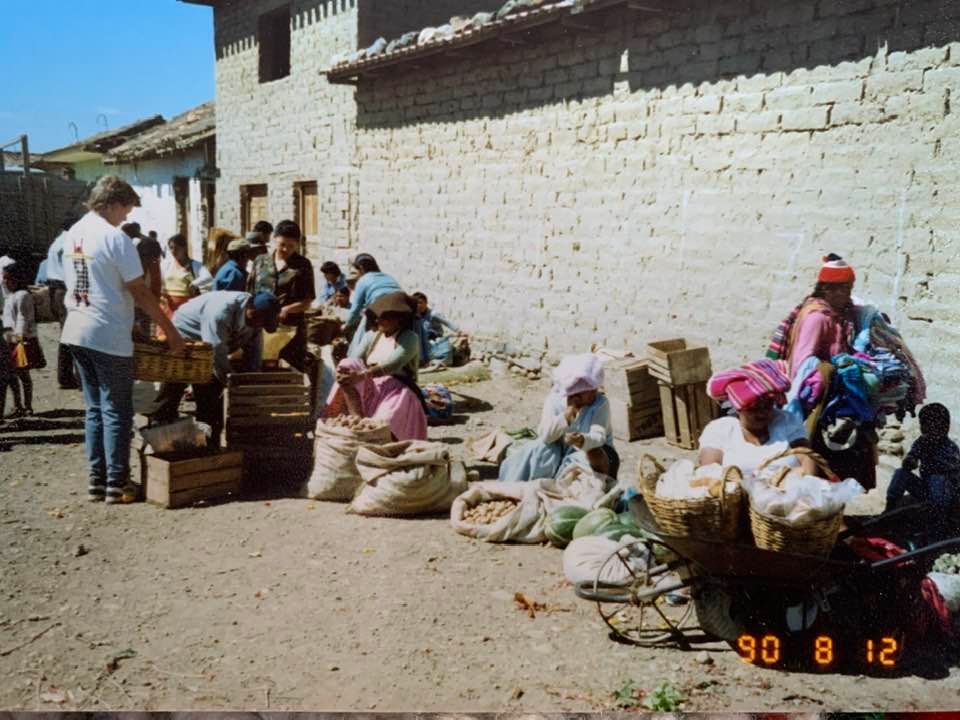
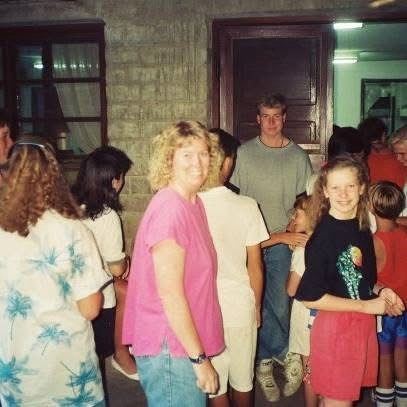
Enjoy these nostalgic pics from our time in Bolivia:

You can watch our episode on YouTube or find it on Spotify, Apple Podcasts, Amazon Music, and more! Please help us spread the word by subscribing, rating, and sharing with a friend.

TRANSCRIPT:

Ruth Perry (00:15)
My guest today is my much older brother, Dr. Matthew McNutt. I’m very pleased to have you today, Matthew.

Matthew McNutt (00:23)
I was pleased to come on until the much older, the, see, ⁓ yeah, good, good cover. That’s, we’ll see.

Ruth Perry (00:26)
much older and wiser, I should say. Yes.

And do you prefer to go by Reverend Doctor or can I call you Matthew?

Matthew McNutt (00:35)
Call me Matthew.

Ruth Perry (00:36)
I invited you on today because one of the things that is on my heart for the church is to care for our most vulnerable members. And we had the opportunity as missionary kids, to see how that can go sideways and all the wrong ways if the safety of children and the vulnerable is not prioritized in an organization. And so our topic today is rather heavy. And I just want to mention that before we dive in, because a lot of people have experienced spiritual, physical, sexual abuse in their lifetime. And so this might be an episode that is challenging for you or that you might not even want to listen to.

Particularly, we’re talking about a missionary boarding school in South America, but I think this was across the world in this organization and other organizations as well, that this was a common problem in these missionary boarding schools, that there was rampant abuse.

So Let’s share our experience. We weren’t always missionary children, but in 1989, our family moved to Bolivia and I was going into fourth grade at the time, but you were going into high school, right?

Matthew McNutt (01:46)
I was going into 10th grade. It was actually the fall of 1990. I guess this being much older and wiser helps me remember it. It helps that I kept a detailed journal too.

Ruth Perry (02:00)
I was thinking I was nine. I was born in 1980, so I was thinking I was 89.

Matthew McNutt (02:04)
89 was my freshman year of high school, 89-90. So 90-91 was the school year that we moved to Bolivia with New Tribes Mission, now known as Ethnos360. But yeah, we moved to Bolivia. Our parents were associate mission staff with New Tribes Mission, which means they were short term. They were going down for a two year commitment. It ended up becoming three years working at the boarding school as third and fourth grade teachers as part of that staff for the first year and half. Then they were transferred to Paraguay for a little over a year before coming back to Bolivia in time for my high school graduation. And then we returned to the US where they jumped into training to go full time with the mission before eventually leaving a year or so later and accepting a call to the church in Maine.

Ruth Perry (02:57)
Yeah, so moving to South America was very exciting. My dad had been an associate pastor at a church in Washington state and had been leading short-term mission trips. And he had been to Bolivia and really was blown away by his experience there. So that’s how we ended up moving to be short-term missionaries there. And so I think our expectations were very high that this was going to be extraordinary.

And it was in many, many ways. It was an extraordinary experience. And I’m really excited that we have that as part of our childhood. I heard Gabor Mate recently talk about how different siblings do not have the same childhood. And one of the ways that that’s true between you and I is that while we were in South America, I always lived with my parents. But the school pressured mom and dad to put you and Danny into the dorms. And so you were living in the dorms at Tambo. The school was very remote. We would get there by bus. I think it took 12 hours from Cochabamba or what was it?

Matthew McNutt (03:55)
Yep, from Cochabamba, six hours from Santa Cruz. The mission, when they had built the school decades before, had intentionally landed it in the middle of nowhere because they did not want missionary kids to have access to movie theaters and the other temptations in the cities, which is wild. As a youth pastor now, I’ve been a youth pastor for 25 years, and it is wild to me that it was more important to have kids hours and hours away from the temptations than it was to have them close to hospitals and emergency care. Like students died at that school over the years, but it was more important to be remote and away from temptation than it was to have access to health services.

Ruth Perry (04:42)
They had a typhoid and a hepatitis outbreak while we were there. And then in the surrounding area, there was a cholera outbreak. And we’re talking about a very short time that we were there, three years.

Matthew McNutt (04:49)
Yeah. Yeah. We called it the HEPA-CHOLEROID OUTBREAK because that was crazy year. That was our first year in South America.

Ruth Perry (04:59)
Yeah. I got an intestinal infection. So while everybody else is getting hepatitis and typhoid, I’m dealing with something totally different, but they kept treating me for hepatitis or typhoid. And so I nearly died our first year there.

Matthew McNutt (05:12)
You mentioned Danny and I were put in the dorms. He was in middle school, I was in high school. If I was in 10th grade, he was in sixth grade. And there was enormous pressure from the established staff that kids should be in the dorms. Which is funny because the guy that put the most pressure on our parents, Al Lotz, did not have his kids in the dorms. They were in his home with him. But, whatever. There was enormous pressure. you were close to death. Dad had hepatitis at the same time. And so the two of you were rushed into the city. Both of you had really severe cases and there was enormous pressure on mom that she could not leave the school to be with you guys because the task was so much more important. And these boarding schools were a way to get the kids away from the parents because the mission task was the most important thing.

Trust God with the kids but what people didn’t really talk about is where they tended to get their best teachers was through the associate program short-term staff who were then unable to really make much change because if they made waves, they were asked to go home early. And if they played nice, they could stay longer. But most of the long-term staff at the school were there because they didn’t fit in well in other places in the mission field. When you talked about we showed up with rose-colored glasses, I was not happy about moving to South America. I was 15. I liked my life. I had a best friend.

I had stuff going on. I was not happy to go. In hindsight, I loved that I spent years of my life living abroad. It really changed my perspective on a of things, but that first year was a really rough transition. But one of the things that was a shock for our parents was finding out the number one reason that most of the missionaries would leave the field at least at that time, was because they didn’t get along with other missionaries. Everybody had the same call, but man, just like there’s a lot of conflict in churches in the US, there’s a lot of conflict on the mission field, and it’s a lot harder when there’s only three families out in a remote base. If you don’t get along, it just gets bad quick. And so…

It’s so hard to find missionaries to begin with. It’s even harder to find missionaries who are able to raise their support and get to the country that once you get missionaries down there, if they don’t fit into what they were called to, man, there’s a desperation. We gotta put them somewhere.

Right? Like we can’t waste these bodies. And so we had dorm parents and teachers with no formal training that did not go to the field for that. I remember one couple wildly racist. They hated Bolivians, but they were missionaries to Bolivia.

Where do you put a missionary couple? Like, well, put them with the missionary kids and make them dorm parents. We had other people that had all sorts of conflict in other places, couldn’t fit in anywhere. Well, then they can be dorm parents. They can be teachers. And it was just a weird mix of dysfunctional career missionaries that couldn’t fit in in other places. Very few of them were at the school because that’s what they went to Bolivia to be missionaries for. Which right away creates a really dangerous groundwork for who’s gonna be working with kids.

On top of that, there’s been a handful of psychologists and counselors out there that specialize in boarding school counseling. A lot of it actually comes out of England because there’s a real boarding school culture there, not Christian but just boarding school in general. And one of the interesting things to me is I was in recent years processing some of what we experienced and what could have happened differently is those counselors would say, it is virtually impossible to have a boarding school without physical and sexual abuse. The schools just in general, secular, Christian, whatever, are going to attract predators because they’re gonna have access to kids with a lot less supervision.

Even if you have every perfect adult, there is going to be student on student abuse, sexual and physical and verbal, because it is impossible to provide the kind of supervision that a child would have at home with their family. Even where we know families don’t have as much communication and supervision as they probably should have. If you stick 15 or 20 high school guys in a home together with one set of parents, even if they are the best dorm parents in the world, there’s no way for them to adequately supervise and protect 15 to 20 high school boys even from each other. And so yeah, our boarding school had tons of abuse.

When we first went down, just in the three years that we were there, there were several missionaries kicked out of the school and off the field for sexual abuse of kids and students. And I remember for years thinking to myself, that must have just been a really weird three years in Tambo’s history. Like just bizarre, like how could that possibly be whatever?

And around 15 years ago, 16 years ago, one of my friends from Tambo who had rejoined the mission was stunned to find out that his abuser, who was not kicked out while we were there. She was still there when we were there as students. I think you had her as a teacher, Susan Major. Yeah, I’ll say names. I mean, even as students, she was no longer allowed to spank kids because she had so viciously beat and left scars on kids for the most minor offenses. So it was known, she was a known abuser. He was stunned to find out that she was still in the mission, that she had just been moved to a boarding school in Mexico.

And so he was like, she should not be in the mission. She needs to be gone. Like this is outrageous that she’s been in the mission at that point for decades and decades abusing kids. And they were like, well, you know, the Bible says you can’t have just one person bring an accusation against the leader. There needs to be two or three witnesses. And, you know, he was kind of stunned because it was already a known thing by the time we had shown up in South America. He was my age at that point, but as a fifth and sixth grade student, he had had her and in the years since she wasn’t allowed to beat kids anymore because it was such a known thing.

And so he started a Facebook group and just grabbed every former missionary kid from our boarding school that he could think of and was just like, hey, I need one or two more people that were abused by her to be willing to come forward or she’s gonna keep abusing kids in this mission. And so some people did come forward. They did finally remove her and fire her from the organization.

But what happened in this Facebook group is it exploded with other MKs going, well, I wasn’t abused by her, but I was abused by so-and-so, or I was abused by so-and-so, or I went to the school 30 years before, and so I have no idea who she is, but I was abused by this other person. And so it just became this chorus of voices.

I’m kind of convinced that social media really forced the mission to attempt to acknowledge abuse that they had been covering up for decades and hiding for decades because victims were finally going, if you’re not gonna talk about it, we’re gonna talk about it. We’re gonna put it out there. We’re gonna reach out to news organizations. If you’re gonna refuse to do anything about this, then we’re gonna sue until you acknowledge what happened and name these abusers. And so out of that came some responses by New Tribes Mission.

When he started this Facebook group of Bolivian missionary kids, this was after New Tribes had already contracted with GRACE, organization at the time. He was part of, think he’s retired from it since then. But they had contracted with them to investigate one of their other schools already. So it wasn’t a completely new idea that there could be an investigation that something could happen. But again, that was an investigation that happened because abused missionary kids who had become adults. Studies show most people, isn’t until their 30s or 40s that they really become willing to talk about their childhood abuse and start naming names.

A lot of it has to do with about the time you have kids, the age of when you were abused is when you start to go, wait a minute. I know for me, looking at my oldest son when he turned 15, about a decade ago, was a moment for me that I was like, yeah, no, this is outrageous. The way I was being treated, the abuse that was happening, the things that happened to me that were said to me. And I’m just like, I would never be okay with a fraction of that happening to one of my sons. Like they are children. So it’s just kind of your own memory kind of why it wasn’t as bad to me or it wasn’t.

But yeah, it was the same kind of thing. Missionary kids from this other country one of them had started a website where people could leave comments and leave stories and they had put pressure until New Tribes finally hired Grace to put together a response.

Ruth Perry (14:45)
Well, I’m thinking back about just how widespread corporal punishment, like as one type of abuse, the physical abuse there was widespread because I even had the first year we were there, I had my parents as my teachers in the third and fourth grade classroom. So overall, besides almost dying from an intestinal infection, the first year was pretty positive. And one big striking difference to the positivity of it, though, is that next door to us, was a first and second grade classroom. And in between our classrooms, there was a little closet with access from both classrooms. And so the first and second grade teacher would bring in the little kids and beat them So we could all hear the little six and seven year olds who are separated and so isolated from their parents being regularly beaten by their teacher.

And then I had Sue Majors in fifth grade. Danny had her his first year when he was in sixth grade and she was a very unstable person having meltdowns in the classroom where she would just start screaming at everybody and then we all had to comfort her and tell her that it was fine. Once they stopped letting her personally beat the children, she would just send them off to Al Lotz who would do it happily for her.

Matthew McNutt (15:52)
Yeah, he was the director of the school and what was supposed to be the solution to her beating kids, was send them to him and then he would evaluate whether or not a spanking was actually justified. Like for reference, one of times Danny and some of his classmates were sent to get a beating because they were taking a test and they were supposed to keep their pencil on the paper the entire time. And he and a couple of the other kids had accidentally lifted the lead off the paper to go to the next question and so they got sent for being defiant and disobedient and to Al. Now any reasonable person would have heard that and been like yeah no this is this is not justify a beating.

The problem was Al Lotz he was my dorm parent my first year student. When I was put in his dorm, just a bully, you know, when they finally did the investigation, he was the person I named for physically abusing me and spiritually and emotionally abusing me and New Tribes said, yeah, no, he did. They sent me a letter saying, you know, agreeing and when I named him on my blog, a bunch of other students reached out to me and said, yeah, he was their abuser too. But he bragged to us. I remember being shocked as a 15 year old sitting down in our first dorm meeting. It was me and 17, 18 other high school guys. So like we’re ninth through 12th grade. I think the last time I had had a spanking, cause we had parents that spanked us. I think by the time I was 10, that was over. I got other disciplinary measures, but I remember sitting there going, I’m 15, this is over at this point.

And he told us all, I believe in spanking. I don’t think any of you are too old. and I do not believe in four or five sissy swats. He pulled out, he had a wooden paddle. It was a big wooden board. And he said, I believe in a minimum of 15 to 20 full force, everything I’ve got, swats. Which our dad, when he found out about that reported that to the executive committee in Bolivia and and they acted shocked and horrified that that was an excessive amount He didn’t believe in spanking on the butt because he was like there’s too much padding it’s got to be on the back of your legs where it’s gonna actually hurt and so guys would compare Who was more black and blue from the back of their knees to their butt. Just from these minimum of 15 to 20 swats, full force, and that was gonna be the punishment for pulling a pencil off of a piece of paper in class. It was just wildly disproportionate.

Our dad reported that and the executive committee acted horrified. They told Al, hey, the maximum you can do is five swats. Five swats is reasonable, whatever. But they didn’t notify parents. They didn’t tell any kids. Nobody was told, hey, here’s the new rule. So that happened my 10th grade year. My junior year, he beat two of the high school guys. That same excessive number of swats, he was still swatting middle school kids, that number of swats, because nobody had been told otherwise. And there was no enforcement. And at that point, our parents had been transferred to Paraguay because they had already been labeled as troublemakers for going and reporting this abuse.

Ruth Perry (19:16)
They were also replacing a missionary who had been molesting the Native children.

Matthew McNutt (19:20)
Yeah, who was molesting native kids in Paraguay. The other thing my dad had done that had labeled him a troublemaker is that first year, Rich Hine the director of the school, who would just beat kids and came out over the Christmas break that he had molested a kid. Originally, Al Lotz’s decision was he can stay, he just can’t be the director anymore, he can’t be a dorm parent anymore. You know, he’s found out molesting a little boy and the answer was, well, let’s move him into a house at the edge of the property by himself and let him stay on as a teacher and a staff member, but he can’t be the director anymore.

And they didn’t notify any of the other staff what it was he had done. They didn’t notify parents. They didn’t notify kids. It eventually got out because the executive committee in Bolivia did find out what he had done. And while they agreed with not notifying parents or kids to see if there were other victims, they did talk to all of their own kids that went to the school to make sure none of them had been abused. Those kids came back, told their friends, who told their parents, some of whom were staff. So it eventually got out.

When it got back to the US, the headquarters, they gave him 24 hours to get off the property and one week to be out of the country. He was sent back to England, because he was a missionary from England. But once he was there, they didn’t notify his church, they didn’t notify anybody there, they didn’t notify authorities, They just fired him from the mission and turned him loose. And I know that because I went to the New Tribes Bible School in England and I inadvertently started attending his home church three years after he was kicked off the field. And the pastor who had been the pastor at the church for 12 years at that point. So he was Rich Hine’s sending church and sending pastor was like, wait a minute, you came from Bolivia? And I was like, yeah.

And he’s like, do you know Rich Hine? And I’m like. Yeah, He was like, you wanna see him? I can, you know, get you guys connected. And I was like, no, no, I I don’t really know. and then the pastor goes, you know, it’s really strange. said he came back about two, three years ago from Bolivia and it’s like nobody at the mission wants anything to do with them.

Because the mission the British headquarters were there in that town and he was like they just he’s just kind of here in the community He doesn’t hardly come to church anymore He’s like I’ve never really known why and I remembered thinking

It’s like, is not my job. Like, this is not, I should not have to be the one to, and I regret now, I didn’t tell the pastor what he had done. In hindsight, I wish 19 year old me had had the courage to tell this pastor exactly what had happened. But I didn’t and at that point, you know, we had been in South America for three years. Our parents had been in the training for a year.

Now I was in the Bible school, so at this point I had been connected to the mission for about five years, and it was really ingrained. We were not allowed to talk about Rich Hine. They literally told us that when they told the kids, hey, he had a sin issue, they weren’t gonna tell us what, but he confessed it, we forgave him, it’s all good, and you are not allowed to talk about it ever again, literally. And so, yeah, five years later, I was like, I’m not allowed to talk about this.

Ruth Perry (22:41)
He also had on his way out that day, he came into the lunch room where the entire school was eating lunch and took the microphone and cried and made himself out to be a victim. so.

Matthew McNutt (22:53)
Al Lotz, yeah, Al Lotz gave him the mic and told him he could say goodbye and he was sobbing and he was like, I don’t understand why this is happening. I was told it was okay. And so, I mean, there is a certain reality. They did a disservice to him by minimizing what he had done by telling him it was okay. So it was a shock to his system. I have no sympathy for him whatsoever, right? I have no, you know, he was an abuser that was judged by other abusers. So of course what he had done did not seem like a big deal to them. yeah, he went on, all these kids in the room are crying, like, oh, the executive committee in Florida is so mean, why would they do this? He couldn’t have ever done anything to deserve this.

And meanwhile, the victim, that had had the courage to tell their parents what had happened, right? The vast majority of victims don’t speak up ever. A very small percentage do. So this victim has the courage to speak up, to say what had happened, to tell their parents. The parents actually say something, the guy gets kicked out and so now this victim is sitting in this room while all of their peers are crying and going like, this is awful. Why are they doing this to him? How could this happen? Poor Mr. Hine. You know, I remember 15 years ago when I met with the investigators telling that story, that’s the part of the report that I broke down talking about because it was just so abhorrent to me to think that there was a middle school child in that room watching everyone feel sorry for Rich Hine because this kid had done the right thing and told and got help. Right? And then people wonder why victims don’t want to come forward because they don’t get protected. They don’t get looked out for.

And New Tribe’s entire response has been to cover up and hide what is done, to drag their feet at naming anyone, to not want to tell people what happened or why.

Ruth Perry (25:10)
What would have been the appropriate response from the executive committee in Florida to the news that they had a pedophile working at a school with a bunch of vulnerable children? Like, tell me step by step what you think they ought to have done and where they failed.

Matthew McNutt (25:27)
Well, they failed on every level. They still continue to fail. In the example of Rich Hine, the moment they knew what he had done, especially since he admitted to it, right? When he was confronted, he admitted that he had done that. The reality is they should have assumed that the odds of his one and only victim coming forward are ridiculously small. There’s no way he didn’t have other.

Especially as a as dorm, like he just had access and he had authority I don’t know this for a fact, but when I named him on my blog, others have reached out to me and told me that he was transferred to Bolivia from Paraguay because he had abused kids in Paraguay and there had been issues there. And this was kind of his second chance.

If that wasn’t part of the story, if all they knew was this one kid, the moment they’ve known that, he should have been immediately fired. I think he should have been reported to Bolivian authorities because he molested a kid in Bolivia. They should have reported him to US authorities, because this was an American citizen. They should have reported him to British authorities because he was a British citizen. His supporting churches should have been notified, hey, he is being removed and this is why.

Now, I was told when I told the mission years ago, you need to notify, well, that opens you up to lawsuits and liability and all that and I was like, well, first off, if somebody is gonna sue because you say this, well then you simply get to pull out, I was like, what lunatic is gonna sue over this because then you get to bring out the evidence to prove why you’ve made this accusation, right? You get to defend yourself and then it becomes public record. But furthermore, sometimes you just need to do the right thing and maybe that comes with risk, but it would be better if they got sued by a couple abusers than all of the victims that have been suing them to try and get them to name names.

The first thing they should have done is notified every single parent that had a kid at the school the entire time Rich Hines was at that school. So that they could have conversations with their kids to be like, hey, did this ever happen to you? Do you know that this happened to anyone? They should have notified the entire student body, right?

Instead of telling us, he did something, he apologized, everyone forgave him. It’s okay, Nobody’s allowed to talk about this ever again, right? Well, now they’ve closed the door on conversations. Talking about Rich Hine is now something that can get you in trouble. They should have had a conversation, age appropriate, right? Because it was a kindergarten through 12th grade school, but they should have had conversations on every level of, hey, this is horrific this happened. And I know some of you are gonna find this very hard to believe because the reality, abusers are so good at creating a great reputation so that when accusations come out, other people find it impossible to believe.

But they should have had conversations across the board and just been like, man, if any of you know of something, have heard something, have experienced something, had something inappropriate or uncomfortable or that you’re not even sure about. Please come tell us, right? To find out the fullness of the story. I mean, this is why, you know, a few years ago, Ethnos360 finally decided to release the names of sexual offenders who were still alive because they said you know, hey, they could still be out there sexually assaulting kids. what was explained to me is we don’t need to do the physical abuse ones because most of those were beatings and they probably can’t beat kids anymore anyways because of laws and whatever. So that isn’t probably happening anymore. Like in their rationale, they only needed to name names of things they thought might still be happening to protect against that happening again. And then they release the names on a buried site, part of their website that you can’t find, it’s in a PDF, you can’t Google.

But again, that’s lacking the concern for other victims out there, right? Because the most empowering thing to a victim is to know that, if there are other victims of Rich Hine out there, having him named, gives them the courage to go, I’m not crazy. I’m not misreading the situation. I didn’t cause this to happen in some way. It wasn’t me leading him into temptation, that it wasn’t on them, it was on him and having other stories released gives validity to them and gives them the courage and strength to come forward and say, hey, actually, this happened to me. They feel like, I might get believed more, but instead, by refusing to name dead perpetrator, honestly, it helps keep the list really small of who did what.

When you give such a tightly controlled, we will only name people that are alive and that sexually assaulted kids. It keeps the list small. And I think New Tribes they don’t want to admit that in their mission organization of thousands of people, there are dozens, if not hundreds of abusers that they know about. And, you know, one of the things that was pushed back on is, well, you have to keep in mind the culture at the time. The culture at the time would have reacted differently.

No, because the culture at the time, was horrified to find out Al Lotz was beating kids more than five swats. People were already being arrested for this kind of stuff. They were already reporting things in practice in the US. So it was very much culturally understood. This is unacceptable. There is a response protocol that should be happening.

Ruth Perry (31:04)
They’ve shown through working with victims that not being believed or having their experience minimized is re-traumatizing, almost to the same or sometimes more traumatic for victims than the initial abuse because it’s so hard to just say this happened to me. And then that’s a critical time where you need to number one, I think the church needs to be educated about abuse. We need to grow our empathy, not be afraid of empathy as many seem to be nowadays, where we can weep with those who weep and hold the pain and sit with the pain of others and witness it.

And so what is your advice to people, how should we respond if someone discloses abuse to us?

Matthew McNutt (31:50)
I think we should believe victims, right? Because the response is always, hey, what if they’re lying? What if they’re making it up? When they’ve done the studies, it’s something like over 90 % of the stories that come out are true, right? So if you err on the side of believing victims, statistically speaking, you’re probably, you’re believing the right thing.

You’re taking the right side. There is absolutely a lot of truth to coming out with the abuse and not being believed or the response being poor is very traumatizing. I was 15 when we moved to South America.

Al Lotz physically abused me. I didn’t even get one of the beatings. I think he was too afraid of Dad to ever actually beat me because I think he knew Dad was one of the few guys that would have come beat him up.

There were things I saw, there were things I heard, there were things I saw happen to my friends. Early on in my 20s, I started talking to counselors. I’ve done that off and on over the years. by the time in my 30s, when this conversation really started happening, I was a lot more comfortable talking than a lot of missionary kids were.

And so when New Tribes announced, at the time New Tribes, now Ethnos360, they said they were severing their relationship with GRACE because they didn’t like that Boz when they commissioned them to do this report, he released the report publicly, naming names of abusers. At the same time, he gave the report back to New Tribes, and New Tribes was absolutely caught off guard by that. They were furious that they could not control or filter or have a say in what the report would say.

And so they severed ties with GRACE, and what they announced was that they had contracted with IHART, I-H-A-R-T, an outside investigative service that was led by Pat Hendricks. And they wanted people to come forward with their abuse stories from all of the different boarding schools to reach out to Pat. And so I did. And I was a loud advocate to other missionary kids that, know, hey, we gotta talk to these people. Like, this is the opportunity.

New Tribes is finally listening. They’re going to do the right thing here. They’re going to investigate. And I legitimately thought there is a lot to win for New Tribes in addressing this because it was stuff from decades before. By the time they were launching this investigation, they largely didn’t have boarding schools anymore.

Most missionaries were homeschooling. The stuff that had happened in the past, there were enough people that quietly knew about it that they just weren’t, you know, they had better protection things in place. The people in leadership of the mission were not the ones that had covered up and hidden things decades before. And so I legitimately went into it going like, they’re gonna do the right thing. They can own this. It’s gonna be an awful chapter of their history, but they can name these abusers and make things right. And I advocated hard for people to talk. I was the first missionary kid from Tambo that the investigative team interviewed.

They sent four interviewers. Usually they did it in pairs. They would send two investigators of the same gender of the victim to talk to them. They sent four to me. They asked if that was okay because they were like, you seem like you’re comfortable talking about stuff. Would you be willing to talk to more of us just so we can learn more about the school in general before we talk to people that are gonna have a hard time? I was like, yes, let’s do it. And so they flew in, they met with me in my office here.

They said, you know, where are you gonna feel the most comfortable? was like, my office feels comfortable. And so we had a conversation for just hours and hours. And it was really good. And Pat had hired a lot of retired abuse investigators, law enforcement investigators, and put together this team. And so then over the next couple years, they were interviewing more and more missionary kids. I was telling people, you got to do this. It felt so empowering to me to finally be heard and listened to. I was like, this is such a good thing.

And then I was recruited to be on the first recommendations panel that Pat Hendricks formed for the first report that IHART was going to issue. And I was part of a team of six or seven, eight people that we were all recruited because of different backgrounds. There were a couple counselors, there were some missionary kids, there were missionaries, former missionaries. They wanted pastoral presence. And so part of what they liked about having me on this panel was that I checked off multiple boxes. I’m a youth pastor, so I’m a professional youth worker. I was a missionary kid. I’m a pastor. And so I served on this panel. We met up in St. Louis. And I had gotten hundreds of pages of witness statements and reports ahead of time to read through just sickening stuff that had happened in this mission field. And to children and just horrifying things.

And so we met and we talked about it. And we looked at these reports and came back with recommendations that really caught New Tribes Mission off guard. Because we found a lot of leadership in the country, culpable. We also found a lot of leadership in the Florida headquarters culpable which is one of the things that had shocked them when Boz had done his report that he found leadership in Florida headquarters culpable for abuse that happened because they had covered it up. There’s just document trails showing they knew stuff and they were aware of it and didn’t respond and We made a series of recommendations and I came away from it,

It was painful. It was hard. It was emotionally draining. It was horrifying. Part of why I’d been on that panel is I had no connection to that boarding school or that country. So it wasn’t people I knew, but it was certainly similar to stories I had seen in Bolivia. And at one point I even asked Pat Hendricks because that report I felt like it was a small number of abusers named. And I said to Pat Hendricks, and to the investigators, did not many people come forward from this country?

Or was it just, I was like, as horrifying as this to say, did they just not have that many abusers there? And she goes, well, what do you mean? And I was like, well, I could name off this many abusers from just my three years at Tambo. And that school had existed for decades and decades. Tambo was the first boarding school that New Tribes had started. And she said, no, Tambo is just way worse.

And said, what do you mean? And she Tambo had the most out of all the boarding schools. So much so that at that point she wasn’t sure how she was going to handle doing a report. Did she break it up into multiple recommendations panels and multiple reports to try and deal with all of it adequately because it would be too overwhelming to have one team.

And as shocking as that was, was a part of me that was like, that makes sense because there were so many just in our three-year window there. And so I came away from that hopeful New Tribes had heard all these things and then the report was issued and it was so sanitized what it was that New Tribes released. They released a document that was supposedly the recommendations that our panel had come up with. They wrote up a completely different set of recommendations. They were completely inadequate. Victims were rightfully outraged at this anonymous recommendations panel because they were like, how could they hear the stories and come up with the, well, they weren’t our recommendations. They released a set that was supposedly from us. They were not. I still have our recommendations, right?

And then, I was invited by Pat Hendricks to be a part of a second recommendations panel for a second country. And as we were getting ready to do that, New Tribes lawyer, Teresa Sidbotham got more and more involved. She started being on these calls and telling us what we could and couldn’t do and what we could and couldn’t read. And it was really confusing to me. And I was like, I don’t understand why is there a lawyer on this call? Is this lawyer acting on the behalf of the victims? Is this lawyer acting on behalf of the mission? Because it feels like they’re acting on behalf of the mission. And around that time, New Tribes fired Pat Hendricks from IHART. And I remember going like, how in the world is this mission able to fire the president or the leader of an outside investigative service?

Well, that’s when we found out that IHART was not an outside organization. It was a process started and owned by New Tribes Mission. And they fired Pat. They got rid of her investigators. They hired other teams. They put Teresa in charge of it. She sprinted through the reports, released, again, this second panel that I was a part of what was released did not reflect what we had read or said. And what was released about Bolivia was a joke.

And once they released it all, they rushed it all out. And then they changed the name of the mission organization. Right? So all of the reports were issued in the name of New Tribes Mission, about New Tribes Mission. And then the mission became Ethnos360. And they said it was because they were renaming to reflect to how they had changed over the decades and the mission and reaching the world and changing language. But it really felt like the timing was, oh, you sprinted out all these reports, said you were done, and then changed the mission’s name.

As to your question, I felt tremendously victimized by the betrayal I felt from the leadership, misrepresenting our words as a panel, you know, that I had trusted them when they said they had hired this outside organization only to find out, no, it was their organization and they could fire and screen and filter and change the words however they wanted. That was far more infuriating to me, far more damaging, far more hurtful than what happened, you know, when I was a teenager.

And I think what it is, is there is a part of me that understands, man, Al Lotz is a physical abuser. He enjoys beating kids and he beat a lot of kids. And he wrestled and he said inappropriate things and he did inappropriate things with kids. And there is a part of me that gets like as horrible as that is.

It makes sense that he helped cover up for Rich Hine because they were friends and they were both abusers. And if you’re an abuser, you don’t think another person’s abuse is that bad, right? What is far more horrifying to me in some ways, because again, some of what other people suffered is far more traumatic than what I suffered.

I felt like I betrayed other missionary kids by advocating for them to go through this process. I felt like I set other people up to get hurt by telling them that they could go and share these stories and New Tribes was going to actually do the right thing. It’s crazy to me that, 15 years later. They are still burying names.

dozens, hundreds of names of sexual and physical and spiritual abusers that are still just out there, able to get jobs at schools, to live, you know, Bob Fisher was a sexual predator of kids that they did not name until a couple years ago. It was shortly before his death. They wouldn’t name him now because he’s dead.

He was living across the street from a middle school at one point, if he had ever been named, if he had ever been appropriately investigated at the time, there would have been things put in place to protect him from having this kind of access to kids going forward, but they didn’t. And so for me,

You know, where 15 years ago, I had all this hope and felt like, the leadership of Ethnos360 has an opportunity here to do the right thing, to cause healing, to look out for the least of these countless children that were beaten, that were molested, that were raped, that were they were told they were liars, were told they were going to hell, that they were going to send other people to hell if they said anything. For years I was the one that felt shame and embarrassment and I felt like I couldn’t say anything. Al Lotz should be the one that feels ashamed and embarrassed and afraid.

But because they never said anything, he’s the vice president of another mission that specifically does children and youth ministry. That’s outrageous. They had an opportunity to speak up for all these children that were entrusted in their care, they didn’t. And so that’s why there’s a part of me now that goes, the leadership of Ethnos360 is culpable for the silence, for enabling. I am not one of those victims that feels like burn it all down. It all needs to go away. I think the majority of missionaries with Ethnos360 are probably great people. Great hearts, I’m friends with some of them. I know they care deeply about the Great Commission and about reaching the lost. But man, the leadership? Disqualified, for covering up for being unwilling to name the abuse to take responsibility for it out of fear of getting sued. They got sued anyways. But a lot of those victims that sued would not have sued if that wasn’t what it took to get their abusers named.

To go back to your question, Christians need to believe victims. And this is real. The Bible does call us to forgive. There needs to be a path for forgiveness, restoration, but the Bible also tells us to not be like a dog returning to its vomit and to be as wise as serpents, innocent as doves. Like we need to forgive, but we also need to take steps and do the right thing. And what seems to be happening in the culture at large is that the church, that Christianity, that these missions organizations are the least likely to name and expose abusers, that they’re far more interested in protecting the organization than they are in protecting and advocating for victims.

And what they actually end up doing in that case is advocating for and protecting abusers. Not naming Rich Hine is advocating for Rich Hine. Right? It’s not advocating for his victims. It’s advocating for his reputation and advocating for the people that will feel uncomfortable knowing that the person they supported or liked did this. It’s wanting to protect the reputation that missionaries are up on a pedestal. A lot of missionaries are really great, kind people with incredible hearts for God.

Ruth Perry (46:13)
Yeah.

Matthew McNutt (46:35)
But just like every organization out there, just like every church out there that has dysfunctional people as well or leaders in sin, there are missionaries in sin that need to be named, that need to be brought to light. Because, hey, like you cannot have an organization with thousands of missionaries and 100 % of them are gonna be sinless, perfect. Like, no, we’re all fallen people.

And it says a lot more about us, how we respond. Years ago, a friend of ours, a mutual friend of ours actually, was gonna be checking out our church and it was right after one of our pastors, something had come to light.

And it was a really ugly situation and we were going to be addressing it to the church. And I said to my Hey, I got to be honest. This is going to be a really uncomfortable Sunday. I don’t know if this is the one that you want to come check out our church with. Right. And his response was so true because he said, actually, I think I can learn a lot more about your church in seeing how it handles this. And I mean, that was coming from a guy who had worked in ministry where some bad stuff had gone down.

I think some people rationalize defending abusers as, we need to minister to them, and yes, there are steps there, but there’s also things that need to happen if you’re choosing the perpetrator over the victim, which tends to be more comfortable for everyone, right? Because then we get to all pat ourselves on the back of, look, like he did this horrible thing and we are helping him become a good person again. Like we are loving him so well and we’re embracing him and we’re showing the love of Christ. And meanwhile, we’ve chased the victim off and we’ve communicated to any other victims out there, hey, this is not a safe place.

That was a long winded way of saying, yeah, I felt more betrayed by New Tribes and Ethnos360 in the response than I did in what happened 35 years ago.

And, I think that continues to be a black stain on that ministry and a black stain on their leadership that needs to be acknowledged fully and, and finished. And that’s why there are still victims hurt and upset and posting things online and trying to bring awareness. I should not have felt like I needed to be the one to write a blog post about Al Lotz.

New Tribes should have taken care of that. I should not have been the one that felt like I needed to write a post about Rich Hine. That story should have already been told.

Ruth Perry (48:59)
And I think that what we’ve talked about today is just one case study of many, many organizations. And it’s kind of drilled into us as Christians that we need to make our church seem, we don’t want to make it look bad to people. So we need to just always put the most beautiful picture forward about who we are. And then also attending church, we get that same message of like, you need to put the most beautiful picture of who you are attending church. And so I think the people who get burned and hurt, they don’t feel safe, because they know that everybody’s wearing a mask. And that’s not a safe environment. The truth is what feels safe to people who’ve experienced this kind of abuse.

Matthew McNutt (49:41)
Yeah,

Ruth Perry (49:42)
We’ve covered a lot, Matthew. I’m sorry for what you experienced at Tambo and what you experienced again through the process of trying to bring accountability. None of that was your responsibility. I mean, it just is heartbreaking what’s happened to you and to others. And I just pray that if anyone is listening who has experienced abuse in a Christian environment, I pray for your healing and for your comfort and your peace. And I pray for accountability and justice for you. The GRACE organization, it stands for Godly Response to Abuse in Christian Environments. That’s a great resource to reach out to if you need accountability.

Matthew McNutt (50:18)
Their model, yeah, and their model for handling these kinds of things is probably one of the strongest out there. The Bible talks about how we can use our suffering to be an encouragement to others. And so part of why I have wanted to advocate over the years is I feel like I have had a unique combination of experience and understanding as paired with my vocation as a youth pastor, the training that comes with that, my masters in pastoral counseling. It’s given me some access points to process and talk and be a voice that I want to be for redemption in this area and for transparency and on behalf of victims. But man, we’re not anywhere near where we need to be yet.

And you my specific context or our specific experience in connection to history with New Tribes, now Ethnos360, just paints a picture, I’m still deeply disappointed. Their response is not yet where it needs to be. And I’ve blogged about that. You my blog is MatthewMcNutt.com All you have to do is search New Tribes or Ethnos360 on there and you will find my posts where I’ve documented some of that stuff a lot more thoroughly than what I can say in a podcast format.

Ruth Perry (51:37)
Yeah, check that out, matthewmcnutt.com And thanks for being on The Beautiful Kingdom Builders podcast with me, Matthew. Do you want to add the last word here before we sign off?

Matthew McNutt (51:44)
Yeah! I mean, that would be a first. Sorry, I went so long without any sibling rivalry. No, I’m excited you’re doing this. I’m excited to be a part of it. I’ve enjoyed watching, I think over the years, this has become an unexpected platform for you. I think it’s been interesting. There were a lot of years where we were separately
processing and navigating a lot of different theological things and coming out of some really conservative and fundamentalist backgrounds that in recent years we were kind of surprised to find that we’ve both ended up on a lot of similar pages theologically but separately.

Like just kind of navigating there through our different experiences and stories. And it is funny that you can grow up in the same house, but have very different experiences there too. And very different experiences in the church and on the mission field and in school and all of that. And so, yeah, I’m excited. I’ve been loving listening to the other episodes that have come out so far and can’t wait to hear who else you’re going to be talking to in the future.

Ruth Perry (52:59)
Thanks for your support, Matthew, I love you.

Matthew McNutt (53:02)
Love you too. Bye.

Ruth Perry (53:03)
All right, bye.


Thanks for visiting The Beautiful Kingdom Builders! We’re excited about our new podcast and hope to bring light to the darkness through these conversations about gender, abuse, justice and healing in the Christian Faith. Follow along here (you can subscribe by email on the right-hand menu under our page description) or on your favorite podcast platform and social media: YouTube, Spotify, Apple Podcasts, Amazon Music, Facebook, Instagram, Threads, Bluesky, Pinterest, and TikTok!

002 I Amber Braddy Jones on Navigating Faith & Healing

My guest on the podcast this week is my friend Amber Braddy Jones. Amber’s husband Dale and my husband Logan have been close friends since high school, and though we have never lived near each other, I’ve always loved when our families spent time together. Amber is a kindred spirit and a beautiful soul. I have always been impressed by Amber’s writing that she has shared on social media, and she has compiled her writings and poetry into a book that was recently published. Find Sacred by Amber Braddy Jones on Amazon.

In our conversation, Amber shares her experiences growing up in evangelical Christianity, the impact of purity culture and sexual abuse, and the challenges faced in her marriages and ministry due to complementarian beliefs. She discusses the pain of leaving the church and the need for empathy and understanding within faith communities. Amber emphasizes the importance of affirming all individuals and serving communities without strings attached, while also reflecting on her mental health challenges that arose from these experiences. You can find TBKB Podcast on your favorite platform here: https://podlink.com/1858367321 or watch the video on YouTube. Comment your thoughts below or email me at ruthperry@thebeautifulkingdombuilders.com. Thank you for listening, and if this episode resonated with you, would you share it with a friend?

Transcript:

Ruth Perry (00:15)
My guest today is Amber Braddy Jones, a longtime friend as our husbands grew up together. And they even sang together in the Step of Faith men’s Gospel group that toured around Eastern North Carolina back in the day. Amber has recently published a book called Sacred that has her writings and poetry from over the past 15 years as she’s been healing from purity culture and perfectionism and from being a sexual abuse survivor. So check out Sacred. Buy a copy for yourself or for a friend.

And see if you can find, I’ve left a little Michael Scott blooper in here for you today, where I mix up the words of a common phrase that everybody should know. And if you find it, let me know on a comment thread, somewhere on social media, on one of my pages, or on my website, thebeautifulkingdombuilders.com. Without further ado.

Here is my conversation with Amber Braddy Jones

Ruth Perry (01:12)
So what I wanted to talk with you about, what was it like for you growing up in the evangelical church the good, the bad, the ugly, just speaking from your heart, what your experience was like growing up Christian in America.

Amber Jones (01:25)
What a time to be alive.

Ruth Perry (01:25)
What kinds of things have given you hope, what things have broken your heart, I don’t know. Cause I know you and Dale, but I don’t know you the way Logan knows Dale. I feel like you’re a kindred spirit. But I would love to know more about you, like what was your life like growing up Christian in America?

Amber Jones (01:48)
Whoa.

Very multifaceted. I’m just going to jump into it. I loved my childhood. I was a very happy child. I loved church. We were the type of family that every time the church doors were open, we were there. It was, I mean Sunday school, Sunday morning church, children’s church, Wednesday night revival, youth groups on Friday night. We had, Teen Talent, which was like a teen talent competition that we would travel all over and that was pretty much year-round for us. We started practicing our little songs we were gonna do, you know, so we were in church constantly and I loved every second of it. Like I didn’t have a clue really about any of the issues or problems with the church. Now there were a lot of issues and problems I had with me personally. I internalized a lot of the doctrine that was being thrown at me and growing up in evangelical Christianity I really do feel like

it can go a couple of different ways for people. One of them, I think people can develop a savior complex where it’s like, we have the answers. We have to go out and convince all of these people that we’re right and you’re wrong and come to our side. We’re the right ones, you know? And then there’s also a camp where I feel like I fell in, which was like, I’m never gonna be good enough. I’m not enough. There’s nothing that I will ever do to earn what I need to earn to get where I need to go and do what I need to do. So it was very fear-based I’ve dissected this for years now. I don’t even think a lot of it was intentional. I think people were just scared. It was fear mentality and it just translated to a child growing up in this that you’re not good enough. You’re never gonna be good enough.

And so I just, I was on a quest to like prove that I’m worthy. I’m good. I can do this. And it created a lot of mental health issues, perfectionism issues. I was a hypocrite if you want to put it into church terms like that because I had a facade on Sunday morning that wasn’t quite the truth during the week which created a whole nother set of internal struggles for me.

So it’s very multifaceted and in one respect I loved my childhood, I loved what we did and it was fun and I’m so thankful for the experiences that I had and the people that I had in my life around me but also now coming to this part of my life I see where there were just very toxic teachings that I’m still undoing to this day.

Ruth Perry (04:25)
Yeah, I relate. So did you grow up Pentecostal like Dale?

Amber Jones (04:28)
Yes, Pentecostal

Ruth Perry (04:53)
Yeah, I grew up Baptist, but I relate to the fear. Like I didn’t know it at the time. And it’s not that that’s the explicit message. Like you said, it’s you’re hearing the message that God is love, all of these really good things. But then there’s also that just the culture is conditioning you to seek affirmation from them and belonging. In ways that you have to shape shift to receive those things. And yeah, it’s hard to be your authentic self. Even like, I bet it sounds to me that you’re also a good girl.

Amber Jones (05:05)
Yeah! I’m recovering good girl!

Ruth Perry (05:17)
And that you were probably received a lot of, you probably received a lot of affirmation in the church, like I did too. And it was hard to reconcile for me personally, I just never, I did what I needed to do to receive that affirmation and I also perceived myself as being that person that was a good person. But so much fear of the people outside and fear of being rejected.

Amber Jones (05:33)
Absolutely.

Ruth Perry (05:34)
Looking back, are there particular doctrines that you understand now that were harmful to you?

Amber Jones (05:42)
Purity culture is a huge one. Purity culture, that to me started my mental health journey honestly. As a good girl growing up Pentecostal Holiness, but also developing very early like I got my period early, got boobs early, like just was very aware of my body early and it was your body’s bad. It was the message of you’re a temptress. You know, we grew up in an environment where if we went swimming with the opposite sex, like we were the ones that had to cover up, you know, the boys could wear their swimming trunks with no shirts. And, you know, we always had to wear, even if we wore a one piece, we had to wear a t-shirt over it and we couldn’t let the boys see. And we always had to walk that line of not being a temptress and that was early on. And then, you know, I’ve been very public in certain places with my sexual abuse struggle that when I was about eight years old, I started being sexually molested by a family member that nobody knew about that was happening. And so then I had to deal with all of those.

shame cycles of what did I do to cause this at eight years old and then you know that continued until I was about 12 years old and then finally I told my parents what was going on and then you know that stopped. But just the purity culture message to me is a very toxic message in the church that I’m not sure if we still have honestly because I’m so far removed.

Ruth Perry (06:56)
I’m so sorry.

Amber Jones (07:17)
from the church at this point, but I feel that it’s still there. I feel that we still have a lot of the messages to women and young girls that they’re the problems and they just need to cover up and be less and all of those things and that was a very detrimental message to me growing up.

Ruth Perry (07:35)
I also received, like on top of purity culture though and all the messages about modesty, there were also just a lot of pervy older men in the church that made me so uncomfortable.

Amber Jones (07:45)
Same, All right.

Ruth Perry (07:51)
A lot of attention from men, once I hit puberty and beyond, it was uncomfortable.

Amber Jones (07:57)
Yep. Very uncomfortable. Very uncomfortable. And you know, we grew up in the 80s and 90s. So it was like, any type of like short skirt or shorts or, you know, heels, I am very much into fashion. Kind of always have been in a way. And I remember from a very early age being kind of, like that’s too much. First of all, because of my weight, it was, you’re too big to wear that. And also you can’t wear that because it may be a hindrance to your brother type of thing. And so that was really hard to reconcile for me because I am a very free spirit by nature. I feel like I always have been. And I can just remember being like, wait a minute, what? Why can’t I do this? And why can’t I wear this? And why can’t I turn around with my dress on and let it fly up and all the things. And so, the message to me was like, you’re bad, you’re too much, you need to hide, you need to cover, you need to settle down, you’ve got a husband that you’re trying to grab one day and so you’ve got to be pure for him and just awful. Just awful.

Ruth Perry (09:06)
How did that pressure for perfection as a sexual assault survivor, what was that like for you?

Amber Jones (09:14)
Well, I internalized that early on, that that was my fault. And through therapy now, obviously I know that it was not, but I think that for me, I always had to make sure that I was doing the right things. Because if I wasn’t doing the right things, then I was wrong, I was bad.

I internalized that whole message. And so I always had to put on a front and the face that everything was good, we’re good, I’m good.

Even in my marriage with Dale, we’ve been married almost 25 years now. Early on, it was like neither one of us wanted to accept that anything was wrong in our marriage. Like we would rather just deny, deny, deny, we’re good, we’re good, we’re good, rather than really facing the issues because, you know, he struggled with that perfectionism as well in his life. So it comes full circle and if you don’t get that dealt with, it can wreak havoc everywhere.

Ruth Perry (10:11)
Did complementarian theology negatively impact your marriage in any way?

Amber Jones (10:17)
Absolutely. I remember early on, I never really had boyfriends growing up.

So Dale was like my first serious boyfriend when I was 20 and I remember I went to Bible college and I remember when I went away to Bible college like the reason why I was going to Bible college was because I wanted to find a husband like that was my mission in life. That’s what we were taught like you’re not a complete person until you find your husband and You know, I was on the hunt for that didn’t find it at Bible college came home Dale and I met he was singing with Ricky with the singing group and we started as friends for a while and then it just progressively got to you know where we were interested in each other romantically but talk about you know imposter syndrome with me and him because he was older, he grew up in church he was in a singing group like I felt like I can never live up to this man, you know? And now I’m like, you’re lucky to have me bud, you know?

Ruth Perry (11:19)
Yes.

Amber Jones (11:21)
You’re lucky but at the time like it was my gosh if I can keep him he became my identity. I was there to basically serve him and honestly Ruth I know I’m jumping but even me working in ministry years later in a church, when I had kind of gotten out of evangelical Christianity Dale and I kind of walked away from the Pentecostal Holiness Church and moved into a more non-denominational progressive more progressive type church where grace was the central message which was healing for us at the time. But I became a staff member there for worship and I remember I would never call myself the worship leader because I was a woman. And this was years later. I was a professional woman in my 30s, had children, had left the evangelical Christian Pentecostal, but still had to have my husband and all the other men worship leaders out in front. And I could step up and sing a song every once in a while and lead people, but the men had to be the worship leader. And I’m just like, now? I’m like, what the?

Ruth Perry (12:05)
Yeah. And Amber, you are the real deal. Like when it comes to singing, you’re extraordinary and amazing and gifted and called. And yeah, it’s hard to see women who are so gifted to even imagine that they would have any kind of self doubt.

Amber Jones (12:35)
Thank you. I could do everything behind the scenes and did everything behind the scenes. I mean, pick the songs out, the set list, pick the band. I mean, ran the rehearsals, did every single thing that was required to have an excellent worship experience for people, but did not feel the confidence to step myself out and actually be the full-time worship leader for this congregation of people, which is really sad.

Ruth Perry (13:13)
Did the leadership of the church call out your leadership and your gifts?

Amber Jones (13:18)
They did really push women in leadership. and I remember them kind of encouraging me and you need to step out. So yeah, they were very encouraging in that point. That was just a personal thing of mine of the way that I grew up.

Ruth Perry (13:33)
I’ve been deconstructing complementarian theology for, I think, 15 years now. And I just realized two years ago that I needed to, pursue my calling in ministry regardless of what my husband is doing. I have a calling, too, and it’s not just to ride his tailcoats. It takes a long time to unlearn the way we were taught.

Amber Jones (13:55)
Absolutely. It really does. really does. Yeah, it does. Still unlearning.

Ruth Perry (13:58)
Yeah. So you left Pentecostalism behind and I’m curious to know, what was that experience like for you? Because you come from a small community and then Pentecostal community inside of that community is even a smaller community, but you still encounter all these people. And like, how have you been?

Amber Jones (14:09)
Yes. Yeah.

Ruth Perry (14:24)
How, what was that experience like for you?

Amber Jones (14:28)
It was hard in some ways. When we decided, we had been contemplating making the move for about a year probably. Just, we were just burned out. We were burned out.

From our marriage, like our marriage was not good. Barrett was small, I was actually pregnant with Chandler at the time but Barrett was small. Our marriage was not great. We were not great personally and we had just needed a change. There were just some things in the church that we were just like, we are not feeling this.

And we finally made the move, which was very hard because my whole family was a part of that church. I mean, my grandmother was a member of that church until she passed away a few years ago. Cousins, aunts, like so many people that still attend the church. And most of them have been great. You know, you have a few people who I was friends with and it totally changed the relationship, which was hard and heavy.

But now that I’m on the other side of that I’m like some of that could have been me as well. I try not to stay in victim mentality with it as it’s like I was changing and growing as well. So it wouldn’t it wouldn’t have lasted the distance anyway, probably with where my mindset and my theology was going. So it was better probably at that time to go ahead and cut the ties. But at the time it was very painful and it felt very isolating.

So when we switched that congregation and made our way to the new congregation we jumped in like because we were missing our community at that point and so that will probably wasn’t the best thing to do as well it was basically going from one congregation full force to and I mean cuz Dale and I were very involved we’ve been involved in ministry since I mean, forever, since we were little kids singing. Both of us grew up singing in the church at little kids. You know, I taught children’s church, sang on the praise team, like always. And so we left that ministry, Pentecostal Holiness Ministry, went into this more non-denominational ministry, jumped in head first there, which probably wasn’t the smartest thing for us to do at the time. So.

And we ended up staying there about 10 years, and then we parted ways as well.

Ruth Perry (16:33)
And now you say you’re far from the church. Tell me about that.

Amber Jones (16:36)
Yeah, we haven’t attended church in a few years.

We were both in ministry positions at our previous church, And both of us served in, I would say full-time ministry, even though I was only considered part-time, it was full-time ministry. We both were involved and he actually left his credit union job that he had been at for almost 30 years to be on full-time staff at this church. And so it was big. We downsized our home, moved into a smaller home.

It was a big deal for us to do this. He ended up staying about three years and he was completely burned out, like classic burnout. And I was burned out as well, but I’m a little bit better at faking it til you make it type person. And so I remember certain things, you know, he would be very vocal about.

And I would say, no, no, no, no, you can’t say that. can’t. Because I had learned how to exist in the system. And I was very good at, like you said, shape shifting into these systems. And so I had planted myself firmly in this system. And now Dale was disrupting that and started calling things out. And it made me very nervous.

Being like mm-hmm like you can’t say that you can’t do that you have to operate this way to stay in the good graces and it became apparent he wasn’t able to do that and so then once he stepped away certain things just started happening that now I was like that’s my husband and this we’re gonna start calling this out.

So we ended up parting ways with that church around the time of COVID, which was, you know, pretty convenient for us. Honestly, was like churches were closing anyway. So it was like the perfect time for us to step away and just figure out can we exist in this congregation now with not being in ministry? Because as you know, when you serve on a church and you’re in the inner circle, and then you step back, it’s really hard to then enter back into that congregation as just a congregation member. So we had to figure out if we could even do that knowing a lot of the behind the scenes and we couldn’t.

And then we of course began looking for another church in town. It was like, oh well what do we do? We go to church on Sunday so let’s find another church. And so we tried a few and never really landed anywhere. We were at one for almost a year probably and started singing again and leading worship again and then it was just like it just wasn’t a good fit for us. And you when you know you know and so I have a hard time because I don’t want to ever make anybody feel like their ministry is not good or you know I don’t want to talk bad about somebody’s ministry but it’s just not a good fit for me. I can say that at this point in my life.

We haven’t gone anywhere in a few years. And I’m at peace with that. Honestly, I’m at peace with that.

Ruth Perry (19:30)
Yeah. Well, I wonder, it just seems like the church in America has become so commercialized and they’re run like businesses. I really enjoy good teaching. I love worship, but I feel like personally, a conversation like this is going to feed my soul so much.

Amber Jones (19:52)
Yeah.

Ruth Perry (19:52)
And I’m so appreciative for your authenticity and willingness to like, just have a conversation about your faith journey and where you are now and where you’ve come from. I feel like that is missing a lot in churches today where we don’t really make space for conversations and we especially don’t make space for hard conversations.

Amber Jones (20:15)
I agree. And I think that growing up, the church that I grew up in was very different than the second church that I was a part of. So the first church that I was a part of was very much more like organic, flying by the seat of your pants. Like we never knew what we were singing to. We got there. Very more laid back. There wasn’t a lot of people on staff. It was really kind of the pastor and then he had a secretary and they had a deacon board and you know everything else was volunteer positions. And so then the second church that I was part of, very different church. It was in the time Hillsong was very popular and so a lot of churches had patterned themselves like you said, very commercialized, very business like and so there were more people on staff, so more paychecks had to be paid every week. And so with that comes more pressure for giving talks. And, you know, we need more people to volunteer because we’ve got more people coming.

You know, it’s a slippery slope because I understand that you want the church to be relevant in your community because there are a lot of things vying for our attention now. Whereas back in the 80s and 90s, I mean, what did you do? You went to church and you went out to eat and you had a few places to go out to eat.
But now it’s like with the culture that we live in, there are so many things vying for us on Sundays. And so churches did have to get creative, I think, to go, how do we get these people here? And so the lights came and the rock music came and the, you know, all the things that now we see as like the typical commercialized church happened.

And I think that a lot of them probably came from good intentions. People were trying to, meet the needs in their community. My thing that I always try to go back to is I don’t know the motives of others. I know my motives and my motives sometimes are not great and I have to constantly check my motives. I cannot tell you your motive. And so I feel like a lot of good intentioned people are in ministry and try just to do the best that they can in this culture that we find ourselves. Now there are predators, 100%. There are people who prey on innocent people, but I do think a lot of pastors and ministry teams do have good intentions, but I think that we have just lost our way in a lot of ways.

Ruth Perry (22:23)
Yeah. And I feel like a big aspect of where the church is today has to do with mental health, like you said, and a lot of unexamined childhood experiences. like, I went and had EMDR therapy last year. And just thinking about the difference of how I feel now compared to before then. And just so many people are traumatized in ways that they don’t understand. And they’re still pouring themselves out because they love God and they love being in ministry. They love using their gifts. They’re called to use their gifts. But I just wonder like how much more impactful would the church be if we were all healed and serving from a place of well-being?

Amber Jones (23:06)
Absolutely.

Absolutely.

Ruth Perry (23:26)
Where we weren’t seeking any kind of personal gain from it because we have these gaping wounds in our lives that need tending and care.

Amber Jones (23:35)
Yeah, Absolutely. So many people, I think, get into ministry for the affirmation of it. And because we developed with the Savior Complex early on, like we have all the answers and you don’t. So here I am to tell you what you need and how you need it, you know? And I think that for a long time, I think it’s getting better, but I think for a long time, the church was very adamantly against therapy and against any type of wellness journeys.

I know myself personally, in my early 20s, I went through a really bad clinical depression and was diagnosed from a therapist. went to see a psychiatrist in my early 20s, had never been to therapy, never even had heard of any type of mental illness really, and was diagnosed with clinical depression and had to go see a psychiatrist. And she basically was like, you’re clinically depressed. I’m like, what does that mean? And you need to be on Prozac. And I was like, okay. And because I…

At that time, I would have done anything to feel better. Like I was literally, I had a lot of things that I needed to work through. And so I remember talking to my church leadership about that and was very excited. Like, yeah, I went to see my psychiatrist and she’s prescribing Prozac and they were like, like literally gasped in my face. And I was like, and she was like, you can’t take that. And I’m like, why? And she’s like, That that’s bad stuff like no you can’t take that and I remember you know a person in leadership telling me that there’s no such thing as depression that I was oppressed and that I just needed to pray and then the shame I was already in such a vulnerable place and so then it’s like wait a minute what my pastor, you know, my leader is telling me that I’m not depressed, there’s no such thing as depression, that I’m oppressed and that I shouldn’t take this medication. So that was really a time in my life where I had to be like, okay, what do I do? Who do I listen to?

And thankfully I listened to my psychiatrist and my parents at that time as well. And so my parents, thankfully, even though they were involved in the church as well, thankfully, had the sense enough to say, you’re depressed, there is depression, you’re taking this medication. And I did, and it was very healing for me. So I do think that the church needs, it’s getting better, but I think that as a whole, the church really needs to dive into these mental health issues and everybody work on it. Leadership down, like everybody, like you said, everybody needs to be whole. Everybody needs to get well.

Ruth Perry (26:15)
I think what I want to ask you, I think there’s been 40 million people that left the church in the last several decades. And so you’re one of those people. from your perspective, not that we want to be commercialized as well and shop for churches, but what do you feel would make for a healthy and safe church where you would be drawn to attend?

Amber Jones (26:40)
For me, at this point in my life, I feel like it would have to be a church that affirmed everyone. I’m just at that point in my life where I’m tired of us versus them. I’m tired of we have the answers and you don’t. We have it all figured out and you don’t. I feel like we’re all on a journey and there are so many theologians that are way smarter than me, who have struggled and argued with biblical text for centuries. So you don’t think that those people could come to an understanding of exactly what the Bible means and says. If they can’t, then what makes us feel like that we’re the experts on it?

So I think that in order for me to feel safe in a church congregation again It it would have to be a church that affirms everyone and it’s not an us-versus-them mentality. It’s like just come regardless of what you’ve got going on. You know and a lot of churches say that that’s what they do, but they really don’t, they don’t at the heart of it, they don’t. And you know the difference.

And so it’s like everybody is welcome and not just welcome, but everybody is celebrated for your uniqueness. Sunday morning is the most segregated place in America. The most segregated hour is Sunday morning still. And I hate that. Like that has bothered me for decades. Why are we so segregated on Sunday mornings?

Ruth Perry (28:09)
Yeah.

Amber Jones (28:10)
There just needs to be a lot of conversations, a lot of healing, more trust, and I just don’t think it’s there in America. We just don’t trust each other.

Ruth Perry (28:19)
That is a word. Yeah, it’s hard. It’s hard not to get caught in cynicism and hopelessness about where things are.

Amber Jones (28:26)
Yes. Every day it’s a battle. But I do go back to, and I go back to this a lot Ruth, because I remember that Jesus said on my rock I will build this church. I don’t think we have gotten that right yet though. Like I don’t, I feel like the way that we do church is just not there. It’s just not the idea that Jesus had for his church yet. We’ve tried, we’ve you know, there’s so many denominations and so many churches and so many creeds and so many, and we still haven’t gotten it right yet, I don’t think. And I say we because I’m part of that too. Like, I don’t even know. That’s the thing.

Ruth Perry (29:08)
Like you said, there’s been theological differences and arguments from the beginning of the church. I mean, it’s right there in the Bible. But so many people are so certain about their beliefs and the way they read the Bible. This is a question I would ask God if I could have a conversation with God. Why are our brains wired with so many biases? Like, why can’t we just be smart and perceptive.

Like why does it have to be like this? I don’t understand that.

Amber Jones (29:39)
Absolutely. And it’s getting worse. I mean, with social media and the impact of internet. When I was growing up, we didn’t have social media. We didn’t have, you know, the internet until I was in college. So our teenage years, you know, we had the people in front of us. had the people at our church, with the people we played ball with or whatever. We had, you know, our family members that could have been spread out.

Ruth Perry (29:43)
Yeah.

Amber Jones (30:03)
That was our influence. We had TV, so we watched those shows and had those influences and books. But now think about what our teenagers are consuming on a daily basis. No wonder there’s so much anxiety and mental health issues for our teenagers and young people right now, because they’re wading through so much information and misinformation and trying to find their way. Like, can you imagine?

I just have such empathy for them right now.

Wading through it all and how to, you know, to try to be the best person that you can be and, you know, be a good human in the midst of everything that’s happening.

Ruth Perry (30:44)
I’m thinking back about when I was growing up, I was like the golden child and I got a lot of affirmation in church because I did everything right like I was supposed to. But I have three brothers and two of my brothers didn’t receive that kind of affirmation and nurturing in the church. In fact, they experienced a lot of the opposite.

I think that that is just the experience of a lot of people coming to church. If they don’t fit in and conform, they know they don’t belong. They know they’re not being accepted. They know they’re not being celebrated. And it doesn’t feel good. It does not feel like God’s love and God’s grace and God’s mercy, no matter what language we’re using.

Amber Jones (31:21)
They do.

Absolutely and think about the sense of belonging like that’s a basic need that we all have is to belong and I just think of you know If you’re If you’re in a church you can belong to the church, but that’s so relative because you change one thing or stop doing one thing and then you can be outed and then it’s like you lose your whole community

And that’s hard, like losing your entire community and then having to like, refind that and reframe that, we did that twice now. So it was like we lost our community in the first church that we left and then we lost our second community in our second church and then didn’t find another church community. So Dale and I are still like grappling for community, which community is so important. And that’s one of the things that I think the church does well, but it only offers it to the people in their church. Like they offer it to the people that are serving there and the people that are giving there and the people that are attending there. Just, there’s just something that we’re missing that we could be so much more of a beacon of hope in our communities than we are.

And one of my favorite things about the earlier church that I think of often is, when I see old churches with the steeples and they’re still standing and you think about why those steeples were there. So the churches were planted in those communities and the steeple was built over top of all the other buildings so that when people needed something, needed help, were in need, they knew where to go to get the help. They would go, they would find the steeple and then they would go to the church. And I’m like, do our churches provide that for our communities now? Like are we those staples that we want to be? Are we very insider focused?

Ruth Perry (33:23)
I think we’re insider focused. I mean, just looking at how we spend our money, budgets in churches are like 90 something percent going towards maintaining their staff and their building and very little for the people who are outside.

Amber Jones (33:24)
I do too. Yep, absolutely. Very little, very little. So I think it’s gonna take more than a couple of missions trips a year for churches. I know that feels good, know, that makes us feel good.

Ruth Perry (33:52)
And it’s more, it’s not just about like trying to recruit people to come sit in your pews. It’s about serving your neighbors. No strings attached.

Amber Jones (34:02)
Absolutely. We do not have that down at all. So that would probably be another thing that I would look for in a church is like how community involved are you? More than just a couple of little fundraisers a year, you know? It’s tough. It’s just tough.

Ruth Perry (34:06)
Yeah.

Amber Jones (34:22)
They’re just set up in a different, the organizational structure right now is just very different than, know, so. So many politics involved with it all.

Ruth Perry (34:28)
Yeah.

Amber Jones (34:32)
And I’m not interested in that, if I’m being honest. I’m just not.

Ruth Perry (34:36)
Politics is a fun topic too. How much that’s infiltrated the church.

Amber Jones (34:38)
Shoo!

I didn’t recognize that so much when I was younger and I know that you there was a big push in the 80s with the Christian nationalism movement I’m learning about that now but it wasn’t as prevalent back then I didn’t pick up on it. Now, it’s like blatant in your face like you can’t escape it really so

Ruth Perry (34:55)
Yeah.

No, thank you.

Amber Jones (35:03)
No thank you. No thank you. And I just feel like the church in America, like we have an obligation and I feel like we have the call from Jesus to do the best that we can do. And at this point, I try to stay hopeful, but I don’t know how to reverse it at this point. I see it going down such a slippery slope. It’s gonna take something huge, I think, to wake people up to say, and I’m even talking to myself, you know.

Ruth Perry (35:34)
Yeah.

Amber Jones (35:35)
Because there’s so much more that I could be doing, know, personally without a church for my community and for people all over the world. So I’m not saying that I have it all together and I’ve figured it out and these churches need just need to do it. I don’t. I’m there with you. But I do think that recognizing it is half the battle and I think some churches just haven’t recognized it yet.

Ruth Perry (35:41)
Right.

Amber Jones (35:58)
They see everything else, everybody else as problems when they’re not taking ownership in their toxic practices as well. And so how are we going to change it? There’s going to have to be something huge that wakes us up, to say, we’ve got to about face. Like there’s gotta be an about face, I think. Or it’s just gonna keep going the way that it’s going. And Christians are just gonna be in a totally different camp than everybody else. I mean, they’re writing their own books and they’re making their own movies and having their own shows. And it’s like, I don’t think it was ever intended that way. Like I think you plant yourself in and you be the light and the salt. It’s turned so crazy where it’s like, now we’re gonna put ourselves in a cave and we’re gonna protect ours. Almost like you’re going in a bunker. And you want to…

Ruth Perry (36:47)
Yeah, and I’m so cynical about it. I think that it’s just like their marketing machine. The people that are making all of that content are making so much money because they have a captive audience who this is all that they’re allowed to consume. So that’s the conferences they’re going to. Those are the books they’re buying. That’s the radio shows they’re listening to. That’s the podcast you’re listening to and the blogs they’re reading. And, you know, it’s self-serving in some way.

Amber Jones (37:12)
Very, very self-serving.

And I mean, what good are you doing with that? What are your billion dollars doing? Where are they going? You know? And so I think until that changes where there’s just such an us versus them mentality on both sides, because I can tend to get very us versus them as well.

Ruth Perry (37:23)
Yeah.

Amber Jones (37:35)
I can go my gosh why are they why do they believe that what are they thinking and then it’s like but they’re thinking the same thing of me and until we can kind of have some common ground and figure out where each other’s coming from there’s gonna be no headway and I just don’t know how to do that at this point I really

Ruth Perry (37:51)
Well, that’s what they say, you can’t hate close up. Like if we would just get to the point where we could have a conversation with each other, where we’re actually listening actively and having empathy for other people’s stories, I think that’s what we need.

Amber Jones (37:59)
Yeah. Yeah. I too. I just don’t know how to get there because it’s so polarized. Everything’s so polarized right now. So I don’t know. But I do think that the hope that I see in it is that I do feel like there’s so many people that are using their voice like you. You know, like people who are writing and I love Jen Hatmaker. I mean, she’s using her voice and all of these people that are putting out content, you know, so that we that are following social media can see and go, yes, yes, that’s what I believe. I’m not on my own.

Because when you feel like you’re out on an island and everybody else around you believes this way, but you don’t, it can be very isolating. And so to be able to have like-minded people to have conversations and see, OK, I’m not out on left field here. There are other people who feel the way that I feel. It’s just very important, I feel like, to think out.

Ruth Perry (38:58)
I think that’s why I started the Beautiful Kingdom Warriors with my friend Becky all those years ago, just feeling isolated and alone and like we’re crazy. And I’ve met so many like-minded people who just understand the experience of that first domino falling and the mental anguish of learning that something you always believed might not be true.

Amber Jones (39:10)
We’re crazy here!

Ruth Perry (39:22)
And then the anguish of, what else? Like it’s so much work to start peeling that onion and discovering what do I really believe authentically deep down in my heart?

Amber Jones (39:31)
and what you feeling.

Yeah, it’s like once you start the peeling it just keeps on peeling When does it stop?

Ruth Perry (39:40)
Yeah.

But it’s worth it.

Amber Jones (39:45)
It is. It is. And I’m thankful.

Ruth Perry (39:47)
If you can persevere.

Amber Jones (39:49)
I’m thankful. Dale and I talk about this a lot, you know, with our boys, because we’ve always told them, we don’t want you to have our faith. We want you to find God early. We actually prayed when they were young, and now it’s like, God, that was, we prayed when they were young that they would come to their crisis point early so that they could find God in it and their own faith, not just our faith.

And walking that out is hard, being in the middle of that is hard. But I’ve never wanted them to just accept it because that’s what I’ve thought. But I think for so many people, that’s just what they do. They believe it because grandma believed it and grandma brought them to church and then, mom believed it and so dad got saved and so now they go to church and so now, I guess I’m going to have to get to the age where I’m going to have to stop drinking so I can go to church. I mean, I see that and hear that so often, but it’s

Like that you’re missing it. Like if that’s really what you think, you’re missing it. So. But they just don’t, they just believe it because that’s what they’ve been told to believe in their whole life. So, my brain doesn’t work that way.

Ruth Perry (40:54)
That’s a good thing. I’ve enjoyed having a little peek into your brain today Amber.

Amber Jones (40:55)
Yeah! Thank you. It’s messy up there.

Ruth Perry (41:03)
Well, and I do hope that we can have an episode with your family. I think that would be really great.

Amber Jones (41:09)
I do too. Yeah, absolutely. We have these conversations quite a bit, honestly. So, yeah, thank you.

Ruth Perry (41:15)
Yeah, I love your family and it’s been beautiful and amazing and I’m so grateful. Thank you, Amber.

Amber Jones (41:22)
Thank you.


Be sure to share this episode with a friend! Follow me on Facebook, Instagram, Threads, Bluesky and TikTok!

Subscribe on your favorite podcasting platform from https://podlink.com/1858367321

Subscribe by email here so you never miss an episode.

God bless!