
Tag Archives: coaching

016 I Rev. Dr. Lisa Corry: Lessons in Grace-Filled Leadership

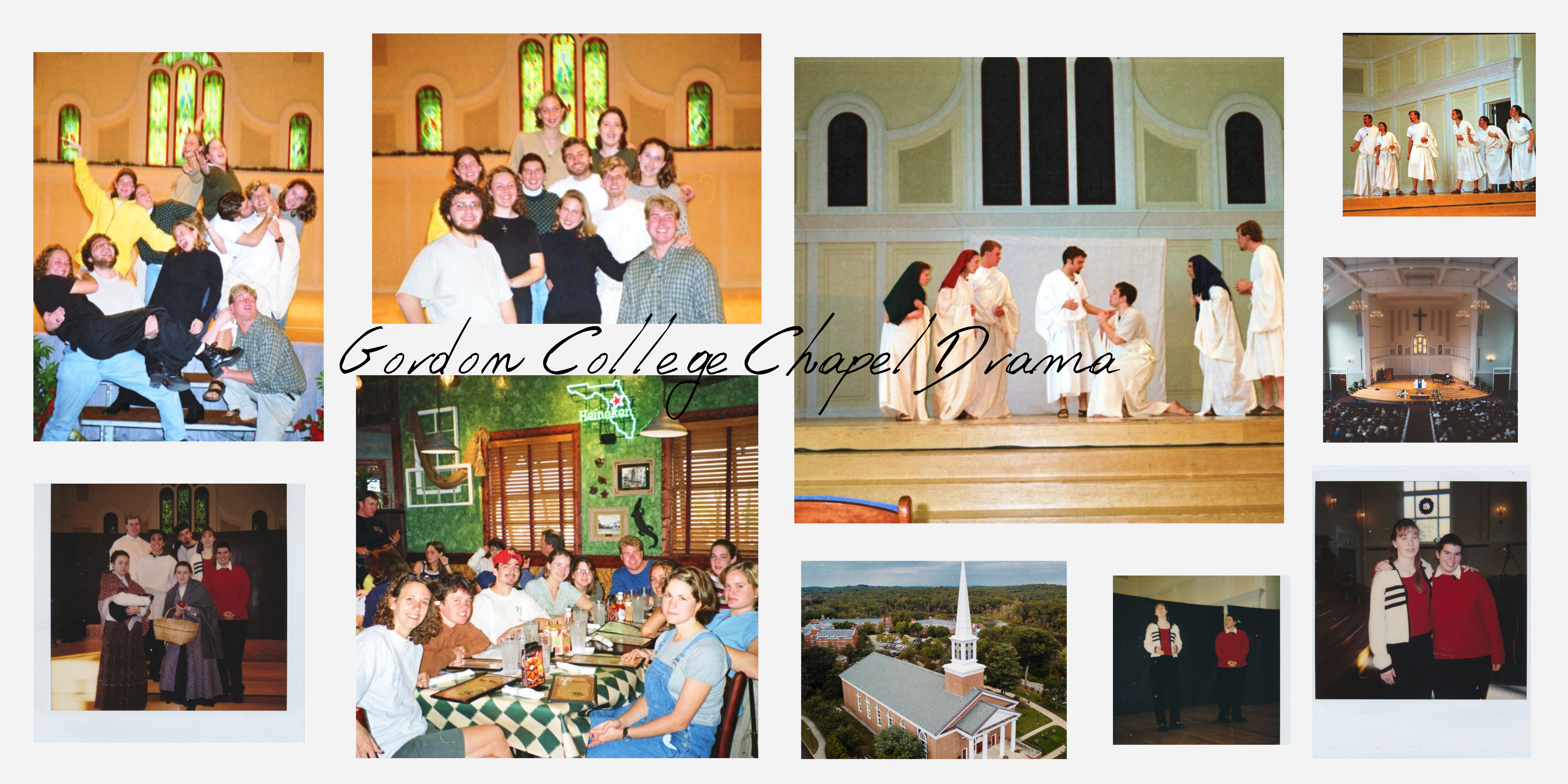
This episode was so fun to record! Lisa mentored myself and my brother Matthew McNutt when we were students at Gordon College, and we had the best time reconnecting and reminiscing with Lisa about those pivotal years. Matthew and I both participated and led the Chapel Drama Team while we were students at Gordon, which meant participating on the Chapel Cabinet under Lisa’s valiant leadership. The pictures below overlap Matthew’s senior year and my freshman year. I’m glad that Matthew could find some pictures to share–he’s more organized than I am!
Join us for an inspiring conversation with Reverend Dr. Lisa Corry as she shares her journey through faith, ministry, and personal growth. Discover insights on spiritual development, leadership, and the importance of grace-filled mentorship. You can listen to our conversation on The Beautiful Kingdom Builders Podcast on YouTubeSpotifyApple PodcastsAmazon MusicSubstack, and more

TRANSCRIPT:

Ruth Perry (00:15)
My guest today is the lovely Reverend Dr. Lisa Corry who was working at Gordon College in the chapel office when myself and my brother Matthew, who I’ve invited to be here today as well, we were both part of the chapel cabinet as students. And so Lisa was our mentor. And I’m very excited to have you on today, Lisa.

Lisa (00:38)
I’m thrilled to be here. It’s so great to see you both.

Matthew McNutt (00:41)
Yeah, it’s fun to catch up after so many years.

Lisa (00:43)
Yes, a lot of years.

Ruth Perry (00:45)
So when I started my podcast, I was thinking for my first season, something that I wanted to do is bring on people who’ve been instrumental in my own faith journey. And having you as a mentor at Gordon College was a really clutch time. I remember you walked through the death of a very close friend of mine. You helped me through that. You helped me with my first dating relationship. And you encouraged me to break up with that person? Which I did!

Matthew McNutt (01:16)
Ha!

Ruth Perry (01:17)
It was very wise. It was very wise of you. I appreciate that. You gave me a lot of opportunities to just be involved and have a voice on the cabinet. And that was a lot of fun for me. Matthew, what do you remember about Lisa at Gordon?

Matthew McNutt (01:33)
I probably stressed you out a lot more than Ruth did. I have to reassure you, I’m a lot more organized and prepared than I was back in the late 1900s when I was one of your students. Oh my word. So what I do remember is I jumped in as a freshman, there was a chapel drama team, and I signed up to join it. I had at that point in my life. I really had sworn off God and I was 100 % in it because I liked acting and being on stage in front of 1200 of my peers just had so much appeal and But I was also really good at faking the Christian stuff and by the time my sophomore year rolled around, I thought I was good at faking it.

I’d grown up in really fundamentalist and legalistic environments and just by the time I was 17, 19 years old, had gone like, this is, I don’t wanna be a part of that. And I showed up at Gordon, a 21 year old freshman, and I remember around the end of my sophomore year, at that point, I had become part of the leadership of the drama ministry. But towards the end of my sophomore year, I was just getting really overwhelmed with guilt over, I I’m claiming to be things I’m not. I’m really faking it. I don’t, I don’t know what. And so I had scheduled a meeting with you, Lisa, to just kind of go.

I’m lying. I’m lying about all these things. I, know, and I think I need to get my life right with God, but here’s all the ways I am not honoring God. And I was probably the most honest I had ever been in my life at that point to anyone. And I just genuinely thought, yeah, you’re like, what did, what did I do in this moment? I remember with the environments I grew up in,

Lisa (03:21)
I’m nervous. What did I do?

Matthew McNutt (03:28)
I just assumed with what I’m saying, that you would go away and just be like, we need to get him out of our school. Like he definitely shouldn’t be doing chapel drama. He should probably be gone. Like he’s a failure and like just such legalistic harsh environments. And, you in that moment just express all this love and grace and just were like, you actually seem surprised when you realized.

I thought this was going to just kind of land me out of the school and out of everything. And instead you really dialed in and mentor. And I’d already been kind of wrestling with, this grace-filled approach to Christianity that Gordon College is modeling for real? you know, cause I had remembered thinking at times like I could be that type of Christian. And so that was a really pivotal moment for me where I finally was like, okay, like I’m gonna go all in with God. And my junior year of college, when you were kind of coaching and mentoring, had gotten rid of my TV, which was a big deal. I love movies and I got rid of all of my secular, it wasn’t even that some of it was bad. It was just like, I need to change how I focus on God. And so my junior year was probably the most,

Lisa (04:37)
I do remember that.

Matthew McNutt (04:50)
spiritually intense growth period in my life. And I have given your response to me as an example to youth leaders that I’ve been training for the last 25 years of this is how we love students into faith and show grace. And so, yeah, you were a huge part of me turning back to God. And then a year or so later when I started going, I think I’m actually like, I remembered being so embarrassed telling you, I think I might be called to be a youth pastor, not a high school teacher. And I was waiting for you to laugh at me and be like, this is great because I grew up in environments that gave me very low self-confidence. And so, yeah, so I’ve been in ministry for 25 years now, full-time ministry.

Lisa (05:32)
Heh.

Matthew McNutt (05:42)
in huge part because of those couple pivotal conversations. So that was probably more a longer winded thing than you were looking for, Ruth. But, but yeah.

Ruth Perry (05:53)
No, I mean, that is so beautiful. I love to hear it.

And I just wonder, like, how many years were you in college ministry, Lisa?

Lisa (06:02)
Yeah, that’s a good question. Let me think a second. I think probably 25 maybe. I mean, not always directly, but I always gave time in that direction when I worked in college settings. Yeah, but it’s neat to hear you reflect, both of you. And I just remember you both were authentic, fun. One of you was a little more wacky than the other one.

Ruth Perry (06:26)
Which one?

Matthew McNutt (06:27)
Probably the one that landed in youth ministry and not the one pastoring three churches.

Lisa (06:33)
And you both are leaders. You were leaders then and you’re leaders now. I mean, it’s really beautiful. And it’s beautiful that, I mean, we’re all a little bit older and we all have enough mileage to know that this life holds many lives. And you all are leaders contributing to the kingdom of God and the streams of your church. And that’s, golly, that’s what it’s about. That’s great.

Ruth Perry (06:56)
I think something that inspires me about your ministry is just the non-anxious presence that you were to very angsty people at that stage of life. You were always just really calm, cool and collected and kind and gracious. And I think it speaks to your trust in the power of the Holy Spirit to do the Holy Spirit’s work. And that when you just show up and you’re there for someone, you don’t have to be able to quote the whole Bible or explain 10 tenets of like, I think the way that we kind of grew up, you just should know the road to salvation and like know all these things and ask people and you’re carrying the whole weight of their salvation on your shoulders almost. And so just learning that

Actually, God is a lot bigger than you are. You can just hear someone out and then maybe offer them a little bit of grace and just how far that can go in their spiritual life is really powerful.

Lisa (07:55)
Wow, that’s neat to hear. I was ordained in the Episcopal Church nine years ago this year. And as I reflect to people what a big part of my kind of day job is right now, I tell people a lot that I share calm, that that’s a big piece of my job, is I just share calm with people. And so it’s fun that you would bring that up. I don’t necessarily remember being super calm in those days, but.

Ruth Perry (08:17)
Super calm.

Lisa (08:19)
Yeah.

Matthew McNutt (08:20)
I mean, you’re pretty calm and focused with all of my antics. I remember you reassured another student that was really stressed out. They were leading the dance ministry or something, and they were worried, like, is McNutt gonna even have this stuff done in time? And you were like, look, you because her personality was she already had everything done months ahead of time kind of a deal and you were like look you guys are very different but I can assure you when the day comes it will be ready.

Lisa (08:52)
Yeah, you know, you were never early, but you were never late.

Ruth Perry (08:59)
This is reminding me of a big lesson you taught me. I was a perfectionist and super stressed out about everything. And you taught me that I needed to have life balance and that I should just give 80 % effort. So I dialed it down to 80 % effort my senior year and my grades stayed the same, but my quality of life vastly improved.

Lisa (09:10)
Yes. ⁓

Matthew McNutt (09:13)
Ha ha ha ha ha!

Lisa (09:21)
Hahaha

Ruth Perry (09:22)
And so I’ve taken that into like, I’m just trying to give 80 % here and there and good enough is my life motto now. Good enough.

Lisa (09:29)
Man. That’s right. That’s exactly right. Yes. You know, I was reminding myself I was doing a small group last night and there’s a quote from the, I forget the author’s name, but the gentleman wrote something like everything I needed to know I learned in kindergarten. But the sentence is, anything worth doing is worth not doing well.

Matthew McNutt (09:31)
Ha ha ha ha ha.

Lisa (09:48)
Isn’t that great?

Ruth Perry (09:48)
That’s good. Yeah! Lisa, can you tell us about you now? Because when I was in college, I don’t think I ever asked you about you. So now 20 something years later, let’s catch up. Where are you from? Where did you grow up?

Lisa (09:56)
You, how funny. How funny. You know, because when I think of you both, that’s so funny. I don’t think it ever crossed my mind that we didn’t talk about me. But I always think of Boothbay, Maine when I think of you guys. And coffee. I think of coffee. Is that right? Yeah. Yeah. So yeah, I’m from Michigan, just outside of Detroit originally. And I’ve lived all over the country.

Ruth Perry (10:12)
Yeah, yeah, yeah, Moosehead Coffee Beans. That was the family business.

Lisa (10:25)
Not that I was wandering, but I kept kind of just following the bouncy ball. And I was always a late kind of decider to do things. Like I think when I was with you both, I don’t know if I’d started it yet, but before I left Gordon, I had dinked away slowly at a Masters from Gordon Conwell. And I don’t even remember when that was exactly, but I don’t know if you guys were in my galaxy then, but probably because I left Gordon not long after you guys left. Maybe it’s…

Ruth Perry (10:52)
I think I remember when you graduated.

Matthew McNutt (10:52)
Yeah, I feel like I remember you taking classes, like one at a time, I feel like. One or two.

Lisa (10:56)
Oh, okay. Yeah, it was the power of the dink.

Mm-hmm. Yeah. It took me hundred years, but I got it. But I didn’t even start that till I was probably 30, you know? And then I have a doctorate also that I worked on and almost got kicked out because I took too long, but I did graduate. It was a cohort program, but from Biola, Talbot.

But I didn’t start that until my mid 40s. So about me. So I’ve gone to school. I’ve worked in higher ed and I lived actually, believe it or not, after I left Massachusetts of all places, I’d probably surprised myself because I had to look at a map about where it was before I took the job. I moved to Arkansas. I lived in Arkansas for about 20 years. Isn’t that wild?

And it’s a really great place. And I worked at John Brown University for a while and probably about a decade, I think. It’s in Northwest Arkansas. And in that season got more and more involved in the Episcopal Church and discovered a call there and went through the process, which is fun and a lot of discernment and discovery. I lived in Minnesota for a little while and it was very cold and dark and I don’t know why anybody lives there.

Sorry if anybody’s offended by that. yeah, I’m in St. Louis area now. Been here about a year and a half, maybe two years in August.

Matthew McNutt (12:20)
What landed you in college ministry for so many years? What was your pull to that or what was your calling to that?

Lisa (12:27)
Yeah, I, when I was in college, it was a really important time in my own faith development. I came to college really questioning God. I almost got a scholarship to play basketball and I hurt my knee my senior year of high school. And when that was taken away, I kind of crumbled a bit, you know, as we do when we’re 17 and something important has taken away. So I found myself at Michigan State as an undergrad and was really searching and stumbled into through people on my floor getting involved in Campus Crusade for Christ.

And that was a real foundational experience for me for Bible study and learning about this personal relationship with God and all that that meant and the kingdom of God really helped me set in motion some values. And I think because that was such a significant time after my undergrad, went on staff with that organization for little bit. I didn’t really fit. It’s pretty, not that I’m not conservative, but it’s pretty, it’s pretty conservative. And so I, after a few years, I slid out of there, but it was a great experience for me as a student and as a staff member.

And then after that, I discovered there was this thing called Christian higher education. I’d never heard of it before. See, I’m really slow, I’m slow, slow, slow, but I, I got on that bus and I thought, my gosh, I can work and get paid and invest in college students. What a great idea. so Gordon was my first stop and working in Christian Higher Ed. So I worked at like three different colleges, but since I’m talking with you today, I’ll say you all are my favorite. Gordon’s my favorite.

Ruth Perry (14:04)
I’m keeping that in. Okay, so I wanted to follow up. I have two questions initially. Number one, what do people from Arkansas call themselves? Arkansas-sian? Like, what is that?

Lisa (14:15)
It took me a long time to learn this. Arkansans. Yeah, because I used to call them Arkansinians. But they’d be like, no, Arkansans. Yeah.

Ruth Perry (14:18)
Arkansans, okay, thank you. Yeah, yeah. Yeah, I can see that one too. Arkansans, helpful. All right, and then my

Matthew McNutt (14:27)
Didn’t take off.

Ruth Perry (14:30)
Second question. I guess I’m kind of cluing in that maybe you didn’t grow up in church.

Lisa (14:34)
Good, good, good, good. Listen, good attentive listening. Yeah. Nominally Catholic group, nominally Catholic. And I was confirmed in the Catholic church, but it wasn’t a center of my life or I think it was a practice, particularly with my mom’s, but not necessarily the family system commitment. And so. Maybe even a little bit like you’ve described, Matthew, just I think I probably had more fear of God than vision about a Christian life. So that took a while to undo and redo. And those college years for me are when that happened.

Matthew McNutt (15:11)
So what would you say with 25 years in college ministry, what were kind of your key concerns or key passions when you were working with young people? What is your style of ministry or what was your emphasis with young people in that stage of life?

Lisa (15:22)
Mm. Yeah. Yeah, you know, two things strike me. One is kind of you kind of inferred about this, Ruth. I think not a lot of people, particularly college age students at that time, and I’ve been out of that loop for a little bit, you know better than I do, but don’t have people that sit across from them and look them in the eye and say, how are you? And so I think just expressing that care and not hurrying past that question and following wherever it goes without judgment does a lot inside a young person’s deep places, I think.

So that was a big piece, I think, was just that relational holding of space and being fully present to them. The other thing is, in my doctorate, though you know, doctorates are hard, which you’re aware of, Matthew. I think it’s a terminal degree because it almost kills you, right? But anyway, my dissertation, I went from a PhD to an Ed.D. So it’s a doctor of education because I had a, I stupidly or wisely picked a really hard dissertation chair.

Matthew McNutt (16:22)
Yeah.

Lisa (16:36)
And I assumed he was keeping track of some things he wasn’t. And he assumed I was keeping track of some things I wasn’t. And then he was like, you’ve got to either get out of this program and work on your own and reapply or change to an EdD. And I was like, I’m going to change to an EdD. I can’t keep doing this. I got to stop this hamster wheel.

But anyway, My dissertation, the title of it is something like, and it’s funny, I can’t remember it because it was so much a part of my life, but it was, it’s something like, you know, cause it’s like an inch wide and a hundred miles deep, Spirituality Development in Women in the College Years. And so it had to get that deep, but my research didn’t start that deep. You just kind of find your way.

But the thing I discovered in that, what I ended up doing was intertwining spirituality development in the college years with identity development, like inter-connecting theology and social science theory. And then I also discovered, and this was not even just Christian, it was just spirituality. I was trying to be wide, but the thing I discovered overall that still impacts me in my own life and talking with any age person, but college-age students, it strikes me a lot for, is that the thing that college students need is how to learn how to be quiet and maybe meditate or sit in silence practice some kind of silent discipline, where discipline is not a harsh word but just a silent practice. And there were a of colleges at that time and this was probably close to 15 years ago now, but that the big push was in response to that creating spaces on campus that are only for silent meditation or silent sitting. And that just really was interesting to me.

Ruth Perry (18:19)
There was a room in the chapel office designated for prayer. And I remember you would send me there on occasion with the notepad to like, contemplate something in conversation with God. So you were doing that even then before your doctorate.

Lisa (18:26)
Mm-hmm. Yeah, and it wasn’t a time out. It wasn’t.

Ruth Perry (18:42)
No!

Matthew McNutt (18:43)
That’s how I’m interpreting it because as I recall, I did not get sent there. So I might have been the better… ⁓

Lisa (18:47)
Hahaha! That’s great.

Ruth Perry (18:54)
Well, it’s actually, so this in particular, was when I was having my first dating relationship. And as a conditioned good girl in the Christian faith, something that I just couldn’t do was imagine that God had a calling on my life. I didn’t know how to say no to anybody. And so every time I would talk with you and you would ask me about my relationship. And I would talk about what my goals were. We had already talked about what I wanted to do after college, which was go to seminary. And then we’d talk about this relationship where he didn’t think I should go to seminary. And you’d be like, so why are you dating this person?

Lisa (19:32)
That’s funny.

Ruth Perry (19:35)
Yeah, so I definitely have had people think, ask me what do I want to do in my life? But you were like, prioritize that.

Lisa (19:42)
Yeah, because you can make decisions to move in the direction. And remind me your husband’s first name. Logan, because I remember when you met him. I remember when you guys started going out. Yeah.

Ruth Perry (19:45)
Yeah. Logan.

Matthew McNutt (19:56)
I did too.

Lisa (19:57)
Well, I remember when you and your wife started going out too, so.

Matthew McNutt (20:01)
Yeah,

Lisa (20:01)
Thanks.

Ruth Perry (20:02)
So what about the Episcopal denomination? What about their beliefs and their tradition do you love?

Lisa (20:09)
Yeah, gosh. You know, when I was in Massachusetts, I was kind of dabbling in going to the Episcopal Church a bit. But the center of my galaxy was always where I was working, is where I would give kind of my free time for ministry. And then in Minnesota and in Arkansas, I began to get more involved in the church. And I hit this moment and I don’t know what predicated or, you know, made it pop for me, but I hit this moment where I was like, you know, I think I want to move. I was working in the co-curricular teaching part-time in the Bible department, but also doing some small group spiritual formation oversight on campus, but I was giving more time than that. And I thought, well, I think what I want to do is start giving my extra time to the church. And so I started getting more involved in the Episcopal church. But what drew me to it was,

You know, for my Catholic upbringing, the liturgy is really similar. And when I first started going, there was something about having this meaning of this personal relationship that was pretty vibrant with the action and participation in the liturgy. And that was somehow put me together. And so I was really drawn to that. then I think too, Episcopals are really good at two things. They’re good at accepting everybody and they’re good at agreeing to disagree, while also being high critical thinkers as a generalization. So those are kind of a few of the things that drew me in.

I don’t know if you guys are familiar with the Episcopal Church.

Ruth Perry (21:37)
Was that in South Hamilton, was that an Episcopal church that I would go for their special services? And I think the reason I found them was because you had them come for Ash Wednesday. And that was the very first time I had ever received the imposition of ashes.

Lisa (21:41)
Yep. Yep. Yeah. Wow, okay. yeah, meaningful stuff. Yeah, and the Episcopals are good because they don’t, you know, they’re really good at marking time. So the colors change, liturgical seasons, so you always know where you are. don’t like, you don’t have to wonder what’s happening. And they’re good at remembering and we need to keep reminding ourselves of reality. I know I do. Yeah.

Matthew McNutt (22:14)
What was the transition like for you going from full-time ministry in college to college students to full-time ministry in the Episcopal Church? Or your focus shifting in that way?

Lisa (22:25)
Yeah. Yeah, you know what’s interesting at first, what’s really surprised me was that people are just people. know, and so somebody who’s 21 or 19 is the same in so many ways as somebody who’s 80, as somebody who’s four, right? You just have to, you just have to know your audience well enough to communicate in the way they can hear. And so I was just really surprised that, you know, the four-year-old and the 19-year-old and the 80-year-old are all worrying about the same things. And they’re all wondering what’s for dinner. And they’re all, everybody’s thinking about the same things, even though it’s such a different developmental scheme, but it’s people are people. And that was my big surprise and also a big help, right? Because I had spent so much time with college students. Thank God that it could translate, right?

Matthew McNutt (23:16)
One of the questions that pops into my mind is, you know, even with an egalitarian denomination, I still read reports to talk about the challenges of being a woman in pastoral ministry. Have you experienced some of those challenges or are there ways where you’re like, it has really worked well for I don’t even I’m not even articulating it very well at this point.

Lisa (23:38)
No, I hear, I know, but I hear you. Well, I’ll tell you, the first time I really felt like I hit a ceiling and that I thought was gender. And it was actually at John Brown University down in Arkansas. When I was taking in the decision of moving from a PhD to an Ed.D, because I think I had more of an internal fantasy that I realized that I wanted to maybe teach full time in the college setting, you know, so I

I thought, oh, I’ll ask the chair of the Bible department what they think I should do. you know, I don’t want to mess up that possibility. And so when I laid it all out with this gentleman, old white man, if I may say, he just looks at me and said, you know, it doesn’t matter. We would never hire you. And I was like, I was like, oh, OK, thank you very much. the last.

Matthew McNutt (24:20)
My gosh. That’s direct.

Lisa (24:26)
Yeah, I was like, dear. And then I was like, I’m just gonna get the EDDs, because why am I knocking myself out? It certainly doesn’t matter. And so that was the first time I felt, and I felt like, I mean, I didn’t say, well, tell me, sir, is that a gender response? But I’m pretty sure it was.

And then I think as a female priest, as a woman who’s ordained, I have been more aware or experienced more misogyny than I ever have in my entire life. And it’s not like aggressive. It’s more like how people treat you or talk to you. Like there’s times, I’m the first woman rector, rector’s a funny word for like lead priest at a church. I’m the first female rector at the church I’m at right now. And there have been a handful of times when people have talked to me and I’ve taken a beat and I’ve looked at them and I’ve said, would you say that to a man? And then they go back. And some of them say, I’m sorry. And then some of them just don’t know what to do at all. I’m kind of awkwardly cavitated back in a way. I’ve learned to gently confront it. But I think that, know, ministry is more than I realized, often a male world. I don’t know, Ruth, if you hit that.

Ruth Perry (25:36)
I got that a lot. I have experienced a lot of misogyny, but not since I joined the United Methodist Church. And the difference has been so striking to me. And I’ve also started attending ecumenical pastors group around the same time that I started pastoring here. And the pastors in that group are not misogynistic. There’s another group here in town with all the pastors are welcome to, and I just don’t go to that one because I don’t want to deal with it.

Lisa (25:56)
Nice. Good.

Ruth Perry (26:10)
But I am really enjoying just, my parishioners have had a lot of women. And so it’s normal to them and they just always call me pastor and they just always refer to me with so much respect and it’s just been really lovely. And so I’ve had three years of no misogyny.

Lisa (26:25)
Yeah. There you go, yeah. And I don’t mean to just be negative, you because it’s wonderful. And I feel like I’ve landed in my call that took me about 50 years to discover, but there’s pockets of it. That’s probably the thing that’s been difficult. So the pockets.

Matthew McNutt (26:52)
And part of me wonders, as you were talking, Ruth, because of where we grew up, where a woman wouldn’t be a lot like it would be a question of whether or not a woman could teach in Sunday school, let alone be a pastor. Part of me wonders if growing up where it was so blatant, because there are women in Methodist churches that will still talk about the challenges they experience as opposed to the men, but where it’s so much less so than what we grew up with. Yeah, not that I’m trying to, Ruth, could you please find some examples of misogyny? That’s a…

Ruth Perry (27:25)
Yeah, it’s been striking. No, I’m having the universal United Methodist experience, Matthew. I speak for all United Methodists.

Lisa (27:35)
Ha ha!

Matthew McNutt (27:36)
I mean, you’re in the South.

Ruth Perry (27:37)
My town is primarily Southern Baptist or Independent Baptist and all the little Independent Baptists that have fought with each other and broken up with each other.

Lisa (27:42)
Okay, dear. You know, Virginia’s an interesting state. They’re interesting people.

Ruth Perry (27:55)
Yeah, it has been very interesting.

Lisa (27:58)
Yeah, but it’s beautiful.

Matthew McNutt (27:59)
Perrys are weird people in Virginia.

Ruth Perry (28:02)
Yeah, the Perrys. We’re doing our best.

Lisa (28:05)
It’s funny.

Ruth Perry (28:06)
Who are some Christian theologians or writers or artists that have been meaningful in your faith journey, Lisa?

Lisa (28:10)
Oof. Boy, that’s a big question. In terms of like reflection, and she’s been around for decades, probably maybe even when I was at Gordon, Jan Richardson is, Ruth, are you familiar with her? Yeah. She says a lot of poetry and a lot of reflection. She’s kind of artsy. I feel like maybe she might be in your Methodist stream.

Ruth Perry (28:28)
I’ve heard her, but I don’t think I’ve ever read her.

Lisa (28:41)
I could be making that up, but I think so. But she’s been significant to just kind of help facilitate thoughtful reflection and take in big spiritual truths. So she’s really great. C.S. Lewis is always just fantastic. There’s a guy, I forget where he’s out of, but he’s done some commentaries. D.A. Carson, I appreciate the way he writes and his thoughtfulness and fidelity to scripture and what it’s trying to say and how and why.

I think most recently, not everybody’s a theologian that helps me. There was a poet laureate from Colorado who died recently, Andrea Gibson. And they have some poetry that is just phenomenal about the hardship and angst of life this landing that they’ve done and hope, which is just beautiful to sit with. So those are what come to mind off the top of my head. How about you guys? Am I allowed to ask you that?

Ruth Perry (29:39)
Yeah. Matthew, you first.

Matthew McNutt (29:41)
Come on. Shoot, would have to, I read, I read a ton, I know, I read a ton of stuff. I really love anything NT writes. Carolyn Custis James has written some really cool stuff that I’ve appreciated. I went through a phase where I was reading everything by Pete Enns, which was kind of fun and challenging some of my thoughts.

Lisa (29:45)
That’s a hard question. He’s good.

Matthew McNutt (30:05)
But yeah, have a ton of favorite authors. My goal this year has been to read like 50 or 60 books over the course of the year. So I’m trying to get there.

Lisa (30:08)
It’s, yeah. Wow. It is funny because we all probably, all three of us probably read a lot of Christian stuff all the time, right? Yeah. How about you Ruth? Yeah.

Ruth Perry (30:28)
Yeah, I think that’s my problem is I kind of snack. And I’m not like, I’ll some people they’ll like I really I’ve read all the books of this one person. I’m like, wow, I’ve read one book. And then I’ve moved on. Although I have all of the Brene Brown books, and I have one in the mail.

Lisa (30:33)
That’s great. That’s a great image.

Ruth Perry (30:49)
that I realized I hadn’t read it yet. So I think that that may be the only person that I’ve like really kept up with all her work. And Lisa Sharon Harper, her book, The Very Good Gospel was really impactful to me. And so I’m reading her book Fortune right now, and I’m hoping that she’ll come. I’m going to invite her to come on and talk with me. I hope she will. I think those two have been
probably more influential than others.

Lisa (31:16)
That’s great.

Ruth Perry (31:17)
Do you have spiritual practices that nourish you in particular, Lisa?

Lisa (31:22)
Nice. Yeah, yeah, I do actually. There’s the one isn’t which I kind of brought up before is that idea of kind of silence, sitting in silence. There’s a practice which you it’s kind of like silent meditation, but it’s a little more. It’s got some parameters to it that are helpful. It’s called centering prayer. You guys heard of that? So in centering prayer, you sit in silence and it’s about just letting go of thoughts. And so even if you’re busy the whole time, just letting go, at least you’re letting go, right? So you can’t fail. You just have to show up.

So I think sitting in silence and seeking the silence of silence every day helps me know what’s going on in my own soul, but it also helps me get rid of the things that are between me and God, you know? So that is probably a personal practice that most days of the week for probably a couple of decades that I think has been really transformative for me.

The other one might sound a little more odd, but it’s yoga. I do yoga. And during the pandemic, I did this online training to be a yoga instructor because I wanted to learn about yoga. And so it’s just a personal practice. A lot of people do it kind of in classes and socially, but I find it kind of magical. Our bodies and minds and wellbeing are also connected. It just kind of helps put me together or take me apart, depending. So those are the two, I think, strangely, those are the two things that come to mind. Yeah.

How about you guys?

Ruth Perry (32:51)
Honestly, playing the piano is a spiritual practice for me. I often will play through the hymnal or I’ll hear a song that speaks to me. I can’t play without music, so I’ll have to find the music online and then print it out and I’ll just play like one song for a while and just sing it to the Lord. And that is probably the one spiritual practice that I have that really fills me up. And then a lot of…

Lisa (33:06)
Nice.

Ruth Perry (33:14)
I think my problem is being quiet. And so I’m taking note, Lisa, that I need to turn things off because I’m just constantly scrolling or reading or listening to podcasts and I do not practice quiet. If I’m in the car, I’m either listening to a podcast or some music. So yeah, I’m taking note. Thank you for that.

Matthew McNutt (33:35)
Yeah, as your brother, I would say I’ve never thought of you as quiet. This is the… I think for me, when I’m able to isolate myself and relax, it’s hard for me to settle down and relax and just be, which is what you were always telling me to do way back then.

Lisa (33:39)
Hahahaha!

Matthew McNutt (33:55)
You were even like Qui-Gon Jinn is saying just be like Qui-Gon Jinn Trying to speak my language back in the day ⁓ Writing is where I get a lot of my energy and and excitement and so Just trying to find ways to write and create about faith has been a good

Lisa (33:59)
Hahaha! Didn’t help.

Matthew McNutt (34:16)
exercise for me as well to dial in.

Ruth Perry (34:22)
One of my questions, because of our background growing up evangelical, something that I’ve realized is that it had never even occurred to me to try mainline denominations. Even though in college, I was a music major taking theology of worship classes and in seminary too, and they would send us to all kinds of services and so I’ve experienced a lot but it never occurred to me to join a church that wasn’t evangelical. I think now where we are culturally in America a lot of people are kind of disillusioned with the evangelical church and they’re feeling lost. And so what would you say that a mainline denomination like the Episcopal Church has to offer to someone who’s rethinking the way that they’ve grown up?

Lisa (35:10)
Yeah, I’m trying to think, you know, there’s some faces from church that actually come go through my mind here where I am now. And I think that.

You know, it’s kind of like everybody’s the same thing, that thing I told you before, you know, you can be 19 or 35 and have two small kids. But, know, that it’s that everything’s OK and you can rest here and you can relax here. And we don’t have a big to do list for you to do this right. I think that when people know that they’re just accepted and that there’s no plumb line that they have to make sure that they hold to, they can be loved in a direction that doesn’t overwhelm them with heavy weight. Yeah, but do, agree with you that, you know, churches are not, Christianity’s got not a great reputation right now. And I would say, you know, I was thinking about this briefly while I was walking my dog this morning, who’s not barking at all, ⁓ and it’s right there. I’m just kidding.

But anyway, I was thinking about how we share a bit of a similarity in that, you know, I really grew in my faith and was exposed to Christianity through Campus Crusade for Christ. And then in the Christian higher ed piece of contributing to faith outside of the church. And you all had the missionary background and I think some, some missionary thought that was so deep within you for kind of para-church kind of things that

For all of us, there’s a degree that it’s certainly, why would it cross our minds? But then we have this sometimes awful history, but a great history. The church is a beautiful thing. And so why would we do anything else but find a church? It’s interesting how it’s the last thing and not the first.

Ruth Perry (37:02)
Lisa, thank you so much for coming on the podcast today. just want to, before you go, I want to tell you, just thank you for being person who met me where I was in my spiritual journey and gave me, really wise advice and a lot of grace and kindness and also opportunities, to imagine what I could do to serve the Lord. You gave me my position as the student director of ministries. I don’t know if you remember that, but I was discipling other students and that was really impactful as well. So your ministry to me means so much to me and I want to thank you, Lisa.

Lisa (37:30)
I do. Well, I’m so grateful for you both, goodness, and available to you. I know it’s been 100 years, but if I can support you guys at all, I’m here.

Matthew McNutt (37:50)
Now I think for me it’s a lot of the similar sentiments as Ruth. You were a huge part of me coming back to faith and for me feeling empowered to go into ministry full time. And I must have been a headache at times to deal with the chapel ministry. But that was such a special special season in my life. So thank you.

Lisa (38:00)
Yeah. No, you were not. You guys are great. Yeah.

Ruth Perry (38:14)
God has given her extra blessings for ministering to you.

Lisa, do you want to have the last word before we sign off?

Lisa (38:27)
You know, I’ll just say that what’s so great is because of relationship we’ve had that we can just pick up and I’m so happy and it’s so normal to talk with you both. Feels like we’re in that windowless office I had in the chapel. So thank you. Thanks for thinking of me. It’s great to be together. Thank you.

Ruth Perry (38:41)
Yes. This was awesome. Thank you so much, Lisa. God bless you.

Lisa (38:49)
God bless you guys, take care. All right.


You can listen to our conversation on The Beautiful Kingdom Builders Podcast on YouTubeSpotifyApple PodcastsAmazon MusicSubstack, and more! If you find our conversation helpful, please share it with a friend, rate and review, and subscribe so you never miss an episode! God bless YOU!

014 I Wendy McCaig on Embracing Community Development

Wendy McCaig is the founder and Executive Director of Embrace Communities, a nonprofit dedicated to strengthening neighborhoods through community development. She has her M.Div from Baptist Theological Seminary in Richmond, VA. In 2009, Wendy was trained in Asset Based Community Development (ABCD) and in 2021 was invited to become a steward (faculty) for the ABCD Institute.  She is the author of From the Sanctuary to the Streets and Power Shift: A Field Guide for Community Cultivators Everywhere which serves as the core curriculum for Embrace Communities’ ABCD training. 

Wendy has spent decades cultivating strong communities – initially within faith communities, then across Metro Richmond, and now through a global network. Since 2012, Wendy has been coaching and training institutions in how to strengthen communities from the inside out using ABCD. Wendy recently moved to my area in rural Virginia and I am excited to see how God uses her to catalyze my community into greater belonging and purpose together!

In this conversation, we dive deep into the inspiring journey of Wendy, from her infertility bargain with God to her path to ministry, and her unique experiences in ministry as a community developer. She describes the transformative power of building relationships in community work and emphasizes the need for churches to empower communities, release and support dreamers, and recognize hidden assets, as those closest to the problems are also closest to the solutions. And Wendy highlights the significance of spiritual disciplines in sustaining long-term commitment to justice and reconciliation work.

In an age of church decline and stark divisions, Wendy offers an important message about being the Kingdom of God outside of the walls of our sanctuaries, bringing salt and light to our neighbors and asking what our church can do to strengthen our communities. You can subscribe to Wendy on Substack to keep in touch with her apostolic vision for ministry today.

You can listen to our conversation on The Beautiful Kingdom Builders Podcast on YouTubeSpotifyApple PodcastsAmazon MusicSubstack, and more! If you find our conversation helpful, please share it with a friend, rate and review, and subscribe so you never miss an episode! I started a Pinterest Board as well, where I am putting any books that are mentioned on the podcast. Check that out here.

TRANSCRIPT:

Ruth Perry (00:15)
My guest today is Wendy McCaig, the founder and executive director of Embrace Communities, a faith-based nonprofit that strengthens low-income neighborhoods through an asset-based community development approach, which I’m excited to talk about today. Wendy holds a Master’s of Divinity from Baptist Theological Seminary in Richmond. And she is a prolific writer. She has a book called From the Sanctuary to the Streets, How the Dreams of One City’s Homeless Sparked a Faith Revolution. And she’s got writing on her website, wendymccaig.com. Thank you so much, Wendy, for being here today.

Wendy McCaig (00:50)
It’s great to be here.

Ruth Perry (00:52)
Before we talk about your ministry and your work, could you take us back and tell us about your faith background and the journey that you’ve had with Christ and how you found your spiritual giftings in your calling?

Wendy McCaig (01:04)
Actually your previous guest, Kathy Escobar and as I was listening to her journey, it mirrors mine a lot. I did not grow up in the church, but I was born and raised in a small town in central Texas, and it’s really hard to stay unchurched in the Bible Belt, but I managed to do it until I was in my late 20s. And I endured multiple miscarriages in my young adult years and that launched me on a journey.

My grandmother was a woman of faith and as I was grieving she said, well have you thought about praying about it? I always dismissed grandma, sorry grandma, but now it’s just like sure sure, but you know when you reach the bottom and nothing in your own power is seemingly helpful. I reached that place and just prayed a very, very simple prayer, and it was kind of like a bargain, like, okay, God, if you give me a baby, I will dedicate my life to you. Right?

And somehow even that twisted, manipulative way in which I was praying, God honored, and, the baby I was carrying, they had, determined that it was a non-viable pregnancy, but when we went in to go through the procedure, they found a heartbeat. So my eldest is a miracle, an absolute miracle.

And it was such a miraculous thing to have happen that I decided to honor my end of the equation and I had been drugged to church with a few friends, you know, through the years, but I had never committed to being a part of a faith community. And at that point I did. And I joined a ELCA Lutheran church in our little community and I started getting involved.

And I’d never owned a Bible, and I started going to everything. I went to Bible study, and they were people who’d been in the church their whole life. And so when the leader would say, turn to Leviticus, my heart would stop. I’m like, what is that? I had no idea. So I went to the pastor and I was like, look, you guys are all really nice and everything, but I have no idea what you were talking about. And they knew when to stand up and when to sit down and what words to say. And it was overwhelming to me.

And he said, well, what you really need is a small group. And this was in the early 90s. And I was like, what is that? And he was like, well, it’s a great place to really deepen your faith. And so he hosted this meeting and he invited the whole church to come and talk about this whole new idea of small groups. And he did this great pitch, if you want to grow, this is the way to do it. And I’m like, woo hoo, I’m so excited. Can’t wait to join this small group, right?

So then he gets to the end and he was like, okay, now who here is willing to lead this? And it was crickets. And I sat there and my heart just fell to the floor. I’m like, I guess I’ll never grow. I guess I’ll never have this chance. And then there’s this like stupid idea in my head. And before I knew it, like my hand was doing this. And here I am, the only person sitting in the room who’s never studied the Bible, had just gotten a brand new one from the pastor, didn’t know her way around anything. And all of a sudden I’m leading the first small group.

And the pastor looked out and he was like, Thanks, Wendy. I could tell he was like, you are not what I was fishing for. He turned to this other couple and he was like, Candy and Randy, y’all have been in the church a really long time. Would you help Wendy? that’s how I became a small group coordinator. I started the first small group. I absolutely loved it. I loved the interaction. I loved asking questions. I loved digging into stuff and things you can’t do in worship. It fed my soul and then Pastor Kerry was our pastor and he was like, Wendy, you’re really good at this.

I had been working as an auditor. That’s my training. I have a degree in accounting, but I really wanted to stay home with my baby. And so I quit my job in corporate America, went to work for a church, working 10 hours a week, making $10 an hour and was never happier. It was a huge leap of faith. And so I became their first small group coordinator and that’s my entry into ministry was through small group ministry.

From there we moved from Katy, Texas up to the Woodlands and I got involved in church leadership at that time. Now we’re talking like mid-90s, the whole like seeker movement had just really taken off and my pastor at the time invited me to go to Willow Creek and I read everything from The Purpose-Driven Church, The Purpose-Driven Life, I was gobbling up all of this kind of seeker movement because that was me, right?

Like I felt so weird in this liturgical church with no background and I wanted people to experience the depth without having to have the history of knowing when to do everything. So my father passed away. My father died by suicide. So that was definitely a turning moment for me. And for a season, I just wanted to disappear.

I was really active in the church at the time, but I just needed a space to heal. And so we found ourselves in a seeker church that went from 800 to 8,000 in the few years that we were there. And I could disappear. I mean, it’s pretty easy to disappear in a room of 800 to 8,000 people. But over time, I did get more involved in church leadership, started doing children’s ministry and all kinds of stuff. And that church was non-denominational, but if you scratched the surface you would discover Baptist. I didn’t understand really the difference until I was told as a woman I could never be called a pastor and that I better make sure that nobody confused me for one. And that was devastating because in corporate America, I never encountered that level of sexism and I didn’t grow up in the church. So this was really mind-blowing to me.

My husband used to work for Enron; that didn’t go so well. So we ended up in Virginia and that gave me an opportunity to go seminary because we’re in Richmond there was seminary I went to a Cooperative Baptist seminary and I discovered not all Baptists are created the same and really loved my seminary journey and that led me into the missional church movement. During that time period the missional church, Shane Claiborne’s book had just come out and it was really exciting time for me and I started volunteering with individuals experiencing homelessness.

That led me into the field of community development. I started the largest furniture bank on the Eastern Seaboard. I was involved in churches. It was just a lot of missional style work. And that led me to asset-based community development. And I started coaching and training churches in ABCD, doing inner city ministry, working in neighborhoods and did that for a decade or so.

But what I saw was congregations independently really were not sustaining the development efforts and often the inside out way of doing ABCD, which hopefully we’ll dive more into what that is really hard. It’s really, really, really hard for churches to get this mindset shift.

We were primarily training churches, then started training multi-sector groups, and I now coach and train folks who are doing this across the globe. And so my primary role is as a network weaver. So I work with grassroots community connectors, community cultivators, working in schools, working in neighborhoods, working in different affinity groups, cultivating community is my primary thing. I know when you read the intro you mentioned working in the inner city not not really I work everywhere and the principles of ABCD are applicable to any type of community.

So that’s kind of my journey from inside the walls to outside the walls to across large swaths of community.

Ruth Perry (09:12)
Yeah, I’m really delighted to have met you. You moved to my little rural area now, and I’m excited to see what the Lord does through you here. And your whole testimony is so moving and exciting. Your enthusiasm is beautiful. And I think that your coming to the church, being unchurched, definitely lends you to just naturally be more missional, I think, than those of us who grew up in the church who are just kind of stuck in our traditions and this is the way you do it and this is the way we’ve always done it. So coming with fresh eyes is probably a real gift that you bring to the church and to ministry.

Wendy McCaig (09:42)
I think it is in some ways helpful. I think it sometimes, you know, kind of a disconnect between those who think about the goal of the church as to grow the church. And I have always kind of looked at the role of the church is to strengthen the community and be kind of that salt and light in the world. And I understand that for many people, the church is their refuge. It’s a place of healing that’s very personal and meaningful and knocking down those walls or erasing the lines between the ones on the inside and the outside.

It’s not for everybody. It’s that apostolic calling, you know, that deep commitment to love of neighbor balanced with the love of, you know, loving God at the same time. That’s really not as easy as I naively thought it was going to be. When I read Toxic Charity, was like, woohoo! Everybody’s going to get this. Everybody’s going to embrace this. No, it’s not. And we keep snapping back to those old ways of doing things without ever really thinking about why and how we got to where we are, where we’re going and what the world looks like today.

Ruth Perry (11:12)
Yeah. This sounds like your language of living between two worlds. When you had suburban church life on one hand and then the realities of the inner city right there and your heart for that. What did standing on that bridge teach you about the gospel?

Wendy McCaig (11:14)
It’s a gift that sometimes feels like a curse. Yeah, when I think about it, you know, so much of my journey has been a kind of an expanding of seeing bigger thinking about that one side not just specifically, kind of the suburban church or the affluent church and those on the margins, which was kind of probably the way I described it in the early days. It’s more about those that see themselves as part of a dominant culture, a dominant narrative and everyone else. And in our current times, the everyone else category seems to be getting larger.

And those lines are getting so much firmer or they feel so much sharper to me and especially in parts of the Christian tradition right now that are leaning into these more exclusive definitions of who’s in and who’s out. And so that standing on the bridge, I feel I’ve always felt called to the middle of the bridge to try to bring people together in conversation. Like when I write, one of my principles is to write to unite. But increasingly that is hard to do. And I get criticism from those on both sides of the bridge.

Because a lot of people right now think the center of the bridge has collapsed and if they head toward it they’re going to fall into a chasm and we have this binary thinking right now that you’re either this or that and we can’t hold those tensions in a way that reestablishes the connection that bridge connection and it’s extremely challenging right now and for me personally.

When I was in Richmond, I lived in a community where I felt like my values were kind of the same as my neighbors, especially when I lived in an urban community. I don’t know that that’s, I think probably that’s true for the majority of my neighbors, I just visually get cues that it’s not, like the Confederate flags that fly all around us. It makes me wonder what narratives are playing out in my new community. And I’m so new that I don’t understand. And so I have to enter curious and willing to learn instead of ascribing my meaning, and then I blow up the bridge and I kind of get my own way. So I’m trying not to do that, but it’s challenging. It’s a really different culture. I grew up in small town Texas. So it’s really, I just have to remember my roots and that there’s good people everywhere. I haven’t found a whole lot behind Confederate flags, but I haven’t looked.

Ruth Perry (14:10)
Yeah. In your work, you also suggest that the richest expression of Christian faith often happens outside of Sunday worship. What does that look like,

Wendy McCaig (14:20)
So when we first started, I started working with individuals experiencing homelessness. I had a women’s ministry that I had started in Woodlake, which is an affluent middle-class community. And we had 70 women in seven small groups that were all gathering. And I started asking them, if you could do anything to change the world, what would you do? And the number one thing I heard was people saying, we have so much out here in the suburbs, but our neighbors in the city don’t. And so I had a chance encounter with a woman who was experiencing homelessness. She and I became friends. We started what became the largest furniture bank on the Eastern seaboard.

At the time we were gathering once a month, we would collect stuff in my garage. I would haul it and pick up trucks, me and my neighbors, down to this abandoned United Methodist Church in the middle of city. We would throw it all on the yard. We’d pray over it that it’d find a home. And we started networking with homeless shelters. So as people were exiting the shelter, they would come, they’re giant free yard sale and take what they needed.

We started inviting, started practicing this hospitality. Every person who came to receive assistance, I asked them, would you come back and help the next family in need? And about 20, 25 % did. And what I watched was those suburban neighbors who came to the city next my new friends from the city who were coming out of unsheltered status became friends.

And so we would sit around and eat fried chicken and pray for each other. And it was the most beautiful expression of what I imagined the kingdom could look like. Because in that act of serving together, everyone’s gifts counted. There was no giver, no receiver in that team. We were one. And what we learned about each other and each other’s journeys, most of us were moms.

And so we had this deep connection. Our kids would run around this old abandoned church. My daughter has so many memories of playing with kids and I mean, we were family and that was my first taste of it. And I was hooked from then on out. I was like, this is real church for me, for someone like myself.

After that I started working in a community called Hillside Court. So it’s a public housing complex. And what we saw was those that were coming through the experience of housing, a significant percentage at that time were losing their housing. And so they were coming back through to receive. And what we realized is that those individuals who were serving with us, when they went into housing, they had a family, they had us, if something went wrong, and let’s say they had an unexpected bill, medical bill or the car broke down or whatever. We were able with very low funds to keep people in housing.

And so we realized the stuff is nice, right? But it wasn’t changing the outcome. What was changing the outcome was people in relationship, authentic, deep relationship. So I spun the furniture bank off to Caritas, the largest homeless services provider in Richmond. And I started doing community development work in Hillside Court.

And it was remarkable. I mean, we just asking the community members if you could do anything to strengthen this community, what would you do? And the number one thing we heard was keep the children safe. Okay, what would you do to keep the children safe? Because there was gun violence, significant gun violence, people literally being gunned down in the street and then two teenagers were shot. And it was like, reached the point where the community had to do something.

And Lindsay Gulletly and Patrice Shelton, they said, if we could do anything, we would provide activities for young people. And so that launched a new community development effort around Keep the Kids Safe. And we had 10 resident-led initiatives that emerged over the next five years. And it became that same experience.

Once a month, we had Fellowship Day. We had church groups bring in the meat, like fried chicken or whatever it was and all the residents would cook. It was a big, giant, community-wide potluck dinner with hundreds of people. And we would baptize people with t-shirts if they volunteered. And so my understanding, if Jesus were here right now, what would this look like? You know, when Jesus is with people, He’s in their life, He’s in their world.

It’s not like, okay, today we’re going to feed the 5,000 come to the temple, we’re going to do it at the temple. You know, like that’s not what I see. It’s, it’s doing life where people are joining in where people are. And then inviting people to be a part of the solution. If you have some fish and some lows, let’s see what we can do with it. You know, it’s just that willingness to use what’s already there.

So Brooklyn Park was the next community I went to. I moved into that historically black community with a rich, rich history. Same thing happened. Moved from Brooklyn Park out here to middle of nowhere Virginia. And I would say it’s still a little early, but finding you and Kay and all of the folks in my backyard that care about this kind of thing. Stay tuned. I have no idea what will happen. And that’s what’s so fun. It’s a fun, fun thing to watch. When everybody gives what they have to achieve their wildest dreams for their community, cool stuff happens.

Ruth Perry (19:38)
Especially when you got a cool catalyzer like yourself that comes in and gets people together and gets them thinking. Can you explain what the asset-based community development approach is? What does that mean?

Wendy McCaig (19:51)
Yeah, so asset-based community development was developed by John McKnight and Jody Kretzman, and it actually got its naming more in academia. So they traveled across the country. They interviewed like 3000 communities about what made them strong and they identified six assets.

And so the official definition of ABCD is that ABCD considers the local assets as the primary building blocks for sustainable community, building on the skills, talents of the residents, and the power of local groups, supportive functions of associations. The way I like to think about it is simpler. Everyone has a gift. Everyone has a dream. If you discover the shared dream, people will invest their gift and bring that dream to life.

And so that’s pretty much the process is this discovery process that you go to. And ABCD is simply a tool for that. It’s a way of seeing the world. And when I wrote Power Shift, which is my second book that we use as the curriculum for my training, I wanted to kind of make it really easy to remember. So I love organic metaphors. So imagine you’re growing a tree, you know, that tree, what kind of tree you can grow depends on what kind of soil you have. And that soil is made up of particles of this bedrock of those rocks underneath. And so I really wanted to zoom in on four bedrock principles of ABCD.

And those bedrock principles are asset-based lenses, like how are we looking at the world? And I think Philippians 4.8 is the most helpful, that we are focusing on what is true, what is noble, what is right, what is pure, what is lovely, what is admirable, that’s asset-based lenses. So if we get in a room, and all we want to talk about is what we don’t have. We want to talk about how we need more children in the church and we need more tithers and we need more and we need more. All that does is suck the life out of the room. You can’t build on broken.

You’ve got to figure out what do you have? What are those building blocks? So asset-based lenses helps you see the world for what’s already there. And the role of a pastor in helping the church see its abundance is one of the greatest transformational practices.

The second is around hospitality. So the second bedrock principle is bond-building relationships. We have a lot of service providers that say that they’re building relationship, but they’re really not. It’s very transactional. If your church is doing a food pantry and during COVID you went through the line and somebody bags the groceries and gives it to you through your car window and that is not a relationship, that is a transaction. Transactions do not transform people the way relationships do.

And so bond building relationships are peer to peer connections and the practice of hospitality. When you look at Jesus, like he was always at parties and dinners and like he was having fun with people, like hanging out, doing life. That is our core practice for ABCD is, you know, people are like, well, how do you get started? Throw a party, like invite people over.

Go out for coffee. Like It’s not rocket science, but it’s that presencing. It’s that willingness to sit and be and listen and discover stories. Like, So that bond building relationship is critical. The third is community driven action. And what, what that principle is about is don’t expect the outside group to come in and do for your community. Be the body.

You’ve got all the parts. I believe that in every single community, the spirit has assembled. It’s kind of like those dry bones and they’re all spread out all over the place. How do we bring those bones together? How is that breath of life breathed in? Those relationships are like the tendons that hold those bones together. So thinking about community-driven action is us living into our purpose. And the final principle is developmental impact. So we’re not just bringing the body together and saying, okay, body, let’s go lay on a beach and soak up the sun. It’s like, why? What is our why? What is our purpose? What is our shared calling? What is it that spirit is doing in this place at this time?

And so that grows out of community listening. So that’s our first capacity building process that I teach churches and others to do. In the church we call it holy listening and you’re going to be a part of an experiment. So I’m going to try doing holy listening with a whole church, now granted it’s very small church, with a whole church in a few weeks to discover what are their gifts, what is their shared dream. And to start to imagine if those two pieces came together, what would that make possible? So that’s ABCD in what, five minutes or less? I don’t know.

Ruth Perry (25:01)
Good job. That’s really, really compelling. Yeah, I love all of it. How does seeing people as asset holders rather than problems change ministry relationships?

Wendy McCaig (25:12)
Yeah, so a lot of times to help people understand this practice of hospitality, I read this book in seminary and right now it’s escaping me. But she talked about how hospitality is reciprocal and that when we only see one half of the equation where we’re the givers and I think sometimes faith language is problematic because we see ourselves as servants and servant leadership. I’ve gotten to where I don’t use that language because it it’s missing the reciprocal.

The last chapter in John McKnight’s first book, talks about Jesus saying, no longer do I call you servants, I call you friends. That idea of friending, of mutuality, of exchange, that doesn’t happen until people see the gifts of others. And so one of the ways I help into my trainings for people to get this is I would have two people face each other, volunteers. One puts their arms out wide and the other has Velcro on their hands and they have to stand like a board. And then the one with their arms out gives the other one a big hug.

And then I ask them what that felt like, and the person who goes to give the hug you know always says it felt weird because the other person couldn’t give back. They couldn’t hug back. if you’ve ever, if you have a teenager like mine, you’ve experienced the one way hug, right? Like it’s just part of mothering a teenager and it is, there’s just something wrong about it. It just really feels weird because we are hardwired, We are just, it’s in our nature to want to give back and the greatest need of

anybody, any community is the need to be needed. And when we don’t invite people to give whatever gift they have, it could be a smile, it could be a kind word. Like everybody has a gift to give. If we don’t invite that, we are telling people they have nothing to contribute to this. We got it. We got this. You go sit down. You do nothing. Let me serve you.

Sometimes people are in crisis and that’s what they need, right? But not everyone all the time. And so it’s that reciprocal nature that it makes possible. And that is transformative for everyone in the equation. Not just those who have come to receive something. If they get to give, then somebody else is receiving. And within the church, what I found is people have a really hard time receiving.

Church members who their whole life pride themselves on being a servant and serving others really struggle with receiving. So that’s one of the homework assignments that I like to give out when I’m training in churches. And I’ve heard some amazing stories of how the gift of receiving gave the gift of giving to someone else.

Ruth Perry (28:02)
That is so true. I was just talking with one of my elderly parishioners and she’s still, in her mid 80s, still doing, doing, for her children and her grandchildren and doesn’t like to receive any care from them. And she prays to God that they’ll never have to take her in and care for her. And I think it’s that need to just be the servant and not receive.

And I’m also thinking about how you grew up in the, or you didn’t grow up, but you experienced the Baptist Church. And that was the tradition that I grew up in. And so I had that idea that God had an order to things. And this idea of hierarchies. And it was really transformative for me to realize looking back in Genesis and never seeing it before, but God gave dominion to Adam and Eve, both of them.

I think reading Lisa Sharon Harper’s The Very Good Gospel is where I had the recognition that God didn’t just give Adam and Eve dominion, he gave every human being dominion. We all have the capacity to have dominion. And I’ve realized as a woman undoing patriarchy that women are the best guides out of patriarchy. And so the poor are the best guides out of poverty. We should look to the people on the margins to be our leaders in these areas where there are hierarchies that need to be taken down.

Wendy McCaig (29:16)
Absolutely. So ABCD operates under the principle of subsidiarity, which basically says the individual closest to the challenge is closest to the solution. And listening and centering the voices of those who are most impacted by whatever decisions get made. I think a lot of our current, well, yeah, we’ll have an advisory circle, right? But they don’t have the power.

And so in Power Shift, we really focus on how do we transfer decision-making power. And if you can get bond building and you can start building relationships, then you have to start asking yourself, who made the decision on what day our food, meat feeding ministry is happening? Who made the decision on what food gets, but you know, who made the decision on how long it like, like the transferring of decision-making power is exceptionally difficult especially in high control religion.

And yeah it’s a journey for a lot of different faith communities to start to lean into these principles little by little and and I’m kind of a dive into the deep end of the pool kind of girl. And a lot of my friends that were born and raised in the church are like, what’s the kiddie pool version? You’re not going to get them jumping off the high dive, Wendy. You need to like give people a way to acclimate to the waters. so I’m over the years recognize that about myself. I tend to coach and train people who really want to make a big splash, you know, off the high dive. But then they’re then coaching and training individuals who can help shepherd people to that end to the pool. It’s really not my greatest strength. And I recognize that as one of my limitations.

Ruth Perry (31:06)
You can’t be good at everything. So what are some common mistakes that well-intentioned churches make when they’re trying to help communities in poverty, Wendy?

Wendy McCaig (31:15)
It goes back to what I said a little bit ago about the need to be needed. When we deprive people of the gift of giving, we don’t see it as a kind of selfish act, but in many ways it is. Like so many of what we term our missions, you know, kind of outreach is really driven by our need to be needed internally and there’s tremendous resistance to undoing that way of thinking.

I had this experience with a church that I went to talk to and I was talking about this process. Oh yes, we’ve been serving the homeless for 45 years and we’re really good at it. And I said, really? You just hosted Caritas, right? Did you meet John? Did you meet Rudy? Because I knew the people who were there and the church members were like, we don’t learn their names.

And I was like, okay, I just made the only point I’m going to make. I didn’t have to say anything. I’m just like, there’s a difference between what you’re doing and what I’m trying to get you to do. Simply learning people’s names, learning their story, that willingness to be in relationship. That’s the greatest

missed opportunity. You know, it’s not that just handing out food and not learning names is bad, but it’s a deeply missed experience of mutuality and giving people dignity along with the bag of groceries. Like, can we do both? I often get criticized. People think I’m saying, Don’t do these things. I’m just saying do it different. Do it with the input of those that you say you’re seeking to serve. Yeah, so I think that’s my soapbox that I probably should get off now.

Ruth Perry (33:08)
Can you share a story where recognizing hidden assets in a community changed the outcome entirely?

Wendy McCaig (33:14)
Yeah, so Hillside Court, mentioned it earlier, they had had a number of murders. So there were three separate murders in the first three weeks of, I think it was 2010. And then those two teenagers were hit by a stray bullet. So in my brain, I’m like, my God, we need to get the cops in here. We need to have a community wide meeting and we need the police to come tell us what we should be doing.

So I hosted this meeting for my key leaders or about a dozen key leaders from the community and I invited the police to come in and talk to us and we walked out and there’s a guy we all call Big John and Big John said, don’t you ever do that to me again. He said, if my neighbors see me walking out of here, with that cop in there, I’m going to be branded a snitch and there is no good that can come out of what you just did.

John was a big teddy bear. Like he never ever said anything to me like that before. He was scared and it really rattled me. And at the time I was being coached by an ABCD person who did for me what I do for others. And he asked me, said, whose idea was that, Wendy? And I said, it was mine. And it was me and the outsiders. Like, that’s what I would do with my neighbor. And he said, you never, you need to let the community tell you what would be most helpful.

And so a few weeks later, we hosted a big pizza party. We invited anybody who wanted to come, no cops, no outside officials, no government reps, nobody but the community and I asked the question, if you could do anything to strengthen Hillside, what would you do? And these voices about keeping the kids safe, the motivation for action. Most people like Big John, they knew what to do. They knew if they heard gunfire, where to go. They felt like they were navigating it but it was the fact that they were locking their children inside their apartments and they couldn’t play outside.

That was devastating to the whole community, those with and without children. And so I asked who in this room would be willing to be a part of the solution. I don’t live here. When the guns are going off, I’m 30 minutes away. And Patrice Shelton raised her hand and said, I’ll do it. And as soon as she did, Lindsay Gallet-Lee raised her hand and those two built a team, interviewed parents and said, if we could do anything to keep our children safe, what could we do.

And that is how that development effort really took off. And so Lindsay used to be a cheerleading coach and she said, well, what if we offered activities here at the rec center? So the rec center had been shut down. It was like a community room that had been shut down for a decade. And so they wouldn’t give the keys to the community, but they’d give it to me because I had a million dollar liability insurance. And so I gave the key to the residents and they started organizing activities for kids. we had cheerleading and football, then all kinds of stuff grew out of how do we keep our children safe?

I would never have thought that cheerleading would be the pathway to community safety. The wisdom of how to best address what is going on in a community lies with the community members themselves. The other thing I learned through this, so they started gathering parents, largely single moms and many of them very young, together for a family support group. And when I learned from this circle, where were the gunmen coming from? They were not residents. They were people taking advantage of very young moms. They were men coming in, living in the community with these women against all the rules, you know.

And the way that the community responded to that was a block by block support structure where we had block captains across the community that worked with their block to help people feel safe and to help those young girls who were being taken advantage of find other alternatives and to liberate them from that oppressive situation. I wouldn’t have thought of that. So when you listen deeply and you allow the community itself to think about what it has and how it can be a source of solution to its own problems, the power that creates, that sense of efficacy and agency that grow out of that cannot come from the outside. It has to come from the inside lived experience of making a difference. And that power grows over time until they can take on systems. I saw all kinds of things happen in Hillside Court. So that’s, yeah. That’s kind of a long story, but I hope it illustrates the point.

Ruth Perry (38:05)
Yeah, You use the phrase dream-releasers. that I like. What does it mean to cultivate leaders rather than create dependency?

Wendy McCaig (38:13)
Yeah, and that story with Hillside, so we had a cheerleading team, so Lindsay’s husband’s name was Tony. And Tony was like, well, you have cheerleaders, you need a football team, but it was gonna cost like several thousand dollars for them to join this league. And we formed a dream team at a local church. And we said, your job dream team, is to support the dreamers in Hillside Court. Tony’s dream is to have a football team that is led by residents. Here’s what you can do to support the team. And they did it. Versus going to this suburban affluent community and saying, what do y’all want to do for the residents?

We took Tony and Lindsay to the church and said, these are your missionaries. Like they are the ones making a difference in their community. What can you, how can you come alongside? And so miraculous things happen, too many to name in a podcast. But the thing I most appreciate and did not expect were these very long-term relationships that formed between folks who otherwise would never have met each other. But deep, deep, deep, deep, deep friendships that have lasted decades. That’s the real fruit of that long-term connection.

Ruth Perry (39:32)
That’s beautiful. What spiritual disciplines sustain you, in your long-term justice and reconciliation work?

Wendy McCaig (39:39)
So I guess through the years I’ve kind of like developed my own like phrasing around spiritual disciplines. I Every morning I get up, I get my coffee, I get my journal and I position myself where I can watch the sunrise and I try to capture, I love Mary Oliver’s instructions for living, it’s like, pay attention, be astonished, tell about it. And so my journal is really about capturing what is astonishing me in this moment. And then speaking it back to the divine, to the universe, to the sacred and saying thank you.

Thank you for this conversation with Ruth. Thank you for this opportunity to join in where your spirit is already moving in my backyard. So my facing the dawn practice is both about recognizing and being fully present in my own experience, but the facing of the dawn is leaning into the possibility. What is this new day? These fragments of awe that I’m bringing from yesterday, what are they pointing toward for this new day? And when what happened the day before is not so beautiful and it happens, right? We have bad days. It’s like, wow, it’s a newness here. There’s a new emerging right in front of me. So facing the dawn has been a practice of mine for forever.

Following beauty for me is a practice that emerged during my time in seminary. So I took a course in Celtic spirituality and Dr. Brocklow would have us go into the forest. He would tell us to get lost and go talk to trees. And we were to come back 45 minutes later and tell him what the frog said. It was this incredibly liberating kind of experience and it was also stretching for me, the accountant, to lean into the contemplative and mystical side of the Christian tradition. And that practice of spending quality, deep time in the wild led us to buy our property. We have 23 acres of heavily forested land and that’s how I ended up in Ruth’s backyard. Always dreamed that one day we would move out here and that’s where I am and I want this place to be a place where people can experience that. That magical, mysterious spirit that roams around like a fairy in my forest.

So following beauty and probably the last one I’ll share is kind of a new or something I’m learning to do. And that is standing in the darkness. I’ve been through multiple seasons where it felt like the light went out. When I had the three miscarriages, when my dad passed away, I went through a really hard time in 2017, 18, multiple things happened. And then again, more recently, and every time I I was able to pause and the last two I took sabbaticals and was able to just stand with the darkness, not run from it, not lay under it and just give up, but just stand in it and to feel it and to be present to it.

I think a lot of people would tell me, you what’s the lesson? Okay. Sometimes there is no lesson. I don’t understand a lot of it. And I think that is part of our growth is to not have to make sense of it all. Sometimes senseless things are just senseless things. But in that we can be held. We can find the ground of our being and it’s the only thing helping us stand. And that is a, I’m a fix it kind of girl. And that was a really hard, really hard for me to stand, just stand still with it. So those are the ones that are kind of daily reminding myself of and trying to practice.

Ruth Perry (43:43)
Yeah, you have to fill up to pour out, If every church embraced the vision that you describe, how would cities look different? And rural communities like ours, how would they look different 10 years from now?

Wendy McCaig (43:55)
think that the main thing around this vision is really about people coming alive. And so I love Howard Thurman’s quote, don’t ask what the world needs, ask what makes you come alive and go do that. Because what the world needs is people who have come alive. When we discover our own gifts, when we help other people find their gift, and then we bring all of it together, not just those in the church doing for those outside, but the whole community coming to a common place, a common table, investing our gifts, watching our communities really thrive. What do all communities really need during this time?

And there’s two things that are in my experience, invaluable. One is belonging. We live in a season of life where loneliness is an epidemic. Our individual tendencies, individualistic tendencies have led us to this place and we need to get back to recognizing we’re all connected. We all belong together.

So belonging and the second is around purpose. I see a lot of hopelessness. I see a lot of apathy, especially among our young people for whom the promises that were delivered to our generation that motivated us just don’t hold water. And finding purpose, finding something more than a promise of a 401k is really what our world hungers for. It can’t just be about that physical world of stuff. There’s something so much deeper. And so if people embrace this vision for coming alive and are willing to give their gifts, that’s what I see is a world marked by belonging and purpose. And the walls that separate and divide us will disappear and we will see ourselves in one another and the spirit moving and binding all of us together when we’re willing to do that.

Ruth Perry (46:07)
May it be so. Well, we should probably wrap up our conversation, Wendy. I’ve kept you long enough. Is there anything else that you want to share before we sign off?

Wendy McCaig (46:17)
No, I’ve just so enjoyed this conversation and thinking through all the different questions. I think you did a lovely job of guiding us through what my career as a minister of community cultivator of 50 years, it feels like, in one hour. So thank you. You’re very, very good at this. I appreciate it.

Ruth Perry (46:42)
Everyone should visit wendymcaig.com, and is it embracecommunities.com as well, or is it something else?

Wendy McCaig (46:49)
embracecommunities.org. And I will just add currently that WordPress site wendymccaig.com, I’m about to point it over to the Substack but if you want to see 10 years of content, just go look at it real quick. to be pointing to the news space. Yes.

Ruth Perry (47:05)
So they can find you on Substack then. So what is your Substack, Wendy McCaig?

Wendy McCaig (47:09)
Wendy McCaig and you can either search for me, Wendy McCaig, or Walking with Wildflowers is the publication, and that’s where I’m capturing a lot of what’s emerging today, what’s growing out of these cultivating efforts, and a lot of my own personal journey trying to figure this out in this weird time we live in. So I would recommend the Substack.

Ruth Perry (47:32)
Well, thank you so much for being here today, Wendy. I’m super pumped and excited for what God is gonna do through you here in this area, and I’m grateful to be your friend now. God bless you.

Wendy McCaig (47:42)
Yeah, I’m excited. Thank you.


If you enjoyed this episode, would you share it with a friend? That would be amazing! You can subscribe to The Beautiful Kingdom Builders Podcast on YouTubeSpotifyApple PodcastsAmazon MusicSubstack, and more! God bless!