Last month, a dear friend sent me this picture, which linked to this article, “Why Feminism and Christianity Can’t Mix”, by Kristen Clark:

That’s a pretty polarizing image that begs for a response, don’t you think?!
The blog Girl Defined has the tagline, “getting back to God’s design,” so my first impression was that Kristen Clark and The Beautiful Kingdom Warriors share a passion for the very same thing, and yet our primary messages are drastically different. This is a testament to the diversity of thought within Christianity and how beliefs are shaped by personal experiences, relationships, community, cultures, socialization and more. We are both sincere Christians, passionate for God’s Kingdom and God’s design to reign supreme. We are also both defensive against what we perceive to be heresy that impedes God’s will.
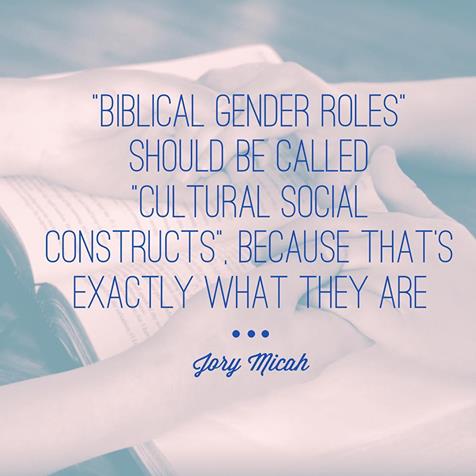
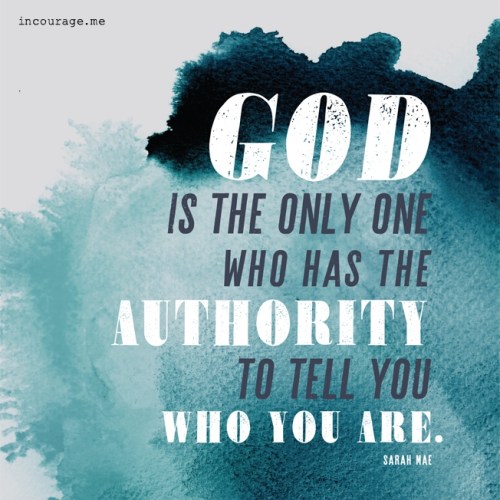
Fundamentally, the difference between Kristen Clark’s and my ideology comes down to our respective Biblical interpretation of gender roles. By “God’s design,” Kristen means that in the Genesis narrative, God created man to be “head” and woman to be man’s “helper.” There is a hierarchy with God over Christ, Christ over men, and men over women and children. Men have authority and women submit to men. Though men and women are of equal value, their roles are different. This is the teaching of complementarian (i.e. patriarchal) theology, which is explained thoroughly in this video by Pastor John Piper (one of the founders of the Center for Biblical Manhood and Womanhood. Kristen links to a CBMW review of “Jesus Feminist” by Sarah Bessey in the comments section, with the explanation that she respects the theologians and writers on that site.), in which he says,
The intention with the word “complementarian” is to locate our way of life between two kinds of error: on the one side would be the abuses of women under male domination, and on the other side would be the negation of gender differences where they have beautiful significance. Which means that, on the one hand, complementarians acknowledge and lament the history of abuses of women personally and systemically, and the present evils globally and locally in the exploitation and diminishing of women and girls. And, on the other hand, complementarians lament the feminist and egalitarian impulses that minimize God-given differences between men and women and dismantle the order God has designed for the flourishing of our life together.
Egalitarianism in short.
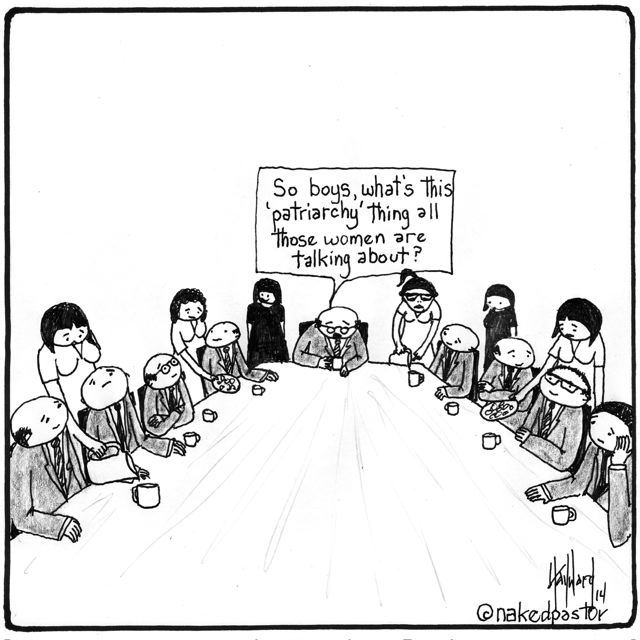
So Piper would lament feminism and egalitarianism (the Christian theology that God created man and woman equal, with shared authority; see this article or this one or this video, all from respected and notable theologians, for summaries of egalitarian theology) as ideologies that “dismantle God’s design.” Often, egalitarians also identify as feminists due to the shared goal of demolishing patriarchy, which egalitarians see as a heresy in opposition of God’s design and will for humanity. Egalitarians believe that God created man and woman in His image (literal translation of ezer being “corresponding strength” rather than “helper”), gave both authority over creation, and hierarchy came as a result of the curse in Genesis 3. Throughout the Bible there are women functioning outside of complementarian gender roles, and in the New Testament we see the Holy Spirit falling on both men and women, and women serving alongside men in leadership in the early church. Here is a good response to John Piper’s masculine view of Christianity.
While Christians have always held different views on many theological issues from the advent of the Church, it is common for complementarians to treat their view of gender roles as a critical aspect of the Gospel and to besmirch their egalitarian brothers and sisters with accusations of insincerity and rebellion. The Whartburg Watch wrote a post this year called, “Owen Strachan, CBMW, John Piper and David Platt: Gender Whackiness on the Rise” demonstrating this trend of elevating gender issues to be on par with the Gospel.
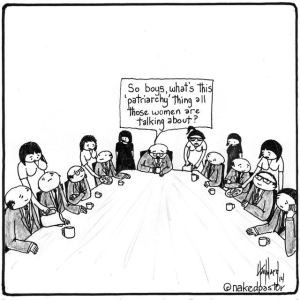
But back to Kristen’s polarizing image and characterizations of feminism. Is it true that at it’s root, feminism is devoid of God? If so, why are so many Christians identifying as feminists?
First of all, it is true that “feminism wears many hats” and cannot be flatly defined, in the same way that Christianity comes in many forms, traditions and political leanings. For example, Baptists. There are over 1,400 Baptist denominations in the United States. To some who hear the word “Baptist,” there is a visceral, biological response because of their negative experiences with Baptists, who can be judgmental, unloving and legalistic. I have personally known Baptists to gossip, to be gluttonous and proud. It can be controversial to bring up the topic of Baptists. It can be polarizing to identify yourself as a Baptist. So it is probably best not to identify with that word. Just call yourself a Christian!
See what I did there? I could change “Baptists” to “Pentecostals,” or “Episcopalians,” “Methodists,” “Congregationalists,” or “Presbyterians” for the same effect. And if I really did believe that Baptists were misguided and I wanted to deter others from becoming Baptists, I could utilize that tactic. Playing word games doesn’t really prove anything. The fact is, there are no perfect denominations, political parties, or social movements. But there are lots of social activists making positive change in the world towards values that I believe are in line with God’s redemption work. Christians can partner with environmentalists, humanitarians, economists, social workers, politicians, educators, health professionals, counselors, scientists, and even feminists, in the work of redeeming God’s creation to it’s pre-curse state. A feminist, atheist, Democrat, you-fill-in-the-blank is a person created in God’s image and loved dearly by God…I personally couldn’t call any imago Dei “devoid of God.” There is common grace among all of humankind. And has the Bible already solved all of the world’s problems and restored us to God’s design and will for humanity? Clearly there is much work to be done, and Christ has given us that work to do. Do I agree on all issues that all feminists tout? No. Do I agree that patriarchy is from the curse and has no place in Christ’s redeemed Kingdom? Yes.
Among many conservative Christians, the word “feminist” is spit out with disdain and horror. Feminists are accused by conservative pundits and pastors of ruining our country with their liberal agendas. They are compared to militants who see their gender as superior – “feminazis.” I am not familiar with the categorizations that Kristen uses to describe feminists. Her primary attention goes to addressing “equality feminists” though, so that is what I would like to respond to.
Like Kristen, I was a complementarian for nearly thirty years. I respected the same theologians and teachings that she points to in her writings. I won’t go into detail about my change to egalitarianism, as I already posted that story here. In short, it was at God’s prompting that I began reading about women in ministry and egalitarian theology, and I became convinced that the complementarian theology of gender roles was wrong.
I didn’t come to feminism through a desire to usurp the authority of men. I came to egalitarianism (I believe through God’s direction) and some of my conservative Christian friends began cautioning me about the slippery slope that I was on, and began jokingly referring to me as a feminist. Not because I was arguing for abortion rights or burning my bras, but because I was asking questions about gender roles in the Church. “Feminist” is a slur in the context of my upbringing. Looking back, I understand that this negative response can be a powerful deterrent to keep group members from challenging the status quo of patriarchy. It didn’t take me long to adopt the title feminist, as I couldn’t shake it and I was becoming more and more impassioned to see change in the world for women who are marginalized and abused by systems of patriarchy.
Kristen Clark’s term, equality feminism, sounds to me like a euphemism for egalitarianism. I believe she is using this term, which is considered deviant in conservative Christian circles, to paint egalitarianism in sinister terms.
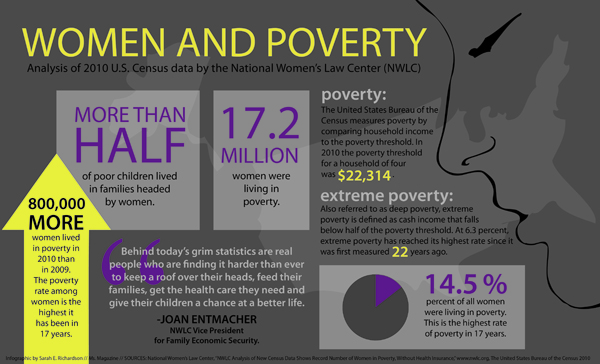
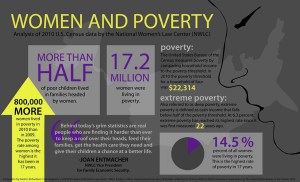 I began to see that “fighting theological battles” (i.e. blogging) like egalitarianism vs. complementarianism is critical to liberating women and girls around the world who suffer the most from the systems of patriarchy and poverty and war, etc. Becky and I share articles every day on our FB page detailing the horrors and injustices of the world’s most vulnerable inhabitants. If it is feminist to care about these issues, then yes, I’m a feminist. For important reference points on gender issues around the world, here are two excellent articles:
We need feminism – Rachel Held Evans
Christian Compassion or Complicity: The Abuse and Gendercide of God’s Daughters – Dr. Mimi Haddad
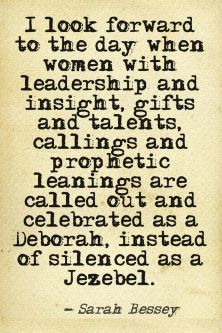 And in thinking about the roots of feminism, which Kristen Clark says are devoid of God, it is a fact that many of the earliest feminists were Christians who were trying to improve the lives of impoverished, disenfranchised, suffering women and children of their day. The blog Making a Track, by Rev. Jonathan Inkpin, celebrates the lives of early Christian feminists and is an excellent resource for learning about inspiring Beautiful Kingdom Warriors.
I am going to leave off with a comment that I found under Kristen Clark’s article from a wonderful Beautiful Kingdom Warrior who took the time to advise her Christian sisters in the better way, skipping right over the references to feminism (i.e. egalitarianism?) and getting to the heart of the matter–gender roles:
I too used to believe in the headship/submission form of marriage. But now, in my 50’s, I have changed my view. Please understand- I am in love with Jesus more than ever before, am pro-life, am a pastor’s wife, home school mom, been married to the same man for 27 years, teach Sunday school, and lead worship at our church. But I now believe that God created husbands and wives as equals, friends and co-heirs in the promises. After counseling many women who were verbally and sometimes physically abused by their Christian husbands, I studied the verses that cause so much pain. What I learned is this:
1) Eve was Adam’s helper, but this didn’t mean servant or maid. We don’t see Eve helping Adam by washing his clothes or cleaning his house; she was created to help Adam rule the world. As woman, she was given equal status as part of “mankind.” She had equal responsibilities and equal blessings. It appears that as salt is to pepper, peanut butter is to jelly, Eve was Adam’s Helper in that she helped to complete the set: man + woman = mankind. This was God’s beautiful, original design for husbands and wives.
2) At the fall, Eve was cursed, with all women, to be ruled by her husband. Ever since the curse, in nearly every society, women have been ruled by men. In some cultures, women are the legal property of their husbands and can be abused, sold, or even killed.
3) In the Old Testament, slavery is always mentioned as a curse, never part of the blessings for God’s people.
3) Jesus broke that curse, along with every other curse, at the cross. Christian women are now free- co heirs with men once again to enjoy all the blessings and promises of God.
4) In 1 Corinthians and 1 Timothy, Paul has many rules for women. They are told to keep silent in church, wear head coverings or wear long
hair, and never teach a man. Paul says women “are commanded to be under obedience as also saith the law.” But why would Paul, who in Galatians says
that “Christ has redeemed us from the curse of the law,” and now “there is neither male nor female; you are all one in Christ Jesus,” and “if you are led
by the Spirit, you are not under the law,” now put women (half the church) under the law? I think Paul was trying to jolt these churches back into grace. This
makes sense considering how in 1 Corinthians 3:1-3 Paul tells the people that he can’t talk to them as Spirit filled believers; because of their carnal
behavior, he must speak to them as people still under the law.
5) In Philippians 4 and Romans 16, Paul mentions many women who were ministers, deacons, teachers, laborers, co-prisoners and co-workers for the Lord! These women were anything but silent. It seems these women broke the rules of 1 Corinthians and Paul was very happy for it! Why? Because they lived in grace, not legalism. Remember, the law kills but the Spirit gives life! It is for freedom that Christ set you free, do not be burdened again with the yoke of slavery!!
6) When Paul tells wives to submit, he tells husbands to love (agape) their wives. 1 Corinthians 13 tells us that agape love is patient, kind, and doesn’t demand its own way. This is, of course, the very heart of submission. So, in reality, Paul is telling husbands and wives not to demand their own way… submit to the desires of the other, just like Christians are supposed to act with all people at all times.
7) The husband is head of the wife, as Christ is head of the church… How is Christ our head? Is He demanding or patient? Is He angry or loving? As Christ gave us the example of how to agape love, husbands are to usher this kind of love into the marriage. They are the heads in that they are to be the model of agape love for their families. Nabal was “head” by being an angry, demanding
tyrant that no one could reason with (1 Samuel 25). Clearly God was not pleased with Nabal’s behavior!
Solomon, however, was “head” by not being demanding…. When his wife was tired and turned him away one night, Solomon didn’t throw a tantrum and demand his own way, he quietly turned and left. King Lemuel, husband to the Proverbs 31 woman, also ushered this Godly love into his marriage. His wife was an intelligent woman who pursued many interests during her lifetime. Lemuel gave her the freedom, one fellow human to another, to follow her creative desires. He was “head” by being respectful to her, considerate of her needs, and proud of her talents. She, in return, loved him dearly and did him no harm all the days of his life.
My advice to Christian women is to marry a man who will be a friend, not a ruler.
Amen.
Thank you for visiting The Beautiful Kingdom Warriors! Please “like” our Facebook page where we post articles every day regarding gender issues from around the world and the church. God bless!