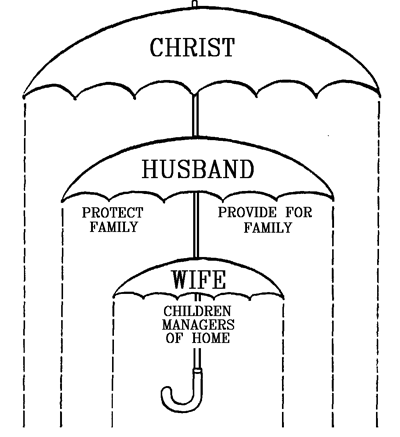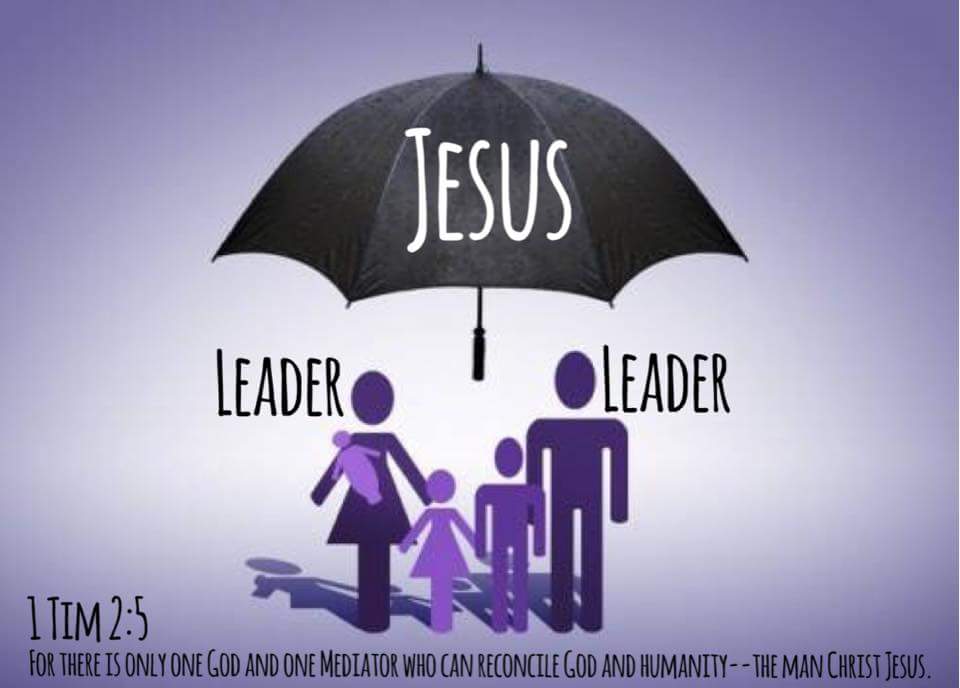
In this latest episode of The Beautiful Kingdom Builders Podcast, author Lydia Grace Kaiser shares her journey from traditional complementarian views to a more egalitarian understanding of women in scripture. She discusses biblical translation, cultural context, and how Jesus elevated women, encouraging listeners to explore scripture deeply and embrace their calling. Be free!
You can find more about Lydia Grace Kaiser on her website, where there are links to her social media accounts as well. And I highly recommend buying Kaiser’s book and reading it for yourself. It is a treasure trove of insight on Scripture’s message to women.
Please enjoy this episode of The Beautiful Kingdom Builders podcast on YouTube, Spotify, Apple Podcasts, Amazon Music, Substack, and more!
TRANSCRIPT:
Ruth Perry (00:17)
My guest today is Lydia Grace Kaiser. She wrote a really incredible book titled Bible Truth About Women, What They Don’t Tell You. And Lydia has a wonderful blog, lydiakaiser.com, that I highly recommend. Thank you so much for being here today, Lydia.
Lydia Grace Kaiser (00:34)
Thanks for having me, Ruth.
Ruth Perry (00:35)
Before we talk about your book, can we just go back and hear more about you and where you come from and especially about your faith journey, where it started to where you are now?
Lydia Grace Kaiser (00:45)
Okay, well, right now I’m fifty-nine years old. I have three adult children. I used to be able to say they’re all in their twenties, but the oldest one just turned 30. And I homeschooled my kids all the way through high school. And so that’s a big part of my education was that I, you know, got the education, the classical education that I never got before by teaching them. So it was a lot of work, but I’m grateful for it.
We have three grandboys. We live in rural Missouri with a little bit of acreage and chickens and bees. My education is I graduated from Pensacola Christian College in 1988. And I’ve been in ministry for four decades, mostly working with parachurch organizations because of the restrictions in church. I have done a lot of teaching, you know, training volunteers.
Administration, marketing, all of the admin stuff too, you know. And I have studied and taught the Bible all of my life, but in my 50s I became interested in this topic and realized that I did not have the research skills to study it adequately. I would read from this person, they would say this, and that person says that, and I’m like, I don’t know who’s right. You know, they say, well.
This Greek word or that Hebrew word, and how do I check that? You know, so I enrolled in seminary in my 50s. I
Ruth Perry (02:08)
That’s spectacular.
Lydia Grace Kaiser (02:09)
Yeah, well, I finally had the freedom to learn what I wanted to learn instead of worrying about what
I needed to teach everybody else around me, you know. So I just encourage people that it’s never too late. but my first class was hermeneutics. I went to Bethel Seminary in St. Paul, Minnesota.
Not to be confused with the other three Bethels, I think. But yeah, my first class was hermeneutics, and it was just mind blowing. My professor was a internationally renowned translator, which was just fantastic. But I was able to learn all of the challenges involved with translation. You know, all my life I had just, I had believed
That there could be a literal unquote word-for-word translation. And translators would say, well, I’m just giving you what the text says. I’m not interpreting. Oh yes, they are. You cannot translate without interpreting. I learned how to look up the Hebrew and Greek words for myself and check what people are saying and check different types of commentaries
with differing views and see how well they supported what they were saying. And that also helped me decide which theologian scholars I trust when I’m doing a deep dive into something, how to check their background and see really how much study they have in that particular topic. For example, Marg Mosco is my most cited scholar in my book.
Let me spell her name, M-O-W-C-Z-K-O, for those who want to look her up. But she’s not just a great translator, but someone who’s put in thousands of hours on these particular passages and issues, you know, comparing the passages and researching original documents. So she’s able to articulate the reasons for her conclusion that’s on a whole different level than, say, someone who’s also a great scholar, but they spend 99.2
Nine percent of their time on other topics or issues, you know? So yeah, people say, Well, I follow so-and-so, or I follow so-and-so. And I’m like, Great, I’m sure they’re a good scholar, but have they studied this topic like this? You know? So yeah, there is a little about
Ruth Perry (04:21)
Exactly.
Lydia Grace Kaiser (04:22)
me and my education.
Ruth Perry (04:24)
So just responding to that introduction, first of all, I’m a homeschool mom as well. I homeschooled three children. I had two boys and a girl.
Lydia Grace Kaiser (04:31)
Wow. Same here. Yeah.
Ruth Perry (04:33)
Were they two boys oldest and then a girl like me? Yeah.
Lydia Grace Kaiser (04:36)
No, the girl was in the middle. Yeah.
Ruth Perry (04:39)
Well, my oldest, he ended up going to public middle school. He didn’t love homeschooling. And so that worked out well for him. And then my next two homeschool through middle school, but then they went to high school because I was really burnt out by the time. It did so much work.
Lydia Grace Kaiser (04:55)
yeah, it’s a slog. It it really is a slog.
Ruth Perry (04:58)
So I commend you for that. How are they doing now?
Lydia Grace Kaiser (05:02)
Well, they’re all entrepreneurs. None of them felt the need to go to college, which made me feel like a failure because they didn’t just love education so much. But it turned out they just know how to teach themselves whatever they need to learn, and they’ve all
Ruth Perry (05:14)
Yeah.
Lydia Grace Kaiser (05:15)
been very successful in their chosen careers. I mean, some careers need advanced education and others don’t. And so, I guess we dodge three bullets without having to help out with, you know, higher education, but they’re all doing very well in their chosen fields. And, they’re all so different. The kids are different, you know, and it’s been fun
Ruth Perry (05:34)
Yeah.
Lydia Grace Kaiser (05:34)
to watch them blossom in their own ways.
Ruth Perry (05:36)
Secondly, you said you went to Pensacola. It’s Baptist, right?
Lydia Grace Kaiser (05:40)
No, but it’s Baptistic, very Baptistic. You could probably say it leans Reformed,
Ruth Perry (05:43)
Mm-hmm. And Bethel is too,
Lydia Grace Kaiser (05:47)
Bethel is from a old Swedish Baptist heritage, yes. The difference is they are a little broader. I don’t wanna speak for them. I wouldn’t say they leaned reformed, but you know, they’re in the same town as Bethlehem. Which was Pipers and and
Ruth Perry (06:03)
Yeah.
Lydia Grace Kaiser (06:04)
they’re not the same. I’ll just say that.
Ruth Perry (06:06)
Okay. That yeah, I was wondering if there was a relationship there.
Lydia Grace Kaiser (06:09)
So yeah, they’re different. They are also egalitarian. They have female professors and it was so refreshing to just engage with male professors that treated me so respectfully, honestly, and male students as well. It was a different experience than what I have felt in the past.
Ruth Perry (06:29)
So did you grow up believing that there were restrictions on w what roles and what things women could do in the church and the home?
Lydia Grace Kaiser (06:38)
Absolutely. And it was pretty much pounded into my my brain, you know, all these particular verses like Sarah called her Abraham Lord, and women need to be silent, and women are not to have any authority or teach. And so the practical outcome of that is that
All females really we knew not to give our opinion if it differed from the males in our presence. Especially my father who was a Baptist pastor, if any female gave her opinion in his presence, he would, say things about how she needed to shut her sassy mouth. I mean, he just really did not like to hear from women.
Ruth Perry (07:13)
So you’ve been on a journey in that regard too then changing your views.
Lydia Grace Kaiser (07:16)
Right, right. Well, and I have a high regard for scripture and it appears that there are some passages that do restrict women and so I’m just like, well, can’t argue with the Bible, you know, you just gotta use the plain reading of the word and so I thought that that’s what it said for the longest time, even though I looked around me and saw that it didn’t really work. I saw that men basically lost their partners, with this teaching and it’s harmful for men as well as women. They lose their partner and just everything is put on them. And the women are also taught, well, something doesn’t go right, it’s all his fault, because it ultimately, it’s on his shoulders. And so the women can just play along with that and like, well, it’s his fault, you know.
And so that’s is hard on him. He’s more likely to feel defensive or or just entitled. You know, he can go one way or the other and just become extreme in those feelings. And you know, no no person should feel like it’s all on them sink or swim. It should be we’re in this together, we’ll make these decisions together. And if it doesn’t go well, it’s on both of us, you know, and we
Ruth Perry (08:26)
Yeah.
Lydia Grace Kaiser (08:27)
We celebrate together and we mourn together. The practicalities of so called complementarian teaching are are just really devastating even for relationships.
Ruth Perry (08:38)
I also was a Baptist minister’s daughter and very
Lydia Grace Kaiser (08:42)
really?
Ruth Perry (08:43)
like grew up I wanna say like twenty something years I read the Bible through that patriarchal complementarian lens, never questioned it, it just made perfect sense and I didn’t recognize that I was culturally conditioned to accept it as making sense because that was the system I grew up in. Those were the gender norms and the cultural norms that I was used to. And so it was definitely a lens. Can you tell me about some of the things that started to create cognitive dissonance for you about complementarianism?
Lydia Grace Kaiser (09:15)
Sure. But before I forget, you’re talking about the cultural lens. I don’t know if you’re on Substack.
Ruth Perry (09:21)
Yeah.
Lydia Grace Kaiser (09:21)
Nick O’Brien just posted something about the culture and how the culture is very patriarchal. And so when these complimentarians say that we’re just giving into the culture, it’s not at all true. And he goes through every aspect of the culture and you know gives.
Hard stats. I mean, it’s just, it’s pretty amazing.
Ruth Perry (09:42)
I’ll look that up.
Lydia Grace Kaiser (09:43)
Yeah. Okay, so how did I first start getting feeling the dissonance? So I stumbled across a explanation for First Corinthians 14, 34 and 35, where you know someone just said something about how if this
Can be if if this is supposed to be taken at face value that women are to be silent in the church, well then it contradicts other scripture, like in this very same book, 1 Corinthians 11, where it says, when women are speaking and praying and prophesying in the church gathering, they should have their head covered. And I realized I have always been in circles it worried about whether we should have our heads covered, more so than the fact that.
Paul is nonchalantly mentioning that women are speaking and leading really in prayer and prophesying. And so, yeah, there, I had always been taught that the Bible doesn’t contradict itself. And I realized that every other topic out there, you know, biblical topic, if we see an apparent contradiction, we work really hard to resolve that.
You know, we look at all the possibilities, we do word studies, we have these long explanations for in order to reconcile that. But I’ve never seen that done with these passages about women. And the more I looked, I you know, I thought, well, if we’ve done that with that passage, what about the other passages? Have have we have we missed things or or failed to reconcile contradictions with those, but so I began looking more closely. I took my rose colored glasses off. Actually they weren’t rose colored, but I took those lenses off that you were talking about and just started reading a lot more critically and thought, there’s some issues here. I need to learn more. And then I started reading more broadly and that’s when I was like, I don’t know who to believe.
So there I went to seminary.
Ruth Perry (11:35)
Well the subtitle of your book is What They Don’t Tell You. What
Lydia Grace Kaiser (11:38)
Mm.
Ruth Perry (11:39)
are some of the biggest things that you believe Christians have not been told about women in scripture?
Lydia Grace Kaiser (11:44)
Okay, well, what I do with the book is I compiled 20 categories of misleading tactics used by translators and interpreters, you know, some by translators and more by interpreters. And I just number them in the introduction of the book, one through twenty. And then I go through all of the passages and explain which of those misleading tactics has been used with that passage. And then I summarize in a little sidebar. So if someone is just like, I’m not a book reader, well just flip through and read the sidebars and you’ll get the gist. But yeah, there’s 124 sidebars or examples. And sadly it’s it’s not exhaustive. But did I answer your question?
Ruth Perry (12:26)
That was helpful, but I was asking about the subtitle, what they don’t tell you. Yeah.
Lydia Grace Kaiser (12:30)
what they don’t tell you. Yeah. So like what I was explaining about challenges to translation, and the whole idea of plain reading, what I thought was that I could read my English Bible and those English words were, just as straight from heaven and straight from God as if those English translators were filled with the Spirit and led by the Spirit, just the same as the original authors. And yet I have also been told all my life that the Bible is inerrant in the original languages. And finally I thought, I haven’t been living that way. I have not been reading my English Bible as if it’s not completely inerrant.
I’ve been putting far too much weight on every one of those English words, every one of them. And so, what they don’t tell you is translators make a lot of decisions. For example, take a verse that talks about the word head. Ephesians 1:22 through 23. And he put all things under his feet and gave him as head over, you hear that preposition, over all things to the church, which is his body, the fullness of him who fills all in all. So the translator needs to put a preposition in there. And it’s up to them to decide which preposition to use. And they could use the word of, because there’s not a preposition, there’s not any indication of superiority or overness in the Greek there. But they, because of their ideology, they choose the word over. And now listen to how it sounds if they had chosen the word of. And he put all things under his feet and gave him as head of all things to the church, which is his body, the fullness.
Okay, here’s another thing that they don’t tell you is that some of these words that we take as a metaphor, such as head is a CEO or the boss, they didn’t have that same metaphor back then, the first century. It was coming in as a military term, but in ordinary usage, not so much, and especially prior to Paul’s writings, the idea of head, they thought that the head provided everything that the body needs. It was the source of provision. they even one of the philosophers even taught that the semen comes from the head, everything comes from the head.
So when you realize, okay, Paul wrote this to that audience, this is their understanding, this is what they would have understood when they read these words. then you see that this particular verse, and also in Ephesians 4, he says, We are to grow up in every way into him who is the head, into Christ, from whom the whole body, joined and held together by every joint, with which it is equipped, when each part is working properly, makes the body grow so that it builds itself up in love.
Do you see the source of provision that is being described? So this is how Paul uses the word. And then elsewhere, there’s a couple verses where it indicates more of he is the head of the whole universe, that sort of thing. But when he’s talking about the church, there’s an entirely different nuance there. And so understanding that the church doesn’t tell you that there are these nuances to translation and that these verses have other ways of being understood. So I’ll just leave it at that, although I could go on all day about even just this particular thing with with the head, you know.
Ruth Perry (15:55)
Yeah, it’s so true. there’s just a so much conditioning when you grow up in these complementarian churches that the people who aren’t coming to the same conclusions as you about the interpretation of the scriptures are playing fast and loose with scripture or they’re twisting
Lydia Grace Kaiser (16:10)
Well
Ruth Perry (16:11)
or cherry picking and all these things. But then you look
Lydia Grace Kaiser (16:13)
Yeah.
Ruth Perry (16:14)
at it deeply and you realize, well, wait a second. It’s not
Lydia Grace Kaiser (16:18)
And you know,
Ruth Perry (16:19)
the egalitarians doing that.
Lydia Grace Kaiser (16:20)
Yeah, and I hate to even use their word complimentarian because it’s such a misnomer. It’s one way complimenting is what’s happening. And they coined that word in the late 80s. Like I said, I graduated from college in eighty-eight. So as a young person, as I was just learning my deeper theology and hearing some of these words, I didn’t realize they were new words and that I was learning new teaching. This was not around before.
So really hierarchicalists are what they are, or the hierarchy, the hierarchical teaching is a more accurate term for what they are putting out there. And then as far as egalitarian, they’ve used that so pejoratively and then there are some egalitarians who are more extreme where their thinking is more androgynous, like there isn’t a difference between man and and woman, which of course I don’t believe. And so I really like the term mutualist, because what I’m looking for is mutual love and respect. You know, that that’s more of a partnership term.
I think believe that’s what God intended in Genesis, when he made Eve out of Adam’s body so that they would be of one flesh, one material, and then together gave them dominion over the earth. And then in First Corinthians 11, Paul says, yes, woman came from man, but then man comes from woman. And so, you know, everything comes from God. So stop making a big deal out of the fact that Eve came from Adam. Every other man has come from woman ever since, you know. So it was God’s way of showing that we’re equal and yet people have twisted that and just focused on one aspect of it.
Ruth Perry (17:59)
Yeah, absolutely. Can you tell us about the context of the Greco Roman culture and the Jewish culture and how they viewed women and the purity codes that were all enacted at the time that Jesus lived and then how Jesus countered those beliefs in his ministry and his treatment of women?
Lydia Grace Kaiser (18:19)
Sure. Now I go into the some in my book because it’s hard to say the culture was all like this. It was a very varied culture. It had the Greeks, even though we call it the Greco-Roman, the Greeks and the Romans were different in ways. You got your Jewish influence. And then even within the Jewish system, you have, the Sadducees and the Pharisees and the Zealots and the folks who followed Herod, the Hellenists. But there’s there’s just so many aspects of culture that you really can’t say, well, it was all like X.
So for example, I think it’s very interesting that Jesus came when he did, because in the Jewish culture, women were more oppressed, I think, than any time in history before that. You look at all the things that women were doing in the Old Testament, Deborah being both a judge and a prophet, Huldah being consulted by King Josiah. Even though there’s some other very famous prophets who were living at the time, she was his first pick. Did the church ever tell you that, by the way? No, you never heard that in church.
Ruth Perry (19:25)
No.
Lydia Grace Kaiser (19:27)
Yeah, kind of kicked Jeremiah and some others to the curb there to call on Huldah. So Jesus, when he came, when he started his ministry, he was baptized, you know, by John. And then he went out into the wilderness. And then he came back. And the very first thing he did was go to the synagogue. And they handed him the scroll of Isaiah. He turned to Isaiah 61 and he read that passage about the Spirit of the Lord has anointed me, and I’m come to give sight to the blind and freedom to the prisoner and the captives and declare the day of the Lord. And then he rolled it up and said, This day, this is fulfilled in your hearing.
So he kind of gave his manifesto for his ministry, for the start of his ministry. And from then on, he began healing people and treating women who were basically oppressed. I mean, the verse says that he’s bringing good news to the oppressed, he elevates women at every turn. And the Pharisees had come up with something like well, hundreds of extra laws. I think there might have been six hundred laws in the Torah, and they came up with an extra 400 or and a hundred of them restricted women in very specific ways, which really restricted them in society and their movement and their ability to economically and all those things. And so it’s interesting to me that he came at a time when women were more oppressed than at any other time.
But at the same time before the coming of Jesus, you had the new Roman women who were basically they were kind of doing the ancient bra burning type marches, you know. Feminism is very old. But Rome had tried to restrict women and what they could wear and what they could do, and so they wouldn’t have it. And so they marched and threw off everything and they were dressing very extravagantly. This is why in first Timothy it says, you know.
Dress modestly. They weren’t talking about not showing too much skin. They were talking about, not flaunting your wealth, basically. So then this was also affecting the Greek women. For example, in Ephesus, they had the Diana, or also, so there’s a Roman name and there’s a Greek name. So there’s Artemis and Diana are the same. And so you have women a lot more involved in civic affairs. Now, the men still dominated. We want to be clear about that. But the women were moving about much more freely. So you have women like Lydia and Phoebe, who were able to travel and you know, do commerce. I’m sure they had an entourage for safety and that sort of thing, but they were wealthy and in fact, these old Egyptian parchments show that in the first century around 25% of Greco-Roman households were headed by women.
Ruth Perry (22:14)
wow.
Lydia Grace Kaiser (22:15)
So you have a lot of changing power dynamics, but I think that the Jewish women were especially oppressed, and it was the religious people who were oppressing them. And I I feel like the same thing is happening today. We have this resurgence. The Baptists had the conservative resurgence. you have the the new
Ruth Perry (22:35)
Yeah.
Lydia Grace Kaiser (22:36)
Calvinists that are resurging that are very much about restricting women. And so I just wonder if we’re seeing history repeat itself here and if God is not intervening by exposing all of the corruption in today’s church and also helping us women with the with the new tools that we have, with the internet and the ability to call out sin and expose it on a national level. And not let these guys continue to just, go to another town and take another pulpit and, abuse a whole nother congregation of people. So I find all that very interesting. did I answer your question?
Ruth Perry (23:18)
Yeah, so that is the context and then how did Jesus treat women?
Lydia Grace Kaiser (23:23)
Okay, so I have a whole section of my book, part three, is all about the example of Jesus. And the point that I want to make is that we so often, at least in my background, they took the epistles in what they thought were clear passages and put that back on Jesus and held that as the highest standard. Whereas we need to remember that the authors of the epistles were followers of Jesus, you know, not the other way around. And so we really need to start with Jesus. What did he say? What did he do?
And it’s interesting, for example, Mark 15, names women who follow Jesus into Galilee and minister to him, and it references quote, Many other women who would come up with him to Jerusalem. And then of course you have Luke 8, 1 through 3 names women who traveled all the time with Jesus. And then also says, quote, many other unquote women. Now the really interesting thing in Mark 15 is that this word for for the women who follow him is Akalitheo, which is the language of discipleship.
So that is shocking in its first century Jewish context. And it confirms that unlike other rabbis, Jesus elevated women to the position of disciple. They were considered just as much a disciple as the Twelve or anyone else who was in the entourage. And then, of course, we have the story of Mary sitting at Jesus’ feet, and Jesus will not let that be taken from her.
So I’m sure that just threw the door open, and as many women as as could t took that posture. And we also want to remember that the first century posture there of someone who quote, sat at someone’s feet, was not just doing it to sit there in adoration. This is the picture I always had, you know, the woman
Ruth Perry (25:18)
Yeah.
Lydia Grace Kaiser (25:19)
was just sitting there, like, you know, hands folded, looking adoringly at Jesus. No. The the context here is that people would follow the master, the rabbi, in order to then turn around and have followers themselves. Now, of course, with Jesus, the followers should not think that they become greater, a greater teacher, you know, like you’ve got Socrates, Plato, and Aristotle, and they each tried to, perhaps eclipse the other. But this is a long tradition of choosing a rabbi or a master and following them and then continuing to teach. And, we totally missed that. I mean, again, have you ever heard that in church?
Ruth Perry (26:01)
No. No.
Lydia Grace Kaiser (26:03)
so yeah, we could go into all the stories where Jesus gave special attention to women touched them, commended them like the woman with the issue of blood; shouldn’t have even been out of her house while menstruating according to the Pharisaical laws, let alone touching a man’s clothing, you know. And yet Jesus had her say in front of everyone what she did and then commended her.
So the ways he interacted with women just were in your face to those who wanted to hold women back. I just gotta tell one more. Like when Jesus said to the Pharisees Simon, look at this woman. It could have been because some Pharisees wouldn’t even look at women. And he was making him look at her. Or it could just be that he was saying really look. Pay attention to this woman instead of dismissing her. Truly pay attention.
Ruth Perry (26:55)
What do you make of the people who want to say that Mary Magdalene and the women that witnessed the resurrection and were told to go and tell were just giving a testimony they weren’t preaching. Like what do you feel about the squabbling over the language of testifying or sharing versus preaching when it comes to women?
Lydia Grace Kaiser (27:14)
It is straining at a gnat in order to swallow a camel to use Jesus’ words.
Ruth Perry (27:20)
Amen. Yeah.
Lydia Grace Kaiser (27:22)
Because if you look at all of the language from all through the New Testament, for example, I was having a little debate with a man on Facebook due to one of my posts, you know, right?
Ruth Perry (27:33)
Yes.
Lydia Grace Kaiser (27:34)
If they if they stop being civil, I bid them, you know, adios. But this one, you know, was being respectful. And so we w we went back and forth probably 20, 25 times, you know, just and it was very interesting. And I I enjoyed the challenge because it helped me to look. And one of the things he said was, Well, when Priscilla taught Apollos, that word is more of an explaining word. It’s not the same authoritative.
You’re gonna hear that word a lot. Authoritative teaching that is used elsewhere in Acts, and that word was very much available to Luke. So he could have used the more authoritative word, but instead used this explaining word. so because of just having some basic skills, which any of your listeners can acquire, we have these wonderful tools like Bible Hub.
Where you go on there and you pick your passage, you you choose interlinear so that you have the Greek and the English next to each other. You find the English word, you see which words, word or words are are being used, where those English words came from in the Greek, could be one or more. You click on them, you can see everywhere else they’re used and where they come from and what the
core of the word is, what the prefixes and suffixes might be versus the root. And you can do your own word studies. You know, again, you gotta be careful not to draw big conclusions without checking with maybe some commentators. But you can at least do some exploring. So what I did was I just went to this so-called authoritative word, and then I discovered that, look, here it is in Colossians 3:16, where the entire congregation is being told to teach one another. Everyone in the congregation. So Paul uses these words, and Luke and all of them use these words very freely for all kinds of things. And so, all Luke was saying was, they sat down at length to explain because Apollos was teaching this and he wasn’t quite there yet, so they had to.
It says explain to him more fully. So this was a lot of teachings. That’s all he’s trying to do is say, this took some significant explaining. It wasn’t a ps come over here to the foyer for a second, you know. So yeah, this hair splitting about whether the women were just delivering some news or
bringing an authoritative message from Jesus. The big problem with all of this debate is a huge misunderstanding about authority. Let me get back to that for a minute, because
Ruth Perry (30:07)
Yeah.
Lydia Grace Kaiser (30:09)
when we start thinking that there’s a special kind of authority that people have, then I think that’s where we really get off the rails. I think we need to remember that it’s the word of God that has the authority, not the vessel who’s delivering the word. It’s the Holy Spirit that has the authority that gives me the word, that gives me a prophecy, you know, a word that I need to deliver to someone. I’m impressed to deliver that. It has nothing, really nothing to do about me except perhaps my level of surrender and a willingness to listen, willingness to obey. And we all know, we’ve heard the stories, I could name names of people, vile men that we know who delivered the truth, the word of God, and lives were changed.
Ruth Perry (30:58)
Yeah.
Lydia Grace Kaiser (30:58)
Millions around the globe. And then we find out, say after he’s dead, the horrific things he was doing. Did that particular man have authority? No, it was the word of God that had the authority, it was the Holy Spirit. And that’s
Ruth Perry (31:12)
Yeah.
Lydia Grace Kaiser (31:12)
the only comfort that I can take. Because so many people, they leave the church and they say it’s a bunch of hypocrites or it it doesn’t work because look at these people, they’re messing up and
You know, my own father was very abusive to my mother. And so for years I was like, How could he have the Holy Spirit? How could he be a Christian even? And when he was physically and verbally and emotionally and spiritually abusive, you know, in every way. And we have our besetting sins that we need to humbly address. But God will still use us when we deliver the truth from his word. And so it’s something to be cautious about in that we know that we we will not have reward in heaven if we didn’t do it with the right motive. Paul said some people preach out of jealousy.
Ruth Perry (32:03)
Yeah.
Lydia Grace Kaiser (32:03)
You know. and yet it’s also a comfort in that we know that with the right surrender and humility that God can still use us even though we’re not perfect and at all times holy, you know. So
Ruth Perry (32:19)
I like your point a lot better than the one I’ve heard a lot is well, God spoke through Balan’s document so he can use women too.
Lydia Grace Kaiser (32:27)
Yeah, that’s cute. but it’s still kind of putting down the vessel as if women are just one step above a donkey.
Ruth Perry (32:32)
Absolutely. Yeah.
Lydia Grace Kaiser (32:35)
And the fact is, we’re
created in God’s image exactly the same way men are. It says male and female, he created them in his image, he created them. And the hierarchalists will say, Well, sure, they’re ontologically equal, but just have different roles. But then here comes the so-called roles. One of them is to always be spiritually over and authoritatively over the other, only because they were born with the right physical, you know, is not at all logical, even. It’s just
Ruth Perry (33:08)
Yeah.
Lydia Grace Kaiser (33:09)
it is not obeying scripture, it is finding a way around scripture. Scripture couldn’t be, you know, okay, I shouldn’t use the word clear. I’m trying not to say clear, but they’re always saying clear. I could
Ruth Perry (33:20)
Yeah.
Lydia Grace Kaiser (33:21)
I could say it’s clear because God said, Look, I’m giving you dominion together. He had all these opportunities to say, man is the boss, man is overwoman, woman follow man. He never said any of those things. We’re just adding to scripture and assuming those things because that’s what people want to believe and assume. And then they flip it around and say that’s what we’re doing. It’s it’s it’s kind of maddening.
Ruth Perry (33:44)
Yeah, it really is. And I also really liked when you talked about Paul and the way that he spoke about people in ministry. And then how we turned those into
Lydia Grace Kaiser (33:51)
Right,
Ruth Perry (33:53)
titles. Can you tell us about that?
Lydia Grace Kaiser (33:55)
Yeah, again, all these words, he’s trying very hard to just use servant based egalitarian type words like co-worker. This this guy’s my coworker. You know, he doesn’t say I’m the senior elder and he is the junior elder, the assistant elder, or anything like that. It’s these diaconos servant, and co-worker type words, not titles, and yet this whole debate is based on titles. And now what functions supposedly go with those titles?
It’s getting to the point where it’s just untenable because how are we going to distinguish which functions are pastoral, when Al Moeller’s amendment said the pastoral functions, including preaching to the gathered assembly. Well, what are the other functions? You know, there’s a lot of things that are pastoral, and women are especially good at taking care of others and shepherding them. So where is it gonna end? It’s just so confusing. It is just unbiblical because yeah, Paul does not set up all these titles.
Ruth Perry (35:03)
Well, what would you say to somebody who is at the beginning of this journey of questioning complementarianism, but they have that fear of losing their community and their identity and you know, it’s a costly journey. What would you say to them?
Lydia Grace Kaiser (35:18)
Well, first I’d say read my book, because you really need to understand this inside and out and have deep conviction and not only conviction but excitement. I mean, the biggest tragedy in all of this is that our view of God has suffered. And so when you get a true and proper perspective of God through all this, and how actually God Himself is incredibly humble and what he’s done for us. It helps not only give courage, but it helps you to enter into that suffering with Jesus that is spoken of in Philippians, and you understand God’s heart, you feel his heart for you, and it helps you on that tough journey.
Because yeah, there will be a personal price to pay, more so for some people than others. But then you can know that Jesus is walking through this with you because he did it first. He was highly misunderstood, by family, especially, by people close to him and his community and the town that he grew up in, all the people that they knew his character, they knew he was a good, honest, hardworking businessman and took care of his widowed mother and siblings, and they knew all these things about his character. And yet they dismissed him. And, we’re told to expect the same. And sometimes we think that’s too hard. And sometimes we think, well, I’m not going to make that stand because I can’t bear to lose this that or the other. But what you don’t want to lose is Jesus. You don’t want to lose your relationship with Jesus. And this is so precious. I can’t even tell you how very, very precious it will be to you.
Ruth Perry (36:56)
I highly recommend your book. It was excellent. I really enjoyed reading it. I related and I learned new things. I’ve been on this journey myself for a long time, and I learned a lot from you. And so thank you for all the hard work that you’ve done. And I’m just so excited that God has led you into this study and that He’s gifted you so beautifully. And I pray that God uses you in amazing ways.
Can I give you the last word, Lydia, before we sign off? Is there anything else you’d like to share with my audience?
Lydia Grace Kaiser (37:23)
Well, thank you for that encouragement. I spent I think six years on the book. And no one but God knows, how much work that was and the price I’ve paid for coming out with it. And so just hearing that from you is really encouraging. I guess my last word is just that God is all about elevating and empowering others.
And I would like for each of your listeners to be free. Especially if you’re a woman who’s felt inhibited, who’s felt confused by why God would give you perhaps leadership or teaching abilities, but then tell you to hold back and wait for a man to do it. Just be free. Be free to say what God puts on your heart, with graciousness, of course, but with the same courage and conviction that any man would say it. Be free to dream and let God use you in big and small ways that you didn’t feel free to dream about before.
And be free to embrace the role of pastor, you know, to recognize that you’re a shepherd of those whom God has given you to disciple, even if it’s just a small group. Take that seriously and be a shepherd to those people. You don’t have to wait for someone to ordain you. You just do it. You have ordination from the Holy Spirit. And you could even consider starting and leading a small microchurch in your neighborhood or friend circle. And whatever dream God gives you. Find a common interest with some other people and bring the Lord into that and lead however God leads you. And I tell you what, let your life open up with all kinds of possibilities and it’ll be exciting.
Ruth Perry (38:57)
Amen and praise God. Yeah. Thank you for that good word and thank you for being here today. God bless.
Lydia Grace Kaiser (39:03)
Thank you for having me, Ruth.
Did you enjoy this episode? Please subscribe, rate or review us on YouTube, Spotify, Apple Podcasts, Amazon Music, Substack, and more! Your support means the world. God bless!



 I was speaking with my mentor Collette over the phone since I posted my article about Abigail. She blew my mind, asking, what if David had co-reigned with his wise wife Abigail, instead of being discontent and taking multiple wives and concubines? The whole trajectory of Israel’s history would have been different. I had never considered this before. If only David did not have this faulty view of submission, it is possible that Israel’s “series of unfortunate events” and calamity may have been averted.