Tag Archives: Egalitarian

Was Jesus Really a Complementarian???

In an article published today on The Gospel Coalition, Kevin DeYoung, senior pastor of University Reformed Church in Michigan, writes that Jesus was simultaneously pro-woman and complementarian¹.  He shares a long and beautiful list of interactions that Jesus had with women throughout his life and ministry, and then points to Jesus’ 12 male disciples as the proof that although women were of equal value to Jesus, he reserved leadership for men and was therefore complementarian (i.e. traditional, hierarchical, or patriarchal).  TGC is almost synonymous with complementarianism, posting regularly on God’s design for gender roles, even positioning gender roles as a critical part of the Gospel – generally understood to be the Good News that Jesus came to restore his creation and redeem us to right relationship with God…and to our gender roles for all eternity?   

kevin deyoung
I certainly agree with DeYoung that Jesus’ interactions with women were revolutionary.  It is often these same interactions that plant a seed of doubt in the mind of complementarians who come around to an egalitarian² theology.  If this is how Jesus treated women at a time when Jewish men daily were thanking God that he did not make them women, why do our churches treat them any differently?

In “Our Pro-Woman, Complementarian Jesus”, DeYoung says,

Out of a cultural background that minimized the dignity of women and even depersonalized them, Jesus boldly affirmed their worth and gladly benefited from their vital ministry. He made the unusual practice of speaking freely to women, and in public no less (John 4:27; 8:10–11; Luke 7:12–13). He also frequently ministered to the needs of hurting women, like Peter’s mother-in-law (Mark 1:30–31), the woman bent over for 18 years (Luke 13:10–17), the bleeding woman (Matt. 9:20–22), and the Syrophoenician woman (Mark 7:24–30).

Jesus not only ministered to women, he allowed women to minister to him. Women anointed Jesus and he warmly received their service (Matt. 26:6–13; Luke 7:36–50). Some women helped Jesus’s ministry financially (Luke 8:2–3), while others offered hospitality (Luke 10:40; John 12:2). A number of women—Mary Magdalene, Joanna, Susanna, Mary the mother of James and Joses, Salome, Mary and Martha—are mentioned by name in the Gospels, indicating their important place in Jesus’s ministry. Many women were among Jesus’s band of disciples. And perhaps most significantly, women were the first witnesses to the resurrection (Matt. 28:5–8; Mark 16:1–8; Luke 24:2–9; John 20:1–2).

DeYoung could elaborate on his mention of John 4 – the story of the Samaritan woman at the well, who Jesus ministered to despite cultural taboos (and even contradictory to the much-followed complementarian “Billy Graham Rule” of never being alone with a woman), who then went into her city as the first missionary, converting many.

He could mention that Jesus submitted, at somewhere around 30 years old, to his mother’s wish that he turn water into wine at the wedding at Cana, his first miracle.

love that women were the financial backers of Jesus’ ministry.  There is no mention in the Bible of any men doing so.  Complementarians generally assign finances to the role of males, as a source of power and authority that transcends the domestic duties of women.

At a time when women were not eligible to give witness in a court of law because of their lowly status and questionable ability in the eyes of the patriarchal culture, Jesus first appeared to women at his resurrection.  Let that sink in.  If women are not to teach men, as complementarians believe that teaching is a form of authority, and women are not to have authority over men, should they have gone back to the 12 grown men and told them, or held the Good News under their hat until Jesus spoke directly to the men who could then spread the Good News to others?

DeYoung goes on to say,

Underlying Jesus’s ministry was the radical assumption that women have enormous value and purpose. The clearest example is his mother Mary, who’s called highly favored in Luke 1:28. Moreover, Jesus used women as illustrations in his teaching, mentioning the queen of the south (Matt. 12:42), the widow of Zarephath (Luke 4:26), women at the second coming (Matt. 24:41), and the woman in search of her lost coin (Luke 15:8–10). He held up the persistent widow as an example of prayerfulness (Luke 18:1–5), and the poor widow’s offering as an example of generosity (Luke 21:1–4).

Jesus addressed women tenderly as “daughters of Abraham,” placing them on the same spiritual plane as men (Luke 13:16). His teaching on divorce treated women as persons, not mere property (Matt. 5:32; 19:9), and his instruction about lust protected women from being treated as nothing more than objects of sexual desire (Matt. 5:28). And in a time where female learning was suspect, Jesus made a point to teach women on numerous occasions (Luke 10:38–4223:27–31; John 11:20ff).

I would elaborate on the story of Martha and Mary from Luke 10, in which Jesus insisted that Mary sit at his feet alongside his male disciples, learning from him rather than serving them in her subordinate female station–which was inconsistent with what DeYoung calls “God’s original design for role distinctions”.  If it was better for Mary to sit at the feet of her teacher, in the posture of a disciple, is it not better for women today to pursue their callings in the Kingdom of God than it is to remain in supportive roles, always deferring to and serving the men?

DeYoung was doing well until this point in his article.  While acknowledging that Jesus’ treatment of women was revolutionary in his patriarchal culture, he veers off course with his assertion that Jesus’ selection of an “all-male apostolic leadership” points to complimentarianism.

First of all, if Jesus is being consistent with God’s original design for male and female roles, it is important to point out that gender roles as expressed by complementarian theology were not present in humanity before the Fall.

Complementarians say that because God made Adam first, he intended that Adam would be the leader.  But Adam was not made first.  The animals were!

When God went to make an ezer kenegdo for Adam, which is often translated “suitable helper”, he was making an equal partner to yoke with Adam.  A truer translation renders ezer kenegdo “corresponding strength.”  It is not preferable to be unequally yoked in marriage, with one spouse carrying a greater load than the other.  In most appearances of the word ezer  in the OT, it is referring to God or to a warrior in battle.  Certainly not an image of domestic servitude!

When God fashioned Eve out of Adam, he declared that she was bone of his bone and flesh of his flesh, meaning she was the same.  None of this “weaker sex” talk here.  Women are made of tough stuff!

And God did not give Adam alone authority over creation.  The mandate to be fruitful and multiply and rule the earth was given to both Adam and Eve.  We do not see a brokenness in male and female equality and partnership until sin entered the picture.

Second of all, pointing to the fact that the twelve disciples were male does not prove that Jesus would have withheld positions of authority from women for all time.  Jesus also chose only Jewish, middle-aged men.  Are Gentiles, slaves, and elderly or young people also excluded from church leadership?

There was symbolism behind Jesus choosing his original twelve disciples, pointing to the restoration of the twelve tribes of Israel and the coming of their long-awaited Messiah.  These twelve were then titled apostles after Jesus ascended to heaven, but others were also later called apostles, including Paul and a woman named Junia.  The prophesied Messiah had come, and another prophecy from Joel 2:28 was also fulfilled when the Holy Spirit came at Pentecost and landed on all who were gathered together waiting – both men and women – and they all began to prophecy.  With God’s Spirit in each of us, there is no longer Jew nor Gentile, slave nor free, male nor female (Galations 3:28).  We are all one in Christ and equally equipped to serve God’s Kingdom.

How is complementarian theology practiced in most churches?  When looking for leaders, half of the church is immediately disqualified because of their genitalia.  From there leaders are chosen.  It boggles the mind to see spiritually mature and qualified women barred from using their gifts for the Kingdom of God, while our culture has progressed to a place where women are able to lead in secular organizations to the great benefit of all!

God became flesh in a patriarchal world where leadership was not accessible to women.  But in the early days of the Church women played pivotal roles as leaders.  Christianity can be credited with progressing the equality of women throughout culture at large.  And so it is ironic and sad that hierarchical Christianity today is a leading force in subjugating women.  Complementarianism may seem benign to many who have not examined their life-long assumptions about gender roles, but to those of us who have been exposed to the plight of abused and marginalized women around the world and in our own backyards, we are horrified that the Church is not stepping up to honor women in the same revolutionary way that Jesus did in his day.


¹Wikipedia: “Complementarianism is a theological view held by some in Christianity, Judaism, and Islam, that men and women have different but complementary roles and responsibilities in marriage, family life, religious leadership, and elsewhere…For some Christians whose complementarian view is biblically-prescribed, these separate roles preclude women from specific functions of ministry within the Church.  Complementarianism assigns primary leadership roles to men and support roles to women—based on their interpretation of certain biblical passages from a Complementarian perspective. One of its precepts is that while women may assist in the decision-making process, the ultimate authority for the decision is the purview of the male in marriage, courtship, and in the polity of churches subscribing to this view.”

²Wikipedia: “Christian egalitarianism (derived from the French word égal, meaning equal or level), also known as biblical equality, is a Christian form of egalitarianism. It holds that all human persons are created equally in God’s sight—equal in fundamental worth and moral status. This view does not just apply to gender, but to religion, skin colour and any other differences between individuals. It does not imply that all have equal skills, abilities, interests, or physiological or genetic traits. Christian egalitarianism holds that all people are equal before God and in Christ; have equal responsibility to use their gifts and obey their calling to the glory of God; and are called to roles and ministries without regard to class, gender, or race.”


Thanks for visiting TBKW!  “Like” us on FB, where we share interesting articles every day from around the web dealing with gender equality, gender injustice, and gender violence.


A Response to Girl Defined – Is Feminism Devoid of God???

Last month, a dear friend sent me this picture, which linked to this article, “Why Feminism and Christianity Can’t Mix”, by Kristen Clark:

11206008_837632299619184_8099788202025688119_n

That’s a pretty polarizing image that begs for a response, don’t you think?!

The blog Girl Defined has the tagline, “getting back to God’s design,” so my first impression was that Kristen Clark and The Beautiful Kingdom Warriors share a passion for the very same thing, and yet our primary messages are drastically different.  This is a testament to the diversity of thought within Christianity and how beliefs are shaped by personal experiences, relationships, community, cultures, socialization and more.  We are both sincere Christians, passionate for God’s Kingdom and God’s design to reign supreme.  We are also both defensive against what we perceive to be heresy that impedes God’s will.

Fundamentally, the difference between Kristen Clark’s and my ideology comes down to our respective Biblical interpretation of gender roles.  By “God’s design,” Kristen means that in the Genesis narrative, God created man to be “head” and woman to be man’s “helper.”  There is a hierarchy with God over Christ, Christ over men, and men over women and children.  Men have authority and women submit to men.  Though men and women are of equal value, their roles are different.  This is the teaching of complementarian (i.e. patriarchal) theology, which is explained thoroughly in this video by Pastor John Piper (one of the founders of the Center for Biblical Manhood and Womanhood.  Kristen links to a CBMW review of “Jesus Feminist” by Sarah Bessey in the comments section, with the explanation that she respects the theologians and writers on that site.), in which he says,

The intention with the word “complementarian” is to locate our way of life between two kinds of error: on the one side would be the abuses of women under male domination, and on the other side would be the negation of gender differences where they have beautiful significance. Which means that, on the one hand, complementarians acknowledge and lament the history of abuses of women personally and systemically, and the present evils globally and locally in the exploitation and diminishing of women and girls. And, on the other hand, complementarians lament the feminist and egalitarian impulses that minimize God-given differences between men and women and dismantle the order God has designed for the flourishing of our life together.

Egalitarianism in short.

Egalitarianism in short.

So Piper would lament feminism and egalitarianism (the Christian theology that God created man and woman equal, with shared authority; see this article or this one or this video, all from respected and notable theologians, for summaries of egalitarian theology) as ideologies that “dismantle God’s design.”  Often, egalitarians also identify as feminists due to the shared goal of demolishing patriarchy, which egalitarians see as a heresy in opposition of God’s design and will for humanity.  Egalitarians believe that God created man and woman in His image (literal translation of ezer being “corresponding strength” rather than “helper”), gave both authority over creation, and hierarchy came as a result of the curse in Genesis 3.  Throughout the Bible there are women functioning outside of complementarian gender roles, and in the New Testament we see the Holy Spirit falling on both men and women, and women serving alongside men in leadership in the early church.  Here is a good response to John Piper’s masculine view of Christianity.

While Christians have always held different views on many theological issues from the advent of the Church, it is common for complementarians to treat their view of gender roles as a critical aspect of the Gospel and to besmirch their egalitarian brothers and sisters with accusations of insincerity and rebellion. The Whartburg Watch wrote a post this year called, “Owen Strachan, CBMW, John Piper and David Platt: Gender Whackiness on the Rise” demonstrating this trend of elevating gender issues to be on par with the Gospel.

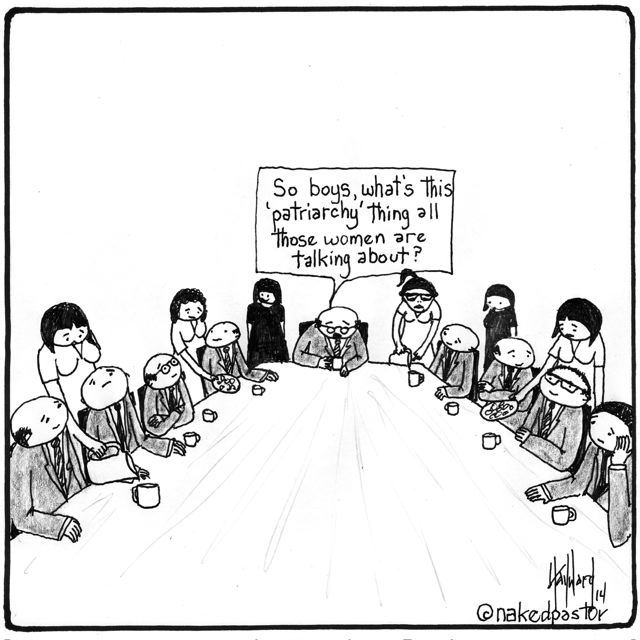
the-patriarchy (1)

But back to Kristen’s polarizing image and characterizations of feminism.  Is it true that at it’s root, feminism is devoid of God?  If so, why are so many Christians identifying as feminists?

First of all, it is true that “feminism wears many hats” and cannot be flatly defined, in the same way that Christianity comes in many forms, traditions and political leanings.  For example, Baptists.  There are over 1,400 Baptist denominations in the United States.  To some who hear the word “Baptist,” there is a visceral, biological response because of their negative experiences with Baptists, who can be judgmental, unloving and legalistic.  I have personally known Baptists to gossip, to be gluttonous and proud.  It can be controversial to bring up the topic of  Baptists.  It can be polarizing to identify yourself as a Baptist.  So it is probably best not to identify with that word.  Just call yourself a Christian!

See what I did there?  I could change “Baptists” to “Pentecostals,” or “Episcopalians,” “Methodists,” “Congregationalists,” or “Presbyterians” for the same effect.  And if I really did believe that Baptists were misguided and I wanted to deter others from becoming Baptists, I could utilize that tactic.  Playing word games doesn’t really prove anything.  The fact is, there are no perfect denominations, political parties, or social movements.  But there are lots of social activists making positive change in the world towards values that I believe are in line with God’s redemption work.  Christians can partner with environmentalists, humanitarians, economists, social workers, politicians, educators, health professionals, counselors, scientists, and even feminists, in the work of redeeming God’s creation to it’s pre-curse state.  A feminist, atheist, Democrat, you-fill-in-the-blank is a person created in God’s image and loved dearly by God…I personally couldn’t call any imago Dei “devoid of God.”  There is common grace among all of humankind.   And has the Bible already solved all of the world’s problems and restored us to God’s design and will for humanity?  Clearly there is much work to be done, and Christ has given us that work to do.  Do I agree on all issues that all feminists tout?  No.  Do I agree that patriarchy is from the curse and has no place in Christ’s redeemed Kingdom?  Yes.

Among many conservative Christians, the word “feminist” is spit out with disdain and horror.  Feminists are accused by conservative pundits and pastors of  ruining our country with their liberal agendas.  They are compared to militants who see their gender as superior – “feminazis.”  I am not familiar with the categorizations that Kristen uses to describe feminists.  Her primary attention goes to addressing “equality feminists” though, so that is what I would like to respond to.

Like Kristen, I was a complementarian for nearly thirty years.  I respected the same theologians and teachings that she points to in her writings.  I won’t go into detail about my change to egalitarianism, as I already posted that story here.  In short, it was at God’s prompting that I began reading about women in ministry and egalitarian theology, and I became convinced that the complementarian theology of gender roles was wrong.

I didn’t come to feminism through a desire to usurp the authority of men.  I came to egalitarianism (I believe through God’s direction) and some of my conservative Christian friends began cautioning me about the slippery slope that I was on, and began jokingly referring to me as a feminist.  Not because I was arguing for abortion rights or burning my bras, but because I was asking questions about gender roles in the Church.  “Feminist” is a slur in the context of my upbringing.  Looking back, I understand that this negative response can be a powerful deterrent to keep group members from challenging the status quo of patriarchy.  It didn’t take me long to adopt the title feminist, as I couldn’t shake it and I was becoming more and more impassioned to see change in the world for women who are marginalized and abused by systems of patriarchy.

Kristen Clark’s term, equality feminism, sounds to me like a euphemism for egalitarianism.  I believe she is using this term, which is considered deviant in conservative Christian circles, to paint egalitarianism in sinister terms.

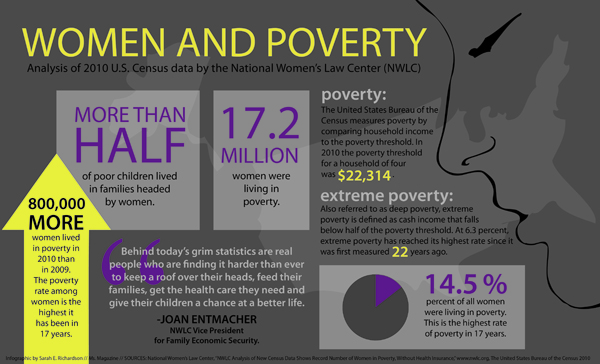
povertyI began to see that “fighting theological battles” (i.e. blogging) like egalitarianism vs. complementarianism is critical to liberating women and girls around the world who suffer the most from the systems of patriarchy and poverty and war, etc.  Becky and I share articles every day on our FB page detailing the horrors and injustices of the world’s most vulnerable inhabitants.  If it is feminist to care about these issues, then yes, I’m a feminist.  For important reference points on gender issues around the world, here are two excellent articles:

We need feminism – Rachel Held Evans
Christian Compassion or Complicity: The Abuse and Gendercide of God’s Daughters – Dr. Mimi Haddad

e4c2e61dc0186b4ebe317ab0bcc67f33And in thinking about the roots of feminism, which Kristen Clark says are devoid of God, it is a fact that many of the earliest feminists were Christians who were trying to improve the lives of impoverished, disenfranchised, suffering women and children of their day.  The blog Making a Track, by Rev. Jonathan Inkpin, celebrates the lives of early Christian feminists and is an excellent resource for learning about inspiring Beautiful Kingdom Warriors.

I am going to leave off with a comment that I found under Kristen Clark’s article from a wonderful Beautiful Kingdom Warrior who took the time to advise her Christian sisters in the better way, skipping right over the references to feminism (i.e. egalitarianism?) and getting to the heart of the matter–gender roles:

I too used to believe in the headship/submission form of marriage. But now, in my 50’s, I have changed my view. Please understand- I am in love with Jesus more than ever before, am pro-life, am a pastor’s wife, home school mom, been married to the same man for 27 years, teach Sunday school, and lead worship at our church. But I now believe that God created husbands and wives as equals, friends and co-heirs in the promises. After counseling many women who were verbally and sometimes physically abused by their Christian husbands, I studied the verses that cause so much pain. What I learned is this:

1) Eve was Adam’s helper, but this didn’t mean servant or maid. We don’t see Eve helping Adam by washing his clothes or cleaning his house; she was created to help Adam rule the world. As woman, she was given equal status as part of “mankind.” She had equal responsibilities and equal blessings. It appears that as salt is to pepper, peanut butter is to jelly, Eve was Adam’s Helper in that she helped to complete the set: man + woman = mankind. This was God’s beautiful, original design for husbands and wives.

2) At the fall, Eve was cursed, with all women, to be ruled by her husband. Ever since the curse, in nearly every society, women have been ruled by men. In some cultures, women are the legal property of their husbands and can be abused, sold, or even killed.

3) In the Old Testament, slavery is always mentioned as a curse, never part of the blessings for God’s people.

3) Jesus broke that curse, along with every other curse, at the cross. Christian women are now free- co heirs with men once again to enjoy all the blessings and promises of God.

4) In 1 Corinthians and 1 Timothy, Paul has many rules for women.  They are told to keep silent in church, wear head coverings or wear long
hair, and never teach a man. Paul says women “are commanded to be under obedience as also saith the law.” But why would Paul, who in Galatians says
that “Christ has redeemed us from the curse of the law,” and now “there is neither male nor female; you are all one in Christ Jesus,” and “if you are led
by the Spirit, you are not under the law,” now put women (half the church) under the law? I think Paul was trying to jolt these churches back into grace. This
makes sense considering how in 1 Corinthians 3:1-3 Paul tells the people that he can’t talk to them as Spirit filled believers; because of their carnal
behavior, he must speak to them as people still under the law.

5) In Philippians 4 and Romans 16, Paul mentions many women who were ministers, deacons, teachers, laborers, co-prisoners and co-workers for the Lord! These women were anything but silent. It seems these women broke the rules of 1 Corinthians and Paul was very happy for it! Why? Because they lived in grace, not legalism. Remember, the law kills but the Spirit gives life! It is for freedom that Christ set you free, do not be burdened again with the yoke of slavery!!

6) When Paul tells wives to submit, he tells husbands to love (agape) their wives. 1 Corinthians 13 tells us that agape love is patient, kind, and doesn’t demand its own way. This is, of course, the very heart of submission. So, in reality, Paul is telling husbands and wives not to demand their own way… submit to the desires of the other, just like Christians are supposed to act with all people at all times.

7) The husband is head of the wife, as Christ is head of the church… How is Christ our head? Is He demanding or patient? Is He angry or loving? As Christ gave us the example of how to agape love, husbands are to usher this kind of love into the marriage. They are the heads in that they are to be the model of agape love for their families. Nabal was “head” by being an angry, demanding
tyrant that no one could reason with (1 Samuel 25). Clearly God was not pleased with Nabal’s behavior!

Solomon, however, was “head” by not being demanding…. When his wife was tired and turned him away one night, Solomon didn’t throw a tantrum and demand his own way, he quietly turned and left. King Lemuel, husband to the Proverbs 31 woman, also ushered this Godly love into his marriage. His wife was an intelligent woman who pursued many interests during her lifetime. Lemuel gave her the freedom, one fellow human to another, to follow her creative desires. He was “head” by being respectful to her, considerate of her needs, and proud of her talents. She, in return, loved him dearly and did him no harm all the days of his life.

My advice to Christian women is to marry a man who will be a friend, not a ruler.

 Amen.

Thank you for visiting The Beautiful Kingdom Warriors!  Please “like” our Facebook page where we post articles every day regarding gender issues from around the world and the church.  God bless!

January Link-Up

Here are the best of the best articles dealing with gender issues within Christianity that we have shared on our Facebook page this month.  I had to narrow it down to the posts that we marked with either “Fantastic!” or “Excellent!”.  If you want more, check our FB feed.  Happy reading!  🙂

The Junia Project – “No Representation and No Invitation: To Be Asked the Question”

At the end of the day, we simply want this: to be asked the question.

Rather than ushering us off to the nursery before learning that we have absolutely zero knack with or passion for children, or assuming our appropriate role is on the coffee or hospitality team before realizing that we can’t even boil water; ask us the appropriate questions before stuffing us into a mold that quite frankly doesn’t fit.

The questions are simple:

“What are your God-given, Spirit-breathed gifts?”
“What makes you come alive?”
“How can your great gifts meet a great need within the body and broader community?”

And then, perhaps even more importantly:

“What can we do to equip you, as an image bearer, to fulfill your calling; to optimize your gifts for the sake of the Kingdom? “

You can join The Junia Project on Saturday, February 14th for a half-day conference to celebrate women in leadership!  Check it out here.

Christianity Today – “My First Sexuality Sermon”

So maybe it’s time for a woman’s take on sexuality from the pulpit. But what should that be? Is it my place to talk about pornography to the men in my congregation? I’m not sure I feel comfortable with that. Or maybe it’s time to add a woman’s perspective? There have been voices lately that have introduced the possibility that lust is not unique to men. And pornography is not only viewed by men. So is it my task to admit to my own desires in this Sex Sermon? Male preachers have received a lot of flak lately for calling their wives “hot.” The complaint was over the sexualization of their wives and the way it made other women in the congregation feel. If I stood before my congregation and called my husband “hot,” the problem might be a little different. Regardless of how a woman looks, for a woman to be sexually interested is for a woman to be sexually interesting. As a pastor, I work very hard to be publicly sexually uninteresting.

CBE International – “A Partner, Not a Patriarch:  10 Types of Men to Marry”

Seems like every few days, the Christian blogosphere produces a new article on the 5, 7, or 10 people Christians should avoid marrying. Some lists are great, but others are patriarchal beyond the point of absurdity. So my husband, Tim, and I made our own list.

If you’re a woman looking for a partner, not a patriarch, here are some men to look for…

1.       Nobody

Jesus wasn’t married. Why should you be? Single Christian women have been changing the world for millennia!  ….

Rachel Heston Davis – “Strachan’s views on male leadership: It’s all about the women!  No, really!”

So women flourish in this system because their husbands engage in self-sacrifice, bless them, treat them gently, and die to their own wishes to benefit them.

You know what? None of that sounds particularly bad. And it seems accurate when held up against Ephesians 5:28, which tells husbands to “love their wives just as they love their own bodies.” Sounds like a prioritization of women’s needs to me.

But if you could pick a word to sum all that up, what would it be? Servanthood? Caring? Sacrifice?

Yet the word complementarians always, always, always return to, is “leadership.” Strachan says that men who don’t understand this system aren’t “virtuous leader[s].” The blog and Twitter posts he referenced from Gavin Peacock define complementarianism as husband “leader”ship in no uncertain terms.

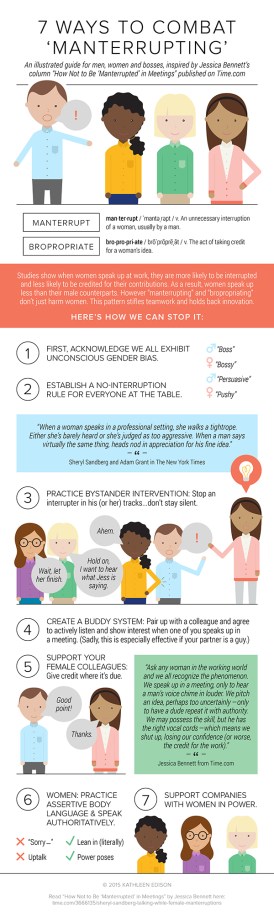
Behance – “7 Ways to Combat Manterrupting”

ff4bbd9d6494a7bcd22abf3740ca6e56

Fast Company – “How We Can Help Young Girls Stay Assertive”

Girls lose their voice for a variety of reasons—it’s mostly because of their self-esteem and is culture-based, says Martha Mendez-Baldwin, a psychologist who specializes in child and adolescent behavior, and an assistant professor of psychology at Manhattan College. Navigating the world between being children and women leave them unsure of how to act. When that uncertainty is met, combined with the pressure to fit in with peers and high expectations of parents, girls are often reluctant to assert themselves, she says.

In addition, girls receive tremendous pressure from society and media to adhere to a feminine role, says Linda Hoke-Sinex, a senior lecturer in the department of psychology and brain sciences at Indiana University in Bloomington, Indiana. The message is to be passive and nice—that it’s preferable to keep the peace than to speak up with an opinion that might be unpopular.

Nate Pyle – “Seeing a Woman: A conversation between a father and son”

There are two views regarding a woman’s dress code that you will be pressured to buy into. One view will say that women need to dress to get the attention of men. The other view will say women need to dress to protect men from themselves. Son, you are better than both of these. A woman, or any human being, should not have to dress to get your attention. You should give them the full attention they deserve simply because they are a fellow human being. On the other side, a woman should not have to feel like she needs to protect you from you. You need to be in control of you.

The Junia Project – “They Say the Church is Too Feminine”

Yes, this statement bothers me, because it shows how little we are actually evaluating the situation and because it is offensive, but most importantly it bothers me because  it is completely false.

The Barna Group has been studying Church trends over the last 20 years and they have found that women actually represent the biggest shift away from the Church. They also found that the gap between unchurched men and women is no longer a significant one. “It remains true that churchless people are somewhat more likely to be men than women, but the gap is not huge and has been steadily closing…the gap between men and women has plummeted from 20 points in 2003 to just 8 points currently.” And this is not just in protestant churches. Findings coming out of the Catholic Church do not look much different,according to the Association of Religion Data Archives.

All of this makes me want to ask those who claim that the Church is “too feminine” what churches they are going to. Are men really walking into churches and becoming overwhelmed with female presence? The idea that the church is “too feminine” goes against the majority of my experiences in church. In fact, as I visited churches on three continents over the last 6 years of my life, I have noticed that the majority of those churches presented the same experience to me, and it doesn’t come close to being feminine.

The Junia Project – “5 Reasons Not to Use Gender-Based Jokes in the Pulpit”

Don’t get me wrong, I understand the intention.

Humor is good. So is connecting with your audience by relating to real life experiences.

But there are ways to do that without using gender-based humor.

There are ways to do that that don’t deepen the gender brokenness, further entrench the stereotypes and, possibly, alienate people from the church and from a deeper walk with God.

In the end, we need to be creating meaningful venues where congregations can talk constructively about male/female relationships and partnerships. Maybe a place to start would be the content of this post. Agree? Disagree? Either way, it would be great to host a conversation in your church about it.

The bottom line is that until we figure out ways to take gender seriously in the church, the joke will be on us.

Christianity Today – “What Happens When We See Women Teach the Bible”

Sometimes I wonder how many women in the church have the gift of teaching, but will never use it, or even entertain the possibility of possessing it. When roughly 90 percent of evangelical pastors and 80 percent of evangelical seminarians are men, it can be hard for gifted women to find role models in the church. With such a void, do some women even consider the thought?

As a college student, I was confused about the direction of my call and the place of my gifts. At my church, women mostly occupied administrative positions. Even in my college parachurch organization, we rarely had a woman speak. Given the scarcity of female role models, I wasn’t sure where to turn.

However my life was forever changed when, in my early 20s, I attended the annual Passion conference, a popular worship and teaching gathering founded by pastor Louie Giglio. Beth Mooretook the stage, and though I was only vaguely familiar with her at the time, I won’t ever forget that moment. When she opened up her Bible, she taught the Word like I had never heard a woman teach it before. She spoke with power, competency, conviction, and most of all, anointing. I would never be the same again.