Author Archives: Ruth Perry

Egalitarian Christmas Wish List

my-grown-up-christmas-list

As I sit in devastated helplessness over the atrocities occurring in Aleppo, I think, what can I possibly do to help?  Beyond giving to organizations I believe in (like The Compassion Collective), I am convinced more than ever that the fight to end oppression of the vulnerable and disenfranchised is where it is at.

And how can the Church specifically address this?  Let’s start with our own disenfranchised–women, who experience varying degrees of oppression depending on their particular churches, but oppression none the less.  Being side-lined from using their spiritual gifts and working alongside their brothers in Kingdom building is oppression.

And who benefits from this?  I don’t think anyone actually benefits.  There are some men who hold inordinate power and influence (check out Malestrom, below, to see how many men are downtrodden by patriarchy), who would experience loss if they were made to share these things, to quiet their own voices to allow room for others’.  But it is really to their benefit as well to be humbled and to become a servant, just as Jesus Christ was humbled even to death.

There is intersection of issues to consider as well.  People of color are disenfranchised in Evangelical institutions of influence and power.  Low-income people are viewed negatively in our Western, wealthy society.  Finding our way out of patriarchal, racist and classist systems that sideline Kingdom warriors will involve a massive shift in the way that Christians view theological issues of authority, dominion, headship, and submission.  Christians have historically led the charge in freeing others from oppression – for instance, early abolitionists and suffragists were Christians.  Let us pick up our mantle of freeing others once again, and pray that the ripples spread throughout the world to ensure the abundant life of all humankind.

12507519_873393196115394_9177446309210050879_n.jpg

And so, I offer you a Christmas shopping list for the Christians in your family, church staff, close friends, anyone who you buy a gift.  Using your voice and purchasing power to spread Egalitarian Kingdom values is money well-spent.
The links to purchase each book is in the caption.  In no particular order:
 

egalbook1

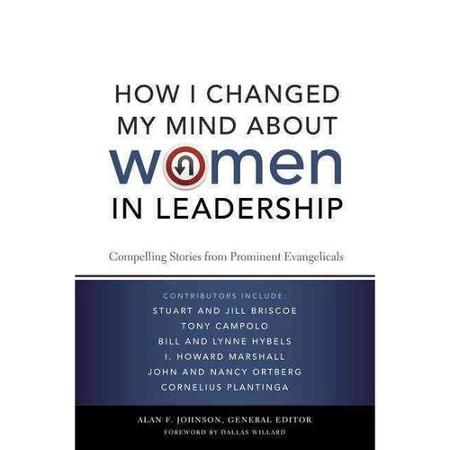
Excellent essays from influential Evangelicals on their change from Complementarian to Egalitarian theology.  How I Changed My Mind About Women in Leadership

egalbook3

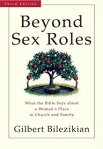
One of my favorite theologians.  Love this.  Beyond Sex Roles
egalbook4

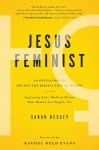
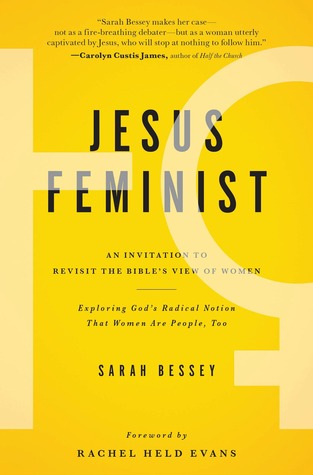
Beautifully written, compellingly drawing us to Jesus and His daughters.  Jesus Feminist
egalbook6

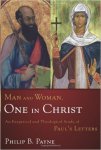
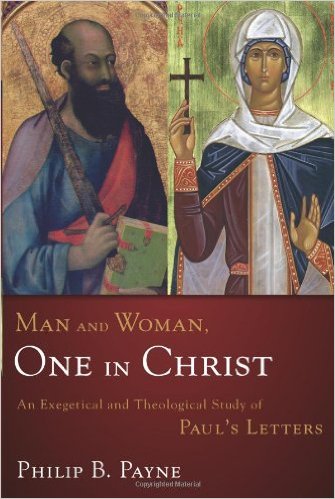
Powerful scholarship on Paul’s letters.  Man and Woman, One in Christ

egalbook5

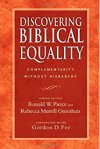
A seminal work from Egalitarian theologians on Kingdom gender roles.  Discovering Biblical Equality

egalbook7

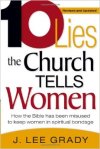
Grady looks at patriarchal cultural influences have snuck into the Church. 10 Lies the Church Tells Women
egalbook8

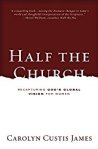
Custis James is my favorite Ezer.  Read her many books!  You’ll be glad you did!  Half the Church

egalbook9

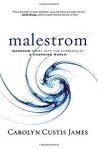
An excellent treatise on the harm that patriarchal society inflicts on men.  Malestrom  
egalbook11

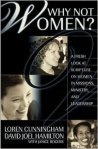
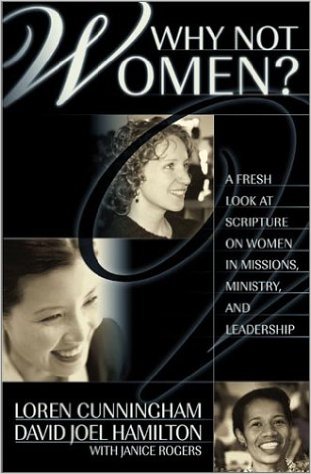
From the founder of Youth with a Mission on the importance of commissioning women into ministry.  Why Not Women?
egalbook12

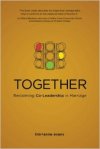
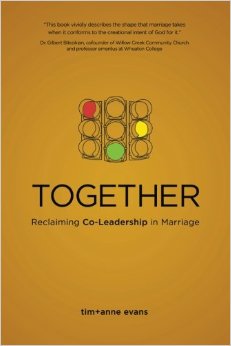
Women are not the subordinate ‘helpers’ – we are co-leaders in marriage and Church.  Together: Reclaiming C0-Leadership in Marriage
egalbook13

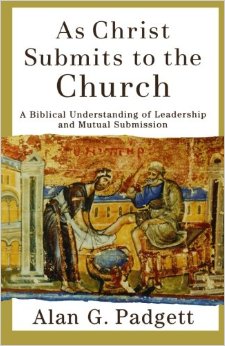
Egalitarians do not reject the teachings on submission – just exempting men.  As Christ Submits to the Church


egalbook15

A marriage book for newlyweds and marriage veterans alike.  I studied under Mathews at Gordon-Conwell Seminary.  Marriage Made in Eden


The Egalitarian World of the Kingdom

I am always googling “Egalitarian” to see what I can come up with for new insights and resources.  Yesterday, I listened to a Jesus for Everyone podcast episode from Herb Montgomery of Renewed Heart Ministries on the Egalitarian nature of God’s Kingdom.

Herb Montgomery, director of Renewed Heart Ministries, is an author and adult religious re-educator. For over fifteen years, Herb and his wife, Crystal, have shared Jesus’ teachings with others in cities and communities across the United States. Herb’s presentations are transparent, relevant, relationally responsible, and intellectually honest. He has an unusual gift for making complex theological and sociological concepts accessible for the people he speaks to. He especially enjoys presenting to groups possessing wide and diverse “belief” spectrums yet with a common focus on compassion and justice. (RHM website)

As with many resources we share on The Beautiful Kingdom Warriors blog, this particular teaching is relevant to our discussions on gender equality in the Church.  I am unfamiliar with the scope of Montgomery’s views, but can wholeheartedly agree with this particular podcast.  You can listen here:

https://renewedheartministries.com/podcasts/83egalitarian.mp3

On the Renewed Heart Ministries website, Montgomery also shares his podcast transcript.  I am editing it down some, but you can access the full transcript here:

The Egalitarian World of the Kingdom

This week, I want to take a look at Jesus’ words in Matthew 23.8-12. The phrase I want to zero in on is, “Nor are you to be called instructors, for you have one instructor, the Messiah.” What Jesus is commissioning us to put on display is a community characterized by humble egalitarian relationships rather than hierarchical ones. In all actuality, Jesus was death to any person using hierarchical authority over another: “But Jesus called them to him and said, ‘You know that the rulers of the Gentiles lord it over them, and their great ones are tyrants over them. It will not be so among you; but whoever wishes to be great among you must be your servant.’” (Matthew 20.25-26)

According to the Hebrew creation narrative, hierarchical relationships are a fruit of the relational schisms that took place in the garden; they are not reflective of original creation (Genesis 1.26 mentions authority over creation, but not authority over others.) Even in a perfect state, the narrative seems to hint at humanity’s inability to exercise authority over one other. Nor are they reflective of the new creation that has come through Jesus. (See 2 Corinthians 5.17, NIV.)

The early followers of Jesus understood this vision. Notice Paul’s description of how the church that met in Corinth functioned: “When you come together, each of you has a hymn or a word of instruction, a revelation, a tongue, or an interpretation.” (1 Corinthians 14.26, emphasis added) The gatherings of the early church, historical scholars agree, were not ones where the majority sat passively silent while the same person taught every week. These were communities that embraced the priesthood of all believers, each one possessing a gift to share that would contribute to and build up the body. They saw themselves as having only one teacher (the Messiah), and they were are all humble students, together, showing each other what Jesus was teaching them. These were communities where following the “one-anothers” of the New Testament could be practiced as well as put on display for the world around them to see.

The early followers of Jesus believed that together, they equally became a dwelling place for God. (See Ephesians 2.22, where the “you” is plural, not singular, and 1 Peter 2.4-8.) They believed that together, they were functioning here on Earth as the visible “body of Christ,” with only Christ as their “head” (Ephesians 4.15)—not “lording” authority over each other, but humbly and lovingly serving one another. In this way, they, as a community, believed that together, they were partaking of the “divine nature” (see 2 Peter 1.4) and that “all of them” were “one,” just as the Father was in Christ and as Christ was in the Father. “They” saw themselves in Them. (See John 17.20-21.)

The body metaphor used by Paul is especially telling when taken with Jesus’ words in Matthew 23. When our head signals to our hands, it doesn’t first signal the arm to tell the hands to move; neither must the hand submit to the arm in order for it to obey the head. The brain sends direct signals to those body parts it seeks to influence; consequently, the head controls all of the body’s parts immediately and directly. It doesn’t pass its impulses through a chain-of-command scheme invoking other body parts along the way.

The proper application of the body metaphor preserves the unvarnished truth that in the world changed by Jesus, there is no hierarchical authority practiced by Jesus’ followers over other of His followers. There is only one source of authority in the church: Jesus Christ.

It is mutual submission (i.e., being submitted to one another and then together to Christ), not hierarchical submission (i.e., being submitted to someone else as they are submitted to someone else who has submitted themselves to Christ), that engenders the proper coordination of the body of Christ.

We are not called to put on display simply a religious version of the corporate structures of this world. On the contrary, Jesus is inviting us to experience (and then to put on display) a world where, rather than exercising power over others, we—together, as a community—come under His authority , each of us together learning how to listen to Him. And instead of “lording” power or position over each other, we learn what it means and what it looks like to serve each other with humble servant love.


Thanks for visiting The Beautiful Kingdom Warriors!  “Like” us on Facebook if you would like daily links to articles about gender equality in the Church and world.

Francis Chan, the NEO House Church Network, and Women in Leadership

sb10065601aa-001

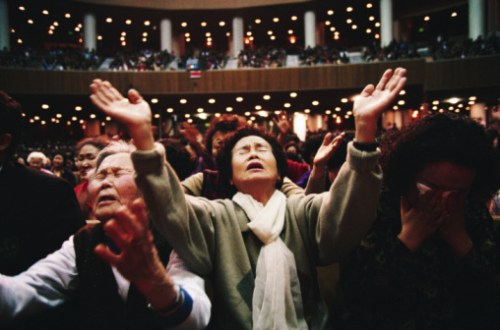
Getting Images: Yoido Full Gospel Church members praying

I recently listened to Francis Chan on the Phil Vischer Podcast, episode 227, sharing about his current ministry, the NEO House Church Network:

Popular author and preacher Francis Chan walked away from his megachurch to try something completely different – a series of tiny house churches in inner city San Francisco.  Why the change?  And what can we learn from his big experiment in going “small?”  This week on the podcast with Francis Chan – is the future of the church tiny??

At the end of the podcast, he mentioned that the NEO House Church Network is complementarian, reserving pastoral leadership to men.  It is a part of The Christian & Missionary Alliance (complementarian) and is also affiliated with The Gospel Coalition, which holds complementarianism as a key doctrine.

I love what Chan is doing, building a house church network that gives thousands of people the opportunity to minister in intimate and committed small communities. Mobilizing the priesthood of all believers should be the ultimate goal of a pastor.  And Chan is an amazing minister of the Gospel that I admire.  So I thought he would benefit from this quick story about a pastor that mobilized the women in his church to start house churches and they grew to be the largest church in the world.

“Don’t be afraid to empower women,” says the pastor of the world’s largest church.  Churches are wrong not to let women become spiritual leaders, David Yonggi Cho told church leaders at a “Discipling a Whole Nation” conference in Italy.  “If you ever train the women, and delegate your ministry to them, they will become tremendous messengers for the Lord.”

Most leaders at Cho’s Yoido Full Gospel Church in Seoul, Korea, are women.  The 700,000-member congregation is divided into 50,000 cell groups that meet in homes, and about 47,000 cell leaders are women, he said.  Of the church’s 600 associate pastors, 400 are women.  “In ministry they are equal with men,” he said.  “They are licensed.  They are ordained.  They become deaconesses and elders.”

Cho adopted the cell church principle in 1964 after he collapsed from exhaustion trying to minister to his then 3,000-member congregation.  His male leaders balked when he told them to divide the congregation into cells that meet in their homes.  “They said, ‘Fine, but we are not trained to do that and we are not paid to do that.  Why don’t you have a long vacation?’ This is the Korean way of saying ‘Why don’t you resign from the church?’ ”

When he asked the women leaders to do it, they said, “Teach us, pastor.  We will do anything for you,” he said.  The church grew from 3,000 to 18,000 in the next five years.  The cell churches started new cell churches and more lay leaders got involved in ministry, Cho said.  “It is the will of God to have a growing church.”

Source: https://godswordtowomen.org/empower.htm

Over time, using this cell principle, Cho’s church grew to over 1 million people.  Sadly, Cho has been convicted of embezzling from his church.  It is common for one person holding much power to be corrupted.  This should not diminish the impact of Cho’s female cell church pastors though!

Matthew 7:16 tells us, “You will know them by their fruit.”  The fruit of empowering women in ministry at Yoido Full Gospel Church in South Korea was unprecedented growth.  Church planters like Francis Chan should take note and include women in leadership.


Further reading:
The Junia Project has a great article on Why Women Make Great Church Planters.

The MissioAlliance has several must-read articles on Women in Church Planting.


Thank you for visiting The Beautiful Kingdom Warriors, where we fight for our rightful place beside our brothers in Christ’s reconciling and redeeming work on Earth. “Like” us on Facebook if you’d like to read links from around the web each day on gender issues in the Church and world.