
It is an honor and a pleasure to share this sermon from Zoë Faith Reyes, our sister in Christ and in community at North Harbor Community Church in midcoast Maine. In the weeks leading up to Easter Sunday, the teaching team at North Harbor did a series called A Peace of Suffering. If you are interested in listening to the entire series, you can do so here. It was profoundly helpful to look closely at the topic of suffering as a church family. And in the spirit of The Beautiful Kingdom Warriors’s mission to empower women and girls to pursue their callings and develop their spiritual gifts for the building of God’s Kingdom, we wanted to offer Zoë as an example of a woman using her gift of teaching to greatly bless her church family. Enjoy her sermon!
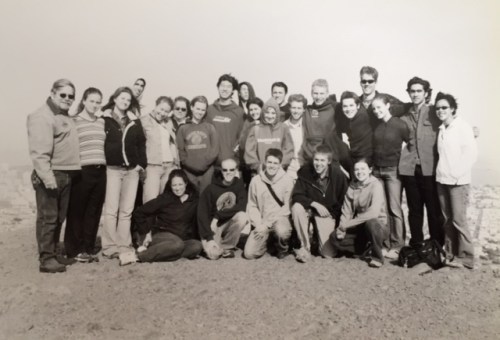
Zoe’s San Fransisco Team on top of a windy hill
The Way through the Waves
A Peace of Suffering – Part 6
I recently read an article about one of my favorite topics, Resilience, the capacity to recover quickly from difficulties. Almost as an aside, the article mentioned that research has shown that people who are members of faith communities regularly demonstrate stronger resilience. At the same time, I was feeling heavy with the weight of trials and sufferings that I felt that the members of my own faith community [including myself] were undergoing. “How?!” I wondered. “What is it about people in faith communities that enables them to be more resilient? How can I tap into that capacity? How can I offer that power to my brothers and sisters of faith??” With these burning questions weighing on my mind, I entered into a dark and beautiful journey into the world of pain.
For one, I have to admit, “I hurt.” I can’t begin to preach at my community as if I have it all together, am above this fray, I have to admit the hurt in my body, mind, heart and soul. Any outsider might assess my “suffering” differently, but Pain is Pain. If I worry about those external assessments, I might belittle or glorify my pain, but both approaches only help me avoid actually dealing with it. And as attractive as avoiding pain seems, I can not forget the worst pain I ever experienced. When I went into labor with my second child and attempted a VBAC, his heart rate indicated he was in distress. Due to my history and his present condition, I was whisked away for an emergency C-section, which required an emergency administration of general anesthetic. They struck a needle into the back of my hand and it felt like a freight train had tunneled into my hand and up my arm instead. The feeling that effectively took all pain and other feeling away was easily the most excruciating physical pain I have ever known. So I neither can, nor am I sure I want to remove all pain from my life.
For two, I know YOU hurt, and I hurt for you. I hate that in my helplessness, I can not shoo away your chronic pain; make the world treat you with the love and respect you deserve; erase the trauma from you past; bring back the people you have loved and lost; I may not even be able to get through the walls you’ve erected to keep anyone from knowing you are in pain and in need of help in the first place. And there’s despair in that. Despair is when you feel like tomorrow will be no different from today, or in other words, despair is the absence of hope. I have known despair all too well, far too many times. AND, so many times when I have faced my despair, I have found hope. Hope is a learned skill, learned in the context of relationship. I am learning to hope as I experience life in community.
I want to get vulnerable and share with you out of my own darkness and despair to share a picture of where despair can lead to hope, how I have time and again found peace in my suffering.
When I was in college, I co-lead a mission team to San Francisco where we fed the homeless, worked with AIDS victims; painted a mission outpost; and played with and shared love with inner city kids. Both the prep work in the year leading up to the trip and the week itself were sleepless and exhausting, but miraculously I had strength to get through each day with gusto. Until the last day, that is. On the last day, in the climax of my leadership success, one of our team members informed me that he was taking off to hang out with a friend in the city. I told him he could not, we were there on a TEAM trip. He scoffed at me and left anyway.
In a recent sermon at our church, Will Truesdell talked about our self-talk when we’re in the midst of suffering. My self-talk went something like this: “How dare he show such disregard for our team unity! I can not be held responsible for the danger he is going to get himself into in the city – he is so going to get lost on the subway!! How dare he show such disrespect for this trip’s purpose! How dare he show such disrespect for me! Why is he just abandoning me like this?!” I was feeling intense fury and disdain. Depression is sometimes defined as “anger turned inwards,” and that was exactly what I started experiencing. My anger at this guy quickly turned into, “I am a failure! I am failing my team. I am failing at ministry. I am failing myself. I am failing God.”
I prayed for help. And things got . . . worse. I felt profoundly powerless. I had no strength left. And that feeling was even scarier than my familiar feelings of depression. I could not stop crying. I could not move my body. I could not get low enough to the ground. I could not respond when I heard people asking where I was. I could not respond when people found me and asked what was wrong. I could not move when they had no time left to be patient because we had to go. I felt trapped inside a body I was too small and meager to maneuver. Friends eventually found me and carried me into a car, which carried me across the Bay to our destination. As we drove, I continued to be inconsolable. I felt as abandoned by God as by the guy who had ditched us. I felt a sense of exclusion from their concern.
Psalms 69:1-3 says: “Save me, O God, for the waters have come up to my neck. I sink in deep mire, where there is no foothold; I have come into deep waters and the flood sweeps over me. I am weary with my crying; my throat is parched. My eyes grow dim with waiting for my God.”
I resonated strongly with that Psalm. I think the disciples also would have resonated with the Psalm the night they were in the boat on the stormy sea, just after Jesus had fed 5,000 people with a small portion of loaves and fishes. Take a minute to read Matthew 14:22-33.
They were in the middle of their ministry, in the middle of the night, in the middle of the sea, in the middle of a great storm, and Jesus was NOT there. He’s sent them on ahead of himself. Scripture says they were, “far from land, and the wind was against them.” I think they must have felt they were far from HOPE.
In the 4th [last] watch of the night [3-6am], “they had begun to despair of deliverance.” And just as their hope is nearly completely gone, they look out into the waves and think they see a ghost. They cry out in fear. Like my night in San Francisco, a bad night just got way worse.
But it’s not a ghost. It is Jesus. And Jesus replies to their cries with words of comfort. Literally translated, His words would come out something like, “Have courage, I AM; don’t be scared away.” Our biological responses to fear are: fight, flight, or freeze. But Jesus asks the disciples to choose another way. He asks them to instead Face their fear. He invites them to be present, even in this dark and scary moment.
In a sense, Peter does obey. He is not scared away. Instead, he stays. And he gets curious. He says, “if it’s really you, ask me to come to you on the water.” Jesus replies, “come.” And Peter steps out into the darkness, into the water, into the storm.
What if we got curious about our suffering and
stepped into it instead of running or fighting it away?
And so, Peter walks on water, just like Jesus, until the wind picked up and delivered a full sensory assault to Peter. Hebrews 12:2 says to “fix our eyes on Jesus,” but in this moment, Peter. Just. Can’t. He experiences a failure of faith and courage, which threatens his life and his ego, and he begins to drown.
So here’s the PIVOTAL moment:
Will Peter deny or embrace his inability to endure this suffering??
When I was in San Francisco, I thought the success of our trip was on my own shoulders. BUT, I could not bring the trip to a successful end. I could not hold the team together. In that moment, I couldn’t even speak.
In Peter’s moment, he cries out, “Lord, save me.” Peter embraces his suffering. In other words, Peter incorporates his pain, his death, his insufficiency into himself. HE OWNS IT.
Here, when Peter says, “Lord,” he’s using a word that means, “he to whom a person or thing belongs.” He is confessing a submissive belonging. He is expressing that he belongs to Jesus; not to himself, not to the fear, not to the waves.
The word “save” here is “sozo” in the original text. That word means “to keep safe, to protect, to restore, to make whole, to make complete.” In other words, Peter is saying, “I alone am not sufficient, I am not enough. Complete my courage. Complete my faith. Complete my strength. Make us ONE. Weave us together. Pursue our peace.”
Etty Hillsum, a Jew who ultimately died in a Nazi concentration camp came to realize that
“to exclude death [and I would add “failure” or “pain”] from life is to sacrifice a complete life.”
Shalom, Peace, is:
The webbing together of God and man with all creation
to create universal flourishing and wholeness.
~Cornelius Plantinga
In other words, Shalom is Completeness, made whole-ness.
It is integration instead of exclusion.
It is integration of death into life;
you into me;
peace into suffering.
When Peter cries out, “Lord, save me,” he is owning his suffering and crying out for PEACE.
Jesus replies, “Oh you of little faith, why did you doubt?” In the church, we can use the “little faith” phrase to imply that good Christians shouldn’t be so bogged down by suffering or grief, if they had more faith, “this” wouldn’t be such a problem. But I wonder . . . what was Peter doubting? Maybe Peter doubted that Jesus made him able to walk on the water in the first place, that Jesus would see it through until they reached each other, that Jesus, with his presence, would help him suffer the storm.
Maybe Peter doubted that the whole point of any of this mess was not that Peter get to walk on water, but to join with Christ and together endure their suffering. Maybe Peter doubted that the whole point of all of this crazy life with Christ was LOVE.
I hadn’t been doing the good work in San Francisco the whole time. As we had prepared, chose the team, did the work in the city . . . I had thought that serving Jesus through meeting Him in the people we served was the goal. But I was too blind to see that He was also the archer. He was powering the work. His love was making it possible for us to show love to people in San Francisco.
**His love made a way for us, for me, to enter into his love. **
I humbly suggest that maybe I have some guesses about what Jesus thinks Peter was doubting, and what that tells us. But I don’t think it is inconsistent with what is said elsewhere. In Matthew 11:28-30, Jesus says:
“Come to me, all you that are weary and are carrying heavy burdens, and I will give you rest. Take my yoke upon you, and learn from me; for I am gentle and humble in heart, and you will find rest for your souls. For my yoke is easy, and my burden is light.”
And in 2 Corinthians 12: 9-10, Paul conveys God’s message to him:
“My grace is sufficient for you, for power is made perfect in weakness.” So, I will boast all the more gladly of my weaknesses, so that the power of Christ may dwell in me. Therefore I am content with weaknesses, insults, hardships, persecutions, and calamities for the sake of Christ; for whenever I am weak, then I am strong.
Jesus doesn’t calm the storm in this instance, nor does he necessarily exert power over the elements that cause suffering. He comes under the storm and weathers it with the disciples. He is Emmanuel, God with us.
Jesus gets Peter back into the boat. Eventually, the storm dies down. And the disciples declare, “Truly you are the Son of God.” In Mark’s version of this account (Mark 6:45-52), he points out, “They were completely astounded because they had not understood about the loaves. Instead, their hearts were hardened “ ~Mark 6:51-52. A hardened heart is one covered with thick skin, callused, made dull, having lost the power of understanding. People who have calluses aren’t born that way. They are people who have grown tough skin because of a wound or significant friction, they’ve had to toughen up to just get through, to survive. And that thick skin is hard to cut through to do the true wound-healing. “Just surviving” impairs understanding. When Jesus fed the 5,000, as Dan preached about in the last sermon series, He was filling a gap in the disciples capacity and in their faith. Here, he is doing the same thing again in a much more visceral way [point by Manny Reyes.]
“True omnipotence may not be found in a distant and separate power over something or someone, but rather in the intimate experience of being wounded for and with.”
~Gerald May, Dark Night of the Soul, p. 197
As Dan has pointed out in previous sermons in this series, to Suffer, from the latin, means “to bear from below.” Instead of exerting power over here, Jesus suffers with and for his disciples.
“True omnipotence may not be found in a distant and separate power over something or someone, but rather in the intimate experience of being wounded for and with.”
Back to me in San Francisco, trapped in my powerlessness . . . the car I was in arrived at our destination, and I was pulled out, not ready to enter the house with the group, but stood outside alone with Manny on the edge of an hilltop, in the night, in the middle of a rushing wind. And in the middle of that full sensory assault of wind and darkness, I experienced God’s quiet, gentle words to me, “Be still. I AM.” With those words, I could feel His comfort and have the courage to listen on to what else He had to say to me. He didn’t speak to the situation. He didn’t make that guy suddenly appear and apologize. But He did assure me that I was not alone. I was not “fired” from serving Him. Manny would be my partner in service – as he was already demonstrating as he held me in that moment that he would be able to hold me in the ministry God had laid out for us in the future. But most importantly, He showed me Emmanuel, God WITH us, was there to stay with me for the journey. And that truth diminished my other fears and concerns, of which that dude would be one of the least.
This story out on the water looks to me like a microcosm of the greater story of the gospels: God on high saw the people He loved suffering, so He entered into their lowliness in order to be with them, to endow strength into them so that they might endure. This story and my story are both miniature incarnations, Christ manifesting His presence to save. When Jesus entered into their suffering, spoke into their fear, and saved Peter. He is softening hard hearts.
I think an exoskeleton, like the shell on a turtle, the skeleton on the outside, is a good picture for a hardened heart. When Jesus suffers with and for the disciples and for us, He cuts through thick callused skin dulling our senses, healing the leprosy of the heart and making us vulnerable. He completes our incomplete courage with His own strength. In our unification, He builds a new skeleton within us. We are transformed into a creature with an endoskeleton, flexible and durable, not safe, but saved, completed.
Transformed,
we are better equipped to weather the rest of the storm, and most importantly,
we are not alone.
I originally shared this message on Palm Sunday, the day when the church remembers Jesus, who knew that His betrayal, denial, and death were coming, entering into Jerusalem in a coronation parade. Knowing all that He knew, he allowed the people to sing Hosana over Him, as the King of the Jews. I wouldn’t have. I, who do what I can to exclude death and failure and pain and betrayal from my life, would have been infuriated with those people with palm branches waving their praises, knowing they would turn on me in a matter of days. But he integrates his death into his life, the betrayal into the praise, because he IS life enlarged. AND he does it all for the sake of LOVE, so that we could join him – through our pain – and also integrate death into our life for full, durable, thriving life – which is to say life with him.
PS 77: 19 Your way was through the sea, / Your path, through the mighty waters.
No fear can hinder now the love that has made a way into his love.
Hosanna to the Prince of Peace.
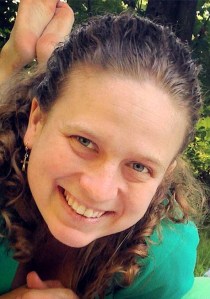
Zoë Faith Reyes was born and raised in the church in Houston, Texas. She has B.A.’s in Philosophy and English from Westmont College and a Masters in Social Work from California State University East Bay. Zoe has done mission work in Tecate and Reynosa, Mexico; Sewanee, Tennessee; Houston and Galveston, Texas; Kingston, Jamaica; San Francisco, California; and Kandy, Sri Lanka. She has worked for seven nonprofits, including Project Peace which she co-founded and for which she was a founding board member and CEO. She is currently serving as mother for Sofia (5) and Daniel (2); wife for Manuel Reyes; steward for a small bit of earth in Brunswick, Maine; Community Development Director for North Harbor Community Church; and photographer for Zoe Reyes Photography. If she has done anything of worth in this life, it is a result of the power of Christ in her, and to the glory of God.







 The Beautiful Kingdom Builders