
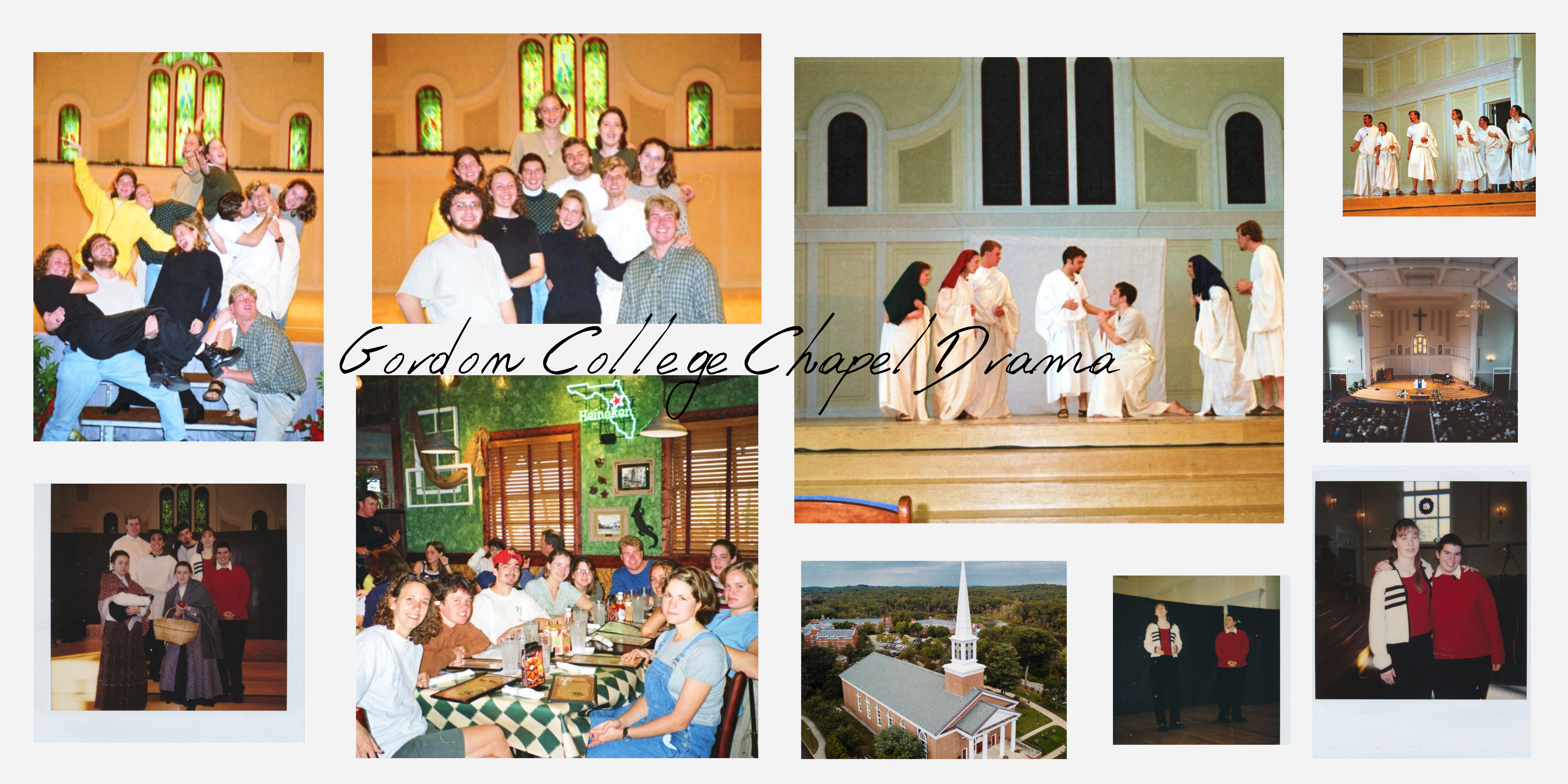
This episode was so fun to record! Lisa mentored myself and my brother Matthew McNutt when we were students at Gordon College, and we had the best time reconnecting and reminiscing with Lisa about those pivotal years. Matthew and I both participated and led the Chapel Drama Team while we were students at Gordon, which meant participating on the Chapel Cabinet under Lisa’s valiant leadership. The pictures below overlap Matthew’s senior year and my freshman year. I’m glad that Matthew could find some pictures to share–he’s more organized than I am!
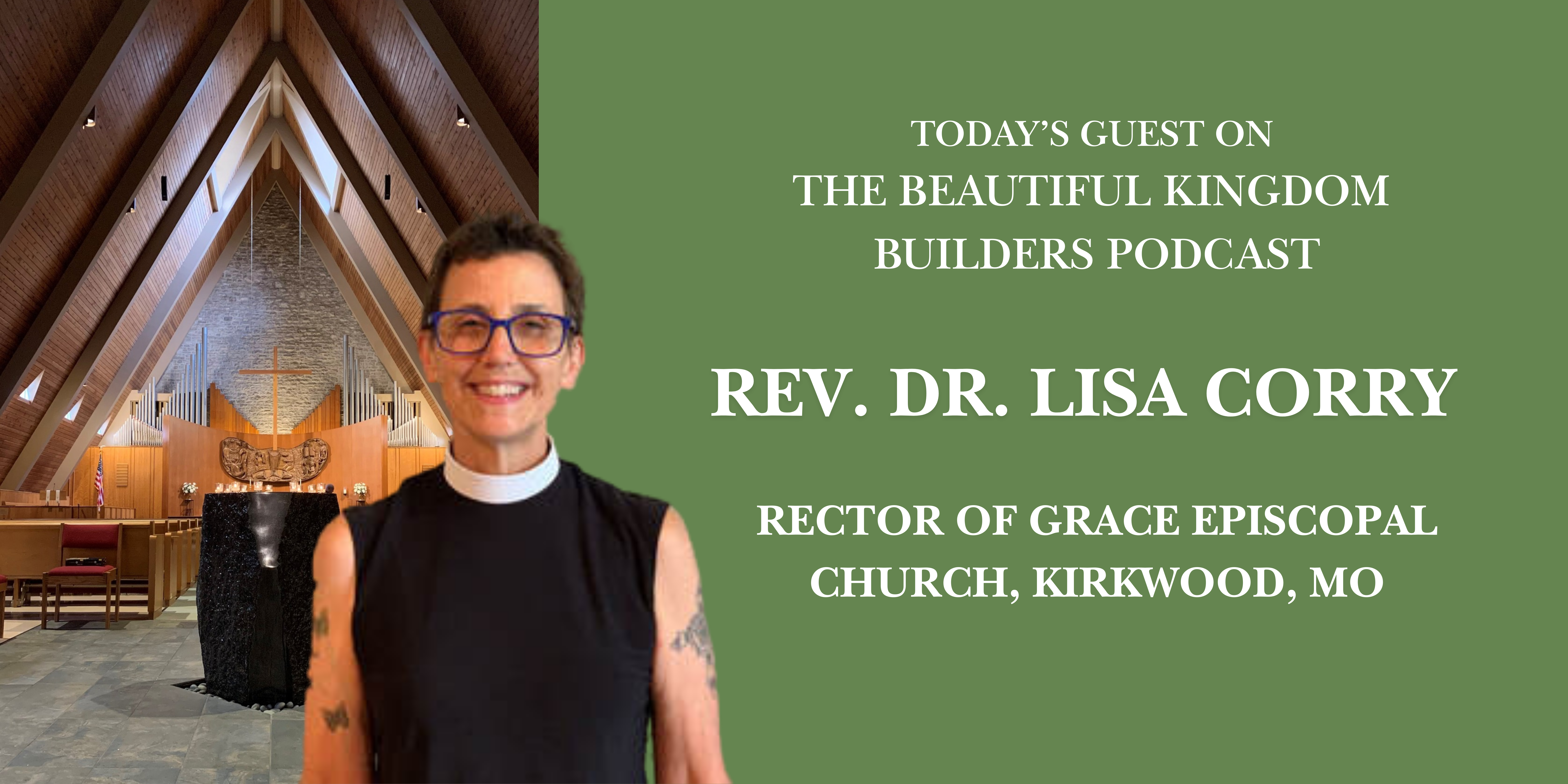
Join us for an inspiring conversation with Reverend Dr. Lisa Corry as she shares her journey through faith, ministry, and personal growth. Discover insights on spiritual development, leadership, and the importance of grace-filled mentorship. You can listen to our conversation on The Beautiful Kingdom Builders Podcast on YouTube, Spotify, Apple Podcasts, Amazon Music, Substack, and more!
TRANSCRIPT:
Ruth Perry (00:15)
My guest today is the lovely Reverend Dr. Lisa Corry who was working at Gordon College in the chapel office when myself and my brother Matthew, who I’ve invited to be here today as well, we were both part of the chapel cabinet as students. And so Lisa was our mentor. And I’m very excited to have you on today, Lisa.
Lisa (00:38)
I’m thrilled to be here. It’s so great to see you both.
Matthew McNutt (00:41)
Yeah, it’s fun to catch up after so many years.
Lisa (00:43)
Yes, a lot of years.
Ruth Perry (00:45)
So when I started my podcast, I was thinking for my first season, something that I wanted to do is bring on people who’ve been instrumental in my own faith journey. And having you as a mentor at Gordon College was a really clutch time. I remember you walked through the death of a very close friend of mine. You helped me through that. You helped me with my first dating relationship. And you encouraged me to break up with that person? Which I did!
Matthew McNutt (01:16)
Ha!
Ruth Perry (01:17)
It was very wise. It was very wise of you. I appreciate that. You gave me a lot of opportunities to just be involved and have a voice on the cabinet. And that was a lot of fun for me. Matthew, what do you remember about Lisa at Gordon?
Matthew McNutt (01:33)
I probably stressed you out a lot more than Ruth did. I have to reassure you, I’m a lot more organized and prepared than I was back in the late 1900s when I was one of your students. Oh my word. So what I do remember is I jumped in as a freshman, there was a chapel drama team, and I signed up to join it. I had at that point in my life. I really had sworn off God and I was 100 % in it because I liked acting and being on stage in front of 1200 of my peers just had so much appeal and But I was also really good at faking the Christian stuff and by the time my sophomore year rolled around, I thought I was good at faking it.
I’d grown up in really fundamentalist and legalistic environments and just by the time I was 17, 19 years old, had gone like, this is, I don’t wanna be a part of that. And I showed up at Gordon, a 21 year old freshman, and I remember around the end of my sophomore year, at that point, I had become part of the leadership of the drama ministry. But towards the end of my sophomore year, I was just getting really overwhelmed with guilt over, I I’m claiming to be things I’m not. I’m really faking it. I don’t, I don’t know what. And so I had scheduled a meeting with you, Lisa, to just kind of go.
I’m lying. I’m lying about all these things. I, know, and I think I need to get my life right with God, but here’s all the ways I am not honoring God. And I was probably the most honest I had ever been in my life at that point to anyone. And I just genuinely thought, yeah, you’re like, what did, what did I do in this moment? I remember with the environments I grew up in,
Lisa (03:21)
I’m nervous. What did I do?
Matthew McNutt (03:28)
I just assumed with what I’m saying, that you would go away and just be like, we need to get him out of our school. Like he definitely shouldn’t be doing chapel drama. He should probably be gone. Like he’s a failure and like just such legalistic harsh environments. And, you in that moment just express all this love and grace and just were like, you actually seem surprised when you realized.
I thought this was going to just kind of land me out of the school and out of everything. And instead you really dialed in and mentor. And I’d already been kind of wrestling with, this grace-filled approach to Christianity that Gordon College is modeling for real? you know, cause I had remembered thinking at times like I could be that type of Christian. And so that was a really pivotal moment for me where I finally was like, okay, like I’m gonna go all in with God. And my junior year of college, when you were kind of coaching and mentoring, had gotten rid of my TV, which was a big deal. I love movies and I got rid of all of my secular, it wasn’t even that some of it was bad. It was just like, I need to change how I focus on God. And so my junior year was probably the most,
Lisa (04:37)
I do remember that.
Matthew McNutt (04:50)
spiritually intense growth period in my life. And I have given your response to me as an example to youth leaders that I’ve been training for the last 25 years of this is how we love students into faith and show grace. And so, yeah, you were a huge part of me turning back to God. And then a year or so later when I started going, I think I’m actually like, I remembered being so embarrassed telling you, I think I might be called to be a youth pastor, not a high school teacher. And I was waiting for you to laugh at me and be like, this is great because I grew up in environments that gave me very low self-confidence. And so, yeah, so I’ve been in ministry for 25 years now, full-time ministry.
Lisa (05:32)
Heh.
Matthew McNutt (05:42)
in huge part because of those couple pivotal conversations. So that was probably more a longer winded thing than you were looking for, Ruth. But, but yeah.
Ruth Perry (05:53)
No, I mean, that is so beautiful. I love to hear it.
And I just wonder, like, how many years were you in college ministry, Lisa?
Lisa (06:02)
Yeah, that’s a good question. Let me think a second. I think probably 25 maybe. I mean, not always directly, but I always gave time in that direction when I worked in college settings. Yeah, but it’s neat to hear you reflect, both of you. And I just remember you both were authentic, fun. One of you was a little more wacky than the other one.
Ruth Perry (06:26)
Which one?
Matthew McNutt (06:27)
Probably the one that landed in youth ministry and not the one pastoring three churches.
Lisa (06:33)
And you both are leaders. You were leaders then and you’re leaders now. I mean, it’s really beautiful. And it’s beautiful that, I mean, we’re all a little bit older and we all have enough mileage to know that this life holds many lives. And you all are leaders contributing to the kingdom of God and the streams of your church. And that’s, golly, that’s what it’s about. That’s great.
Ruth Perry (06:56)
I think something that inspires me about your ministry is just the non-anxious presence that you were to very angsty people at that stage of life. You were always just really calm, cool and collected and kind and gracious. And I think it speaks to your trust in the power of the Holy Spirit to do the Holy Spirit’s work. And that when you just show up and you’re there for someone, you don’t have to be able to quote the whole Bible or explain 10 tenets of like, I think the way that we kind of grew up, you just should know the road to salvation and like know all these things and ask people and you’re carrying the whole weight of their salvation on your shoulders almost. And so just learning that
Actually, God is a lot bigger than you are. You can just hear someone out and then maybe offer them a little bit of grace and just how far that can go in their spiritual life is really powerful.
Lisa (07:55)
Wow, that’s neat to hear. I was ordained in the Episcopal Church nine years ago this year. And as I reflect to people what a big part of my kind of day job is right now, I tell people a lot that I share calm, that that’s a big piece of my job, is I just share calm with people. And so it’s fun that you would bring that up. I don’t necessarily remember being super calm in those days, but.
Ruth Perry (08:17)
Super calm.
Lisa (08:19)
Yeah.
Matthew McNutt (08:20)
I mean, you’re pretty calm and focused with all of my antics. I remember you reassured another student that was really stressed out. They were leading the dance ministry or something, and they were worried, like, is McNutt gonna even have this stuff done in time? And you were like, look, you because her personality was she already had everything done months ahead of time kind of a deal and you were like look you guys are very different but I can assure you when the day comes it will be ready.
Lisa (08:52)
Yeah, you know, you were never early, but you were never late.
Ruth Perry (08:59)
This is reminding me of a big lesson you taught me. I was a perfectionist and super stressed out about everything. And you taught me that I needed to have life balance and that I should just give 80 % effort. So I dialed it down to 80 % effort my senior year and my grades stayed the same, but my quality of life vastly improved.
Lisa (09:10)
Yes. ⁓
Matthew McNutt (09:13)
Ha ha ha ha ha!
Lisa (09:21)
Hahaha
Ruth Perry (09:22)
And so I’ve taken that into like, I’m just trying to give 80 % here and there and good enough is my life motto now. Good enough.
Lisa (09:29)
Man. That’s right. That’s exactly right. Yes. You know, I was reminding myself I was doing a small group last night and there’s a quote from the, I forget the author’s name, but the gentleman wrote something like everything I needed to know I learned in kindergarten. But the sentence is, anything worth doing is worth not doing well.
Matthew McNutt (09:31)
Ha ha ha ha ha.
Lisa (09:48)
Isn’t that great?
Ruth Perry (09:48)
That’s good. Yeah! Lisa, can you tell us about you now? Because when I was in college, I don’t think I ever asked you about you. So now 20 something years later, let’s catch up. Where are you from? Where did you grow up?
Lisa (09:56)
You, how funny. How funny. You know, because when I think of you both, that’s so funny. I don’t think it ever crossed my mind that we didn’t talk about me. But I always think of Boothbay, Maine when I think of you guys. And coffee. I think of coffee. Is that right? Yeah. Yeah. So yeah, I’m from Michigan, just outside of Detroit originally. And I’ve lived all over the country.
Ruth Perry (10:12)
Yeah, yeah, yeah, Moosehead Coffee Beans. That was the family business.
Lisa (10:25)
Not that I was wandering, but I kept kind of just following the bouncy ball. And I was always a late kind of decider to do things. Like I think when I was with you both, I don’t know if I’d started it yet, but before I left Gordon, I had dinked away slowly at a Masters from Gordon Conwell. And I don’t even remember when that was exactly, but I don’t know if you guys were in my galaxy then, but probably because I left Gordon not long after you guys left. Maybe it’s…
Ruth Perry (10:52)
I think I remember when you graduated.
Matthew McNutt (10:52)
Yeah, I feel like I remember you taking classes, like one at a time, I feel like. One or two.
Lisa (10:56)
Oh, okay. Yeah, it was the power of the dink.
Mm-hmm. Yeah. It took me hundred years, but I got it. But I didn’t even start that till I was probably 30, you know? And then I have a doctorate also that I worked on and almost got kicked out because I took too long, but I did graduate. It was a cohort program, but from Biola, Talbot.
But I didn’t start that until my mid 40s. So about me. So I’ve gone to school. I’ve worked in higher ed and I lived actually, believe it or not, after I left Massachusetts of all places, I’d probably surprised myself because I had to look at a map about where it was before I took the job. I moved to Arkansas. I lived in Arkansas for about 20 years. Isn’t that wild?
And it’s a really great place. And I worked at John Brown University for a while and probably about a decade, I think. It’s in Northwest Arkansas. And in that season got more and more involved in the Episcopal Church and discovered a call there and went through the process, which is fun and a lot of discernment and discovery. I lived in Minnesota for a little while and it was very cold and dark and I don’t know why anybody lives there.
Sorry if anybody’s offended by that. yeah, I’m in St. Louis area now. Been here about a year and a half, maybe two years in August.
Matthew McNutt (12:20)
What landed you in college ministry for so many years? What was your pull to that or what was your calling to that?
Lisa (12:27)
Yeah, I, when I was in college, it was a really important time in my own faith development. I came to college really questioning God. I almost got a scholarship to play basketball and I hurt my knee my senior year of high school. And when that was taken away, I kind of crumbled a bit, you know, as we do when we’re 17 and something important has taken away. So I found myself at Michigan State as an undergrad and was really searching and stumbled into through people on my floor getting involved in Campus Crusade for Christ.
And that was a real foundational experience for me for Bible study and learning about this personal relationship with God and all that that meant and the kingdom of God really helped me set in motion some values. And I think because that was such a significant time after my undergrad, went on staff with that organization for little bit. I didn’t really fit. It’s pretty, not that I’m not conservative, but it’s pretty, it’s pretty conservative. And so I, after a few years, I slid out of there, but it was a great experience for me as a student and as a staff member.
And then after that, I discovered there was this thing called Christian higher education. I’d never heard of it before. See, I’m really slow, I’m slow, slow, slow, but I, I got on that bus and I thought, my gosh, I can work and get paid and invest in college students. What a great idea. so Gordon was my first stop and working in Christian Higher Ed. So I worked at like three different colleges, but since I’m talking with you today, I’ll say you all are my favorite. Gordon’s my favorite.
Ruth Perry (14:04)
I’m keeping that in. Okay, so I wanted to follow up. I have two questions initially. Number one, what do people from Arkansas call themselves? Arkansas-sian? Like, what is that?
Lisa (14:15)
It took me a long time to learn this. Arkansans. Yeah, because I used to call them Arkansinians. But they’d be like, no, Arkansans. Yeah.
Ruth Perry (14:18)
Arkansans, okay, thank you. Yeah, yeah. Yeah, I can see that one too. Arkansans, helpful. All right, and then my
Matthew McNutt (14:27)
Didn’t take off.
Ruth Perry (14:30)
Second question. I guess I’m kind of cluing in that maybe you didn’t grow up in church.
Lisa (14:34)
Good, good, good, good. Listen, good attentive listening. Yeah. Nominally Catholic group, nominally Catholic. And I was confirmed in the Catholic church, but it wasn’t a center of my life or I think it was a practice, particularly with my mom’s, but not necessarily the family system commitment. And so. Maybe even a little bit like you’ve described, Matthew, just I think I probably had more fear of God than vision about a Christian life. So that took a while to undo and redo. And those college years for me are when that happened.
Matthew McNutt (15:11)
So what would you say with 25 years in college ministry, what were kind of your key concerns or key passions when you were working with young people? What is your style of ministry or what was your emphasis with young people in that stage of life?
Lisa (15:22)
Mm. Yeah. Yeah, you know, two things strike me. One is kind of you kind of inferred about this, Ruth. I think not a lot of people, particularly college age students at that time, and I’ve been out of that loop for a little bit, you know better than I do, but don’t have people that sit across from them and look them in the eye and say, how are you? And so I think just expressing that care and not hurrying past that question and following wherever it goes without judgment does a lot inside a young person’s deep places, I think.
So that was a big piece, I think, was just that relational holding of space and being fully present to them. The other thing is, in my doctorate, though you know, doctorates are hard, which you’re aware of, Matthew. I think it’s a terminal degree because it almost kills you, right? But anyway, my dissertation, I went from a PhD to an Ed.D. So it’s a doctor of education because I had a, I stupidly or wisely picked a really hard dissertation chair.
Matthew McNutt (16:22)
Yeah.
Lisa (16:36)
And I assumed he was keeping track of some things he wasn’t. And he assumed I was keeping track of some things I wasn’t. And then he was like, you’ve got to either get out of this program and work on your own and reapply or change to an EdD. And I was like, I’m going to change to an EdD. I can’t keep doing this. I got to stop this hamster wheel.
But anyway, My dissertation, the title of it is something like, and it’s funny, I can’t remember it because it was so much a part of my life, but it was, it’s something like, you know, cause it’s like an inch wide and a hundred miles deep, Spirituality Development in Women in the College Years. And so it had to get that deep, but my research didn’t start that deep. You just kind of find your way.
But the thing I discovered in that, what I ended up doing was intertwining spirituality development in the college years with identity development, like inter-connecting theology and social science theory. And then I also discovered, and this was not even just Christian, it was just spirituality. I was trying to be wide, but the thing I discovered overall that still impacts me in my own life and talking with any age person, but college-age students, it strikes me a lot for, is that the thing that college students need is how to learn how to be quiet and maybe meditate or sit in silence practice some kind of silent discipline, where discipline is not a harsh word but just a silent practice. And there were a of colleges at that time and this was probably close to 15 years ago now, but that the big push was in response to that creating spaces on campus that are only for silent meditation or silent sitting. And that just really was interesting to me.
Ruth Perry (18:19)
There was a room in the chapel office designated for prayer. And I remember you would send me there on occasion with the notepad to like, contemplate something in conversation with God. So you were doing that even then before your doctorate.
Lisa (18:26)
Mm-hmm. Yeah, and it wasn’t a time out. It wasn’t.
Ruth Perry (18:42)
No!
Matthew McNutt (18:43)
That’s how I’m interpreting it because as I recall, I did not get sent there. So I might have been the better… ⁓
Lisa (18:47)
Hahaha! That’s great.
Ruth Perry (18:54)
Well, it’s actually, so this in particular, was when I was having my first dating relationship. And as a conditioned good girl in the Christian faith, something that I just couldn’t do was imagine that God had a calling on my life. I didn’t know how to say no to anybody. And so every time I would talk with you and you would ask me about my relationship. And I would talk about what my goals were. We had already talked about what I wanted to do after college, which was go to seminary. And then we’d talk about this relationship where he didn’t think I should go to seminary. And you’d be like, so why are you dating this person?
Lisa (19:32)
That’s funny.
Ruth Perry (19:35)
Yeah, so I definitely have had people think, ask me what do I want to do in my life? But you were like, prioritize that.
Lisa (19:42)
Yeah, because you can make decisions to move in the direction. And remind me your husband’s first name. Logan, because I remember when you met him. I remember when you guys started going out. Yeah.
Ruth Perry (19:45)
Yeah. Logan.
Matthew McNutt (19:56)
I did too.
Lisa (19:57)
Well, I remember when you and your wife started going out too, so.
Matthew McNutt (20:01)
Yeah,
Lisa (20:01)
Thanks.
Ruth Perry (20:02)
So what about the Episcopal denomination? What about their beliefs and their tradition do you love?
Lisa (20:09)
Yeah, gosh. You know, when I was in Massachusetts, I was kind of dabbling in going to the Episcopal Church a bit. But the center of my galaxy was always where I was working, is where I would give kind of my free time for ministry. And then in Minnesota and in Arkansas, I began to get more involved in the church. And I hit this moment and I don’t know what predicated or, you know, made it pop for me, but I hit this moment where I was like, you know, I think I want to move. I was working in the co-curricular teaching part-time in the Bible department, but also doing some small group spiritual formation oversight on campus, but I was giving more time than that. And I thought, well, I think what I want to do is start giving my extra time to the church. And so I started getting more involved in the Episcopal church. But what drew me to it was,
You know, for my Catholic upbringing, the liturgy is really similar. And when I first started going, there was something about having this meaning of this personal relationship that was pretty vibrant with the action and participation in the liturgy. And that was somehow put me together. And so I was really drawn to that. then I think too, Episcopals are really good at two things. They’re good at accepting everybody and they’re good at agreeing to disagree, while also being high critical thinkers as a generalization. So those are kind of a few of the things that drew me in.
I don’t know if you guys are familiar with the Episcopal Church.
Ruth Perry (21:37)
Was that in South Hamilton, was that an Episcopal church that I would go for their special services? And I think the reason I found them was because you had them come for Ash Wednesday. And that was the very first time I had ever received the imposition of ashes.
Lisa (21:41)
Yep. Yep. Yeah. Wow, okay. yeah, meaningful stuff. Yeah, and the Episcopals are good because they don’t, you know, they’re really good at marking time. So the colors change, liturgical seasons, so you always know where you are. don’t like, you don’t have to wonder what’s happening. And they’re good at remembering and we need to keep reminding ourselves of reality. I know I do. Yeah.
Matthew McNutt (22:14)
What was the transition like for you going from full-time ministry in college to college students to full-time ministry in the Episcopal Church? Or your focus shifting in that way?
Lisa (22:25)
Yeah. Yeah, you know what’s interesting at first, what’s really surprised me was that people are just people. know, and so somebody who’s 21 or 19 is the same in so many ways as somebody who’s 80, as somebody who’s four, right? You just have to, you just have to know your audience well enough to communicate in the way they can hear. And so I was just really surprised that, you know, the four-year-old and the 19-year-old and the 80-year-old are all worrying about the same things. And they’re all wondering what’s for dinner. And they’re all, everybody’s thinking about the same things, even though it’s such a different developmental scheme, but it’s people are people. And that was my big surprise and also a big help, right? Because I had spent so much time with college students. Thank God that it could translate, right?
Matthew McNutt (23:16)
One of the questions that pops into my mind is, you know, even with an egalitarian denomination, I still read reports to talk about the challenges of being a woman in pastoral ministry. Have you experienced some of those challenges or are there ways where you’re like, it has really worked well for I don’t even I’m not even articulating it very well at this point.
Lisa (23:38)
No, I hear, I know, but I hear you. Well, I’ll tell you, the first time I really felt like I hit a ceiling and that I thought was gender. And it was actually at John Brown University down in Arkansas. When I was taking in the decision of moving from a PhD to an Ed.D, because I think I had more of an internal fantasy that I realized that I wanted to maybe teach full time in the college setting, you know, so I
I thought, oh, I’ll ask the chair of the Bible department what they think I should do. you know, I don’t want to mess up that possibility. And so when I laid it all out with this gentleman, old white man, if I may say, he just looks at me and said, you know, it doesn’t matter. We would never hire you. And I was like, I was like, oh, OK, thank you very much. the last.
Matthew McNutt (24:20)
My gosh. That’s direct.
Lisa (24:26)
Yeah, I was like, dear. And then I was like, I’m just gonna get the EDDs, because why am I knocking myself out? It certainly doesn’t matter. And so that was the first time I felt, and I felt like, I mean, I didn’t say, well, tell me, sir, is that a gender response? But I’m pretty sure it was.
And then I think as a female priest, as a woman who’s ordained, I have been more aware or experienced more misogyny than I ever have in my entire life. And it’s not like aggressive. It’s more like how people treat you or talk to you. Like there’s times, I’m the first woman rector, rector’s a funny word for like lead priest at a church. I’m the first female rector at the church I’m at right now. And there have been a handful of times when people have talked to me and I’ve taken a beat and I’ve looked at them and I’ve said, would you say that to a man? And then they go back. And some of them say, I’m sorry. And then some of them just don’t know what to do at all. I’m kind of awkwardly cavitated back in a way. I’ve learned to gently confront it. But I think that, know, ministry is more than I realized, often a male world. I don’t know, Ruth, if you hit that.
Ruth Perry (25:36)
I got that a lot. I have experienced a lot of misogyny, but not since I joined the United Methodist Church. And the difference has been so striking to me. And I’ve also started attending ecumenical pastors group around the same time that I started pastoring here. And the pastors in that group are not misogynistic. There’s another group here in town with all the pastors are welcome to, and I just don’t go to that one because I don’t want to deal with it.
Lisa (25:56)
Nice. Good.
Ruth Perry (26:10)
But I am really enjoying just, my parishioners have had a lot of women. And so it’s normal to them and they just always call me pastor and they just always refer to me with so much respect and it’s just been really lovely. And so I’ve had three years of no misogyny.
Lisa (26:25)
Yeah. There you go, yeah. And I don’t mean to just be negative, you because it’s wonderful. And I feel like I’ve landed in my call that took me about 50 years to discover, but there’s pockets of it. That’s probably the thing that’s been difficult. So the pockets.
Matthew McNutt (26:52)
And part of me wonders, as you were talking, Ruth, because of where we grew up, where a woman wouldn’t be a lot like it would be a question of whether or not a woman could teach in Sunday school, let alone be a pastor. Part of me wonders if growing up where it was so blatant, because there are women in Methodist churches that will still talk about the challenges they experience as opposed to the men, but where it’s so much less so than what we grew up with. Yeah, not that I’m trying to, Ruth, could you please find some examples of misogyny? That’s a…
Ruth Perry (27:25)
Yeah, it’s been striking. No, I’m having the universal United Methodist experience, Matthew. I speak for all United Methodists.
Lisa (27:35)
Ha ha!
Matthew McNutt (27:36)
I mean, you’re in the South.
Ruth Perry (27:37)
My town is primarily Southern Baptist or Independent Baptist and all the little Independent Baptists that have fought with each other and broken up with each other.
Lisa (27:42)
Okay, dear. You know, Virginia’s an interesting state. They’re interesting people.
Ruth Perry (27:55)
Yeah, it has been very interesting.
Lisa (27:58)
Yeah, but it’s beautiful.
Matthew McNutt (27:59)
Perrys are weird people in Virginia.
Ruth Perry (28:02)
Yeah, the Perrys. We’re doing our best.
Lisa (28:05)
It’s funny.
Ruth Perry (28:06)
Who are some Christian theologians or writers or artists that have been meaningful in your faith journey, Lisa?
Lisa (28:10)
Oof. Boy, that’s a big question. In terms of like reflection, and she’s been around for decades, probably maybe even when I was at Gordon, Jan Richardson is, Ruth, are you familiar with her? Yeah. She says a lot of poetry and a lot of reflection. She’s kind of artsy. I feel like maybe she might be in your Methodist stream.
Ruth Perry (28:28)
I’ve heard her, but I don’t think I’ve ever read her.
Lisa (28:41)
I could be making that up, but I think so. But she’s been significant to just kind of help facilitate thoughtful reflection and take in big spiritual truths. So she’s really great. C.S. Lewis is always just fantastic. There’s a guy, I forget where he’s out of, but he’s done some commentaries. D.A. Carson, I appreciate the way he writes and his thoughtfulness and fidelity to scripture and what it’s trying to say and how and why.
I think most recently, not everybody’s a theologian that helps me. There was a poet laureate from Colorado who died recently, Andrea Gibson. And they have some poetry that is just phenomenal about the hardship and angst of life this landing that they’ve done and hope, which is just beautiful to sit with. So those are what come to mind off the top of my head. How about you guys? Am I allowed to ask you that?
Ruth Perry (29:39)
Yeah. Matthew, you first.
Matthew McNutt (29:41)
Come on. Shoot, would have to, I read, I read a ton, I know, I read a ton of stuff. I really love anything NT writes. Carolyn Custis James has written some really cool stuff that I’ve appreciated. I went through a phase where I was reading everything by Pete Enns, which was kind of fun and challenging some of my thoughts.
Lisa (29:45)
That’s a hard question. He’s good.
Matthew McNutt (30:05)
But yeah, have a ton of favorite authors. My goal this year has been to read like 50 or 60 books over the course of the year. So I’m trying to get there.
Lisa (30:08)
It’s, yeah. Wow. It is funny because we all probably, all three of us probably read a lot of Christian stuff all the time, right? Yeah. How about you Ruth? Yeah.
Ruth Perry (30:28)
Yeah, I think that’s my problem is I kind of snack. And I’m not like, I’ll some people they’ll like I really I’ve read all the books of this one person. I’m like, wow, I’ve read one book. And then I’ve moved on. Although I have all of the Brene Brown books, and I have one in the mail.
Lisa (30:33)
That’s great. That’s a great image.
Ruth Perry (30:49)
that I realized I hadn’t read it yet. So I think that that may be the only person that I’ve like really kept up with all her work. And Lisa Sharon Harper, her book, The Very Good Gospel was really impactful to me. And so I’m reading her book Fortune right now, and I’m hoping that she’ll come. I’m going to invite her to come on and talk with me. I hope she will. I think those two have been
probably more influential than others.
Lisa (31:16)
That’s great.
Ruth Perry (31:17)
Do you have spiritual practices that nourish you in particular, Lisa?
Lisa (31:22)
Nice. Yeah, yeah, I do actually. There’s the one isn’t which I kind of brought up before is that idea of kind of silence, sitting in silence. There’s a practice which you it’s kind of like silent meditation, but it’s a little more. It’s got some parameters to it that are helpful. It’s called centering prayer. You guys heard of that? So in centering prayer, you sit in silence and it’s about just letting go of thoughts. And so even if you’re busy the whole time, just letting go, at least you’re letting go, right? So you can’t fail. You just have to show up.
So I think sitting in silence and seeking the silence of silence every day helps me know what’s going on in my own soul, but it also helps me get rid of the things that are between me and God, you know? So that is probably a personal practice that most days of the week for probably a couple of decades that I think has been really transformative for me.
The other one might sound a little more odd, but it’s yoga. I do yoga. And during the pandemic, I did this online training to be a yoga instructor because I wanted to learn about yoga. And so it’s just a personal practice. A lot of people do it kind of in classes and socially, but I find it kind of magical. Our bodies and minds and wellbeing are also connected. It just kind of helps put me together or take me apart, depending. So those are the two, I think, strangely, those are the two things that come to mind. Yeah.
How about you guys?
Ruth Perry (32:51)
Honestly, playing the piano is a spiritual practice for me. I often will play through the hymnal or I’ll hear a song that speaks to me. I can’t play without music, so I’ll have to find the music online and then print it out and I’ll just play like one song for a while and just sing it to the Lord. And that is probably the one spiritual practice that I have that really fills me up. And then a lot of…
Lisa (33:06)
Nice.
Ruth Perry (33:14)
I think my problem is being quiet. And so I’m taking note, Lisa, that I need to turn things off because I’m just constantly scrolling or reading or listening to podcasts and I do not practice quiet. If I’m in the car, I’m either listening to a podcast or some music. So yeah, I’m taking note. Thank you for that.
Matthew McNutt (33:35)
Yeah, as your brother, I would say I’ve never thought of you as quiet. This is the… I think for me, when I’m able to isolate myself and relax, it’s hard for me to settle down and relax and just be, which is what you were always telling me to do way back then.
Lisa (33:39)
Hahahaha!
Matthew McNutt (33:55)
You were even like Qui-Gon Jinn is saying just be like Qui-Gon Jinn Trying to speak my language back in the day ⁓ Writing is where I get a lot of my energy and and excitement and so Just trying to find ways to write and create about faith has been a good
Lisa (33:59)
Hahaha! Didn’t help.
Matthew McNutt (34:16)
exercise for me as well to dial in.
Ruth Perry (34:22)
One of my questions, because of our background growing up evangelical, something that I’ve realized is that it had never even occurred to me to try mainline denominations. Even though in college, I was a music major taking theology of worship classes and in seminary too, and they would send us to all kinds of services and so I’ve experienced a lot but it never occurred to me to join a church that wasn’t evangelical. I think now where we are culturally in America a lot of people are kind of disillusioned with the evangelical church and they’re feeling lost. And so what would you say that a mainline denomination like the Episcopal Church has to offer to someone who’s rethinking the way that they’ve grown up?
Lisa (35:10)
Yeah, I’m trying to think, you know, there’s some faces from church that actually come go through my mind here where I am now. And I think that.
You know, it’s kind of like everybody’s the same thing, that thing I told you before, you know, you can be 19 or 35 and have two small kids. But, know, that it’s that everything’s OK and you can rest here and you can relax here. And we don’t have a big to do list for you to do this right. I think that when people know that they’re just accepted and that there’s no plumb line that they have to make sure that they hold to, they can be loved in a direction that doesn’t overwhelm them with heavy weight. Yeah, but do, agree with you that, you know, churches are not, Christianity’s got not a great reputation right now. And I would say, you know, I was thinking about this briefly while I was walking my dog this morning, who’s not barking at all, ⁓ and it’s right there. I’m just kidding.
But anyway, I was thinking about how we share a bit of a similarity in that, you know, I really grew in my faith and was exposed to Christianity through Campus Crusade for Christ. And then in the Christian higher ed piece of contributing to faith outside of the church. And you all had the missionary background and I think some, some missionary thought that was so deep within you for kind of para-church kind of things that
For all of us, there’s a degree that it’s certainly, why would it cross our minds? But then we have this sometimes awful history, but a great history. The church is a beautiful thing. And so why would we do anything else but find a church? It’s interesting how it’s the last thing and not the first.
Ruth Perry (37:02)
Lisa, thank you so much for coming on the podcast today. just want to, before you go, I want to tell you, just thank you for being person who met me where I was in my spiritual journey and gave me, really wise advice and a lot of grace and kindness and also opportunities, to imagine what I could do to serve the Lord. You gave me my position as the student director of ministries. I don’t know if you remember that, but I was discipling other students and that was really impactful as well. So your ministry to me means so much to me and I want to thank you, Lisa.
Lisa (37:30)
I do. Well, I’m so grateful for you both, goodness, and available to you. I know it’s been 100 years, but if I can support you guys at all, I’m here.
Matthew McNutt (37:50)
Now I think for me it’s a lot of the similar sentiments as Ruth. You were a huge part of me coming back to faith and for me feeling empowered to go into ministry full time. And I must have been a headache at times to deal with the chapel ministry. But that was such a special special season in my life. So thank you.
Lisa (38:00)
Yeah. No, you were not. You guys are great. Yeah.
Ruth Perry (38:14)
God has given her extra blessings for ministering to you.
Lisa, do you want to have the last word before we sign off?
Lisa (38:27)
You know, I’ll just say that what’s so great is because of relationship we’ve had that we can just pick up and I’m so happy and it’s so normal to talk with you both. Feels like we’re in that windowless office I had in the chapel. So thank you. Thanks for thinking of me. It’s great to be together. Thank you.
Ruth Perry (38:41)
Yes. This was awesome. Thank you so much, Lisa. God bless you.
Lisa (38:49)
God bless you guys, take care. All right.
You can listen to our conversation on The Beautiful Kingdom Builders Podcast on YouTube, Spotify, Apple Podcasts, Amazon Music, Substack, and more! If you find our conversation helpful, please share it with a friend, rate and review, and subscribe so you never miss an episode! God bless YOU!


 The Beautiful Kingdom Builders