
Tag Archives: Christian

The Search for Identity: Healing Our Image of God and Of Ourselves

We primarily associate the search for identity with a phase of life occurring during the teen years.  Young people are expected to be “finding themselves,” questioning the messages they receive from authority figures, pushing boundaries, etc.  My experience is showing me that the search for identity continues beyond adolescence and may be a life-long process.

We are all asking the same existential questions:

What are we about?
Why are we here?
Where are we going?

And to answer these questions, we invest our energy in these things:

We are what we do.
We are what others say about us.
We are what we have.

As long as we are experiencing success and people are saying good things about us, or we are living comfortably and enjoying good relationships, we can feel OK.  But when we face failures, when others’ disapprove of us, when we lose people and things that are dear to us, then we may experience an existential crisis.

baxq

My earth-shattering existential crisis occurred when I was 30 years old (four years ago…in case you were wondering!:).  There have been small bumps and jolts along my journey that have caused me to question things before, but at thirty I faced a tidal-wave of paradigm-shifting crap heaped up on my life that turned everything upside down and left me at ground zero.  My greatest discovery as I rebuilt my life was that I was finding my identity apart from God.  I was finding my identity in what I did, what others said about me, and what I had.  All my life, I have loved God and His Church.  But for the first time in my life, I am now living as one beloved by God.  And I am finally experiencing fullness of life and freedom in Christ!

All humans are created imago dei (in the image of God) and only in finding our identity in God can we experience life in all its fullness.  We need to recover the image of God in our lives by finding our ultimate identity in reflecting and representing God on earth – as His beloved children.

Living imago dei means finding your identity “from Him and to Him and through Him” (Romans 11:36).

To understand what it means to live imago dei, let’s first look at the Creation account in Genesis 1.  Verse 27 says,

So God created humankind in His own image, in the image
of
God He created them; male and female He created them.

Conservative scholars agree that the author of the book of Genesis was Moses, writing around 3,500 years ago.  This was during a time when emperors placed statues of themselves throughout their kingdoms, signifying who was in charge.  These statues would loom over town centers and were often made of precious metals and stones.

When my brother and I were backpacking through Europe, we visited a museum of communist and Nazi statues from the mid-20th century.  These huge statues had been formidable, oppressive symbols for the people who lived with them in their midst.  When Sadam Hussein’s regime fell, I have vivid memories of watching newscasts of people tearing down his statues, with tremendous effort and emotion.

Statue of Saddam being toppled in Firdos Square after the US invasion

Statue of Saddam being toppled in Firdos Square after the US invasion

When we think of these images of emperors being a normal aspect of life during the time of Moses, the beauty of God placing humankind as His image on earth is astounding.  We were created to represent God’s glory and diety on earth.  In heaven, it is clear who is in charge as God sits on His throne and is worshipped in a non-stop chorus of hosannas.  On earth, God has given us the choice to worship Him or not.  And He has given authority to humankind to rule and steward His creation.  And yet, unlike the emperors’ statues, who were made from precious metals and stones, we were made from the dust of the earth.

It is important to recognize two things about humanity from the Creation account:

1.  We are made for DIGNITY – to represent God’s glory and diety on earth
2.  We are HUMBLE creations – made from dust, not diety ourselves

Whether or not we are living our lives in devotion to God, every human being has dignity and value as image bearers of God.  This is common grace for all.  To live fully imago dei, however, goes beyond our creation as God’s image bearers.  It also means finding our identity as image bearers, living “from Him..to Him…[and] through Him.

Living imago dei means finding our source, purpose and meaning in God

There are three aspects to finding our identity as image bearers of God:

1.  Live in communion with God
2.  Live in community with others
3.  Steward creation the way God does

In struggling with our identity, we tend to start in the opposite order:

Do something…
Then ask for help from others…
Then, in a last ditch effort, quiet yourself and spend time with God.

So the first step towards living imago dei requires knowing God.

In healing our image of God, we heal our image of ourselves.
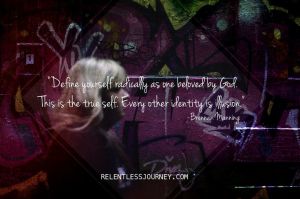
a02059fa99f010307874e714bd7fc45d

“We have seen His glory, the glory of an only Son, filled with enduring love.” (John 1:14)

“May Christ grow in your heart by faith, and may love grow…that you will be able to grasp how wide, how long, how high and how deep is God’s love which is beyond all knowledge, that you may be filled with the fullness of God.” (Ephesians 3:17-19)

“Beloved, let us love one another, for love is from God…for God is love.  By this the love of God was manifested in us, that God sent His only begotten Son into the world so that we might live through Him.” (1 John 4:7-9)

God is love — and you are God’s beloved!

In healing our image of God, Jesus frees us from fear of the Father and dislike of ourselves.  If not, you still have not accepted the total sufficiency of His redeeming work.

6ba53c60c98d3c1376c9d6ab44623ccb

The problem: our image of God (how we see God) reflects more of our experience with humankind.

god-in-mans-image

In this short video, Greg Boyd explains why it is that many of us picture God as angry and vindictive, and how any conception of God that is other than what we find in Christ is a mischaracterization:

http://view.vzaar.com/1971665/flashplayer

(Or see it here: http://www.theworkofthepeople.com/making-god-in-our-own-image).

If we do not know God, then we cannot live fully imago dei.

Not only do we believe lies about who God is – but we believe lies about who we are and where we “should” be finding our identity.  These lies come from our society at large, the media, our families, our faith communities, etc.

Stop Shoulding Yourself

Lies make us feel as though we are less than, unworthy, freaks, frauds and failures.  While God loves us as we are and not as we should be, we get a different message from society.  We “should” find our worth in our accomplishments, appearance, education, gender, feminity or masculinity, occupation, race, sexuality, social networks, spirituality, wealth, etc.

The reason these lies are so ingrained in our psyches:  SOCIALIZATION.

We are socialized to believe certain lies about our identities through three processes:

1. Modeling (how we observe others behaving)
2. Overt Instruction (how we were instructed to behave)
3. Reinforcement (positive or negative responses to our behavior)

Our socialization results in cognitive lenses through which we understand the world and ourselves.

Socialization is POWERFUL.  Through our cognitive lenses, we learn to associate or assign meaning to words in a process that occurs in one-seventh-of-a-millionth second.

For example: when we hear “woman” we may associate that (in less than one- seventh-of-a-millionth second!) with “helper.”  This association comes from the most common translation of ezer from the Creation account.

Then the LORD God said, “It is not good for the man to be alone; I will make him a helper suitable (ezer kenegdo) for him.'” Genesis 2:18

Early translators viewed the Bible from a cognitive lens of gender hierarchy as God’s design (through the influence of St. Augustine’s writings, who describes Plato–a philosopher who saw educated, wealthy men as the pinnacle of society who ought to govern over the women, slaves and children–as the lens through which he understood the Bible).  So although other instances of ezer throughout the Old Testament show God swooping in as a warrior in battle to “help” turn the tide towards victory, the translation chosen denotes subjection and male authority.  A truer translation of ezer kenegdo would be “corresponding strength,” with Eve as co-warrior alongside Adam.  As women, we have valuable strength to contribute to our churches, families, and communities.

These are helpful questions to begin to peel away the onion-layers of lies that have influenced our identity formation:

What are my cultural lenses?
What has my role modeling been?
What has my instruction been?
What has my reinforcement been?
How has my socialization impacted my search for identity – the purpose, meaning and goal of my life?

Christian women in Western society have been socialized to believe that a feminine, nurturing and submissive homemaker is the ideal Christian woman.  Rather than finding our identity in God and living boldly and freely as ezer-warriors in authority over Creation, we are socialized to live small, inhibited lives, so as not to rock the boat or make waves.

Kathy Escobar shared these lists on her blog, comparing Good Christian Women to Ex-Good Christian Women.  Which list do you identify with more?

i know these are generalizations, but in my experience a lot of “good-christian-women”:

  • rarely engage in conflict
  • are terrible at saying “no” because it feels selfish
  • know how to say the right things, do the right things, to keep the peace
  • continually strive–and i do mean strive–to be a better wife, better mother, better christian
  • live with a feeling that God is disappointed with us somehow
  • feel a lot of shame for who we are and who we aren’t (but rarely say it out loud)
  • doubt our leadership, feelings, gifts, dreams
  • dwell on the things we should be doing differently or better 
  • view anger as sin
  • always seek permission 

here are some characteristics of those of us with the “ex” added.  “ex-good-christian-women”:

  • are learning to show up in relationship instead of hiding
  • engage in conflict instead of avoid it
  • say “no” with less-and-less guilt and say “yes” more freely, more honestly
  • tell the truth
  • respect anger
  • are honest about shame
  • live in the present 
  • are beginning to believe we are “enough”–here, now
  • open ourselves up to dreams & passions & living out what God is stirring up in us
  • lead & love & live in all kinds of new ways, with or without permission
  • are discovering that God is much bigger than we were ever taught & loves us more than we ever knew

Our sisters, both locally and globally, need us to step into our calling as ezer-warriors, living fully and abundantly as beloved and equal daughters of God, creating a ripple effect that erodes the lies from our neighborhoods and the world at large.

Living imago dei means finding your identity
“from Him and to Him and through Him.” 

God loves you as you are, not as you should be.
We all need to learn to live for an audience of One,
and “stop shoulding on ourselves.”

The best summary I can come up with is this Love letter from Jesus:
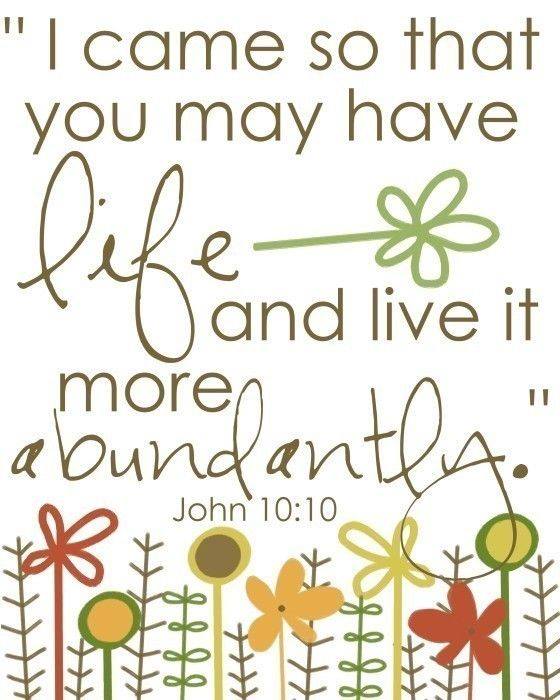
1924342_688934901160641_7819172647961135872_n

With much love,

                   Jesus


This post is adapted from a talk I did at a women’s retreat earlier this month.  I shared the books, sermons and articles I referenced in this post, Imago Dei Resources.

On the retreat, it was much more of a conversation with dialogue about lies that we struggle with.  Please feel free to join that conversation in our Comments section!  What lies have you been trying to peel away, that keep you from living fully imago dei?

Thanks for visiting TBKW. Please Follow us, subscribe, or “Like” us on Facebook if you’d like to keep tabs on what we’re up to.  Peace!

Around the Web – Posts on Spanking, Domestic Violence, Patriarchy and More

With the departure of summer, “people from away” are slowly filtering out of Maine and life is balancing out once again for those of us whose livelihood is impacted by the tourism industry.  The last four months have been insanely busy for me and Becky.  There hasn’t been the space in our lives to write, but that will change over this fall and winter.  We look forward to getting back in the swing of blogging and vlogging for you!

I promised to share my Imago Dei presentation from our women’s retreat earlier this month, and I will get to that later this week hopefully.  I am always checking in with my favorite blogs and keeping track of important conversations that are happening, so today I want to share some links with you to posts that have had me thinking.  I’m whetting your appetite with a quote from each post, and I hope you are able to read some of these in their entirety.

ON SPANKING

Why Jesus Wants You to Stop Spanking Your Kids – Benjamin Corey (also, you can listen to Ben talk about spanking, domestic violence and ISIS on That God Show: Episode 7)

When one considers the fact that studies overwhelmingly show that spanking is seriously harmful to children, that it damages their brains, lowers their IQ’s, reduces their ability to make good choices, increases their aggression/violence, and leads to a pattern of negative behaviors that simply require more violence on the part of the parent, the scientific evidence against spanking should be clear. When a Christian couples that scientific evidence with the nonviolent teachings of Jesus from the New Testament, along with a warning from Jesus himself that it would be better to be thrown into the sea than to harm a child, there aren’t many arguments left to support the old way of doing things.

I love you, therefore I hit you…er, SPANK you. {How Christians conflate love with violence} – Elizabeth Esther

Now, let’s talk about “hostile attribution bias.” This means you live your life expecting people to be mean to you. UM. WHOA. Hi, self. My ingrained response to the world is that people are mean and scary and out to get me. I am constantly surprised when people love me–and I have to repress the urge to be suspicious when they are kind.

Here’s my default thought process: What do they want from me? Why are they being nice? They must have an ulterior motive! Don’t they know I’m a bad person? I can’t trust them! BLOCK THEM OUT.

The hardest thing for me to do is receive love. There, I said it. I have a huge fear of intimacy because I just don’t trust people. This is my trauma wound.

I can’t go back and change my past. But I can change my future. I don’t have to perpetuate the cycle of violence. I can do something different. You can, too. Our children deserve it.

In which I talk about spanking – Sarah Bessey (she lists great resources for further reading)

The short list of why I don’t spank

  1. Personally, I believe it’s morally wrong to strike a child. Also, it isn’t Biblical.
  2. Hitting teaches hitting as a solution.
  3. It creates an adversarial relationship between parents and children – Us vs. Them.
  4. It can easily lead to abuse.
  5. It doesn’t work over the long term.
  6. It promotes anger or gives place to anger in both the parent and the child.
  7. It doesn’t teach inner discipline.
  8. It creates a behavioural response out of fear instead of love.

ON GENDER EQUALITY IN THE CHURCH

women, men & church: what hurts, what helps – Kathy Escobar (here are her “what helps,” but you should really read the whole post and consider “what hurts.”)

Here are some tangible and practical “best practices” that can help us move toward greater equality in the church:

  • Friendship. This is a core practice that opens doors to equality. We’ve got to find ways to practice being true friends together.
  • Be intentional about inviting, including, empowering, and releasing women into all levels of leadership. It won’t drop out of the sky so needs to be clear and strong message–“we need you, we want you, and here’s how we can make this happen.
  • Pay properly and equally. Period. Figure it out.
  • Avoid gender-biased comments (on both sides) about looks, athleticism, feelings, and other stereotypical ways of viewing both sexes.
  • Create intentional and brave conversations about gender in our communities–places to share, evaluate, process, adopt new practices together.
  • Ask at every table of leadership: how can we make room, make this table more balanced, who’s missing?
  • Recognize the realities of childbearing and honor it completely. That means keeping positions open, building flexible schedules, re-thinking the plans for advancement in churches & ministries.
  • The older generation of both men and women mentoring, supporting, encouraging, calling-out the younger generation of female leaders. Not just women supporting women but men and women supporting men and women.
  • Consider how to support women practically and tangibly through seminary and then ministry related to childcare help, books, mentorship, and financial support.
  • Start naming the elephant in the room before certain meetings and planning sessions get started–“We know women haven’t had an equal voice in this before. How can we shift that dynamic in here right now so everyone is heard?
  • Conference organizers and local have a solid and clear list of female speakers to draw from and use them; intentionally work toward balance.
  • Men showing up for gender equality conversations as much as women do (I added this one).

Women Like Me Are Abused Worldwide.  Here’s Why. – Anne Graham Lotz

If you doubt that sin is the root of the discrimination of women, look at Jesus. He was raised in a religious culture where people were taught that women, at the very least, were much less then men. As a rabbi (as his disciples called him), he should have discriminated against women as every other man did. But there was a significant difference between Jesus and everyone else. He had no sin in his heart.

As a result, we see him. . .

honoring women as he did when Mary anointed him with oil during a dinner in Simon’s home,

singling women out for praise as he did the widow who placed her “mite” in the temple treasury,

caring for women as he did the desperately ill woman who reached out to touch the hem of his garment,

protecting women as he did the one caught in adultery who was in danger of being stoned to death,

giving women new purpose and elevated status as he did the ones who were the first to encounter him after his resurrection and were commissioned by him to go tell the men what they had seen and experienced.

The New Wine of the Kingdom: Equality in the Church – Brian Wiele

You drink what the host is pouring… but unfortunately, within a short period of time after the New Testament era, church leadership rudely refused to drink what the host had poured, and declared, just as Jesus had predicted, that the old wine of patriarchal dominance would serve the church just fine.

Catholic, Orthodox, Evangelical Protestant – the majority of the distinctive church families have continued to trot out their preferred vintage – sometimes with new labels on it like complementarian – and then audaciously decreed it to be the blend that Jesus preferred and recommended. They control the cellar, and their hierarchical vintage is thus the only one poured. As a result, anyone advocating that the church drink of the new spirit of equality is at best considered suspicious and liberal, and at worst divisive and heretical.

I’m convinced that Jesus poured a new wine – men and women, both created in his image – into new wineskins, a Trinitarian model of shared leadership.  Throw whatever labels you like at me, the refreshing blend of gender equality will continue to be served in my congregation. I’m drinking what was poured for me in order to honor the one who poured it, Jesus Christ.

ON MISOGYNY, DOMESTIC VIOLENCE AND PATRIARCHY

Changing the Culture that Enabled Mark Driscoll: 6 Ways Forward – Rachel Held Evans (read Rachel’s fantastic elaboration on these 6 ways forward:)

1.  We must educate Christians about abuse, bullying, and misuse of power in church settings.
2. We must value and preserve accountability.
3.   We must take misogyny and homophobia seriously.
4.  We must measure “success” by fruit of the Spirit, not numbers.
5.   We must protect people over reputations.
6.  We must treat our pastors and church leaders as human beings–flawed, complex, and beloved by God.

The Spin of Patriarchy – a podcast with Aimee Byrd and Rachel Miller (with links to related posts).  They discuss these questions:

On the surface, Patriarchy families may look very harmless and even attractive. Everyone wears a smile, they tend to have a quiverfull of obedient children that they homeschool, and they present to you a formula for success. But what exactly does the husband and father’s “authority” entail? Should a husband be a mediator for the family, acting as a priest between them and the Lord? Is a college education wasted on daughters, because they are being raised to be homemakers? What’s the deal with stay-at-home daughters? Can women work outside of the home, alongside other men? What happens if you don’t have a happy disposition that reflects positively on your father or husband? Is a woman’s worth tied to the number of children she has? Do you believe that women are always prone to rebellion and satanic deceit and therefore need to be directed into submission? Is it a sin to educate your child through a different avenue than homeschool? And how does this all play out politically?

Why I Won’t Watch #RayRice – Angela Denker

Biblical traditionalists often forget to mention that the language of submission in the Bible is grounded in mutuality. For each instruction to women, Paul has an instruction to men as well. Relationship—love–is meant to be sacrificing, loving, and kind. Violence, vengeance, of any kind is condemned from the Old Testament to the New. Vengeance is mine, says the LORD.

Jesus himself says this, in his first sermon: “The Spirit of the Lord is upon me, because he has anointed me … to proclaim liberty to the captives … to set the oppressed free,” (Luke 4:18-19, quoting Isaiah).

Jesus died so that no person might lose her personhood. So that no one would be controlled, manipulated, and abused. The love Jesus practiced and preached was a love that lifted up those who were brought low; a love that set people free from the roles society gave them and left them identified by an eternal life, an eternal light that could never be extinguished.

Domestic violence puts out that light. As Janay Rice-Palmer crumples to the ground in that video, she is reduced to something less than human.


Thanks for visiting us today!  We share articles like these daily on our Facebook page.  “Like” us there if you’d like to read more!

Anne Lamott on Robin Williams

I had to share Anne Lamott’s status, reflecting on Robin William’s suicide.  Posted 8/12/14.


This will not be well written or contain any answers or be very charming. I won’t be able to proof read it It is about times like today when the abyss is visible and we cannot buy cute area rugs at IKEA to truck out the abyss. Our brother Robin fell into it yesterday. We are all staring at the abyss today.

I called my Jesuit friend the day after the shootings in Newtown, stunned, flat, fixated, scared to death: “Is there any meaning in the deaths of twenty 5 and 6 year old children?”

Tom said, “Not yet.”

And there is no meaning in Robin’s death, except as it sheds light on our common humanity, as his life did. But I’ve learned that there can be meaning without things making sense.

Here is what is true: a third of the people you adore and admire in the world and in your families have severe mental illness and/or addiction. I sure do. I have both. And you still love me. You help hold me up. I try to help hold you up. Half of the people I love most have both; and so do most of the artists who have changed and redeemed me, given me life. Most of us are still here, healing slowly and imperfectly. Some days are way too long.

And I hate that, I want to say. I would much prefer that God have a magic wand, and not just a raggedy love army of helpers. Mr. Roger’s mother told him when he was a boy, and a tragedy was unfolding that seemed to defy meaning, “Look to the helpers.” That is the secret of life, for Robin’s family, for you and me.

I knew that those children at Sandy Hook were caught in God’s loving maternal arms at the second each crossed over, and the teachers were, too. I believe the shooter was too, another child of God with severe mental illness, because God loves, period. But this is controversial.

I know Robin was caught too, in both the arms of God, and of his mother, Laurie.

I knew them both when I was coming up, in Tiburon. He lived three blocks away on Paradise drive. His family had money; ours didn’t. But we were in the same boat–scared, shy, with terrible self esteem and grandiosity. If you have a genetic predisposition towards mental problems and addiction, as Robin and I did, life here feels like you were just left off here one day, with no instruction manual, and no idea of what you were supposed to do; how to fit in; how to find a day’s relief from the anxiety, how to keep your beloved alive; how to stay one step ahead of abyss.

We all thought after Newtown that gun control legislation would be passed, but no–not one new law. We think in the aftermath of Robin’s death that there will be consciousness raising about mental health, but I doubt it. The shock and awe will pass, like it did after Phillip Seymour Hoffman’s death. Unless…unless we take action. But what? I don’t have a clue. Well, here’s Glenn Close’s astonishing organization to raise awareness and diminish the stigma of mental illness, where you can give OR receive help: http://www.bringchange2mind.org. Go there, OK?

In Newtown, as in all barbarity and suffering, in Robin’s death, on Mount Sinjar, in the Ebola towns, the streets of India’s ghettos, and our own, we see Christ crucified. I don’t mean that in a nice, Christian-y way. I mean that in the most ultimate human and existential way. The temptation is to say, as cute little believers sometimes do, Oh it will all make sense someday. The thing is, it may not. We still sit with scared, dying people; we get the thirsty drinks of water.

This was at theologian Fred Buechner blog today: “It is absolutely crucial, therefore, to keep in constant touch with what is going on in your own life’s story and to pay close attention to what is going on in the stories of others’ lives. If God is present anywhere, it is in those stories that God is present. If God is not present in those stories, then they are scarcely worth telling.”

Live stories worth telling! Stop hitting the snooze button. Try not to squander your life on meaningless, multi-tasking bullshit. I would shake you and me but Robin is shaking us now.

Get help. I did. Be a resurrection story, in the wild non-denominational sense. I am.

If you need to stop drinking or drugging, I can tell you this: you will be surrounded by arms of love like you have never, not once, imagined. This help will be available twenty/seven. Can you imagine that in this dark scary screwed up world, that I can promise you this? That we will never be closed, if you need us?

Gravity yanks us down, even a man as stunning in every way as Robin. We need a lot of help getting back up. And even with our battered banged up tool boxes and aching backs, we can help others get up, even when for them to do so seems impossible or at least beyond imagining. Or if it can’t be done, we can sit with them on the ground, in the abyss, in solidarity. You know how I always say that laughter is carbonated holiness? Well, Robin was the
ultimate proof of that, and bubbles are spirit made visible.