Category Archives: Uncategorized

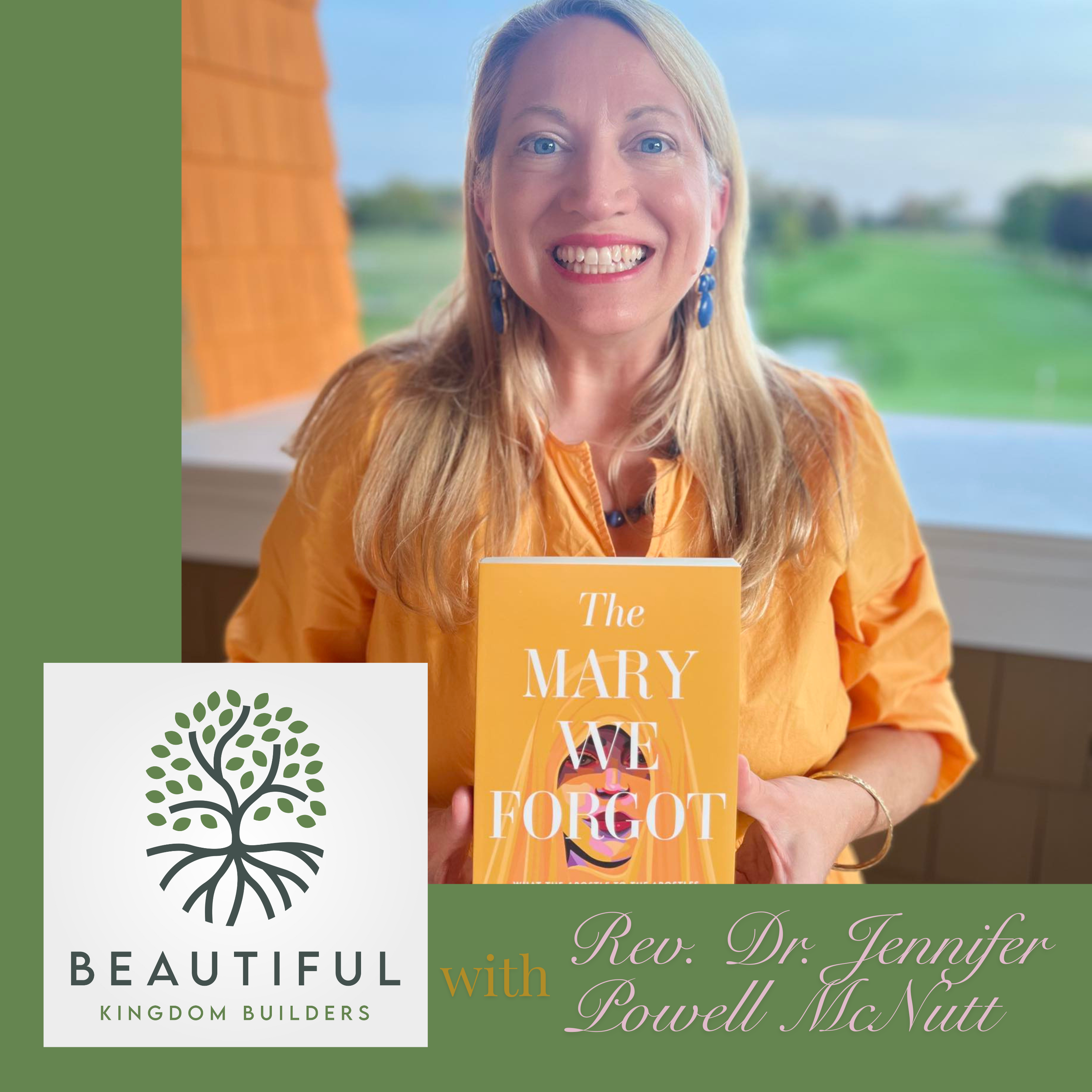
008 I Rev. Dr. Jennifer Powell McNutt on The Mary We Forgot

In this episode, Dr. Jennifer Powell McNutt discusses her insights on Mary Magdalene from her book, ⁠The Mary We Forgot⁠.

Dr. McNutt describes her own faith journey leading her to the dual ministry of Church historian and Presbyterian minister, and then delves into the historical mischaracterization and significance of Mary Magdalene, and what “the apostle to the apostles” can teach us today: from the importance of her healing from demons to her financial support of Jesus’ ministry, being the first witness and messenger of the resurrection, and as a missionary to France in her later life.

Dr. McNutt and her husband, Rev. Dr. David McNutt, have a ministry called ⁠McNuttshell Ministries⁠, a teaching, preaching, and writing ministry that serves both the church and the academy by sharing the Christian faith “in a nutshell.” 

You can find Dr. McNutt on ⁠Facebook⁠, ⁠Instagram⁠, ⁠Threads⁠, ⁠Substack⁠, and more! Find today’s episode notes and transcript on ⁠The Beautiful Kingdom Builders⁠ blog.

In our conversation, Sandra Glahn’s book, Vindicating the Vixens: Revisiting Sexualized, Vilified, and Marginalized Women of the Bible comes up, and Dr. McNutt encourages us to read all the books in her bibliography.

I was really excited to speak with Dr. McNutt after reading her beautiful, pastoral book, which was gifted to me from my brother, Rev. Dr. Matthew McNutt. It’s always fun to meet another McNutt doing good work out in the world! Here’s that adorable picture of my family with our nut shell sign my dad made; I’m guessing this is 1983 or 1984:

If you enjoy this episode, please Subscribe to The Beautiful Kingdom Builders podcast on your favorite platform, rate and review it, and share it with a friend! Every little bit of encouragement helps! You can watch our episode on YouTube or find it on SpotifyApple PodcastsAmazon Music, and more!

TRANSCRIPT:

Ruth Perry (00:16)
Well, Welcome to the Beautiful Kingdom Builders podcast, Dr. Jennifer Powell McNutt. I’m so honored to have you here today.

Jennifer Powell McNutt (00:20)
Yay! Thank you so much for having me. What a delight.

Ruth Perry (00:25)
I feel like, like you talk about in your book, our sibling relationship in Christ, and then we have that added layer of the last name.

Jennifer Powell McNutt (00:30)
haha McNutt. I know we are definitely related. Well, by marriage. yeah. Yes.

Ruth Perry (00:38)
Absolutely. I’m married out of it, so I’m Perry now, but growing up McNutt was very special, and so I thought that I should have my brother Matthew on so we have extra McNutts to join the fun. I wanted to show you this cool picture of my family. My dad made this sign with a bunch of different nuts, and I thought of this picture when I read the name of your ministry, McNuttshell Ministries. Very cute.

Jennifer Powell McNutt (00:46)
I love it. Can’t have enough McNutts. Lean into it, you know? Just embrace it.

Matthew McNutt (01:04)
I always just, yup, I always called my stuff the Nutt house, cause it’s like, we’re…

Jennifer Powell McNutt (01:09)
Oh yeah. When I started teaching there was the McNutty professor, that movie or whatever had come out, know, so there’s that too. I was like, oh no.

Ruth Perry (01:19)
I appreciate you bringing a lot of nobility and dignity to the name, you’re doing us well.

Jennifer Powell McNutt (01:23)
Good, I’m glad I’m accepted. I’m earning my stripes. That’s good.

Ruth Perry (01:29)
Yeah! My brother actually bought me your book for Christmas last year. And so that’s another reason why I wanted to have him in on this conversation, because he’s an avid reader and he loved your book. And I loved your book. I’m very excited to talk with you today about Mary Magdalene. But first, I want to talk to you about you. I’d love to hear about your personal faith journey, your testimony and just a little bit more about your background before we get into the book.

Jennifer Powell McNutt (02:02)
Yeah, thank you so much. Yeah, my faith journey just begins with my family and the ministry that my parents led and as pastors, co-pastors even in our denomination, we’re Presbyterian and having met in seminary and all of that and just knowing Jesus from the beginning and loving Christ and wanting to follow Him and feeling like a part of my parents’ ministry in a very powerful, compelling, persuasive way. And those church communities, you know, just really embracing us too. In California and Texas. But also churches that they had after I went to college in Pennsylvania, San Diego, and now they live here with us, retired, mostly retired.

And so for me, there isn’t a time that I don’t remember loving Jesus and wanting to follow Him. But there were many particular moments where the Lord has directed me in my life and calling and desire to be equipped for this vocation that I’m in as a professor at Wheaton College, but then also as an ordained minister in the Presbyterian Church and hoping to bridge that church and academy, that work, that it will enrich students and also churches. So for me, it just came from really as a child being called into ministry and that was like a pivot for my whole life. I was 10 years old and I was like, I’m going to seminary. yeah, it’s just been so interesting to see how I’ve been directed, in terms of my discipline too, and then just loving, especially the life of the classroom and know, adult education in the church and kind of the preaching parts came a little bit later for me. And I enjoy that as well so much, but my primary call is to the classroom. And so, you know, just how you go through life and make your decisions and do the best you can to be faithful and somehow the Lord directs you in the right path. So that’s been my hope at least.

Ruth Perry (04:20)
That’s really beautiful that you have the academic and the pastoral dual calling. I’m curious to know, what do you see as the, greatest benefits of your church history background and expertise in your church ministry?

Jennifer Powell McNutt (04:35)
Yeah, I just love to make that knowledge accessible that I really feel the importance of that to come in and to help deepen those roots and a sense of confidence in the faith and growth in the faith and also inviting those questions to that faith seeking understanding I think is so important.

To be able to grapple with the places where we’re uncomfortable, where we feel a tension, where we find a disconnect or a dissonance with our context and what Scripture’s saying or how we understand things. Those are all opportunities for going deeper, for the Lord using that in deeper ways. And so I love that part of it.

I’ve been doing a lot more just with all different denominations, churches all over the country and even outside of the US that come from their own history and their own context and the value of knowing the fullness of church history to the best of my abilities. Obviously there’s more than I could ever fully grasp, but nonetheless that you can speak

to people in their local spaces, in their local context in a way that maintains that larger story and helps them to see how they fit into God’s particular story and that universal story. So I’d to distill a richer perspective and connection that Christians have with one another today and with the past. So that’s my hope.

Matthew McNutt (06:14)
Is there something about Wheaton College in particular that drew you or that you’ve particularly enjoyed serving there?

Jennifer Powell McNutt (06:22)
Yeah, thank you. So I did go to Westmont College. It was Christian, liberal arts education. That was where I was really nurtured and knew about Wheaton. I never really expected to be at Wheaton. California girl going to the Midwest wasn’t exactly in my bingo card. yeah, but having taught as a doctoral preceptor in the university settings, I did long for the kind of relationship that you can have with your students, the mentoring relationship that you can have with your students at a Christian school and being able to like care about them as whole people and not just about their grades, or just about their minds, but about their whole life and who they are and kind of shepherding them through this time that we have together. And I found that there was kind of more of a distance at some of the university settings. We were required to have quite a distance. And so it’s just really wonderful to be at a school where you can just like pray with the student and they can share more about who they are and their sense of calling or vocational purpose. And yeah, you can just support them in a holistic way.

And so that’s the thing I’ve loved the most. And I think you would get that at other Christian schools too. But Wheaton does that really well, that integration of faith and learning, the connection between Scripture, theology, and context and just seeing how all those pieces fit together. And a lot of it too is how they valued me and supported me and made a place for my expertise and a place for me to thrive. So I’m very grateful for that. It’s been 18 years, so there’s definitely been ups and downs. Nothing is perfect, but on the whole, I would say, yeah, I think it’s been a really good experience.

Ruth Perry (08:28)
Another follow-up question I have about your background is thinking about the Presbyterian denomination with their theology and their tradition and their history. What do you feel like the Presbyterian church has to offer to the broader Christian family that is of particular value and beauty?

Jennifer Powell McNutt (08:45)
Well, I love that question. Thank you. We don’t always get to answer that. You know, like so many traditions, the Presbyterian Church is pretty fragmented, you know, in terms of so many different branches, certain branches that wouldn’t allow me to do ministry in as a woman. Other branches that don’t necessarily align with my own theological convictions fully.

So it’s always complex to navigate. And then there’s perception too, you know, of like a dominant voice in the tradition or majority voice in the tradition. So I always want to be very generous in my Reformed perspective. And the things that I love are the elements of humility that come into play for the tradition. I think it’s really important to remember, and I’ve spoken on this many times in different venues about that if we go back to our origins, our inception points, like in the 16th century, in the Reformation with John Calvin in Geneva, that so much of his ministry was dedicated to people who were displaced and living in exile and suffering from persecution. And so the theology that he emphasizes is God’s power and ability to be present with us, to save us even through the most devastating, catastrophic moments in our lives and that God’s goodness and God’s ability to save us is never diminished by those circumstances. And really trust in God’s loving, fatherly activity in our lives.

Also, I would say, that, as I mentioned, the humility, but that, the transcendence between, like, us humans and God, I think those are good reminders, too, as well that he’s capable to save and willing. Those are parts that I love, also love about Scripture, you know, Scripture as like, glasses that we put on to understand, to see the world clearly and to understand the world around us. I really strongly affirm that I believe that and experience that just at many different levels. So of God’s activity through that. Those are two things. I’ll add one third one. And that is something called, a little lesson here, duplex gratia, double grace.

I love the duplex gratia, which is that we are, just as we’re justified, that that is linked to our sanctification, that the Holy Spirit is at work in uniting us to Christ, in transforming our lives and sanctifying us, that we might be holy and righteous. So, those are three things I think that are sometimes missed in perceptions of the Reformed tradition, that context can give us some gratitude and appreciation for.

Ruth Perry (11:34)
Beautiful, praise God.

Matthew McNutt (11:35)
You wrote later in the book that Mary Magdalene’s place in the biblical story has been buried in the cellars and attics of our churches.” What drew you to study and write about Mary Magdalene?

Jennifer Powell McNutt (11:43)
Yeah, thank you so much. There are a lot of layers to the story. So I’ll just say kind of one thing and then maybe you want to follow up. But one thing that I have been struck by is in coming out of a tradition in the branch of the Presbyterian Church that I was in, they were very attentive to women in the Bible. And there was a place to talk about that and to think about, I would say, kind of a Galatians 3.28 like, you know, church experience so that you could be called, you have gifts from the Holy Spirit that are not gendered and you know, that God could call you to serve anyone.

But even in that space and even in that context, there was still kind of a separation between some of the focus on the women in the Bible, in the pulpit, and the focus on the women of the Bible in the women’s ministry. So we still had that. And then in addition to that, in another layer, I don’t think anybody wanted to touch Mary Magdalene. So I grew up knowing Lydia and Deborah and Phoebe and those names before I was ever taught how to understand, think about Mary Magdalene.

And I think that’s a much larger problem. It’s not just in certain types of Protestant churches. It’s not just in the Protestant tradition. It’s in the Roman Catholic Church. It’s much broader than this. It’s kind of a Christian issue of how to interpret and understand Mary Magdalene. And so when, as a professor with many years in my research, I began to notice more and more in my classrooms and discussion theology I was doing references to women in the Bible and the Reformation and seeing how they are talking about Mary Magdalene kind of brought it to the surface of this is really different than what we see in our culture because there’s a cultural discussion and also what we’re seeing in our churches.

Kind of seeing the need. And for me, first, I only saw it as for women. Like, let’s talk about Mary Magdalene for women. And I was invited to have those opportunities to share that kind of perspective. But through the process of getting the book to be accepted and published, I began to realize, this is for the whole church. It’s not just for women. And that’s because the gospel writers invite the whole church to see Mary Magdalene’s presence and her witness and her calling by Christ to proclaim. So that’s been great. So it’s kind of like a growth process, I would say like over time, you know how the Lord plants a seed, you know, I was a doctoral student when the Da Vinci code took off, I was in Scotland, everybody was talking about it. It was in every bookstore window. There were bookstores back then. you know, every bookstore window, everybody’s talking about it. And now when I look back at that time, I realized that the church was so susceptible to that cultural moment and the confusion that erupted from that cultural moment because there had been no clarity about her, you know, before that.

So I bring also that to the writing of the book, that experience as well. Did you guys experience that? I don’t know. Like when, you know, when the DaVinci code came out and.

Matthew McNutt (15:16)
I remember when it came out.

Ruth Perry (15:16)
I felt like reading, one of the things I loved about your book is that all of the references you made were a part of my life. I just felt like we would be friends if we knew each other. And I really enjoyed that aspect of reading your book too. I was thinking about when I first started, so Matthew and I grew up conservative Baptist. And so we were definitely of a mind that, spiritual authority belonged to men in the church and the home and read the Bible through that lens. And when I started rethinking that, because I had received a call from God when I was 30 years old, so I was way behind you in that process.

But it was when I was 30, so I started trying to read the Bible through a new lens. And I was frequently told I was reading the Bible through a flawed hermeneutic because most of the people I knew were still conservative. So they were being critical of my questions and the new things I was discovering in the Bible. And I just love that you describe it as a hermeneutic of surprise. Just seeing how God elevates women in the Bible. I don’t know that everybody listening to my podcast knows what the word hermeneutic means, so maybe explain the word hermeneutic and then also just talk more about that hermeneutic as a surprise.

Jennifer Powell McNutt (16:32)
Sure, absolutely. Thank you. So hermeneutic means basically just interpretation. And so when you study hermeneutics, you’re studying different ways of interpreting. So there’s different approaches or methods for interpreting Scripture. Of course, hermeneutics can be used for other sources as well. But there are those critical lenses that are used to understand the text and methods to get at the meaning of the text in its context or how it, you know, the different, they would say, percopes or like portions of Scripture, how they are placed intentionally side by side and what the meaning is for that. There’s all different approaches.

So I was coming from a context that was kind of more like saying, there’s not enough women in the Bible. It’s not enough and it’s not empowering to women because they’re not really present enough in the gospels or in the texts. And so as a historian, it’s important that we understand literature in its context, you know, what were the practices and approaches that you would expect in that time period for how they would write about it. And the thing is, is that they wouldn’t reference women at all.

And so when we say like 200 named women isn’t enough, we’re kind of coming at it from, I think, the wrong side. We need to turn around and go the opposite direction about what does it mean to add 200 women into the text and to highlight their names. Or just to leave them unnamed even, but still present in the story is really interesting. So the hermeneutic of surprise is intended to challenge the hermeneutic of suspicion to an extent, to say that suspicion isn’t always the best disposition of a reader of Scripture because we can miss all the surprising ways that the text in its context is telling the story. So we can be surprised ourselves from our own context, we don’t expect, you know, gentleness to be emphasized or whatever it might be.

And that’s like us growing in how the text relates to our place today as Christians. But the text itself already has embedded moments of surprise within the text that we miss if we only read it from our context. We have to try to read it from the space in that time to see what is being highlighted. So I just have a few different examples that I try to show, but I think once you approach it that way, you’ll begin to see the whole of Scripture, so many surprising parts of Scripture that just sometimes requires to sit a little bit more with, to seek to learn and to study and to, sit under a, knowledgeable teacher to help you to read Scripture with more insight and perspective. I think that can be very useful. All of us can benefit from that at different points, including myself.

Matthew McNutt (19:52)
I mean, you’ve already touched on this a little bit, right? That Mary Magdala’s story has been muddled and obscured throughout history. And even just talking about how the church is not very familiar with her. How do you disentangle her from the other Marys in the Gospels, from the unnamed women that she gets lumped in with?

Jennifer Powell McNutt (20:13)
Right, yes. Well, I think the first thing, my first question was how did this happen? So again, coming in as a historian and trying to go back to some of the original interpretations of Mary Magdalene. So especially looking at Irenaeus of Lyon is a father for the church in the West and the East. So it’s a really interesting starting point to see a trajectory that’s established there and to understand how the early church especially was engaging with Mary Magdalene because the church can’t ignore her because she is the only one who is named by all four gospels as present at the empty tomb and then as first witness by both John’s gospel and Matthew’s gospel.

And so there’s no Easter sermon without Mary Magdalene. And that means that she is someone that we can kind of track in the history of interpretation and see some of the shifts that took place. The thing that I became alert to was how, and I talk about in the book, so with charts, which I think are really helpful because it gets complicated. But what I noticed was especially the importance of Augustine’s voice for the Western branch of the church in his readings of the women that anointed Jesus, that there’s a story of a woman anointing Jesus in each of the four gospels, and that three of the women mentioned are anonymous, but that one woman is noted as Mary, who’s coming from Bethany.

And so we know her as Mary Bethany. And that was really the beginning of the shift to see her as a prostitute because of Luke 7. So just go back and read Luke 7 and then notice too that Luke 8 is where Mary Magdalene is named and identified with Magdala. so the church kind of gets into seeing her as the sinner woman and so there’s first the conflation of the anointings and then there’s a conflation with the Marys and that’s formalized in the seventh century and that continues to be the tradition. But what I loved about the history of it too is that it’s not a very simple story, it’s not so consistent.

And there are many other layers to how the church has also remembered her because there’s other parts of her story because she’s so prominent in so many elements of Christ’s ministry from Galilee to Jerusalem, all the way to the empty tomb. So she’s there, you know, for all these things. And so sometimes when the church is emphasizing, evangelism and preaching, they focus more on her as a preacher and as an evangelist and as an apostle to the apostles. And so I was able in that research and in that tracking also to correct some of the confusion around the history of her reception, as well as to confirm, that this has been very complex. Like, it’s not surprising that we’ve been confused about it for so long.

And then I think because of that confusion, the church has been uncertain about what it means when we point to her. What does it mean when we point to Mary Magdalene? I never had anyone say to me, you should be like Mary Magdalene. You know, as a young Christian woman, like that would be like, is that an insult? Like, what are you saying to me right now? And so I think the church has been a little bit maybe afraid even to point to her because of the, you know, lack of clarity in that message. And so my hope is that the book can kind of give her back to the church in a clearer way to say, we actually really need to grapple with this because she’s pointing us to the risen Christ and she has such an important role in the gospels. It’s not something you can set aside. It’s actually really critical to our understanding of Jesus. And it’s okay, you know, to point to her because this is what she means according to the Bible.

Ruth Perry (24:37)
Yeah, you use the language of the church playing telephone with Mary Magdalene, which I thought was really appropriate. And then you also talk about our collective memory loss about her. But it was very fascinating for me to read about Mary beyond the Bible. I had never heard anything about her history past the Bible. I’ve heard about the apostles. And so that was really fascinating. Would you tell us more about where Mary went after the biblical text?

Jennifer Powell McNutt (25:07)
I mean, we don’t know for sure, so I’ll just start there. But it is pretty remarkable that the church has held on to the remembrance of her, her accepting Christ’s call to proclaim that he’s risen and also the words that he gave to her and that he doesn’t that she doesn’t stop doing that. I like to it’s not like she’s just like passing a note to the remaining disciples, and then goes on her way. the church has remembered her as living out that call for the rest of her life. And that makes so much sense to me as someone who, as Mary Magdalene was someone who was welcomed into his ministry from Galilee, who was a benefactor and disciple, was a student of Jesus’s.

Then was the cross and at the tomb and all these places. So I like to highlight that she’s there for everything and the Gospels mention that to us. So then the church remembers that she continues in her ministry and that she actually travels to France and that she evangelizes France, which by the way is the beginning of Christianity in the western side of the Roman Empire.

So for her to go from Jerusalem to France is absolutely possible. And the fact that all of the followers of Jesus are really scattered or missional in their work after Pentecost and even kind before that or in the Jerusalem area, but Pentecost really is like moving people outside of Jerusalem into these other locations and places. And then the dangers that were present for Christians in this time. We know that from a second century Greek philosopher who was an opponent of Christianity, that he knew about Mary Magdalene.

He knew that the Christian faith was based upon her testimony of Christ’s resurrection. That was like a widespread thing that was known. And he is very critical of her because she was weeping and she’s a woman and you’re not supposed to have those things as the basis of your truth. Which is surprising, by the way, the hermeneutic is a surprise.

So we know that she was known at the time and so her life could have, very likely would have been in danger as a result. so, yes, there’s lots that is possible about that. And we as Christians in the West, though in France they remember this, but outside of France, a lot of people don’t know this part of our Western story that it’s rooted in Mary Magdalene’s claim and witness to Christ, the apostolicity comes through her for the Western Church. And so, and that’s not just a Roman Catholic tradition, but that’s also evident in recognized in the Reformation among some of the Protestant traditions that are emerging in the Reformation. yeah, so that’s very exciting, I think, to highlight and feature.

But in later periods as the Roman Catholic Church was moving towards a hermetic monasticism, in kind of isolated living in caves, that kind of thing, her story takes on a lot of hagiographical elements. It too easily lines up with the way that you’re supposed to be devoted to the church in that time. Like she suddenly seems like a medieval woman. She’s definitely not a medieval woman. So that’s when you’re like, that’s, that’s pretty ridiculous. You know, that’s, that didn’t happen. But, did she come initially to France? She certainly could have. And so that’s something to know, I think, and, to allow for the possibility of.

And yeah, in the book, I’ll just say our family went there, I share about our journey going to those churches and those locations where she is remembered and just kind of sorting that part of the story out and thinking through it. yeah.

Ruth Perry (29:19)
And possibly seeing her skull. That’s quite something. Yeah.

Jennifer Powell McNutt (29:22)
Yes, we saw a skull that is attributed to Mary Magdalene. That was shocking.

Ruth Perry (29:33)
I was also thinking in your answer about the danger that she was in in France, the danger that you point out that she was in at the foot of the cross, bearing witness to Jesus’ crucifixion. I had never thought about that before.

Jennifer Powell McNutt (29:37)
Yeah, just the Roman Empire. Yes, it’s so interesting to think too about how the Gospels do give us all the pieces, even though we don’t get the fullness of the story. But we have to remember that there is a selectivity for all of the people in the biblical stories. You know, we don’t get to hear very much about Joseph, you know, but we know he was so important and that he had this, you know, what is highlighted about him is what we are invited to remember.

And, you know, we love to see more about Jesus’s mother. There’s a few glimpses. And then the last time we see her is in the upper room waiting for Pentecost to take place. So that also allows us to see that she was present in other ways. so we want to value the ways in which Scripture reveals portions of the story to us, even as we recognize that the full, all of the elements are not always revealed to us. And I don’t think we need every element in order to appreciate the pieces that Scripture does reveal.

Matthew McNutt (30:50)
You talk about the importance of correcting mischaracterizations of Mary Magdalene, and there’s a part of it, as a youth pastor for 25 years, I’m kind of dancing around my head, man, what would it look like to more intentionally teach about Mary? You know, when there’s time looking at the calendar to teach and do all of this, why should Christians care about teaching about her, about correcting these mischaracterizations, about taking time to invest in knowing Mary’s story.

Jennifer Powell McNutt (31:26)
Thank you so much. I love that question. I’m going to have a hard time keeping this tight. So I can talk about this a lot. Okay. So the first thing I would say is we need to expand our imagination for how we can see her as theologically and biblically significant in our ministries.

There are many pieces to her story, but oftentimes it becomes reduced to was she a prostitute or not? It’s an easy answer. She wasn’t. Okay, so now we have to move on. Who was she? Okay, so this is where I think actually churches could and should emphasize her as an example for stewardship, right? What is she doing? She is a patron of Jesus’s ministry. Luke chapter eight highlights her and other women that are financially supporting Jesus’s ministry and traveling with him. And when we realized that not everybody was allowed to go with Jesus, not everybody was invited to be with him in that kind of intimate way.

We can say, this is really significant. Their presence there is significant. So it actually completely transforms. And I would say that I was writing this before The Chosen was kind of starting to do this, but The Chosen is such a helpful step forward in allowing us to reimagine beyond the 12, right? So there are the 12 men that are invited to be part of Jesus’ ministry, but there are many women, that’s what Luke chapter eight says, many women, and then certain women who have key roles that are with Jesus and traveling with him and receiving teaching and being part of his ministry and probably were part of the 70 that were sent out because many times these were male and female, like married couples, according to some of the best scholarship on the topic. So we just need to expand the ministry to, and we need to be clear when we say disciples, we actually mean men and women. We say the 12 we are talking about these men. And those are not exactly the same.

So we need to change the way we talk about it so that people don’t associate disciples with male exclusive participation. So that’s one part of it. It transforms the way we see Jesus’s ministry. We can see how stewardship is involved, right? How we’re using finances to support him. And then we can also expand our understanding of the importance of the empty tomb. My experience has been, and again, even in a tradition that has been alert to women’s call to ministry that we don’t know anything about the women of Luke eight. And then all of a sudden on Easter morning, we’re like, we hear that there are women there and we think that they’re just any women, but they aren’t. They have been there the whole time. And so their witness is so much greater actually than just that they happen to be there at the empty tomb in that moment. But it’s everything that Jesus has done for them up until that moment.

And so in Mary Magdalene’s case, now we have to grapple with demon oppression, right? We have to, and that is something our churches definitely don’t want to talk about in my experience, right? How do we talk about this part of her story? So these are women who have been healed from the grip of basically the greatest evil that they could experience. In Mary Magdalene’s case, seven demons, Jesus talks about how significant seven demons are in Matthew chapter 12, he highlights that for us, what could happen with seven demons, and that’s what she has. And so that’s where we have to say, what does it mean when the gospels are highlighting for us that Jesus conquers demons, right? What does that tell us about who Christ is and about the power of the Lord and about God’s kingdom and the kingdom come?

And Mary Magdalene’s witness then, if we are so wrapped up in thinking about her as a prostitute and unwilling or afraid to talk about her as a woman who has been delivered from demonic presence, she is the witness at the tomb, then we are going to miss the fullness of what it means when she points us to the risen Christ. We’re going to think it’s one thing when it’s actually another.

So there are many women, there’s different groups of women that are there, but the particularity of Mary Magdalene’s presence is highlighting for us that Jesus is King, that he has conquered evil for us and that God’s kingdom has arrived. And so that’s how Jesus invites us to understand this part of his ministry.

And when we do that, we can also embrace the texts that are outside of Scripture that recognize and identify Jesus as exorcist, that this is widely known at the time that he is a very successful exorcist. So that brings us also into their context, into that time and what that means for us today. Then pastorally, I would just say it means that whatever the thing is that has gripped you, right? In that, you know, I like to talk about a sheep that is, you know, at the bottom of that pit.

Jesus talks about this in Matthew 12, you know, the sheep that’s at the bottom of the pit, it’s the Sabbath and no one can save this sheep. And yet the Son of God can, right? The Son of God comes in and can save the sheep, pull it out of the pit. And that’s us. That’s a proclamation of God’s power in our lives and the possibility of his work in our lives. So that’s a message that the church needs to hear, I think, it’s exciting to hear that and when we receive her, we can receive that kind of biblical theological message. Does that answer the question? Okay.

Matthew McNutt (37:14)
That’s good. That’s good. And it’s funny. I was even kind of reacting to, know, when you talk about people’s aversion to talking about her because they think she was a prostitute, which she was not. But then I was also sitting here, but it’s funny. We have no aversion to talking about Paul, who was a murderer and a blasphemer before he started preaching. We have no aversion to talking about Matthew, who was a tax collector, which was, you know, a traitor to the people. And, such a horrible practice that they would separate sinners and then you had tax. It’s like we don’t have that same aversion for the men with complicated pasts as we do for her.

Jennifer Powell McNutt (37:53)
Yeah, exactly. That’s so true. Or we make all the women former prostitutes, right? That’s the other thing that we end up doing is saying this is the only story that a woman in Scripture can have. And so we miss, you know, these other stories.

Matthew McNutt (38:08)
I love the book, Vindicating the Vixens, which is just a collection of stories of how we’ve sexualized and vixenized all these different women whose stories were not actually like that. It a really cool book.

Jennifer Powell McNutt (38:11)
Yes! I love that book too, thank you for highlighting that. It’s really important book.

Matthew McNutt (38:24)
Except we’re talking about yours.

Jennifer Powell McNutt (38:26)
That’s okay. I tried to fill up my book with footnotes, with citations, so people can go. You’ll see that book is in there and referenced, and many other wonderful books. I was kind of bringing those biblical voices together, seeing a need even in biblical scholarship and commentaries, to try to piece together the story of Mary Magdalene. So I’m bringing the church history, but also some of the best biblical scholarship out there to help us to see the story. So yeah, please use those footnotes and read these other books, because they help me too. That’s how I was able to do my work.

Ruth Perry (39:03)
You say, “In an era of de-churching and faith deconstruction, Mary Magdalene can serve as a model of steady faith in Christ, even when our churches fail us and hurt us.”

And “Her readiness to run is the outworking of her readiness to follow and give of herself and her resources to Christ’s ministry.”

I thought those are two beautiful quotes about Mary Magdalene from your book, but I was also wondering, How does her faith challenge and inspire you and your discipleship in ministry? Dr. McNutt.

Jennifer Powell McNutt (39:33)
Thank you so much. I was really struck when I was kind of piecing together her story, how everything around her was really crumbling or changing rapidly, you know, in just a very short amount of time. The shock of, the betrayal that took place within their community, and her being elevated out of that in a very special way. There are so many surprising things going on and it did really strike me because working in church history, you will very quickly come to all the failures and problems that the church has faced, the mistakes, the blind spots, the failures.

They’re there. And of course, in our church today, we see those too. I think church history can help with that, to see there is an enduring struggle for the church to live in to sanctification and to keep repenting. Just as individuals, are called to live a life of repentance to continually turn back to Christ, so too are our churches, and to focus on Christ, to put Christ really at the center. And I think for me, Mary Magdalene has become such a powerful example of centering Christ in your life. I’m amazed.

Whatever it was she was doing before, we don’t really know what was going on exactly before that, except for her suffering. But we don’t know exactly what that looked like or anything. But the Gospels invite us to remember that she, her whole life becomes focused around Christ walking. I love this walking literally in his footsteps. The direction of her finances become focused on building Christ’s ministry, being a faithful witness, and she is faithful and doing something very hard that she’s called to do. And that does inspire me. It does remind me.

And so when I see the structure of the church, and I’m speaking as a Reformation scholar, so I talk about this all the time, right? The failures of the structure of the church to keep our focus and center on Christ and building Christ’s ministry. And I do think that that can be helpful. That doesn’t condone the mistakes or the pain or the importance of whatever actions might happen. But we don’t abandon Christ even when our churches fail us, and they certainly do. So that’s a hard reality as being saved by Christ and being transformed by Christ, but also being transformed by Christ at the same time and all the future that we look to in that transformation. yeah, so those are a few thoughts for how she’s inspired me.

She really has become such a central voice in my faith. And I would say I’ve gotten this question from other podcasts where they’re like, did you always love her, always feel drawn to her. And my honest answer is no. I wasn’t because I didn’t know what to think about her because my church also didn’t know what to think about her. So it’s been a delightful surprise to see how she can have a more prominent place in my own faith journey with Christ.

Ruth Perry (42:58)
And what do you think Mary would say to the church today?

Jennifer Powell McNutt (43:01)
What would she say? She would probably say the same thing. You have been, the words that Jesus gave to her, which is that Jesus is our brother and God is our father, and we are part of this family, and basically proclaim that he is risen, and keep it about the resurrection and all that that means for us today. But I’ve think she would have a lot of good insight beyond what the text can reveal to us. How are we using our money? There’s another one. Right.

Matthew McNutt (43:31)
This has been, I’ve really appreciated the insights and just hearing some of your heart and passion behind your work and what led you to this and expanding some of what we’ve read in your book. So thank you so much for that.

Jennifer Powell McNutt (43:31)
Thank you, Matthew. It was a wonderful conversation with you both. I’m so grateful for the invitation and I look forward to, yeah, I hope more conversations together and we’ll meet in person someday, I hope.

Ruth Perry (43:59)
Thank you for the gift that your life and testimony is to the church, Dr. McNutt. We appreciate you. Thank you for your time today.

Jennifer Powell McNutt (44:03)
I appreciate you. Thank you for having me. I was blessed by our conversation. Thank you.


Thanks for visiting The Beautiful Kingdom Builders! Here is the link again for Dr. McNutt’s book, The Mary We Forgot. It is an amazingly pastoral work that will give you so much food for thought and moments of surprise!

We’re excited about our new podcast and hope to bring light to the darkness through these conversations about gender, abuse, justice and healing in the Christian Faith. Follow along here (you can subscribe by email on the right-hand menu under our page description) or on your favorite podcast platform and social media: YouTubeSpotifyApple PodcastsAmazon MusicFacebookInstagramThreadsBlueskyPinterest, and TikTok!

007 I Marg Mowczko on Faithfully Interpreting Paul

Long time reader, first time caller! I was so honored and excited to chat with Marg Mowczko after fifteen years of learning from her through her articles on her blog, www.margmowczko.com, and Facebook interactions. I was so delighted by her genuineness, humor and intelligence.

In this episode of The Beautiful Kingdom Builders podcast, I interviewed Marg Mowczko, a prominent voice in the conversation about women in ministry and biblical interpretation. We discussed Marg’s faith journey, the complexities of understanding Scripture, and the impact of patriarchy on faith. Marg shared insights on key biblical passages from the Apostle Paul on men and women, emphasizing the importance of context and the need for a more egalitarian approach to ministry. Our conversation highlighted the transformative power of faith and the necessity of using one’s gifts to serve and uplift others.

Visit ⁠www.margmowczko.com⁠ to explore Marg’s fantastic articles; if you scroll down to the bottom of her About Page, you can listen to her beautiful music. And here are links to her articles dealing with the passages we talked about in this conversation: 1 Timothy 2:11-15, Ephesians 5 and 1 Corinthians 11:2-16

Also, I mentioned an excellent book I read in seminary called Stages of Faith that approaches faith from psychology’s stage theory, that describes the movement of faith from unambiguous to accepting more mystery with maturity.

Marg’s last word: Paul’s overarching theology of ministry was: you have a gift, use it, use it to build up others. Because salvation builds up, belonging to Jesus builds up. It’s not about subordinating people.

You can watch our episode on YouTube or find it on SpotifyApple PodcastsAmazon Music, and more! Please help us spread the word by subscribing, rating, and sharing with a friend.

TRANSCRIPT:

Ruth Perry (00:15)
My guest today on the Beautiful Kingdom Builders podcast is the wonderful Marg Mowczko. I feel like I’ve known you forever because I started reading your blog probably 15 years ago. I was a complementarian and I heard God’s call to ministry and so I had a lot of questions about that because I had been reading the Bible through a patriarchal lens all my life at that point. I was 30 then. And so I found your blog, margmowczko.com and I read all your articles and they were so accessible and so easy to follow. And so you have been a guide to me, a spiritual sibling in the faith that I’m just so honored that you would come on my podcast and chat today. I started my blog about empowering women in ministry.

And the work that you’ve done is just such a resource for the church. And so that’s what I want to talk to you about today. But first, I’d love to hear more about your personal faith journey yourself, Marg. How did you come to know the Lord? Did you grow up in the faith?

Marg Mowczko (01:15)
I grew up in a fairly dysfunctional family but my mum had a strong faith and we went to church every Sunday in a Dutch Reformed Church which was quite staid but I still loved it. I just loved everything about church and I would just watch and sing hymns, but it wasn’t until I was about 10 in year 5 that I felt like I really started a relationship with Jesus.

So I went to a camp. My mum by then was a single mum and she was working. So every holiday she would send us off to Christian camps, which were the best time. And in my adult years, I did a lot of camp ministry because camps were so influential on my faith. But anyway, at the very first camp, at the end of the day, there was a speaker who got up and spoke and I still remember the story and it’s you know about a girl called Elizabeth yada yada yada and so when that story ended I knew exactly what I wanted to do and while all the other girls went off to get their hot chocolate at the end of the evening, I went to a dormitory and I just prayed and I said Jesus I want you, words to that effect, and I want the Holy Spirit.

Because it was the first time I really heard and I paid attention to the Holy Spirit and I actually had a really strong tangible unexpected experience because, I wasn’t hyped up at all, I was excited because I’d heard about Jesus in a way that I’d never heard before and I was excited about the Holy Spirit but I certainly wasn’t expecting anything and I just got flooded with something and because of that I’ve never been able to doubt God. I still have lots of questions but because as I get older God seems to be getting more mysterious and more big so I have more questions than ever but yeah right from right from that moment.

And I know sounds cliched, but I was totally in love with God and at that moment and ever since I knew that nothing was as important as serving God and that feeling has never left me. So even though I’ve had an ordinary life, I’ve got married, I’ve had kids, I’ve had jobs. but serving God was actually always has been my top priority and I’ve had a few more experiences like that along the way where God really unexpectedly just did something.

Ruth Perry (03:55)
I relate to that. I feel like I’ve never personally had doubt, although I’ve had a lot of questions. I read a book in seminary called Stages of Faith. Have you ever read Stages of Faith?

Marg Mowczko (04:07)
No, but the title does ring a bell.

Ruth Perry (04:11)
It’s by James Fowler and he talks about how our faith develops similarly to how we go through stages, developmentally, emotionally and mentally, and that faith goes from being very black and white to more mysterious as you mature in your faith, which is really beautiful. That you’re able to just open up your hands and kind of accept more mystery.

Marg Mowczko (04:34)
Yes, yeah, especially with reading the Bible. People often say there are no contradictions in the Bible and I just find that statement quite unhelpful and I don’t even want to use the word contradictions, but there’s a lot of layers and I just quite like the tension that the whole Bible narrative gives to our faith. But you know, there is, is a trajectory that we can outline in the Bible, you know, pre-fall, fall, lots of messy stuff, Jesus, the Holy Spirit.

But yeah, I’m really happy living with not the contradictions but with the different messages that the Bible gives. Actually, Sometimes I’m not happy I should say that because there are some horrible stories in the Bible as well. But I love the Bible and I don’t mind that sometimes there aren’t clear cut answers in the Bible. Yeah I’m fine with that.

Ruth Perry (05:36)
So when you were 10, you became a Christian at camp. And then did you remain Dutch Reformed?

Marg Mowczko (05:43)
I was a kid, so I still went to my mum’s church. I went to an Anglican church and a Presbyterian church every now and then because my mum did night duty on Saturday night so sometimes she was unable to go to church the next day so sometimes because I love church that much that I would just walk to the nearest churches and that was a Presbyterian church or an Anglican church so it’s very ecumenical right from the get-go.

Ruth Perry (06:09)
Where did your faith go from there?

Marg Mowczko (06:11)
Yeah, so at that camp I learnt that if you wanted to be a Christian you had to read the Bible and it was recommended that you start at John.

And because I was a very good girl in those days and did as I was told, I did that. And so I got a Bible. We had one at home and I read John and I loved it. I loved it. And so then I just kept reading and I read Acts and I’ve still to this day, I remember reading Acts and trying to get my head around what was happening in the church at that time, which looked nothing like the church I went to.

And then of course you read Romans which still blows my mind. So I’ve been a Christian 50, I’m 60 now, for 50 years and every now and then I think oh I should read Romans again and every time I do it just blows my mind and I just kept going. And I should say almost from the get-go too that I’ve just loved Paul. I’ve never had a problem with Paul. Yeah I really love his letters.

Ruth Perry (07:17)
Did you have a call to ministry as a child as well or did that come later?

Marg Mowczko (07:23)
Well, like I said, almost from the beginning, I felt that there was nothing as important as serving God. And this was a conversation I had with God a lot growing up because in the Dutch Reformed Church, the only women we saw as ministers, and none of them had a title or a position, let alone a paid position, was the organist, the pastor’s wife and the very occasional missionary woman that we heard about. And I’ve never really liked organ music. I didn’t want to be a pastor’s wife because to me, even as a girl, I looked like she was missing out on all the fun. She was serving coffee and cake while the men were having these great discussions that I wanted to be a part of.

And a missionary’s wife looked like it was too hard. So I didn’t want to do any of those things. So I didn’t know what to do. I didn’t know what to do. So from a really young age, I just did whatever I could do. So I was the youngest Sunday school teacher ever. I played guitar in church services once we had guitar in the evening services and camp ministry. I was like the youngest, like the very first camp went to people mistook me for another camper that’s kind of how young I was and so I got involved in whatever I could get involved with.

Ruth Perry (08:46)
When did you start writing music? I was just listening on your website to some of your music and you are a songbird. Such a beautiful voice, such a gift.

Marg Mowczko (08:54)
Thank you. Music’s been a huge part of my life, a huge part and I think almost as soon as I started picking up the guitar, I think because with piano, especially the way I was taught piano, it didn’t really lend itself to songwriting but with guitar, pretty much as soon as I started learning guitar, I just started writing songs as well. So that was my main ministry for many years and then I lost my voice with menopause which I’m still really devastated about so I can barely sing at all which is horrible but that’s when I started writing my blog I just put more effort into writing.

Ruth Perry (09:38)
What year did you start your blog?

Marg Mowczko (09:39)
I’m really bad with dates but you said you’ve been reading it for about 15 years and I think that’s probably when I started it. So before then I had a MySpace. I’m gonna say 2009.

Ruth Perry (09:53)
Wow, so I might have been one of your very first followers.

Marg Mowczko (09:56)
I know when you said that I thought wow you must have found me pretty early on if you’ve been reading my blog for 15 years.

Ruth Perry (10:04)
Yeah, so I thought you would be an excellent guest for the Beautiful Kingdom Builders audience because I know just how transformative and how hard the work has been for me to undo patriarchal interpretation of Scripture and all the ramifications of patriarchy in my life and in the conditioning that I received growing up with that worldview and that perspective.

And it’s just very insidious and hard. I mean, the fruit of patriarchy from my perspective now, is just so bad. But I can 100 % empathize and have compassion for people who have that perspective because for 30 years of my life, that’s how I read the Bible and understood it. And it really did feel like scales falling off of my eyes
to read the Bible through a new lens. But something that you do on your blog is you take passages about women and explain them so clearly and then you get a lot of engagement from people who disagree with you. And so you’re a very valuable person to just explain both views of a passage. Because a lot of people are trying to convert you back to patriarchy, I assume.

Marg Mowczko (10:57)
Hmm. Yeah, I don’t know if I get as much pushback as some people, but I definitely get some pushback. And sometimes it can just be nasty, but sometimes it can be constructive. But the thing is, makes me think harder. And so often that pushback is helpful to me because it helps me to explain things better. It sharpens my focus. It makes me adjust my views if I need to because I really try to be careful not to overstate things. I really want to stay as true to what I think the Bible is saying and not overstate things.

Ruth Perry (12:03)
I was wondering if you could walk us through a few passages, maybe from Paul or wherever you would like to go in the Bible. Kind of like you do with your “Nutshell” articles. And maybe start with what would the complementarian interpretation of that passage be and then explain it to us from the egalitarian view, if that’s possible.

Marg Mowczko (12:25)
Right, yeah, yeah so that’s something I kind of don’t do a lot. I do critique views. I really try not to critique people. That’s one of my values as well. Because like you, I grew up hearing, I didn’t know the word complimentarian, but I heard and I saw, I saw patriarchy demonstrated in the church all the time and you just absorb it as a child.

Ruth Perry (12:39)
Yeah.

Marg Mowczko (12:54)
But in my writing, I tend to just go, this is what I think, without necessarily critiquing the complementarian view. And then people hopefully can make up their own mind. Sometimes I kind of forcefully say, well, this is what I think the Bible says. But sometimes I actually go, well, these are ideas and…

Not that I actually say you can make up your own mind. I really hope people do make up their own mind or that they’ll at least think about it. So, but let’s start with 1 Timothy 2:12, perhaps, because that’s the big one. That’s the one that gets quoted at me all the time, because I do tend to focus more on women in ministry than women in marriage for some reason. But anyway, so with 1 Timothy 2:12, my approach is to look at the context. So 1 Timothy 2:12 says I do not allow a woman to teach and I put a comma there or to authentein is the Greek word there, a man and authentein is a really key word that I’ll come to in a minute.

So if we just start there that’s really not a good idea we at least have to look at the very verse above it which is, A woman needs to learn in quietness and in full and then we have this word submission which I’ll have a look at in a minute too. Those two verses really belong together because in the Greek it starts off with this little phrase in quietness in verse 11 and verse 12 ends with this little phrase in quietness. So it’s an inclusion, it’s a unit. I know not everyone thinks that Paul wrote 1 Timothy but I’m just going to use the word Paul. So Paul said to Timothy, a woman needs to learn in quietness and in full submission.

I do not allow a woman to teach, comma, and the comma is in the King James. So it’s not just me who thinks that comma should go after that. Yeah. And then it ends with in quietness. So that’s a unit. So to me, if we look at it in this tiny bit of context, let alone in the full context, it’s good advice. A woman who needs to learn, she needs to learn, she’s not allowed to teach anyone and then and she’s not allowed to authentein a man. And authentein there’s been so many people writing on this word including me I think I’ve got four maybe five articles just on authentein to see how it’s used in other Greek texts because Greeks been a really big part of my faith journey too. So you know I love the Bible.

At the age of 10 I picked up John, loved it and I’ve been reading the Bible ever since and at some point I found out that the New Testament was written in Greek and I thought one day I’m going to learn how to read it in Greek and that’s something that I’ve been pursuing for a couple of decades now so I can sort of pick up the New Testament and read it in Greek and I read other texts as well in Greek.

So verse 11 and 12, a woman needs to learn, she’s not allowed to teach. Well, if a woman still needs to learn, then yeah, she shouldn’t really be teaching and she shouldn’t be domineering a man. And that’s how I take authentein or controlling a man. And there’s a few English translations that are now conveying that sense because it doesn’t have anything to do with ordinary authority.

If you look at how this word is used in other Greek texts, it’s actually quite a rare word as a verb, which is another thing. This word, authentein there’s a couple of relative nouns, but I actually don’t think looking at the nouns is helpful to understanding the verbs because, you know, language can do different things over the years and I think the verb has a separate sense to one of the nouns that means murderer. I don’t think understanding it as to do with murder has any value.

So that’s how I understand those two verses but if we sort of zoom out a little bit further if we look at 1 Timothy 2 beginning at 8 all the way to 15 because context is everything it’s just everything all of 1 Timothy 2, 8 to 15 is Paul addressing problems in the Ephesian Church, poor behavior in the Ephesian Church. He’s addressing the problem of angry men in verse 8, he’s addressing the problem of overdressed rich women in verses 9 and 10 and then he goes from the plural men and women to singular which is a clue that now he’s talking about husband and wife relationship because people think it’s about ministry and it could be both because teaching is to do with ministry but the authentein bit I think is to do with a husband and wife. A woman isn’t allowed to dominate her husband and Chrysostom uses exactly the same word a couple of hundred years later when he says a husband shouldn’t authentein his wife.

Because this is not healthy relationships. But Chrysostom thought that husbands should sort of have authority, but they shouldn’t authentein. And authentein there is translated in some English translations as act the despot.

It’s this controlling even in like really well-known lexicons. I don’t know if you can see the lexicons this one right there Yeah, the first definition is to have full power over. We’re not talking about a benign authority or a benign leadership. We’re talking about this domineering full power over someone and Paul saying I don’t want a woman to have that over a man probably a wife to husband relationship, Chrysostom says I don’t want husbands to have that relationship. It’s bad behavior. Authentein has no place in Christian relationships. So Paul’s addressing bad behavior, he’s not saying no woman anywhere for all time is allowed to teach a man.

And it’s got nothing to do with healthy authority within the church. And I don’t think that’s very hard to see that even in English translations, except I guess when they use the word exercise authority. Exercise authority is a really unfortunate translation of authentein.

Ruth Perry (19:14)
Well, that would be one of those examples of a contradiction where Paul is seemingly saying women can’t teach, but then he sends Phoebe with his letter to the Roman church and commends Priscilla for teaching. so it’s easy when you’re reading the Bible and latching onto a verse like 1st, Timothy 2 12, where you’re crystallizing a worldview from one sentence in the Bible and then you have to ignore other passages in order to do that.

Marg Mowczko (19:38)
Yeah, from one verse, yeah. Yeah, it’s literally one verse in the Bible that says a woman is not allowed to teach and the church has made a mile out of that verse and not understood that Paul’s addressing bad behavior here.

And the fact that in a lot of discussions, ministry comes back to authority, authority, authority over is really unfortunate. So to me, the authority to minister in anything is an authorization. I prefer the word authorization, an authorization from God, an authorization from the Holy Spirit who gives gifts. And then hopefully the congregation recognizes those gifts.

But ministry is service. It’s not about an authority over someone. We’re all brothers and sisters. So the fact that 1 Timothy 212 is used so much, but also the fact that people have sort of really hung onto this word authority that occurs only in English translations, obviously, because it’s an English word, and then made a mile out of it, is really sad. It’s not about having authority over anyone. It’s about serving people and using your gifts.

Ruth Perry (20:53)
How do you explain Paul’s use of the word head then in Ephesians and Corinthians about the man?

Marg Mowczko (20:58)
Yeah. So first of all, I prefer to look at Paul’s use of head in Ephesians separately, because in Ephesians he uses it three times in a head-body metaphor. And the way he uses it is just astounding and that’s not an overstatement because Paul’s vision of the church is really quite mind-blowing. So in Ephesians 1, Paul uses head in two ways.

Also, head to me is a sort of spatial metaphor, head is at the top and he uses head and feet so that’s very spatial, head is like the most important or the most high status person and feet is the lowest status person. So it is about status, it is about spatial things but he also uses it in Ephesians 1 in a head body metaphor and the church is not under Jesus feet in Ephesians 1. We are his body and we are his fullness because I think Paul is speaking in the present tense but we are the fullness of Christ so if we are the fullness of Christ where is the hierarchy there is hierarchy in head feet absolutely but where’s the hierarchy with head and body if we are the embodiment of Christ’s fullness?

So I will admit that I don’t actually understand fully what it means to be Christ’s fullness and also fullness itself is a theological term that was used in certain ways especially in the second century that I can’t quite put my finger on but if we then go to Ephesians 4 again we have head body metaphor and this one’s a lot easier to understand and this is where it says that Jesus gave gifts to be apostles and prophets pastors teachers so that we, the church, hold onto the head and we become like the head. We grow to the stature and maturity of the head. So again, we have the head who, in its most basic metaphorical sense, has sort of a higher status because it’s at the top spatially.

But again, we’re not his feet. We are connected and growing and fastened to this head so that we become, the full stature of Christ. So if there is a difference in hierarchy, it’s not that much if we are to measure up to the full stature of Christ. in a context we’ve read how Paul uses head, in Ephesians 1, head, body in Ephesians 4 and the underlying sense or the main sense of course is connection and unity because the head and body, they’re together, they belong together. So if we’ve been reading along and not just sort of dive in at Ephesians 5 where it says Christ is the head of the church and this is the example that Paul then gives to husbands.

We won’t be having this sense of head here, feet here because the wife isn’t the feet, the wife is the body connected to the head and often when we get to Ephesians 5 and the picture of Christ in the church, we often sort of focus on Christ giving himself sacrificially and even though the cross isn’t mentioned and death isn’t mentioned, that’s usually what we have in our head, but Christ lowered himself even just by coming to earth as a human, he literally came down to our level.

But that’s only half the story because Christ also sanctifies the Church and kind of lifts the Church up to his level because in verse 27 I think it says that he sanctifies the Church so that he can present the Church to himself and the Greek word there is endoxis which sometimes is translated splendour which to me doesn’t mean a lot but the main definition of endoxis is high ascension which again is kind of a status word. So Christ came down to our level but he lifts the church in high esteem and so again it’s not head feet it’s head body and high esteem and you know I’m reluctant to say that we are on exactly the same level as Jesus I’m very reluctant to say that.

But the way that Paul speaks about the church, it’s pretty close. He says we’ve been raised in heavenly places belonging to Jesus, becoming his child is about being elevated. It’s about being raised. It’s about becoming like Jesus, about being transformed.

And in Paul’s views, not only are we being transformed now, but when we die, our bodies will be transformed and be like Jesus’s body. So, yes, Jesus is our Lord, he’s our Savior, Messiah, and yet he’s also our older brother and we are to become like him. So in Ephesians five, when Paul’s talking about husbands and wives, he’s not saying husbands are the head and wives are the submissive followers. No he’s saying husband, lowers himself what are the exact words I really need the exact words

Ruth Perry (26:09)
husbands love your wives just as Christ loved the church and gave himself up for her.

Marg Mowczko (26:08)
Ephesians 5.25 is when Christ and gave himself.

Yeah. So that’s it. but then it talks about husbands doing stuff, which kind of doesn’t make a lot of sense.

But if we understand that husbands in the first century did have a higher status, than their wives. And then we understand that Paul is saying husbands love your wives as your own male bodies, that has an effect of elevating their wives in status because if that man is loving his wife as his own male body how is that not treating her with equal importance or equal consideration? And it does take a little bit of unpacking to see what Paul’s saying.

I also want to point out too that when Paul starts speaking to husbands in Ephesians 5 and he says, love your wives as Christ loved the church, people again, they make a mile out of that and they make this into this big, honorable, chivalrous concept that is a particular duty of husbands. But Paul uses almost exactly the same Greek words further up in exactly the same chapter, which again is why we shouldn’t just look at these verses in isolation, we need to read them in context because in Ephesians 5 verse 2 he says exactly the same thing to everyone that we all are to love as Christ loved the Church who gave himself for her.

We’re all supposed to have that sacrificial love, but husbands needed an extra reminder. And I think still today, a lot of us need this extra reminder that we’re all to love as Christ loved the church.

Again, we’ve lost sight of who Paul was and what his vision was for the Church and his vision for human relationships within the Church. And like even Colossians 3.19. He says to husbands, love your wives and don’t be harsh with them.

And throughout the centuries, it’s like been the opposite. Husbands haven’t really loved their wives and they’ve been very harsh. Some Christian husbands have been incredibly harsh with wives. It’s not rocket science. It’s just, do unto others, all those one another verses in the Bible sort of get thrown out of the window and people focus on these few verses about marriage and they make it about decision making they make it about leadership. I often say husbands are never told to lead their wives; Paul never says husbands lead your wives.

Actually, let me be really specific. There’s no New Testament verse that says husbands lead your wives or have authority over your wives or even like be the person responsible for your wives.

But if you look at all the verbs in Ephesians 5 where Paul is addressing husbands, love is mentioned six times. The verb for love and the agape love, which I know again some people made a really big deal. think that agape always means this self-sacrificial love, it doesn’t necessarily, but that’s another story. But it’s still a strong love. So husbands love your wives; six times

love is used when Paul is addressing husbands. He never tells husbands, lead your wives.

I heard someone say there’s a patina over Ephesians five. We’ve heard so many sermons, we’ve read so many blog posts or whatever. And so a lot of people just read Ephesians five and just assume it’s about the husband being the leader, they assume it’s about husband being the decision maker, the one being responsible for finances, but you just don’t find that in Ephesians five.

Yeah, we need to get rid of that patina, sort of scrub it all down and just look at the words, look at the verbs, the doing words that Paul actually used when he spoke to husbands, and wives.

Ruth Perry (30:06)
I think we end up having a lot of implications in our theology about God when we don’t understand that love doesn’t control and love doesn’t dominate. That God’s love for us, he doesn’t control us or dominate us. He’s given us free will. He’s sent his son to die for us. And to model that kind of love, we’re not going to lord authority over each other, Paul says. We just read our own worldview into the Bible.

Marg Mowczko (30:33)
Totally. Yeah. I just saw this comment the other day and gender discussions aside, I was thinking we just approach our relationship with God so differently. Yeah, who we think God is certainly affects how we relate to his children. Yeah.

Ruth Perry (30:56)
Were you going to explain how Paul uses head in 1 Corinthians as well?

Marg Mowczko (31:00)
Ah sure, sure. So he uses it in 1 Corinthians 12 and that’s probably one of my favorite passages in the Bible where Paul has his vision for the church as a body and all the parts are working together in unity. People you know hearing Greek, reading Greek, in the first century head was about status.

So if you’re the head, literally have a higher status. Often you will have more influence and you might have a leadership role, but head is not synonymous with being a leader and I think that’s really important. In Ephesians 5, first century husbands and Christ do have a higher status than the church but Paul wanted to minimize that status and he used that head body metaphor to signify that and to show that the head sort of becomes lower and the body becomes higher.

And also in 1 Corinthians 12, there’s this verse where it says, we shouldn’t give more honor because the head normally had more honor, but just generally speaking about the body, we shouldn’t give more honor to the parts that already have it. They already have honor. He actually says we need to give honor to the parts of the body that don’t have it. And, where are the sermons on that? You know because who didn’t have honor in first century Corinth? It was slaves. And we know from the rest of 1 Corinthians that slaves were definitely a big part in that congregation. He’s talking about women and we definitely know that there were women. We even hear about Chloe and we hear about women who were praying and prophesying.

So according to first century standards, these people would have less honor than freeborn men with a bit of money. And so Paul’s saying, let’s not honor the people who already have honor. It actually says there’s no need to do that. Let’s give honor to the people who lack it.

So the first thing I’d like to say about the passage in 1 Corinthians 11 where it says man is head of woman is that this passage isn’t really about marriage. It’s about ministry and the men and the women who he’s speaking about. He’s not even speaking about the broader church here. He’s talking about the men and the women who are praying and prophesying and they’re doing essentially the same thing. Paul doesn’t differentiate. There’s men praying a prophecy and there’s women praying a prophecy and he doesn’t say that any of them should stop.

So I think whatever we think about 1 Corinthians 11, we need to keep in mind that men and women were ministering in a very similar or identical way and Paul is not telling anyone to stop, but he is addressing their hair or head coverings. So I think scholarship is pretty divided on this. A lot of people think it’s head coverings for women and not head coverings for men. I think it’s hairstyles. We know definitely in the second century that some women were cutting their hair and even dressing like guys, Christian women, when they were becoming Christians, sexual renunciation.

It was huge, but it starts in the 50s. So if you read 1 Corinthians 7, people were choosing not to get married and people in the Corinthian church who were already married were having sexless marriages or they were leaving their spouse altogether because they felt that sex was somehow a contaminant. And we see this idea just repeated throughout the centuries in church. It was huge in the second century and it started early. We see it literally in Corinthians, so we know that there were people in the Corinthian church that were renouncing sex.

And the people who were doing this were probably the hyper spiritual people. So I think some of these women were cutting their hair, which would have been really odd in first century Roman Corinth because we can see from frescoes and statues that women wore their hair long but tied up. That was the respectable hairstyle. So if suddenly these women in Corinth were cutting their hair, that’s a very provocative statement. And it could also be that some of the men were having long hair. We know that philosophers sometimes grew their hair long.

I got a couple of blog posts where I really quote a lot of people around the first century where they discuss hair. I know some people have said that it had sexual connotations but I don’t think that’s really the case because a lot of frescoes and busts and pictures show women with their head uncovered, respectable women. And I know that there’s sort of discussions from Greek physicians, you know, Hippocrates and stuff, many centuries before Paul’s time, who spoke about hair in sort of a sexual way. But I just don’t see that in writings from the first century. So basically, I don’t think it’s got anything to do with creating lust. Let me say that. I think it’s got everything to do with just social respectability. I’ve actually got a picture here of a scene in Pompeii. I don’t know if you can see the women I just always have that there because I like it.

There’s just oodles and oodles of busts and coins, of the empress, and she doesn’t have her head covered. So if there’s something sexual about hair, why aren’t these women who want to be portrayed as respectable and as honorable women, why do they have their hair just uncovered but long and bound up? Okay, so let me try to get to the point. So the bigger problem with 1 Corinthians 11 is it’s really hard to make cohesive sense of the whole thing because it is like Paul’s contradicting himself and that’s because I think he’s talking about two different scenarios and this is explained by different people in different ways but this is how I explain it and also this is how Judith Gundry explains it.

So the first section is about reputations in broader Corinth. So Paul wants the Corinthians to tone things down a bit. The church was a small group in the mid first century and it was a very vulnerable group. Being a Christian could be quite liberating for people and Paul is just saying, pray and prophesy but men do this with your hair and women do this with your hair and I think it’s because of social respectability in the broader society.

I haven’t even touched on the word head because men have a higher status than women. And that’s what I think this head is about. And we still have to honor or acknowledge at least that social differentiation for the sake of reputations. So God has a higher status than Christ the Messiah, and then Christ has a higher status than every man and then he goes singular man has a high status the woman and I think this is referring to Adam and Eve because another thing to keep in mind when reading this passage beginning at verse 2 to 16 is to keep in mind that men and women were doing the same thing but also Paul refers to creation quite a lot.

and I think that man and woman in 1 Corinthians 11.3 is probably Adam and Eve. Anyway, so men and women they can pray and prophesy but Paul wanted them to do something respectable about their heads. So he doesn’t want women to cut their hair and right at the end he says a woman’s long hair is her glory or that word can also be translated reputation because I do think it’s about reputations.

Okay, so the first half is about reputations in broader Corinth and verse 10 is the crux of this passage because I do think it’s written as a chiasm. Paul makes certain points until he gets to the main point and then he repeats it and the main point has to do with angels and I do think those angels are human messengers In the New Testament that word is used several times for human messengers and it’s even used for the spies who Rahab helped. So in James the same word is used for the spies because people were suspicious of new religious movements. You know, Rome had been through so much upheaval but under the current, well since Augustus things had calmed down a bit. There was some degree of stability and people wanted to keep it. They didn’t want new uprisings and new crazy religious ideas to get out of hand.

Anyway so I think the top half is about reputations it brought a Corinth but then Paul says well but don’t take it too far effectively he’s saying that so in verse 11 he says but or nevertheless for those of us who are in the Lord, that’s us in the Lord. So now he’s talking about relationships within the body of Christ. And again he alludes to Genesis. Head, in verse three is about firstness.

Who comes first because firstness was attached to honor so the man comes before the woman Adam comes before Eve but then he’s saying but in the Lord that means nothing because just as woman came from the first man every other man ever since has come from the body of a woman he doesn’t use all those words but that’s the meaning because ultimately everything comes from God and in this whole passage you see it more clearly in the Greek because where a word is used in a sentence can give it more emphasis but three times he brings it back to God so it’s not about people it’s not about male and female because everything ultimately comes from God and that’s why God is mentioned at the beginning as well because I think God is at the end of that sentence as well in the Greek.

So verse three.

Because because we’re talking about husbands being the head or man man being the head of woman because I think it’s Adam and Eve or at least a vague illusion, a vague illusion to Adam and Eve. But it’s not if it really was a hierarchical top down thing, it would be God, Christ, every man, man, woman sort of in that order. But it’s not it’s all around the place because he’s actually bringing it back to God in the Greek. And like I said, three times.

And we’re so caught up in all these little debates about who’s more important, God. That’s who’s more important. That’s the answer. That’s what Paul wanted to say. It’s not whether ultimately male people are more important than female people or whatever. No, it’s God. God is the ultimate source.

But what happens all too often is we look at 1 Corinthians 11 3, we focus on that, we say what we think it means and we don’t read to verses 11 and 12 which is for us who are in the Lord are we in the Lord well then it doesn’t matter who’s first you know it doesn’t matter who the head is anymore because we’re all brothers and sisters.

So to summarize, head in 1 Corinthians 11.3 is about kind of who came first and it’s attached to honor so first part is about reputations in broader Corinth which he sort of backs up with this firstness idea. The second part after verse 10 is about relationships within the body of Christ because he wants them to acknowledge how society works and not bend too many rules but within the body of Christ that kind of hierarchical thinking has no place. And that’s where we hear more clearly that Paul’s actually talking about hair. He’s not talking about head coverings. Yeah. But that’s still debated.

That’s a really hard passage to unpack. So I hope that wasn’t too garbled. Yeah. But it’s very different to what we hear.

Ruth Perry (43:15)
Yeah. No, that was really interesting. Yes, absolutely. I think you nailed it. I mean, it all comes down to that we all come from God. And if we’re submitting our lives to God and we’re loving one another as all the one another passages command us to do, then all of those hierarchies and that need to have some over others, it kind of dissipates.

Marg Mowczko (43:43)
Yeah, and you can hear some of the early church fathers struggling with this because I think they recognized that in the New Testament there was this understanding that we are all just brothers and sisters but a lot of them believed that society would just crumble if there wasn’t someone in charge. There always had to be, even in marriage, which is a relationship of two people and I often say why does a relationship of two people need one person to always be the leader? There’s no other relationship where that’s needed or that that’s a good thing. If it’s an organization, sure, let’s have leaders. But a relationship of two people doesn’t need one person to always be the leader unless that other person is really incapacitated in some way.

But yeah, I do read some early church fathers who can say really, really great things about marriage and then they go, yeah, but if the man’s not the leader, then it’ll all go awry and I’m yeah I don’t think that could really envisage that but we know like my relationship with my husband and we’ve been married over 40 years we tried doing the leadership bit. It just didn’t work. It just didn’t work for us

And my husband, I wanted it because I was sort of the good girl who wanted to do everything I thought the Bible was saying. And my husband just wanted me to be myself. So I was the one putting pressure on him to be the priest of the family and all these things that I learned growing up, which have no biblical basis, especially in New Covenant understanding.

A relationship works better when people can just give their best without these artificial restrictions. It’s not rocket science.

Ruth Perry (45:27)
Well, I can say just because I’ve been watching you and listening to you and learning from you for so long that your life is a beautiful testimony to that kind of submission to God and prioritizing God’s way and not your own that you’re always seeking to honor and be faithful to God above all else. And your scholarship is a gift to the church. And your example of a woman in Christian scholarship and Bible study is a beautiful example to the church because women, our imagination is kindled by seeing women using their gifts to imagine what we can do for the Lord. And so it’s been really powerful for me to just learn from you, sit at your feet and appreciate the example that you show of discipleship to your Lord Jesus Christ. So I wanted to thank you for that.

Marg Mowczko (46:18)
But you don’t have to sit at my feet. Don’t sit at my feet. We’re even. Yeah, but I know even about examples because yeah, growing up, I had no examples. I didn’t want to be the organist. I didn’t want to be the pastor’s wife. I didn’t want to be the missionary and I didn’t know what to do. But I just did what I could do and I’m grateful for the opportunities I’ve had. Yeah.

Ruth Perry (46:22)
Hahaha! Alright

Marg Mowczko (46:45)
Yeah, I know what you mean though about sitting at feet Yeah.

Ruth Perry (46:46)
Would you, yeah. Thank you for the correction now too. Do you have any last words that you’d like to leave this podcast on?

Marg Mowczko (47:01)
Hmm. yeah, I just…

When I read Paul and when I read him as a 10 year old and when I still read him as a 60 plus year old, I think his overarching theology of ministry was you have a gift, use it, use it to build up others. Because salvation builds up, belonging to Jesus builds up, it’s not about subordinating people. If we are reading Paul’s letters or anything in the Bible and we’re reading, we need to keep certain group down then we’re reading it wrong. Yeah, use your gifts and build up others. That’s Paul’s message.

Ruth Perry (47:39)
Amen. Thank you so much, Marg. God bless you and I’m excited to share this episode with everyone. Thank you.

Marg Mowczko (47:42)
It was my pleasure. Thanks Ruth.


Thank you again for catching this episode of The Beautiful Kingdom Builders! Subscribe here, or on YouTube,  SpotifyApple PodcastsAmazon Music, and more! Please help us spread the word by sharing with a friend!

006 I Rev. Dr. Matthew McNutt on Abuse in New Tribes Mission / Ethnos360

In this conversation, Ruth Perry and her brother Matthew McNutt discuss their experiences as missionary kids in Tambo, a boarding school in Bolivia, South America, focusing on the rampant abuse that occurred and the institutional failures to protect vulnerable children. They explore the long-lasting effects of these experiences, the importance of believing victims, and the need for accountability within church and parachurch organizations. The conversation highlights the challenges faced by survivors and the necessity for change in how abuse is addressed in religious contexts.

Visit ⁠matthewmcnutt.com⁠ to find more detailed information about Matthew’s experiences at Tambo in Bolivia, and his work on a recommendations panel during IHART’s investigation into abuses in New Tribes Missions (now Ethnos360). And visit GRACE (Godly Response to Abuse in Christian Environments) at netgrace.org if you need resources regarding abuse prevention and response.

Enjoy these nostalgic pics from our time in Bolivia:

You can watch our episode on YouTube or find it on Spotify, Apple Podcasts, Amazon Music, and more! Please help us spread the word by subscribing, rating, and sharing with a friend.

TRANSCRIPT:

Ruth Perry (00:15)
My guest today is my much older brother, Dr. Matthew McNutt. I’m very pleased to have you today, Matthew.

Matthew McNutt (00:23)
I was pleased to come on until the much older, the, see, ⁓ yeah, good, good cover. That’s, we’ll see.

Ruth Perry (00:26)
much older and wiser, I should say. Yes.

And do you prefer to go by Reverend Doctor or can I call you Matthew?

Matthew McNutt (00:35)
Call me Matthew.

Ruth Perry (00:36)
I invited you on today because one of the things that is on my heart for the church is to care for our most vulnerable members. And we had the opportunity as missionary kids, to see how that can go sideways and all the wrong ways if the safety of children and the vulnerable is not prioritized in an organization. And so our topic today is rather heavy. And I just want to mention that before we dive in, because a lot of people have experienced spiritual, physical, sexual abuse in their lifetime. And so this might be an episode that is challenging for you or that you might not even want to listen to.

Particularly, we’re talking about a missionary boarding school in South America, but I think this was across the world in this organization and other organizations as well, that this was a common problem in these missionary boarding schools, that there was rampant abuse.

So Let’s share our experience. We weren’t always missionary children, but in 1989, our family moved to Bolivia and I was going into fourth grade at the time, but you were going into high school, right?

Matthew McNutt (01:46)
I was going into 10th grade. It was actually the fall of 1990. I guess this being much older and wiser helps me remember it. It helps that I kept a detailed journal too.

Ruth Perry (02:00)
I was thinking I was nine. I was born in 1980, so I was thinking I was 89.

Matthew McNutt (02:04)
89 was my freshman year of high school, 89-90. So 90-91 was the school year that we moved to Bolivia with New Tribes Mission, now known as Ethnos360. But yeah, we moved to Bolivia. Our parents were associate mission staff with New Tribes Mission, which means they were short term. They were going down for a two year commitment. It ended up becoming three years working at the boarding school as third and fourth grade teachers as part of that staff for the first year and half. Then they were transferred to Paraguay for a little over a year before coming back to Bolivia in time for my high school graduation. And then we returned to the US where they jumped into training to go full time with the mission before eventually leaving a year or so later and accepting a call to the church in Maine.

Ruth Perry (02:57)
Yeah, so moving to South America was very exciting. My dad had been an associate pastor at a church in Washington state and had been leading short-term mission trips. And he had been to Bolivia and really was blown away by his experience there. So that’s how we ended up moving to be short-term missionaries there. And so I think our expectations were very high that this was going to be extraordinary.

And it was in many, many ways. It was an extraordinary experience. And I’m really excited that we have that as part of our childhood. I heard Gabor Mate recently talk about how different siblings do not have the same childhood. And one of the ways that that’s true between you and I is that while we were in South America, I always lived with my parents. But the school pressured mom and dad to put you and Danny into the dorms. And so you were living in the dorms at Tambo. The school was very remote. We would get there by bus. I think it took 12 hours from Cochabamba or what was it?

Matthew McNutt (03:55)
Yep, from Cochabamba, six hours from Santa Cruz. The mission, when they had built the school decades before, had intentionally landed it in the middle of nowhere because they did not want missionary kids to have access to movie theaters and the other temptations in the cities, which is wild. As a youth pastor now, I’ve been a youth pastor for 25 years, and it is wild to me that it was more important to have kids hours and hours away from the temptations than it was to have them close to hospitals and emergency care. Like students died at that school over the years, but it was more important to be remote and away from temptation than it was to have access to health services.

Ruth Perry (04:42)
They had a typhoid and a hepatitis outbreak while we were there. And then in the surrounding area, there was a cholera outbreak. And we’re talking about a very short time that we were there, three years.

Matthew McNutt (04:49)
Yeah. Yeah. We called it the HEPA-CHOLEROID OUTBREAK because that was crazy year. That was our first year in South America.

Ruth Perry (04:59)
Yeah. I got an intestinal infection. So while everybody else is getting hepatitis and typhoid, I’m dealing with something totally different, but they kept treating me for hepatitis or typhoid. And so I nearly died our first year there.

Matthew McNutt (05:12)
You mentioned Danny and I were put in the dorms. He was in middle school, I was in high school. If I was in 10th grade, he was in sixth grade. And there was enormous pressure from the established staff that kids should be in the dorms. Which is funny because the guy that put the most pressure on our parents, Al Lotz, did not have his kids in the dorms. They were in his home with him. But, whatever. There was enormous pressure. you were close to death. Dad had hepatitis at the same time. And so the two of you were rushed into the city. Both of you had really severe cases and there was enormous pressure on mom that she could not leave the school to be with you guys because the task was so much more important. And these boarding schools were a way to get the kids away from the parents because the mission task was the most important thing.

Trust God with the kids but what people didn’t really talk about is where they tended to get their best teachers was through the associate program short-term staff who were then unable to really make much change because if they made waves, they were asked to go home early. And if they played nice, they could stay longer. But most of the long-term staff at the school were there because they didn’t fit in well in other places in the mission field. When you talked about we showed up with rose-colored glasses, I was not happy about moving to South America. I was 15. I liked my life. I had a best friend.

I had stuff going on. I was not happy to go. In hindsight, I loved that I spent years of my life living abroad. It really changed my perspective on a of things, but that first year was a really rough transition. But one of the things that was a shock for our parents was finding out the number one reason that most of the missionaries would leave the field at least at that time, was because they didn’t get along with other missionaries. Everybody had the same call, but man, just like there’s a lot of conflict in churches in the US, there’s a lot of conflict on the mission field, and it’s a lot harder when there’s only three families out in a remote base. If you don’t get along, it just gets bad quick. And so…

It’s so hard to find missionaries to begin with. It’s even harder to find missionaries who are able to raise their support and get to the country that once you get missionaries down there, if they don’t fit into what they were called to, man, there’s a desperation. We gotta put them somewhere.

Right? Like we can’t waste these bodies. And so we had dorm parents and teachers with no formal training that did not go to the field for that. I remember one couple wildly racist. They hated Bolivians, but they were missionaries to Bolivia.

Where do you put a missionary couple? Like, well, put them with the missionary kids and make them dorm parents. We had other people that had all sorts of conflict in other places, couldn’t fit in anywhere. Well, then they can be dorm parents. They can be teachers. And it was just a weird mix of dysfunctional career missionaries that couldn’t fit in in other places. Very few of them were at the school because that’s what they went to Bolivia to be missionaries for. Which right away creates a really dangerous groundwork for who’s gonna be working with kids.

On top of that, there’s been a handful of psychologists and counselors out there that specialize in boarding school counseling. A lot of it actually comes out of England because there’s a real boarding school culture there, not Christian but just boarding school in general. And one of the interesting things to me is I was in recent years processing some of what we experienced and what could have happened differently is those counselors would say, it is virtually impossible to have a boarding school without physical and sexual abuse. The schools just in general, secular, Christian, whatever, are going to attract predators because they’re gonna have access to kids with a lot less supervision.

Even if you have every perfect adult, there is going to be student on student abuse, sexual and physical and verbal, because it is impossible to provide the kind of supervision that a child would have at home with their family. Even where we know families don’t have as much communication and supervision as they probably should have. If you stick 15 or 20 high school guys in a home together with one set of parents, even if they are the best dorm parents in the world, there’s no way for them to adequately supervise and protect 15 to 20 high school boys even from each other. And so yeah, our boarding school had tons of abuse.

When we first went down, just in the three years that we were there, there were several missionaries kicked out of the school and off the field for sexual abuse of kids and students. And I remember for years thinking to myself, that must have just been a really weird three years in Tambo’s history. Like just bizarre, like how could that possibly be whatever?

And around 15 years ago, 16 years ago, one of my friends from Tambo who had rejoined the mission was stunned to find out that his abuser, who was not kicked out while we were there. She was still there when we were there as students. I think you had her as a teacher, Susan Major. Yeah, I’ll say names. I mean, even as students, she was no longer allowed to spank kids because she had so viciously beat and left scars on kids for the most minor offenses. So it was known, she was a known abuser. He was stunned to find out that she was still in the mission, that she had just been moved to a boarding school in Mexico.

And so he was like, she should not be in the mission. She needs to be gone. Like this is outrageous that she’s been in the mission at that point for decades and decades abusing kids. And they were like, well, you know, the Bible says you can’t have just one person bring an accusation against the leader. There needs to be two or three witnesses. And, you know, he was kind of stunned because it was already a known thing by the time we had shown up in South America. He was my age at that point, but as a fifth and sixth grade student, he had had her and in the years since she wasn’t allowed to beat kids anymore because it was such a known thing.

And so he started a Facebook group and just grabbed every former missionary kid from our boarding school that he could think of and was just like, hey, I need one or two more people that were abused by her to be willing to come forward or she’s gonna keep abusing kids in this mission. And so some people did come forward. They did finally remove her and fire her from the organization.

But what happened in this Facebook group is it exploded with other MKs going, well, I wasn’t abused by her, but I was abused by so-and-so, or I was abused by so-and-so, or I went to the school 30 years before, and so I have no idea who she is, but I was abused by this other person. And so it just became this chorus of voices.

I’m kind of convinced that social media really forced the mission to attempt to acknowledge abuse that they had been covering up for decades and hiding for decades because victims were finally going, if you’re not gonna talk about it, we’re gonna talk about it. We’re gonna put it out there. We’re gonna reach out to news organizations. If you’re gonna refuse to do anything about this, then we’re gonna sue until you acknowledge what happened and name these abusers. And so out of that came some responses by New Tribes Mission.

When he started this Facebook group of Bolivian missionary kids, this was after New Tribes had already contracted with GRACE, organization at the time. He was part of, think he’s retired from it since then. But they had contracted with them to investigate one of their other schools already. So it wasn’t a completely new idea that there could be an investigation that something could happen. But again, that was an investigation that happened because abused missionary kids who had become adults. Studies show most people, isn’t until their 30s or 40s that they really become willing to talk about their childhood abuse and start naming names.

A lot of it has to do with about the time you have kids, the age of when you were abused is when you start to go, wait a minute. I know for me, looking at my oldest son when he turned 15, about a decade ago, was a moment for me that I was like, yeah, no, this is outrageous. The way I was being treated, the abuse that was happening, the things that happened to me that were said to me. And I’m just like, I would never be okay with a fraction of that happening to one of my sons. Like they are children. So it’s just kind of your own memory kind of why it wasn’t as bad to me or it wasn’t.

But yeah, it was the same kind of thing. Missionary kids from this other country one of them had started a website where people could leave comments and leave stories and they had put pressure until New Tribes finally hired Grace to put together a response.

Ruth Perry (14:45)
Well, I’m thinking back about just how widespread corporal punishment, like as one type of abuse, the physical abuse there was widespread because I even had the first year we were there, I had my parents as my teachers in the third and fourth grade classroom. So overall, besides almost dying from an intestinal infection, the first year was pretty positive. And one big striking difference to the positivity of it, though, is that next door to us, was a first and second grade classroom. And in between our classrooms, there was a little closet with access from both classrooms. And so the first and second grade teacher would bring in the little kids and beat them So we could all hear the little six and seven year olds who are separated and so isolated from their parents being regularly beaten by their teacher.

And then I had Sue Majors in fifth grade. Danny had her his first year when he was in sixth grade and she was a very unstable person having meltdowns in the classroom where she would just start screaming at everybody and then we all had to comfort her and tell her that it was fine. Once they stopped letting her personally beat the children, she would just send them off to Al Lotz who would do it happily for her.

Matthew McNutt (15:52)
Yeah, he was the director of the school and what was supposed to be the solution to her beating kids, was send them to him and then he would evaluate whether or not a spanking was actually justified. Like for reference, one of times Danny and some of his classmates were sent to get a beating because they were taking a test and they were supposed to keep their pencil on the paper the entire time. And he and a couple of the other kids had accidentally lifted the lead off the paper to go to the next question and so they got sent for being defiant and disobedient and to Al. Now any reasonable person would have heard that and been like yeah no this is this is not justify a beating.

The problem was Al Lotz he was my dorm parent my first year student. When I was put in his dorm, just a bully, you know, when they finally did the investigation, he was the person I named for physically abusing me and spiritually and emotionally abusing me and New Tribes said, yeah, no, he did. They sent me a letter saying, you know, agreeing and when I named him on my blog, a bunch of other students reached out to me and said, yeah, he was their abuser too. But he bragged to us. I remember being shocked as a 15 year old sitting down in our first dorm meeting. It was me and 17, 18 other high school guys. So like we’re ninth through 12th grade. I think the last time I had had a spanking, cause we had parents that spanked us. I think by the time I was 10, that was over. I got other disciplinary measures, but I remember sitting there going, I’m 15, this is over at this point.

And he told us all, I believe in spanking. I don’t think any of you are too old. and I do not believe in four or five sissy swats. He pulled out, he had a wooden paddle. It was a big wooden board. And he said, I believe in a minimum of 15 to 20 full force, everything I’ve got, swats. Which our dad, when he found out about that reported that to the executive committee in Bolivia and and they acted shocked and horrified that that was an excessive amount He didn’t believe in spanking on the butt because he was like there’s too much padding it’s got to be on the back of your legs where it’s gonna actually hurt and so guys would compare Who was more black and blue from the back of their knees to their butt. Just from these minimum of 15 to 20 swats, full force, and that was gonna be the punishment for pulling a pencil off of a piece of paper in class. It was just wildly disproportionate.

Our dad reported that and the executive committee acted horrified. They told Al, hey, the maximum you can do is five swats. Five swats is reasonable, whatever. But they didn’t notify parents. They didn’t tell any kids. Nobody was told, hey, here’s the new rule. So that happened my 10th grade year. My junior year, he beat two of the high school guys. That same excessive number of swats, he was still swatting middle school kids, that number of swats, because nobody had been told otherwise. And there was no enforcement. And at that point, our parents had been transferred to Paraguay because they had already been labeled as troublemakers for going and reporting this abuse.

Ruth Perry (19:16)
They were also replacing a missionary who had been molesting the Native children.

Matthew McNutt (19:20)
Yeah, who was molesting native kids in Paraguay. The other thing my dad had done that had labeled him a troublemaker is that first year, Rich Hine the director of the school, who would just beat kids and came out over the Christmas break that he had molested a kid. Originally, Al Lotz’s decision was he can stay, he just can’t be the director anymore, he can’t be a dorm parent anymore. You know, he’s found out molesting a little boy and the answer was, well, let’s move him into a house at the edge of the property by himself and let him stay on as a teacher and a staff member, but he can’t be the director anymore.

And they didn’t notify any of the other staff what it was he had done. They didn’t notify parents. They didn’t notify kids. It eventually got out because the executive committee in Bolivia did find out what he had done. And while they agreed with not notifying parents or kids to see if there were other victims, they did talk to all of their own kids that went to the school to make sure none of them had been abused. Those kids came back, told their friends, who told their parents, some of whom were staff. So it eventually got out.

When it got back to the US, the headquarters, they gave him 24 hours to get off the property and one week to be out of the country. He was sent back to England, because he was a missionary from England. But once he was there, they didn’t notify his church, they didn’t notify anybody there, they didn’t notify authorities, They just fired him from the mission and turned him loose. And I know that because I went to the New Tribes Bible School in England and I inadvertently started attending his home church three years after he was kicked off the field. And the pastor who had been the pastor at the church for 12 years at that point. So he was Rich Hine’s sending church and sending pastor was like, wait a minute, you came from Bolivia? And I was like, yeah.

And he’s like, do you know Rich Hine? And I’m like. Yeah, He was like, you wanna see him? I can, you know, get you guys connected. And I was like, no, no, I I don’t really know. and then the pastor goes, you know, it’s really strange. said he came back about two, three years ago from Bolivia and it’s like nobody at the mission wants anything to do with them.

Because the mission the British headquarters were there in that town and he was like they just he’s just kind of here in the community He doesn’t hardly come to church anymore He’s like I’ve never really known why and I remembered thinking

It’s like, is not my job. Like, this is not, I should not have to be the one to, and I regret now, I didn’t tell the pastor what he had done. In hindsight, I wish 19 year old me had had the courage to tell this pastor exactly what had happened. But I didn’t and at that point, you know, we had been in South America for three years. Our parents had been in the training for a year.

Now I was in the Bible school, so at this point I had been connected to the mission for about five years, and it was really ingrained. We were not allowed to talk about Rich Hine. They literally told us that when they told the kids, hey, he had a sin issue, they weren’t gonna tell us what, but he confessed it, we forgave him, it’s all good, and you are not allowed to talk about it ever again, literally. And so, yeah, five years later, I was like, I’m not allowed to talk about this.

Ruth Perry (22:41)
He also had on his way out that day, he came into the lunch room where the entire school was eating lunch and took the microphone and cried and made himself out to be a victim. so.

Matthew McNutt (22:53)
Al Lotz, yeah, Al Lotz gave him the mic and told him he could say goodbye and he was sobbing and he was like, I don’t understand why this is happening. I was told it was okay. And so, I mean, there is a certain reality. They did a disservice to him by minimizing what he had done by telling him it was okay. So it was a shock to his system. I have no sympathy for him whatsoever, right? I have no, you know, he was an abuser that was judged by other abusers. So of course what he had done did not seem like a big deal to them. yeah, he went on, all these kids in the room are crying, like, oh, the executive committee in Florida is so mean, why would they do this? He couldn’t have ever done anything to deserve this.

And meanwhile, the victim, that had had the courage to tell their parents what had happened, right? The vast majority of victims don’t speak up ever. A very small percentage do. So this victim has the courage to speak up, to say what had happened, to tell their parents. The parents actually say something, the guy gets kicked out and so now this victim is sitting in this room while all of their peers are crying and going like, this is awful. Why are they doing this to him? How could this happen? Poor Mr. Hine. You know, I remember 15 years ago when I met with the investigators telling that story, that’s the part of the report that I broke down talking about because it was just so abhorrent to me to think that there was a middle school child in that room watching everyone feel sorry for Rich Hine because this kid had done the right thing and told and got help. Right? And then people wonder why victims don’t want to come forward because they don’t get protected. They don’t get looked out for.

And New Tribe’s entire response has been to cover up and hide what is done, to drag their feet at naming anyone, to not want to tell people what happened or why.

Ruth Perry (25:10)
What would have been the appropriate response from the executive committee in Florida to the news that they had a pedophile working at a school with a bunch of vulnerable children? Like, tell me step by step what you think they ought to have done and where they failed.

Matthew McNutt (25:27)
Well, they failed on every level. They still continue to fail. In the example of Rich Hine, the moment they knew what he had done, especially since he admitted to it, right? When he was confronted, he admitted that he had done that. The reality is they should have assumed that the odds of his one and only victim coming forward are ridiculously small. There’s no way he didn’t have other.

Especially as a as dorm, like he just had access and he had authority I don’t know this for a fact, but when I named him on my blog, others have reached out to me and told me that he was transferred to Bolivia from Paraguay because he had abused kids in Paraguay and there had been issues there. And this was kind of his second chance.

If that wasn’t part of the story, if all they knew was this one kid, the moment they’ve known that, he should have been immediately fired. I think he should have been reported to Bolivian authorities because he molested a kid in Bolivia. They should have reported him to US authorities, because this was an American citizen. They should have reported him to British authorities because he was a British citizen. His supporting churches should have been notified, hey, he is being removed and this is why.

Now, I was told when I told the mission years ago, you need to notify, well, that opens you up to lawsuits and liability and all that and I was like, well, first off, if somebody is gonna sue because you say this, well then you simply get to pull out, I was like, what lunatic is gonna sue over this because then you get to bring out the evidence to prove why you’ve made this accusation, right? You get to defend yourself and then it becomes public record. But furthermore, sometimes you just need to do the right thing and maybe that comes with risk, but it would be better if they got sued by a couple abusers than all of the victims that have been suing them to try and get them to name names.

The first thing they should have done is notified every single parent that had a kid at the school the entire time Rich Hines was at that school. So that they could have conversations with their kids to be like, hey, did this ever happen to you? Do you know that this happened to anyone? They should have notified the entire student body, right?

Instead of telling us, he did something, he apologized, everyone forgave him. It’s okay, Nobody’s allowed to talk about this ever again, right? Well, now they’ve closed the door on conversations. Talking about Rich Hine is now something that can get you in trouble. They should have had a conversation, age appropriate, right? Because it was a kindergarten through 12th grade school, but they should have had conversations on every level of, hey, this is horrific this happened. And I know some of you are gonna find this very hard to believe because the reality, abusers are so good at creating a great reputation so that when accusations come out, other people find it impossible to believe.

But they should have had conversations across the board and just been like, man, if any of you know of something, have heard something, have experienced something, had something inappropriate or uncomfortable or that you’re not even sure about. Please come tell us, right? To find out the fullness of the story. I mean, this is why, you know, a few years ago, Ethnos360 finally decided to release the names of sexual offenders who were still alive because they said you know, hey, they could still be out there sexually assaulting kids. what was explained to me is we don’t need to do the physical abuse ones because most of those were beatings and they probably can’t beat kids anymore anyways because of laws and whatever. So that isn’t probably happening anymore. Like in their rationale, they only needed to name names of things they thought might still be happening to protect against that happening again. And then they release the names on a buried site, part of their website that you can’t find, it’s in a PDF, you can’t Google.

But again, that’s lacking the concern for other victims out there, right? Because the most empowering thing to a victim is to know that, if there are other victims of Rich Hine out there, having him named, gives them the courage to go, I’m not crazy. I’m not misreading the situation. I didn’t cause this to happen in some way. It wasn’t me leading him into temptation, that it wasn’t on them, it was on him and having other stories released gives validity to them and gives them the courage and strength to come forward and say, hey, actually, this happened to me. They feel like, I might get believed more, but instead, by refusing to name dead perpetrator, honestly, it helps keep the list really small of who did what.

When you give such a tightly controlled, we will only name people that are alive and that sexually assaulted kids. It keeps the list small. And I think New Tribes they don’t want to admit that in their mission organization of thousands of people, there are dozens, if not hundreds of abusers that they know about. And, you know, one of the things that was pushed back on is, well, you have to keep in mind the culture at the time. The culture at the time would have reacted differently.

No, because the culture at the time, was horrified to find out Al Lotz was beating kids more than five swats. People were already being arrested for this kind of stuff. They were already reporting things in practice in the US. So it was very much culturally understood. This is unacceptable. There is a response protocol that should be happening.

Ruth Perry (31:04)
They’ve shown through working with victims that not being believed or having their experience minimized is re-traumatizing, almost to the same or sometimes more traumatic for victims than the initial abuse because it’s so hard to just say this happened to me. And then that’s a critical time where you need to number one, I think the church needs to be educated about abuse. We need to grow our empathy, not be afraid of empathy as many seem to be nowadays, where we can weep with those who weep and hold the pain and sit with the pain of others and witness it.

And so what is your advice to people, how should we respond if someone discloses abuse to us?

Matthew McNutt (31:50)
I think we should believe victims, right? Because the response is always, hey, what if they’re lying? What if they’re making it up? When they’ve done the studies, it’s something like over 90 % of the stories that come out are true, right? So if you err on the side of believing victims, statistically speaking, you’re probably, you’re believing the right thing.

You’re taking the right side. There is absolutely a lot of truth to coming out with the abuse and not being believed or the response being poor is very traumatizing. I was 15 when we moved to South America.

Al Lotz physically abused me. I didn’t even get one of the beatings. I think he was too afraid of Dad to ever actually beat me because I think he knew Dad was one of the few guys that would have come beat him up.

There were things I saw, there were things I heard, there were things I saw happen to my friends. Early on in my 20s, I started talking to counselors. I’ve done that off and on over the years. by the time in my 30s, when this conversation really started happening, I was a lot more comfortable talking than a lot of missionary kids were.

And so when New Tribes announced, at the time New Tribes, now Ethnos360, they said they were severing their relationship with GRACE because they didn’t like that Boz when they commissioned them to do this report, he released the report publicly, naming names of abusers. At the same time, he gave the report back to New Tribes, and New Tribes was absolutely caught off guard by that. They were furious that they could not control or filter or have a say in what the report would say.

And so they severed ties with GRACE, and what they announced was that they had contracted with IHART, I-H-A-R-T, an outside investigative service that was led by Pat Hendricks. And they wanted people to come forward with their abuse stories from all of the different boarding schools to reach out to Pat. And so I did. And I was a loud advocate to other missionary kids that, know, hey, we gotta talk to these people. Like, this is the opportunity.

New Tribes is finally listening. They’re going to do the right thing here. They’re going to investigate. And I legitimately thought there is a lot to win for New Tribes in addressing this because it was stuff from decades before. By the time they were launching this investigation, they largely didn’t have boarding schools anymore.

Most missionaries were homeschooling. The stuff that had happened in the past, there were enough people that quietly knew about it that they just weren’t, you know, they had better protection things in place. The people in leadership of the mission were not the ones that had covered up and hidden things decades before. And so I legitimately went into it going like, they’re gonna do the right thing. They can own this. It’s gonna be an awful chapter of their history, but they can name these abusers and make things right. And I advocated hard for people to talk. I was the first missionary kid from Tambo that the investigative team interviewed.

They sent four interviewers. Usually they did it in pairs. They would send two investigators of the same gender of the victim to talk to them. They sent four to me. They asked if that was okay because they were like, you seem like you’re comfortable talking about stuff. Would you be willing to talk to more of us just so we can learn more about the school in general before we talk to people that are gonna have a hard time? I was like, yes, let’s do it. And so they flew in, they met with me in my office here.

They said, you know, where are you gonna feel the most comfortable? was like, my office feels comfortable. And so we had a conversation for just hours and hours. And it was really good. And Pat had hired a lot of retired abuse investigators, law enforcement investigators, and put together this team. And so then over the next couple years, they were interviewing more and more missionary kids. I was telling people, you got to do this. It felt so empowering to me to finally be heard and listened to. I was like, this is such a good thing.

And then I was recruited to be on the first recommendations panel that Pat Hendricks formed for the first report that IHART was going to issue. And I was part of a team of six or seven, eight people that we were all recruited because of different backgrounds. There were a couple counselors, there were some missionary kids, there were missionaries, former missionaries. They wanted pastoral presence. And so part of what they liked about having me on this panel was that I checked off multiple boxes. I’m a youth pastor, so I’m a professional youth worker. I was a missionary kid. I’m a pastor. And so I served on this panel. We met up in St. Louis. And I had gotten hundreds of pages of witness statements and reports ahead of time to read through just sickening stuff that had happened in this mission field. And to children and just horrifying things.

And so we met and we talked about it. And we looked at these reports and came back with recommendations that really caught New Tribes Mission off guard. Because we found a lot of leadership in the country, culpable. We also found a lot of leadership in the Florida headquarters culpable which is one of the things that had shocked them when Boz had done his report that he found leadership in Florida headquarters culpable for abuse that happened because they had covered it up. There’s just document trails showing they knew stuff and they were aware of it and didn’t respond and We made a series of recommendations and I came away from it,

It was painful. It was hard. It was emotionally draining. It was horrifying. Part of why I’d been on that panel is I had no connection to that boarding school or that country. So it wasn’t people I knew, but it was certainly similar to stories I had seen in Bolivia. And at one point I even asked Pat Hendricks because that report I felt like it was a small number of abusers named. And I said to Pat Hendricks, and to the investigators, did not many people come forward from this country?

Or was it just, I was like, as horrifying as this to say, did they just not have that many abusers there? And she goes, well, what do you mean? And I was like, well, I could name off this many abusers from just my three years at Tambo. And that school had existed for decades and decades. Tambo was the first boarding school that New Tribes had started. And she said, no, Tambo is just way worse.

And said, what do you mean? And she Tambo had the most out of all the boarding schools. So much so that at that point she wasn’t sure how she was going to handle doing a report. Did she break it up into multiple recommendations panels and multiple reports to try and deal with all of it adequately because it would be too overwhelming to have one team.

And as shocking as that was, was a part of me that was like, that makes sense because there were so many just in our three-year window there. And so I came away from that hopeful New Tribes had heard all these things and then the report was issued and it was so sanitized what it was that New Tribes released. They released a document that was supposedly the recommendations that our panel had come up with. They wrote up a completely different set of recommendations. They were completely inadequate. Victims were rightfully outraged at this anonymous recommendations panel because they were like, how could they hear the stories and come up with the, well, they weren’t our recommendations. They released a set that was supposedly from us. They were not. I still have our recommendations, right?

And then, I was invited by Pat Hendricks to be a part of a second recommendations panel for a second country. And as we were getting ready to do that, New Tribes lawyer, Teresa Sidbotham got more and more involved. She started being on these calls and telling us what we could and couldn’t do and what we could and couldn’t read. And it was really confusing to me. And I was like, I don’t understand why is there a lawyer on this call? Is this lawyer acting on the behalf of the victims? Is this lawyer acting on behalf of the mission? Because it feels like they’re acting on behalf of the mission. And around that time, New Tribes fired Pat Hendricks from IHART. And I remember going like, how in the world is this mission able to fire the president or the leader of an outside investigative service?

Well, that’s when we found out that IHART was not an outside organization. It was a process started and owned by New Tribes Mission. And they fired Pat. They got rid of her investigators. They hired other teams. They put Teresa in charge of it. She sprinted through the reports, released, again, this second panel that I was a part of what was released did not reflect what we had read or said. And what was released about Bolivia was a joke.

And once they released it all, they rushed it all out. And then they changed the name of the mission organization. Right? So all of the reports were issued in the name of New Tribes Mission, about New Tribes Mission. And then the mission became Ethnos360. And they said it was because they were renaming to reflect to how they had changed over the decades and the mission and reaching the world and changing language. But it really felt like the timing was, oh, you sprinted out all these reports, said you were done, and then changed the mission’s name.

As to your question, I felt tremendously victimized by the betrayal I felt from the leadership, misrepresenting our words as a panel, you know, that I had trusted them when they said they had hired this outside organization only to find out, no, it was their organization and they could fire and screen and filter and change the words however they wanted. That was far more infuriating to me, far more damaging, far more hurtful than what happened, you know, when I was a teenager.

And I think what it is, is there is a part of me that understands, man, Al Lotz is a physical abuser. He enjoys beating kids and he beat a lot of kids. And he wrestled and he said inappropriate things and he did inappropriate things with kids. And there is a part of me that gets like as horrible as that is.

It makes sense that he helped cover up for Rich Hine because they were friends and they were both abusers. And if you’re an abuser, you don’t think another person’s abuse is that bad, right? What is far more horrifying to me in some ways, because again, some of what other people suffered is far more traumatic than what I suffered.

I felt like I betrayed other missionary kids by advocating for them to go through this process. I felt like I set other people up to get hurt by telling them that they could go and share these stories and New Tribes was going to actually do the right thing. It’s crazy to me that, 15 years later. They are still burying names.

dozens, hundreds of names of sexual and physical and spiritual abusers that are still just out there, able to get jobs at schools, to live, you know, Bob Fisher was a sexual predator of kids that they did not name until a couple years ago. It was shortly before his death. They wouldn’t name him now because he’s dead.

He was living across the street from a middle school at one point, if he had ever been named, if he had ever been appropriately investigated at the time, there would have been things put in place to protect him from having this kind of access to kids going forward, but they didn’t. And so for me,

You know, where 15 years ago, I had all this hope and felt like, the leadership of Ethnos360 has an opportunity here to do the right thing, to cause healing, to look out for the least of these countless children that were beaten, that were molested, that were raped, that were they were told they were liars, were told they were going to hell, that they were going to send other people to hell if they said anything. For years I was the one that felt shame and embarrassment and I felt like I couldn’t say anything. Al Lotz should be the one that feels ashamed and embarrassed and afraid.

But because they never said anything, he’s the vice president of another mission that specifically does children and youth ministry. That’s outrageous. They had an opportunity to speak up for all these children that were entrusted in their care, they didn’t. And so that’s why there’s a part of me now that goes, the leadership of Ethnos360 is culpable for the silence, for enabling. I am not one of those victims that feels like burn it all down. It all needs to go away. I think the majority of missionaries with Ethnos360 are probably great people. Great hearts, I’m friends with some of them. I know they care deeply about the Great Commission and about reaching the lost. But man, the leadership? Disqualified, for covering up for being unwilling to name the abuse to take responsibility for it out of fear of getting sued. They got sued anyways. But a lot of those victims that sued would not have sued if that wasn’t what it took to get their abusers named.

To go back to your question, Christians need to believe victims. And this is real. The Bible does call us to forgive. There needs to be a path for forgiveness, restoration, but the Bible also tells us to not be like a dog returning to its vomit and to be as wise as serpents, innocent as doves. Like we need to forgive, but we also need to take steps and do the right thing. And what seems to be happening in the culture at large is that the church, that Christianity, that these missions organizations are the least likely to name and expose abusers, that they’re far more interested in protecting the organization than they are in protecting and advocating for victims.

And what they actually end up doing in that case is advocating for and protecting abusers. Not naming Rich Hine is advocating for Rich Hine. Right? It’s not advocating for his victims. It’s advocating for his reputation and advocating for the people that will feel uncomfortable knowing that the person they supported or liked did this. It’s wanting to protect the reputation that missionaries are up on a pedestal. A lot of missionaries are really great, kind people with incredible hearts for God.

Ruth Perry (46:13)
Yeah.

Matthew McNutt (46:35)
But just like every organization out there, just like every church out there that has dysfunctional people as well or leaders in sin, there are missionaries in sin that need to be named, that need to be brought to light. Because, hey, like you cannot have an organization with thousands of missionaries and 100 % of them are gonna be sinless, perfect. Like, no, we’re all fallen people.

And it says a lot more about us, how we respond. Years ago, a friend of ours, a mutual friend of ours actually, was gonna be checking out our church and it was right after one of our pastors, something had come to light.

And it was a really ugly situation and we were going to be addressing it to the church. And I said to my Hey, I got to be honest. This is going to be a really uncomfortable Sunday. I don’t know if this is the one that you want to come check out our church with. Right. And his response was so true because he said, actually, I think I can learn a lot more about your church in seeing how it handles this. And I mean, that was coming from a guy who had worked in ministry where some bad stuff had gone down.

I think some people rationalize defending abusers as, we need to minister to them, and yes, there are steps there, but there’s also things that need to happen if you’re choosing the perpetrator over the victim, which tends to be more comfortable for everyone, right? Because then we get to all pat ourselves on the back of, look, like he did this horrible thing and we are helping him become a good person again. Like we are loving him so well and we’re embracing him and we’re showing the love of Christ. And meanwhile, we’ve chased the victim off and we’ve communicated to any other victims out there, hey, this is not a safe place.

That was a long winded way of saying, yeah, I felt more betrayed by New Tribes and Ethnos360 in the response than I did in what happened 35 years ago.

And, I think that continues to be a black stain on that ministry and a black stain on their leadership that needs to be acknowledged fully and, and finished. And that’s why there are still victims hurt and upset and posting things online and trying to bring awareness. I should not have felt like I needed to be the one to write a blog post about Al Lotz.

New Tribes should have taken care of that. I should not have been the one that felt like I needed to write a post about Rich Hine. That story should have already been told.

Ruth Perry (48:59)
And I think that what we’ve talked about today is just one case study of many, many organizations. And it’s kind of drilled into us as Christians that we need to make our church seem, we don’t want to make it look bad to people. So we need to just always put the most beautiful picture forward about who we are. And then also attending church, we get that same message of like, you need to put the most beautiful picture of who you are attending church. And so I think the people who get burned and hurt, they don’t feel safe, because they know that everybody’s wearing a mask. And that’s not a safe environment. The truth is what feels safe to people who’ve experienced this kind of abuse.

Matthew McNutt (49:41)
Yeah,

Ruth Perry (49:42)
We’ve covered a lot, Matthew. I’m sorry for what you experienced at Tambo and what you experienced again through the process of trying to bring accountability. None of that was your responsibility. I mean, it just is heartbreaking what’s happened to you and to others. And I just pray that if anyone is listening who has experienced abuse in a Christian environment, I pray for your healing and for your comfort and your peace. And I pray for accountability and justice for you. The GRACE organization, it stands for Godly Response to Abuse in Christian Environments. That’s a great resource to reach out to if you need accountability.

Matthew McNutt (50:18)
Their model, yeah, and their model for handling these kinds of things is probably one of the strongest out there. The Bible talks about how we can use our suffering to be an encouragement to others. And so part of why I have wanted to advocate over the years is I feel like I have had a unique combination of experience and understanding as paired with my vocation as a youth pastor, the training that comes with that, my masters in pastoral counseling. It’s given me some access points to process and talk and be a voice that I want to be for redemption in this area and for transparency and on behalf of victims. But man, we’re not anywhere near where we need to be yet.

And you my specific context or our specific experience in connection to history with New Tribes, now Ethnos360, just paints a picture, I’m still deeply disappointed. Their response is not yet where it needs to be. And I’ve blogged about that. You my blog is MatthewMcNutt.com All you have to do is search New Tribes or Ethnos360 on there and you will find my posts where I’ve documented some of that stuff a lot more thoroughly than what I can say in a podcast format.

Ruth Perry (51:37)
Yeah, check that out, matthewmcnutt.com And thanks for being on The Beautiful Kingdom Builders podcast with me, Matthew. Do you want to add the last word here before we sign off?

Matthew McNutt (51:44)
Yeah! I mean, that would be a first. Sorry, I went so long without any sibling rivalry. No, I’m excited you’re doing this. I’m excited to be a part of it. I’ve enjoyed watching, I think over the years, this has become an unexpected platform for you. I think it’s been interesting. There were a lot of years where we were separately
processing and navigating a lot of different theological things and coming out of some really conservative and fundamentalist backgrounds that in recent years we were kind of surprised to find that we’ve both ended up on a lot of similar pages theologically but separately.

Like just kind of navigating there through our different experiences and stories. And it is funny that you can grow up in the same house, but have very different experiences there too. And very different experiences in the church and on the mission field and in school and all of that. And so, yeah, I’m excited. I’ve been loving listening to the other episodes that have come out so far and can’t wait to hear who else you’re going to be talking to in the future.

Ruth Perry (52:59)
Thanks for your support, Matthew, I love you.

Matthew McNutt (53:02)
Love you too. Bye.

Ruth Perry (53:03)
All right, bye.


Thanks for visiting The Beautiful Kingdom Builders! We’re excited about our new podcast and hope to bring light to the darkness through these conversations about gender, abuse, justice and healing in the Christian Faith. Follow along here (you can subscribe by email on the right-hand menu under our page description) or on your favorite podcast platform and social media: YouTube, Spotify, Apple Podcasts, Amazon Music, Facebook, Instagram, Threads, Bluesky, Pinterest, and TikTok!