Author Archives: Ruth Perry

Book Review: Jimmy Carter’s “A Call To Action”

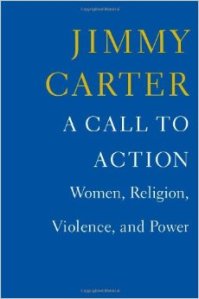
I was very excited to hear about Jimmy Carter’s new book, “A Call To Action: Women, Religion, Violence and Power.”  It took me a few weeks to get it from my local library, as seven others had reserved it before me.  So I just spent the past week devouring it.  Wow, this is an important read!  Click this link to purchase on Amazon.
412hz9LYhDL__SY344_BO1,204,203,200_

President Carter’s book is a “call to action” to reverse the widespread gender violence that is a result of patriarchal systems that devalue women, an epidemic touching every nation.  He makes a case that denying women equal rights has a devastating effect on economic prosperity and causes unconscionable human suffering that affects us all.

The world’s discrimination and violence against women and girls is the most serious, pervasive, and ignored violation of basic human rights…Women are deprived of equal opportunity in wealthier nations and “owned” by men in others, forced to suffer servitude, child marriage, and genital cutting.  The most vulnerable, along with their children, are trapped in war and violence…A Call to Action addresses the suffering inflicted upon women by a false interpretation of carefully selected religious texts and a growing tolerance of violence and warfare.  Key verses are often omitted or quoted out of context by male religious leaders to exalt the status of men and exclude women.  And in nations that accept or even glorify violence, this perceived inequality becomes the basis for abuse. [dust-jacket description]

President Carter dedicated this book to Karin Ryan, “and the countless women and girls whose abuse and deprivation she strives to alleviate.”  I Googled her name and discovered that she is the Senior Project Advisor for the Human Rights Program of The Carter Center.  I love the center’s tagline: “Waging Peace.  Fighting Disease.  Building Hope.”  In reading this book, I was amazed to learn of all that President Carter has done through his foundation to combat disease and suffering.  He is a truly great man and was well deserving of his 2002 Nobel Peace Prize.  Through his work with The Carter Center, President Jimmy Carter (90 years old!) and his wife Rosalynn have travelled to 145 countries and there are active projects going on today in half of them, all to advance human rights.

A true partnership - President Jimmy Carter and his wife Rosalynn work hand-in-hand through the Carter Center.

A true partnership – President Jimmy Carter and his wife Rosalynn work hand-in-hand through the Carter Center.

Stemming from his life-experience as a world leader and devout Christian and an activist for human rights, it is President Carter’s belief that “the most serious and unaddressed worldwide challenge is the deprivation and abuse of women and girls, largely caused by a false interpretation of carefully selected religious texts and a growing tolerance of violence and warfare, unfortunately following the example set during my lifetime by the United States.”  The result is the justification of “gross and sustained acts of discrimination and violence…[that] includes unpunished rape and other sexual abuse, infanticide of newborn girls and abortion of female fetuses, a worldwide trafficking in women and girls, and so-called honor killings of innocent women who are raped, as well as the less violent but harmful practices of lower pay and fewer promotions for women and greater political advantages for men” (pgs. 3-4).

With the adoption of visionary standards of peace and human rights, President Carter believes we should have advanced much farther than we have in equal rights for women and in seeing a decline in gender-based crimes.  In June 2013, The Carter Center hosted a Human Rights Defenders Forum with leaders who are working to align religious life with the advancement of women’s and girl’s equal rights.  And he wrote A Call to Action in the hope that world leaders will adopt the advancement of equal rights for women and girls as a top priority.  This book is dense with statistics, stories and arguments that will convince you that President Carter is right about this sad reality in our world.  I’ll leave you with some of the fantastic quotes that are scattered throughout the book from leaders who were at the Human Rights Defenders Forum.  Please pick up a copy from your local library, or purchase a copy here.

War and violence against women not only have similar social, cultural, and religious supports, they are mutually reinforcing.  These supports allow societies to tolerate conditions in which a third of women and girls can be treated violently, without mass outcry and rebellion.  When we challenge the attitudes and norms that enable violence against women, we also are helping to confront the conditions that support war.  – Rev. Dr. Susan Brooks Thistlethwaite

The principle of treating others the same way one would like to be treated is echoed in at least twelve religions of the world. ‘Others’ transcend gender, race, class, sexual orientation or caste.  Whoever and whatever the ‘other’ is, she has to be treated with dignity, kindness, love and respect.  In African communitarian spirituality, this is well expressed in the Ubuntu religious and ethical ideal of ‘I am because you are, and since we are, therefore I am’–a mandate based on the reality of our being interconnected and interdependent as creation.  Therefore pain cuased to one is pain shared by all.  – Fulata Moyo

As a “Nun on the Bus’ I heard the struggles of ordinary people.  I learned that to be pro-life (and not just pro-birth) we must create a world where all people have their basic needs met.  This is justice.  Governments hold the responsibility of enacting laws that ensure living wages and safety nets for people who fall through the cracks of the economy.  In the United States, both federal and state policy makers must end political gridlock and enact just laws that ensure that all people have access to the basics: food, shelter, education, healthcare, and living wages.  These are pro-life programs.  – Sister Simone Campbell

It’s time for all people of faith to be outraged.  It’s time for our Christian leaders to stand up and say that women, made in the very image of God, deserve better.  And it’s time for us in the faith community to acknowledge our complicity in a culture that too often not only remains silent, but also can propagate a false theology of power and dominance.  There is a growing understanding that women must be central to shaping solutions…There is a new generation of young leaders determined to ensure the bright future of all people regardless of gender.  – Jim Wallis

This is a moment of truth, and people of faith working for human rights must be honest and acknowledge the role our own leadership plays for good or ill.  We must speak out about the power of Islam to affect positive change in the lives of women, girls, and all people.  We must take responsibility to spread this message.  We should not wait for leaders to tell us, we should begin in childhood, at the grassroots, to educate our young about human rights, peach-building, and coexistence.  By raising the voices of the voiceless, here we become a chorus and in sharing our ideas we support each other’s efforts to advance the course of human rights around the world.  – Alhaji Khuzaima

If the [developing] world was a molecule put under a powerful microscope, we would see a complex web of barriers that keep women from fully realizing their inherent human rights and living in dignity.  Strands of this web include barriers to securing property rights; pursuing an education and earning a decent living at fair wages; making decisions about love, sex, and marriage; controlling one’s reproduction; and obtaining health care.  We would also see the invisible DNA that keeps this web intact: a sense of powerlessness, enforced by social coercion, rigid gender roles, homophobia, violence, and rape.  Finally, we also would see that only the women who face these barriers can push them aside, change their own lives, and transform the societies in which they live.  IT is our obligation to support them.  – Ruth Messinger

President Carter ends his book with a 23 point Call to Action, and asks that we participate in these efforts through http://www.cartercenter.org.

  1. Encourage women and girls, including those not abused, to speak out more forcefully.  It is imperative that those who do speak out are protected from retaliation.
  2. Remind political and religious leaders of the abuses and what they can do to alleviate them.
  3. Encourage these same leaders to become supporters of the United Nations High Commissioner for Human Rights and other UN agencies that advance human rights and peace.
  4. Encourage religious and political leaders to relegate warfare and violence to a last resort as a solution to terrorism and national security challenges.
  5. Abandon the death penalty and seek to rehabilitate criminals instead of relying on excessive incarceration, especially for non-violent offenders.
  6. Marshall the efforts of women officeholders and first ladies, and encourage involvement of prominent civilian women in correcting abuses.
  7. Induce individual nations to elevate the end of human trafficking to a top priority, as they did to end slavery in the nineteenth century.
  8. Help remove commanding officers from control over cases of sexual abuse in the military so that professional prosecutors can take action.
  9. Apply Title IX protection for women students and evolve laws and procedures in all nations to reduce the plague of sexual abuse on university campuses.
  10. Include women’s rights specifically in new UN Millennium Development Goals.
  11. Expose and condemn infanticide of baby girls and selective abortion of female fetuses.
  12. Explore alternatives to battered women’s shelters, such as installing GPS locators on male abusers, and make police reports of spousal abuse mandatory.
  13. Strengthen UN and other legal impediments to ending genital mutilation, child marriage, trafficking, and other abuses of girls and women.
  14. Increase training of midwives and other health workers to provide care at birth.
  15. Help scholars working to clarify religious beliefs on protecting women’s rights and nonviolence, and give activists and practitioners access to such training resources.
  16. Insist that the US Senate ratify the Convention on the Elimination of All Forms of Discrimination Against Women.
  17. Insist that the United States adopt the International Violence Against Women Act.
  18. Encourage more qualified women to seek public office, and support them.
  19. Recruit influential men to assist in gaining equal rights for women.
  20. Adopt the Swedish model by prosecuting pimps, brother owners, and male customers, not the prostitutes.
  21. Publicize and implement UN Security Resolution 1325, which encourages the participation of women in peace efforts.
  22. Publicize and implement UN Security Resolution 1820, which condemns the use of sexual violence as a tool of war.
  23. Condemn and outlaw honor killings.

I also enjoyed this review from The Independent, and this interview on NPR.


Thanks for visiting TBKW!  Please “like” us on Facebook!

Linking You Up. You’re Welcome.

I was just catching up with some of my favorite blogs, and thought, rather than overloading our Facebook page (please Like us!) with links, I’d post them all here and let you scroll through for your own reading pleasure.

Kathy Escobar on 10 Tangible Ways We Can Work Toward Equality in the Church.  She gives some great advice for making changes to balance the power between men and women in our churches.

I really liked this post from Tyler Standley : 6 People Who Should be Banned from Evangelicalism (or a lesson in consistency).  He points out that the prominent leaders, or “gatekeepers,” of today’s evangelicalism, who call out numerous Christians as heretics and false teachers for disagreeing on issues like evolution, hell, inerrancy of Scripture, etc., would also denounce C.S. Lewis, Martin Luther, St. Augustine, William Barclay, John Stott, and Billy Graham.  He also wrote this post, The Evangelical Castle, naming some of the current “heretics” under fire.

Mimi Haddad, president of Christians for Biblical Equality, wrote The Bait and Switch of Complementarians.  Here’s a quote:

Please do not tell girls or women that they share equally in God’s image; that they are equal at the foot of the cross; that they are equal in the kingdom of God, that they should cultivate their minds equally, unless you are prepared to give them equal authority to use the gifts God has given them. To do otherwise is to bait girls and women with the truth of Scripture as it points to their inheritance in Christ, and then to switch—to deny them the opportunities to walk in newness of life—in using their God-given gifts with equality authority. To advocate for the education of females based on the aims of Christian discipleship is inseparable from God’s aims for men and women created in God’s image—where both shared authority in Eden (Genesis 1:26- 28); and as recreated in the image of Christ who extends equal authority to his disciples, both male and female (John 20:18-23).

I did post this video on our FB page a few days ago, but it is a MUST SEE, so I’m making sure you see it again!  Sarah Bessey message that You are Not Forgotten.  And here’s an interview she did with The Junia Project about her book, “Jesus Feminist.”  Here’s one of her answers:

“Feminism is not simply about the hot button issues in American evangelical churches – should women preach or not.  It is more about the global story of women – maternal health, education for girls, the status of women in the world today. All these major social issues of our time, clean water, human trafficking or even eating disorders track back to our theology of women. The tag line on the book -the radical notion that women are people, too- is definitely more hyperbolic, but it establishes a baseline.”

Love this picture and quote:

from Silvia Ferreira Photography, 1/2/14, www.raspberryessence.blogspot.com

from Silvia Ferreira Photography, 1/2/14, http://www.raspberryessence.blogspot.com

I’ve enjoyed all of Bob Edward’s posts on The Junia Project.  Here is a fascinating and informative video Bob made, where he addresses the question of “Where did we go wrong?  An in-depth exploration of the emergence of male authority in the church.”  He is coming from the perspective of a social worker and psychotherapist and college professor.  He explains how role modeling, instruction and reinforcement socialize people to make the norms of their environment their own internal norms – how they are supposed to function – and how this takes place in regards to gender.

Here is a painting of the Last Supper that includes 12 women disciples, who are not named as being present at the celebration, but are named in the Gospel accounts as disciples of Jesus who travelled with him.  The artist is John Coburn from Australia.

Sandra Glahn explains that Betty Frieden did not start the “woman’s movement” – Christians did, in The Feminists We Forgot for Christianity Today’s Hermeneutics.

This is an older post, but I just read it recently and loved it! Paul’s Masculine and Feminine Leadership, from Margaret Mowczko.

I won a book from Elizabeth Esther!  It’s not hers…it’s “Spiritual Misfit: A Tale of Uneasy Faith” by Michelle DeRusha.  I can’t remember the last time I won something, so I am pretty excited.  I will definitely review the book here after I read it.  But I did want to share this awesome post from Elizabeth, entitled, “A Tale of Mrs. Judge-y Pants and how she learned that being honest is better than trying to be good.”  She talks about the difference between trying to look good vs. be good.

Ann Voskamp shares beautiful pictures and stories and videos from around the web to give you something to wonder at over the weekend: Multi-vitamins for Your Weekend.

“How to say yes to God with safe faith is no longer enough” is SUCH A POWERFUL POST from Kristen Welch, author of Rhinestone Jesus, on how her Christianity was transformed by a trip to Kenya with Compassion International in 2010.

And finally, here is Rachel Held Evan’s Sunday Superlatives – a list of her favorite blog posts from around the web.

Happy reading!

EDIT: I meant to add this powerful video we watched in church today: Dr. Brenda Scott McNeil on Do What You See the Father Doing.

Stand-Out Mother’s Day Posts

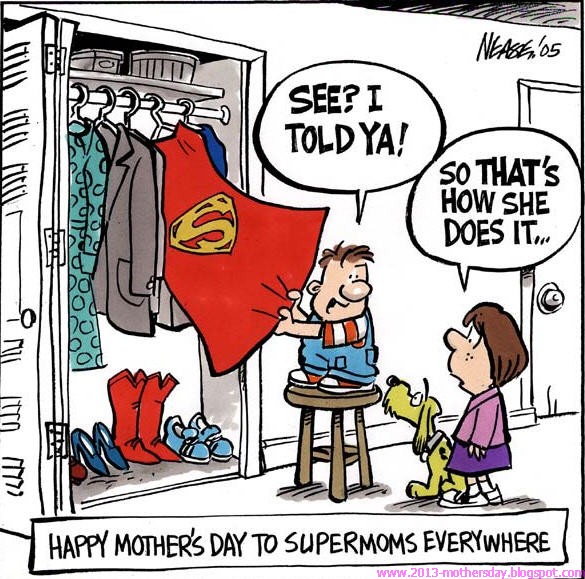
We’ve been sharing great Mother’s Day posts on our Facebook Page, and I decided they warranted a listing here on the blog, as we reflect on our mothers and all care-givers who nurture and love on others.

A poem about motherhood and our feeble attempts to return the favor for our mothers’ innumerable sacrifices.  This will make you laugh and cry:


Because mothers are human beings too…and need lots of grace!:  “This Mother’s Day, Make a List of Reasons You Resent Your Mother – Oh, and then throw it away.” by Ashley Moore for Today’s Christian Woman.

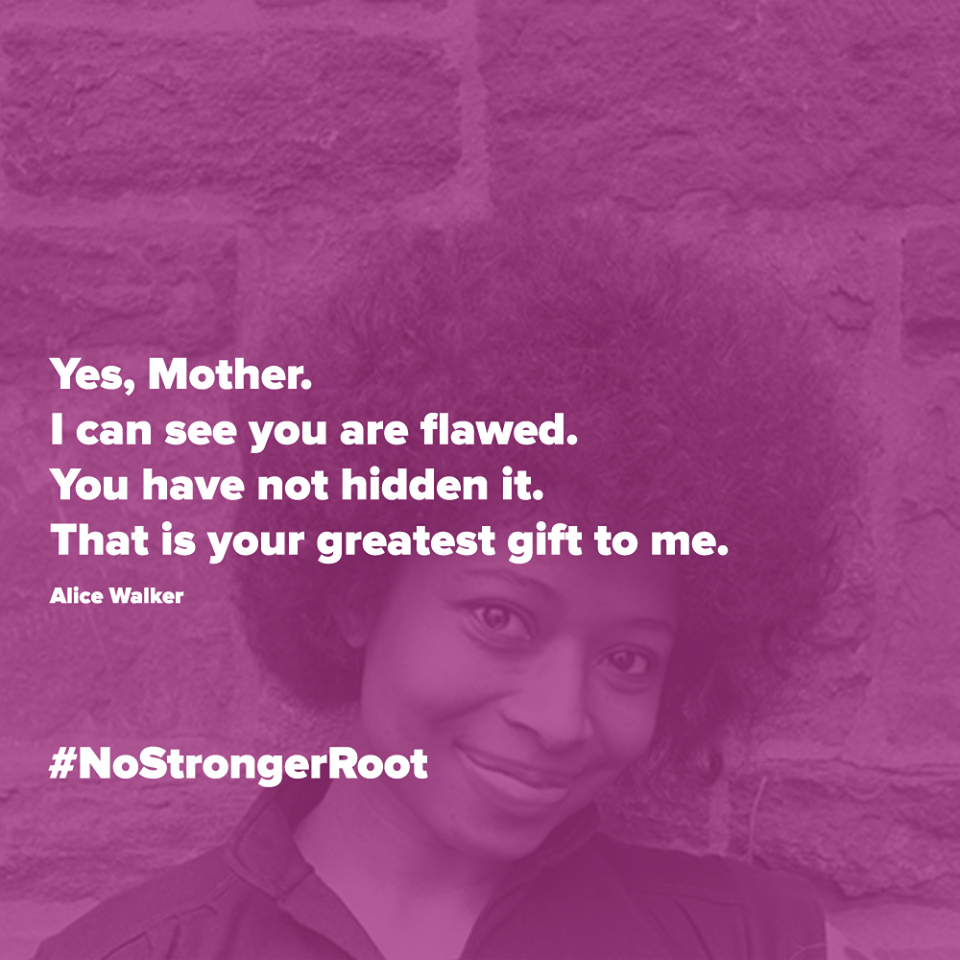
Glennon Melton at Momastery shared this one from TheRoot.com

Glennon Melton at Momastery shared this one from TheRoot.com

Shauna Niequist, daughter of Bill and Lynne Hybels, on “What My Mother Taught Me” – Make space for two callings in one home, one marriage. Don’t let logistics get in the way of calling. It’s not easy, it’s complicated – but everyone benefits when women tap into the passions and gifts that God has given them.

Ann Voskamp’s beautiful piece, “Why Motherhood is Really Just for the Birds.”  Here’s an excerpt:

That’s just the pretty ugly of us — we’re not the Hallmark mother, just the Velveteen Mothers. The Velveteen Mothers who know when there’s a volleys of words and weary silences afterward and everything looks impossibly wrecked —

The angular, hard edges of perfection are being sanded down by all our scrapes and falls, till we’re round and soft and can get close enough to each other to just hold each other.

Only when you’re broken are you tender enough to wrap yourself around anyone.

Only the broken people can really embrace.

That’s us — could we just really hold onto each other?

Find each other and hold onto each other and offer the hug of the broken who know the relief that homemaking is about making a home, not perfection, that motherhood is a hallowed space because children aren’t commonplace, that anyone who fosters dreams and labor prayers is a mother to the child in us all.


This really important bit of advice: “How Not to be Disappointed this Mother’s Day,” from Lisa Jo Baker.  How many of us have unrealistic expectations for this holiday?  Here’s an outstanding excerpt:

We expect and the expecting is high and impossible until it blossoms into full blown entitlement. And entitlement? Entitlement is a very slippery thing. Entitlement believes that we know best, deserve the best, and resents the rest who don’t deliver. Entitlement takes the sacrifice of motherhood and spins it in dizzying, disorienting circles. Motherhood bends. Entitlement demands. Motherhood serves. Entitlement stomps its foot. Motherhood delights. Entitlement keeps lists. Motherhood laughs. Entitlement whines. Motherhood celebrates. Entitlement sulks. Motherhood forgets itself in favor of remembering her dimple, his fastest mile, their mouths all ringed around with chocolate. Entitlement tastes bitterness in every bite of a day that doesn’t go as planned. And the grand irony of a day devoted to remembering mothers is that it can make me forget how content I am in this skin. Because I am not the sum total of breakfast in bed or empty dishwashers. I am not defined by how tidy the playroom is or who remembered to make me a thoughtful card.

Shane Claiborne shared this prayer from Common Prayer:

A Litany to Honor Women

We walk in the company of the women who have gone before, Mothers of the faith both named and unnamed,
Testifying with ferocity and faith to the Spirit of Wisdom and Healing.
They are the judges, the prophets, the martyrs, the warriors, poets, lovers and Saints
Who are near to us in the shadow of awareness, in the crevices of memory, in the landscape of our dreams.*

We walk in the company of Deborah,
who judged the Israelites with authority and strength.

We walk in the company of Esther,
who used her position as Queen to ensure the welfare of her people.

We walk in the company of you whose names have been lost and silenced,
who kept and cradled the wisdom of the ages.

We walk in the company of the woman with the flow of blood,
who audaciously sought her healing and release.

We walk in the company of Mary Magdalene,
who wept at the empty tomb until the risen Christ appeared.

We walk in the company of Phoebe,
who led an early church in the empire of Rome.

We walk in the company of Perpetua of Carthage,
whose witness in the third century led to her martyrdom.

We walk in the company of Saint Christina the Astonishing,
who resisted death with persistence and wonder.

We walk in the company of Julian of Norwich,
who wed imagination and theology proclaiming “all shall be well.”

We walk in the company of Sojourner Truth,
who stood against oppression, righteously declaring “ain’t I a woman!” in 1852.

We walk in the company of the Argentine Mothers of the Plaza de Mayo,
who turned their grief to strength, standing together to remember “the disappeared” children of war
with a holy indignation.

We walk in the company of Alice Walker,
who named the lavender hue of womanish strength.

We walk in the company of you Mothers of the faith,
who teach us to resist evil with boldness, to lead with wisdom, and to heal.

Amen.
The Liturgists shared a fascinating prayer and meditation on “God Our Mother”.  So true that we cannot fully understand God and our language often only impedes us further in that.
And finally, I’ll leave you with this beautiful post from Glennon Melton at Momastery, “Sistering On.”  I love the metaphor and I found myself crying at the beauty of this simple post.  Oh, how I need the support of my sisters!  We all need to love and support one another.