
Please enjoy the first episode of The Beautiful Kingdom Builders Podcast, in which I interview co-founder Becky Buck and we reminisce about the origins of this blog and our Facebook community. We explore our personal journeys of faith, the challenges of deconstructing traditional beliefs, and the importance of love and community in spiritual growth. We discuss the impact of religious trauma, the complexities of gender roles within faith, and the need for critical thinking in understanding one’s beliefs. Our conversation emphasizes the significance of reclaiming identity and voice, particularly for women in high-control religious environments, and the transformative power of love in fostering a deeper connection with God. I hope you enjoy it! Please subscribe on your favorite podcast platform and follow me on Instagram, Threads, Bluesky, Facebook and TikTok for reels and more!
In this conversation, we mention North Harbor Community Baptist Church, our pastors Dan and Lisa Wells, Brennan Manning, and Carolyn Custis James — all great resources and hopefully future podcast guests!
TRANSCRIPT:
Ruth Perry (00:15)
I just want to welcome my very beautiful friend, Becky Buck! We go way back to our time when I lived in Maine. And we are the dynamic duo that started The Beautiful Kingdom Warriors page. I had to look it up. When did we start? It was January, 2014. And so I’m very grateful to have you here, Becky, because I was in a real spiritual wilderness period of my life at the time and it was so lonely. And you filled a huge gap for me being a kindred spirit. And I’m just so grateful for our friendship and our work together on The Beautiful Kingdom Warriors. And I’m excited to like reminisce together and talk about our spiritual journeys together.
Becky Buck (01:04)
Yeah, definitely. I can’t believe it’s been 10 years. That is, that’s wild. I mean, we’ve seen so much since then, you know, moves, transitions, losses.
Ruth Perry (01:07)
Yeah. You’ve had two babies, I think, since we started. You already had two.
Becky Buck (01:21)
Yes, I’ve had two babies. A pandemic. mean, coming back after that, career changes, it’s been a decade. It really has been. Yeah, I was looking back when we were working on the blog and getting main ownership transferred back to you. I was like, wow, this is a trip down memory lane. I tried to go back as far as our first blog and blog entries would go. And it was like, wowzer, we’ve done a lot of growth since even then.
Ruth Perry (01:50)
Yeah, yeah.
So I thought, I want to go back before the Beautiful Kingdom Warriors. And both of us share where we were when we met each other. And so I’ll give you a couple of minutes to like just stew on that question. And I’ll say where I was at the time. We had, my husband and I moved back to Maine.
Becky Buck (01:59)
Yeah.
Ruth Perry (02:13)
after we finished seminary in Massachusetts and after we had had our first son and he was an infant and my dad’s church in my hometown is where we were going and my dad was the senior pastor and my brother was the associate pastor and we went there for a couple of years and then there was a huge church split and it was really ugly and there was a lot of trauma and spiritual abuse that we experienced through that. And so I think that was when Benjamin was a baby.
And he was born in, oh my gosh, 2007. And then between the time that we came to North Harbor Community Church where I met you, so there was like five years where we were basically starting in our hometown of Boothbay, Maine, going to like all the evangelical churches and visiting them. And then we would get involved in them. And there were several churches that we ended up having, like either being asked to leave or being like gently prodded to leave. And so we had additional traumatic experiences with church. And so when we came to North Harbor, spiritually I was very ragged and I was like an open wound. And then I was also deconstructing because in 2010, when I was pregnant with Abbey I had my call to ministry from God and I was a complementarian at the time. The belief that spiritual authority belongs to men in the church and in the home. And so that was causing some painful cognitive dissonance for me. And I started reading books and blogs but in my personal relationships, if I brought anything up like that, it was like I’d get slapped on the wrist by people. Like you’re going out of bounds, you’re headed down a slippery slope. And so a lot of personal
kind of trying to keep me in my place and in my lane. So a lot of those readings and things were just happening privately for myself and kind of lonely. So that’s where I was when we came to North Harbor. I think we got there in 2012. And where was your journey to North Harbor, Becky?
Becky Buck (04:05)
Yeah, I mean, I think a big piece of we were we hit it off immediately because I feel like you and I were both really battered and bruised at that point in our like season of ministry. I think when we both first came to North Harbor, I don’t know if we I guess maybe we were still volunteering on the Kids Cove team. I don’t know if Graham had joined the preaching team yet or if even we had started with worship. But I feel like
We were easing our way back in to serving after also coming out of kind of a toxic ministry situation. So the short answer for how we ended up at North Harbor is community. think when Graham and I moved from Florida back home here to Maine, it was because my two best friends were part of the launch team for North Harbor.
And so Graham served for about two years on staff at a church in New Hampshire as a youth pastor. And I think what was hard about that is we thought even just moving to New Hampshire, somehow we would have community and friends and family, but we very quickly discovered that because we believed in things like egalitarian ways of moving through ministry in the world, because we didn’t really hold to normal upper middle class, I would even say elitist views of students needing to participate in sports and get amazing grades and then go on to Ivy League institutions. We didn’t really push that and you know we were basically pushed out of that first official full-time ministerial position.
When that happened, I was like done with the church because lots of pieces of my story involve, we’ve talked about this before, spiritual and religious trauma through high control, fundamentalist Christianity. And my journey with my faith, I think it’s really hard when you’re hoping for the best because you’re answering the call of ministry and you encounter just pain and disappointment and shame. And I think those were themes that I had struggled with personally, but then to watch Graham go through that for the first time really was like, I was so heartbroken and yeah, so when we made the choice to move back, was to be near my family. We found out my dad was really sick and we wanted to kind of move home to help care for him.
And again, we had community, like we would come visit North Harbor and it was like, that was our people. And I think what made that place so special for us was there wasn’t an expectation for us to get involved. We were just like loved. But that made us then want to be involved, probably a little faster than we should have been. But I think what’s really hard as you grow in your journey of life, deconstruction is a natural part of that. And I think people are very afraid of that and it’s a very hot button topic word that’s being thrown around in these volatile times of just worldwide unrest. And I think it’s not something to be afraid of because a richer understanding of the human experience is what can await you in that because we would not have found each other if we hadn’t been open to the process of growing and questioning and critically thinking together, you know?
Ruth Perry (07:26)
So was it church hurt that started for you, the onion, peeling away the layers of the things that you had been raised with in high control religion? Or was it something else like what radicalized you, Becky?
Becky Buck (07:38)
What radicalized me? I don’t know the Sermon on the Mount. Imagine that. It’s so funny because I was like practicing last week or two weeks ago before, you know, the unfortunate Black Widow incident. So glad that you’re on the mend. That was scary. Yeah, I was in the car and I’m like, she’s going to ask me about my deconstruction journey. She’s going to ask like, what are you going to say? Like, and
Ruth Perry (07:42)
Yeah!
Thank you. Thank you.
This is what I love to talk about. I love to hear people’s story.
Becky Buck (08:05)
Yeah, yeah, same. I mean, that’s why we started this, right? was like a redemptive base for people to have redemptive dialogue about, you know, areas of theology and life that were colliding. Yeah, so I think, well, first of all, I think being born a woman, radicalizes you quickly. Because we don’t know necessarily what is being done to us when that is the norm, right? And I think, I always felt in my spirit that I was a lot. I always related more to my brothers and the men. I was very nurturing, but, and I love hair and makeup, obviously, and fashion and creativity and expression and all of that. And I always had loved that.
what I always joke about like being so young and having like, you know, the tutu with the bow and arrow and a Barbie and a GI Joe. Like that was kind of my childhood. And I think that was humored until I hit puberty. Right. Like the aspects of myself, I was still very praised for my beauty and I was praised for my like performing abilities with like singing and music. Right.
Ruth Perry (08:58)
Yeah!
Becky Buck (09:16)
And so you learn quickly that if you want to belong or if you want to feel good, those are the things that you have to do. And I think when I hit my teen years, that’s when my deconstruction journey began. Because I quickly realized that in high control fundamentalist Christianity, not all voices are welcome at the table. And that was through local church.
That was through youth groups. went to a church school. It was through that. And I don’t want to completely destroy how beautiful my growing up experience was in that in many ways. I had great friends in my very, very small Christian school. We made a lot of great memories together. I met Graham at a Christian camp that I would say was much more liberal, but still women were only allowed to work in the kitchen, the nurse’s office, or admin. They could have admin roles at the Christian boys camp. We were told that we were supposed to be wallflowers, which if you’ve spent five seconds with me you know like that’s it’s not gonna happen.
And I think I never understood, I guess in so many ways I’ve always been moving like the line towards like liberal progressive Christianity because I always felt like I was pushing the boundary of always asking, but why do we do it this way? So like we have dress code, but why? women’s bodies are dangerous, but like what about men though?
Like, so we have to have modesty, but like what are men doing? Like there was just these pieces to my deconstruction journey and the way that my brain works. Like it didn’t add up. It didn’t make sense. Like if God loves everyone, why are we saying like in order to be loved by God, you have to look like this, be like this, perform like this, do like this. So I think my entire deconstruction journey was truthfully just like studying the Bible through a critical lens and being open to hearing from people who didn’t believe the same things as I did. And that was really frowned upon, right?
I mean, I lost friends for reading Carolyn Custis James. Like, I mean, I lost friends because of that, because I was no longer a complementarian. Yeah, so I think the beginning was being born a woman in a high control patriarchal society where it just didn’t add up. It didn’t add up for me like who I was as a person and what I read in the Bible even without knowing Hebrew or Greek like it just it didn’t make sense to what I was being told I had to do and be to what I was like reading. So yeah I don’t know.
Ruth Perry (11:41)
Yeah. You were young because for me, I never questioned complementarianism and I got a lot of positive feedback for myself and like puberty and beyond as being a good Christian girl. And so I never really questioned it until I was, um, after I’d had children basically, or maybe it was actually the day that we got home from our honeymoon. My husband came home for dinner and I was like sobbing and I said, I don’t want to be a housewife. Like finally occurred to me. Wait a second. This isn’t for me. Um, yeah. So I would commend you for being a young person and realizing and asking why.
Like that’s a skill that I just, I didn’t have. And I really admire it in people, the people who are like, what, why? And also, like, I agree with you. I have so much gratefulness that I came from a Christian background. Even if it wasn’t a perfect Christian background, I still don’t think I have a perfect Christianity. I don’t think anybody does. And so that heritage I’m grateful for, but I do feel like we need to have curiosity, and we need to work out our own salvation. And we need to like really test the things that we believe because we’re all wrong about stuff. And I think we were wrong about a lot of things. Yeah.
Becky Buck (13:02)
Right. And I think, for sure, for sure. I mean, I think, yeah, it’s tough. Like one of my words in the current season of life, studying to become a licensed clinical counselor is like duality or like if you’ve ever heard of like dialectical behavioral therapy, right? It’s this concept of radical acceptance that two seemingly opposing truths can be true at the same time. So I can hold gratitude for the friendships and the lessons that I learned through really beautifully loving and kind people who embodied the teachings of Christ, right? I can hold that. And then in this other hand, I can hold appropriate feminist rage for systems of harm that are anti-biblical, that push an agenda that was never the gospel because women are dangerous in many, views within the church.
And I think, yeah, I think that piece is unfortunately the piece that people see, especially in these turbulent times. Like that’s what they see, right? They see just this in your face, high control, Christian nationalist agenda. That’s what people think the church is. Like it’s it’s rough out there, it’s really rough out there if you are somebody who’s really trying to embody the teachings of Christ and kind of let everything else go because the second you put your foot into anything that goes against this ideology. You know, you’re blacklisted from so many things. It’s, it’s, it is a rough, rough world trying to hold that duality. So I don’t want you to hear me say that I’m like, okay with how I grew up and what I was exposed to and what I went through because I carry that spiritual and religious trauma of not being able to trust myself.
In full disclosure, right, one of my first moments in therapy in Graham’s first year of seminary, when I had a really intense emotional breakdown, my work was to order for myself at a restaurant. Like I had such fear and like I couldn’t order from a menu. I would get anxiety about like ordering my own food. I had to like defer to what everybody else was having, why they were having it. I could not make choices for myself. And I think in high control religion as a woman, you’re taught that you can’t trust yourself. If you are born female in high control Christianity, you are immediately marked as less than. You carry evil within you, you carry temptation within you, right? And I think we internalize that.
We are internalizing a message in critical periods of human development that I’m not safe. My emotions, my feelings are not safe. I can’t trust those things. The only thing I can trust is what my dad says and what my pastor says. Those are the only things that I can trust. So I’m being taught that message, right? But still experiencing such rich celebration of who I am between my relationship with Christ growing up, right? So like, I don’t know, like I just, I don’t want to gloss over the duality, you know?
I think it’s really important that we call out systems of oppression for what they are. Even though high control fundamentalist Christianity taught me about community, it also taught me about hate and it taught me about fear and it taught me about separation. And I think that’s something that unfortunately we still see in this giant movement back to what so many of us were fighting against for so long. So, yeah.
Ruth Perry (16:46)
I had a epiphany, maybe there’s two different times when I feel like I had big spiritual awakenings. And one time was after one of my very best friends died at 21 years old. And she had become a Christian when we were in high school. And I had done this discipleship book with her and she was my Christian friend. But then when we went off to college, she IM’d me one day back when we were IM-ing people and said that she was doubting her faith. And I remember like throwing myself on my bed sobbing. I couldn’t comprehend doubting faith. And to me, she was a lost person now. And for a few years, when I went home and we would hang out, I never talked to her about her faith. Cause I was like, so the weight of her salvation was on my shoulders.
Becky Buck (17:11)
Yeah, we were.
Ruth Perry (17:31)
And I was so intimidated and fearful of what a conversation about her faith would be like, that I just never said anything. And then she died of a pulmonary embolism at 21 years old. And I was certain, like I had this like crushing guilt that I failed her and that I did not save her in time. And so that spiritual awakening, came to the realization, I don’t really, I don’t know how I think, I mean, God just revealed this to me, I think that God loved my friend more than I loved my friend. And that God cared for my friend more than I cared for my friend. And that God could have reached her without me, which was like a huge light bulb realization that her salvation wasn’t on me, that it was on Jesus. And so I had this like, new realization that the weight of the world wasn’t on me. God is the one doing the work.
And then around the same time, after God called me to be in ministry and I started reading about women in ministry and rethinking that. And this was right after our home church had split with all my family involved and just a lot of emotional, like it was a really raw time. I came across Brennan Manning on YouTube. He’s the guy who wrote Ragamuffin Gospel. And there’s like old gravelly videos of him preaching with his old like deep voice. And there’s something about listening to his sermons that just broke me wide open. And I was weeping and realizing for the first time that God loved me unconditionally and that I didn’t have to earn anything, that I didn’t have to be a good Christian girl.
Becky Buck (18:48)
yes.
Ruth Perry (19:08)
I could be just a very flawed human being and God would love me. God loves me unconditionally. That realization gave me the freedom to really start deconstructing and having the liberty to question things. Cause feeling like you have to earn your salvation or that like you could go to hell at the like, there’s so much fear in that. And I, the realization that you know what?
I think God is powerful to save. I think that we’ve underestimated what God can do for us and that God is more loving and beautiful than we’ve ever imagined. And it was in that, that knowledge that gave me the freedom to deconstruct. So tell me, Becky, with all of your psychology studies, what is it about love, like feeling loved, that gives you the freedom to be curious about other things?
Becky Buck (19:52)
Yeah, that’s a great question. So I think love equates to safety. And when we feel truly safe, we can experience love, right? It’s very difficult to feel love when you’re not feeling safe. Not that you can’t, but I do think for me specifically, my own journey, like safety has been like a priority for the 15 years I have personally been in therapy. So it is a journey when we look at why love though, right? Like why biologically do we need love?
Well, love is belonging. Love is identity, love is bonding, So that moment that the baby is born, that rush of those bonding hormones and oxytocin, right? That is present in birth and all mammals that give birth. So I think we have to think about that without that bonding, we would die. Just on a purely biological level, like it keeps us alive, right, to desire to be bonded and cared for.
I think in relation really into attachment theory, where that explores how our primary caregivers shape our ability to be secure in relationships, most often in romantic relationships, but not exclusively to that. And so, you know, that love really has to be present and specifically meaning love looks like meeting basic needs, yes, but it also looks like somebody having joy over who you are. Physically touching you. There’s so many pieces to secure attachment. You know, that when I push back or when I go away, you’re still gonna be there and you’re still gonna love me. You know, that’s stuff that we learn.
And I think in faith, I think what’s really difficult in high control religion, is we equate love with transaction and possession, which is not love. And we reward that system with praise. So again, was like the whole looking back at my childhood, there were just things that did not make sense to me. It didn’t make sense to me how I could feel love from the same people that caused me harm. That created in myself a type of attachment called disorganized attachment. And it’s really complicated because people who are your primary caregivers show up for you a lot, but then are also unsafe sometimes in really big ways.
And so for myself, I think it was hard for me to process love because I equated love with chaos and the love of Christ brings peace, right? I think of like perfect love casts out fear. That’s one of my favorite verses. I had a friend once we were having a conversation about what we believed about faith and spirituality and he talked about how his experience of God is that God is love and love is God. So any place that you find love, that’s God. And that just blew me away. That was like four or five years ago. And I was in the thick of some really, really difficult deconstructing life stuff. So I tattooed love wins on my knuckles. ⁓ And that spoke to me in so many ways because that is love, right? Love is showing up. Love is safe spaces and safe places. Love is having hard conversations with people who don’t agree with you, which is why we started this, right?
Ruth Perry (23:08)
Aww. Yeah. Yeah.
Becky Buck (23:30)
and trying to find a way to offer compassion to each other. yeah, psychologically speaking, we have to have love to thrive in healthy mental and socio-cultural ways. Yeah, it has to be there.
Ruth Perry (23:48)
I’m thinking of 1 John 4:7-8 Beloved, let us love one another, for love is from God, and everyone who loves is born of God and knows God. And they that love not know not God, for God is love. Beloved, let us love one another.
Becky Buck (24:03)
Yeah, we have chills. Mm-hmm, mm-hmm, mm-hmm. Yeah.
Ruth Perry (24:06)
Fortunately, that was a song that I sang growing up, so I remember it, because I have the worst memory in the world. But I mean, I’m so grateful for it. Like, that’s a verse that I remember, because I do feel like until you understand love, you don’t really understand God.
Becky Buck (24:14)
Woo! Right, right, because we often associate
Ruth Perry (24:23)
Not that anybody can understand God, but you start to.
Becky Buck (24:27)
Right. Yeah. Well, because God is something when you’re in really high control, fundamentalist Christianity with a headship model and a complementarian model. And I think probably a lot of people who watch this will know what that is. But, you know, headship is in the home where the father figure, the male father figure, that’s the child’s first go-to and the father is accountable to the pastor and the pastor is accountable to God. And so everything is run through the father and I think unfortunately I talk a lot about I lost my dad in 2022 and so the last several years have been a lot of joy and pain as I listen to people’s memories of him.
I am constantly reminded of villains and heroes and how we often, in other people’s accounts and experiences of us, sometimes we’re going to be villains and sometimes we’re going to be heroes. But all of us embody that at one point or another in our lives. And I think in my growing up fear, was a motivator for good behavior. Love as a child felt very far away. I didn’t really see but I think I was also like obsessed with Disney romantic love too. Like there’s a whole piece of that in there that I was like wanting that and very swayed by those persuasions and feelings but yeah I agree. I think God isn’t fear. And I think we were taught that we have to be afraid of God to keep us in line and to keep us compliant, especially as women.
Yeah, that’s an interesting thought, because like, mulling it over We can’t know who God is, if you don’t really experience love or understand love. You’re gonna miss it. Or value it, or value love, you know? You’re gonna miss God.
Ruth Perry (26:16)
Yeah. Yeah.
I mean, I was taught, I think I was 30 something when I had that epiphany. So for 30 years, I had been a Christian and been taught that God is love and God loves you and we’re saved by grace, not by works. I knew all that, but there’s a difference between the words that you’re taught and then the behaviors that you’re conditioned in everybody was rewarded for conforming I don’t think my home churches ever felt like they were high control. But as a child growing up in them, I definitely absorbed.
how to conform and be praised and what was expected and what was valued in that community. And it’s taken a lot of years now to just find my voice like you. I didn’t have a voice. I had a script that I had inherited and I knew by heart and I used my script, but I did not know my own personality or… desires or needs. I was really good at just compartmentalizing that all the way in some hidden recess that I couldn’t reach. And so I was a very golden Christian girl, but that’s a painful thing to undo. It’s really hard to undo.
Becky Buck (27:36)
Yeah, yeah. Well again, because you’re rewarded for being a martyr as a woman, you know, we have the internalized misogyny of, in order to be loved by God, in order to be worthy of love and belonging, you have to die to yourself, right? And that’s praised. So the woman doing all the things in the home, in the church for kids, right? That is praised as pastors wives. That’s what people are like, great job. Like we really want to keep you around because you’re such a utility that we can just work with, you know? So I think for me that was really hard.
I didn’t say this, but when Graham went to seminary, they had a, what do they call it? Wives in ministry? It was wives. They prized the word wives. It wasn’t women, it was wives in ministry and it was like a support group and I kid you not the first one I went to there was a lesson about how to properly set a table for when you’re hosting like different families and things like that. Like literally it was like Miss Manners Club and I turned around and I walked out. I’m like no this is not it. This is not it for me. And I think that also fueled my deconstruction journey was seeing at a seminary, you know, 50 women being put in their place and willingly doing it and not questioning it.
I found that really upsetting because in my experience growing up, like, because obviously I had my mom, like there was tension. There was constant tension in my mom showing up for her family, but being true to herself. And I love my mom for that. she was not going to be controlled. She was not going to conform, but then she like kind of did, you know, but I think I also have to credit her and I have to credit the women in my life who were believers but still brought a voice to the table even when they weren’t supposed to. I think I learned that you have to know how to play the game, that you can have a voice at the table in certain situations and places. But yeah, the script is real. That is a real piece.
Ruth Perry (29:40)
Mm-hmm.
Becky Buck (29:59)
to… I know I feel like we always say it wasn’t that bad. It wasn’t that bad. And then you start to tell your story and you’re like, oh my, I was actually a part of a community that a pastor from a pulpit said that women who wear pants are whores. Children in the service saying that. mean, who, some of those kids didn’t even know what a whore was. Like, and yeah.
Ruth Perry (30:15)
Yeah. My gosh.
Becky Buck (30:23)
It’s crazy to look back and just think how Creator God aligns us to bring healing to the world. I think looking at you and I and our alignment, I think we were both rewriting the script.
Ruth Perry (30:40)
Yeah, and it was really powerful to find a fellow sojourner on the path out there in the wilderness. made it a lot less lonely. You actually like threw a lot of firewood on my fire. Like you got me so revved up and so passionate. And I was like, you know what? This has to change. We’re gonna change the world, Becky.
Becky Buck (31:01)
Yeah. We’re just, it’s what we do. Just one brave truth at a time. One brave truth at a time.
Ruth Perry (31:09)
We should have recurring conversations because you’re a wealth of knowledge and expertise on this and just such a beautiful soul and your heart is bigger than anybody else’s. You have so much love and passion and a heart for justice and making things right. Which I feel like that’s straight from God and that’s a mission and the Church is blessed to have you. And I hope more people tune in and join us in this I don’t know that I like the word deconstruction, but I don’t have another one. So just question the script that you’ve been given because… Yeah! Yeah. Yeah.
Becky Buck (31:54)
Just call it critical thinking, where we’re exploring critical thinking skills together, because that inevitably leads to deconstruction.
Ruth Perry (32:03)
Yeah, things aren’t as black and white as we were told. There’s room for questions. And wrestling with your faith is a biblical thing to do, so.
Becky Buck (32:11)
Mm-hmm. Yep.
Ruth Perry (32:12)
Before we say goodbye on this one, can you tell me about where the name The Beautiful Kingdom Warriors came from?
Becky Buck (32:19)
yes, can I tell you that? Well, I remember us wanting to start this blog. You talk about me lighting a fire under you, but your spirit spoke to me about just being willing to be wrong, being willing to shift and change gears and perspectives. And I think, you know, we both knew that when we met, we were supposed to do something with our experience and our stories.
I guess originally because we really geared this more towards like women in ministry and debunking, complimentarian faith, the word beautiful came to my mind, because like, that’s such a hot button word in the church as a woman, right? Like if you’re too pretty, you’re going to distract the men. But if you’re not pretty enough, you’re not trying hard enough to get a husband. So there’s this really distorted view.
Ruth Perry (33:08)
Or you’re not trying hard enough for your husband that you already have.
Becky Buck (33:11)
Also true. So I think reclaiming that word under the lens of an egalitarian worldview. And then warrior comes out of, a very misunderstood translation when in Genesis when, you know, it’s the account where like basically scriptures are written as like you know God made a helper for Adam and this is a weapon that complementarian people use and high control religion and fundamentalist Christianity and all of that use to say that that headship is biblical right like God created men men then is told that he will have a helper.
So like a woman has to come under. I always was described it as like God, men, women come under the mission of the men in their lives. So first their fathers and their pastors, and then when they get married, that then becomes the umbrella that they’re under to come under their husband’s for furthering the gospel. And so that also never sat well with me.
Right, remember Little Becky with the bow and arrow and G.I. Joe and Barbie, like I have a warrior spirit within my soul. And I think, a big piece of my deconstruction journey was reading the book Lost Women of the Bible by Carolyn Custis James. And at that time, her husband was the president of Reform Theological Seminary where Graham was at. And so she took a massive hit in writing this book, basically debunking headship and pushing forward God’s truth for women and celebrating and empowering women as equals in life and ministry.
And I think she basically opens the book and kind of talks about that word helper. And it’s translated as ezer and it means yes, helper, but in the Hebrew, it actually means more of like co-laborer or co-warrior. And I think it’s 16 other times that it’s used in the Old Testament in reference to God coming and helping in battle. So it’s this visual of a man and a woman being back to back in battle, keeping an eye out for one another to fight for safety for whatever they’re fighting for. And I actually have that tattooed too.
Somewhere, nope, not that arm. This arm, this arm, some arm, this arm. I don’t think you can see it, but it’s there somewhere. I don’t know. I don’t know how to move it. But I think that was reclaiming that word, right? Through that knowledge received from the Lost Women of the Bible book. And I think it’s such a powerful visual that’s inclusive of everybody in how.
Ruth Perry (35:32)
Yay! Yeah!
Becky Buck (35:53)
whether it’s a romantic relationship, friendship, whatever it is, men and women are meant to work together, back to back, to co-warrior in sharing light and love and truth.
Ruth Perry (36:08)
I think Carolyn Custis James uses the phrase Blessed Alliance to explain what the relationship between men and women ought to be in God’s kingdom. And it’s like such a misrepresentation of egalitarianism that women want to be above men. Like we want to be free to use our gifts and follow our callings and be a part of building God’s kingdom here on earth as in heaven. And it’s about an alliance. It’s not a competition. And really the curse is where the dominion of man came over the woman. So we don’t want to live out the curse. We’re supposed to like live in the resurrection, redemption, history of Jesus now. Like in the kingdom of God, we should not be living under the curse.
Becky Buck (36:38)
right. Yeah, yeah, think, yeah, I think when we chose the Beautiful Kingdom Warriors, that was kind of the thought behind that. And I love how you kind of shifted it to be builders, right? Because that has more of a peace lens, which we need in this world.
Ruth Perry (37:00)
Yeah. Yeah, I was getting a lot of comments from people, why are you using such violent language? like, well, I mean, it was more like drawing from the imagery of the Bible and the, but yeah, I think they both, I like both names.
Becky Buck (37:17)
Mm-hmm. Yeah, well I think you’re, you know, the, the, I don’t even know what we call it, the blog, the company, the, what is it? What is it even now?
Ruth Perry (37:29)
Yeah, I just always call that a blog. I don’t really know.
Becky Buck (37:32)
I feel like it did its job and now it’s being birthed into something new. And I think it feels like it’s moving towards a more inclusive space where it doesn’t have to be as feminine driven, like in terms of what it needed to be to start for both of us to find a place for our voice and to help other women struggling with feeling like they didn’t have a place and that they were too much and not enough.
Ruth Perry (38:02)
It’s like once your dominoes start falling, you realize, well, actually, you know, patriarchy is linked to white supremacy, is linked to colonizing, is linked to this, is linked to that. And you’re seeing like how everything is interconnected because anything that’s like about supremacy of one over another is anti-God’s kingdom, I think.
Becky Buck (38:13)
Mm-hmm. Agreed. Totally agree. Because people use religion as a weapon, right? In my anthropology class when I went back to school, which was also a huge piece of my deconstruction journey, was like going to a secular university for the first time in my entire life. But it has made me so full and like clear in my vision and purpose and who I am and who I want to become. Like I could not have done the work that I needed to do to get to this point in my journey. the professor, the first day of class, she started by saying, beware of ideology. I didn’t even know what ideology was. I think when we say it has to be this way and only this way or else.
The or else is a problem. And you’re absolutely right. Like we can’t look at egalitarian belief in ministry and then not talk about issues related to like systems of oppression 100%. Like, yeah, I’m in full support of that. you can cut this out if you want to but I even hesitate to call myself a Christian at all these days. and it’s not because I don’t believe in the love of God and the person of Christ like bringing that truth through his life and death and resurrection. But yeah, I think the Christian nationalist movement has defiled the name of Christianity and Christian. And there were atrocities and terrible things that the Protestant faith and the Catholic Church did, again, weaponizing ideology for power and control and colonialism.
Yeah, maybe I would just end that with beware of ideology because it’s serving someone. That ideology that you are screaming in the streets taking bullets for, that is serving someone else who is not in the street taking bullets, right? And I think that’s where the critical thinking lens is really, really important in offering compassion and understanding to one another, but also being willing to be wrong and to pull back and say, like that wasn’t okay that that happened in history or in my past or path. Yeah. Yeah.
Ruth Perry (40:45)
The truth will set us free. It doesn’t help to be defensive or defend like the indefensible. It’s better just to shine a light on it.
Becky Buck (40:57)
For sure, for sure. And we talk a lot about like moving the needle, right? So I think it was Lisa in one of her sermons that that always stuck with me. You’re either moving towards a growing relationship with Christ or like moving away from that.
Ruth Perry (41:15)
I remember her saying that the day that we went to the youth group and that you and I shared about ezer and Genesis and she had her lesson first and I remember her talking about that with the kids and then I remember us talking and then if I remember correctly maybe Kian or Marissa had like a gecko or some lizard that they named Ezer and I was like really honored.
Becky Buck (41:36)
I love that. I love that.
Ruth Perry (41:37)
And I also remember while we were at North Harbor, think between you and I causing such a stir over women’s equality that they changed Lisa’s title from director to pastor. And I felt like that was so exciting. And now North Harbor has a female lead pastor. It’s like just.
Becky Buck (41:51)
They did. They did. I have chills from that. Yes. Yes, yes, Patty is,
Ruth Perry (42:00)
You and I speaking up and this being the thing that we’re passionate about. I mean, you can like really change a culture. And so it’s really powerful when we talk, tell our stories, ask our questions out loud. It’s powerful.
Becky Buck (42:03)
That makes me cry.
Yeah, and to not be afraid to think about who’s missing at the table, right? If we’re going to say that love is God and God is love and God loves the world, then the world should be represented at our table equally across the board. So if there are people missing at the table, there’s a reason why they’re missing. And I think not being content and asking the hard questions paves safety to experience love and belonging.
because now you’re safe enough to critically think and explore and deconstruct and you’re in a safe place to do that. And then again, inevitably love wins. And so you come to a place where more people’s voices are at the table and more work can be done creating places where people can belong and they are no longer feeling oppressed. They’re no longer feeling less than. And yeah.
I agree. I think it’s so powerful how one voice can turn to two voices, can turn to hundreds and thousands of voices just by asking the questions and finding that truth and that light together.
Ruth Perry (43:17)
Man, this was a really beautiful episode and I’m just so grateful for you, Becky, and I love you so much.
Becky Buck (43:25)
I love you too. I’m so, so grateful that we have reconnected and got to kind of celebrate where we came from and where we’re at. And maybe we can kind of revisit where you want to take this next. I don’t know.
Ruth Perry (43:37)
Yeah, let’s do this again soon.
Becky Buck (43:40)
Definitely.
Ruth Perry (43:41)
Alright, thank you. Bye.
Becky Buck (43:43)
You’re welcome. We did it!
Thank you again for celebrating the birth of the Beautiful Kingdom Builders Podcast with me! I am so excited to continue having redemptive conversations about gender, justice, abuse and healing in the Christian faith. Subscribe so you never miss an episode!

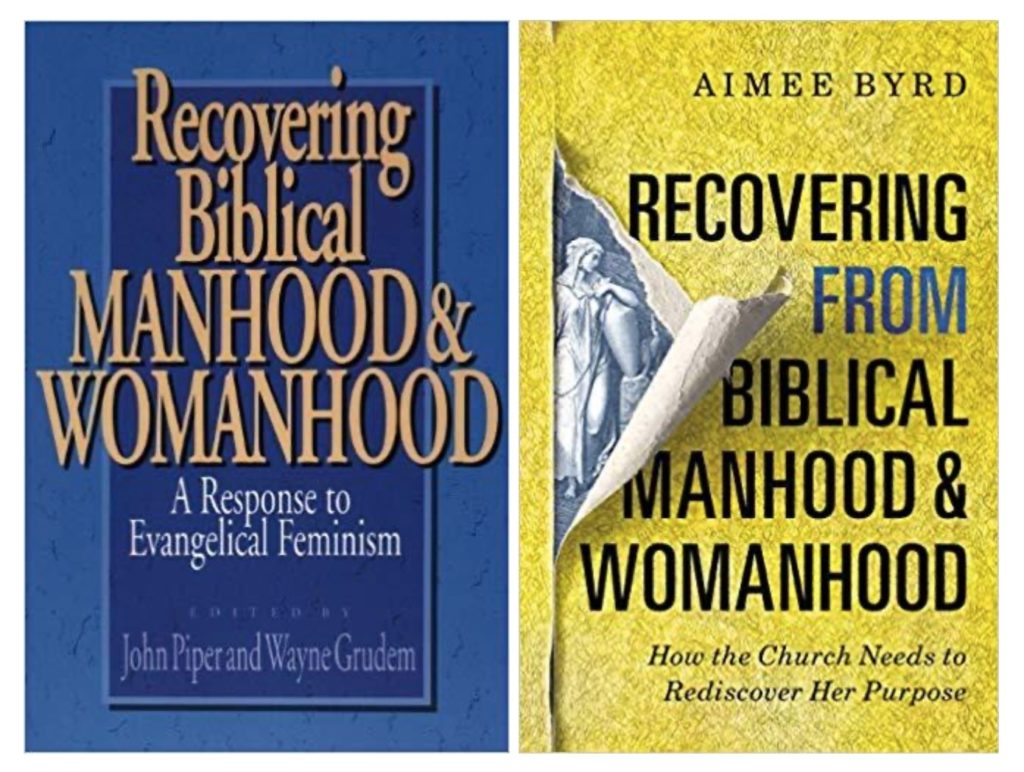 harmful subjugation of women through the work of the Council on Biblical Manhood & Womanhood (CBMW) founded by Wayne Grudem and John Piper and other prominent complementarian pastors, and their definitive tome,


 The Beautiful Kingdom Builders