
I received a question this week from a very dear friend, asking for recommended Christian books to read that would provide guidance and that would shed light on God’s will as she and her boyfriend are considering marriage. This was on Tuesday and I have been mulling the question over in my mind since then. When Logan and I got married, I didn’t do any homework before-hand. We dove in head-first and love-blind, and then when marriage was HARD (right off the bat!), I started reading whatever I could get my hands on.
Looking back, all the Christian marriage books that I read were from a complementarian perspective. Some that I can remember were, The Sacred Marriage; His Needs, Her Needs; For Women Only; The Most Important Year in a Woman’s/Man’s Life; and more recently, This Momentary Marriage. I learned many wonderful lessons from these books, but the stand-out would have to be The Five Love Languages. 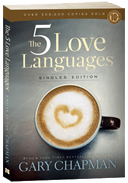 Leaving gender-stereotypes behind for five general love languages that apply to everyone in their own unique measure = pure gold relationship advice. In the book, Dr. Chapman says, “The one who chooses to love will find appropriate ways to express that decision every day,” and he explains five love languages we each speak more or less fluently: words of affirmation, acts of service, receiving gifts, quality time and physical touch.
This June will be Logan and my tenth wedding anniversary, and we are now in our fourth year of living out marriage from an egalitarian perspective. I’ll share a few links at the end of this post to articles and videos describing egalitarian marriage. In dating, one of the most important things you can do is rely on “your people” to tell you what they think of your potential mate. Love is blind, so ask people for honest feedback about what they see from their unbiased, emotionally uninvested vantage point. Since I can’t do that for you without meeting the guy myself, I’ll be more general here. My greatest bit of advice that I have to pass along to a couple who is considering marriage and wanting to start from a great place is, examine two things: your theology of gender and your families of origin.
First of all, let me briefly explain why I say examine your theology of gender. Many Christians like myself have grown up in a patriarchal church and family, were taught about headship and submission as God’s perfect and orderly design for families, and probably had parents who displayed traditional gender roles. If this is the case for you, you likely have a good understanding of the complementarian perspective on marriage. Go ahead and test it against the whole of Scripture and pray for God’s direction in the matter. Before you settle on the DNA of your marriage, do the work.
Like I said, I didn’t do any homework before marriage, and neither did Logan. We had underlying expectations stemming from our upbringings, and we immediately fell into complementarian roles. I believe there are couples who are naturally gifted and disposed to fall into roles that fit the complementarian model. These couples probably attribute their happiness directly to their faithfulness to the spiritual leader role of the husband and the help-meet, submission role of the wife. My experience in trying to live as a submissive help-meet was disorienting, diminishing and hurtful. It was a role that I fell into effortlessly, as I interpreted the Bible from a complementarian perspective and also as it was modeled for me by my parents. I am a naturally easy-going person who defers easily to others, so I was baffled by my unhappiness in that role. But what was most painful was ignoring my own leadership giftings, my own dreams and aspirations, my own experiences and wisdom, to focus on my husband’s role as ‘the boss.’ What it felt like to me was that I was the child and he was the parent.
The sense that I was losing myself in marriage began immediately after our honeymoon. I had been a very happy single person with a rich life of work, community and minisitry. I hadn’t processed how my life would change in marriage, so it hit my like a ton of bricks when we came home from our honeymoon. The first day that Logan went back to work, he surprised me for lunch and found me sobbing, telling him that I didn’t want to be a house wife!
The reason why this season in our marriage lasted six years was that it took that long for us to realize it wasn’t God’s design for our marriage. And we didn’t come to that realization on our own. We were confronted with it when I experienced a nearly audible call from God to be Logan’s co-pastor when we church planted. That happened during the early months of 2010 and I started reading books about women in ministry and I came alive with passion and excitement for my life! I shared that journey in this post. I think Logan’s initial response to this dramatic change in his wife was to feel threatened, but over time we’ve developed a beautiful partnership and our relationship makes more sense now. We really are a great team and our two heads are better than one! Like most couples, Logan and I are extreme opposites in many ways. Before, I always felt like I had to deny my own personal preferences, needs, and nature and defer to his. Now, our two personalities are complimenting each other as they never did as “complementarians.”
I just came across a similar story from a couple who changed to egalitarians half way through their marriage. It’s well worth your time.
There has been a huge movement in Christianity fueled by The Center for Biblical Manhood and Womanhood that I believe has distorted the truth of the Bible and has set pharisaical rules and roles and demands upon men and women that are simply not “Biblical” and in fact, deny aspects of our humanity in a hurtful way. Something that never sat right with me, in all my years in the complementarian camp, were all the Biblical exceptions to these rules. For a book that was written within a patriarchal culture that subjugated women to a lower caste, the Bible is rife with tales of women of valor. Here is a great list of “25 Biblical Roles for Biblical Women.” I believe the tide is shifting in Evangelicalism away from these teachings, but I would urge you to consider another perspective if this is the position you’ve been taught or have experienced.
My second bit of advice is to examine your families of origin. I recenetly read that if we want healthy churches, then we need to resolve the issues from our families of origin. We are living in a fallen, broken world. There is no such thing as a perfect family, and we all bear some baggage that oftentimes we are unaware is there. Our personalities are fully formed by the young age of three years old! 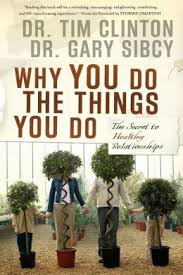 In the book, Why You Do The Things You Do: The Secret to Healthy Relationships, Drs. Clinton and Sibcy explain that we are all born asking two questions: Am I worthy of love, and Can I trust others to meet my needs? Depending on our earliest relationships (mother, father, siblings, caretakers, etc.), we find the answer to those questions and our conclusions are hard-wired into our expectations for life and those become self-fulfilling prophecies for the rest of our life. Logan and I were functioning out of deep, hard-wired, unexamined expectations for years. It was when issues were surfacing in extended family that I began reading Christian psych books and began to learn so much about family dynamics that we had brought into our marriage. I recommend reading Safe People: How to Find Relationships That Are Good for You and Avoid Those That Aren’t, and Boundaries: When to Say Yes, and How to Say No, both by Dr. Henry Cloud and Dr. John Townsend. I recently read, Emotionally Healthy Spirituality by Peter Scazzero and cannot recommend this one enough. He explains how his walk with Christ, his marriage and ministry were revolutionized when his wife “quit” living the lie that everything was fine and began a journey to find true freedom in Christ (she’s got her own book, I Quit: Stop Pretending Everything is Fine and Change Your Life!).
Also, one last thought. Have you considered not marrying? The church has placed marriage on a pedestal that it simply doesn’t belong on. The idea that Biblical Womanhood is to be the dependent help-meet to her husband and to bear children in order to build God’s Kingdom is actually refuted by Paul in 1 Corinthians 7 (emphasis mine):
32 I would like you to be free from concern. An unmarried man is concerned about the Lord’s affairs—how he can please the Lord. 33 But a married man is concerned about the affairs of this world—how he can please his wife— 34 and his interests are divided. An unmarried woman or virgin is concerned about the Lord’s affairs: Her aim is to be devoted to the Lord in both body and spirit. But a married woman is concerned about the affairs of this world—how she can please her husband. 35 I am saying this for your own good, not to restrict you, but that you may live in a right way in undivided devotion to the Lord.
36 If anyone is worried that he might not be acting honorably toward the virgin he is engaged to, and if his passions are too strong[b] and he feels he ought to marry, he should do as he wants. He is not sinning. They should get married. 37 But the man who has settled the matter in his own mind, who is under no compulsion but has control over his own will, and who has made up his mind not to marry the virgin—this man also does the right thing. 38 So then, he who marries the virgin does right, but he who does not marry her does better.[c]
I only make this point to emphasize that marriage is not a necessity in being faithful to God. Make sure you’re looking for marriage for all the right reasons. My single friends and mentors have untold numbers of spiritual children that they are able to nurture and invest in that I simply would not have the time to reach as a busy mother and wife. Many people are looking to marriage to fulfill their natural longings for connection and love, but you can fulfill those longings in your relationship to Christ and in your loving relationships with others. Our church just did an excellent 8 part series on sexuality that you can find at northharbor.net. I would urge you not to be on the lookout for someone to marry as though you are filling an open position, but find contentment in your singleness and only marry if it seems like your marriage to this particular person is an option too good to pass up.
The point of marriage is not to display the Gospel to the world in your fulfillment of the headship/submission roles, as we are often taught in complementarian churches. I firmly believe that hierarchy in marriage does not stem from creation order, but rather is a result of the curse (Genesis 3:16). The point of marriage, rather, is to partner as co-warriors (ezer kenegdo is literally translated “a strength or warrior corresponding to,” not “a helper suitable to”) in bringing the world into submission to God (Genesis 1:28). The point of marriage is to love one another, submit to one another, serve one another. “People will know you are Christians by your love” (John 13:35), not by your wifely submission to the authority of your husband by virtue of his maleness. You have more to offer to your husband than a clean house, good food, frequent sex and encouraging words. You can be a strength corresponding to him in spiritual warfare. Your spiritual giftings need to be nurtured, developed and pursued just as much as his own. In this way, your marriage will be a force to be reckoned with in your community.
I hope these thoughts are helpful to you as you walk through this journey and perhaps make a decision that will change the course of your life! There aren’t too many of those decisions we make in life! I am so thankful that Logan and I have discovered God’s true intentions for our relationship and we are walking in mutual submission and love for one another. Our family and our future are blessed by this new dynamic in our marriage.
Here are a few links to helpful articles and videos on egalitarian marriage. There are more on our Links and Videos pages.
Egalitarian Marriage: What it Looks Like – Jonalyn and Dale Fincher
Empirical Data in Support of Egalitarian Marriage – Dennis Preato
Is Marriage Really an Illustration of Christ and the Church? – Kristen Rosser
Video: Who’s the Boss? – Greg Boyd
Video: Geri Scazzero at New Life’s 2013 Premarital Workshop
Video: How to Get a Date Worth Keeping – Dr. Henry Cloud
Rachel Held Evans wrapped up a mutuality series with this list of resources, and in another post, she asked her readers for recommendations on egalitarian marriage books, and here is that comment thread.
Blessings to you on your life’s journey!!!
Anyone have some additional advice they could share? Please leave a comment!




 The Beautiful Kingdom Builders