Tag Archives: Christian

Finding Healing from Codependency

There is a proverb that says, “I went up to the rooftop to find relief from my pain, and saw that all the other houses were on fire.”  I have learned over time just how true this is.  Even those who appear the most put-together are dealing with pain, symptomatic of the brokenness of our world.  We all need healing and restoration to God’s intended fullness of life for His beloved children.

You are God's delight

We live in a fallen world and are socialized from a tender age to believe many lies about who we are and what we should be and do.  Our parents may have the best intentions to protect us from these lies, but there are lies deeply embedded in their own psyches.  We strive to attain cultural standards of ideal womanhood and manhood in ways that can be contradictory to God’s plan and design for our lives.  We are all hurt by messages that are antithetical to the Good News that Jesus has redeemed His creation and we can live a life of wholeness and abundance.  In John 10:10, Jesus says,

The thief comes only to steal and kill and destroy; I have come that they may have life, and have it to the full.

I read this post last week about how Christian girls and women are socialized to be codependent doormats in the name of “biblical womanhood.”  The author says,

Most materials and sermons I got from Christians in my girlhood emphasized that the only way a girl or woman could be pleasing to God was to be a doormat to other people. Meaning, many hallmarks of codependency are present in this teaching, such as:

  • It is biblical or good for a girl or woman to be passive

  • Getting one’s needs met is selfish; showing or feeling anger is wrong and un-Christian

  • One should always care about other people’s feelings, needs, and wants more than one’s own

I was reminded of one of my favorite posts of all time, “Ex Good Christian Women” by Kathy Escobar.  She shares two lists of qualities present in “Good Christian Women” and “Ex  Good Christian Women” that are spot on.  She says,

“Good Christian Women”

  • rarely engage in conflict
  • are terrible at saying “no” because it feels selfish
  • know how to say the right things, do the right things, to keep the peace
  • continually strive–and i do mean strive–to be a better wife, better mother, better christian
  • live with a feeling that God is disappointed with us somehow
  • feel a lot of shame for who we are and who we aren’t (but rarely say it out loud)
  • doubt our leadership, feelings, gifts, dreams
  • dwell on the things we should be doing differently or better
  • view anger as sin
  • always seek permission

“Ex Good Christian Women”

  • are learning to show up in relationship instead of hiding
  • engage in conflict instead of avoid it
  • say “no” with less-and-less guilt and say “yes” more freely, more honestly
  • tell the truth
  • respect anger
  • are honest about shame
  • live in the present
  • are beginning to believe we are “enough”–here, now
  • open ourselves up to dreams & passions & living out what God is stirring up in us
  • lead & love & live in all kinds of new ways, with or without permission
  • are discovering that God is much bigger than we were ever taught & loves us more than we ever knew
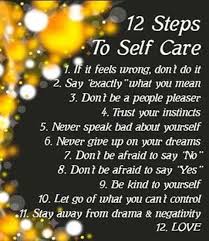
Self-care-steps

Oh, how I relate to these posts.  I was raised in a patriarchal church culture that negatively impacted my understanding of God’s will for my life.  I was a poster girl for these ideal qualities:  being always sensitive to the needs and feelings of others (while being completely out of touch with my own needs and feelings), deferring to others (while not developing my own gifts of leadership), a helper (who could never ask others for help), an empathetic listener (who was always stoic and would never open up about my own emotions).  I always believed that I was living up to “biblical” ideals of femininity and God’s design for women.  I now understand that many of the cultural messages I received about “biblical womanhood” were actually lies and were stealing, killing and destroying me rather than giving me an abundant and full life in Christ.

Codependency is “the disease of the lost self.”  When you are arranging your life around the thoughts, feelings and needs of others, you completely lose touch of your own identity.  Another phrase to describe this is “people-pleasing.”  I have slowly found healing and have found my own voice through many years of reading.  Here are the books that have had tremendous impact in my life, leading me away from codependency and towards fullness and finding my identity in Christ as a beloved daughter, just as I am (listed in the order that I read them):
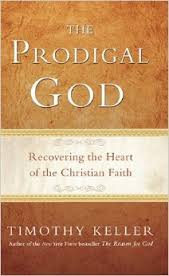
prodigal god

Logan’s cousin who ministers in a homeless shelter in Philadelphia gave us a copy of Tim Keller’s book, “The Prodigal God” when we were visiting over Christmas five or six years ago.  I read it aloud to Logan as we drove back to Maine, and my mind was blown away with a new understanding of this parable.  We are taught “The Parable of the Prodigal Son,” but really Jesus was telling a story of two brothers whose hearts were in the same condition, one who broke all the rules and one who obeyed them all with the expectation of receiving something in return.  Jesus’ story demonstrates that both were loved by their Father with a prodigal (i.e. extravagant, generous, lavish, etc.) love.  This book began to chip away the performance, works-based religion that I was living.  I recognized my similarity to the second brother who was obeying all the rules on a conditional basis.  “I do for you…what will you do for me?”
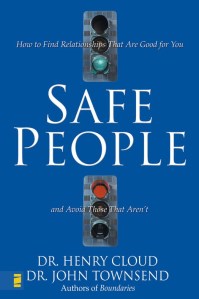
safe-people

Around the same time, my church family was in turmoil and conflict, and I was hurting deeply because church has always been my second home and I was facing rejection and shunning that was traumatic beyond words.  I don’t remember how I found this book…but I do remember devouring it and buying copies for everyone in my family.  I had always been a trusting and open person and was for the first time realizing that there were toxic people in the church who could be abusive, controlling and manipulative.  “Safe People” describes characteristics of emotionally healthy/unhealthy individuals.
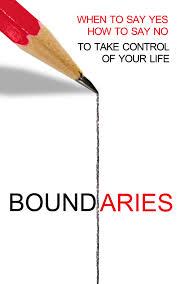
boundaries“Boundaries” taught me even better that in the name of loving others, I had drawn very loose boundaries in my life, allowing the needs of others to trump my own needs.  I was always saying “no” to myself and “yes” to others, with no limitations to what I would give up for others.  I had to learn that there are personal property rights around my physical, mental and emotional boundaries.  I do not owe other people control over my choices, feelings, thoughts, and words.  I do not need to feel selfish or guilty for saying “no” to taking others’ responsibilities on myself.
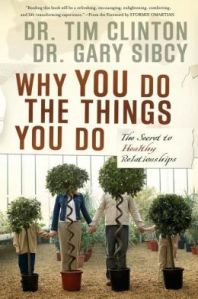
why you do the things you do book

I picked up this book, “Why You Do The Things You Do”, from my niece’s pile of books she brought home with her from college one holiday break.  This book taught me that there are two questions we all come into the world asking:  Am I worthy of love?  and Can I trust others to meet my needs?  According to our first relationships as helpless infants and into childhood, we internalize answers to these questions that affect us for the rest of our lives.  Using research and data, the authors describe four primary patterns of relating to others that stem from our upbringing in our family of origin.  In reading this book, I learned about myself and others in a powerful way, and there is  a lot of helpful information on “emotional coaching” for your own children.
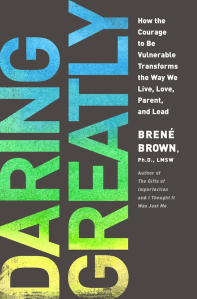
daringgreatly_final525-resized-600

A couple years ago, I went through a phase of listening to several TED Talks every day while I was working, which introduced me to the amazing Vulnerability and Shame talks by Brene Brown.  So when I saw that she had written a book to share her research and findings in a comprehensive message of how to “live wholeheartedly”, I ordered it immediately, and then couldn’t put it down!  I learned to be kind to myself, to show up in life rather than cower behind insecurities and fear.  I learned priceless lessons on teaching worthiness to my children.  I learned how shame will keep you living small while vulnerability will not make your life perfect, but it will make your life great.

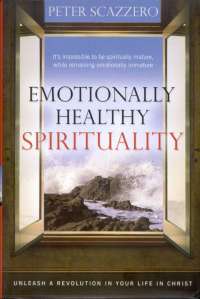
I know that it was God who directed me to EHS-bookCollette Pekar’s Tuesday morning Bible study.  While these books and many other videos and articles online have helped me to find healing from codependency, it was being in small group with a wise counselor who helped me to verbalize and process the things I was learning about healthy relationships that really made the greatest impact.  I cannot encourage you enough to find fellow warriors to pursue healing with.  One fall, our group read this book together by Peter Scazzero.  He demonstrates that we bring the dysfunctional patterns of our family of origin into our adult life despite our “new life” in Christ, and there is work to be done to shed the lies that keep us from living in an emotionally healthy spirituality.  In learning to do the work of chipping away these issues and in learning healthy habits of caring for yourself, you will begin to experience an abundant life!

It is our hope here at The Beautiful Kingdom Warriors that we will be a help to you in your spiritual journey, as we journey together.  Please add your recommendations for healing from codependency and other family of origin issues in the comments!  And “Like” us on Facebook for regular posts on gender issues in the world and in Christianity.  Thank you for stopping by!

February Link-Up, “50 Shades of Grey” Edition

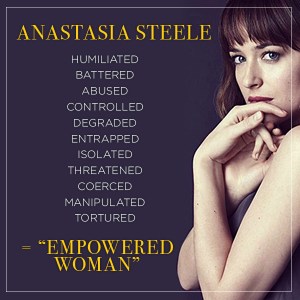
Today is the long-anticipated release of 50 Shades of Grey in American theaters. As I work on this post, people are sitting in theaters being entertained by an abusive relationship in which a woman is battered, degraded, coerced and tortured under the guise of “romance.”

TBKW firmly stands against the dehumanization of God’s children, in any form. Here are some excellent articles on the topic of this cinematic blight on society:

ACTIVISTS SAY SKIP 50 SHADES AND GIVE TICKET MONEY TO A WOMEN’S SHELTER – Take Part, Liz Dwyer

The campaign was started by women from Stop Porn Culture, the National Center on Sexual Exploitation, and the London Abused Women Centre in Canada. It’s inspired by 50 Shades Is Abuse, an effort begun nearly three years ago by Natalie Collins, a British advocate for domestic violence victims. She and other activists worry that the flick will send women the message that being stalked, controlled, and manipulated by a significant other is sexy and romantic.

50 SHADES OF BROKEN – CBE, Jenny Rae Armstrong

There are cultural, psychological, and even physiological reasons why some women gravitate toward threatening “heroes” or violent sexual fantasies. Women’s bodies respond to perceived sexual threat by becoming physically aroused. It’s a defense mechanism to minimize injury if they are assaulted.4 Knowing this may help us understand how fiction that celebrates sexual violence could be an easy way for inexperienced teens or exhausted moms to experience a bit of a tingle. Yet, this age-old storytelling medium has played a crucial role in promoting an unhealthy view of sexuality and relationships, one that has been passed down from a dysfunctional, and often violent, patriarchal past. In a blog post titled “The Brain on Lust,” Sharon Hodde Miller, a PhD candidate at Trinity Evangelical Divinity School, explains that “whenever you learn something new, your brain changes, both physically and chemically. As that new information is stored, your brain creates new neural pathways and strengthens old ones…The more you use certain neural pathways, the stronger they become, whereas others weaken with lack of use.”5

In other words, our minds are, in the most literal sense, moldable. The more time we spend thinking about something (hours submersed in romance novels featuring domineering or abusive heroes), and the more our associations are reinforced (domineering men are sexy, and relationships with them will lead to happy endings), the stronger those neural pathways become. Just like pornography, romance novels can rewire our brains, overwriting reality with unhealthy fantasies that we increasingly associate with pleasure.

50 SHADES OF GREY IS A STUDY IN 50 SHADES OF ABUSE SAYS STUDY – Care2, Steve Williams

The researchers assert this analysis show that Fifty Shades of Grey depicts emotional abuse “in nearly every interaction” between the central couple…

The study concludes:

Despite the pervasive abuse patterns we uncovered in our analysis, popular reviews have suggested the book is liberating for women’s sexuality, providing women with an “opportunity” to openly experience erotica in an otherwise hyper-repressed culture.54 Our analysis did not set out to unravel the validity of the popular claim that the book is liberating for women’s sexuality. However, what our analysis sheds light on is the following: While Anastasia is depicted as experiencing “pleasure” during some of the couple’s sexual interactions, our analysis shows she is simultaneously confused and terrified that she will be hurt in such interactions, and she yearns for a “normal” relationship; in addition, Anastasia’s consent in the sexual activities is coerced through the use of alcohol and intimidation/pressure.

TRUTH ABOUT 50 SHADES OF GREY: MOVIE GLAMORIZES SEXUAL VIOLENCE, DOMESTIC ABUSE – End Sexual Exploitation, Dawn Hawins

50ShadesOfGrey_600x_AnastasiaSteele_21

The reality is that if you take away the glamour, “Fifty Shades” is just a sensationalized lie, telling women that they can, and should, fix violent and controlling men by being obedient and devoted, and that, somehow, this is romantic.

FIFTY ABUSIVE MOMENTS IN 50 SHADES OF GREY – The Rambling Curl

In case you weren’t convinced yet…

ABUSE IS NOT ROMANCE: ADS FROM 50 SHADES WITH ACTUAL INSANE QUOTES FROM THE BOOKS – GOOD, Adam Albright-Hanna

Ahead the highly anticipated film’s release, there’s a growing outrage aimed at 50 Shades of Grey. Last week, GOODwrote about a campaign called 50 Dollars Not 50 Shades, in which domestic abuse activists are urging people to donate $50 to women’s shelters in lieu of purchasing a movie ticket. They feel that the book’s lead romantic interest Christian Grey is often “extremely controlling, possessive, and forceful.”

Tumblr user The 6th Sirens of Pandora agrees, and to further illustrate her point she’s taken to reimagining the film’s movie poster to feature some of the most attrocious quotes from the book. Check out the images to read for yourself how insanely violent the book really is.

99 REASONS TO LEAVE YOUR ABUSIVE RELATIONSHIP – Free Indeed,

  1. He hurts you physically, emotionally, or spiritually.

Enough said.

THE CHRISTIAN PORN CONVERSATION – God Loves Women

The Christian conversation on “porn” has (in the main) these aspects:

  1. Purity: viewing defiles the person looking.
  2. Addiction: people get addicted to viewing and so it becomes treated as a medical disorder.
  3. The redemption narrative: (mostly) men sharing their stories of moving from sin (watching “porn”) to redemption (no longer watching “porn”)
  4. Neuroscience/Intimacy: After Dr William Struthers (neuroscientific theologian) wrote a book covering the ways viewing pornographic content affects the brain and communicated the solution as greater intimacy, this is regularly talked about and he is the go to person Christians usually quote or invite to talk about “porn”.

Though all of the above can be part of the issue, I would suggest of greater significance are the following layers underpinning the spectrum of pornographies:

  1. A gendered analysis: this is about men consuming women.  Man as subject, woman as object.
  2. Industry: people make vast sums of money from selling pornographic material.  Viewers are groomed into harder and harder core porn, in order to bring financial benefit to (mainly) white men.
  3. Power: as we’ve seen in the latest power plays of The Sun around Page 3, pornographic material is more about power than it is about any sort of meaningful sexual experience.
  4. The broken lives: the (mostly) women who are groomed, used, abused and discarded by the industry.

LUNDY BANCROFT ON DOMESTIC VIOLENCE IN POPULAR CULTURE
This is such an insightful and important series of videos.  I’m linking to Part 1 of 7.

LET’S CALL 50 SHADES OF GREY WHAT IT IS: PERVERTED – Charisma Magazine, J. Lee Grady

2. It glorifies violence against women. Last year a researcher from the University of Michigan did a study on the effects of Fifty Shades of Grey on women readers. It showed that women who read the books (it is actually a trilogy) were 25 percent more likely to have an abusive partner; 34 percent were more likely to have a partner who stalked them; and 65 percent were more likely to engage in binge drinking.

Just as there is a link between violent video games and violent behavior in teen boys, this study showed that women who read graphic porn novels tend to gravitate toward the types of abusive relationships depicted in books like Fifty Shades. The study also showed that these women were more likely to have eating disorders. (Interestingly, the dominant male character in Fifty Shades carefully controls his girlfriend’s eating habits.)

WHAT EVANGELICALS FAIL TO UNDERSTAND ABOUT CONSENT – Sarabeth Caplin

I would hate to see this much-needed dialogue turn into a debate about BDSM between consenting couples, which the church has no business policing, and not about the real issue at hand: what abuse looks like in real life. Given the number of people in the BDSM community who say this series misrepresents what it’s all about, it’s a dialogue worth having.

50 SHADES OF CONFUSING: SEARCHING FOR A #TRULYHUMAN PERSPECTIVE – Missio Alliance, Karina Kreminski

A reign of God perspective on sexual desire sees that we are embodied beings given a gift by God which is to be used with discernment, wonder and joy. As we engage with this gift well, we become the true humans that God had always designed us to be.+

Will we react to the issues around sexuality in our world with simple moral outrage or will we rather seek to engage with, relate to and speak into a world that is broken and needs restoration?

50 SHADES: WHY THE OUTRAGE HURTS WOMEN – Michele Phoenix

Here’s the problem: by our disproportionate outcry, we in the Christian culture are subconsciously conveying that WOMEN seeking out indecent content are so much more disgusting than MEN doing the same.

The message we send with our selective displeasure, even implicitly, is that sexual materials aimed solely at WOMEN are a greater shame than those designed for mixed or male audiences. We’re saying that audiences of female BDSM fans deserve more scorn and judgment than male audiences entering porn stores, watching (often sexually-exploited) women online or just “being boys.”

TO STOP VIOLENCE, START AT HOME – The New York Times, Pamela Shifman and Salamishah Tillet

THE pattern is striking. Men who are eventually arrested for violent acts often began with attacks against their girlfriends and wives. In many cases, the charges of domestic violence were not taken seriously or were dismissed.

WHY DOMESTIC VIOLENCE VICTIMS DON’T LEAVE – TED TALKS, Leslie Morgan Steiner

Cannot recommend this video enough.  A survivor of domestic violence shares her story.

DOMESTIC VIOLENCE: EVERYONE IS IMPACTED AND THE CHURCH NEEDS TO BE MAKING A DIFFERENCE – TBKW, Ruth Perry

A post from October with DV statistics and resources.

DAVE BARRY LEARNS EVERYTHING YOU NEED TO KNOW ABOUT BEING HUSBAND FROM READING 50 SHADES OF GREY – Time, Dave Barry

This seems so wrong to share after all the others.  This is just for fun – I was laughing hysterically all the way through!


As I am finishing up, I just saw my friend post this fantastic note on Facebook (food for thought as you encounter this book and movie in your community):

I just submitted this letter online to Hannaford via this link and encourage others who share my concerns to do the same. Thank you!:

http://www.hannaford.com/content.jsp…

I love our ___ Hannaford. The staff could not be more helpful, friendly, or efficient. Our family of 8 shops there 2 – 3 times a week, and we almost always fill 2 large carts. While checking out recently with my kids, however, I was extremely shocked and disappointed to see that “Fifty Shades of Grey” was being sold at the check-out. Not only is it a XXX book, but it depicts the most unhealthy kind of relationship. This book glorifies dating violence and abuse. As a store that promotes healthy choices, I fail to understand why it would sell such dangerous garbage. I have many friends who feel similarly and I have encouraged them to contact you about this important matter as well. Thank you for your consideration and prompt action.  Sincerely, ______

Like my wonderful friend and the authors and speakers in these links, let’s be brave and courageous Beautiful Kingdom Warriors as we speak up for the dignity and worth of every human being.


EDIT:  this one is amazing:
EVEN THE CO-STARS OF THE MOVIE “50 SHADES OF GREY” THINK IT IS AWFUL (AND MAYBE EVEN A BIT LIKE HITLER).

Looking back on our first year blogging on TBKW

One year ago today, Becky and I posted our first blog entry, explaining our vision for The Beautiful Kingdom Warriors.

Looking back on our first year blogging about gender issues within Christianity, we are so grateful for all of our readers, followers, and contributors!  Thank you for commenting, messaging us, “liking” us on Facebook, and passing along articles and ideas for posts.  Your encouragement amazes us and keeps us going!

Here is a short Youtube message from yours truly:

In the past year, we have published 84 posts.  Here are our most-viewed posts:

From Becky:
Destroyed in the Destruction of Addiction
Am I too much?  Am I not enough?
Do What You Want What You Want With My Body

From Ruth:
A Response to Matt Walsh: “Christian women: feminism is not your friend”
Musings on my muffin top
God’s Unreasonable Generosity

From Guest Contributors:
Jesus was a feminist – A poem by Robin Merrill
Singleness – A Gift from God, A Seat at the Kiddie Table, or Girls Gone Wild?
Graham Explains Submission within the Trinity

We’ve also done several VLOGS.  Here are a couple of our favorites:
Beautiful and Dangerous: BODY=IMAGE, SEX=SYMBOL
Fighting for Joy

Keep reading and sharing!  And we’ll keep blogging!  Thank you so much for a great year.  We love you!