Book Review: A God I’d Like to Meet by Bob Edwards

I am excited to share a review of Bob Edward’s book, A God I’d Like to Meet, especially today as Amazon has dropped it’s Kindle price to $1.99 for the week.  You only have a few days to take advantage of this deal, and I HIGHLY recommend that you purchase this one!  Also, check out Edwards’ amazing blogs, God is Love, and Biblical Equality for Women and Men in the Christian Faith.  I first found Edwards through his blogs, and have been truly blessed by his knowledge and scholarly writing on the roots of Christian patriarchy and complementarianism (the ideology that God has ordained male-dominated authority over the Church and Christian homes).

41q4U+IK76L__BO2,204,203,200_PIsitb-sticker-v3-big,TopRight,0,-55_SX278_SY278_PIkin4,BottomRight,1,22_AA300_SH20_OU01_ CLICK HERE TO PURCHASE ON YOUR KINDLE FOR $1.99!!! 
THIS WEEK ONLY!

Let me share the “About” blurb from one of his blogs:

Bob Edwards lives with his wife and two children in Ontario, Canada. He holds degrees in Religious Education, Social Development Studies and Social Work. In 2013, he received the Delta Epsilon Chi award for intellectual achievement, Christian character and leadership ability, from the Association for Biblical Higher Education. Bob has been a Social Worker since 1996, providing psychotherapy in a variety of settings. He was the Director of Counseling Studies at a multi-denominational Bible College, teaching courses in Psychology, Sociology and Counseling. His hope is to share a vision of God’s impartial love towards women and men everywhere.

Bob is also the author of the best-selling book entitled, “Let My People Go: A Call to End the Oppression of Women in the Church, Revised and Expanded.”

“A God I’d Like to Meet” is an example of what Edwards does best: a scholarly dissection of Calvinist theology, demonstrating its roots in Plato’s philosophy, and the damaging effects that have resulted from reading the Bible from a worldly perspective.

Here is the description of the book from the dust jacket:

Throughout history, prominent theologians and church leaders have made sense of the Bible through the interpretive lenses of ancient Greek philosophy.

As a result, our traditional beliefs often portray God as an all-controlling deity that frowns on emotion and subjects women to male authority.

Throughout this book, the author explores the origins of these theological traditions, and seeks to restore a vision of God as depicted in the New Testament — a vision of God as love.

Calvinism is a prominent strain of Evangelical Christianity today, as noted in this New York Times article from January of this year. Notable Calvinists include Mark Driscoll, John Piper, and Tim Keller.  Calvin’s “Institutes” was required reading in my seminary Intro to Theology class.  Edwards’ insights were very eye-opening to me personally.  In answer to the question, What is Calvinism? Edwards writes,

Simply put, it is an interpretive framework that tells people what to look for in the Bible, where to look, and how they should make sense of what they find.  This interpretive framework consists of what Calvin referred to as “the principal matters” of “Christian philosophy” (p. 16)

A valuable aspect of Edwards’ writing is his background as a counselor.  He explains many psychological processes that impact the lens through which people understand their world.  In Chapter 1: Bad Religion, Bob says,

I’ve been a Social Worker and Psychotherapist for nearly twenty years now.  During this time, I’ve provided individual, family and group counseling to thousands of people.  Many of them have told me that they have difficulty believing in God.  Most of them have experienced horrific forms of abuse: physical, sexual, psychological, emotional and spiritual.  Many of them were told, at one time or another–often by well-meaning Christians–that the terrible things done to them or to their loved ones were either allowed or caused by the “Sovereign Will of God” (p. 6).

Edwards wraps up chapter one, where he has described how Christians have explained the problem of pain, with this paragraph:

We now have a picture of a God that is allegedly in control of everything, causes evil to befall humans because they (in their vileness) deserve it, or because we are expendable in the accomplishment of “the greater good.”  Of his servants, this God requires the death of self, and the rejection of what it means to be human.  In particular, human beings must apparently deny that they are sexual.  Historically this has led male leaders in the church to project blame for their vilified sexuality onto women.  This projection has led to the subjection of all women to male control.  I submit that this is a portrait of a God who is controlling, abusive, unethical, unloving and sexist.  Simply put, in the minds of many, this is not a God they would like to meet (p. 10).

This book is not a long, cumbersome read.  I couldn’t put it down once I started, and finished the book in two hours.  He explains how, in setting up “the principal matters of Christian philosophy” as an interpretive lens for the Bible, Calvin was facilitating “top-down processing,” and how “Rather than seeing new information objectively, human beings are strongly inclined to perceive and interpret the world around them in ways that confirm what they already believe” (a “psychological phenomenon known as ‘belief perseverance'”, p. 18).  A very brief explanation of the lens through which Calvin made sense of the Bible is through his high opinion of St. Augustine, who made sense of the Bible through his reading of the Greek philosopher, Plato.  in his 8th book of Confessions, Augustine wrote:

Simplicianus congratulated me that I had not fallen upon the writings of other philosophers, which were full of fallacies and deceit, “after the beggarly elements of this world,” whereas in the Platonists, at every turn, the pathway led to belief in God and his Word” (p. 21).

The rest of the book unpacks how this Platonic philosophy impacted St. Augustine’s and Calvin’s interpretation of Scripture, and thus how Calvinism “impacts the way some Christian leaders today understand, preach and practice Christianity” (p. 24).  Specifically, how Calvinism makes God responsible for evil (chapter 3), how Calvinism confuses emotion with sin (chapter 4), and how Calvinism leads to the subjugation of women (chapter 5).

Edwards leaves off with the redeeming message that “the distorting lens of Platonic philosophy can be removed from our perception of God.  When we remove this lens, I believe that we have an opportunity to see God in the way the biblical authors intended.  We are able to perceive that God is love” (p. 98).

If you are an Evangelical Christian, there is a good probability that you have come across Calvinist theology at some point, if not regularly in your faith community.  I emphatically encourage you to pick up this book for the low price of $1.99 and consider the implications of Edwards’ research into the roots of Calvinism.


Thank you for visiting The Beautiful Kingdom Warriors!  Please Follow us, Like us on Facebook, and come again!  God bless. 🙂

Singleness – A Gift From God, a Seat at the Kiddie Table, or Girls Gone Wild?

singleness

I am a 35-year-old Christian woman that isn’t in a relationship and isn’t married.  I grew up in a Christian environment with parents that are still together.  I never dreamt I would be in my 30s single with no kids.  I dreamt of being a wife and a mother.  I think I would make a great wife and mother.  I’ve had a lot of different emotions about my single life through the years, but these days I seem to have more questions than emotions – What messages have I been told about being single?  What messages do I tell myself?  Did I do something wrong?  Is being single a blessing?  Why do I still desire marriage and kids if it’s not God’s Plan for me?  What is God trying to teach me? Etc. Etc. Etc.

The questions can make me a little crazy some days!  But I have learned in life that the best place to take my questions are to the foot of the cross.  There isn’t always an answer to my question, but there is always love and grace at the foot of the cross.  Some of my questions do have answers that I must wrestle through.  Let’s tackle a couple here now.

What have I been told about singleness, both intentionally and unintentionally?

In Christian society, I often feel like I haven’t grown up yet.  Like I have not arrived into the life God made for me because I do not have a husband to lead me.  Marriage feels like it is held up as God’s ideal for us all and because I don’t have it I am somehow missing out on God’s best life.

In secular society, I often feel like my life needs to be wild and sexually free because I am single.  Most assume I sleep around and enjoy not being in a monogamist relationship, then the bomb comes when they find out I am a virgin. Yes, the 35 year old virgin!  My non-Christian friends cannot understand it and often then just treat me with pity.  Again, I am treated like I am missing out on the best life has to offer.

Now, what messages do I tell myself.  If I’m honest, at times I believe all the lies I just talked about.  Some days I do feel like I am missing out, like I haven’t arrived, and that I will be alone forever.  On these days I have to run to the only place I know to find truth – back to the foot of the cross, to the arms of my Creator, and to the love of my Savior.  It is here that I am reminded who I am!

The truth that God whispers in my ear is that I am His and no one will ever love me like He does.  That I will never be alone because it is He who walks beside me.  Now I want to stop here and say what many of you single folks might be thinking, “That is all well and good, but doesn’t produce a flesh and blood person to do life with.”  To this, I say I know.  For years, and on some days even now, I feel lonely.  I long for someone to help me with things.  I long for a partner.  Yet with my whole heart, I believe God is enough.  I would love to be a wife and a mother someday, but if that day never comes I will still live a great life.  I am a beloved daughter of God that has amazing family and friends that love me and let me love them back.  I have a job and hobbies that let me pour into others, as they pour into me.  I am blessed.  I am loved.

At this point in my life, I have learned to celebrate the good parts of being single and to face the hard parts with those that love me and in the arms of my good God.  One of the biggest things I have learned I will talk about more in another blog entry or in an upcoming vlog entry with Ruth and Becky, but it is that I am so much more than a label.  Who I am is not in the label of singleness.

Until next time…enjoy life, regardless of any label!!!

Love & Laughter,

Amy


amy st johnBecky and Ruth are pleased to share this guest post from the wise and wonderful Amy St. John.  Amy is a Relay Event Specialist for the American Cancer Society and serves on the Board of Directors for North Harbor Community Church in Topsham, Maine.  She is a Beautiful Kingdom Warrior through and through!!!

Please leave Amy a comment, thanking her for sharing her story here and encouraging her to come back soon!

If you haven’t already, “Like” us on Facebook and Follow us here so you don’t miss out on any posts!

Domestic Violence – Everyone is impacted and the Church needs to be making a difference

October is Domestic Violence Awareness Month.  TShirt_DomesticViolence542x600Becoming aware of the statistics is beyond sobering.  While gender-based violence is a worldwide problem, it is overwhelmingly present right here in our own backyard.  All month, I have been reading articles that shed light on the prevalence and realities of domestic violence, watching videos of survivors sharing their stories, noticing the purple ribbons in yards and trees as I drive here and there.

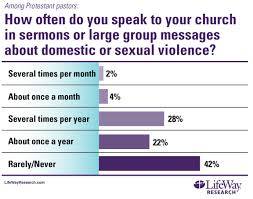
My heart is bleeding.  Every person is created in the image of God and is designed for dignity and shalom.  Violence of any kind dehumanizes others in a vile and evil way, and so I believe that Christians are called to advocate for domestic violence victims and survivors.  Not only is domestic violence as common among church-goers as the general population, but it is sadly missing from many Christians’ radars.

10653672_540932686036868_4005151008959911077_n

I remember the first time that I learned of the prevalence of domestic violence among Christian families.  I was in seminary taking a class called “Ministry to Women.”  Besides two other female seminary students, the others taking the class were the wives of male seminary students who could audit one class per semester for free.  Looking back, I am sad that the male students were not required to take this particular course, which would have illuminated the needs of nearly two thirds of their future congregations.  When our professor shared the statistics of domestic violence in the Church – how it is equal to domestic violence outside of the Church – I was shocked.  Then one of the wives told us that as an EMT, she couldn’t understand the coldness of her colleagues towards her until one of them explained that when they learned of her association to the seminary, they were thinking of the horrible domestic violence calls they had responded to in the dorms.  I was absolutely floored.

Jesus’ heart was for the powerless, and so should ours.  “The Spirit of the Lord is upon me, because he has anointed me to proclaim good news to the poor.  He has sent me to proclaim liberty to the captives and recovering of sight to the blind, to set at liberty those who are oppressed, to proclaim the year of the Lord’s favor” (Luke 4:17).
10527299_513457458784391_5215287369369355256_n
And so, in this post, I want to share what I have been learning and digesting this month.  In a Huffington Post piece from 2012, Soraya Chemaly says,

Globally and domestically, violence against women is pandemic. And it primarily happens in the context of the home. Women are the overwhelming targets of intimate partner and domestic violence. Everyone suffers. The women suffer long term social, emotional, physical and economic trauma. Their children, likewise — girls being more likely to become victims, boys abusers. Men who abuse are untreated, controlling, violent and stripped of their humanity. The societal costs are great: everything from increased poverty and homelessness to maternal mortality and expensive emergency health care provisions. The drain on economies is deep and clear. And last, but certainly not least, violence in the home is the surest predictor of violence at the state level, a tolerance for such violence reflecting a propensity for militarization and war. These violences are preventable.

In that same article, Chemaly shares 50 facts about domestic violence.  Here are a sampling:

  • Number of U.S. troops killed in Afghanistan and Iraq: 6,614
  • Number of women, in the same period, killed as the result of domestic violence in the US: 11,766
  • Number of people per minute who experience intimate partner violence in the U.S.: 24
  • Number of women who will experience partner violence worldwide: 1 in 3
  • Increase in likelihood that a woman will die a violent death if a gun in present in the home: 270 percent
  • Percentages of people killed in the U.S. by an intimate partner: 30 percent of women, 5.3 percent of men.
  • Estimated number of children, worldwide, exposed to domestic violence everyday: 10,000,000
  • Worldwide, likelihood that a man who grew up in a household with domestic violence grows up to be an abuser: 3 to 4 times more likely than if he hadn’t.
  • Percentage of U.S. cities citing domestic abuse as the primary cause of homelessness: 50
  • Percentage of homeless women reporting domestic abuse: 63
  • Percentage of homeless women with children reporting domestic abuse: 92
  • Percentage of women with disabilities who report violence: 40
  • Annual cost of domestic violence in the U.S. related to health care: $5.8 billion
  • Annual cost of domestic violence in the U.S. related to emergency care plus legal costs, police work, lost productivity: 37 billion dollars
  • Annual number of jobs lost in the U.S. as a result of intimate partner violence: 32,000
  • Average cost of emergency care for domestic abuse related incidents for women and men according to the CDC: $948.00 for women, $387 for men
  • Increase in portrayals of violence against girls and women on network TV during a five year period ending in 2009: 120 percent
  • Average number of times an abuser hits his spouse before she makes a police report: 35
  • No. 1 and No. 2 causes of women’s deaths during pregnancy in the U.S.: Domestic homicide and suicide, often tied to abuse
  • Number of women killed by spouses who were shot by guns kept by men in the home in the United States: 2 in 3
  • Percentage of rape and sexual assault victims under the age of 18 who are raped by a family member: 34
  • Number of women killed everyday in the U.S. by a spouse: 3+

A similar but much shorter list is BuzzFeed’s “11 Facts That Show How Widespread Domestic Violence Is.”  This is a great post to share on social media because it is short and eye-catching.  And The Center for Women and Families has a list of domestic violence stats here.

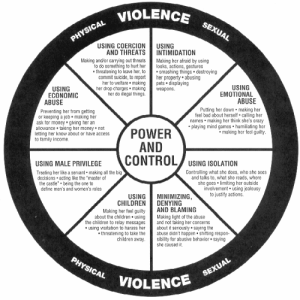
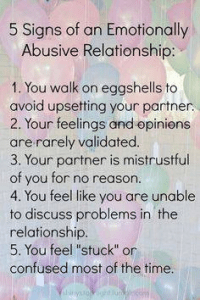
Physical violence is the most typical form of abuse associated with domestic violence, but abuse comes in many colors.  For instance, verbal abuse, sexual abuse, emotional abuse, etc.  The Power and Control Wheel (from the State of Delaware web page “Dynamics of Domestic Abuse”) is helpful in demonstrating this (go to the page for further descriptions):

power and control wheel

Justin and Lindsey Holcomb have a resource page on Moody Publishers linked from their book, “Is it my fault?” that I would encourage you to visit.  Their tab headings are “What is Domestic Violence?”“Understanding the Cycle of Abuse”, “Is This an Abusive Relationship?” , “Why Does He Choose to Abuse”, “How to Make a Safety Plan” and “God’s Grace for the Abused.”

On the Half the Sky Movement website, there is an excellent article explaining the impact of gender-based violence as the number one public health crisis for women throughout the world.  “To date, 603 million women live in countries where domestic violence is not outlawed and more than 2.6 billion live in countries where rape within marriage is not considered a crime.  Without  legal retribution, assailants rarely face consequences for their actions and the victims are less likely to report the abuse.  In some cases, women are concerned that they will  be the ones punished if they report the violence.  Other times rape and sexual assault are so stigmatized that the victim stays silent even if there are laws in place.”

I have been following several Christian blogs that exist to support Domestic Violence survivors and raise awareness.  Here is a sampling of articles so you can link to their pages:

TED Talks provides this excellent resource list of organizations combatting domestic violence, and I would recommend these talks. Stories of survivors:

silence unsafe relationship

Finally, I’m going to leave you with an article on The Gospel Coalition, in which Lindsey Holcomb offers seven helpful ways that the Church can reflect God’s heart for women at risk:

1. Stand with the vulnerable and powerless.  God calls his people to resist those who use their power to oppress and harm others (Jer. 22:3).

2.  Believe the women; don’t blame them.  Blaming victims for post-traumatic symptoms is not only misguided but also contributes to the victims’ suffering.  Research has proven that being believed and listened to by others are crucial to victims’ healing.

3.  Respond graciously, offering comfort, encouragement, and protection.  Also respond with tangible, practical care.  Spiritual and emotional support needs to be accompanied by actual deeds.

4.  Get informed and inform others about the prevalence of women at risk.  They can be found not only around the world but also right under our noses, in our cities and neighborhoods and in our churches and small groups.  The prevalence is staggering.

5.  Learn about the effects of sexual assault, domestic violence, and other forms of abuse.  The only thing more staggering than the prevalence of abuse toward women is the acute damage done to them.  Trauma is not only done to, but also experience by victims.  The internal and deeply personal places of a victim’s heart, will, and emotions need a clear application of the gospel of redemption, along with tangible expressions of love.

6.  Clearly communicate the hope and healing for victims that is found in the person and work of Jesus Christ.  Unfortunately, the message victims hear most often is self-heal, self-love, and self-help.  The church’s message is not self-help, but the grace of God.  Grace does not command “Heal thyself!” but declares “You will be healed!”  God’s one-way love replaces self-love and is the true path to healing.

7.  Get involved with the issue of violence against women.  This can include addressing the issue in small group settings, praying about it in corporate prayer, and working toward preventing abuse together with community and national organizations.


Thank you for visiting The Beautiful Kingdom Warriors.  Please Follow our blog, and “Like” us on Facebook.