October is Domestic Violence Awareness Month.  Becoming aware of the statistics is beyond sobering. While gender-based violence is a worldwide problem, it is overwhelmingly present right here in our own backyard. All month, I have been reading articles that shed light on the prevalence and realities of domestic violence, watching videos of survivors sharing their stories, noticing the purple ribbons in yards and trees as I drive here and there.
My heart is bleeding. Every person is created in the image of God and is designed for dignity and shalom. Violence of any kind dehumanizes others in a vile and evil way, and so I believe that Christians are called to advocate for domestic violence victims and survivors. Not only is domestic violence as common among church-goers as the general population, but it is sadly missing from many Christians’ radars.
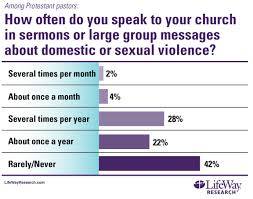
I remember the first time that I learned of the prevalence of domestic violence among Christian families. I was in seminary taking a class called “Ministry to Women.” Besides two other female seminary students, the others taking the class were the wives of male seminary students who could audit one class per semester for free. Looking back, I am sad that the male students were not required to take this particular course, which would have illuminated the needs of nearly two thirds of their future congregations. When our professor shared the statistics of domestic violence in the Church – how it is equal to domestic violence outside of the Church – I was shocked. Then one of the wives told us that as an EMT, she couldn’t understand the coldness of her colleagues towards her until one of them explained that when they learned of her association to the seminary, they were thinking of the horrible domestic violence calls they had responded to in the dorms. I was absolutely floored.
Jesus’ heart was for the powerless, and so should ours. “The Spirit of the Lord is upon me, because he has anointed me to proclaim good news to the poor. He has sent me to proclaim liberty to the captives and recovering of sight to the blind, to set at liberty those who are oppressed, to proclaim the year of the Lord’s favor” (Luke 4:17).

And so, in this post, I want to share what I have been learning and digesting this month. In a Huffington Post piece from 2012, Soraya Chemaly says,
Globally and domestically, violence against women is pandemic. And it primarily happens in the context of the home. Women are the overwhelming targets of intimate partner and domestic violence. Everyone suffers. The women suffer long term social, emotional, physical and economic trauma. Their children, likewise — girls being more likely to become victims, boys abusers. Men who abuse are untreated, controlling, violent and stripped of their humanity. The societal costs are great: everything from increased poverty and homelessness to maternal mortality and expensive emergency health care provisions. The drain on economies is deep and clear. And last, but certainly not least, violence in the home is the surest predictor of violence at the state level, a tolerance for such violence reflecting a propensity for militarization and war. These violences are preventable.
In that same article, Chemaly shares 50 facts about domestic violence. Here are a sampling:
- Number of U.S. troops killed in Afghanistan and Iraq: 6,614
- Number of women, in the same period, killed as the result of domestic violence in the US: 11,766
- Number of people per minute who experience intimate partner violence in the U.S.: 24
- Number of women who will experience partner violence worldwide: 1 in 3
- Increase in likelihood that a woman will die a violent death if a gun in present in the home: 270 percent
- Percentages of people killed in the U.S. by an intimate partner: 30 percent of women, 5.3 percent of men.
- Estimated number of children, worldwide, exposed to domestic violence everyday: 10,000,000
- Worldwide, likelihood that a man who grew up in a household with domestic violence grows up to be an abuser: 3 to 4 times more likely than if he hadn’t.
- Percentage of U.S. cities citing domestic abuse as the primary cause of homelessness: 50
- Percentage of homeless women reporting domestic abuse: 63
- Percentage of homeless women with children reporting domestic abuse: 92
- Percentage of women with disabilities who report violence: 40
- Annual cost of domestic violence in the U.S. related to health care: $5.8 billion
- Annual cost of domestic violence in the U.S. related to emergency care plus legal costs, police work, lost productivity: 37 billion dollars
- Annual number of jobs lost in the U.S. as a result of intimate partner violence: 32,000
- Average cost of emergency care for domestic abuse related incidents for women and men according to the CDC: $948.00 for women, $387 for men
- Increase in portrayals of violence against girls and women on network TV during a five year period ending in 2009: 120 percent
- Average number of times an abuser hits his spouse before she makes a police report: 35
- No. 1 and No. 2 causes of women’s deaths during pregnancy in the U.S.: Domestic homicide and suicide, often tied to abuse
- Number of women killed by spouses who were shot by guns kept by men in the home in the United States: 2 in 3
- Percentage of rape and sexual assault victims under the age of 18 who are raped by a family member: 34
- Number of women killed everyday in the U.S. by a spouse: 3+
A similar but much shorter list is BuzzFeed’s “11 Facts That Show How Widespread Domestic Violence Is.” This is a great post to share on social media because it is short and eye-catching. And The Center for Women and Families has a list of domestic violence stats here.
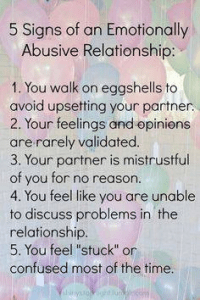
Physical violence is the most typical form of abuse associated with domestic violence, but abuse comes in many colors. For instance, verbal abuse, sexual abuse, emotional abuse, etc. The Power and Control Wheel (from the State of Delaware web page “Dynamics of Domestic Abuse”) is helpful in demonstrating this (go to the page for further descriptions):
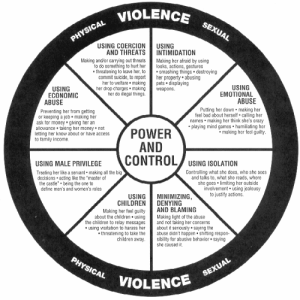
Justin and Lindsey Holcomb have a resource page on Moody Publishers linked from their book, “Is it my fault?” that I would encourage you to visit. Their tab headings are “What is Domestic Violence?”, “Understanding the Cycle of Abuse”, “Is This an Abusive Relationship?” , “Why Does He Choose to Abuse”, “How to Make a Safety Plan” and “God’s Grace for the Abused.”
On the Half the Sky Movement website, there is an excellent article explaining the impact of gender-based violence as the number one public health crisis for women throughout the world. “To date, 603 million women live in countries where domestic violence is not outlawed and more than 2.6 billion live in countries where rape within marriage is not considered a crime. Without legal retribution, assailants rarely face consequences for their actions and the victims are less likely to report the abuse. In some cases, women are concerned that they will be the ones punished if they report the violence. Other times rape and sexual assault are so stigmatized that the victim stays silent even if there are laws in place.”
I have been following several Christian blogs that exist to support Domestic Violence survivors and raise awareness. Here is a sampling of articles so you can link to their pages:
TED Talks provides this excellent resource list of organizations combatting domestic violence, and I would recommend these talks. Stories of survivors:
Finally, I’m going to leave you with an article on The Gospel Coalition, in which Lindsey Holcomb offers seven helpful ways that the Church can reflect God’s heart for women at risk:
1. Stand with the vulnerable and powerless. God calls his people to resist those who use their power to oppress and harm others (Jer. 22:3).
2. Believe the women; don’t blame them. Blaming victims for post-traumatic symptoms is not only misguided but also contributes to the victims’ suffering. Research has proven that being believed and listened to by others are crucial to victims’ healing.
3. Respond graciously, offering comfort, encouragement, and protection. Also respond with tangible, practical care. Spiritual and emotional support needs to be accompanied by actual deeds.
4. Get informed and inform others about the prevalence of women at risk. They can be found not only around the world but also right under our noses, in our cities and neighborhoods and in our churches and small groups. The prevalence is staggering.
5. Learn about the effects of sexual assault, domestic violence, and other forms of abuse. The only thing more staggering than the prevalence of abuse toward women is the acute damage done to them. Trauma is not only done to, but also experience by victims. The internal and deeply personal places of a victim’s heart, will, and emotions need a clear application of the gospel of redemption, along with tangible expressions of love.
6. Clearly communicate the hope and healing for victims that is found in the person and work of Jesus Christ. Unfortunately, the message victims hear most often is self-heal, self-love, and self-help. The church’s message is not self-help, but the grace of God. Grace does not command “Heal thyself!” but declares “You will be healed!” God’s one-way love replaces self-love and is the true path to healing.
7. Get involved with the issue of violence against women. This can include addressing the issue in small group settings, praying about it in corporate prayer, and working toward preventing abuse together with community and national organizations.
Thank you for visiting The Beautiful Kingdom Warriors. Please Follow our blog, and “Like” us on Facebook.


 Becky and Ruth are pleased to share this guest post from the wise and wonderful Amy St. John. Amy is a Relay Event Specialist for the American Cancer Society and serves on the Board of Directors for North Harbor Community Church in Topsham, Maine. She is a Beautiful Kingdom Warrior through and through!!!


 The Beautiful Kingdom Builders