
Flash Quiz!
What is something that Agatha Christie, Charles Dickens, Thomas Edison, Albert Einstein, Benjamin Franklin, C.S. Lewis, Wolfgang Mozart, Leo Tolstoy, and Mark Twain have in common?
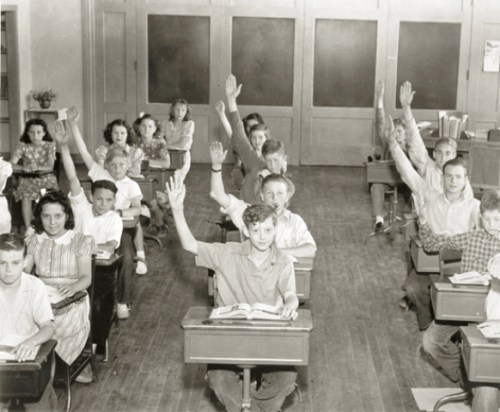
They were all home schooled!
I am homeschooling my kids this year and have had several people ask what I love about homeschooling, so I thought I would post my thoughts here. But first, I want be clear that I understand that home education is not feasible for most families. I’m not writing this to shame non-homeschooling families.
I also believe that we need public schools, and our public school teachers deserve mad props for being amazing public servants!! This is not an anti-public school post.
We each must prayerfully discern how God is leading us in how we will raise and provide for our children, and then follow with confidence in God’s perfect love for our children. The kids will be alright. Amen?!
Home schooling only accounts for 3% of education in the United States, with 2.3 million students learning at home in 2016. It is definitely the “road less traveled,” and as someone on that road, I would love to share my favorite things about home education:
I have more time to disciple my kids.
In Matthew 28:16-20, Jesus commanded us to make disciples (i.e. Jesus followers). I often felt like our busy life pre-homeschooling impeded our ability to teach our kids about God and God’s Kingdom. Not to mention that the weight of their peers’ voices was overpowering our own as parents. In Deuteronomy 6:7, Moses directs us to, “Impress [the commandments] on your children. Talk about them when you sit at home and when you walk along the road, when you lie down and when you get up.” I have lots of friends who do a beautiful job discipling their public-schooled kids. I am not saying it cannot be done. All I am saying is it is easier as a homeschooling family.
I love infusing the day with theology. As we studied Harriet Tubman last week, I talked to my kids about liberation theology. And I can focus on their character development. This year, I feel like I am quoting John 4:6-8 over and over again. “Beloved, let us love one another. For love is of God and everyone who loves is born of God and knows God. He who loves not, knows not God, for God is love. Beloved, let us love one another.” I have first-hand access to see that this is a lesson that needs repeating…and repeating…and repeating. This is the kind of socialization that I want for my children.
It’s a slower lifestyle.
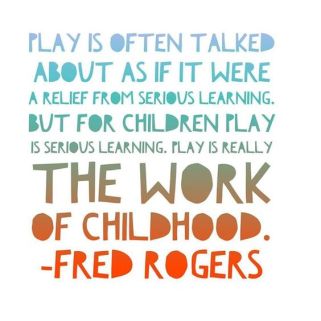
Click here to read: Understanding the Benefits of Play for Children
We live in a fast-paced world and many bemoan the speed of life compared to previous generations. When we were public-schooling our kids, they were up at 6:30, racing around to catch the bus by 7:00, and after-school activities kept them busy until dinnertime and even bedtime for older students with homework. We had very little family time. Now, we all get plenty of sleep and have lots of free time for chores and play, the truly important work of childhood. If the kids are excited about a project, they have the time to enter flow and fully develop their ideas. I can be flexible with our schedule to allow for rabbit-trails and exploration, lots of field trips and spontaneous family adventures. While we were public-schooling, my sons never played with their little sister. It warms my heart to see our family growing closer together through our new slower lifestyle.
Studies show that in the modern public school classroom, management, busywork, waiting, leaving and arriving, and other diversions reduce gross instructional time to around ninety minutes a day. According to Dr. David Elkind of the University of Rochester, attention in class to single students may average, per student, only six hours per year.¹ With home education, you are able to complete your daily curriculum in much less time, freeing up much of the day for your kids to be imaginative and to participate in household chores and life.
I get to participate in my kids education.
I have a lot of fun learning along with my kids! One of my Clifton StrengthsFinder results is Connectedness – making connections between ideas. I have such a good time making connections between what we are learning in our curriculum and the life events that we experience outside of “school.” The whole world becomes our classroom!
The flip-side of this coin is that there can be a lot of insecurity in homeschooling — am I doing enough with them? Are they progressing adequately? What am I not doing that I should be teaching them?
The truth is, home education, public schools and private schools are all imperfect. Each scenario has pros and cons, and saying yes to some pros means accepting the corresponding cons. But you weigh your options and decide what is best for your family and then you go forward bravely.
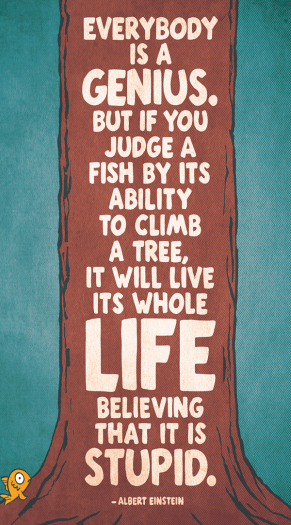 It takes time to find the homeschool style that works best for your particular kids and family. Styles include eclectic, classical, Montessori, Charlotte Mason, unschooling, school-at-home, Waldorf, etc. You can buy full curriculum or piece your own together. Some curriculum works better than others for different individuals. You may try different styles year to year, or even within the same year. A big pro in home education is having flexibility to drop things that aren’t working and to pursue new options. Give yourself lots of grace as a budding teacher. Think outside the box, get your kids involved in a co-op or part-time at the public school. There are countless options.
In my opinion, providing a nurturing, non-competitive, shame-free environment for education gives natural learners a place to thrive. We cannot predict outcomes, but that can also be said of public-schooled children.
Self-directed learning sticks harder.
Our brain won’t hold onto information that it deems expendable. When I was in school, I forgot almost everything I studied once the information was regurgitated onto a test. Once the purpose of the information was accomplished, an “A,” I was done with it. Not knowing that I would find that information valuable in later years, my brain didn’t file it in my long-term memory.
Kids are naturally curious about their world and are motivated to learn information to be productive and successful in life. Each child bears the image of God and has the capacity to impact the world through creative authority. If students have more agency to pursue areas of natural aptitude and interest, the knowledge they acquire “sticks harder.”
In a Smithsonian Report on the development of genius (cited in this article), it was found that children need three conditions for optimal development: “1) much time spent with warm, responsive parents and other adults, 2) very little time spent with peers, and 3) a great deal of free exploration under parental guidance.” These conditions are more readily found in the home than in the classroom.
Mental health and self-image matter for life.
Children (most adults too, for that matter!) tend to judge another’s worth on three factors: beauty, intelligence, and wealth. Janet Kizziar and Judy Hageforn, experts in the field of adolescent self-esteem, write: “The way his peers perceive him strongly influences the adolescent’s conception of himself, which generally remains unchanged throughout his life. Peer influences are at their zenith during preadolescence and adolescence when youngsters are most inclined to feel socially, emotionally, and even intellectually inept.”² Child psychologist Dorothy C. Briggs points out that “no child can see himself directly, he only sees himself from the reflection of others. Their ‘mirrors’ literally mold his self image…what goes on between your youngster and those around him, consequently, is of central importance.”³
Anxiety, depression, bullying, drug use, porn use, suicide, and more are growing problems among our young people. Attentive parents can infuse their children with a deep sense of worthiness and belonging that will give their life a firm foundation. I don’t want peers to influence my children’s conceptions of themselves that will last for their entire lifetime. I love Brene Brown’s Parenting Manifesto – I have it printed and hanging on my fridge. “Above all else, I want you to know that you are loved and lovable.”
In conclusion, As image bearers of God, every human has an amazing capacity to attain the knowledge needed to pursue their particular calling and path. Whether our children are home or attending a school, we can nurture in them loving, generous, and brave character. We can give them a sense of wonder at God’s amazing creation (including themselves). I am very grateful that, at least for now, I am able to keep my kids home with me, where they have time to explore and the security to be themselves.
¹Ballman, Ray E. The How and Why of Home Schooling (Crossway Books; Wheaton, IL. 1995), p. 35.
²Kizziar, Janet and Hageforn, Judy. Search for Acceptance: The Adolescent and Self-Esteem (Chicago: Nelson-Hall, 1979), p. 2.
³Briggs, Dorothy. Your Child’s Self-Esteem: The Key to Life (Garden City, N.Y.: Doubleday, 1970), p. 2.
Here are a couple recommendations I have for parenting/homeschooling resources (Please leave your recommendations as a comment – I’d love to see them!):
- Writings by high school teacher turned education reformer, John Holt.
- This is an old quote, but worth considering (from the Homeschooling wiki page):
In the 1970s, Raymond and Dorothy Moore conducted four federally funded analyses of more than 8,000 early childhood studies, from which they published their original findings in Better Late Than Early, 1975. This was followed by School Can Wait, a repackaging of these same findings designed specifically for educational professionals.[46] They concluded that, “where possible, children should be withheld from formal schooling until at least ages eight to ten.” Their reason was that children “are not mature enough for formal school programs until their senses, coordination, neurological development and cognition are ready”. They concluded that the outcome of forcing children into formal schooling is a sequence of “1) uncertainty as the child leaves the family nest early for a less secure environment, 2) puzzlement at the new pressures and restrictions of the classroom, 3) frustration because unready learning tools – senses, cognition, brain hemispheres, coordination – cannot handle the regimentation of formal lessons and the pressures they bring, 4) hyperactivity growing out of nerves and jitter, from frustration, 5) failure which quite naturally flows from the four experiences above, and 6) delinquency which is failure’s twin and apparently for the same reason.”[47] According to the Moores, “early formal schooling is burning out our children. Teachers who attempt to cope with these youngsters also are burning out.” Aside from academic performance, they think early formal schooling also destroys “positive sociability”, encourages peer dependence, and discourages self-worth, optimism, respect for parents, and trust in peers. They believe this situation is particularly acute for boys because of their delay in maturity. The Moores cited a Smithsonian Report on the development of genius, indicating a requirement for “1) much time spent with warm, responsive parents and other adults, 2) very little time spent with peers, and 3) a great deal of free exploration under parental guidance.” Their analysis suggested that children need “more of home and less of formal school”, “more free exploration with… parents, and fewer limits of classroom and books”, and “more old fashioned chores – children working with parents – and less attention to rivalry sports and amusements.”[47]
- More Black families are choosing homeschooling to give their children an education free from discrimination.
- A great podcast with psychologist Alison Gopnik on the Gardening vs. Carpentry models of modern parenting.
“The idea is that if you just do the right things, get the right skills, read the right books, you’re going to be able to shape your child into a particular kind of adult,” she says. “I think the science suggests that being a caregiver for human beings is…much more about providing a protected space in which unexpected things can happen than it is like shaping a child into a particular king of desirable adult.”
- Sir Ken Robinson’s must-see TED Talk on education reform:
The Beautiful Kingdom Warriors is a place for empowering women to pursue their God-given callings alongside their brothers in Christ. We post articles about gender issues in the Church and world every day on our Facebook page. Subscribe to our blog so you never miss a post!

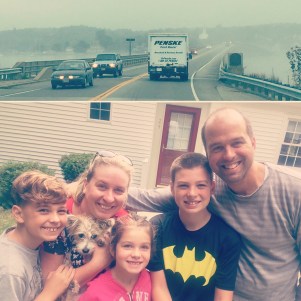 Long time, no blog! The Perrys have made it through another busy summer in touristy coastal Maine, and a month ago today, we pulled out of our driveway and headed south to central Virginia where my husband has taken a pastor position at





 The Beautiful Kingdom Builders