Tag Archives: spiritual abuse

Image

Jeffrey Watt’s Manipulation Series

Becky and I typically VLOG on Mondays, but weren’t able to coordinate our schedules this week.  So I found this series that I thought was really interesting and helpful.  Part of living free in Christ requires having good woman_puppetboundaries with unsafe peopleThe Manipulation Series by Jeffrey Watts describes the tactics used by abusers to control their victims.  If you are facing a form of psychological or physical abuse in your life, this series will be helpful to check out.  And if you are in an abusive relationship, we encourage you to take steps to protect yourself and get help.

The Manipulation Series – Introduction
The Manipulation Series – Gaslighting 
The Manipulation Series – Sarcasm
The Manipulation Series – Minimalization
The Manipulation Series – Scapegoating
The Manipulation Series – Judgment vs. Intuition
The Manipulation Series – Projection
The Manipulation Series – Terrorizing
The Manipulation Series – Teasing

*While I found these videos to be excellent, I cannot find any biographical info on Jeffrey Watts, beyond that he is a psychologist.  I came across the series on the website, A Cry for Justice.  “Jeff Crippen, author and pastor for over 30 years, and Barbara Roberts, author and survivor of domestic abuse, created this website to:

  • educate people to the abuser’s mentality and tactics
  • teach what scripture really says about abuse, marriage, and divorce
  • recommend resources for further help
  • provide a safe environment for victims of domestic abuse to be encouraged, validated, and believed.”

Be sure to visit A Cry for Justice if you have been a victim of psychological, physical or spiritual abuse.

Along the same lines, I read this post on Elizabeth Esther’s blog awhile ago entitled, “A Handy Guide for Dealing with Manipulative People.”  Esther’s book was just released March 18th and looks really good: “Girl at the End of the World: My Escape from Fundamentalism in Search for Faith with a Future.”  Her tips for dealing with manipulative people:

  1. Manipulative people make their requests sound like a great, special offer just for you when the reality is, you are the one doing THEM a favor. Whenever a manipulative person asks me to do something for them, I remind myself that I am under no obligation to say yes. And furthermore, I should not feel the need to apologize for saying no. Additionally, I do not owe them any explanation for saying no.
  2. Arguing with a manipulator is like arguing with a drug addict. You’re not arguing with the person, you’re arguing with the drug. Everything a manipulator says serves their own personal agenda. Instead of making it a personal discussion, deal with them as if you are simply dealing with their vice. You are talking to their drug/vice addiction. You wouldn’t apologize to an addict for not giving into their requests, right? If their request violates your personal boundary, the answer is always no.
  3. Manipulative people are accustomed to getting their way. Not only do manipulators want you to say yes to their requests, they want you to say yes NOW. Manipulators usually get angry or vindictive when they don’t get their way. To avoid the drama and maintain your boundaries, defer your answer to a later time. Say something like: “I’ll have to get back to you on that.” When you do say no, say it in the least personal way possible; ie. via voice-message, email or text.

Be well, friends!  We’ll be back with a VLOG next week!

Reporting Sexual Abuse in Christian Communities

2e16431c804b869f5ca80ecca95267f6

There have been a lot of articles circulating recently from victims of sexual abuse at the hands of high-profile perpetrators.  Dylan Farrow called out her step-father Woody Allen after his recent Academy Award nomination, and Tamara Green reminded us of Bill Cosby’s many accusers, long forgotten.  I have also been following conversations from little known victims: children (grown now), who were abused while they were at boarding schools run by missionaries.

When I was 9 years old, my family moved to South America as short-term missionaries (a 2-3 year commitment) with New Tribes Missions, where my parents taught at a NTM boarding school.  While much of our experience was wonderful, the psychological, physical and spiritual abuse at the school was shocking.  My parents were labeled trouble-makers for voicing concerns and reporting abuse, and ultimately they chose not to continue as career missionaries under the circumstances.  In addition to stunningly abusive corporal punishment (i.e. “swats” with a large wooden board, with holes drilled in it, administered gleefully by a bully of a principal), there were three men, that I know of, sent home for sexually abusing children – just during that three year span of time.  Sent home, but not reported to law officials or even to their own churches.  Just sent away to plug into other ministries with children.

It is hard to believe that even today, in 2014, there is still a reluctance among many Christians to report sexual abuse.  We have seen the fallout in the Catholic Church over covering abuse up, and yet there are abusers in all denominations and organizations throughout the world.

With the advent of social media, victims of abuse from NTM schools began to connect online and share their stories.  This led NTM to hire GRACE in 2010 to investigate alleged abuse at the Fanda School in Senegal.  Here is their report stemming from that investigation.  It is a harrowing read.  They are currently investigating other NTM schools, including the school my family served at.  I am very hopeful that there will be healing for victims of abuse through this process of being heard and hopefully, of perpetrators being reported for their crimes.  Thankfully, covering up can no longer be standard procedure for NTM, as Warren Kennell learned last week.

Logan and I attended a church conference in June of last year where we heard a woman tell the story of growing up in a home wrought with physical and sexual violence.  She and her siblings were beaten, sexually abused and starved.  The turning point came when she finally, at twelve years old, had the courage to tell her Sunday School teacher, who prayed with her to forgive.  Living without bitterness made her situation bearable, and she went on to be a wife and mother and a talented Bible teacher in her church, living a normal life despite her hellish upbringing.

Her story was inspiring, but honestly, I was furious that the abuse didn’t end when she finally had the courage to tell someone trustworthy, someone in church leadership.  I wanted to scream, WHY DIDN’T HER SUNDAY SCHOOL TEACHER REPORT THE ABUSE!!!

1725240_647007305358796_1677897230_n

Too often, this is the reality of domestic and organizational violence against women and children, which occurs in equal measure in churches as it does in the rest of society.  The victims are nearly always silent, and if they do speak up to the leaders in their church, they are often met with disbelief, platitudes to forgive, advice to be obedient, expressed concerns for the reputation of the perpetrator and the church, etc.  Often, church leaders will opt to handle things in-house rather than report abuse and make a public issue of it.  The problem is, abuse is not only a sin, it is a crime, and it is criminal to remain silent when we have knowledge of abuse.  And allegations need to be taken seriously, as less than 5% of child sexual abuse claims are fabricated.

There was news this week that Bob Jones University fired GRACE, the organization it had hired to investigate claims of sexual abuse on campus.  This happened just weeks before GRACE’s final report was to be made public.  It would appear that BJU decided self-protection was of greater importance than protecting their most vulnerable and powerless, teenaged students.   Here is a great article about Why the BJU Scandal Will Go Away, and please take a minute to sign this petition asking BJU to rehire GRACE to complete their investigation.

Boz Tchividjian, the founder and executive director of GRACE, and Liberty University Law School professor and former child abuse prosecutor, wrote an excellent article yesterday, Christians and the Struggle to Report Child Abuse.  And Sandra Kim at everyday feminism posted this great article, 10 Ways to Talk to Your Kid About Sexual Abuse.

There is hopeful change with the advent of social media and heightened awareness and accountability, but there is still a long way to go.  Let us do what we can to protect the most vulnerable in our faith communities, first of all by ensuring that policies are in place for responding to claims of sexual abuse.  Not one allegation should go unreported.

First Image credit: Shane Claiborne quote
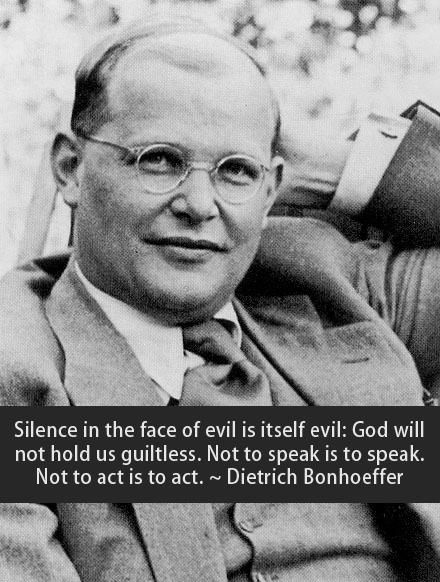
Second Image Credit