The Lord works righteousness and justice for all who are oppressed.
Psalm 103:6
God is moving in the United States of America. As Christians, have we discerned where the Holy Spirit is taking us? Are we aligning ourselves with the redemptive plan of God?
In an article published this week, Robert Jones, CEO and founder of the Public Religion Research Institute, wrote that white Christians are consistently more likely to deny systemic racism than religiously unaffiliated white Americans. “Our fellow African American citizens, and indeed the entire country, are waiting to see whether we white Christians can finally find the humility and courage and love to face the truth.”
I have heard white Christians suggest that the upheaval in the United States today is because as a nation, we have turned away from God and have removed prayer from schools and society. We need Jesus, they say. This sentiment reminds me of the prophet Jeremiah’s words, “They dress the wound of my people as though it were not serious. ‘Peace, peace,’ they say, when there is no peace” (Jeremiah 6:14). There is no peace without justice. Justice and righteousness are central to the heart of God.
What we are seeing today is the cumulative effect of centuries of oppression and discrimination. Dressing the wound of racism with platitudes of returning to God is a misdiagnosis of the root of the upheaval. A misdiagnosis can be fatal when the illness is terminal.
For Black Christians, the fragile flicker of hope in a just, equitable life in the U.S. has been rekindled. In a gorgeous essay written two days before his death, Rep. John Lewis wrote, “While my time here has now come to an end, I want you to know that in the last days and hours of my life you inspired me. You filled me with hope about the next chapter of the great American story when you used your power to make a difference in our society.”
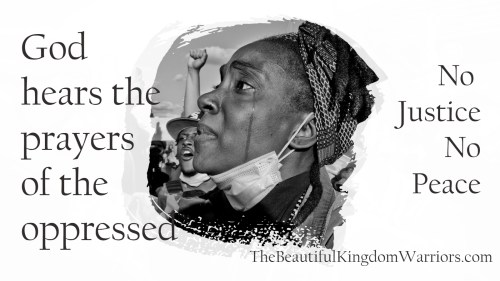
The centuries of prayers for God’s intervention to end their oppression have been heard. America has not turned from Christianity – America was never Christian because it has always been marred by the ugliness of racial oppression. God’s wrath burns against racism and God’s heart is with the oppressed.
God is truly healing our land, and it is painful but necessary to cut deep in order to remove the cancer of racism from our marrow. Our culture is embedded with racism, and we have believed the lies of the enemy that have dehumanized and dishonored the Black community.
Jesus’ heart is broken by the discrimination and violence perpetrated against BIPOC, who bear God’s image and are endued with the holy calling of dominion and care that all of God’s children are called to. The time is NOW to follow the Holy Spirit in the work of dismantling white supremacy and redeeming American society to be equitable for all.
It is wrong for white Christians to cast themselves as the persecuted minority here in America. Beginning with the Catholic Church’s “Doctrine of Discovery” that baptized global colonization and its’ accompanying atrocities, to the American church’s sanctification of chattel slavery and advocacy for segregation, up to this day’s white Evangelical racial resentment, we have much to lament. In reading the biblical narrative, white Christians ought to identify ourselves with the powerful Egyptian empire, Babylonian empire, or Roman empire, rather than the captive Israelites. We have been the oppressors, not the oppressed.
The Bible is clear where God’s heart lies on the issue of justice for racial oppression.
Isaiah’s prophecy described the agenda the Messiah would champion:
Isaiah 42:1-4
“Behold, My Servant, whom I uphold;
My chosen one in whom My soul delights.
I have put My Spirit upon Him;
He will bring forth justice to the nations.
“He will not cry out or raise His voice,
Nor make His voice heard in the street.
“A bruised reed He will not break
And a dimly burning wick He will not extinguish;
He will faithfully bring forth justice.
“He will not be disheartened or crushed
Until He has established justice in the earth;
And the coastlands will wait expectantly for His law.”
When Jesus became flesh and dwelt with us, he announced his earthly ministry with this mission statement:
“The Spirit of the Lord is upon me, because he has anointed me to
proclaim good news to the poor. He has sent me to
proclaim liberty to the captives and recovering of sight to the blind,
to set at liberty those who are oppressed,
to proclaim the year of the Lord’s favor.”
Luke 4:18-19
In the Sermon on the Mount in Matthew chapter 5, Jesus shared the values of his kingdom with these declarations:
3 “Blessed are the poor in spirit, for theirs is the kingdom of heaven. 4 Blessed are those who mourn, for they will be comforted. 5 Blessed are the meek, for they will inherit the earth. 6 Blessed are those who hunger and thirst for righteousness, for they will be filled. 7 Blessed are the merciful, for they will be shown mercy. 8 Blessed are the pure in heart, for they will see God. 9 Blessed are the peacemakers, for they will be called children of God. 10 Blessed are those who are persecuted because of righteousness, for theirs is the kingdom of heaven.
11 “Blessed are you when people insult you, persecute you and falsely say all kinds of evil against you because of me.12 Rejoice and be glad, because great is your reward in heaven, for in the same way they persecuted the prophets who were before you.
To hunger and thirst for righteousness is to desire justice for those who have been wronged. The Bible exhorts us to seek justice throughout its pages (this is a small sample of examples):
“Learn to do good; seek justice, correct oppression; bring justice to the fatherless, and please the widow’s cause,” (Isaiah 1:17).
“He has told you, O man, what is good; and what does the Lord require of you but to do justice, and to love kindness, and to walk humbly with your God?” (Micah 6:8).
“Blessed are they who observe justice, who do righteousness at all times!” (Psalm 106:3)
“To do righteousness and justice is more acceptable to the Lord than sacrifice.” (Proverbs 21:3)
“Open your mouth for the mute, for the rights of all who are destitute. Open your mouth, judge righteously, defend the rights of the poor and needy.” (Proverbs 31:8-9)
These are my thoughts today as we continue to reckon with the centuries-long history of racial oppression in our country. Our God is our Redeemer, the great Physician who is healing us and bringing us closer and closer to the time when our Prince of Peace will rule with justice and mercy. God hears the prayers of the oppressed, God’s heart is for the brokenhearted, and God is always healing his beloved Creation. Be encouraged. We have no reason to fear and all reason to hope. God is good, all the time.
Here are a couple more excellent links I encountered recently:
White Christianity has been complicit in the subjugation of our Black brothers and sisters. We must lament our racial sins and demonstrate true repentance.
Thank you for visiting The Beautiful Kingdom Warriors! We are most active on Facebook, sharing articles, posts and memes from around the web every day on the issues of gender, class and race in the Church and world.
We so appreciate every “Like,” “Follow,” “Comment,” and “Share!”
Please watch and share this video, made “for such a time as this.”
Phil Vischer, author, speaker and the creator of Veggie Tales and What’s in the Bible?, has made a must-see video covering 100 years of U.S. history post-slavery. With engaging visuals and concise precision, this is 17 minutes that make it very clear why racial tensions are running so high today.
In the description notes, Phil writes,
We need to talk about race. Why are people angry? Why so upset? Didn’t we elect a black president? Pass civil rights laws? Isn’t racism illegal now? Three years ago my brother Rob and I co-taught a class that discussed issues of racial injustice. That class turned into a popular podcast episode, which we’ve now turned into this video. Why are people still angry? Let’s take a look at race in America…
My notes/imperfect transcription:
Average black household has 60% of the income of average white households, but only 1/10th of the household wealth (helps send kids to school, start small businesses, stabilizes loss of income, helps with catastrophes like death, divorce). How did that happen? What happened after slavery?
After slavery, 9 states instated vagrancy laws (making it illegal to not have a job) and 8 of those states allowed those prisoners to be hired out to plantation owners. Other laws against “mischief” and “offhand gestures” created a huge market for convict leasing. Caused worse conditions than slavery because the plantation owner leasing the black prisoner had no long-term interest in his well-being.
By turn of the 20th century, every state in the south had mandated racial segregation by law, “Jim Crow” Laws which supported the social ostracism of blacks applying to schools, churches, housing, jobs, restrooms, hotels, restaurants, hospitals, prisons, funeral homes, morgues, and cemeteries. White politicians competed with each other to be more strict and specific about segregation (e.g. interracial chess playing)
In 1896 the Supreme Court ruled the Jim Crow legal because they “reflected customs and traditions” and “preserved public peace and good order.”
The Jim Crow Laws and the concept of “separate but equal” was finally struck down in 1954 in the ruling on Brown v Board of Education.
In 1956, The Southern Manifesto was signed by 101 out of 128 congress members from the south, pledging to uphold Jim Crow Laws by any means necessary. 50 new Jim Crow Laws came into existence after 1954. Private whites-only schools dubbed “Segregation Academies” popped up all around the south, many of them Christian.
Now widespread civil rights protests combined with anti-war protests that sometimes became violent inspired the political rise of Law & Order rhetoric, with Richard Nixon being the first to campaign specifically on Law & Order.In 1968, 81% of Americans believed that “Law and order has broken down in this country,” and the majority blamed Communists and “Negroes who start riots.”
Going back to household wealth – why do black households only have 1/10th of the wealth of white households? Because the number one source of inter-generational wealth is home ownership, and from the 1930’s until the 1960’s, the federal government enacted policies to actively encourage white families to own homes, and actively discourage black families to do the same.
In 1934, the FHA created a risk rating system to determine which neighborhoods were safe investments for federally backed mortgages. Black neighborhoods were deemed too risky, marked off in maps with red ink (redlining).
After WWII, a boom of suburban houses were built all around the country, much of it restricted by deed to “whites only.” So blacks couldn’t live in white neighborhoods and couldn’t get federally-backed loans for black neighborhoods.
Until 1950, the Realtors Code of Ethics specifically prohibited selling a house in a white neighborhood to a black family.
In the 1930’s, the FHA’s underwriting manual said, “Incompatible racial groups should not be permitted to live in the same communities.” The FHA went on to recommend that highways would be a great way to separate white and black communities. The FHA funded huge white only suburban housing developments, leaving blacks behind in inner cities.
After WWII, the GI Bill provided subsidized mortgages for millions of men returning from the war. While technically eligible for the GI Bill, the way it was administered left over one million black veterans on the outside looking in. In New York and New Jersey, the GI Bill ensured more than 67,000 new mortgages, with less than one hundred going to non-whites. In Mississippi in 1947, over 3200 mortgages were provided, with only 2 going to black veterans.
As a result, white families after the war were able to build home equity, growing wealth for retirement, inheritance, and school for their kids. One historian has said there was “…no greater instrument for widening an already huge racial gap in postwar America than the GI Bill.”
And then came the war on drugs. Inner city blacks were extremely vulnerable economically. The overwhelming majority of African Americans in 1970 lacked a college degree, and had grown up in fully segregated schools.
In the second half of the 20th century, factories and manufacturing jobs moved to the suburbs. Black workers struggled to follow the jobs. They couldn’t live in many of the suburban developments. As late as 1970, only 28% of black fathers had access to a car.
In 1951, when a white man in Cicero, IL, sublet an apartment to a black family, the white community rioted, setting fire to the apartment building and smashing windows until the National Guard had to intervene.
The result of all of this is that in 1970, 70% of black men had blue collar jobs, by 1987 only 28% did.
As unemployment sky-rocketed in African American communities, so did drug use. As drug use increased, so did crime. A dynamic you see playing out in white rural communities hit hard by unemployment.
Throughout the 1970’s, white America became increasingly concerned by images of black violence shown on TV and in magazines. Drugs were the problem. Drug dealers and drug users were the enemy. So we decided to treat the drug crisis not as a health crisis but as a crisis of criminality, and we militarized our response.
During the Reagan/Bush years from 1981-1991, how we invested money in anti-drug allocation completely changed. The Anti-Drug Budget in the Dept of Defense went from $33M in 1981 to $1.04B in 1991. TheDrug Enforcement Agency’s budget to fight criminality in drug use went from $86M in 1981 to $1.03B in 1991.
Then we came to the 1986 Anti-Drug Abuse Act, which carried Mandatory Minimum Sentences, much harsher for the distribution crack cocaine associated with blacks than the powder cocaine associated with whites. Mandated Evictions from public housing for any tenant who permitted drug-related activity to occur on or near premises. It eliminated many government benefits, including student loans, for anyone convicted of a drug crime.
The 1988 revision set a 5 Year Minimum Sentence for anyone possessing crack cocaine, even if there was no intent to distribute, replacing the 1 Year Maximum sentence for any drug found without the intent to distribute.
During Clinton’s presidency, the funding for public housing was cut by -$17B, and the funding for prisons increased by $19B.
The number of those imprisoned for drug crimes exploded. In 1980, there 41,000 in prison for drug crimes. Today, there are 500,000+, more than the entire 1980 prison population. Most arrests are for possession. In 2005, 80% of arrests were for possessing drugs, not selling drugs.
At the same time, we militarized our police forces. Between 1997-1999, the Pentagon handled 3.4 million orders of military equipment, from more than 11,000 police agencies, including 253 Aircraft, 7856 M-16 rifles, 181 grenade launchers, 8131 bulletproof helmets, 1161 night-vision goggles.
We also changed policing tactics. A no-knock entry is when a SWAT team literally breaks down your door or smashes through your windows.
In Minneapolis in 1986, police performed “No Knock” entries 35 times. In 1996, it was 700 times. 2 every day!
There were financial incentives to arresting drug users. Federal grants to local police stations were tied to the number of drug arrests. Research suggests that the increase in drug arrests was due to budget incentives rather than to an increase in drug use.
What was the result? An explosion of our prison population. In 1980, it was 350,000. In 2005, it was 2.3 million. The U.S. now has the highest rate of incarceration in the world. We imprison a higher percentage of our black population than South Africa ever did during Apartheid.
Data shows that the increased prison population was driven primarily by changes in sentencing policy. There was no visible connection between higher incarceration rates and higher violent crime rates.
If you are a drug felon, you are barred from public housing. You are ineligible for food stamps. You are forced to check the box on employment applications marking yourself as a convicted felon. A criminal record has been shown to reduce the likelihood of a call back or job offer by as much as 50%, and twice as large for a black applicant than a white applicant.
In 2006, 1 in 106 white men was behind bars. For black men, it was 1 in 14. For men between the age of 20-35, it was 1 in 9.
Overall, black Americans and white Americans use drugs at the same rate. But the imprisonment rate of blacks is 6x that of whites.
It may be true that there isn’t explicit racism in our justice system anymore, but is doesn’t mean that justice is blind. A study: a law in Georgia permitted a prosecutor to seek life imprisonment for a second drug offense. Over he period of the study, this law was used against 1% of white second-time offenders, and 16% of black second-time offenders. 98% of prisoners serving life sentences under this law were black.
Study:African American youth in this country make up 16% of all youth, but 28% of all juvenile arrests, 35% of youth sent to adult court rather than youth court, and 58% of youth admitted to adult state prison.
Study: Blacks on the NJ Turnpike make up 15% of all drivers, but 42% of all stops, and 73% of all arrests. Of all drivers stopped, white drivers were 2x more likely to be carrying drugs.
Study: Volusio County, FL. 5% of drivers were black or Latino, but 80% of drivers stopped were black or Latino.
Study: Oakland, CA. Black drivers were twice as likely to be stopped and 3x more likely to be searched.
In Minneapolis, Philando Castile had been pulled over 49 times in 13 years, mostly for minor infractions. The 49th time, he was shot by the officer while sitting inside his car. He’d been pulled over for a broken tail light.
Chuck Colson’s organization Prison Fellowship recently organized a Manifesto that was signed by evangelical leaders, asserting that “Our over-reliance on incarceration fails to make us safe or restore the people and communities who have been harmed.”
Unconscious bias seeps into schools too, as white teachers often assume black students are less intelligent than they are. A gifted student needs to be recommended by a teacher to move to a gifted track. When a teacher is black, an equally gifted white and black student have equal chances of being recommended. When a teacher is white, the black student’s odds are cut in half. Are white teachers racist? No. Are they affected by bias? Yes.
In Summary. The average black household has 1/10th the wealth of white families – not by accident, but by policy. We, the majority culture, told them where they could live and where they couldn’t. Then we moved most of the jobs to where we told them they couldn’t live. When the predictable explosion of unemployment and poverty led to a predictable increase in drug use and crime, we criminalized the problem. We built $19B in new jails and sold grenade launchers to the police. As a result, a white boy born in America today has a 1 in 23 chance of going to prison in his lifetime. For a black boy, it’s 1 in 4.
And that is why people are angry. I don’t know the solutions, I am only asking you to do one thing: CARE.
Learn to do right; seek justice.
Defend the oppressed.
Take up the cause of the fatherless;
Plead the case of the widow.
– Isaiah 1:17
“We live in a world in which we need to share responsibility. It’s easy to say ‘It’s not my child, not my community, not my world, not my problem.’ Then there are those who see the need and respond. I consider those people my heroes.”
– Fred Rogers
“Let my heart be broken by the things that break God’s heart.”
– Bob Pierce
Thank you for visiting The Beautiful Kingdom Warriors. This blog and Facebook Page aim at dismantling hierarchical Christianity that gives inordinate authority and power to some while ignoring others. We are all “very good” creations made in the image of God and given dominion as co-regents on earth. God’s redemption work is on-going and it is our honor to be his hands, feet and voice to those around us. May we encourage one another on to love and good deeds. The harvest is great but the workers are few.
A couple weeks ago, I wrote a post about Abigail from 1 Samuel 25. If Abigail had submitted to Nabal, she would not have intercepted David’s army, saving her household from certain death. She is praised for going against her husband, is memorialized as a prophetess of Israel, and David marries her when Nabal dies. She is even portrayed as a type of Christ in the passage. (You can read that post here.)
For many Christians today, Abigail’s story begs the question, What about submission?
If you’ve spent any time in modern evangelical Christianity, you’ve caught on that submission is a big deal. You’ve heard the sermons, been tagged on the blog posts, and have seen a boatload of books flooding the evangelical publishing industry on the topic. Did you happen to notice that these resources are aimed nearly entirely at women?
Because much of Christianity today is shaped by a patriarchal insistence on strict gender roles, there is a widely taught faulty view of biblical submission that defines submission as a one-sided, blind obedience or subservience of a wife to her husband.
Here is a small sample of quotes about submission directed to wives alone:
“Supreme authority in both church and home has been divinely vested in the male as the representative of Christ, who is Head of the church. It is in willing submission rather than grudging capitulation that the women in the church (whether married or singles) and the wife in the home find their fulfillment.” ― Elizabeth Elliot
“The Lord commands the wife to be submissive. Refusal to submit to the husband is therefore rebellion against God himself. Submission to the husband is a test of her love for God as well as a test of love for her husband. The wife then must look upon her submission to her husband as an act of obedience to Christ and not merely to her husband.” ― Wayne Mack
“When you honor your husband, you honor God. When you obey your husband, you obey God. The degree to which you reverence your husband is the degree to which you reverence your Creator. As we serve our husbands, we serve God. But in the same way, when you dishonor your husband, you dishonor God.” ― Debi Pearl
“The overwhelming weight of Bible testimony about a wife’s obedience is that God expects a woman to obey her husband cheerfully, immediately and without reservation.” ― Elizabeth Rice Handford
For many married Christians, this one-sided approach to submission is working just fine, in fact, they are having a positive experience following this teaching. Should we try to fix something that is working?
Abso-freaking-lutely yes. Ideas have consequences. If one-sided submission is not God’s intention for his children, we should not be teaching it!
Let me attempt to demonstrate the faults of this view.
If you are being taught that marriage is a picture of the Gospel, this is your PSA that you are attending a patriarchal church that holds the faulty view of submission. The idea that living out traditional 1950’s gender roles in marriage is how Christians best display the goodness of the Gospel to the world is a mind-boggling notion for those who have not been raised in an evangelical patriarchy culture.
Danny Akin, president of Southeastern Seminary, explains it like this:
Probably the most important biblical principle in relation to the institution of marriage is that it is designed and intended to present something beyond itself, namely the gospel of Jesus Christ. Paul tells us in Ephesians 5:30-31,
“‘Therefore a man shall leave his father and mother and hold fast to his wife, and the two shall become one flesh.’ This mystery is profound, and I am saying that it refers to Christ and the church.” (ESV)
Paul is suggesting something radical, and he knows it! But he cannot shy away from the truth the Holy Spirit is revealing through him. From its very founding, the institution of marriage was designed to image forth the relationship that Jesus Christ has with the people of God, the Church. The man leads, loves, and serves his wife because that is how Christ gives himself to his bride. And the wife respects, submits to, and helps her husband, because that is how the Church of God follows the risen Lord Jesus.
First of all, the Gospel is the “good news” that Jesus died for the forgiveness of sins and rose again from the grave. Nothing in there about men leading and women submitting. Strict gender roles are not good news to a single parent that is both mom and dad to their children, working night and day to put food on the table. Strict gender roles are not good news to people who are not naturally “masculine” or “feminine” in “traditional” understanding (i.e. social constructs of expected behavior). Strict gender roles are not good news to single people who are marginalized in patriarchal churches. We should not be conflating our views of “biblical manhood and womanhood” with the Gospel.
Secondly, Akin misconstrues the “one-flesh” interdependence in marriage by insisting that the husband’s role is to have all the power and authority, and the wife’s role is to respect and submit to her husband. Yet, Christ loved the Church by giving himself up for it, laying his life down. Our relationship as a Church and Bride of Christ has not been one where Jesus directs our every move (imagine how things might go differently if that were the case in our churches!) but one in which we have autonomy as well as inter-dependence with Christ and with one another.
Thirdly, Akin ignores Ephesians 5:21, where Paul instructs believers to “submit to one another out of reverence to Christ,” then continues in verse 22 (Paul didn’t separate this thought with a header as many of our modern translations do) with “wives to your husbands.” Submit occurs in verse 21, applying to all believers, and is fleshed out in the following verses as Paul adapts the commonly known Greco-Roman Household Codes of the day. I would guess that Akin takes the word “head” (5:23) to mean “authority” rather than “source” (like headwaters). Christ is the Church’s source, in whom we live and breath and have our being. In Paul’s day, “head” did not commonly mean “boss” as it does in our modern vernacular. Paul was instructing men, who had inordinate power in the patriarchal Greco-Roman context, to care for their wives as they care for themselves. He is not telling them to rule their wives.
Moving on from the Marriage-as-Gospel idea, another expression frequently expounded on to defend the faulty view of submission is “equal but different,” which calls to mind the “equal but separate” ethos behind segregation and racial discrimination under Jim Crow. This doesn’t make any sense to an increasingly egalitarian society, but it is taught to nods and “amens” in patriarchal churches. The pastors of these churches have strenuously cautioned that the rejection of male authority and female submission is rebellion against God’s intended design for the “flourishing” of society (although studies have proven that greater results come from men and women leading together, as this Forbes article demonstrates).
If this is their view, they are failing to recognize that male authoritarianism and female submission is not how God designed male and female relationships to function. God had recognized Adam’s loneliness and given him a partner who was equal, as Adam clearly saw when he declared she was “bone of my bone and flesh of my flesh.” God gave Adam and Eve dominion together (Genesis 1:26-28) and said a man should leave his family and cleave to his wife, becoming “one flesh” (Genesis 2:24; opposite of patriarchal customs that integrate a bride into the husband’s family). Authoritarian hierarchy clearly enters the biblical narrative at the Fall, in Genesis chapter 3. (Here is a helpful article by Marg Mowzcko on Gender in Genesis 1-3.)
I was speaking with my mentor Collette over the phone since I posted my article about Abigail. She blew my mind, asking, what if David had co-reigned with his wise wife Abigail, instead of being discontent and taking multiple wives and concubines? The whole trajectory of Israel’s history would have been different. I had never considered this before. If only David did not have this faulty view of submission, it is possible that Israel’s “series of unfortunate events” and calamity may have been averted.
I mentioned this to my husband Logan, who had just been watching the John Adams series, and he wondered what would have happened to the direction of U.S. history if Abigail Adams had been co-president along with her husband. He mentioned a powerful scene in the series in which Abigail Adams asked what good could come from the government when she saw the half-starved slaves building the White House (a quote from one of her letters).
While many enjoy a “traditional” marriage, they may not realize that girls in evangelical Christianity are socialized since birth to defer and to be passive, to believe that the highest iteration of herself as a woman is to find a man to follow, to yield to his desires and assist him in his calling. She has been conditioned to be content as a “helper,” not realizing her actual strength and capacity as an ezer (PLEASE check out that link!) and imago Dei.
Bill Gothard b.s.
They may not recognize that the orderliness of their life precludes the messiness of creativity and the freedom of living out our one, wild and precious life and our unique callings. Disorder is what brings change, and change is good. Sure, there is less friction when women’s voices are silenced, but how does that actually benefit anyone?
The bad fruit of this faulty view of one-sided submission is most visible in instances of abuse. A pastor that holds this faulty view is more likely to counsel an abused wife to submit more, to be more agreeable so as not to provoke her husband’s anger. The paradigm in his mind misinforms him that if wives respect their husbands and submit to their loving leadership, all will be well. He has been taught that since the Fall, women want to dominate their husbands (not that they were designed by God to share dominion), and his patriarchal lens gives the benefit of the doubt to the husband.
This is why denominations that teach male hierarchy and female submission tend to be rife with abuse. This is the consequence of this faulty view of submission. An abuser is attracted to the safety of a faith community that will help him maintain control over his spouse. Meanwhile, abused women are asked to do the heavy labor of “bearing their cross” and are praised for suffering in silence. (There are also male abuse victims, but this ideology specifically supports male domination, thus my use of male pronouns.)
I wrote an article on recognizing domestic violence for the IPHC Encourage Magazine last year, that you can read here.
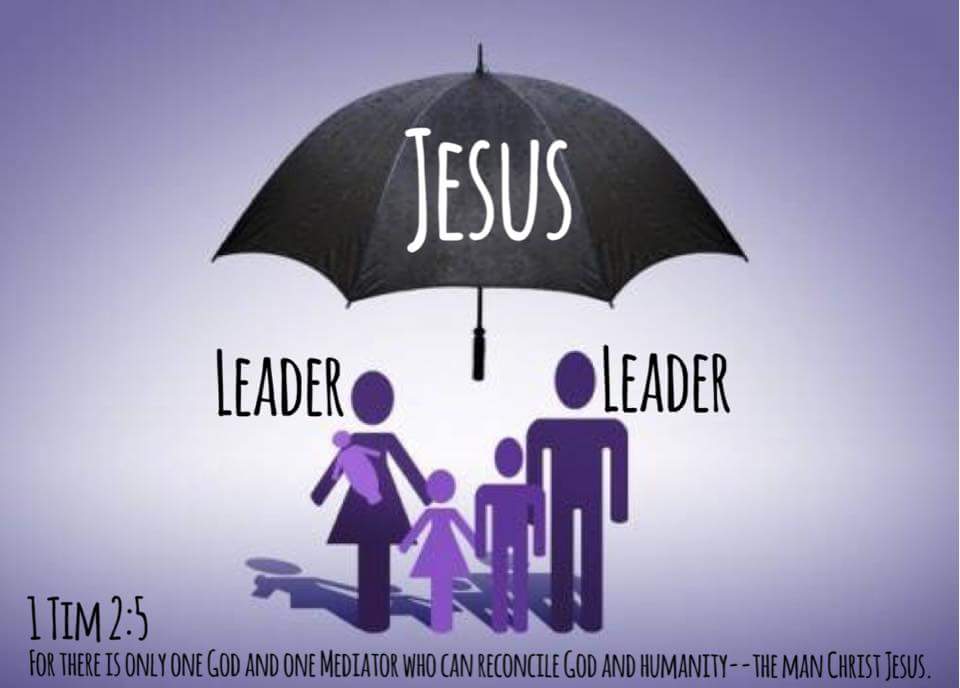
Image by Amber D’Ann Picota to replace Bill Gothard’s horrible umbrella diagram.
So what is the correct view of submission?
Biblical submissionis about mutual and reciprocal collaboration, humility, and the consideration of others before yourself. Unlike one-sided submission that gives all authority to males, Biblical submission returns our God-given dominion and care to all believers, who are created in the imago Dei with the capacity and agency to rule as God’s co-regents on earth. We are to be “one-flesh” in marriage, and working together, side-by-side as siblings, in the Kingdom.
The false narrative of those who believe the faulty view is that Christian egalitarians don’t believe in submission at all. We, in fact, believe in submission all the more, as a critical aspect of loving conduct for all Christians.
Here are some quotes from those who espouse this correct view of submission:
“When two followers of Jesus Christ are married, it is important to remember that Scripture clearly teaches submission is never the wife’s responsibility to the exclusion of the husband’s, nor is love the responsibility of the husband’s to the exclusion of the wife’s. A Spirit-filled, Christ-honoring, God-glorifying marriage is one of mutual submission and love.” ― Wade Burlson
“Mutual submission means that leadership is shared and exchanged based on each spouse’s expertise and need. This means that men will sometimes need to submit to women and women sometimes to men—but not because of their gender.” ― Jeffrey Miller
“When society was patriarchal, as it was in the New Testament context and as it has been everywhere in the world except in modern society in our day, the church avoided scandal by going along with it – fundamentally evil as patriarchy was and is. Now, however, that modern society is at least officially egalitarian, the scandal is that the church is NOT going along with society, not rejoicing in the unprecedented freedom to let women and men serve according to gift and call without an arbitrary gender line. This scandal impedes both the evangelism of others and the edification – the retention and development of faith – of those already converted.” ― John G. Stackhouse Jr., Finally Feminist: A Pragmatic Christian Understanding of Gender
Here is a simple exercise that demonstrates the interdependence of Christian conduct that is explicitly taught throughout the New Testament. Apply the idea of mutual submission to the “one another” passages. While “one another” occurs 100 times in the New Testament, it is specifically commanding Christians how to (and how not to) treat each other in 59 instances. For example:
Submit to one another out of reverence for Christ. Ephesians 5:21
Have equal concern for each other. I Corinthians 12:25
Serve one another in love. Galatians 5:13
In humility, consider others better than yourselves. Each should look not only to your own interests but also to the interests of others. Philippians 2:3b-4
Be devoted to one another in brotherly love. Honor one another above yourselves. Romans 12:10
As God’s chosen people, holy and dearly loved, clothe yourselves with compassion, kindness, humility, gentleness and patience. Colossians 3:12
Rather than cherry-picking a few verses that reinforce the patriarchal, authoritarian domination of the Fallen world in which we seek to have power and control over others, we must look at the entire message of Scripture, in which women like Abigail and many others subvert the faulty view one-sided of submission.
Marg Mowzcko is my go-to reference point for egalitarian exegesis. Her article Submission in Marriage explains some of the passages that are used to subordinate women.
For example, in Ephesians chapter 6, Paul instructs children to obey their parents (hupakouete, v. 1) and slaves to obey their masters (hupakouete, v. 5), but the word used in 5:21-22 for wives means to be submissive (hupotasso) not obey, and it occurs in verse 21, when all believers are told to “submit to one another out of reverence for Christ.” It is merely implied in verse 22 (“wives to your husbands”), although most English translations separate verses 21 and 22 with a heading that did not occur in Paul’s letter. Husbands are then told repeatedly to love their wives, continuing the application of verse 21, of living in mutual submission. Paul does not tell husbands to lead their wives.
In Peter’s first letter, he directs Jesus followers to submit to every secular authority (2:13) and slaves to submit to their masters (2:18), and wives, in the same way, be submissive to their own husbands (3:1). Then he says, “Husbands, in the same way live together with your wives…(3:7). Without a verb in the Greek of verse 7, it is the theme of submission that continues.
Marg Mowzcko beautifully explains that “God’s ideal is for a husband and wife to have a harmonious, loving relationship where each partner serves and prefers the other, in an interdependent, mutually submissive union (1 Corinthians 11:11-12). ..Every follower of Christ, regardless of gender, race, social or church position, should endeavor to live in submissive harmony with others. Jesus exemplified this submission and humility during his earthly mission. Our aim should be to intentionally follow Christ’s example found in Philippians 2:3-8.”
Having believed in one-sided submission for most of my life, and having come to an egalitarian, mutual submission view in the past decade, I can verify that mutual submission is not always as orderly and clear as one-sided submission. But I have freedom and joy in letting the “Leave It To Beaver” charade go and finding my own gumption and voice as a “very good” imago Dei. And my husband and I are finding that the expression “two heads are better than one” works well in marriage.
The fruit of mutual submission is the beauty that will attract the world to the Christian faith. Again, Biblical submissionis about mutual and reciprocal collaboration, humility, and the consideration of others before yourself. As disciples of Jesus Christ, we are to be formed more and more into his likeness.
Jesus told his disciples in John 13:34-35, “A new commandment I give you: Love one another. As I have loved you, so also you must love one another. By this all men will know that you are my disciples, if you love one another.”
This is the good news.
Thank you for visiting The Beautiful Kingdom Warriors! If you enjoyed this article, please pass it along for others to read! And “Like” us on Facebook, where we post lots of resources from around the web each day for joining in God’s Beautiful Kingdom work.
The Beautiful Kingdom Builders is a place for redemptive dialogue about gender, justice, abuse and healing in the Christian faith. Begun as a place to empower Christian women and girls to find our callings, TBKB has grown to conversations about all aspects of Christian faith and culture. Join us in building a more beautiful Christianity.
Find TBKB Podcast on your favorite podcast platform and YouTube, and follow us on Facebook, Instagram, Threads, Bluesky and TikTok!



 I was speaking with my mentor Collette over the phone since I posted my article about Abigail. She blew my mind, asking, what if David had co-reigned with his wise wife Abigail, instead of being discontent and taking multiple wives and concubines? The whole trajectory of Israel’s history would have been different. I had never considered this before. If only David did not have this faulty view of submission, it is possible that Israel’s “series of unfortunate events” and calamity may have been averted.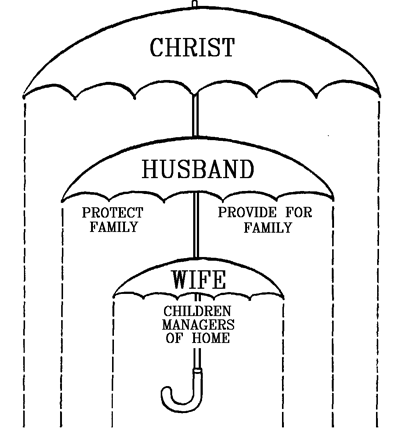


 The Beautiful Kingdom Builders