
 Long time, no blog! The Perrys have made it through another busy summer in touristy coastal Maine, and a month ago today, we pulled out of our driveway and headed south to central Virginia where my husband has taken a pastor position at New Beginnings Ministry. Big changes! Although saying goodbye to our friends and church in Maine broke my heart, I am excited for the adventure of a new hometown, new friends, a year of homeschooling, new ministry opportunities, and getting back to Kingdom work here on the blog!
After so many busy months, my tank is on empty. I am refueling with some good, nourishing books. First, I read Jen Hatmaker’s book, Of Mess and Moxie, whose essays go from deep and convicting to belly-laugh-inducing. Such a worthwhile buy, and I would highly recommend her podcast, if you’re into those. Second, I was thrilled to get my copy of Brené Brown’s newest book, Braving the Wilderness, a week after arriving in our new home. The timing couldn’t have been better, as I feel a bit like I’m living in the wilderness in this in-between phase of saying goodbye and not really feeling at home here yet, and also feeling the worry of being my authentic self as a pastor’s wife. I was a pastor’s kid growing up, so the church has always been my second family, a deep love of mine, and also the source of much of my deepest pain. I sat reading Braving the Wilderness in the bleachers while watching my sons’ football games that Saturday, shamelessly public-crying at multiple points throughout the book, as Dr. Brown demonstrates her findings on true belonging through touching and often heart-wrenching stories.
A section that has been on my mind over the past couple weeks, with the controversy over whether or not NFL players should kneel during the national anthem to protest police brutality and a criminal justice system that is rigged against people of color, was when Dr. Brown discussed the dehumanization process that is necessary for oppressive systems to subjugate others. She describes the process as beginning with our language and escalating from there, and warns us to be vigilant against using demeaning, derogatory language towards others. Quoting from the book:
An important example is the debate around Black Lives Matter, Blue Lives Matter, and All Lives Matter. Can you believe that black lives matter and also care deeply about the well-being of police officers? Of course. Can you care about the well-being of police officers and at the same time be concerned about abuses of power and systemic racism in law enforcement and the criminal justice system? Yes. I have relatives who are police officers—I can’t tell you how deeply I care about their safety and well-being. I do almost all of my pro bono work with the military and public servants like the police—I care. And when we care, we should all want just systems that reflect the honor and dignity of the people who serve in those systems.
But then, if it’s the case that we can care about citizens and the police, shouldn’t the rallying cry just be All Lives Matter? No. Because the humanity wasn’t stripped from all lives the way it was stripped from the lives of black citizens. In order for slavery to work, in order for us to buy, sell, beat, and trade people like animals, Americans had to completely dehumanize slaves. And whether we directly participated in that or were simply a member of a culture that at one time normalized that behavior, it shaped us. We can’t undo that level of dehumanizing in one or two generations. I believe Black Lives Matter is a movement to rehumanize black citizens. All lives matter, but not all lives need to be pulled back into moral inclusion. Not all people were subjected to the psychological process of demonizing and being made less than human so we could justify the inhumane practice of slavery. (Brené Brown, Braving the Wilderness, pp. 76-77
I love the term rehumanizing. It sounds like a synonym for redemption, or restoration. A biblical vision for healing and shalom. Beautiful Kingdom Warriors have been waging an age-old spiritual battle for the rehumanization of those who have been disenfranchised, abused, subordinated and made powerless to restore to them their God-given dignity and authority as humans made in the imago Dei. It is extraordinary that we can be partners with God in this great work of redemption!
Evil is very real and very present in our world. Our current age is marked by conflict. “Blessed are the peacemakers,” Jesus taught us (Mt. 5:9). What a challenge in our day! In order to be a peacemaker, I believe we must be good listeners, to strive to understand the perspectives of conflicting sides in order to facilitate reconciliation and peace. Being a peacemaker involves restoring justice and shalom for all.
However, as social beings, we instinctively gravitate into tribes, and in our sinful nature, we instinctively consider our tribes to be better than others and to draw lines of inclusion and exclusion. Yet we all belong to one race, the human race, we all bear God’s image, we are all equally loved by our Savior. As Christians, our deepest place of belonging and identity should be in the Kingdom of God, as God’s beloved children. We should not be so tied to a church denomination, political party, race, nation, etc. that we fail to love our neighbors (Mt. 22:39) and consider others better than ourselves (Phil. 2:3).
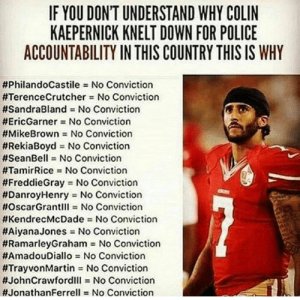
Google these names, bear witness to their stories, imagine how you would respond if these were your loved ones.
Additionally, we are told by the Apostle Paul to “weep with those who weep” (Romans 12:15). I cannot help but grieve with my black brothers and sisters when men and women and children are murdered through police brutality. Blood cries out from the ground for justice, and God hears those cries. We should be angry about the injustice black men and women face in our criminal justice system. We should lament our nation’s history of dehumanizing the lives of people of color in order to become “great.” We should fight racism and white nationalism for the evil that it truly is. One of my favorite quotes is from the founder of Samaritan’s Purse, Bob Pierce, who prayed, “Let my heart be broken by the things that break the heart of God.” Racism surely grieves the heart of God.
The Church that I love so much has wolves in sheep’s clothing, abusers preying on the vulnerable. On a weekly basis, I read a story of a pastor caught molesting children, or a deacon who has murdered his family. I sometimes post these stories to TBKW Facebook page. Some of the highest rates of domestic violence by career are in the clergy, military and police.
An example of “bad apples” in the Church from my own life is that during a three year time-frame while my family served with New Tribes Mission, three men were dismissed for sexually abusing children. Three out of only dozens of missionaries in those contexts. And they were dismissed, not reported for their crimes, and surely went on to harm more victims. Injustice that grieves the heart of God.
If the Church is not immune to evil, why do we think our police force is? There should be reform and training and consequences for abuses of position in our police force. Yet white Evangelical Christians statistically get caught in the either/or tribes of being pro-police or pro-patriotism rather than the Kingdom vision for justice and shalom for all. We can want what is best and safest for our police as well as for private citizens. We can have a more nuanced position than the options that are presented to us.


I don’t really know much about Kaepernick. But I agree that Black Lives Matter, and I protest injustice and the dehumanization of black people in our criminal justice system.
As Beautiful Kingdom Warriors, we are partnering with God in the work of restoration and healing of this broken, fallen world. The most powerful way that we accomplish this mission is in loving God and loving our neighbors, and that extends beyond our tribes. I am thankful to Dr. Brené Brown for the language of rehumanizing those who have been diminished by injustice.
I think this Beautiful Kingdom Warrior and American patriot has the right idea in joining the #takeaknee movement, explaining his support as “wanting to be like Jesus”:
https://twitter.com/brennanmgilmore/status/911960316220764160
“The world is broken. But God is not done yet. God’s work of restoration is not yet finished. This is our hope. God is our hope.” – Pastor Eugene Cho
Amen.
I am so happy to have you here! Please leave a comment with your own thoughts on loving our neighbors and being peacemakers in this broken, conflict-ridden world. I’ll approve if you’re respectful.
I have written about racial reconciliation before here. I pray that white Evangelicals will begin to listen well to their black brothers and sisters. I would encourage you to follow black theologians and authors, listen to their podcasts, read their articles and books; for instance, this year I have read Lisa Sharon Harper’s “The Very Good Gospel” and have listened to the podcast Truth’s Table, “Midwives of culture for grace and truth” with Michelle Higgins, Christina Edmondson, and Ekemini Uwan.
And “Like” us on Facebook! I may not always blog, but I have a daily stream of articles from around the web that I have found to be interesting, helpful, or important for raising awareness of gender issues in the Church.
God bless and come again!




 Christians for Biblical Equality has slashed prices on egalitarian books in their online shop. Most are at least half off, and many are as low as $2 or $4! There are also several titles available in Spanish, Creole, Arabic, and other languages. Stock your library while you can get a bargain! And don’t forget to add the free Journals to your cart.

 The Beautiful Kingdom Builders