Category Archives: Ruth’s Posts

Esther as “Bachelor” contestant who was “In it to win it”

This past Sunday, I visited a Converge church, a denomination formerly known as the Baptist General Conference.  This denomination hosts a rather diverse group of pastors, from fundamentalist, complementarian John Piper to “heretic” Greg Boyd from Woodland Hills Church, of which I am a faithful “podrishoner.”  In addition, our beloved former church in Maine is a part of Converge.

The pastor at this church I visited is a Dallas Theological Seminary graduate and an obvious complementarian, whose demeanor and style struck me right off as being NeoCalvinist and of the Piper-persuasion.  He was opening a series on Esther and I was blown away with his take.  I don’t think it is over-stating to say that I was appalled.

He began with a description of the wicked king, whose wife Vashti did a good thing refusing to strip tease for a room of drunks, but this made the king look bad for not having control of his household, which he oddly publicized all over the kingdom when he threw his “Miss Persia” contest.  We’ve all seen “The Bachelor” and may credit Hollywood with this brilliant idea, but Ancient Persia was ahead of their time!  He described Esther’s year of beauty treatments under the care of eunuchs – “We all know what a eunuch is, right?  Good, I don’t have to explain it.”  Then this young pastor went on to say it is difficult to say who the heroes of this story really are, as Mordecai and Esther stayed in Persia rather than return to their own land with Nehemiah to rebuild, and they hid their Jewish identity, so they weren’t living according to covenant laws.  And Esther was “in it to win it” in a contest with a “sexual component.”  So her character is questionable but God was able to work all things for good in this story (Romans 8:28).

Viewing the context of Esther like this is very similar to Mark Driscoll’s perspective.  He wrote about Esther,

She grows up in a very lukewarm religious home as an orphan raised by her cousin. Beautiful, she allows men to tend to her needs and make her decisions. Her behavior is sinful and she spends around a year in the spa getting dolled up to lose her virginity with the pagan king like hundreds of other women. She performs so well that he chooses her as his favorite. Today, her story would be, a beautiful young woman living in a major city allows men to cater to her needs, undergoes lots of beauty treatment to look her best, and lands a really rich guy whom she meets on The Bachelor and wows with an amazing night in bed. She’s simply a person without any character until her own neck is on the line, and then we see her rise up to save the life of her people when she is converted to a real faith in God.

This is a really detestable way to paint the life of a teenage girl who was probably around 12-14 years old and was “sought,” “gathered” and “taken” by the king’s soldiers and placed in custody of Hegai, the eunuch (castrated man) in charge of the harem.  Saying that Esther was competing in a “Miss Persia Pageant” is like saying blacks “immigrated”
to Southern cotton farms.  This was sex slavery.  Esther could not refuse the king without risk of execution.  And after her one night with the king, had she not been crowned queen, she would have been discarded/imprisoned in a harem for the remainder of her life.  Calling Esther’s character into question is preposterous.  Would we question the character of Jews in Nazi Germany for hiding their ethnicity?  Would we question a child who was raped at knife-point?

Esther had NO CONTROL over her imprisonment and rape.  She was a child.  She was a victim.  She was a minority.  She was a young girl in a patriarchal world that only valued women as property.  She had no power or agency in the context of this story.

And she is the HERO!!  Do not minimize Esther because she is a female heroine in the Bible!  Stop minimizing the amazing women of the Bible that God used to do amazing things for His Kingdom!  Jews celebrating Purim know exactly who the hero is – they cheer every time the reader says Esther’s name, and boo whenever Haman’s name is read.

It is not difficult at all for us to condemn Sharia law for child marriage.  But when it comes to Roy Moore and Kentucky’s ‘child bride’ bill, Evangelicals can be painfully hypocritical.  And with the on-going conversation about the hashtags #metoo, #churchtoo and #silenceisnotspiritual, the book of Esther is a beautifully relevant story to tell in addressing sex abuse and the church’s historic culpability in covering it up.  Sex abuse among Protestant denominations is a sadly prevalent reality.  The church I was visiting had around 600 people in attendance.  If the statistics bear out, there were probably around 100 people there who have been sexually abused or assaulted at some point in their lives.

The Whartburg Watch gave this analysis of Driscoll’s contemptible statement above:

1.”Beautiful, she allows men to tend to her needs and make her decisions.”
Driscoll shows an abysmal lack of understanding about the role of women in this culture. She did not “allow” men to make decisions for her; she was forced to do so.  She would be forced to do so if she was beautiful or ugly.

2. “She spends around a year in the spa getting dolled up to lose her virginity with the pagan king like hundreds of other women.”
Let’s get something straight.  Being taken to a harem by a bunch of the kings’ men is not a day at the spa. This was about one thing for everyone involved and that was making the king happy. If the king wasn’t happy, everyone involved would die.   She had ZERO right of refusal unless she wanted a straight ticket to eternity.

3.”She performs so well that he chooses her as his favorite.”
Once again, Driscoll demonstrates his unremitting fixation with sex. He assumes that she was some sort of sex machine that serviced the king in such a way that he made her his queen. How does he know that? Could Esther have been kind, thoughtful, smart, or humorous? I guess it doesn’t matter because, in Driscoll’s world, it all boils down to sex. So that was, is and ever more shall be, his final answer.

4. “Today, her story would be, a beautiful young woman living in a major city allows men to cater to her needs, undergoes lots of beauty treatment to look her best, and lands a really rich guy whom she meets on The Bachelor.”
Driscoll’s attempt to bring this into a modern context shows a bizarre reinterpretation of the historical nature of that culture. Did he ever take a history course?  If he did, I want the name of his professor. Today’s reality shows are based on freedom of choice. One does not have to be Kim Kardashian, although Deb comes pretty close. (Let’s see if she is reading this). But,  from what I have read about Driscoll’s needs, his wife better be on her “A” game or another book will be forthcoming, bless her heart.

5. “She’s simply a person without any character until her own neck is on the line, and then we see her rise up to save the life of her people when she is converted to a real faith in God.”
How does he know that she lacks character? Character is revealed, not when things are going well, but when things are going dreadfully wrong.  In fact, from my observations of Driscoll, he needs to spend some time in study and prayer on the issue of character. Mark Driscoll is certainly no Esther when it comes to this virtue.

Secondly, did anyone read any verses in Esther about her conversion? How does he know she didn’t have a real faith in God? When it came time to save her people, she requested that the Jews fast for three days. Fasting is one of those biblical things, last time I checked. So, did she just get lucky and guess that they should fast or was she just a quick study?

A Bit of Humor

One of the funnier comments I found on this sad example of Driscoll’s Biblical exposition is the following. The author at Kludt said that he had some points of agreement with Driscoll. Here is how he presented it.

[Esther] grows up in a very lukewarm religious home as an orphan raised by her uncle. Beautiful, she allows men to tend to her needs and make her decisions. Her behavior is sinful and she spends around a year in the spa getting dolled up to lose her virginity with the pagan king like hundreds of other women. She performs so well that he chooses her as his favorite. Today, her story would be, a beautiful young woman living in a major city allows men to cater to her needs, undergoes lots of beauty treatment to look her best, and lands a really rich guy whom she meets on The Bachelor and wows with an amazing night in bed. She’s simply a person without any character until her own neck is on the line, and then we see her rise up to save the life of her people when she is converted to a real faith in God.

In this article, Marg Mowzcko talks about Mark Driscoll’s preference for Karen Jobe’s commentary on Esther, and the interesting irony that complementarians will read women theologians but will not allow that same woman to publicly teach her wisdom and scholarship on that same topic.  

I just had to log in today for this special rant.  Even though I grew up complementarian, I have been attending egalitarian churches for nearly eight years now, so hearing complementarian exposition first-hand again was jarring.  I believe the patriarchy is the evil result of the Fallen relationship between men and women and is not at all God’s vision for humankind.  We are one in the Spirit, we are one in the Lord.  For there is now no more male or female, Jew nor Gentile, slave nor free, for we are all one in Christ (Galatians 8:28).


Thanks for visiting The Beautiful Kingdom Warriors!  “Like” us on Facebook, where we post interesting articles every day from around the web, dealing with gender issues in the church and world.



What I Love About Homeschooling

Flash Quiz!

What is something that Agatha Christie, Charles Dickens, Thomas Edison, Albert Einstein, Benjamin Franklin, C.S. Lewis, Wolfgang Mozart, Leo Tolstoy, and Mark Twain have in common?

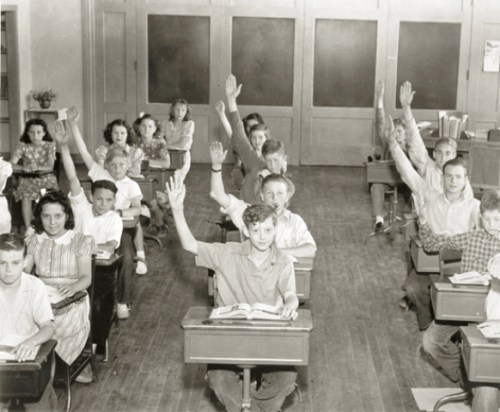
white-schoolkids-ca-1935

They were all home schooled!

I am homeschooling my kids this year and have had several people ask what I love about homeschooling, so I thought I would post my thoughts here.  But first, I want be clear that I understand that home education is not feasible for most families.  I’m not writing this to shame non-homeschooling families.

I also believe that we need public schools, and our public school teachers deserve mad props for being amazing public servants!!  This is not an anti-public school post.

We each must prayerfully discern how God is leading us in how we will raise and provide for our children, and then follow with confidence in God’s perfect love for our children.  The kids will be alright.  Amen?!

Home schooling only accounts for 3% of education in the United States, with 2.3 million students learning at home in 2016.  It is definitely the “road less traveled,” and as someone on that road, I would love to share my favorite things about home education:

I have more time to disciple my kids.

In Matthew 28:16-20, Jesus commanded us to make disciples (i.e. Jesus followers).  I often felt like our busy life pre-homeschooling impeded our ability to teach our kids about God and God’s Kingdom.  Not to mention that the weight of their peers’ voices was overpowering our own as parents.  In Deuteronomy 6:7, Moses directs us to, “Impress [the commandments] on your children. Talk about them when you sit at home and when you walk along the road, when you lie down and when you get up.”  I have lots of friends who do a beautiful job discipling their public-schooled kids.  I am not saying it cannot be done.  All I am saying is it is easier as a homeschooling family.  

love infusing the day with theology.  As we studied Harriet Tubman last week, I talked to my kids about liberation theology.  And I can focus on their character development.  This year, I feel like I am quoting John 4:6-8 over and over again.  “Beloved, let us love one another.  For love is of God and everyone who loves is born of God and knows God.  He who loves not, knows not God, for God is love.  Beloved, let us love one another.”  I have first-hand access to see that this is a lesson that needs repeating…and repeating…and repeating.  This is the kind of socialization that I want for my children.

It’s a slower lifestyle.

We live in a fast-paced world and many bemoan the speed of life compared to previous generations.  When we were public-schooling our kids, they were up at 6:30, racing around to catch the bus by 7:00, and after-school activities kept them busy until dinnertime and even bedtime for older students with homework.  We had very little family time.  Now, we all get plenty of sleep and have lots of free time for chores and play, the truly important work of childhood.  If the kids are excited about a project, they have the time to enter flow and fully develop their ideas.  I can be flexible with our schedule to allow for rabbit-trails and exploration, lots of field trips and spontaneous family adventures.  While we were public-schooling, my sons never played with their little sister.  It warms my heart to see our family growing closer together through our new slower lifestyle.

Studies show that in the modern public school classroom, management, busywork, waiting, leaving and arriving, and other diversions reduce gross instructional time to around ninety minutes a day.  According to Dr. David Elkind of the University of Rochester, attention in class to single students may average, per student, only six hours per year.¹  With home education, you are able to complete your daily curriculum in much less time, freeing up much of the day for your kids to be imaginative and to participate in household chores and life.

I get to participate in my kids education.

I have a lot of fun learning along with my kids!  One of my Clifton StrengthsFinder results is Connectedness – making connections between ideas.  I have such a good time making connections between what we are learning in our curriculum and the life events that we experience outside of “school.”  The whole world becomes our classroom!

The flip-side of this coin is that there can be a lot of insecurity in homeschooling — am I doing enough with them?  Are they progressing adequately?  What am I not doing that I should be teaching them?

The truth is, home education, public schools and private schools are all imperfect.  Each scenario has pros and cons, and saying yes to some pros means accepting the corresponding cons.  But you weigh your options and decide what is best for your family and then you go forward bravely.

613b29722dcf555a4e6275004ffc5d4cIt takes time to find the homeschool style that works best for your particular kids and family.  Styles include eclectic, classical, Montessori, Charlotte Mason, unschooling, school-at-home, Waldorf, etc.  You can buy full curriculum or piece your own together. Some curriculum works better than others for different individuals.  You may try different styles year to year, or even within the same year.  A big pro in home education is having flexibility to drop things that aren’t working and to pursue new options.  Give yourself lots of grace as a budding teacher.  Think outside the box, get your kids involved in a co-op or part-time at the public school. There are countless options.

In my opinion, providing a nurturing, non-competitive, shame-free environment for education gives natural learners a place to thrive.  We cannot predict outcomes, but that can also be said of public-schooled children.

Self-directed learning sticks harder.

Our brain won’t hold onto information that it deems expendable.  When I was in school, I forgot almost everything I studied once the information was regurgitated onto a test.  Once the purpose of the information was accomplished, an “A,” I was done with it.  Not knowing that I would find that information valuable in later years, my brain didn’t file it in my long-term memory.

Kids are naturally curious about their world and are motivated to learn information to be productive and successful in life.  Each child bears the image of God and has the capacity to impact the world through creative authority.  If students have more agency to pursue areas of natural aptitude and interest, the knowledge they acquire “sticks harder.”

In a Smithsonian Report on the development of genius (cited in this article), it was found that children need three conditions for optimal development: “1) much time spent with warm, responsive parents and other adults, 2) very little time spent with peers, and 3) a great deal of free exploration under parental guidance.”  These conditions are more readily found in the home than in the classroom.

Mental health and self-image matter for life.

Children (most adults too, for that matter!) tend to judge another’s worth on three factors: beauty, intelligence, and wealth.  Janet Kizziar and Judy Hageforn, experts in the field of adolescent self-esteem, write: “The way his peers perceive him strongly influences the adolescent’s conception of himself, which generally remains unchanged throughout his life.  Peer influences are at their zenith during preadolescence and adolescence when youngsters are most inclined to feel socially, emotionally, and even intellectually inept.”²  Child psychologist Dorothy C. Briggs points out that “no child can see himself directly, he only sees himself from the reflection of others.  Their ‘mirrors’ literally mold his self image…what goes on between your youngster and those around him, consequently, is of central importance.”³

Anxiety, depression, bullying, drug use, porn use, suicide, and more are growing problems among our young people.  Attentive parents can infuse their children with a deep sense of worthiness and belonging that will give their life a firm foundation.  I don’t want peers to influence my children’s conceptions of themselves that will last for their entire lifetime.  I love Brene Brown’s Parenting Manifesto – I have it printed and hanging on my fridge.   “Above all else, I want you to know that you are loved and lovable.”

In conclusion,  As image bearers of God, every human has an amazing capacity to attain the knowledge needed to pursue their particular calling and path.  Whether our children are home or attending a school, we can nurture in them loving, generous, and brave character.  We can give them a sense of wonder at God’s amazing creation (including themselves).  I am very grateful that, at least for now, I am able to keep my kids home with me, where they have time to explore and the security to be themselves.


¹Ballman, Ray E.  The How and Why of Home Schooling  (Crossway Books; Wheaton, IL.  1995),  p. 35.

²Kizziar, Janet and Hageforn, Judy.  Search for Acceptance: The Adolescent and Self-Esteem (Chicago: Nelson-Hall, 1979), p. 2.

³Briggs, Dorothy.  Your Child’s Self-Esteem: The Key to Life (Garden City, N.Y.: Doubleday, 1970), p. 2.

Here are a couple recommendations I have for parenting/homeschooling resources (Please leave your recommendations as a comment – I’d love to see them!):

  • Writings by high school teacher turned education reformer, John Holt.
  • This is an old quote, but worth considering (from the Homeschooling wiki page):

In the 1970s, Raymond and Dorothy Moore conducted four federally funded analyses of more than 8,000 early childhood studies, from which they published their original findings in Better Late Than Early, 1975. This was followed by School Can Wait, a repackaging of these same findings designed specifically for educational professionals.[46] They concluded that, “where possible, children should be withheld from formal schooling until at least ages eight to ten.” Their reason was that children “are not mature enough for formal school programs until their senses, coordination, neurological development and cognition are ready”. They concluded that the outcome of forcing children into formal schooling is a sequence of “1) uncertainty as the child leaves the family nest early for a less secure environment, 2) puzzlement at the new pressures and restrictions of the classroom, 3) frustration because unready learning tools – senses, cognition, brain hemispheres, coordination – cannot handle the regimentation of formal lessons and the pressures they bring, 4) hyperactivity growing out of nerves and jitter, from frustration, 5) failure which quite naturally flows from the four experiences above, and 6) delinquency which is failure’s twin and apparently for the same reason.”[47] According to the Moores, “early formal schooling is burning out our children. Teachers who attempt to cope with these youngsters also are burning out.” Aside from academic performance, they think early formal schooling also destroys “positive sociability”, encourages peer dependence, and discourages self-worth, optimism, respect for parents, and trust in peers. They believe this situation is particularly acute for boys because of their delay in maturity. The Moores cited a Smithsonian Report on the development of genius, indicating a requirement for “1) much time spent with warm, responsive parents and other adults, 2) very little time spent with peers, and 3) a great deal of free exploration under parental guidance.” Their analysis suggested that children need “more of home and less of formal school”, “more free exploration with… parents, and fewer limits of classroom and books”, and “more old fashioned chores – children working with parents – and less attention to rivalry sports and amusements.”[47] 

  • More Black families are choosing homeschooling to give their children an education free from discrimination.
  • A great podcast with psychologist Alison Gopnik on the Gardening vs. Carpentry models of modern parenting.

    “The idea is that if you just do the right things, get the right skills, read the right books, you’re going to be able to shape your child into a particular kind of adult,” she says.  “I think the science suggests that being a caregiver for human beings is…much more about providing a protected space in which unexpected things can happen than it is like shaping a child into a particular king of desirable adult.”

  • Sir Ken Robinson’s must-see TED Talk on education reform:

The Beautiful Kingdom Warriors is a place for empowering women to pursue their God-given callings alongside their brothers in Christ.  We post articles about gender issues in the Church and world every day on our Facebook page.  Subscribe to our blog so you never miss a post!

How Second Chance Africa is Providing Innovative Therapy to Trauma Victims in Africa

When I was a student at Gordon College, I attended church in Beverly Farms, near another liberal arts institution, Endicott College. A beautiful, artistic, Brazilian poet from Endicott also attended church there and we hit it off like Anne-and-Diana-style Kindred Spirits.  I remember horsing around with Jana at church retreats and attending poetry readings, musical performances, and more together.  When she graduated, I got to meet her family from Brazil and celebrate her milestone with an American Idol themed Karaoke party.  I promise to come back and insert a picture of the two of us when I am able to locate my college album!

As we moved on in life, we stayed in touch occasionally through email, and then two years ago my globe-trotting friend was back in New England and made a special visit up to Maine.  While she was here, she received her acceptance to her Ph.D. program in Neuroscience at the University of Sydney, and she also had a promising Skype meeting about a non-profit she had begun in Liberia called Second Chance Africa.  It was an honor to share these mountain-top moments with her!

sankofa birdYears ago, Jana had embarked on a back-packing adventure that brought her through Africa and face-to-face with lives torn apart by the trauma of war.  She was moved with compassion, so she stayed in a refugee camp and helped, and recognized that little was being done to address trauma.  She began Second Chance Africa in 2008 and has operated on a shoe-string budget through crowd-sourcing, offering therapy to over 7,000.  And now she has developed an innovative therapy app that will extend her life-changing therapy groups to thousands and hopefully millions in the near future.  Jana is calling this the Sankofa Project, after the sankofa bird that walks forward while looking back over its shoulder, representing the importance of reflecting on the past in order to move ahead into the future.

Watch this short video for a quick description of the Sankofa Project:

I’ve had the great honor of joining the Second Chance Africa board as the Secretary and state-side rep to assist with banking needs and receive mailings.  Last week, I met Jana at the airport and we accomplished tasks big and small (banking, printing, laundry, etc.) in a matter of hours before she flew to Liberia to launch her app with trauma therapy groups.  She is relying on crowd-funding once again to make this project successful. Donations can be made here.   This is an opportunity where even a small donation can make a big impact, and I assure you that Jana and her team are motivated by tremendous love and a desire to change lives. Please share their mission with your friends and family!

sankoka jana

Jana providing therapy to refugees in Liberia.

On her website, there are moving testimonials from people who have already been treated through Jana’s organization, Second Chance Africa.  Here are just a few:

“I really wanted to write you in the second week that you left, but I really wanted to see if the transformation that took place my life was something real or magical. I am convinced that it was something real that took place in my life. I want to be grateful to God who directed you in Ghana to the Liberian Refugee. I am grateful that I ever met you. There’s no more nightmares, bad dreams running every night for safety. I can see myself as somebody still useful in life. I believed that there is hope for the future me. I know that with your traumatic therapy treatment you can heal anybody who have been living with trauma for twenty to fifty years. I am saying this because of what took place in my life. I have been living with trauma for the past sixteen years and for you to make me overcome my trauma in less than a month it is something I can’t still believe. However, I am bit sad because there are many Liberians who are going back home still traumatized. UNHCR have been doing well for REFUGEE all over the world but we need more trauma counselors to help these people going back home. Many Liberians do not want to go back home but they do not have any choice. For now there is no more resettlement program for Liberians refugee by UNHCR, therefore they have go back home. It is my prayer that you will be able to get help from other people”. – S.G.

“While at the Monrovia Central Prison, an organization by the name of Second Chance visited the prison and we were helped by the means of their training, such as exercises, counseling and lectures. I personally benefited, there were exercises we were introduced to that when you are down or depressed, it helped you lift your spirit. It helped me many days to relax and have a good night rest despite my problems at the prison. It made me at times to even think that there was a second chance in my life. And I will like to encourage them to keep up the good works, because it made people feel important, that whatever problems in their lives is not the end of their lives. May the good God bless their effort and keep them strong”. M.R.

“She guided through the trauma healing and from that healing today I am able to recover, I came to myself, I came to my senses. I really feel good that now I am a human being, and I am safe, I feel fine in my body” –  F.D.

sankofa bono

To Jana’s great delight, her friend Bono has been wearing a yellow Sankofa Project bracelet and plugging Jana’s work on U2’s 2017 Joshua Tree Tour! Here is a picture of him wearing the yellow Sankofa Project bracelet.  When it is available, I will update with a link to purchase your own. For only $10, you will receive a pack of 10 bracelets and sponsor a full trauma relief program in a post-war region in Africa, for a group of 10 participants during our field implementation phase in 2017-2018.

To read more about Jana’s work through Second Chance Africa and The Sankofa Project, please visit http://secondchanceafrica.org/sankofa/.  And again, please consider giving to her work here and sharing this project with your friends and family.  Thank you!


P.S.  In addition to her amazing, loving work for trauma victims, my friend is also a brilliant artist.  Check out this painting she showed in a RAW Sydney exhibit last year!sankofa artIn the RAW Sydney post describing her art, they said,

Jana’s work arises from the need to give a voice to her thoughts and ideas that may speak louder through silent speech. Her paintings are not meant to be pleasant to the eye nor serve as a decor piece. Her colours are bold and aggressive. Her aim is to create discomfort and challenge one’s misconceptions about themselves and the world. She is a self-taught artist, and a PhD student specialising in post-traumatic stress. The stories she has heard and the violence she has seen while traveling, working and living in war impacted countries in the Middle East, Africa and Asia deeply affects her artwork imagery and aesthetics of advocacy.